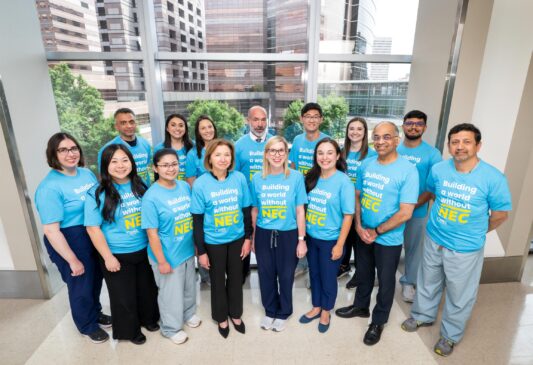
Every day, our multidisciplinary neonatal care teams care for some of our organization’s most vulnerable patients, including premature infants diagnosed with necrotizing enterocolitis (NEC), one of the most serious intestinal diseases affecting newborns.
Our multidisciplinary neonatal care teams include neonatologists and pediatric surgeons who collaborate with nurses, dietitians, respiratory therapists and care coordinators to monitor subtle changes, respond quickly to shifting conditions and adjust treatment for infants with NEC.
Human milk is one of the treatments these teams use to care for infants with NEC. This nourishment strategy helps protect fragile digestive systems and reduce risks. When mother’s milk isn’t available, donor milk is provided through our Milk Bank, one of the largest and longest-established hospital-based milk bank programs in the country.
These teams are also working to improve how NEC is identified and managed through ongoing research. Their work focuses on earlier detection of at-risk infants and refining clinical approaches that reduce disease progression and strengthen decision-making at the bedside.
Neonatologist Dr. Amy Hair said these efforts are doing more than slowing disease progression: they’re advancing hope for families after a diagnosis.
“One of the most important messages we want families to hear is that outcomes are improving thanks to advances in neonatal care, research and earlier diagnosis,” Dr. Hair said. “At Texas Children’s, we have significantly improved outcomes for these babies through state-of-the-art technology and scans that are detecting this sooner than ever before and helping prevent progression.”