June 22, 2026

In case you missed the recent Nursing Town Hall, the replay video is now available. Click here to watch or you can access it on the Voice of Nursing blog. 

Soccer fans have arrived in Houston for the 2026 FIFA World Cup, turning our city into a meeting place for the world. From snapping photos at Buc-ee’s to sharing their first taste of Tex-Mex and Texas barbecue on social media, visitors are discovering everything Houston has to offer.

As the excitement continues to spread across the city, our organization has joined the celebration in meaningful ways, bringing the spirit of the World Cup into our hallways, onto the field and into patient care.

Across our campuses, team members wore jerseys representing national teams and clubs, reflecting the countries they are rooting for and the many places our community calls home.

The global game has also created special moments for our patients. Ahead of Houston’s FIFA World Cup match between Germany and Curaçao, our clinicians helped select patients to serve as official flag bearers. They carried national flags onto the field before an international audience, representing our organization on one of soccer’s biggest stages.

That same spirit reached travelers arriving at George Bush Intercontinental Airport, where a display in Terminal E tells the story of Brinnley, a patient who spent more than seven months at Texas Children’s battling leukemia. She has since completed treatment with support from her care team at our Cancer and Hematology Center and now plays varsity and club soccer again.

Our Child Life team brought the World Cup closer to our community by painting soccer balls alongside patients, while soccer ball installations across our campuses, including a giant display at Legacy Tower, gave team members a chance to pause and make new memories with colleagues.

As the World Cup continues, our organization will keep creating special moments that bring team members, patients and families together. View the photos below that capture those moments!


June 12, 2026

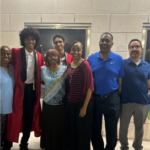
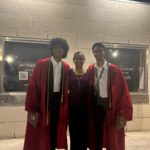
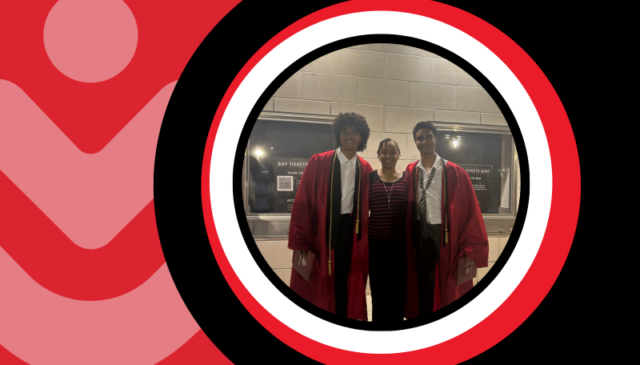
Commission Security Officer Frank Waddle has dedicated his life to serving others.

For three years, Frank has served our organization. He currently works at Texas Children’s Meyer Building, where he helps create a safe and welcoming environment for our community. Kindness, patience and integrity have guided his career and shaped the example he has set for others, including his daughter, Commission Security Officer Darla Waddle.

Darla joined Texas Children’s Pediatrics Conroe two years ago, carrying the values her father taught her into her career.

“One of the biggest lessons my dad taught me was to treat every person with kindness and respect, no matter the situation,” Darla said. “Seeing the impact he had on patients, families and coworkers showed me that healthcare is more than a job. It’s about serving others.”

Frank shared that Darla’s decision to join Texas Children’s and be part of a mission he cherishes was a moment he will never forget.

“As a father, there is no greater reward than seeing your child find purpose in helping others,” Frank said. “Sharing that commitment makes me proud not only of the work we do, but also of the person Darla has become.”

Their shared commitment to service has strengthened their bond as colleagues and as father and daughter. “I feel most connected to him when I know we’re both working toward the same mission of caring for children and supporting families,” Darla said. “Knowing that we’re both contributing to making a difference in patients’ lives gives me a strong sense of connection and shared purpose.”

For Frank, watching Darla follow in his footsteps while building a career of her own in service has been a defining moment in his life.

“One of the greatest joys of my career has been the opportunity to serve others, and one of the greatest joys of my life has been watching my daughter grow into a caring, capable professional,” Frank said. “That is the greatest Father’s Day gift I could ask for.”

We are proud to honor Father’s Day by celebrating Frank and other fathers across our organization whose dedication to service enriches the care we provide.

Do you have a family ties story you would like to share with our community? If so, please email TCC@TexasChildrens.org.

Trust, one of Texas Children’s HEART values, can look different depending on the setting or moment, but it’s always built through shared responsibility and how teams work together.

Across Texas Children’s, this value shows up in meaningful ways. Team members Jenna Henry, Mandi Harlan and Noel Martinez each bring a different perspective, offering a closer look at how trust is built, strengthened and experienced across our organization.

Leading with Consistency and Follow-Through

For Jenna Henry, outpatient therapy manager in Kingwood, trust begins with consistency and honesty.

“It means doing what you say you will do and meaning what you say,” she said. “Building trust requires honesty, even when the message is difficult.”

Jenna builds that foundation early. She meets weekly with new team members during onboarding, not only to review expectations, but to understand how they learn, what motivates them and how they define success. That investment continues through regular check-ins, rounding and being available to her team. 

Her support often extends beyond day-to-day responsibilities. Colleagues note that Jenna consistently advocates for her team, connecting them with opportunities and resources that support their growth.

“Open, clear communication is the foundation of all of it,” she said.

Over time, trust becomes visible in everyday interactions. Team members stop by to talk through challenges, ask for advice or share concerns. Those moments reflect a culture where people feel supported, heard and confident their leader will follow through.

Creating Confidence Through Coordination

With more than 20 years of nursing experience, Mandi Harlan understands how central consistency is in pediatric care. 

“Many of our patients arrive feeling anxious or frightened, and it is deeply important to create a sense of safety and connection from the start.” 

To create a sense of stability in Austin’s outpatient neurosurgery unit, Mandi makes an intentional effort to connect with patients and reassure families by helping them move through their experience with confidence. She works closely with providers and staff to ensure each step of care is clearly and seamlessly coordinated across the multidisciplinary team. 

“My colleagues know they can trust me because I consistently follow through on commitments, communicate clearly and step in to help when questions or challenges arise,” she said. “Approaching teamwork with patience, positivity and a genuine desire to support others strengthens both morale and collaboration.”

Mandi’s experience allows her to anticipate needs, reduce uncertainty and support both patients and teammates through complex situations. The result is care that feels steady, coordinated and dependable for everyone involved.

Strengthening Trust Through Everyday Teamwork

For Noel Martinez, a medical assistant at the Gastroenterology Clinic in Austin, trust is built by embracing everyday teamwork.

“We’ve built this team from the ground up,” he said. “I know I can rely on the people around me. We support each other and lean on each other like family.”

That environment didn’t happen by chance. As part of a newer campus, Noel and his colleagues have shaped their team together through daily check-ins, shared celebrations and a consistent willingness to support one another when it matters most.

Colleagues describe Noel as someone who can be counted on, especially during busy or high-pressure moments.

“We’re all here to take care of patients and help them have a good visit,” he said. “Cooperation is key. No team member can do it alone.”

That consistency creates a team environment where people can rely on one another and step in with confidence when it matters most.

A Value We Build Together

Across these experiences, trust in each other is built over time and reinforced in everyday interactions.

Just as we build trust with families through small but meaningful moments — a warm greeting, crouching to a child’s level, remembering a favorite cartoon character, activity or a caregiver’s birthday — working in a unified way allows that trust to carry through the entire experience. 

It becomes something patients and families can rely on, not just in individual moments but throughout their time at Texas Children’s.

Where have you seen trust in action on your team? 
Whether it’s how teammates support one another or how care comes together for patients and families, share an example in the comments below. Your reflections help reinforce the trust we build together every day.

June 8, 2026

Annual Required Training (ART) reinforces the safety, compliance and workplace practices that help create a high-quality experience for patients, families and teammates across Texas Children’s. To receive credit, complete all course content and submit the attestation. 

How to Access ART

  • Texas Children’s employees: Complete ART in Voyager.
  • Medical Staff (excluding Texas Children’s employees), residents, fellows and students: Follow instructions provided through Centralized Credentialing & Medical Staff Services.
  • Baylor College of Medicine contingent workers: Follow instructions provided by Baylor College of Medicine, unless directed by Centralized Credentialing & Medical Staff Services.
  • Non-BCM contingent workers and volunteers: Complete ART as directed by their leaders.

Beginning in 2027, ART will transition to a January launch schedule to better balance required learning.

For Questions

  • Reach out to your leader

  • For technical support, contact the IS Service Desk at (832) 824-3512, press option 2

The excitement of the FIFA World Cup 2026 kicks off June 14, and Texas Children’s is joining the global celebration.

On Friday, June 12, team members are encouraged to wear their favorite soccer jersey to work. Whether you are representing a national team or your favorite club team, show your soccer spirit and join the fun.

Show your team spirit with colleagues across our organization by snapping a photo and sending it to TCC@texaschildrens.org for a chance to be featured on Connect or our social media channels. 

At Texas Children’s, respect is one of our five HEART values, and it is reflected in how we show regard for, care for and build meaningful connections with one another and those we serve. Respect is not just courtesy. It is the intentional choice to recognize the humanity in every person — to listen without assumptions, to honor individual experiences and to respond with empathy, even in the most challenging moments.

Respect often shows up in ways that are easy to miss if you are not looking for them. It is in the pause before responding, the effort to understand someone’s perspective, the decision to include a voice that has not yet been heard. It is built through consistency — through small, thoughtful actions that help patients, families and team members feel seen, valued and supported.

Creating Moments That Honor Every Family: Respect in Child Life

For Ashley Van Antwerp, Child Life Activity Coordinator in the PICU and TICU, respect begins with presence. In a setting where families are navigating some of the hardest moments of their lives, she sees showing up — in both big and small ways — as a meaningful part of caring for the whole person.

As the first Activity Coordinator in the PICU/TICU, Ashley made it her mission to meet patients and families exactly where they are. Sometimes that means checking in at the bedside. Sometimes it means helping create moments of play, joy and connection in the middle of an overwhelming hospital stay, recognizing that emotional well-being matters just as much as medical care.

That perspective is especially visible in the parades Ashley helps organize for patients being discharged. Each one is personal, shaped around what will help that child and family feel most seen.

One parade that stays with her was for a three-year-old lung transplant patient who did not like loud noises but loved stickers. So instead of pom-poms and music, the celebration was adapted. Staff lined the hallway and handed him stickers as he passed by. It was a quiet parade, but it was full of joy, intention and love.

Ashley understands that these moments represent much more than going home. They reflect the fear, exhaustion, hope and relief families have carried throughout a child’s journey. By taking the time to celebrate in a way that fits each child, she honors not only the milestone, but the experience that led up to it.

“Showing up is about being present, reliable and compassionate because those small moments often become the ones patients and families remember most,” says Ashley. “I always try to put myself in their shoes, to imagine what they are feeling, what they need in that moment and how I can show up for them with compassion, presence and intention, even when time is limited.”

Patience That Builds Trust: Respect in Specimen Management

For Amber Greer, a Path Patient Care Tech in Women’s and Children’s Specimen Management, respect means being fully present for others — patients, families and teammates alike. She describes it as paying attention, addressing people’s needs and approaching each interaction with compassion, integrity and purpose.

One patient encounter brought that meaning into focus. Amber cared for a patient with a cognitive disability who needed lab work. Previous attempts at other facilities had been unsuccessful because of fear and resistance, leaving both the patient and family member understandably anxious. Rather than rushing through the moment, Amber sat with him, explained the process in a way he could understand and gave him the time he needed to regulate and begin again.

Through patience, empathy and consistency, she earned his trust and was ultimately able to complete the blood draw. What may have looked like a small moment from the outside made a lasting difference. Now, when he sees her, he no longer responds to lab draws with the same level of fear and resistance.

Amber says working in her role has taught her that respect is something you give whether or not it is returned. For her, skill alone is not enough. The way care is delivered matters just as much as the care itself.

“Respect should be given without expectation of return — it has to come from within and be a genuine part of who you are,” says Amber. “To cultivate respect in my role at Texas Children’s means leading by example, treating others the way we would want not only ourselves, but our children and family members, to be treated.”

Making Space for Others to Be Seen: Respect on the Women’s Specialty Unit

For Deidra Plater, a nurse in the Women’s Specialty Unit, respect is closely tied to reliability, accountability and supporting colleagues in pursuit of shared goals. Her peers describe her as thoughtful, inclusive and full of spirit — someone whose laughter lifts the unit and whose small acts of care bring people together, especially during difficult seasons.

Deidra’s respect for others shows up not only in patient care, but in the culture she helps create for coworkers. Colleagues shared how she includes everyone — from nursing staff to EVS, House Supervisors and leaders — in the moments she captures and the celebrations she helps organize. 

Whether it is a holiday, Nurses Week, PCA/UCA Week or Breast Cancer Awareness Month, she is known for finding ways to make people feel remembered and included.

She also shared a quieter example in practice. During a pain management discussion, she noticed that a colleague’s input was being overlooked. Rather than letting the moment pass, she calmly redirected the conversation to include that perspective and acknowledged the colleague’s contribution. It was a small act, but one that reinforced mutual understanding, strengthened teamwork and supported better patient care.

Working as a nurse has taught Deidra that respect is often communicated through everyday behaviors: listening without assumptions, communicating clearly and honoring the dignity of patients and coworkers even in stressful moments. She approaches families with empathy, eye contact and acknowledgment of feelings.

“I strive to create a supportive environment where families feel heard, understood and respected, while providing the guidance and care they need during difficult moments,” says Deidra. “Small gestures of patience and understanding can make a meaningful difference in building trust and easing their experience.”

Respect as a Shared Commitment

Across these stories, respect takes different forms — honoring a family’s experience, building trust through patience, creating a sense of belonging for coworkers — but the common thread is the same. It is not reserved for one role, one department or one kind of interaction. It is practiced across Texas Children’s through everyday choices to listen, include team members, support and care for others with intention. These moments may seem small, but together they shape the culture of Texas Children’s and make a meaningful difference for patients, families and one another.

This article is part of an ongoing series highlighting Texas Children’s HEART values — Humility, Excellence, Accountability, Respect and Trust — and the people who bring them to life while working at Texas Children’s.

Where have you seen respect in action on your team?
Share an example in the comments below of how teammates show care, build meaningful connections and help others feel seen and valued.