August 26, 2019

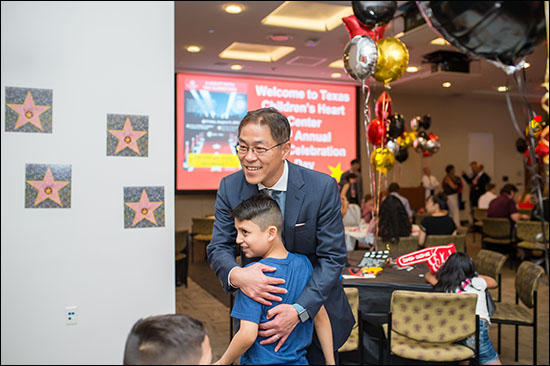
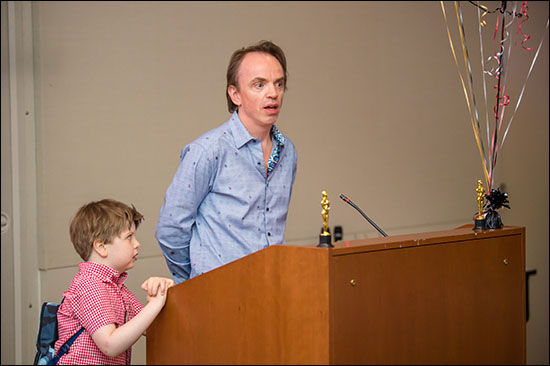
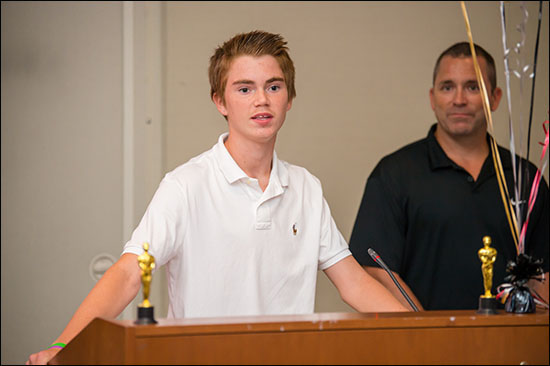
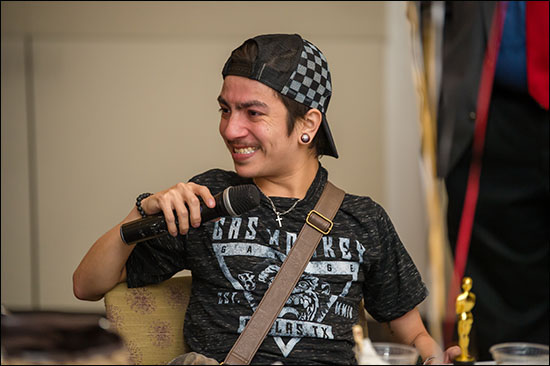
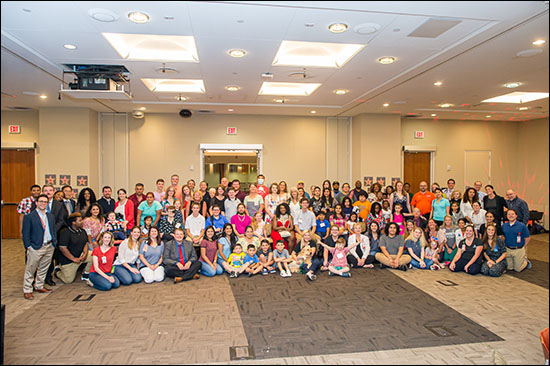
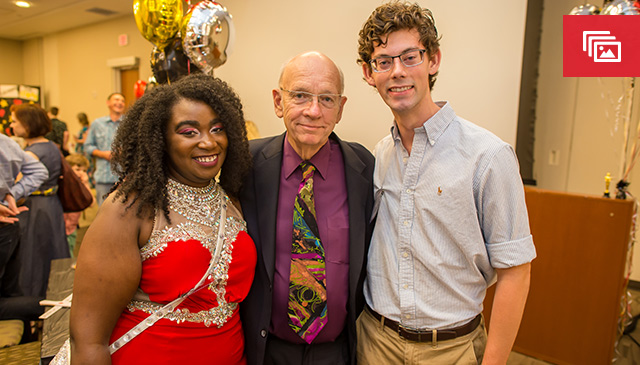
A group of 25 Texas Children’s ventricular assist device (VAD) patients of all ages and more than 100 other guests, including families, caregivers and guest speakers, recently attended the second annual VAD celebration – “A Night with VAD Superstars.”

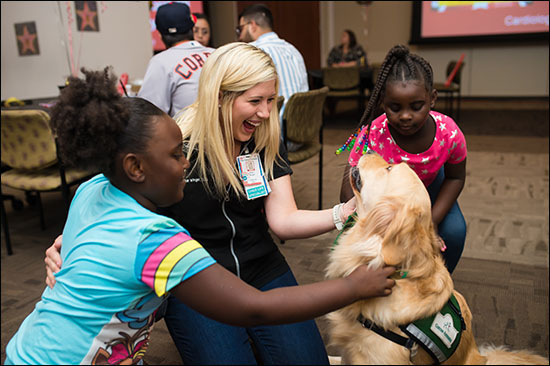
There was plenty of food, a visit from Child Life Specialist Adair Galanski with Bailey – the dedicated therapy dog for Lester and Sue Smith Legacy Tower – and games and activities provided by Physical Therapy, Occupational Therapy and Child Life.

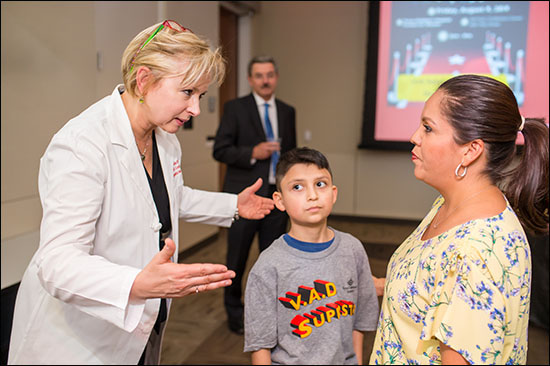
The evening was emceed by Barbara Elias, VAD coordinator and the event’s founder, who started the celebration as a way to honor patients currently on heart pump or circulatory support, or those patients who have previously been on support but have had their pump removed or received a transplant. The VAD celebration also honors families and caregivers and has quickly become an outlet for information exchange and networking.

“Device patients are a special group that lead challenging lives, and their families and caregivers are with them every step of the way for what is sometimes a very long journey,” said Elias. “This event serves many purposes: It provides a forum for families to meet one another, share their experiences and build a community. It allows parents of children with VADs to meet other children or adults who have lived through the experience and persevered. And it gives caregivers – especially those from the ICU, who have seen these patients at their worst – an opportunity to see these patients living their lives and doing well.”

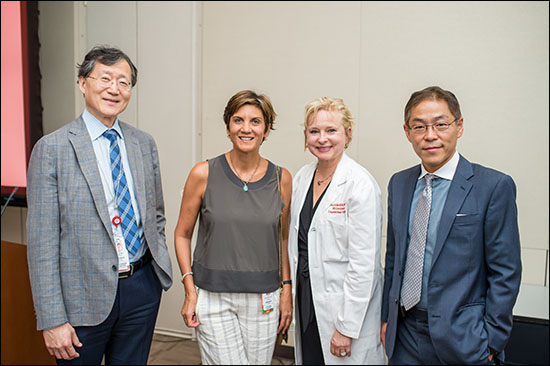
The evening’s speakers included Dr. William Dreyer, Texas Children’s medical director of Heart Failure, Cardiomyopathy and Cardiac Transplant; Dr. Lara Shekerdemian, chief of Critical Care; and Texas Children’s heart surgeon Dr. Iki Adachi. Attendees also heard from special guest speaker Dr. Richard Wampler, the inventor of Medtronic’s HeartWare® HVAD pump, a device frequently used in Texas Children’s patients. In turn, the event gave Wampler an opportunity to see firsthand how his invention has positively affected the lives of so many children at Texas Children’s.

“This event was testimony to what our VAD program has accomplished over the last decade,” said Adachi. “There is no doubt that VAD support has provided our patients with a chance for life. It was a pleasure seeing and sharing the happiness generated by such life-saving therapies with patients, families and medical colleagues.”

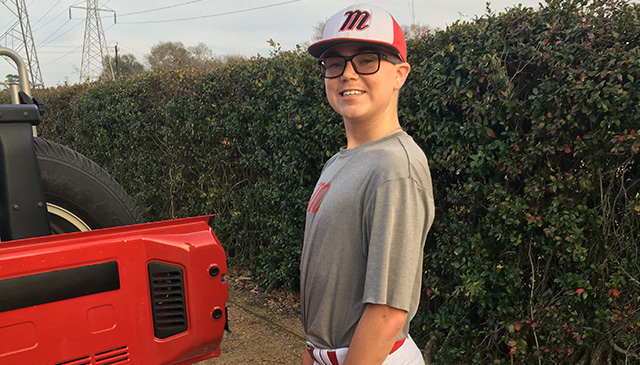
The VAD program’s expertise was on display in the evening’s two special patient honorees, Eugene Carrette and Jameson Finney. Eugene, who is from Belgium, was the smallest and youngest patient to receive a VAD since the beginning of the program. Thanks to the expert care he received at Texas Children’s, he has been able to travel with his family to Europe recently, a phenomenal feat for a young VAD patient. Jameson Finney earned the nickname “Daredevil” for living life to the fullest while on a device, running, golfing and riding bikes until receiving a heart transplant in 2018. Both the VAD implantation and the transplant were performed by Adachi. Jameson has been doing well since his transplant and continues to lead an active life.

The event concluded with a special moment of sharing and reflection. During this emotional and cathartic time of testimony, patients, families and caregivers who wished had the opportunity to share their stories and to speak frankly about living with a VAD. Many also thanked the experts at Texas Children’s for the care they received and how it has empowered them to live their lives.

“The event was extremely well received and was powerful for everyone in attendance,” said Elias. “I would like to thank Dr. Adachi, Dr. Hari Tunuguntla, my partner, VAD coordinator Jason McMullen, RN, the Heart Center Social Committee, and therapies including Physical and Occupational Therapy and Child Life, whose efforts allowed the event to occur.”

Texas Children’s Heart Center® was recently named the No. 1 pediatric heart center in the country for a third straight year by U.S. News & World Report. The VAD program is part of the Heart Failure Program and is one of the busiest pediatric programs in the country. There are currently 15 VAD patients in the program. Seven of those are full-time students.

Learn more about the Heart Center and its recent U.S. News ranking.

August 6, 2019

Early on the morning of June 18, Texas Children’s Heart Center staff filed into Taussig auditorium on the 16th floor of Lester and Sue Smith Legacy Tower. Details about the meeting’s purpose had been scarce. Little did everyone know that they’d been called in for a big reveal.

Texas Children’s Heart Center had once again been named the best place in the country for pediatric cardiology and heart surgery in the U.S. News and World Report 2019-2020 Best Children’s Hospitals rankings – the center’s third straight year at No. 1.

“It’s thrilling for our team to be recognized for the care we provide to our patients every day,” said Chief of Pediatric Cardiology Dr. Daniel Penny. “Even though we received the top honor, we know there is always room for improvement. We are continuing to evolve as a true multidisciplinary team that is dedicated to setting a new standard for the treatment of children and adults with congenital heart disease.”

The U.S. News rankings use a well-accepted framework for evaluating quality of health care, which factors in patient outcomes, such as mortality and infection rates; available clinical resources, such as specialized clinics and programs and external accreditations; and compliance with best practices. Improved rankings demonstrate a health care organization’s commitment to not only providing high-quality care, but also to identifying gaps where improvements are needed.

But where do you go when you’re No. 1?

“Our goal is to be so far ahead that no one can catch us,” said Dr. Christopher Caldarone, Texas Children’s chief of Congenital Heart Surgery. “Being No. 1 is a state of mind, where commitment to excellence is inherent in everything a program does. Our team has a No. 1 mindset. We work hard, we constantly measure our performance, and we drive ourselves to improve in every aspect of providing care.”

Big wins for patients and families

This past year, the Heart Center built on the successes of previously existing programs and also implemented new initiatives to increase transparency, reduce risk of infection and improve the quality of care.

  • Participated in STS National Database public reporting
    The Society of Thoracic Surgeons (STS) is a national leader in health care transparency and accountability. Participation in STS public reporting demonstrates a commitment to quality improvement in health care delivery and helps provide patients and families with access to information that can help them make more informed health care decisions.

Texas Children’s holds a three-star rating in the STS Congenital Heart Surgery Database (CHSD), which is calculated based on overall risk-adjusted operative mortality for all patients undergoing pediatric and/or congenital heart surgery. The rating is the highest category of quality and places Texas Children’s among the elite congenital heart surgery programs in the U.S. and Canada. Additionally, STS recognized Texas Children’s for having operative and adjusted operative mortality rates that were consistently below expected rates over a 4-year period.

  • Implemented a program to routinely track and submit IMPACT data
    In partnership with clinical and physician leadership, the Heart Center’s Cardiac Catheterization Labs implemented processes to submit metrics on all catheterization procedures included in the American College of Cardiology’s IMPACT Registry®. This national register collects quality-focused data on the management and outcomes of pediatric and adult congenital heart disease (ACHD) patients who undergo diagnostic and interventional cardiac catheterization procedures. The registry also allows Heart Center leadership to compare performance against a national aggregate for quality improvement initiatives.
  • Increased the number of cardiac intensive care unit (CICU) RNs with greater than 2 years’ experience
    CICU care requires a multidisciplinary team effort. Success is due, in part, to the team’s being able to rely on experience. In the months leading up to the Heart Center’s move into Lester and Sue Smith Legacy Tower, CICU leadership worked tirelessly to not only recruit the very best nurses, but also to retain them. This enables the nurses to gain valuable experience and mature as caregivers, and also helps improve the overall quality of the CICU team. The response has been extremely positive, with low turnover.
  • Implemented a universal methicillin-resistant Staphylococcus aureus (MRSA) decolonization treatment protocol
    To reduce the risk of infection faced by all surgical patients during the perioperative period, the Congenital Heart Surgery team partnered with experts from Infectious Disease to implement a universal decolonization protocol for MRSA, which causes infections that are more difficult to treat than methicillin-susceptible staph. The protocol, which involves five days of antibiotic ointment in the nose and five days of special wipes, has the added benefit of decreasing MRSA wound infections, and incidence of methicillin-susceptible staph ventilated-associated pneumonia and central line infections.

Learn more about the Heart Center, its services, and volume and outcomes.

June 18, 2019

The results of the 2019 U.S. News & World Report survey of Best Children’s Hospitals are in, and Texas Children’s Hospital is again among the best in the nation!

This year, Texas Children’s tied for third place among all children’s hospitals nationally, a ranking no other pediatric hospital in the state has ever achieved.

In addition, for the first time, Texas Children’s is ranked in the top 10 in each of the U.S. News & World Report-recognized pediatric sub-specialties. Six of our sub-specialties were ranked in the top 3 – two are ranked #1, two are ranked #2, and another two are ranked #3.

“We should all be very proud of this remarkable accomplishment,” said Texas Children’s President and CEO Mark Wallace. “It is because of our One Amazing Team and each team member’s steadfast commitment to quality and excellence that we were able to reach this achievement. Thank you for your dedication to Texas Children’s Hospital and to the patients and families we serve.”

Some highlights of the 13th annual Best Children’s Hospitals rankings for Texas Children’s include:

  • Cardiology and Congenital Heart Surgery is again ranked #1 in the nation, due in part to our increasing the number of RNs in the PICU with more than two years of experience, and exceeding thresholds in four-year combined risk-adjusted operative mortality.
  • Pulmonology, which first debuted in the top spot in the 2016 rankings, is again ranked #1 in the nation. We decreased the percentage of patients readmitted to the hospital to address asthma-related symptoms, and exceeded thresholds in structure metrics, such as mean LOS for asthma patients.
  • Nephrology moved up a spot and is now ranked #2 in the nation, with a significant decrease in hemodialysis catheter associated BSI and an improvement in children younger than 5 years of age receiving hemodialysis.
  • Gastroenterology & GI surgery rose to #2 in the nation from #4, achieving successful Kasai procedures in biliary atresia patients and improving the percentage of patients experiencing prednisone-free admission.
  • Cancer is #3 in the nation, up from #6. We increased the five-year survival of patients with neuroblastoma and increased the percentage of patients who received intravenous treatment antibiotics within an hour of triage.
  • Neurology and Neurosurgery remained at #3 in the nation, showing a significant improvement in 30-day unplanned return to the operating room for craniotomy and a decrease in readmission within 30 days of surgery for Chiari decompression patients.

Our entire list of rankings includes:

#1 Cardiology and Congenital Heart Surgery
#1 Pulmonology
#2 Gastroenterology and GI surgery
#2 Nephrology
#3 Neurology and Neurosurgery
#3 Cancer
#6 Urology
#7 (tie) Neonatology
#8 Diabetes and Endocrinology
#10 Orthopedics

Overall, Texas Children’s exceeded nursing intensity thresholds, made significant improvement in ICU CLABSI rates and exceeded thresholds for hospital acquired pressure injuries.

U.S. News & World Report introduced the Best Children’s Hospitals rankings in 2007 to help families of children with rare or life-threatening illnesses find the best medical care available. The rankings are the most comprehensive source of quality-related information on U.S. pediatric hospitals.

The U.S. News Best Children’s Hospitals rankings rely on clinical data and on an annual survey of pediatric specialists. The rankings methodology factors in patient outcomes, such as mortality and infection rates, as well as available clinical resources and compliance with best practices.

“The results also reflect the efforts of our team and their unwavering focus on the U.S. News survey,” Wallace said. “Compiling and refining our data is a continuous process and, with the support of our medical staff, in-chiefs, service chiefs, as well as Mark Mullarkey, Trudy Leidich, Elizabeth Pham and the entire Quality team, we have made significant strides this past year.”

This year’s rankings will be published in U.S. News & World Report’s “Best Hospitals 2020” guidebook, available in stores mid-September or online at usnews.com/childrenshospitals. You can learn more about Texas Children’s rankings here.

May 28, 2019

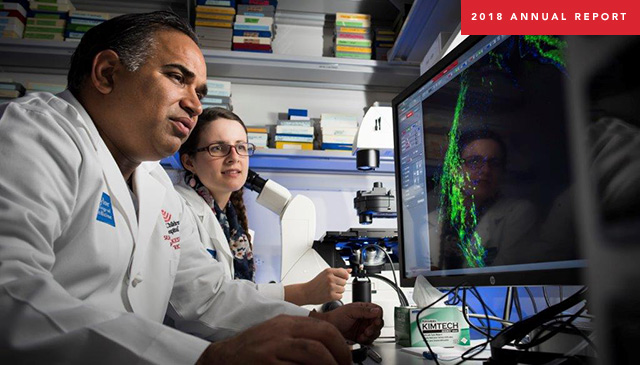
The National Institute of Health awarded a team of Texas Children’s scientists a $2.2 million grant in 2018 to study and develop computer and tissue-engineered models to predict the recurrence of congenital heart diseases. The study aims to change the way heart diseases are managed to improve the quality of life of children. Learn more by visiting our 2018 virtual Annual Report.

April 9, 2019

Texas Children’s Heart Center was once again the site of a groundbreaking novel treatment that gives experts in our new catheterization laboratories yet another method at their disposal in the treatment of complex heart conditions.

Dr. Henri Justino, co-director of the center’s cardiac catheterization labs and director of cardiac innovation, recently developed and performed a first-of-its-kind procedure in which a young patient’s lung veins were reached directly through the chest wall.

Hope for Bronx

Three-year-old Bronx Delarosa was born with total anomalous pulmonary venous return, a critical heart defect that causes oxygen-rich blood returning from the lungs to be pumped into the right atrium instead of the left atrium, as it normally should. There, the oxygen-rich blood mixes with oxygen-poor blood, which means the body doesn’t get the oxygen it needs.

At just 8 days old, Bronx underwent a surgery to repair the defect that was initially thought to be a success. However, following a second surgery, doctors told his parents he’d developed a secondary condition – pulmonary vein stenosis, a condition that caused severe narrowing in his surgically repaired veins. The Delarosas were heartbroken when they learned there was nothing else that could be done for Bronx in their hometown.

To give their son a fighting chance, they turned to Texas Children’s Hospital.

Breaking new ground

Justino performed Bronx’s first catheterization procedure in February 2018, during which he placed a metal stent in the blocked upper vein in Bronx’s right lung. However, he was unable to relieve the blockage in the lower vein.

After a personal friend underwent a lung biopsy, where a tissue sample was taken directly through the chest wall, Justino wondered if a similar approach could be applied in cases like Bronx’s – entering the veins of the lungs through the chest.

After thorough research, Justino decided to move forward with the unique approach to relieve the blockage in Bronx’s right lung.

Bronx was taken to the catheterization lab where the team performed a CT scan to identify the exact location where the blocked vein was sufficiently far apart from artery, yet close enough to the chest wall, to allow a needle to enter the vein directly between the ribs. Justino and his team also generated a 3-D computerized model to pinpoint the exact location where the needle would enter Bronx’s chest. To ensure the utmost accuracy, a laser crosshair was beamed on his chest at the entry point.

Justino carefully made his way into Bronx’s lung and placed a tiny catheter, the thickness of a raw spaghetti noodle. He then used a special wire to deliver radiofrequency energy to get across the blocked vein and into the heart. From there, the wire was threaded down through Bronx’s leg. This allowed a stent to be placed in the blocked vein via a catheter in the leg.

Bronx recovered well and a follow-up echocardiogram proved the experimental approach was a success. The first-of-its-kind procedure, which lasted more than eight hours, was performed in one of the Heart Center’s new state-of-the-art, 1,000-square-foot cardiac catheterization labs, which Justino helped design with this type of procedure in mind.

“We are proud that Dr. Justino was able to develop this completely novel procedure for Bronx,” said Texas Children’s Chief of Pediatric Cardiology Dr. Daniel Penny. “Pulmonary vein stenosis in children is an extremely difficult problem to treat and tests the limits of our abilities to innovate. We see this new procedure as another advancement in the treatment of these children, which will be applied more widely in the future and help us improve the care we offer for complex cardiac conditions.”

Learn more about Texas Children’s Heart Center, ranked No. 1 in the nation by U.S. News & World Report.

March 11, 2019


Transplant Services at Texas Children’s once again led the way as the nations’ largest pediatric transplant program, performing a remarkable 107 solid organ transplants in 2018. That figure includes the highest volume of pediatric liver, lung and kidney transplants in the United States.

For the year, we performed:

  • 44 pediatric liver transplants
  • 12 lung transplants
  • 31 kidney transplants
  • 20 heart transplants

“I want to congratulate everyone on our outstanding Transplant Services team, which continues to provide excellent care and support for our transplant patients and families,” said Texas Children’s Surgeon-in-Chief Dr. Larry Hollier. “I would also like to thank the leaders of our transplant programs – Dr. John Goss, Dr. Jeffrey Heinle, Dr. Jeff Dreyer, Dr. Tina Melicoff, Dr. Daniel Leung, Dr. Christine O’Mahony, Dr. Eileen Brewer and Dr. Ryan Himes – who go above and beyond to uphold high standards.”

Transplant Services provides a comprehensive, multidisciplinary approach to care through all aspects of the transplant process, from initial referral to hospitalization and outpatient management. Our team of experts includes physicians and surgical advanced practice providers, transplant coordinators, pediatric ventricular assist device coordinators, perfusionists, child life specialists, dieticians, social workers, financial counselors, pharmacists, inpatient and outpatient nursing and support staff, Perioperative Services, physical and occupational therapists, Radiology, Pathology, our LifeGift partners, and many others.

Our depth of skill and service enables us to offer world-class care for patients, from newborns to young adults, in need of heart, kidney, liver and lung transplants. That expertise has allowed us to successfully treat some cases that other national and international programs might consider untreatable.

“This is another tremendous milestone for our program,” said Dr. John Goss, medical director of Transplant Services. “I couldn’t be prouder of our team for their commitment toward achieving positive outcomes and for the dedication they show our patients every day.”

One of those patients is Jameson Finney.

For the first 12 years of his life, Jameson was an active little boy that always moved at 100 miles an hour, his parents said. There was never the slightest indication that he might have a heart condition. On Christmas Day 2017, while opening presents with his family, Jameson suddenly became ill. Two days later, he was admitted to Texas Children’s heart failure intensive care unit and diagnosed with dilated cardiomyopathy, a condition in which the heart muscle – typically starting in the left ventricle – begins to stretch and become thin. The dilation makes the muscle unable to contract properly, which weakens the heart and can lead to heart failure.

Jameson was experiencing severe heart failure and needed life-saving surgery as soon as possible. Texas Children’s congenital heart surgeon Dr. Iki Adachi implanted a ventricular assist device on December 31, which improved Jameson’s condition so much that we was able to go home after less than a month. But his journey wasn’t over. Jameson’s best chance at survival now was a heart transplant, and he was placed on the list on March 30, 2018 – Good Friday. Less than two months later, Jameson received the miraculous gift of a new heart. Adachi, who also performed the transplant, said Jameson has been doing very well since his surgery.

Jameson’s story is just one example of the amazing work done by Transplant Services in 2018. But none of the work we do would be possible without the selfless decisions that our donor families make during the most difficult time of their lives.

“Our donor families are heroes, said Goss. “They truly give our patients a second chance at life.”

Learn more about Transplant Services at Texas Children’s.

February 25, 2019

An energetic crew of 30 health-conscious Texas Children’s employees, some of their friends and one enthusiastic Heart Center patient mom recently teamed up to put a whole new spin on celebrating Heart Month.

The multidisciplinary group of physicians, nurses, physical and occupational therapists, and nutritionists from our cardiac intensive care unit (CICU), along with several employees from other critical care medicine (CCM)-related departments and services, met at RIDE indoor cycling studio in Houston Heights to sweat for a cause, raising money for Texas Children’s CICU and CCM patients and their families in a charity spin class.

“An event like this shows you the kind of amazing people we have at Texas Children’s,” said Dr. Paul Checchia, medical director of the Cardiac Intensive Care Unit. “Not only does it reflect their dedication to our patients, to give up their personal time – and their sweat – to benefit children with heart disease, but it also shows their dedication to the team, to each other and to their own heart health.”

The idea first came to Dr. Patricia Bastero, Texas Children’s medical director of Simulation for Critical Care Medicine, after the CICU team held two previous spin runs together.

“Lots of us love spin – it gives you strength and cardio, it’s great for you,” she said. “But it’s also a great way to bond with friends. I thought, ‘Why not take it a step further and do it to benefit our families?’ So we started to spread the word through email, on Facebook and with custom-made flyers, and I want to thank Pamela Biggs for all the work she did in helping us to keep people informed about the event.”

Texas Children’s has one of the nation’s largest, busiest and highest-acuity critical care services. Each year more than 6,000 children are admitted to our intensive care units, including approximately 800 children with heart disease admitted to our CICU, the majority of whom have undergone heart surgery. Understandably, because of the complex nature of these cases, critical care treatment can be stressful for patient and family. It can also mean lengthy stays or lots of travel to the hospital, which can add up.

The funds raised through the charity spin class will help defray some of those costs incurred during hospital visits, such as parking or gas.

“An event like this not only raises much-needed funds to support out families, but it’s an incredible team-building event,” said Dr. Lara Shekerdemian, Texas Children’s chief of Critical Care. “We are lucky to have ICU and Heart Center teams whose commitment to our patients extends beyond the doors of the ICU. Excellent teamwork outside leads to even better teamwork and patient care in our ICUs.”

The event was so popular that there are already plans for future charity spin classes. Bastero also hopes it inspires other groups in the hospital to host similar events, both for our patients’ health and their own.

“There are so many groups across the hospital that do similar things for patients and their families, but every little bit helps,” she said. “When many people join together for a common purpose, we can make a bigger difference.”

Learn more about the CICU and critical care services at Texas Children’s Hospital.