

As we wrap up our Caught You Caring series on Connect, we share one more inspiring story of a Texas Children’s employee who demonstrates what it means to go above and beyond for her patients and their families.
For nearly eight years, Amanda Riddle has found it her life’s passion to take care of sick children. As a neurology nurse in the Epilepsy Monitoring Unit, she makes sure her patients have the best possible experience during their hospital stay as many of them are sometimes here for several months on the unit.
“I nominated Amanda for the Caught You Caring award because she truly embodies a caregiver,” said Elizabeth Davis, patient care manager in Neurology. “She lives the values and demonstrates true advocacy and empathy for patients, families and staff. She always greets patients and their families to see if they are having a great experience during their hospital stay, and she is willing to support her colleagues when they need a helping hand.”
Recently, Amanda noticed that one of the floor’s newer nurses was struggling with her current patient load. Amanda rushed in to help by performing blood draws and handling lab work so that her colleague could focus on her other patients with more urgent needs.
Her colleagues on the unit describe Amanda as a coworker who has a “passion for the work that she does which is impossible to miss. Whenever Amanda is on the unit, she will not let you be in the trenches alone.”
Launched in 2015, Texas Children’s Caught You Caring program is a systemwide program that recognizes employees for going above and beyond to provide compassion and kindness in the care of a patient, family or co-worker. Recently, Riddle was among more than a dozen employees who received a pair of tickets to watch the Houston Texans Play 60 game on October 1, after being recognized for his acts of kindness through this program.
Texas Children’s wants to continue to recognize those who take great pride in the work they do and encourages patients, families and employees to catch someone who is making a difference.
To nominate a colleague, Caught You Caring boxes and cards can be found across the Texas Children’s hospital system for patients and families to fill out. Employees can fill out a staff recognition.
For the past four weeks, Connect featured a series of Caught You Caring videos spotlighting several of our employees who have gone above and beyond their role in the care of our patients and their families.
In case you missed it, click on the links below to view the rest of the series.
Heather Eppleheimer
Joyce Enochs
Keith Thomas
Donald Wilkins
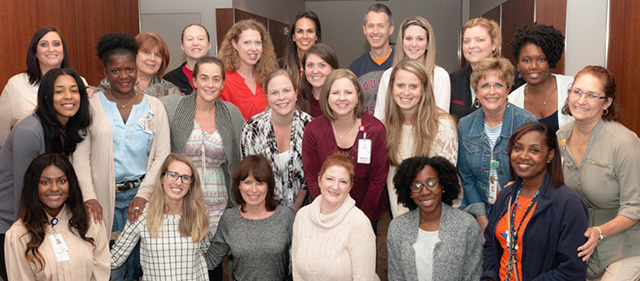 The Texas Children’s Cancer and Hematology Centers recently held its 2017 Annual Advanced Practice Provider (APP) Education and Team Building Symposium.
 Texas Children’s Pediatric and Adolescent Gynecology Division was recently awarded an NIH Small Business Innovation Research grant via Biotex Inc. to develop vaginal stents that will help vaginal reconstructive patients heal.
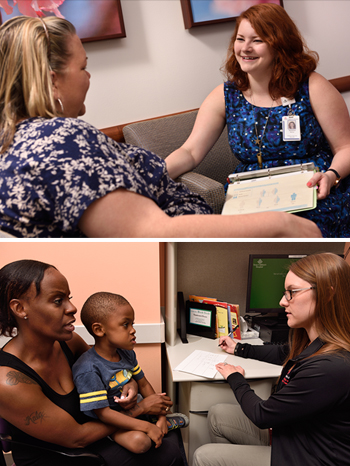 As part of National Genetic Counselor Awareness Day on November 9, Texas Children’s recognizes the crucial role our genetic counselors play every day for our patients and their families. In fact, genetic counselor was named one of the “25 Amazing Healthcare Support Jobs” and one of the “100 Best Jobs” in 2017 by U.S. News and World Report.
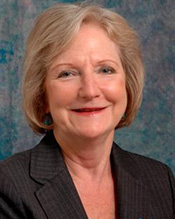 The Inaugural Dr. Barbara J. Anderson lecture was held on October, 27. This lectureship was created to honor Barbara J. Anderson, Ph.D., associate head of the Section of Psychology and professor of Pediatrics, who recently retired after 15 years on faculty at Baylor College of Medicine and Texas Children’s Hospital. Dr. Anderson’s contributions to the diabetes community and behavioral science over her 40-year career have been invaluable to advancing research and practice in pediatric diabetes and supporting the careers of many scientists and providers in academic medicine. Prior to her time in Houston, she was on faculty at Washington University School of Medicine, the University of Michigan, and Harvard Medical School/Joslin Diabetes Center. Dr. Anderson has had continuous grant support from the National Institutes of Health, the Leona M. and Harry B. Helmsley Charitable Trust, JDRF, and other funders since 1979.
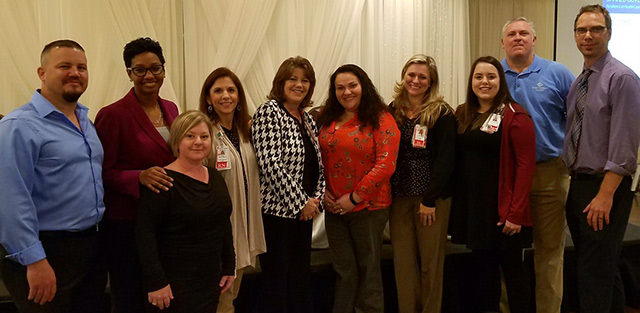 Chief Nursing Officer Mary Jo Andre participated on the CNO panel at the third Annual Houston Regional Shared Governance Conference which was held on November 7 at the Palazzio Reception Venue.
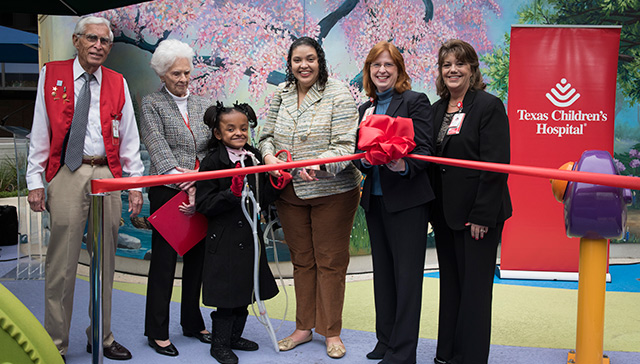 On November 9, Texas Children’s dedicated the Merle C. Donigan Play Garden during a special ribbon cutting ceremony attended by more than 50 people including Texas Children’s leadership and staff, members of the Building and Grounds Committee of the Board of Trustees, The Auxiliary to Texas Children’s Hospital, and our external construction and design partners who helped make this vision a reality for our patients and their families.