March 13, 2018

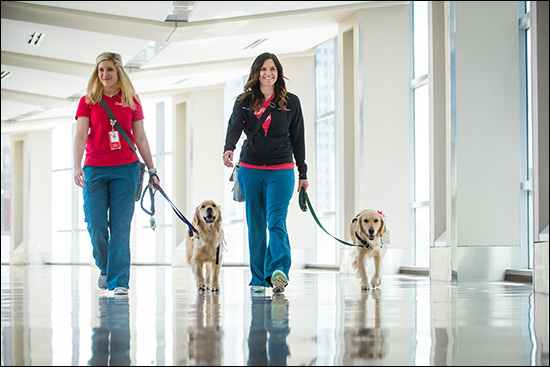
If you have noticed two furry four-legged employees around the hospital, your eyes are not playing tricks on you. At the end of February following Child Life’s explosive gender reveal, Texas Children’s new therapy dog began walking the halls and immediately putting smiles on employees, patients and visitors faces.

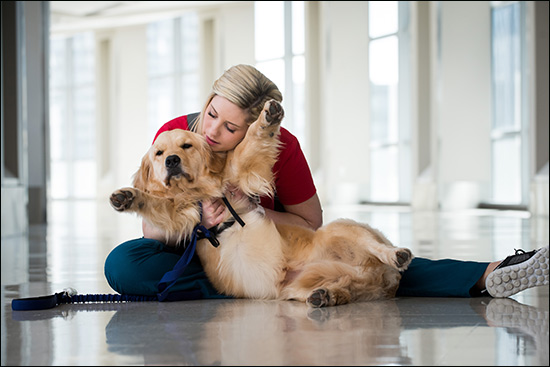
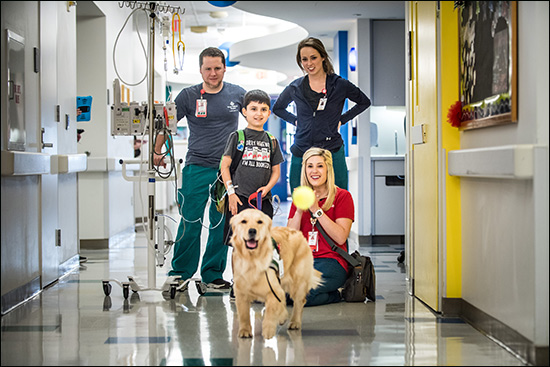
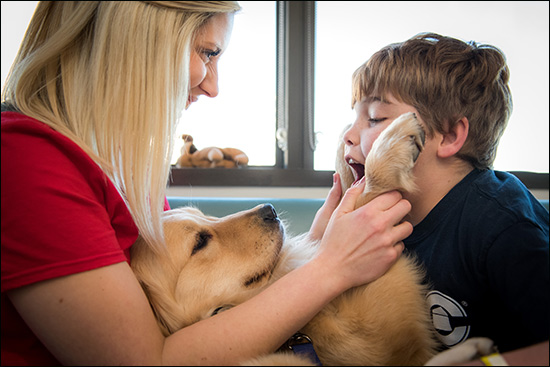
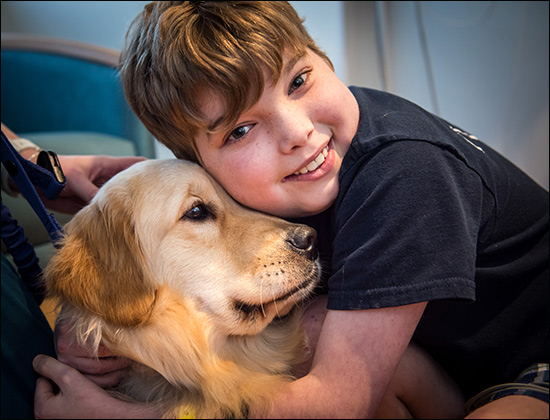
Bailey is an 18-month-old golden retriever that wears a green vest with her Texas Children’s badge, and a red bow attached. She is part of Texas Children’s Pawsitive Play Program that uses animal-assisted therapy to enhance the emotional well-being of pediatric patients by reducing their anxiety, perception of pain and fear of hospitalization.

Bailey offers distraction and motivation to patients undergoing certain medical procedures, but it’s not just her that aids in this process. Her handler, Adair Galanski, is a Texas Children’s child life specialist who collaborates with medical teams and physical and occupational therapists to visit with five to ten patients each day who are having a particularly difficult time during their hospitalization.

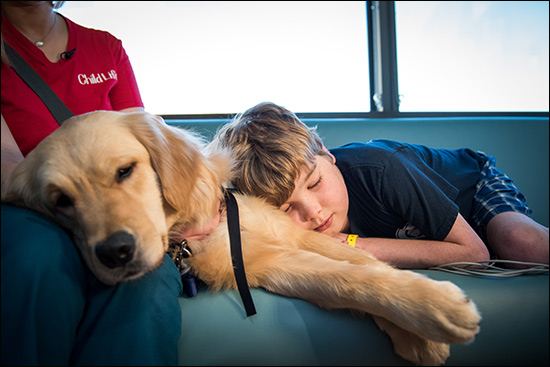
“We go and see families for a lot of different things, whether it’s medical procedures, emotional support, or maybe something even more complicated than that,” said Galanski. “The minute Bailey comes through the door, even if a family was really frustrated or if a child was crying, or if they had just received devastating news, everyone gets excited. They say, ‘Oh my gosh, is that a dog? Is it here to see me? That’s amazing!’”

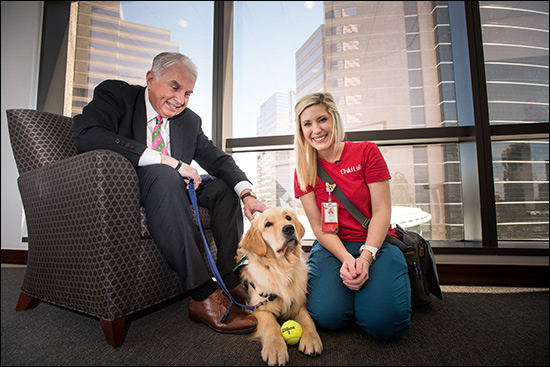
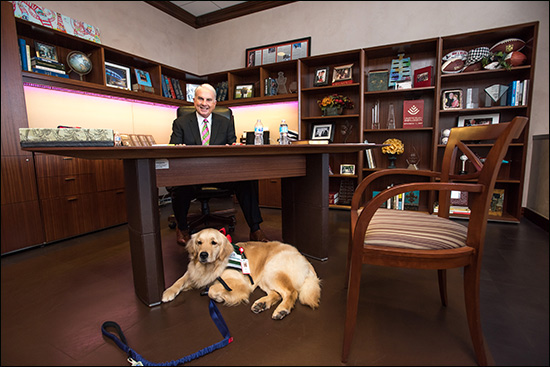
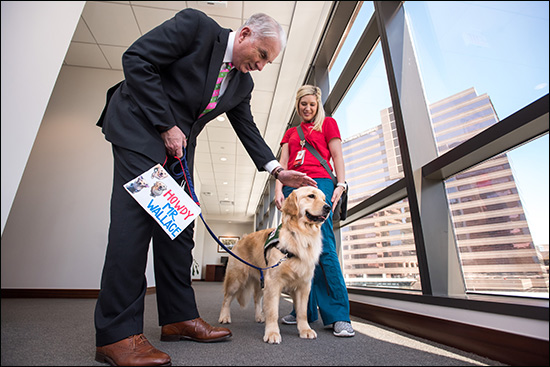
Recently, Bailey took a small tour around the hospital to become more acclimated with patients and her co-workers. Her first stop was to meet Texas Children’s President and CEO, Mark Wallace. He and his wife, Shannon, recently donated Bailey as a gift to Texas Children’s Pawsitive Play Program in memory of their beloved dog, Cadence.

Their generous pledge and initial $80,000 contribution to the program will enable Texas Children’s to hire more animal-assisted therapy coordinator and therapy dog teams specifically trained to provide therapeutic interventions to patients and families in Legacy Tower.

As soon as Wallace laid eyes on Bailey he knew she was a perfect fit for Texas Children’s.

“Bailey, you come from a good family and now you’ve got a great family here at Texas Children’s,” Wallace said. “We’re going to take good care of you, and you’re going to help our patients feel better and relax, and feel loved and nurtured.”

Just like any other employee, Wallace greeted her with the warmest welcome, encouragement, and motivation to succeed in helping patients and their families.

“You’re going to help take their minds off of not feeling real good, and you’re going to be there, even to help their mommy and their daddy, maybe their grandma and grandpa, maybe their brothers or sisters,” Wallace said. “You’re an important part of this one amazing team that we have at Texas Children’s.”

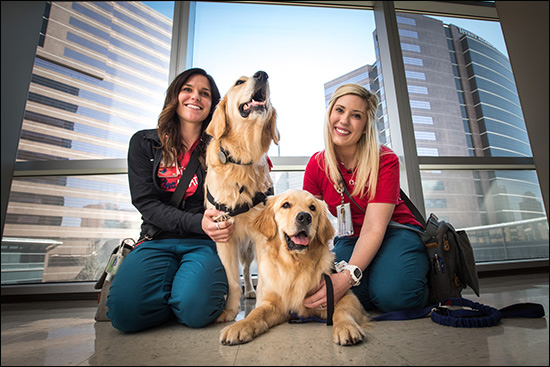
After breaking the ice with the boss, Bailey’s next stop was meeting up with, what employees refer to as, her big sister. According to Galanski, normally at the beginning of most of their days, she and Bailey will visit with child life specialist and animal-assisted therapy coordinator, Sarah Herbek, and Elsa, Texas Children’s first therapy dog. This quality time allows the hospital’s canine kids to spend time with each other as well as bond more with their handlers.

“She has a great relationship with Elsa and I love that I get to work with her all the time. It’s like therapy for me too,” Galanski said. “You just can’t ever really have a bad day when you’re with her.”

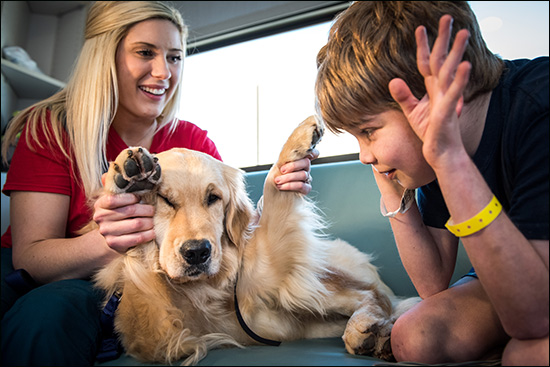
Following the brief playdate, Bailey headed to spend some time with Texas Children’s patients. A normal visit with Bailey usually involves the patients taking her for a walk, playing with toys, or feeding her treats whenever she is not soothing their pain or fear. Engaging in any activity with Bailey can change a patient’s entire day.

“As much as I love my job, and think I’m good at what I do, I can never have that same connection with families that Bailey brings,” Galanski said. “Bailey is that peacemaker and that bridge for us to be able to really connect with kids who might not want to connect through words, but can connect through her.”

Although Bailey has already started seeing heart and critical care patients, she was hired on to work specifically in the hospital’s newest expansion, Legacy Tower. The doors of the first phase of Legacy Tower will open to patients, families, and employees like Bailey on Tuesday, May 22.

She will be groomed weekly and her paws will be wiped down daily. Patients who are allergic to dogs will not be consulted and the dog will not go into patient rooms without first receiving verbal permission from a guardian and the medical team.

“I love what I do, and I love her, so I want to tell everyone about her. I want everyone to experience Bailey,” Galanski said. “I want everyone to have a little piece of unconditional love that she gets to bring to everybody.”

If you see Bailey around the hospital, feel free to greet her and make her feel welcome. She loves belly rubs and snuggling with the patients, but when you come in contact with her in the halls and call her name, she’ll wag her tail enthusiastically to show her appreciation and excitement to be part of the Texas Children’s family.

Following a recent federal court ruling, Texas Children’s Hospital expects to receive tens of millions of dollars in previously denied government reimbursements for care provided to poor and uninsured families.

In a major victory for pediatric hospitals in Texas and other states, U.S. District Judge Emmet Sullivan on Friday vacated a recent Centers for Medicare and Medicaid Services (CMS) rule that allowed the agency to include private insurance payments in the calculation that determines the amount hospitals are eligible to receive in supplemental Medicaid funding, even when Medicaid doesn’t pay for the patient’s care. Children’s hospitals experienced the biggest impact from the CMS rule because they have the highest percentage of patients who have private insurance and are also eligible for Medicaid.

Texas Children’s Hospital, the Children’s Hospital Association of Texas, and other children’s hospitals in Washington, Minnesota and Virginia filed the lawsuit in response to CMS’ enforcement of a Medicaid rule that resulted in certain children’s hospitals being denied Disproportionate Share Hospital (DSH) funding. DSH funding covers the gap between a hospital’s actual cost to care for Medicaid patients and the amount paid to the hospital under the Medicaid program.

“This is a huge victory for Texas Children’s, with a potential positive impact to our bottom line in 2018 of $40 million,” said Texas Children’s President and CEO Mark Wallace. Texas Children’s is estimated to have been denied about $15 million to $20 million annually in recent years.

Wallace added that hospital leaders will be discussing next steps this week, such as when we expect Judge Sullivan to issue his formal opinion, the impact of CMS’ likely appeal of the ruling, and our efforts to coordinate with the Texas Health and Human Services Commission to implement the judge’s ruling.

“Regardless of the next steps in court, this is a huge win for Texas Children’s Hospital and children’s hospitals as a whole,” said Texas Children’s Executive Vice President and Chief Financial Officer Weldon Gage.

It is prom season and The Child Life Department wants all Texas Children’s teens to be able to experience a night of glitz, glam, and guaranteed fun. They are hosting the first hospital-wide prom on Friday, May 11 from 7 to 10 p.m., and they need your help to pull this event off!

In order to make sure all patients have prom attire, Child Life will be collecting formal wear from Texas Children’s employees from now until Monday, May 7.

Men’s and women’s formal wear in all sizes will be accepted and must be dry cleaned before being donated. Please be sure to submit the dry cleaning receipt along with the items.

Prom is open to inpatient and outpatient kids ages 13 and up, and includes a plus one for anyone over 13 as well.

The 16th floor of West Tower will be available the day of prom for patients to get dressed to impress. Professional stylists will be available to perfect their hair and makeup, and accessories will also be provided to add the finishing touches to the patient’s ensemble.

Child Life is also working with The Glass Slipper Foundation to provide formal wear for all inpatient and outpatient kids.

The Glass Slipper Foundation is a nonprofit organization that was inspired by an adolescent who resided in a Residential Treatment Facility. The foundation is an entity of, Vessels Interceding Sowing Into Our Nation (VISION Inc.), which is an organization that supports the physical, emotional, and social needs of at-risk adolescent females.

Inpatient and outpatient children will be able to attend a shopping day to pick out their prom attire.

The outpatient shopping day will be held Saturday, April 7 from 10 a.m. to 2 p.m. at the Fifth Ward Multi Service Center, located at 4014 Market Street, Houston, Texas 77020.

The inpatient shopping day will be held here at Texas Children’s Hospital on the 16th floor of West Tower Thursday, May 10. An exact time of day will be announced soon.

Prom will be held in the third floor conference rooms in Mark A. Wallace Tower. This year’s prom theme is Hollywood Nights. There will be dancing, food, pictures, and more!

Donations will be accepted in the Texas Children’s Hospital Volunteer Services office.

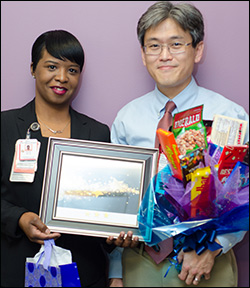
In January, The Woodland’s Recognition and Reward Committee presented the inaugural Texas Children’s Hospital The Woodlands’ Shining Star Award to Dr. Andrew Chu with Gastroenterology, Hepatology and Nutrition, and Aldrian Barrett, a unit clerical assistant with the hospital’s Emergency Center.
The award winners were described as being well deserving, demonstrating flexibility and attention to the care of our patients and staff, and exhibiting the hospital’s core values of leading tirelessly, embracing freedom, living compassionately, and amplifying unity.

Both winners were surrounded by a team of co-workers, leaders, and Recognition and Reward Committee members when they were presented with the award. Chu and Barrett received a plaque, personalized star badge reel, coffee shop treat, free lunch coupon, and a designated parking spot for the quarter. They also will have their pictures displayed on a wall in both the in-patient and out-patient buildings.

After months of planning, the committee members were proud to present the award that is similar to the “Best of the West,” an employee-recognition award given to employees at Texas Children’s Hospital West Campus. The committee decided on the name Woodlands’ Shining Star by hosting a campus wide contest. The committee received 87 submissions from staff from all areas. The winner of the contest was Ashanti Jackson, a respiratory therapist in the Pulmonary Diagnostic Lab.

The committee received a dozen nominations for the new award, which honors those who go above and beyond to provide exceptional care to our patients, families and staff in The Woodlands. The committee selected the top five based on the criteria and sent those names to executive leadership for final selection. The next award will be presented in April with the goal to nominate both a physician and staff member of every quarter.

If you would like to nominate someone, please click here.

March 6, 2018

As one of the top pediatric hospitals in the nation, many patients come to Texas Children’s to access the high quality care and services that our hospital provides to children and women. But often times, trying to schedule an appointment to get into our system can be frustrating for patients and their families.

That’s why Texas Children’s is hitting this challenge head on. Several months ago, the Texas Children’s Access and Patient Scheduling Task Force conducted a baseline assessment of the hospital’s current landscape which revealed several opportunities for the organization to improve access. The Task Force proposed more than 30 recommendations and prioritized which ones would be implemented first.

The first wave of specialties went live on March 1, aligning provider schedules to a standard four-hour clinic session definition to ensure patients receive the service and availability they need. Six specialties impacted during the first wave of operational improvements include: Allergy & Immunology, Rheumatology, Nephrology, Neurology, Orthopedics and Baylor College of Medicine’s Obstetrics/Gynecology. There will be three more waves launching from April to June to standardize clinic sessions for all of the specialties at the hospital.

“After we evaluated appointment templates for over 200 providers, we found additional slots where physicians could see patients for a duration of four hours,” said Texas Children’s Assistant Vice President Carrie Rys. “By making that recommended change, we were able to add about over 10,000 new patient appointments annually into the system.”

Last year, 20 percent of appointment slots were unfilled due to restrictive scheduling practices and last minute cancellations. The committee also identified more than 60 different referral processes throughout the system, which made it extremely cumbersome for patients and families to access our care.

With tremendous support from Texas Children’s leadership, the committee identified additional system wide recommendations that will be implemented in waves over the next several months including:

  • 72-hour flip: If an appointment slot for a specific patient type is not filled 72 hours out, the slot will open automatically to a broader group of patients to maintain flexibility and open schedules
  • Fast Pass: This new MyChart feature creates an electronic waitlist and automatically offers up cancelled appointments to patients desiring a sooner appointment.
  • Online scheduling: Since most families overwhelmingly prefer online scheduling, referral and scheduling processes will be streamlined and standardized across the system to enable online scheduling for new and existing patients across all specialties beginning later this year.
  • Future idea development: The committee is vetting additional recommendations including how to optimize space utilization, pursue a formalized escalation process and leverage telemedicine.

“Our objective is to lay a solid foundation and layer on additional patient access solutions once we have a sturdy infrastructure to build from,” said Texas Children’s Surgeon-in-Chief Dr. Larry Hollier and co-chair of the Access Executive Steering Committee. “Because we really care about our families, we have to pay attention to their needs and do more to help them out. We have to keep the doors open to our patients.”

It’s not every day that physicians at Texas Children’s get the opportunity to treat a child and their parent, but that’s exactly what happened when Caitlin King became a patient of Texas Children’s Pectus Program.

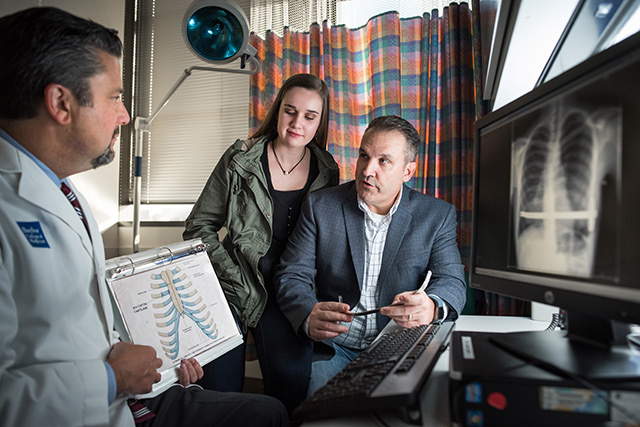
The program is part of Texas Children’s Division of Pediatric Surgery and is run by a specialized team that assesses and treats an assortment of chest wall abnormalities such as pectus excavatum, where the chest has a sunken or caved-in appearance, and pectus carinatum, where the chest bows outward.

Caitlin King, 15, came to Texas Children’s in 2017 seeking help for pectus excavatum, a condition her father, Niky King, had suffered from since he was an early teen. Niky said he got his chest looked at when he was about 12 or 13, but doctors told him there was nothing wrong and that the issue was just cosmetic. When Caitlin was born, Niky said he hoped she would not inherit the same condition, but that if she did, doctors would be able and willing to do something about it.

“My chest affected my life dramatically,” said Niky, who used to have heart palpitations and difficulty taking deep breaths. “I was very self-conscience of it, and am convinced it hindered my ability to do physical activity for a sustained period of time.”

After assessing Catlin, Dr. Mark Mazziotti, a pediatric surgeon with the Pectus Program, assured the teenager and her father that he could correct her pectus excavatum via a minimally invasive surgery called the Nuss procedure. During this procedure, a curved stainless steel bar is inserted in the chest through small incisions on either side, and is guided between the sternum and the heart under direct visualization with a camera through a small incision in the right chest. The bar is left in place for about three years. Recurrence of the pectus excavatum after the bar is removed is very rare.

“This is a very rewarding procedure for the patient,” said Mazziotti, who surgically corrects about 50 pectus excavatum surgeries a year. “We have excellent outcomes, and Caitlin’s case has been no different.”

Since her surgery, Caitlin said “she’s been able to wear whatever she wants” because her chest already looks so much better. She also said she can exercise and maintain a normal, active lifestyle without any hesitation.

“I can’t tell the bar is there at all,” she said. “I’m very happy I decided to move forward with the procedure.”

Caitlin’s procedure went so well, Niky underwent the same procedure three months later. Mazziotti performed the procedure, and because of the severity of Niky’s pectus excavatum, inserted two bars instead of one. The results, Niky said, have been fantastic, just like his daughter’s.

Mazziotti attributes the great outcomes the Caitlin and Niky, and other pectus patients have had to the skill of the surgeons in the program and the fact that they have the ability to offer the most cutting edge technology and procedures. He also said the program’s partnership with anesthesiology and pain management is key as patients typically have to stay in the hospital for several days to recover.

“Texas Children’s Pectus Program is highly specialized and prides itself on offering individualized care,” he said. “We are privileged to be able to treat patients across Texas, the region and the country.”

For more information and to watch a video about our Pectus Program, click here.

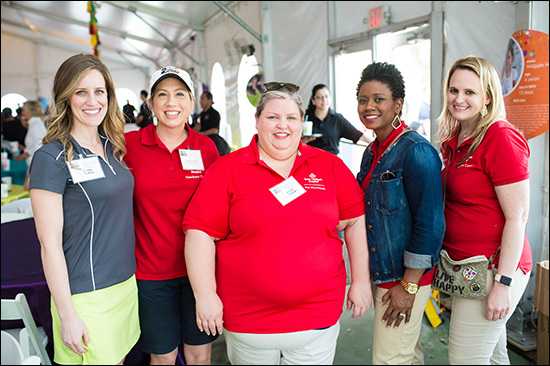
On March 1, close to 340 golfers played colorfully and raised more than $500,000 at the 20th annual Bad Pants Open golf tournament at the Clubs of Kingwood, benefitting Texas Children’s Newborn Center.

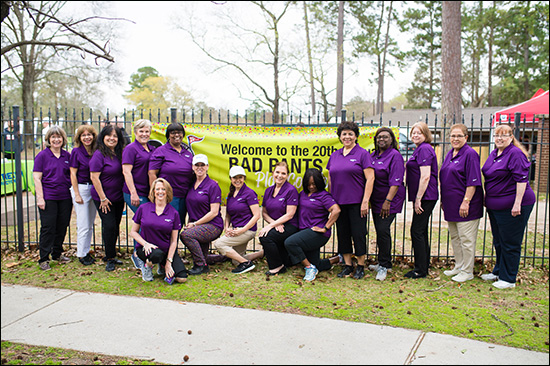
Each year, organizers of the golf tournament set out to raise hundreds of thousands to support the hospital’s level IV neonatal intensive care unit (NICU) that cares for the smallest and sickest babies. To celebrate Bad Pants’ 20th anniversary, the tournament also honored Texas Children’s NICU patient families from the last 20 years, many of whom attended the annual event.

“It was uplifting to see these children, now much older doing so well after going through a tough NICU course, and it was moving to see the pride and joy on the faces of the families of these children,” said Texas Children’s Chief of Neonatology Dr. Gautham Suresh. “It reminded me of what a privilege it is to serve as a physician and have the opportunity to take care of NICU patients in such a wonderful place as Texas Children’s Hospital.”

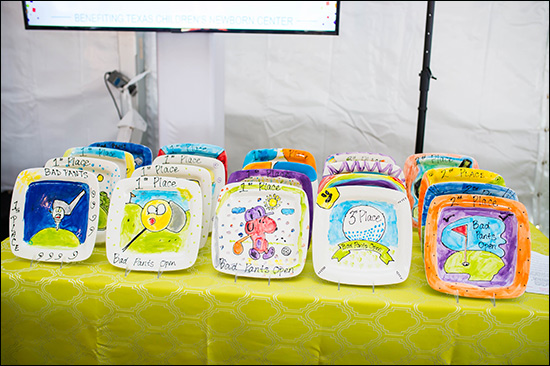
The event featured a post-play awards ceremony and dinner where players were awarded plates painted by Texas Children’s patients for both the best golf scores and baddest pants. Allyson Johnson, a NICU nurse at Texas Children’s Hospital The Woodlands, was presented with the Nurse of the Year award, a special recognition awarded at each tournament. While it is an honor to receive this award, she says seeing former patients thriving and happy is a reflection of the great work we do.

“It made me feel proud to know and hear from several families there how much we make a difference in their time spent in the NICU,” Johnson said. “It really warms my heart to see good outcomes from the attentive care we proudly provide in the Newborn Center at Texas Children’s.”

Proceeds from The Bad Pants Open support continued innovation and excellence in the research, treatment and care of critically ill and premature infants at Texas Children’s Newborn Center. Over the past 20 years, The Bad Pants Open has provided nearly $6.5 million in support of our Newborn Center – the nation’s largest NICU and one of only two Level IV NICUs in the greater Houston area. Their support has helped the Newborn Center provide programs and services to our NICU families including Family Support Groups, NICU Reunion, Parking for Patients Program as well as the work being carried out through Neonatal Family Advisory Committee.

“The Newborn Center is very fortunate to have the Bad Pants Open Committee raising money for the patients we care for and their families, as well as for the nurses and for medical research,” Suresh said. “I think of the committee as the “Bad Pants-Good Deeds” Committee and I am immensely grateful for their volunteer efforts.”

The next Bad Pants Open golf tournament is scheduled for October 11. More information is available at www.badpantsopen.com