August 4, 2015

Twenty years ago on August 1, Texas Children’s launched what is now the largest pediatric network in the nation with more than 200 board-certified pediatricians and 50 practices throughout the greater Houston area. Each year, the group sees 400,000 patients and completes more than a million visits.

“Texas Children’s Pediatrics has been one of the best things for Texas Children’s Hospital,” CEO and President Mark A. Wallace said. “More importantly, it’s been one of the best things for the community.”

The physician network was formed in 1995 with the purchase of a practice in west Houston owned and operated by four brothers – Drs. Ben, Morris, Harry and Paul Rosenthal. Because of its success, more and more pediatricians joined the group, making it what it is today.

Harry Rosenthal, who still practices at Texas Children’s Pediatrics Ashford with his brother, Ben Rosenthal, and his brother’s daughter, Dr. Rachel Rosenthal Bray, said his family is happy to be part of such a successful organization.

“It was one of the best decisions we’ve ever made,” Rosenthal said. “Texas Children’s Pediatrics has been wonderful for our practice.”

Dr. Kamini Muzumdar of Texas Children’s Pediatrics North Cypress agreed and said joining the group 15 years ago “made sense in every possible way” and has allowed her and her more than 20 other colleagues at the practice to accomplish things they never would have been able to do had they been on their own.

“Being part of Texas Children’s has given us the opportunity to be a part of an organization that has a reputation for providing exceptional care,” Muzumdar said.

In addition to providing its physicians with administrative, financial and management expertise, Texas Children’s Pediatrics offers a link to the entire Texas Children’s system, which includes more than 2,000 medical staff who provide care in more than 40 pediatric subspecialties.

“Texas Children’s Pediatrics is part of the Texas Children’s family,” said Kay Tittle, president of Texas Children’s Pediatrics. “The organizations support each other and allow everyone to focus on our top priority, which is taking care of patients and their families.”

The close working relationship also helps us grow to meet the ever-changing needs of those we serve.

“We’ve been doing this for 20 years and have been doing a phenomenal job,” Texas Children’s Pediatrics Vice President Lou Fragoso said. “But, the needs of families are changing, the way they need their care delivered is changing and we need to change with them.”

That’s why just this past year, Texas Children’s opened its first two urgent care centers and started a pilot program called Texas Children’s Pediatrics Walk-In-Now (W.I.N.) at Texas Children’s Pediatrics Cy-Fair. Both programs offer additional access to quality pediatric care any time of the day or night. Additional urgent care and W.I.N. locations will be opening soon.

A few months ago, Texas Children’s Pediatrics launched the ParentAdvice Center, a new mobile health management app available for free on iTunes and Google Play that will help families make smart decisions about what level of care is needed for their child and how to provide symptom relief for minor illnesses or injuries at home.

And, for years Texas Children’s Pediatrics Community Cares Program has provided trusted, high-quality pediatric medical services for children who otherwise would seek care from emergency rooms or possibly go without care or treatment due to low family incomes and/or lack of health insurance.

Regardless of the family’s financial situation, the Community Cares Program provides health care to children from birth to age 18 and offers the opportunity to develop a trusting, long-term relationship with a board certified pediatrician. The program also collaborates with community partners to assist families with other needed health care services.

Texas Children’s Pediatrics Chief Medical Officer Dr. Stanley Spinner said as long as the organization continues to come together as a unified group of physicians whose primary focus is the patient then Texas Children’s Pediatrics will continue to be successful.

“It’s exceeded my expectations,” said Spinner, who was one of the first physicians to join Texas Children’s Pediatrics. “And, I’m sure it will continue.”

8515chagas640They’re often referred to as “kissing bugs,” but a bite from a Triatomine can pose a serious health threat. These small insects carry the parasite that causes Chagas disease. Chagas is a parasitic infection caused by a single cell parasite, known as a trypanosome that has the ability to infect the heart often causing severe and debilitating heart disease. Recently, the Sabin Vaccine Institute and Texas Children’s Hospital Center for Vaccine Development, received a grant of $1.8 million from the Robert J. Kleberg, Jr. and Helen C. Kleberg Foundation. The grant will fund accelerated development of the first therapeutic vaccine for Chagas disease in humans, in a development program under the direction of Drs. Peter Hotez, Texas Children’s Hospital endowed chair in Tropical Pediatrics, and Maria Elena Bottazzi, deputy director of Sabin product development partnership.

“Chagas disease is considered one of the most important neglected tropical diseases affecting Central and South America, but the kissing bugs are also here in Texas, but so far there has been minimal activity toward active surveillance of the disease,” Hotez said. “This grant will help us create a vaccine that is used as an innovative immunotherapy, administered to those infected with trypanosomes to prevent the development of heart disease.”

Bottazzi said this funding is critical to making a real impact toward understanding and treating this neglected tropical disease.

“This is instrumental funding that will not only accelerate the product development but also close the gaps in evaluating parallel vaccine targets which will allow a higher probability of success,” Bottazzi said. “It will allow to transition rapidly into clinical safety evaluations which will bring the vaccine program closer to making a difference in the field and the afflicted populations.”

It’s difficult to determine when an individual has been infected with the parasite because most patients could go decades without symptoms. About a third to a fourth of those infected will eventually progress to severe heart disease, at times even resulting in sudden death. Dr. Kristy Murray, director of the Laboratory of Viral and Zoonotic Diseases, said it’s hard to pinpoint individuals who are infected because there are no real initial symptoms. Most of the patients being monitored at this point are those who have donated blood to a blood bank and tested positive.

“With the current studies being done, we’ll better understand the real at-risk population and formulate screening around that,” Murray said. Chagas disease is one of the most common diseases of people living in poverty in Latin America. One of the real surprises for us is finding evidence of transmission of the disease here in Texas,” said Hotez.

Dr. Murray said in Texas, the affected population also includes people with unique occupational or recreational exposures, for example hunters and campers. She said this isn’t to sound the alarm, but to be aware to take precautions such as staying inside in shelters or a tent to avoid the creatures that feed at night.

Ultimately, the Chagas disease vaccine could benefit up to 10 million people living with Chagas disease in the Western Hemisphere. Hotez hopes with the help of the Kleberg grant, the vaccine will be ready for clinical testing within the next few years.

8515Drzoghbi175Dr. Huda Zoghbi, a Howard Hughes Medical Institute investigator and the director of the Jan and Dan Duncan Neurological Research Institute (NRI) at Texas Children’s, has been awarded a Javits Neuroscience Investigator Award from the National Institute of Neurological Disorders and Stroke for her “distinguished record of substantial contributions in the field of neurological science.”

Zoghbi received this award for her groundbreaking research on spinocerebellar ataxia, a neurodegenerative disorder that affects gait, speech and other activities controlled by voluntary muscles as a result of a CAG repeat in Ataxin-1 protein. Zoghbi identified the gene responsible for this disorder almost 20 years ago. Spinocerebellar ataxia continues to be a primary focus of her research program at the NRI.

This seven-year research grant will allow Zoghbi’s team to further explore the molecular mechanisms underlying spinocerebellar ataxia-1 by which the mutant protein Ataxin-1 cannot be folded properly in the cell, interfering with action of neurons. The protein contains many repeats of the CAG or glutamine amino acid, making it unwieldy for activity in the cell.

Zoghbi’s research project aims to lower the level of toxic protein in the cell, screen human cells in culture and the fruit fly for additional drug targets that can help lower the levels of the protein, and explore modifications and interactions of the Ataxin-1 protein to understand features that would be relevant outside the cerebellum of the brain.

The Javits Neuroscience Investigator Award is named in honor of the late Senator Jacob Javits of New York, a strong advocate for neurological research who died of amyotrophic lateral sclerosis.

July 28, 2015

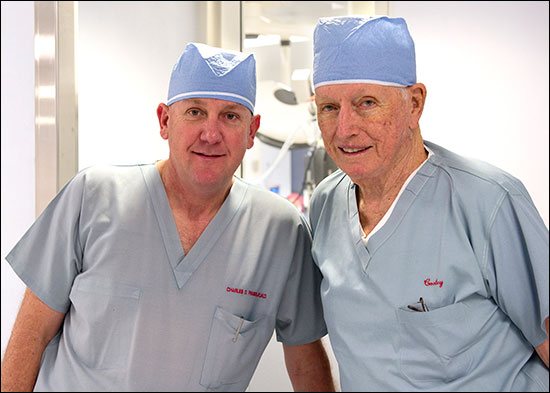
72915fraser640Thanks to the vision of legendary heart surgeon Dr. Denton H. Cooley and the leadership of Texas Children’s Hospital Surgeon-in-Chief Dr. Charles D. Fraser Jr., the Texas Children’s Hospital Heart Center is one of the most active pediatric heart programs in the United States, setting a record with 32 heart transplants in 2014 and consistently treating the most complex heart issues every day.

Since its inception 60 years ago, surgeons with the program have performed more than 27,000 cardiac operations, many of which have pushed the boundaries of a field pioneered by Cooley at Texas Children’s Hospital. The center has continued to push such boundaries under the leadership of Fraser, who joined Texas Children’s in 1995 and has helped focused the center on increasingly complex repair work, particularly in newborns and premature infants.

“I think Cooley would say that some of the contributions we’ve made in the past 20 years he didn’t dream could possibly be happening,” Fraser said. “We will continue to reach for a high bar and not coast on what Cooley and others got started here.”

The Heart Center began shortly after Texas Children’s opened its doors in 1954, a time when the idea of specializing in cardiology or heart surgery was a new concept on adults, much less children and infants. But, Cooley, a masterful surgeon ready to implement the advancements he had seen in medical school, was determined to make Texas Children’s the birthplace of pediatric cardiac care.

One of the program’s first major advances came when Cooley and his colleagues were able to open up the heart and operate inside it. The development of the heart-lung machine, which diverted blood from the heart and lungs, allowed this to happen and drove other doctors to Texas Children’s to observe what was unfolding.

Another milestone that garnered the Heart Center a lot of attention came in 1984 when Cooley performed the first pediatric heart transplant on 6-month-old Sara Remmington. The procedure was unlike anything that had been done, even in adults.

“That really was an exciting occurrence that attracted a lot of attention to the Texas Children’s surgical program,” Cooley said.

Fraser, who recently celebrated his 20th anniversary with Texas Children’s Hospital, is no stranger to monumental surgeries. During his career with the organization, he has performed the smallest arterial switch operation ever reported on a baby girl weighing less than two pounds. He also led a surgery on then 5-week-old Audrina Cardenas, who was born with her heart outside her chest. Fraser and a group of multidisciplinary surgeons saved Audrina’s life during a miraculous six hour open-heart surgery where they reconstructed her chest cavity to make space for the one-third of her heart that was outside of her body.

“We have a tremendous breadth of expertise in pediatrics at Texas Children’s,” Fraser said. “The Heart Center couldn’t be successful with a small baby without this whole focused interest on the children.”

Looking forward, Fraser said his team will continue to refine their techniques and focus on smaller and smaller children. Also, he said his team will work toward providing children with heart problems a life similar to that of a person with a normal, healthy heart.

“The pediatric cardiovascular field has had great success in obtaining survival and meaningful life for people with heart problems,” Fraser said. “Giving such patients a completely normal life, however has not yet been attained and is a goal we want to work toward.”

An important part of the Heart Center’s path forward is its continued relationship with the Texas Heart Institute, which Cooley started in 1962. For more than four decades, the two institutions have worked closely as they achieved numerous successes and Fraser said as long as he’s with Texas Children’s that relationship will continue.

“We’re enormously respectful and grateful for that mutually beneficial partnership,” Fraser said. “We can do so much more together moving forward.”

Dr. Parth Mehta’s favorite picture is one with five young children sitting around a small table putting together a puzzle. The kids, most of them bald, are smiling for the camera as their doctor snaps the photo. They’re cancer patients in a Texas Children’s clinic in Botswana and of the five, four have survived. While even one death is devastating, just a few years ago, none of them would have received the appropriate treatment. Most would have died without ever being diagnosed. Eight years ago, Mehta, now the director of Texas Children’s Global Oncology Programs, was the first pediatric oncologist in Botswana. When he arrived at the Princess Marina Hospital, only 22 cases of pediatric cancer had ever been diagnosed there. Today, more than 200 patients are under the care of Texas Children’s physicians in the same facility, and over the last eight years, more than 450 children with blood disorders and cancer have been treated.

“There is a population of 2 million people in Botswana and the challenge was quite overwhelming,” Mehta said, “Children died from diseases with a 95 percent cure rate in America because the drugs were not consistently available and no one really knew how to take care of these patients.”

Mehta started the first organized international effort in sub-Saharan Africa by Texas Children’s Cancer and Hematology Centers, the largest pediatric cancer institute in the U.S. Under the vision of Physician-in-Chief Dr. Mark W. Kline, Texas Children’s and Baylor College of Medicine had already established several centers to care for children with AIDS in Africa. Baylor International Pediatric AIDS Initiative helped secure the Texas Children’s name in these regions and Dr. David Poplack, director of Texas Children’s Cancer & Hematology Centers, was determined to make a long-term effort to help kids with cancer and blood disorders in these countries.

“Our role has been to put ‘medical boots’ on the ground,” said Poplack. “We send physicians and nurses and we use our staff to train our local counterparts in the treatment of these diseases. Our real aim is to provide the intellectual capital to train the appropriate individuals who will carry the work forward.”

That’s the key to the sustainability of these programs. About 80 percent of pediatric cancer cases are in developing countries where the survival rate is less than 40 percent. In countries like the U.S., it’s approximately 80 percent. While Texas Children’s treats patients from all over the U.S. and 26 different countries, for those in Africa, just bringing their child to a clinic in a nearby town is a difficult task. Dr. Gladstone Airewele who grew up in Nigeria knows about these problems. Airewele is the director of the Global Hematology Programs at Texas Children’s Cancer & Hematology Centers. For many of his patients, saving a life is as easy as a pin prick to collect blood for newborn screening to detect sickle cell disease.

“It’s very gratifying to see children come to the clinic, get great care and do much better than they ordinarily would if it weren’t for this program,” Airewele said.

Airewele said the long-term plan is to help with a broad range of hematologic diseases including bleeding disorders, bone marrow failure, and hemoglobin disorders.

“In a few years, I hope to see leaders of pediatric blood disorders all over Africa who are affiliated with Texas Children’s but are local physicians in those countries,” Airewele said. “People who have been trained and are training others, so these diagnoses are no longer a death sentence for these children.”

Texas Children’s international cancer & hematology initiative is concentrated in sub-Saharan Africa with programs in Uganda, Botswana, Malawi, and Angola. Poplack and his team plan to expand the program to other regions. For now, a group of physicians at Texas Children’s are on call as consultants to BIPAI physicians who need answers about hematological and cancer-related diagnoses. Mehta and Airewele make frequent visits to the designated cancer clinics to pursue potential growth in our programs. For Mehta, the five young patients in that old photograph are a reminder of why this work is so pertinent.

“Medicine is not about borders,” Mehta said. “Medicine is not about cities and states. Cancer doesn’t just affect children in some places, and as a doctor who cares, not just treats, but cares for children with cancer, it’s almost axiomatic that one must take care of children everywhere.”

72915Zarutski640As a child, we’ve all asked ourselves this question, “What do I want to be when I grow up?”

For Dr. Paul Zarutskie, the newest team member to join the Family Fertility Center at Texas Children’s Pavilion for Women, his interest in reproductive medicine happened unexpectedly.

As a young teenager, Zarutskie dreamed of becoming a pilot and aeronautics engineer who designed missiles. When he was awarded a high school grant to intern in a lab in Philadelphia, a blunder in the paperwork misassigned him to a reproductive endocrinology lab.

“I wasn’t disappointed at all,” Zarutskie said. “The science was so fascinating to me, that I never looked back. I knew this was my calling.”

Since that inspirational moment in his youth, Zarutskie finds tremendous joy helping infertile couples achieve their dream of starting a family. As a tireless patient advocate, pioneering researcher and renowned contributor to the field of reproductive medicine, Zarutskie has devoted much of his career to advancing cutting-edge fertility treatment technologies to help patients achieve the best pregnancy outcomes.

As a reproductive endocrinologist for more than 30 years, Zarutskie has developed innovative treatment protocols, drugs, devices and laboratory procedures, including intracytoplasmic sperm injection and cryopreservation, a technique that freezes and stores sperm and eggs to protect the ability of couples to conceive in the future. Zarutskie was also one of the first infertility specialists in the United States to introduce preimplantation genetic screening services into clinical practice that examines embryos for inherited genetic abnormalties, which in turn, can help identify the healthiest embryo for transfer.

Zarutskie earned his medical degree from Hahnemann Medical College, Drexel University, followed by an OB/GYN residency at Duke University Medical Center and a fellowship in reproductive endocrinology at Harvard Medical School’s Brigham and Women’s Hospital. He served most recently as chief of the Division of Reproductive Endocrinology and Infertility at the University of Washington in Seattle.

After making the 2,343-mile trek to Houston, Zarutskie is thrilled to join such a reputable team of physicians, nurses and staff who share his same passion at the Family Fertility Center.

“I have known Dr. William Gibbons for a very long time and I am impressed with the incredible work being done here, particularly in the area of genetics and reproduction,” said Zarutskie, who is also an associate professor of obstetrics and gynecology at Baylor College of Medicine. “I am privileged to be part of this amazing team and continue to pursue my passion of helping would-be parents achieve their dream of having a baby.”

Beyond the in-depth knowledge and expertise Zarutskie brings to the Family Fertility Center, his approach to patient care helps couples find comfort knowing there is hope beyond infertility issues.

“Dr. Zarutskie is incredibly compassionate and personable, but very intelligent in explaining why I am having trouble getting pregnant,” said Family Fertility Center patient Katie Walford, who was referred to Zarutskie after her friend had successful IVF treatment with him 20 years ago. “I wanted to go with someone who I could trust.”

Besides seeing his patients, Zarutskie has published numerous scientific research articles in prestigious national and international fertility journals. Currently, he is collaborating with research colleagues to explore how obesity and metabolic issues affect oocyte retrieval, as well as how genetic markers are better defining the window of embryo implantation to improve fertilization outcomes.

“I am delighted to have someone of Dr. Zartuskie’s experience and reputation join our Pavilion for Women family,” said Dr. William Gibbons, director of the Family Fertility Center and chief of reproductive endocrinology services at Texas Children’s. “He has the skill set and the experience to enrich our practice and help us continue to provide exceptional care to our patients.”

Click here to watch a video tour of the Family Fertility Center. If you have questions, want to schedule an appointment with Dr. Zarutskie or Dr. Gibbons, or learn more about the benefits available to full-time Texas Children’s Hospital employees, call Ext. 6-7500.

July 21, 2015

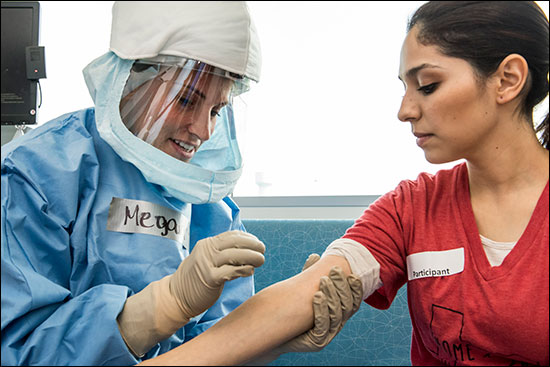
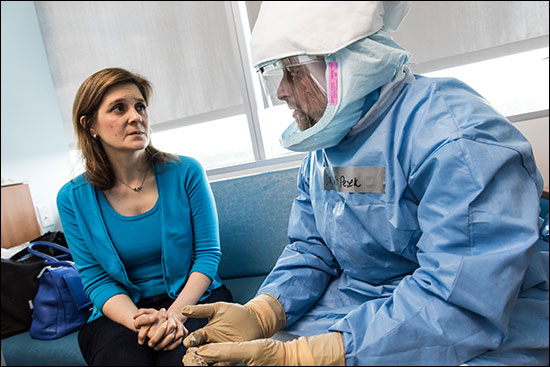
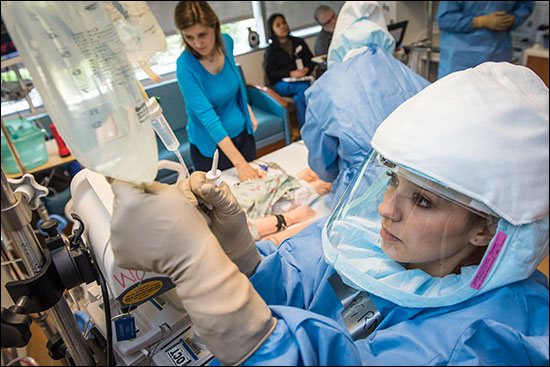
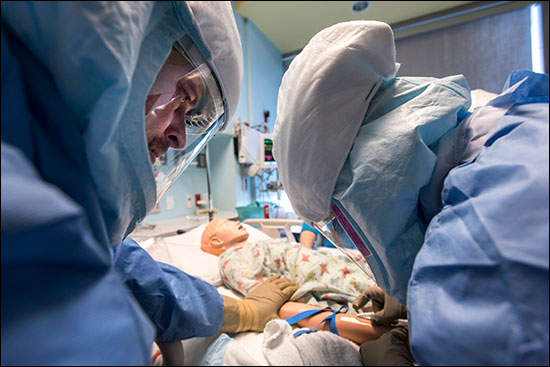
72215WCSIU640Two nurses and a doctor donned personal protective equipment before entering the hospital room to check on the young patient who was exhibiting signs of a highly infectious disease.

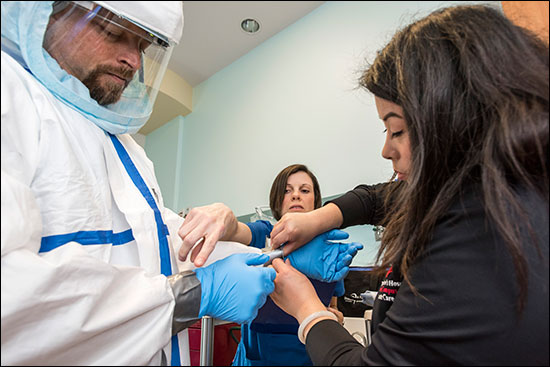
While the physician patiently talked with the child’s worried mother, the nurses checked the patient’s vitals and drew a blood sample to be tested for diseases such as Ebola, Lassa and Marburg fevers.

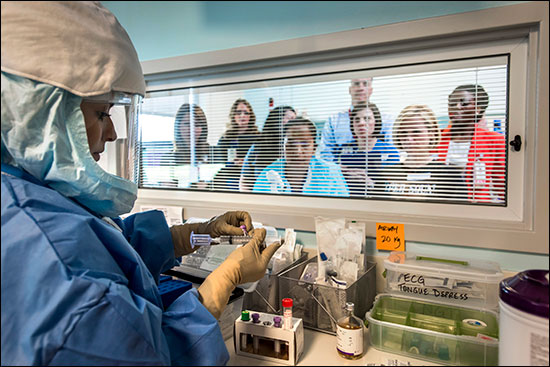
A lab technician dressed in personal protective equipment gathered the blood sample and took it to a nearby lab that would produce results within hours.

Meanwhile, the doctor and nurses worked with a team of medical professionals watching and advising from an adjacent room equipped with an observation window to keep the patient stabilized.

Fortunately, this was not a real scene at Texas Children’s Hospital West Campus but a detailed simulation that recently occurred in the soon-to-be-finished special isolation unit.

In October, the state-of-the-art facility will open its doors and a Special Response Team will stand ready to receive children suspected of having a highly contagious disease.

“Having a special isolation unit at Texas Children’s Hospital West Campus will allow our system to offer our exemplary medical care to a very vulnerable population,” said West Campus President Chanda Cashen Chacón. “We have made tremendous progress since announcing the project in December and are still working full speed ahead.”

Construction on the eight-bed unit is near completion with operational planning, team training and final construction progressing rapidly. The project is like no other at Texas Children’s since the special isolation unit will incorporate all of the latest scientific and technological approaches to biocontainment, including negative air pressure, laminar air flow, high-efficiency particulate air (HEPA) filtration, separate ventilation, anterooms, biosafety cabinets, a specialized laboratory, special security access and autoclaves.

When complete, the unit will be fully equipped to care for any infant or child with a serious communicable disease, with all of the measures available to assure safety of the health care team, other patients and their families. The specialized biosafety level 3 laboratory will enable the care team to monitor the progress of patients and perform rapid detection methods to identify unusual pathogens.

Dr. Gordon Schutze will serve as medical director of the special isolation unit and Drs. Judith Campbell and Amy Arrington will be the unit’s associate medical directors. An elite volunteer-based team of experienced nurses and physicians – all of whom will have successfully completed an intensive advanced certification course and practicum in infection control, hospital epidemiology and management of infectious diseases in the critical care setting – will staff the unit.

Many members of the Special Response Team have been chosen, however recruitment for physicians, nurses, laboratory technicians and environmental services personnel is ongoing. To learn more about joining the Special Response Team, click here.

“The team that staffs this unit is key to making it successful,” Campbell said. “Many of our talented staff have stepped up to the plate to participate in this noble endeavor and we need more to raise their hands to volunteer.”

Another aspect of the unit that has recently ramped up is training and education. Led by Arrington, the training and education program for the special isolation unit is robust and has already included two almost full-day simulations. The first of which was a mid-construction simulation to assess any environmental issues important to the performance, health, comfort and safety of both our patients and our medical staff. The second simulation focused on clinical scenarios involving a patient suspected of having a highly contagious disease.

“The more we train the better off we will be in the event of an infected patient,” Arrington said. “It’s an ongoing process.”