November 24, 2015

112515SIURibbonCutting640

Supporters of Texas Children’s efforts to treat children with highly contagious infectious diseases gathered last week to applaud the opening of the organization’s Special Isolation Unit at Texas Children’s Hospital West Campus.

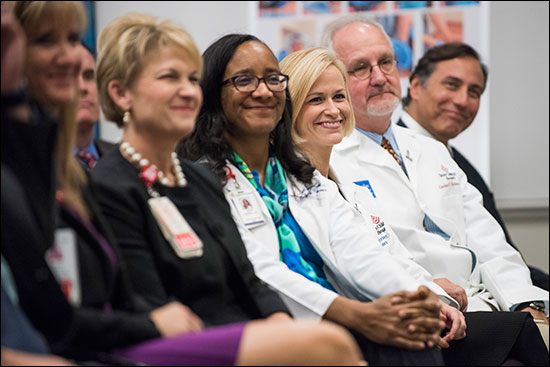
More than 70 people from across the organization and the state attended the unit’s ribbon cutting and open house, during which they got a close-up look at the state-of-the-art facility and heard from people who were critical to the unit’s creation.

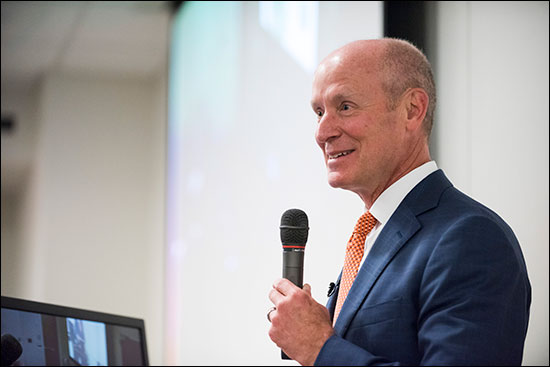
“This is an exciting day, a landmark day, in the history of Texas Children’s,” said Physician-in-Chief Dr. Mark W. Kline. “This unit is a real resource for the city of Houston, the state of Texas, for the region, the nation and the world.”

Texas Children’s began working on the unit almost a year ago, shortly after an unprecedented Ebola outbreak that resulted in the realization that we must be prepared to handle emerging infections as an institution. As a result, the state and the Centers for Disease Control and Prevention designated Texas Children’s Hospital as one of several pediatric Ebola treatment centers countrywide.

Texas Children’s special isolation unit is the only one of its kind in Texas and the southwest region, and is among the few in the United States designated just for children. Located on the fifth floor of West Campus, the eight-bed unit is fully equipped to care for any infant or child with a serious communicable disease and has all of the measures available to assure safety of the health care team, other patients and their families.

Children coming to the special isolation unit will receive top notch care from a team of highly-trained nurses and doctors, led by the unit’s medical director, Dr. Gordon Schutze, associate medical director’s Dr. Judith Campbell and Dr. Amy Arrington, and nursing leader, Sondra Morris.

“I am honored to say that when problems threaten our community and our children, Texas Children’s always leads strong,” said West Campus President Chanda Cashen Chacón. “We do not shy away from those who need us the most.”

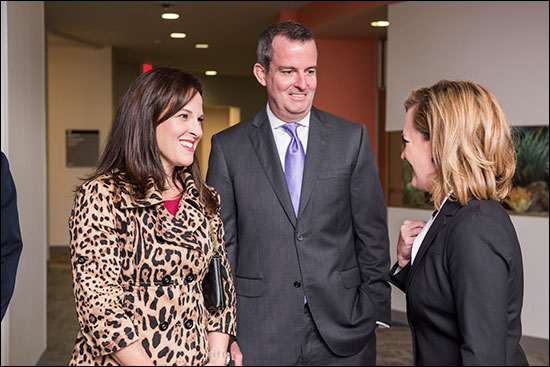
More than 70 people gathered for the official ribbon cutting held last week for special isolation unit at Texas Children’s Hospital West Campus.

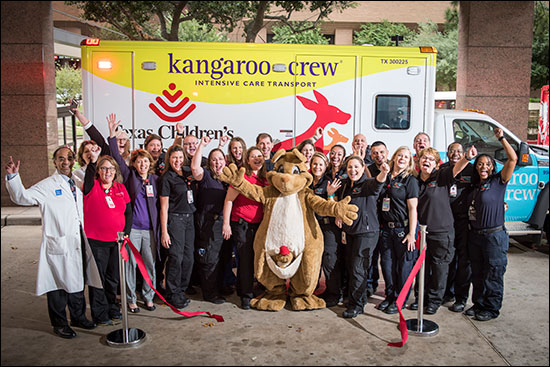
112515KangarooCrewinside640

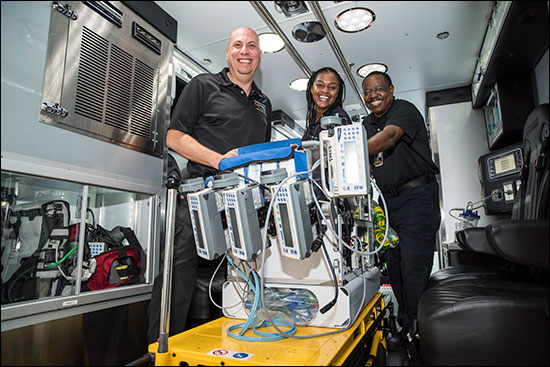
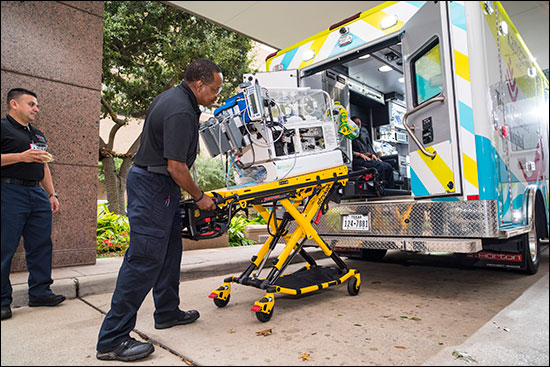
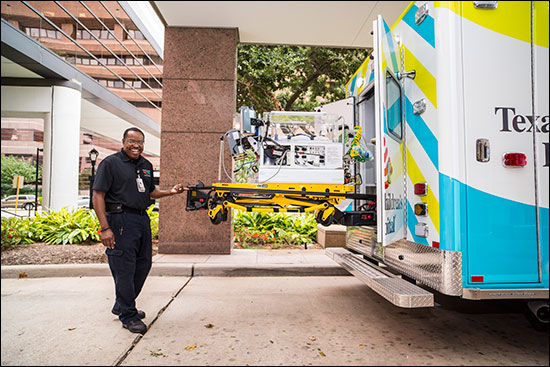
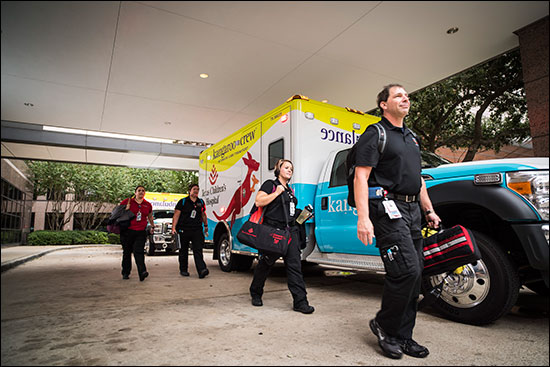
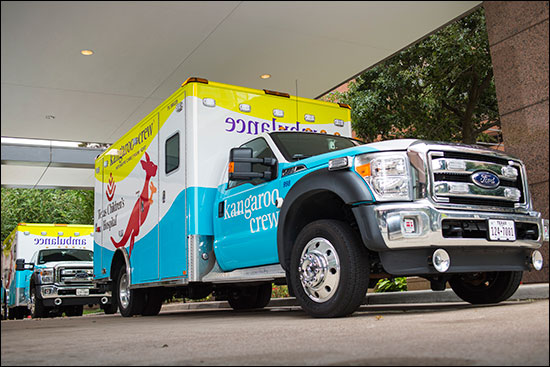
Texas Children’s Kangaroo Crew unveiled its new state-of-the-art ambulances that replace the old fleet while significantly improving patient and crew safety during emergency transport to Texas Children’s Hospital.

“Our 6-year old ambulances were becoming less reliable,” said Texas Children’s Assistant Director of Transport Services Deborah D’Ambrosio. “Our transport team of registered nurses, registered respiratory therapists and emergency medical technicians designed these four ambulances keeping patient and crew safety as their number one priority.”

The new fleet includes a number of safety improvements:

  • Equipped with liquid spring suspension, patients and crew experience a smoother ride. This technology decreases vibrations and bumpiness on the road, which can impact a patient’s condition during transport and make it difficult for the crew to provide care while the vehicle is moving. This safety feature also reduces neck and back pain problems that staff previously reported with the old trucks.
  • The five-point safety harnesses allow the transport team to deliver patient care while secured in their seat belts. This new safety feature replaces the standard seat belts.
  • Instead of manually lifting a stretcher or isolette, the ambulances’ power load system easily performs this function with a push of a button.
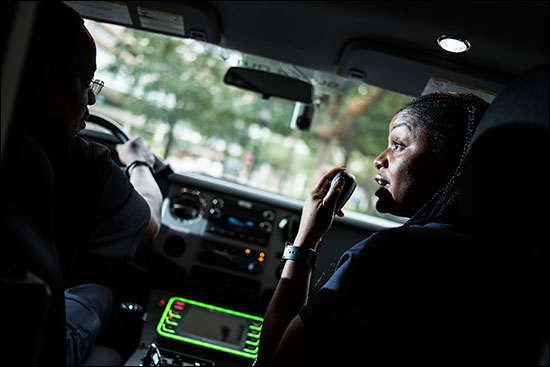
  • The addition of radios and Wi-Fi connections allow the transport team to remain connected to Main Campus via Texas Children’s intranet for protocols and pharmacy references.
    Advanced GPS tracking system helps the transport team know the precise location of the ambulances. This system also features indicators that can be set to deliver messages regarding a driver’s performance while on transport.
  • Electronic monitors provide the transport team with a constant reading of oxygen levels in the tank replacing the manual system.
  • Additional safety features include back-up and turn cameras and airbags for airway seat.

The new ambulances also have a DVD player for the patient and outlets for families to charge their cell phones.

Texas Children’s Kangaroo Crew brings newborn babies and critically ill pediatric patients to Texas Children’s Hospital for expert care from all over the country. The crew performs more than 1,500 critical transports a year.

“As one parent described them, they are the Navy Seals of Texas Children’s,” said Texas Children’s Assistant Vice President of Nursing Gail Parazynski. “She is absolutely right. This team meticulously designed these new trucks to ensure our most fragile patients are safe while being transported to our hospital.”

Besides providing ground transport service, the Kangaroo Crew’s customized Cessna airplane transports critically ill newborn babies and children from throughout the United States and Central America to Texas Children’s Hospital.

November 17, 2015

111815helipad640

The sound of helicopter blades chopping through the air will be a common occurrence at Texas Children’s Hospital West Campus now that the hospital’s helipad has been activated and staff has been trained on how to receive a patient arriving via air transport.

“We are very excited about the opportunity to have helicopters land at Texas Children’s Hospital West Campus,” said Dr. Jeanine Graf, the hospital’s chief medical officer. “It’s been an innovative first for Texas Children’s to begin bringing in children via rotacraft helicopter transport.”

Previously, patients coming to West Campus via helicopter would land at an adjoining facility and then be brought to Texas Children’s via ambulance. Having access to the hospital’s helipad will allow for faster transport and subsequently quicker treatment.

“It’s one more way for us to be there for every child no matter what their needs are,” Graf said, adding that all four predominant helicopter services in southeast Texas now know they can bring patients to Texas Children’s Hospital West Campus. In the near future, they also will be able to land at Texas Children’s Hospital The Woodlands and on the roof of Pediatric Tower E in the Medical Center.

Since late October, four patients have been brought to West Campus via the hospital’s helipad and many more are expected. Before activating the helipad, West Campus received between 10 and 20 helicopter transports a month from nearby facilities. “Now that patients can be brought straight to West Campus’ doorstep, there’s sure to be more and we are happy to be able to serve them,” Graf said.

November 9, 2015

bench-and-beside-Header1

Bench and Bedside is a digest of the previous month’s stories about the clinical and academic activities of our physicians and scientists. We welcome your submissions and feedback.

October 6

Transient hypoglycemia in newborns may affect school-age academic outcomes

A new study led by Texas Children’s neonatologist Dr. Jeffrey Kaiser found that a brief drop in blood sugar at birth, commonly referred to as transient hypoglycemia, may be linked to lower literacy and math achievement test scores in fourth grade. More

October 6

Jae named to  Baylor College of Medicine curriculum committee

Dr. Andrew Jea, Fellowship Program Director, Director of Educational Programs for the Division of Pediatric Neurosurgery, and Associate Professor of Neurological Surgery at Baylor College of Medicine, was recently appointed to the college’s Medical School Curriculum Committee. More

October 6

Four neurologists will receive prestigious honors from the Child Neurology Society

The Neurology division at Texas Children’s was recognized not once, but four times at the 44th Annual Child Neurology Society Meeting in Washington, D.C. on October 9. More

111015ENT300October 6

Division of Otolaryngology experiences tremendous growth under Arjmand

In just a little more than a year, Dr. Ellis Arjmand has turned Texas Children’s Division of Otolaryngology into the largest pediatric ear, nose and throat program in the country. Prior to his coming aboard as chief of Otolaryngology in August 2014, the program had eight otolaryngologists providing services to the entire city of Houston and its surrounding area. Now, Texas Children’s Otolaryngology has 21 physicians stationed throughout Greater Houston. More

October 13

Texas Children’s anesthesiologists contribute to leading textbook in field

Anesthesiologist-in-Chief Dr. Dean Andropoulos and several members of his medical staff helped write and edit the recently published Anesthesia for Congenital Heart Disease, 3rd Edition. More

October 13

Clinical Care Center surgery patients now receiving post-surgery prescriptions at discharge

A pilot project was launched on October 13 in the Clinical Care Center that will allow the opportunity for surgery patients to have prescriptions filled prior to discharge. More

October 13

Super Star Physician: Dr. Sunjeev Patel

Dr. Sunjeev Patel of Texas Children’s Pediatrics Lakewood is the latest Texas Children’s Super Star physician. “Being part of Texas Children’s Pediatrics has allowed me to not only see patients in the office, but it also has given me the opportunity to be involved with understanding and improving quality of care,” Patel said. Read more of Patel’s interview and find out how you can nominate a Super Star. More

111015SIUfinishingtouches300October 13

Finishing touches being put on Special Isolation Unit in preparation of opening

Pastel paint, shiny floors and spacious rooms equipped with the latest scientific and technological approaches to biocontainment are just a few of the features of the soon-to-be-finished Special Isolation Unit at Texas Children’s Hospital West Campus. The 8-bed unit designed for children with highly contagious infectious diseases is set to open later in October. More

October 20

Vasudevan receives grant for liver cancer research

The Macy Easom Cancer Research Foundation has awarded pediatric surgeon Dr. Sanjeev Vasudevan a $75,000 grant for research into a form of pediatric liver cancer called hepatoblastoma, which is a disease that usually affects children under the age of five. More

111015TransitionMedicine300October 20

Texas Children’s Transition Medicine team holds victory celebration dinner

Nearly 90 percent of children born with chronic or disabling conditions are surviving into adulthood, prompting the need for health care providers to develop appropriate and timely transitions of care. Texas Children’s is ensuring patients here experience a smooth transition to adult care. More

111015LeeWoodruffGrandRounds300October 20

Lee Woodruff inspires packed auditorium at Department of Pediatrics grand rounds

When ABC News Anchor Bob Woodruff was injured by a roadside bomb while reporting in Iraq, his wife, Lee, became his caretaker. Recently, she visited Texas Children’s to share her inspiring patient-family story with the Department of Pediatrics at Grand Rounds. More

October 27

NRI study: Deep brain stimulation restores learning, memory in Rett syndrome mice

In a recent study led by Drs. Huda Zoghbi and Jianrong Tang, and published in the journal Nature, researchers from the Jan and Dan Duncan Neurological Research Institute at Texas Children’s and Baylor College of Medicine, demonstrated that deep brain stimulation of a specific area of the brain reverts learning and memory deficits in a mouse model of Rett syndrome, a leading cause of intellectual disability in girls. More

October 27

NRI researcher receives the Janett Rosenberg Trubatch Career Development Award

Dr. Mingshan Xue, a Carolina DeLuca scholar and researcher at the Jan and Dan Duncan Neurological Research Institute at Texas Children’s, has been awarded the Janett Rosenberg Trubatch Career Development Award. More

October 27

2016 Catalyst Leadership Award receipients named at luncheon

Five outstanding Texas Children’s employees who exemplify leadership while upholding Texas Children’s mission and core values were honored October 23 at a luncheon naming the 2016 Catalyst Leadership Award recipients and the Catalyst Leader of the Year. The award was created six years ago by members of Texas Children’s Board of Trustees in honor of Mark Wallace’s 20th anniversary as president and CEO. More

October 27, 2015

102815SPOK640

The loud beeps and vibration from a small black pager alert providers that urgent communication is needed. But other than a number to call back, there isn’t much information these pages provide on either side of the equation. The physician doesn’t have accurate information as to the urgency of the page or what it may concern. The person paging doesn’t have any way to close the loop and know if the communication has been received by the right person.

“Pagers themselves are outdated,” said Dr. Joan Shook, chief safety officer. “Everyone is accustomed to using phones for communication and we know it’s much more efficient than paging.”

A group of physicians and administrative leaders spent months looking for a flexible solution to this communication problem. After reviewing several vendors for the job, the team chose SPOK, a mobile paging system that is HIPAA compliant to allow for fast, secure messaging and closed-loop communication.

“The reason we have on-call providers is to deliver the right care 24 hours a day, 7 days a week,” said Matt Girotto, vice president in the Department of Surgery. “This new system not only improves the way we talk to each other, it also improves our safety by ensuring a timely response for all of our patients’ needs.”

The new paging system allows select users to upload an on-call schedule, while allowing those on the schedule to go in and make changes as their on-call schedules change. The changes are made immediately and can be viewed across the system. The program allows you to search for the on-call provider in each specific unit, making communication with the right person for a case fast and easy.

“This new system brings much better communication among providers and even allows confidential texting about personal health information,” Shook said. “Bringing this into the clinical arena is a huge step forward for the organization and for our patients.”

The system also includes a personal device component that allows users to download a mobile app for communicating about patients. This allows provider-to-provider texts that are safe and secure. The app shows when a provider has received and read a message and even has a feature to automatically escalate a problem if the page is not viewed or answered.

“The vision is for our patients to receive the right care at the right time,” Shook said. “Excellent communication among providers only positively impact the care we are able to provide.”

This new scheduling system is officially live on Sunday, November 1. To download the mobile app and sign up for the new system, contact your leader.

October 20, 2015

102115TransitionMedinside640Texas Children’s Transition Medicine Team hosted its third annual dinner event with the evening’s theme – Transition is a Victory. The celebration was held at Texas Children’s Pavilion for Women in conjunction with the 16th Annual Chronic Illness and Disability Conference. More than 100 people attended the dinner to learn about the progress Texas Children’s has made developing transition solutions.

Nearly 90 percent of children born with chronic or disabling conditions are surviving into adulthood. People with sickle cell disease are living into their sixties and the number of adults with cystic fibrosis now outnumbers the children. This victory has left providers and hospitals nationwide with the challenge of defining and constructing appropriate and timely transitions of care.

Transition Medicine describes the planned process of educating, coordinating and transferring patient care from the pediatric to the adult health care system in a way that optimizes a patient’s health and ability to function. Texas Children’s is dedicated to helping patients transfer care smoothly without a decline or break in their treatment.

Many young adults between the ages of 18 to 21 transition their care to adult providers when they leave for college or enter the workforce. But for those with complex chronic pediatric diseases, transitioning is a struggle filled with barriers and challenges that include patient maturity, psychosocial and family needs, coordination and reimbursement issues, and identification of adult providers able to care for unique patient populations.

At the conference and the dinner, Texas Children’s patients, family and staff shared their inspirational stories and spoke to the importance of a solid transition program. The conference featured discussions on legal issues and quality improvement strategies involved in health care transition, as well as opportunities to meet and talk with faculty, exchange ideas among participants, and share knowledge and information about how best to plan for a successful transition from pediatric to adult care.

Physician speakers from Texas Children’s delivered presentations including conference founder and chair Dr. Albert Hergenroeder and Drs. Heidi Schwarzwald, Carla Tapia and Connie Wiemann.

Administration leaders John Nickens, Diane Scardino, and Daniel DiPrisco along with Drs. Marcia Katz, Angelo Giardino and Albert Hergenroeder spoke about educational efforts, innovative quality and process improvement strategies and recognized supporters of transition medicine. They were joined by family advisor, Jeb Ligums who awarded the 2015 Benjamin B. Ligums Scholar to Dr. Rebecca Laster from Texas Children’s Pediatrics Gulfton location. The scholar program allows a provider in the community to receive training on the adult special needs population and project management assistance in setting up a referral process between providers.

The dinner also included a presentation from Texas Children’s congenital heart patient Kristin Edwards who shared her touching story of transition from pediatric to an adult care at Texas Children’s. The evening wrapped up with Dr. Ahmet Uluer, director of the Weitzman Family BRIDGES Program at Boston Children’s Hospital, who spoke in support of a collaborative nationwide approach to Transition Medicine.

Click here to watch a video about Texas Children’s Transition Medicine Program. For questions or additional information, contact Kris Barton at Ext. 4-1265 or email her at krbarton@texaschildrens.org

102115LeeWoodruffGrandRounds640Her husband went from telling the evening news to being the news and Lee Woodruff took on a role no one could have predicted. When ABC News Anchor Bob Woodruff was injured by a roadside bomb while reporting in Iraq, Lee immediately took on the role of a lifetime, caretaker to a loved one with a traumatic brain injury.

With four children waiting for their dad to come home, Lee was determined to walk out of those hospital doors with her husband, but there was a long road to that day.

Woodruff was invited to Texas Children’s by Physician-in-Chief Dr. Mark W. Kline who asked her to speak at the Department of Pediatrics grand rounds expressing her patient perspective.

“You probably don’t hear this from us as patient families enough, but thank you,” Woodruff said to the group. “As you do your job, I hope you remember that families heal together so include them in the equation.”

Woodruff asked the auditorium full of physicians to remember to care for the entire family. She recalled a turning point during her husband’s hospital stay when someone asked how she was doing. A moment she won’t forget, patient-and-family centered care at its core.

For Woodruff, whose husband endured a difficult path to recovery, there is one message she finds most important. While being sensitive to not give false promises, she asked providers to think before the difficult discussions.

“Just think, ‘how can we have this conversation differently?’” Woodruff said. “How can you leave room for hope?”

For Woodruff and her family, it was the nurses who provided that hope by sharing stories of success and survival of other patients who had brain injuries similar to that of her husband. Woodruff held on to that hope and eventually did see her husband wake up, regain his strength and recover from his brain injury. She said those few months in the hospital changed her perspective and left her forever grateful to the work of those dedicated to healing the sick.

Bob Woodruff did eventually walk out of that hospital room with his wife and continues to report at ABC News. Now a CBS news contributor and New York Times best-selling author, Lee has partnered up with her husband to use their experiences in inspiring groups like the physicians at Texas Children’s and help wounded veterans.