October 2, 2018

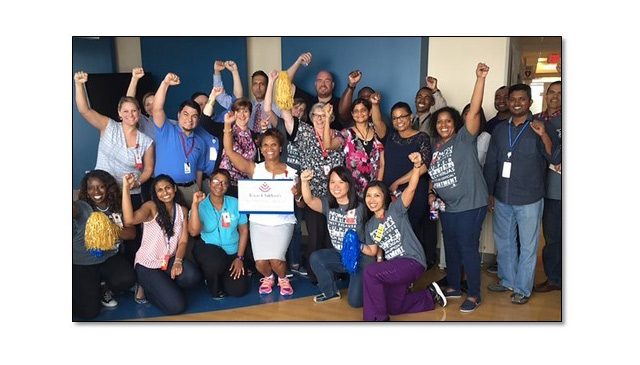
Fueled by a passion for healthy living and motivating their colleagues to make health a priority in their own lives, our wellness ambassadors are spreading the word about all the ways Texas Children’s can support you in your well-being journey – from free boot camp classes, to exciting challenges that bring our employees together to focus on feeling their best inside and out.

In addition to their awareness campaign, the wellness ambassadors are also looking for employees to join the program. In taking on the role, ambassadors agree to undergo training, serve a one-year term and complete approximately one hour of service per month in promoting on-site wellness offerings at Texas Children’s. This service could include sharing communications from the Employee Health and Well-Being team, which manages and oversees the ambassador program; making announcements in staff meetings; and being the departmental point of contact for questions about wellness offerings.

“Sometimes people are hesitant to put more on their plate when it already feels full, but being a wellness ambassador is far from a chore; it sparks conversation and motivates others to be the best they can be,” said Amber Rosta, quality assurance coordinator at The Woodlands campus who was drawn to volunteer because she wanted to amplify unity and be involved in rallying her department around a positive, shared cause.

“It’s exhilarating to hear success stories and inspiration under our very own roof,” Rosta said. “Initiatives to take the stairs, do squats as a group and get up and move really bring a sense of community, and there’s far more to offer than only working out.”

Along with access to wellness perks and invitations to community wellness events, ambassadors also get the inside scoop on the latest offerings developed by Employee Health and Well-Being. They receive monthly newsletters and are the first to know when a new challenge will start, a new program has been added or a new event has been planned.

Sr. Project Manager Bethany Lowe saw becoming an ambassador as a unique opportunity to bring her love for all forms of wellness – especially physical activity, nutrition and mental health – into the workplace. She enjoys learning and sharing information about the wide variety of well-being programs available to employees at Texas Children’s, such as weight loss assistance and discounted gym memberships.

“Wellness does not have to be limited to time outside of the office. You can focus on drinking enough water or getting your steps in while you are at work and still be a productive employee,” Lowe said. “As wellness ambassadors, we get to provide encouragement to our teams so that together, we can strive towards improving our health and well-being – mind, body and soul.”

Interested in volunteering to be a wellness ambassador?

Mark your calendars and plan to join the Employee Health and Well-Being team at one of the ambassador recruiting and reconnection events below. Meet and talk to our current wellness ambassadors and get an exclusive sneak peek at upcoming well-being initiatives. Registration for all events will be open until Monday, October 8.

Main Campus
Tuesday, October 9
3 p.m. to 4:30 p.m.
Click here to register

West Campus
Wednesday, October 10
3 p.m. to 4:30 p.m.
Click here to register

The Woodlands
Thursday, October 11
3 p.m. to 4:30 p.m.
Click here to register

For more information about the Wellness Ambassador Program at Texas Children’s or to volunteer, send an e-mail to wellbeing@texaschildrens.org.
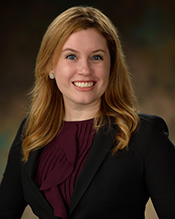
Julia Sigren, July – September 2018 Leader
Your name, title and department. How long have you worked here?
Julia Sigren, BSN, RN, CPN; Patient Care Manager in Cardiology Patient Care Unit (CPCU). I have been at Texas Children’s Hospital for six years.

Tell us how you found out you won a super star award.
I was returning to the unit after a walkthrough in Legacy Tower to meet other members from my team for a monthly meeting. I stepped into our Conference Room to find that they had orchestrated a surprise party to celebrate the announcement. I was in complete shock! Our staff and leaders from the Heart Center were present. They had even managed to have my husband come for the surprise. It was a wonderful event.

What does it mean to be recognized for the hard work you do? How has the organization helped you achieve your personal and professional goals?
It is an incredible feeling and a tremendous honor to be recognized by those who you admire and respect every day. I work with an amazing team not just in CPCU, but also in the Heart Center. Everyone has incredible passion and resilience; it is joy and privilege to get to lead here at Texas Children’s each day.

Ever since I stepped foot at Texas Children’s as a nursing student I knew that the organization was and always will be committed to growth, development and excellence. The abundance of opportunities here, such as Shared Governance and Nursing Professional Development, inspired me to take on committee positions and unit roles. This preparation (and inspirational leaders) eventually led me to apply as a patient care manager. With Texas Children’s always being a vanguard to innovation and to superior patient care, I am able to help with amazing initiatives such as being a liaison for Legacy Tower.

What do you think makes someone at Texas Children’s a super star?
A Texas Children’s Super Star leads with unwavering compassion and resilience. They see the greatest qualities in their teams and work to build them up to their strongest capabilities. A Super Star takes every opportunity to provide help and guidance, all the while acknowledging the greatness in others. They live by the Texas Children’s core values and inspire others to achieve dedicated patient care.

What is your motivation for going above and beyond every day at work?
My biggest motivation for going above and beyond is by far the patients and families of Texas Children’s Hospital. Their incredible journeys and awe-inspiring strength are at the center of my inspiration every day. If I can just make one difference in their lives, no matter how big or small, I consider it to be an unbelievable achievement.

What is the best thing about working at Texas Children’s?
The culture and vision of Texas Children’s is just outstanding. It is admirable how clinical excellence is held to an upmost standard all the while holding the patient experience at heart. Also, as exemplified one year ago during Harvey, the comradery that all the employees have here is magnificent. The staff and leadership team I have the pleasure to work with are absolutely remarkable! But, first and foremost, the patients we get to serve every day are what makes working at Texas Children’s Hospital spectacular.

What does it mean to you that everyone at Texas Children’s is considered a leader? What is your leadership definition?
Everyone has the ability to be an influence to the great work that is achieved at Texas Children’s Hospital. There is great respect for every role and anyone can be an advocate.

I believe being a leader is the ability to be a catalyst for the change you want to see in the world while concurrently empowering others to achieve their aspirations and attain positive results.

Anything else you want to share?
Thank you to my CPCU family and to Texas Children’s Hospital for this great recognition. You all are the best!

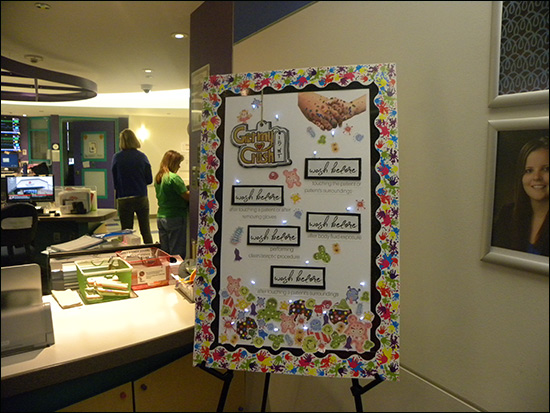
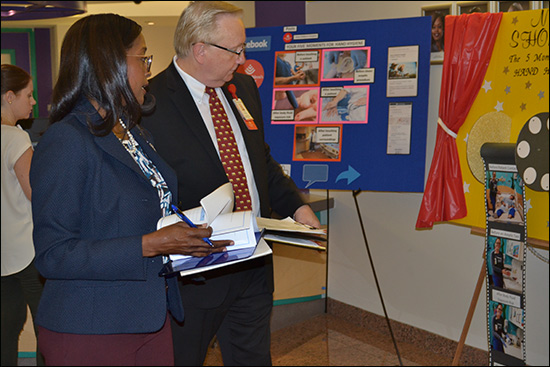
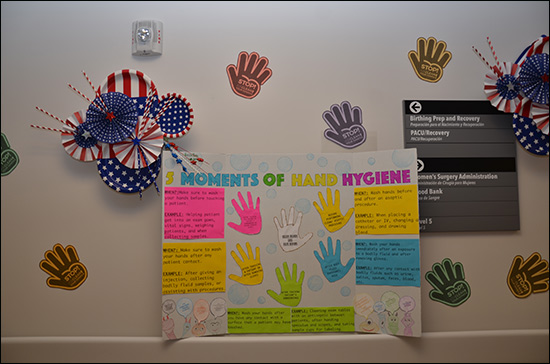
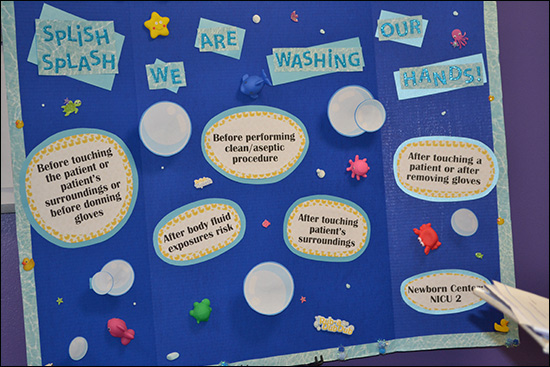
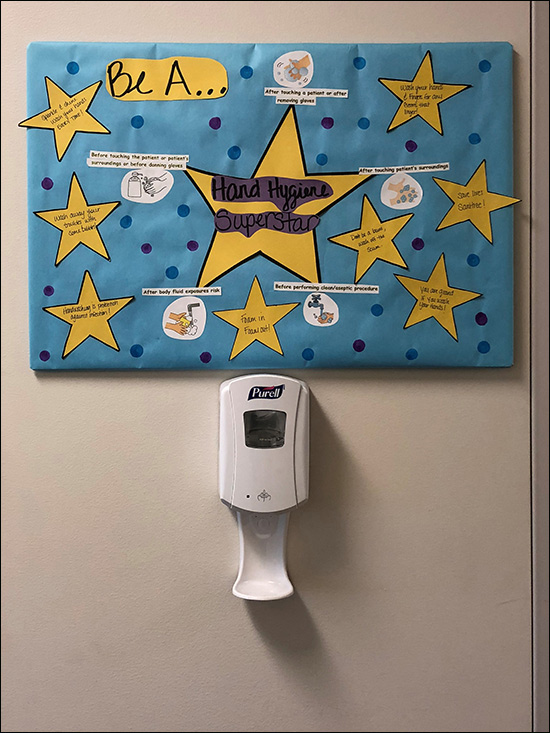
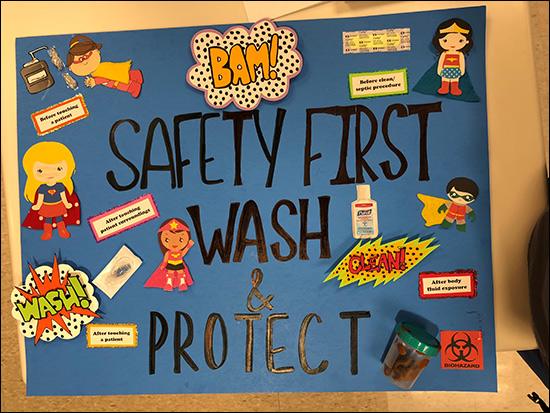
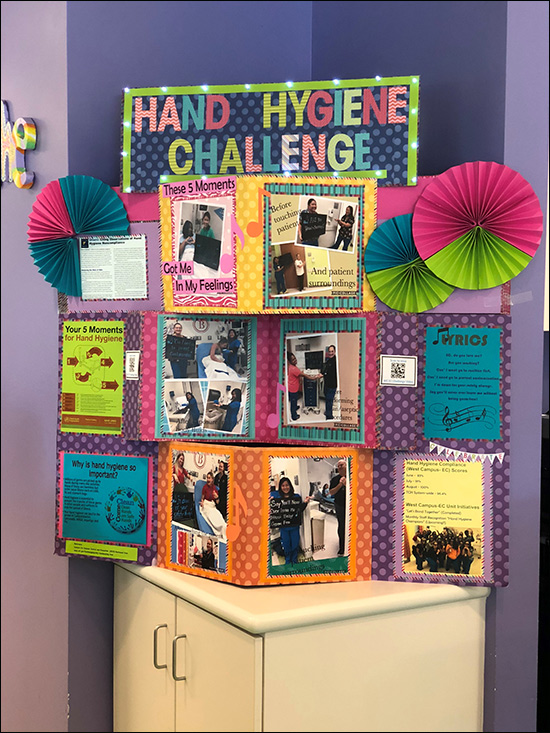
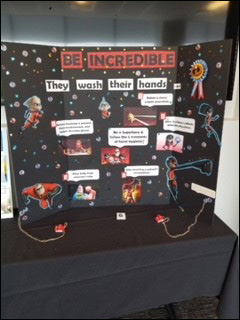
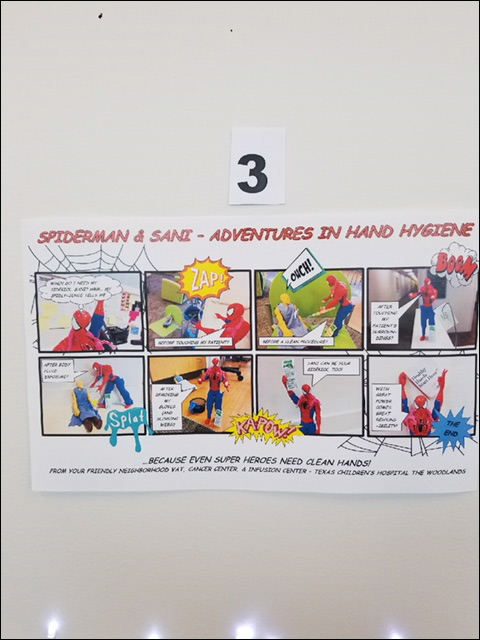
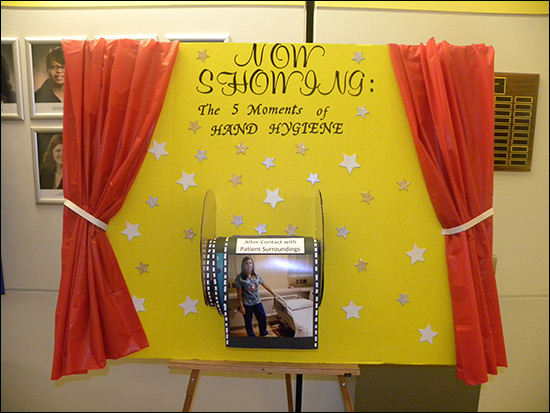
Texas Children’s Hospital Hygiene Work Group for the Central Line Acquired Bloodstream Infection, Hospital Acquired Conditions (CLABSI HAC) recently spearheaded a poster competition on the five moments of hand hygiene.

“Performing proper hand hygiene is our first line of defense in preventing hospital acquired infections,” said Mona Clark, assistant clinical director of Nursing (General Medicine and operational lead for the Hygiene Work Group. “Our organizational goal for hand hygiene is equal to or greater than 95 percent. Through collaboration with our infection control department and nursing, all ancillary care providers received education and training on the five moments of hand hygiene.”

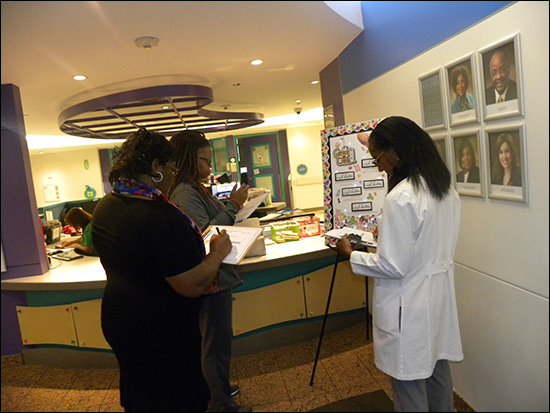
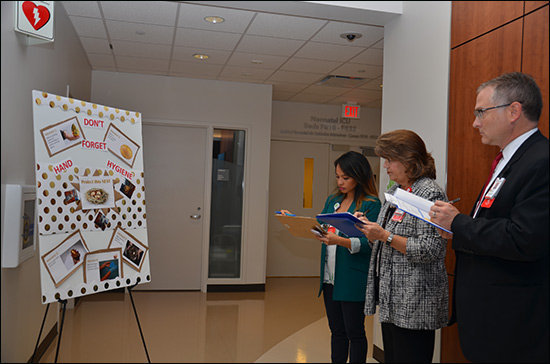
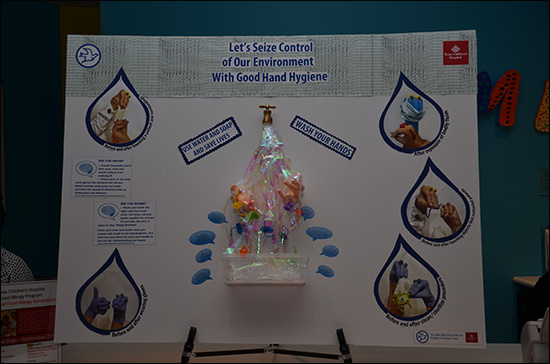
To further engage and capitalize on the momentum of awareness and compliance for hand hygiene, the system-wide poster competition was created. Across the system there was a total of 28 outstanding posters submitted from Texas Children’s Medical Center Campus, Texas Children’s Hospital West Campus and Texas Children’s Hospital The Woodlands. Posters were placed at entrances to the units and clinical areas to be viewed by both staff and visitors.

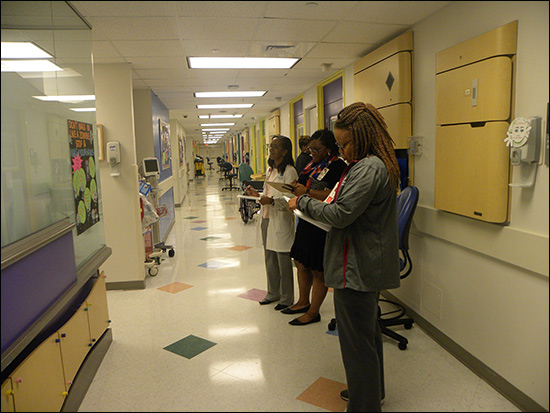
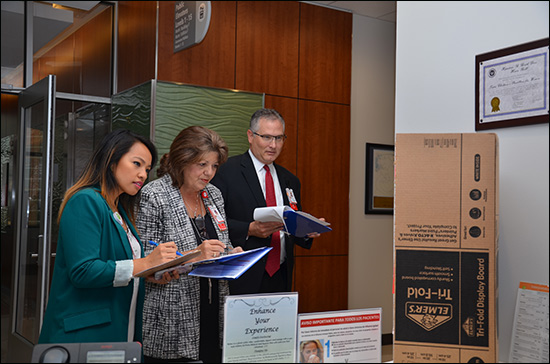
Senior executive leaders from all campuses graciously participated as judges for the competition – Mark Mullarkey, Mary Jo Andre, Jackie Ward, Bert Gumeringer, Dr. Judith Campbell, Dr. Paul Sirbaugh and Dr. Jeffrey Shilt.

A first place winner was selected at each campus:

Medical Center Campus – 12WT General Medicine Transplant Unit poster “Now Showing the 5 Moments of Hand Hygiene
West Campus – Emergency Center “Hand Hygiene Challenge
The Woodlands Campus – Emergency Center “Be Incredible – They wash their hands

“This fun competition further engaged our teams in working together to ensure we all perform proper hand hygiene for the safety of our patients and families,” Clark said. “Thank you all for participating. Our hand hygiene scores clearly reflect your dedication and hard work.”

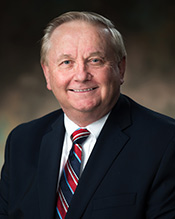
Bert Gumeringer, Vice President, Facilities Engineering & Support Services, is now the Texas Children’s Environment of Care Safety Officer. In accordance with Texas Children’s policy #331 as the EOC Safety Officer, Bert Gumeringer is authorized to take action necessary to assure a safe working and patient care environment in this capacity, he has full access to all personnel and facilities in order to identify and correct safety hazards.

The EOC Safety Officer will take immediate and direct action to alleviate conditions that pose an immediate threat to life or health, or a threat of damage to equipment or buildings for Texas Children’s’ Hospital and/or designee of senior management before taking any action which will prevent or interrupt the delivery of patient care according to policy #331.

September 26, 2018


As the largest children’s hospital in one of the fastest growing cities in the country, Texas Children’s high-quality care is always in high demand. However, due to high volume, getting patients and referring providers the answers and access they need in a timely fashion can be a challenge, which is why improving access has been a key focus at Texas Children’s in recent months.


Since the March 2018 launch of the Patient Access Initiative, several key improvements have been made to streamline processes for patients, including standardized clinic sessions and enhanced implementation of MyChart. On September 5, the Department of Surgery took a major step in improving access for referring providers with the launch of 1-855-TCH-KIDS, Texas Children’s new Provider Priority Line, available 24/7 exclusively for referring physicians and advanced practice providers.

“The Provider Priority Line creates a pathway for referring providers to have easier access to Texas Children’s surgeons for questions about patients,” said Dr. Sohail Shah, surgical director of Perioperative Services at Texas Children’s. “We want to make ourselves available to referring providers to assist them in the care of children across the state of Texas, and ultimately the region.”

Previously, if a referring provider had a question for a Texas Children’s surgeon, the communication pathway might route them across numerous Texas Children’s campuses, offices, clinics, and health and specialty care centers. This fragmented approach had the potential to result in multiple call transfers, which could contribute to delayed response times. Now providers can simply call the Provider Priority Line and reach on-call attending surgeons for specialties including Neurosurgery, Ophthalmology, Orthopedics, Otolaryngology, Pediatric Surgery, Plastic Surgery and Urology.

Department of Surgery leadership partnered with Texas Children’s Mission Control and Telecommunications Services to develop the line’s efficient communication flow.

  • When a referring physician calls the line, the call is triaged through Mission Control.
  • Mission Control gathers patient information, and determines the specialty area needed and whether the call is urgent or non-urgent.
  • The call is routed to the on-call attending surgeon at the Texas Children’s campus nearest to the referring provider’s location.
  • The attending surgeon calls Mission Control and is connected to the referring provider on a recorded line, which closes the communication loop.

Early metrics have shown rapid connection times between providers and on-call specialty surgeons, with responses for urgent calls occurring in 15 minutes or less. Initial referring provider reactions have been overwhelmingly positive.

“An early call we received was from a physician at a regional emergency center who had a question about a 14-year-old patient,” Shah said. “He was pleased to be able to speak directly with a pediatric surgeon and relay a care plan to the family immediately afterward. He said the usual course of action would have required an opinion from a local adult surgeon, which often led to a delay in definitive care.”

The Provider Priority Line will not only create easier access to Texas Children’s pediatric surgical expertise, it will also make interactions with providers more customer focused.

“Dr. Shah and his team, in collaboration with Mission Control, have developed a system that delivers an enhanced level of service for our referring providers, who very much appreciate help and advice when seeing pediatric patients who are dealing with complex problems,” said Texas Children’s Surgeon-in-Chief Dr. Larry Hollier. “As the largest children’s hospital in the country with the largest number of surgeons and operations, we should be able to provide them with the help they expect from us. With the Provider Priority Line, we can show them we’re committed to meeting and exceeding their expectations.”

In the near term, the service will be promoted to referring providers across the region with the ultimate goal of routing all such referring provider calls through the Provider Priority Line for a more streamlined experience. The long-term goal will be to extend the service to emergency centers and urgent care facilities as well. And in addition to 1-855-TCH-KIDS, there is also a local number available: 832-TCH-KIDS.

Learn more about how Texas Children’s is improving access.

Texas Children’s senior leadership has announced that the top three credit rating agencies – Moody’s, Standard & Poor’s (S&P) and Fitch – have affirmed Texas Children’s ratings of Aa2, AA and AA, respectively, as well as a stable financial outlook. Affirmation of the Aa2 and AA ratings are a reflection of the high quality of the Texas Children’s system and its standing as an organization with very low credit risk.

“We are excited to have received affirmation of our ratings from all three agencies,” said Texas Children’s President and CEO Mark Wallace. “These ratings, combined with our stable outlook, will provide us greater access to financial markets and enable us to focus available funds on our ongoing mission to provide the very best care for our patients and families.”

Each year, these agencies analyze financial, operational and strategic data to determine credit ratings. The ratings reflect the agencies’ view of a borrowing organization’s, such as Texas Children’s, capacity and willingness to meet financial commitments as they come due, and thus determine the organization’s creditworthiness. The Aa2 rating and equivalent AA ratings denote Texas Children’s high level of financial stability and our very strong capacity to meet our financial commitments.

“This is fantastic news for Texas Children’s,” said Executive Vice President and CFO Weldon Gage. “Each agency noted similar themes for conferring these ratings, among them our track record of successfully implementing growth strategies and large capital plans, our strong market position and brand equity, and our significant fundraising capabilities.”

Additionally, the agency reports cited Texas Children’s extensive research programs and clinical excellence, its exceptional regional and national presence and reputation, and a historically strong financial position as reasons for the ratings. Long-term, the ratings also signify the agencies’ confidence that Texas Children’s will continue to benefit from its presence as one of the nation’s leading children’s hospitals.

Moody’s, S&P and Fitch have affirmed Texas Children’s positive ratings for the past 22 consecutive years. We are one of less than about 50 hospital systems nationally and among only three hospitals in Texas that demonstrate this level of financial stability.

Sickle cell disease affects more than 100,000 Americans and millions more worldwide. This red blood cell disorder can be treated, but a widely available cure has yet to be found. Texas Children’s hematologist and Assistant Professor of Pediatrics Dr. Vivien Sheehan has recently developed a new sickle cell treatment based on her laboratory research. Sheehan has found that metformin, a commonly used medication for diabetes, has the ability to induce fetal hemoglobin in developing red blood cells.

Since higher levels of fetal hemoglobin reduce sickling in red blood cells of patients with sickle cell disease, the medication could potentially be useful in reducing the severity of sickle cell complications in patients. It also can be taken with another drug that increases fetal hemoglobin, hydroxyurea, to get even more clinical benefit.

Sheehan has been a part of Texas Children’s Cancer Center faculty since 2012, working tirelessly toward advancing sickle cell treatments. During a cancer related conference she attended, it was mentioned that the drug metformin could help with cancer by increasing amounts of proteins that her research showed increased fetal hemoglobin. This led Sheehan to wonder if the drug would increase fetal hemoglobin in cells from patients with sickle cell disease, and sure enough, it did.

“Because metformin is so well studied, so safe, there are millions of people literally taking it,” Sheehan said. “I then went to my Institutional Review Board (IRB) and asked if I could start a clinical trial of metformin in sickle cell patients since it was known to be safe, and wouldn’t cause hypoglycemia even in non-diabetics.”

With funding from Pfizer, in 2016 Sheehan and other researchers were able to launch a clinical trial that is currently assessing the effectiveness of metformin to make fetal hemoglobin in patients with sickle cell cared for here at Texas Children’s Hospital Hematology Center. Pfizer is a world leader in global medical advancement that provides medical research grants and scholarships for new drug development and the latest in cutting edge technology and applications. This not only led to developing the clinical trial, but also led to other acknowledgements and funding such as Sheehan’s Best of ASH recognition, given by the American Society of Hematology at the 2016 annual meeting.

“Her passion truly exudes from her and so a lot of times when you get into conversation with her, you always leave so much more educated because she’s letting you know the newest things that she has learned,” said nurse practitioner Precious Uwaezuoke. “She’s letting you know how her research studies are going. Thus, hearing her speak is always so rewarding and fun. I truly have this huge respect for her just because of how passionate she is about Sickle Cell Disease and our kids.”

Uwaezuoke works closely with Sheehan and the research team, as well as patients, and is responsible for helping to determine who may be good candidates for clinical trials. Fighting sickle cell herself, she knows that at times handling the disease can be very difficult; so she verses how important research is to getting closer to finding a cure for the disease.

“This is a big deal because having sickle cell is not easy. It affects way too many people for us to only have developed one therapy 20 years ago,” Uwaezuoke said. “To be able to see something come to fruition like this because somebody had a dream, and chased it and didn’t let it fall to the wayside is exciting. Anytime somebody wins after trying a therapy and it actually helps them, I feel like I won as well.”

Following the clinical trial, the next step will be commercialization. Sheehan says that the progress is very exhilarating and that it is amazing for a process of this magnitude to have been executed in just four years.

“Usually it takes around 15 years,” Sheehan said. “That’s the average time it takes to develop a drug from the bench to the bedside, and that’s a pharmaceutical company with all of their staff. So now we’re in 2018, we’re almost done with the first arm of our clinical trial, patients taking both hydroxyurea and metformin, and can now analyze and publish our results.”

Overall, preliminary research results show fetal hemoglobin induction, the repair of blood vessels, which is so important to help prevent complications of stroke, retinopathy, renal failure, and the other issues that cause a lot of damage or even death to some patients with sickle cell disease.

“Ultimately, I needed to determine whether patients were having more pain crises or less pain crises on metformin and whether they’re needing more transfusions or fewer transfusions”, Sheehan said. “So I compared the time period before they started the drug to the time period on metformin and they were having fewer pain crises and they were needing fewer transfusions.”

Sheehan says that research is key to improving the use of the tools that we already have. She is now looking for a few more participants to complete the second arm of the clinical trial, patients not on hydroxyurea, and also add adult patients up to the age of 40 years. Sheehan has formed a collaboration with University of Texas Health Sciences Center’s Comprehensive Sickle Cell Center and Dr. Juneja and Dr. Idowu to be able to enroll these patients.

“It’s the only way to advance in a meaningful way. You can make incremental advances just by improving access to care or use of the drug, but you’re not going to make a big, significant change without research. Those with Sickle Cell are doing better through childhood, but they’re still not living longer in adulthood and I think it’s the lack of therapies that will continue to work in our older patients and I feel like this is going to be one of them and I want to see it improve life spans and not just number of years, but health.”