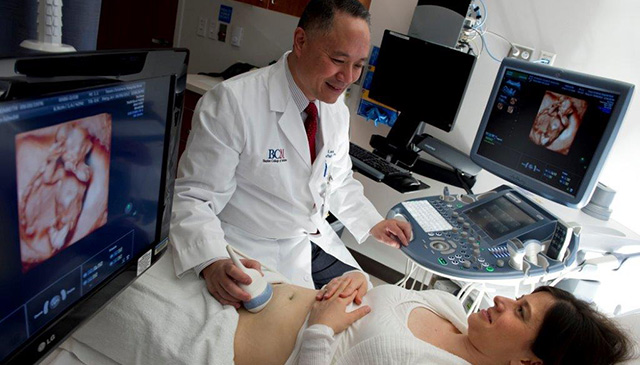
Fetal growth restriction is a major public health concern that can lead to short-term complications for the newborn and possibly the development of health problems later in life. Researchers at Texas Children’s Hospital and Baylor College of Medicine were recently awarded $3.2 million by the National Institutes of Health to develop an improved way to assess umbilical venous blood flow using 3D and Doppler ultrasound techniques. They aim to improve the detection and monitoring of small fetuses.
Fetal growth restriction increases the risk of stillbirth, problems during the newborn period, and neonatal death. Affected fetuses also are predisposed to developmental delay as well as the occurrence of adult diseases such as obesity, type 2 diabetes mellitus, coronary artery disease, and stroke.
“Our research team will initially validate the accuracy and reproducibility of new 3D volume flow measurements and then develop corresponding reference ranges in normal pregnancies,” said Dr. Wesley Lee, co-director of Texas Children’s Fetal Center and professor of obstetrics and gynecology at Baylor. “Detailed observations of fetal growth, heart function, and circulatory changes will be made in over 1,000 small fetuses with estimated weights below the tenth percentile. The results will be correlated with pregnancy outcomes to identify prenatal predictors of clinical problems in newborns.”
According to Lee, identifying the most vulnerable, small fetuses may not only influence their neonatal course, but could also have lasting impact on long-term health consequences during adult life. Researchers hope to develop 3D umbilical venous flow as a reproducible circulatory measurement that is accurate and clinically applicable, even during early pregnancy.
The five-year investigation is a collaboration between Texas Children’s Hospital, Baylor College of Medicine, University of Michigan, Perinatology Research Branch of the Eunice Kennedy Shriver National Institute of Child Health and Human Development and GE Healthcare.
August 13, 2019
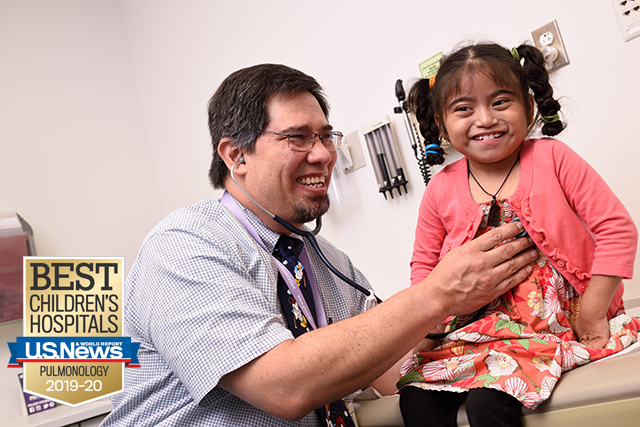
Texas Children’s Pulmonology recently celebrated a well-deserved milestone after learning they were ranked No. 1 by U.S. News & World Report for the second straight year in a row.
On June 19, the Pulmonology team gathered in a conference room on the 10th floor of Wallace Tower to celebrate this impressive accomplishment. Pulmonology, which first debuted in the top spot in the 2016 rankings, was once again recognized as the best in the nation for children in need of pulmonary care.
“At Texas Children’s, we built our program to serve the needs of children with all types of lung disease, from common ailments to the most complex cases,” said Chief of Pulmonary Medicine Dr. Peter Hiatt. “Our unrelenting commitment to providing life-changing and life-saving treatments to children is what motivates us every day to do better and ultimately achieve the best possible patient outcomes.”
The U.S. News rankings uses a methodology that weighs a combination of patient outcomes, quality of health care, available clinical resources, such as specialized clinics, external accreditations and compliance with best practices. Improved rankings show a healthcare organization’s commitment to providing high-quality care and identifying gaps where improvements are needed.
Big wins for patients and families
Building on the successes of previously existing programs, the Pulmonology team continues to make great strides in patient care and outcomes which were recently noted in the U.S. News rankings:
Improved one year survival for lung transplant patients.
Texas Children’s has one of the largest and most successful pediatric lung transplant programs in the country. The one-year lung transplant survival metric is based on data collected from the United Network for Organ Sharing (UNOS) in the Scientific Registry of Transplant Recipients (SRTR) database. Based on this metric and when comparing the volume of our lung transplant patients across the country, the team has seen measurable improvements in our one-year lung transplant survival rate.
Improved growth percentile for cystic fibrosis patients 0 – 24 months of age.
Along with respiratory lung problems, cystic fibrosis patients may encounter digestive problems that can lead to nutritional concerns (malnutrition) and poor growth. Attention to nutritional status and lung function in the first years of life is crucial to promoting the most favorable outcomes. Our pulmonology team improved the median weight-for-length (WFL) growth percentile in CF patients (0-24 months of age) by focusing efforts on early intervention. This included working with our CF dietitians to manage nutrition and avoid calorie and nutrient deficiencies in this patient population. Also, the team collaborated with our CF Family Advocacy group to help under-insured or uninsured families obtain supplements.
Reduced hospital re-admissions for patients with asthma-related symptoms
Pulmonology develops the protocols that guide the organization on how asthma care is delivered to patients across the system. Multidisciplinary collaborations helped the organization decrease hospital re-admissions for exacerbated asthma-related symptoms. Our team collaborated with our partners at the Emergency Center and Texas Children’s Pediatric practices to manage care for chronic to high-risk asthma patients. Other efforts included educating patients about follow up care and the importance of asthma medication adherence to reduce unnecessary re-admissions.
Achieved below target threshold for hospital length of stay (LOS) for asthma patients
Texas Children’s stayed under the 2-day threshold for asthma length of stay on average. Prompt administration of systemic corticosteroid in the Emergency Department (ED) setting and having a focused unit for asthma inpatient care allowed for close monitoring and weaning of therapy to allow for a timely discharge. This was a partnership with the ED and hospitalist clinicians.
Click here to learn more about Texas Children’s Pulmonary Medicine and our services.
When you watch the news these days, it’s hard not to be inundated with tragic stories and heart-wrenching events happening around the world – with some hitting very close to home.
The recent shootings in El Paso, Texas and Dayton, Ohio, impacted many people throughout the country. While these tragic events could happen anywhere, you might be asking yourself, “What is Texas Children’s doing to keep our employees, staff, patients and their families safe?”
“Creating a safe workplace environment at Texas Children’s continues to remain a priority,” said Organizational Resilience Director James Mitchell. “Our collaborative efforts to keep employees safe has matured over the years to include active shooter and workplace violence training.”
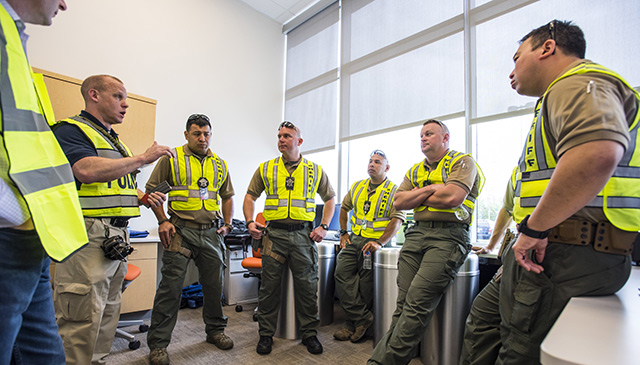
Over the past several years, Mitchell and his team have gone from implementing table-top exercises on mass shooting incidents to large-scale exercises. Beginning in early 2017 through earlier this year, they have conducted large scale active shooter exercises at Texas Children’s Hospital The Woodlands, Texas Children’s Hospital West Campus, Lester and Sue Smith Legacy Tower and at Texas Children’s Health Plan. Additional exercises will be planned for 2020.
Also, the successful implementation of Everbridge, the hospital’s emergency notification system, has allowed his team and others to alert all employees quickly and over various methods – phone, text and email – in the event of an emergency, including an active shooter event.
“Our security team, led by Mike Crum, will upon request, provide any department within the Texas Children’s system active shooter and/or workplace violence training,” Mitchell said. “Our Emergency Management team can also provide this type of training to our staff if necessary.”
Along with training programs, additional steps are underway at Texas Children’s to promote workplace safety, while also keeping the safety of our patients and their families in mind.
With more than 12-million square feet of space among our 125 Texas Children’s locations, there are multiple entrances and exits to our facilities, especially at our Medical Center campus. The organization is looking at ways to reduce entry points to improve better monitoring.
“Our team has conducted risk assessments at 18 of our Texas Children’s locations,” said Vice President of Facilities Operations Bert Gumeringer. “By the end of the year, we will have completed assessments at all of our Texas Children’s facilities. The information gathered from these locations will help us identify other safety measures we may consider putting in place.”
In addition to improved lighting in our parking lots and an increase in security presence in certain areas, Gumeringer and his team are looking into implementing a visitor management program in other areas of the hospital similar to the one in place at Lester and Sue Smith Legacy Tower. This program operates by having a security officer present on each floor of Legacy Tower. Before gaining entry, visitors must present a government issued ID and wear an ID wristband that is tied to the hospital’s database.
While Texas Children’s biggest violent threat continues to be domestic in nature, Texas Children’s understands that mass shootings are of concern and could happen anywhere. That’s why the organization will continue to train and prepare staff for such an event.
At Texas Children’s, every employee plays a role in promoting workplace safety. If you see something that isn’t right, say something so these potential safety concerns can be addressed.
If your department is interested in scheduling active shooter or workplace violence training, contact Michael Crum at mccrum@texaschildrens.org
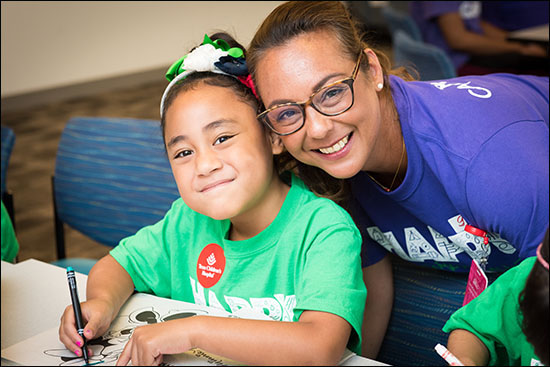
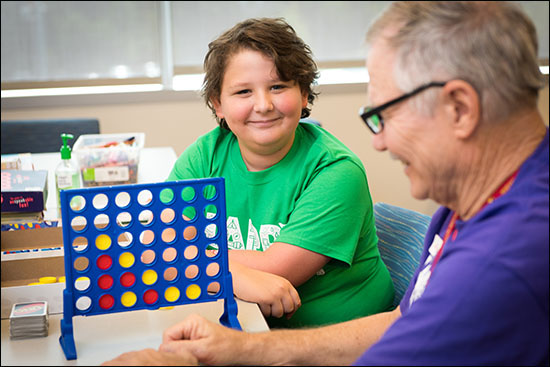
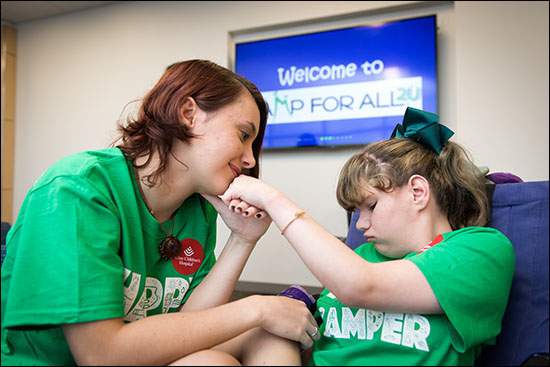
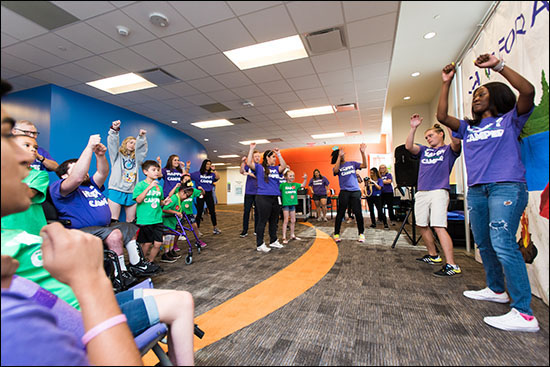
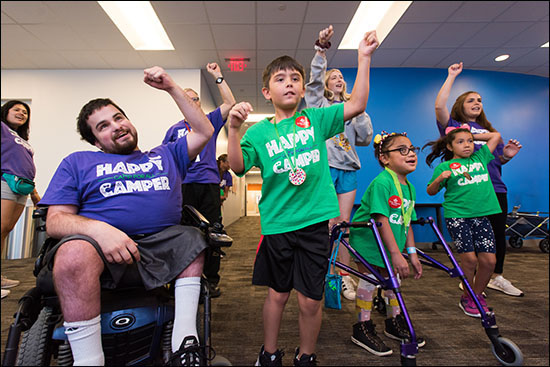
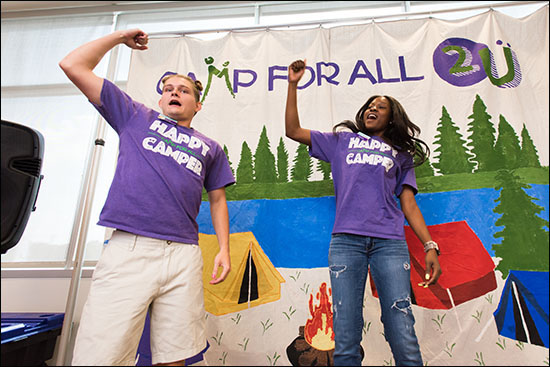
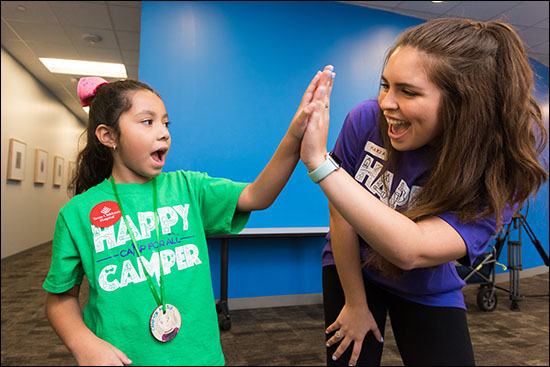
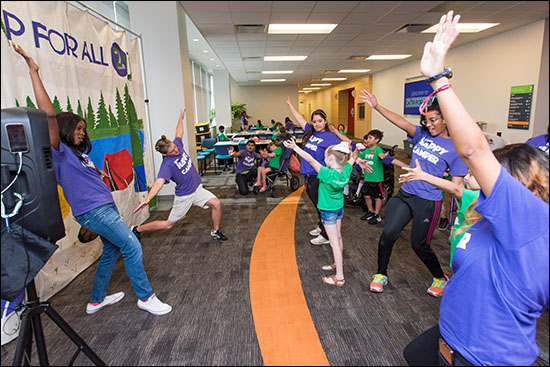
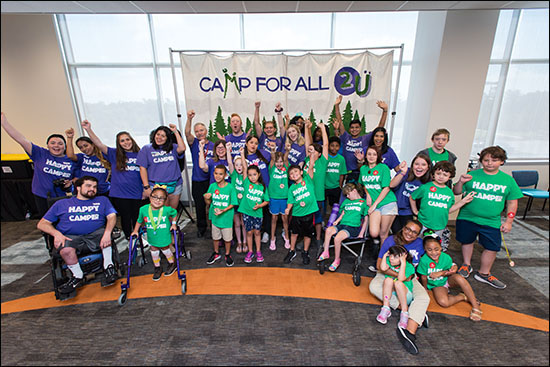
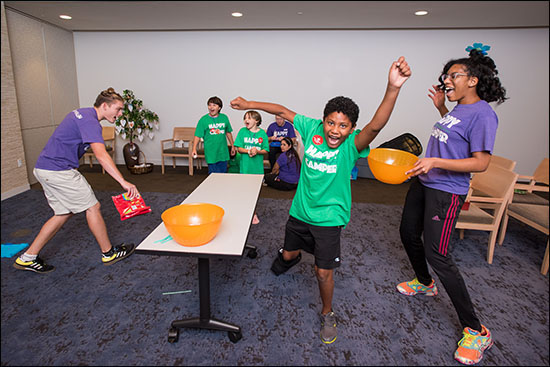
This year the tremendously anticipated Camp For All 2U event debuted at Texas Children’s Hospital The Woodlands. For the first time patients and their families were able to experience summer camp in all hospitals this summer.
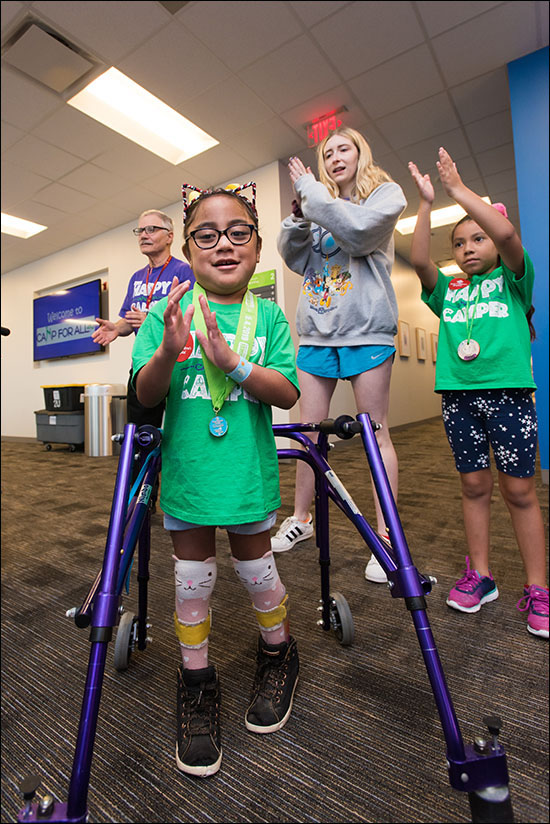
Camp For All 2U is a unique, barrier-free camp that brings the same eventful camping experience to patients and their siblings. Many patients may have missed out on those valuable experiences because they are in the hospital.
“We were thrilled to bring Camp For All 2U here for our patients and families in this community,” Cynda Parrish. “The main goal is to bring fun and normalization to our patients and families here. To have the opportunity to engage in camp-like activities instead of just sitting around at home or in their hospital rooms is exciting.”
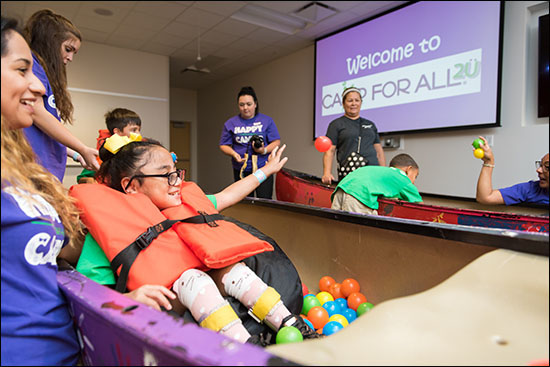
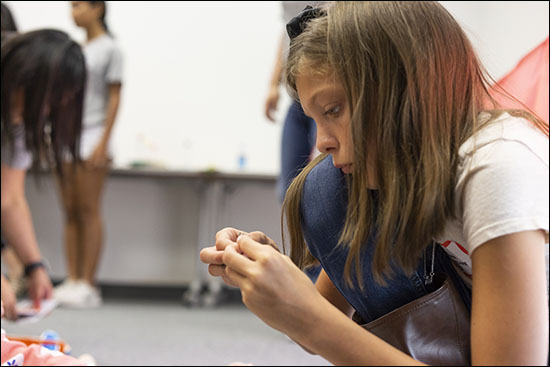
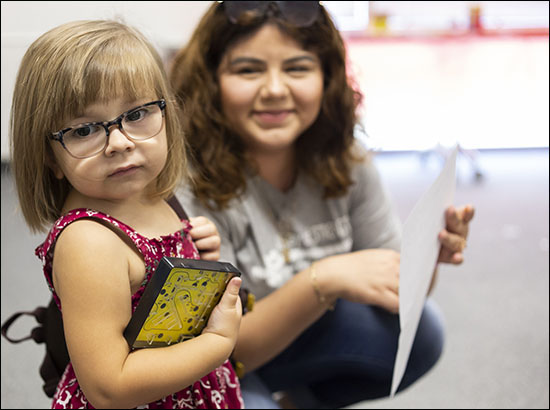
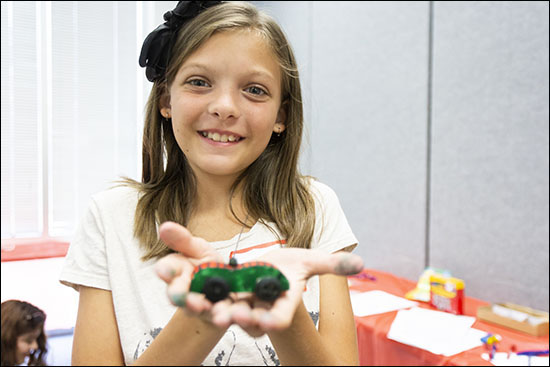
For a week in June and July the program transformed areas of hospitals into camp spaces providing patients, who may not get the experience of camp outside of the hospital, the opportunity to enjoy a variety of games and activities.
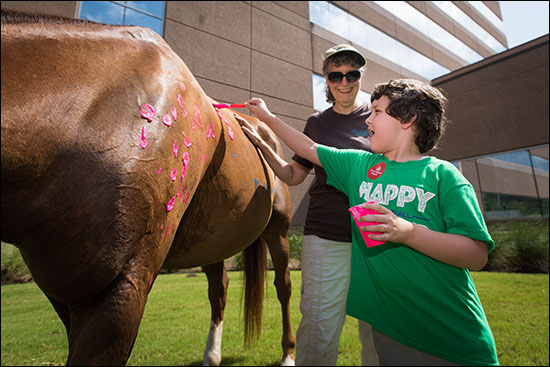
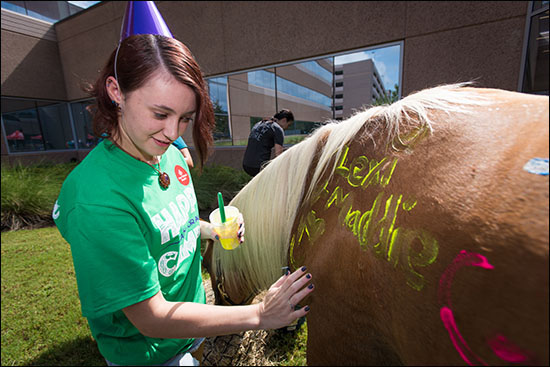
Canoeing and the pie throwing events are a favorite at the Medical Center Campus every year, and West Campus introduced a robotics activity that engaged patients in a whole new way. The Woodlands campus provided activities including a mad science experiment, canoeing, arts and crafts and a hospital favorite, horses!
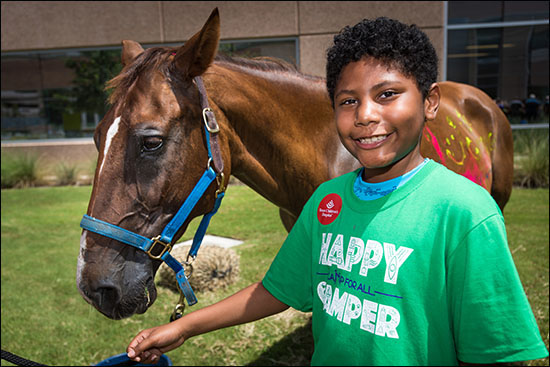
The horses were brought to The Woodlands hospital by a local organization called Inspiration Ranch which provides therapy horses with a similar purpose as our therapy dogs. Patients were invited to pet and paint on the horses, and ultimately enjoy a moment that maybe rare for most of them.
Inspiration Ranch is a Premiere Accredited Center through the Professional Association of Therapeutic Horsemanship International, which breaks down barriers and celebrates the inclusion of individuals with physical, emotional, and social disabilities. They offer exceptional equine-assisted therapy and activities in a loving Christian environment, providing hope and improving the lives of those with physical, mental, and emotional challenges through Equine Assisted Activities and Therapies.
“It’s a little different from therapy dogs when it comes to training because we have to put children on the horse, but the overall goal is the same, the therapeutic value.” President and CEO of Inspiration Ranch, MG Tindall said. “We know for a fact that being next to a horse is calming, they are non-judgmental, and they provided happiness along with and experience some children may not have had before. We appreciate Texas Children’s for allowing us to provide this for the patients.”
View photos from Camp For All 2U below.
Texas Children’s has been adapting camp activities for patients and their siblings in a hospital setting since 2016. Camp For All 2U West Campus was an expansion of the Medical Center Campus event and generously funded by community partner Wood.
“Camp For All 2U is just one of the many opportunities that we have available for patients and their families to enjoy this summer in the hospital,” Child Life Coordinator Mary Reddick said. “The Camp For All 2U staff makes it very easy to engage patients through a series of games and activities that they just love!”
After returning for the fourth consecutive year, an expanding to The Woodlands Campus this year, Child Life Specialist Sarah Herbek said that she is excited to see the program grow across the system and more patients are able to experience this amazing event.
“It feels great to know that Camp is reaching our Katy and Woodlands communities. Camp For All 2 U teaches kids what they can do, not what they can’t do,” Herbek said. “I love that Texas Children’s Hospital recognizes the importance of allowing kids to be kids and as we continue to grow as an institution, we still make it a priority to provide these types of programs for our patients and families.”
Although there is a pre-registration process, patients are more than welcome to join in on the fun if they happen to come across the camp activities at all campuses.
“Camp for All 2U brought tons of laughing and dancing from patients, smiles and excitement from employees, and tears from parents,” Parrish said. “We absolutely look forward to making this an annual event and provide more new and exciting things for the Woodlands community.”
Texas Children’s Health & Well-Being team partnered with colleagues from Environmental Health & Safety, Physical Medicine and Rehabilitation and Occupational & Physical Therapy in launching this month’s “We’ve Got Your Back” video series, which provides employees with expert advice and insight on how to prevent back pain in the workplace – no matter your location, shift or role.
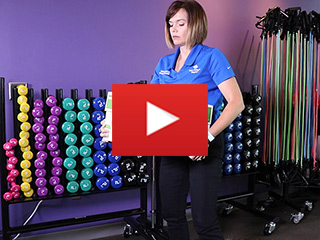
After kicking off the series with a video focusing on using ergonomics to arrange your desk and work environment for optimal comfort and safety, this week’s installment will focus on proper lifting techniques. The episode will feature tips and information on proper body mechanics and techniques from physical therapist Meredith Howell, who also serves as sports PT residency director and site coordinator for clinical education on the Physical Medicine & Rehabilitation team.
“With the use of proper lifting techniques, back injuries can be prevented,” Howell said. “Setting up the environment to prepare for the lift, whether large or small, can improve safety. Always know that if the lift is challenging, you can reach out to team members for assistance.”
Click here to watch the second episode of the “We’ve Got Your Back” series and learn both what to do and what not to do when lifting, as well as the best practice to follow for lifting objects of all kinds: keeping your spine straight, using your legs and hips to complete the lift and lower the object back to the ground.
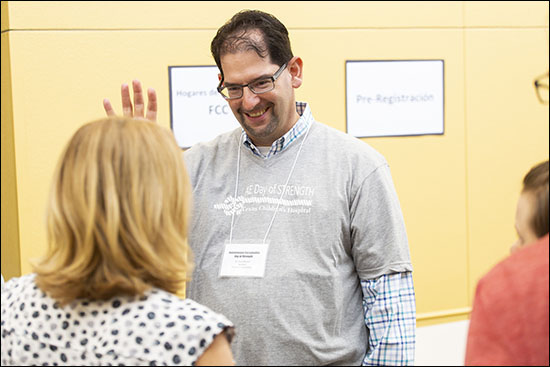
For the second consecutive year, Texas Children’s Hospital hosted a day of recognition for the families and survivors of Autoimmune Encephalitis (AE). Last year, the event was called a Day of Hope. This year it was called Day of Strength.
Organized by Pediatric Rheumatologist Dr. Eyal Muscal and held on July 27 at the United Way-Greater Houston, the purpose of the event was to provide a space for patients to receive updates about their disease, attend sessions about coping strategies, and take advantage of opportunities to connect with other AE patients and families. This year’s program focused on coping and resiliency and also included special activities to honor siblings of AE patients and, for the first time, breakout sessions for adult AE patients and families.
Various organizations participated in the event, including the Anti-NMDA Receptor Encephalitis Foundation, Inc. Foundation President Nesrin Shaheen was a guest speaker at the event and addressed the importance and the huge strides that have been made by the AE Community of Caregivers and Survivors over the past 10 years in raising the profile of AE and particularly, anti-NMDA receptor encephalitis which still leads the pack in prevalence.
“We salute, Dr. Muscal for his enlightened leadership in recognizing the families affected by this important disease,” Shaheen said.
Muscal applauded everyone who participated in the event and to those who helped organize it, including Sarah Brock, Christina Cowperthwait, Monica Guevara and Chivon McMullen-Jackson.
August 12, 2019
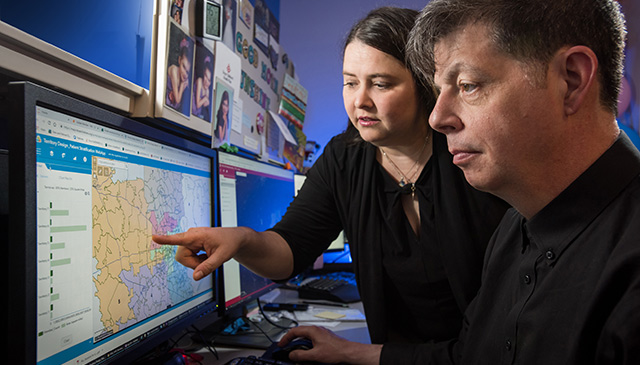
Tricia Foster and Charles Summerhill are the most delightful people providing the most helpful data. They are the geographic mapping experts at Texas Children’s Health Plan.
When you step into their office you feel invited, intrigued and ultimately in awe of the work they do each day to care for our members.
So what exactly do they do?
To the untrained eye the world of GeoMapping seems complicated, but essentially Foster and Summerhill – along with the Business Intelligence Analytics team – build and analyze maps. These maps are then used to meet member, clinical, financial, and operational business needs.
“We use technology that allows us to see where our members are, the resources that are nearby and how to get those resources to them as quickly as possible,” said Foster, senior business intel analyst. “Many times when you work with data and technology you aren’t really sure how your work translates to patient care, but in this job we know we are making a big difference.”
How big?
Big is probably not a big enough word. In recent years the team has had a chance to help patients in the aftermath of some major situations like Hurricane Harvey and the plant explosion in Crosby, Texas.
“On day one of the Crosby explosion we were able to tell the Care Coordination team which members were within a one mile radius of the event and which ones had asthma or breathing related health issues,” said Summerhill, senior business intel analyst.
Foster chimed in with an obvious question – “How many times do you get a call from your insurance company asking how they can help you? People just don’t expect it and it’s wonderful when we can go in and be helpful in times like that.”
The Health Plan’s Mission Control project is another example of how their work has been used to help meet organizational goals.
What can the maps tell us?
The capabilities for the map data are unlimited and always evolving. In addition to knowing where our members are located, we can also tell them the locations of nearby:
But wait, there’s more.
The GeoMapping technology also helps prove that we are meeting state requirements such as having enough providers within a certain proximity to our members. Texas Health and Human Services Commission – the state agency that funds The Health Plan – wants to know that we are making care convenient for our families.
“In addition we can tell if our members are in a food desert,” Summerhill said. “If access to healthy and nutritious food is tough for the family, that is something our member service and care coordination teams should know. There are a variety of factors that impact member care.”
Want to know more about GeoMapping at The Health Plan? Contact Kim Battenfield, manager of Clinical and Business Analytics at kabatten@texaschildrens.org.
What You Need to Know
GeoMapping – When clinical and business data is used to build a map.
Members – Children and women who have insurance through Texas Children’s Health Plan. While Texas Children’s Hospital has patients, Texas Children’s Health Plan has members.
Member Services – The department at Texas Children’s Health Plan that speaks one on one with members to answer questions and provide assistance. You’ll often hear this group referred to as “the call center staff.” Our member services representatives work in our call center on the 10th floor of the 6330 West Loop South building in Bellaire.
Care Coordination – Staff who work directly with families to ensure that their care is managed. Care coordinators work in a case manager or social worker capacity. A great deal of care coordinator work remotely and are often called the “road warriors.”
Food Desert – an urban area in which it is difficult to buy affordable or good-quality fresh food.