September 10, 2019

The Meyer Center for Developmental Pediatrics at Texas Children’s Hospital, Baylor College of Medicine and the Spina Bifida Association recently hosted the Houston Spina Bifida Education Day for patients, families and caregivers. Held at Houston Methodist Hospital, the event showcased newly established, evidence-based national guidelines for the care of individuals living with spina bifida. This is the first time the guidelines, written in part by Texas Children’s and Baylor clinicians and researchers, were shared with such a broad audience.

More than 100 people from across Texas and other states as far as Florida and Indiana attended the event. In addition to unveiling the new guidelines, experts from Texas Children’s presented talks covering a range of health issues faced by individuals living with spina bifida from infancy to adulthood. There also were presentations on related topics such as care coordination, emotional wellness, skin, and bowel-management tips specifically geared toward this group of families.

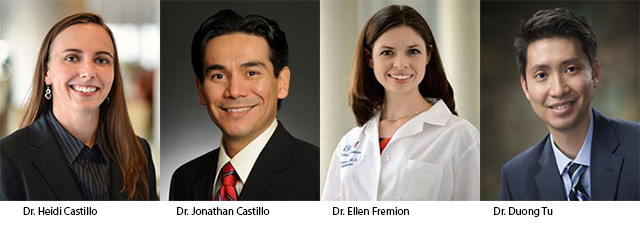
“Usually, clinical care guidelines are widely shared and disseminated among medical practitioners, not so much the lay public, so this conference not only provided professional guidance, but also much needed peer-to-peer advice,” said Dr. Ellen Fremion, a physician in the Spina Bifida Program at Texas Children’s and one of the organizers of the event. “Moreover, the heartfelt appreciation and deep emotional reactions from the families who attended this conference exemplifies how crucial it is to empower patients, families and caregivers with this kind of information, so they are better equipped to care for themselves and their family members.”

Spina bifida (meaning “split bone”) is the most common permanently disabling birth defect seen among newborns in the United States. It is a type of neural tube defect that occurs when a baby’s neural tube fails to develop or close properly. The symptoms of this condition range from mild to severe, depending on where the spinal cord is affected. Myelomeningocele is the most severe form of spina bifida in which parts of the spinal cord and nerves come through the open part of the spine. This leads to several related problems such as loss of feeling in areas below the opening, weakness or paralysis of the feet or legs, problems with bladder and bowel control. Some affected individuals have additional neurological complications, including a buildup of excess fluid around the brain (hydrocephalus) and diverse cognitive challenges. Multiple environmental (such as folic acid deficiency) and genetic factors are thought to cause this complex condition, although the exact causes are still unclear.

The Meyer Center’s Spina Bifida Program at Texas Children’s is a multidisciplinary program that includes several specialty services: neurosurgery, developmental pediatrics, urology, orthopedics, and physical medicine and rehabilitation. Experts from these specialties offer prenatal evaluations and follow patients from in utero to adulthood.

In 2011, Texas Children’s was among the first centers to perform open fetal surgery to treat spina bifida. Using this procedure, the defect in the fetal spine is accessed and repaired through an incision across the mother’s uterus (womb), and has since been the standard of care for spina bifida. In 2014, Texas Children’s Fetal Center pioneered a novel minimally-invasive fetoscopic procedure, in which the spinal defect is repaired through tiny incisions in the uterus using a small camera. This offers the same improved outcomes as the open fetal surgery but comes with additional benefits and reduced health risks.

“Despite recent advances of in utero repair procedures, surgery is not suitable for all patients and cannot be considered a cure,” said Dr. Jonathan Castillo, clinical director of the Spina Bifida Program at Texas Children’s. “Additionally, these surgeries may not reverse all the function or correct all related impairments. Also, these procedures are specific to myelomeningocele and may not help patients with other forms of spina bifida. Therefore, a deeper understanding of the etiology and biology of this condition is crucial to develop better treatment approaches in spina bifida care.”

In addition to providing cutting-edge clinical services, physicians and researchers at Texas Children’s Spina Bifida Program also are engaged in comprehensive, multidisciplinary research initiatives to find newer and safer medical and surgical interventions that can improve the quality of life for these individuals.

In 2014, a multidisciplinary team of experts at Texas Children’s Spina Bifida Program led by Drs. Heidi Castillo, Jonathan Castillo and Duong Tu, received a federal grant from the U.S. Centers for Disease Control and Prevention (CDC) to develop national standards in spina bifida care at the population level. Texas Children’s was the only funded hospital in Texas to be included in this effort, and, along with Baylor, was among the first institutions in the state to participate in the CDC’s National Spina Bifida Registry that collects medical data from this population to improve outcomes.

“Receiving that grant from the CDC and joining the registry gave us an amazing opportunity to participate in a nation-wide effort to develop better outcomes, interventions and standards of care for individuals with spina bifida,” Castillo said. “Since we are one of the major referral sites for spina bifida in the state of Texas, our team provides the entire spectrum of care to pediatric patients – from prenatal diagnosis, surgical interventions and postnatal care until adulthood – for myriad health issues related to spina bifida. This gives our team access to a wide demographic of participants and allows us to conduct unique in-depth studies and comparisons of the outcome measures of current interventions.”

“These studies have led to important findings that are reflected in the recent clinical care guidelines, and have revealed consistent disparities in the outcomes based on patient’s socioeconomic conditions and ethnicity, a novel observation that is currently under further investigation,” Castillo said. “Our team is excited that recently the CDC granted an extension of this grant for five more years, so we can continue to be at the forefront of comprehensive clinical care and research initiatives that will improve the lives of individuals living with spina bifida.”


September 4, 2019

Two years after Hurricane Harvey, Texas Children’s employee Alex Sardual is still dealing with the effects of the historic disaster. Last year we reported that he had not even scratched the surface of fully renovating his home that was destroyed in 2017. Today, Sardual is excited to say that the process is almost completed and his family can move in soon.

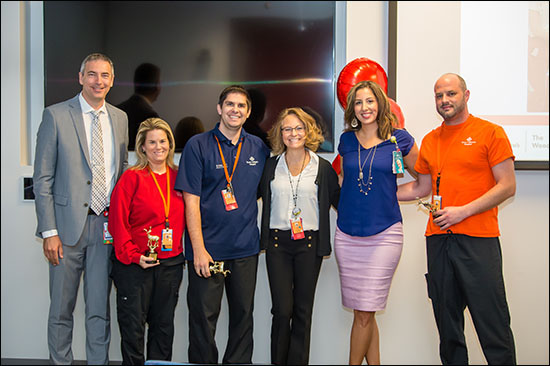
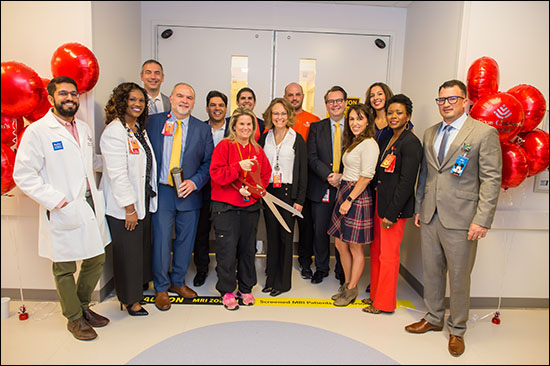
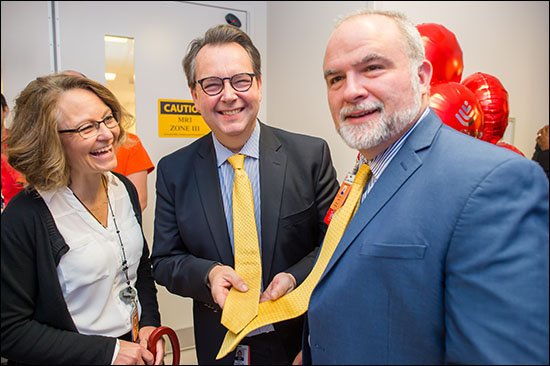
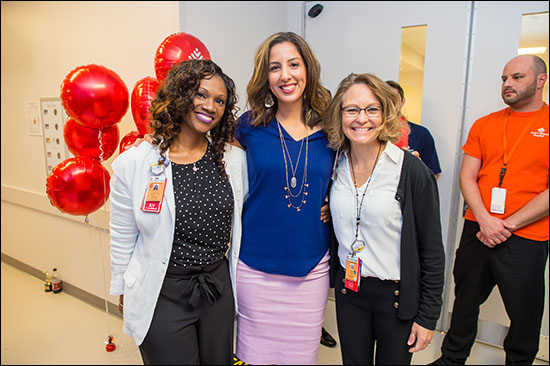
Texas Children’s is known for implementing the latest technology to increase the quality of care for our patients. At an open house, The Woodlands campus recently celebrated the Radiology Department upon receiving two new, hi-tech MRI scanners that will expand the range of exams that are performed.

“We feel that we owe it to our patients to deliver the best possible care and with that it includes getting the best possible diagnoses and having the best possible equipment,” Assistant Director of Radiology Traci Foster said. “We are extremely excited about what this means for The Woodlands campus, and Texas Children’s as a whole.”

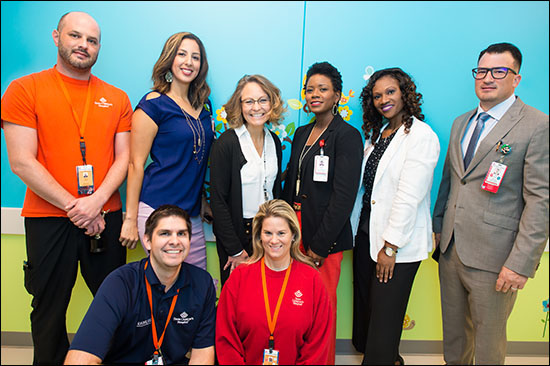
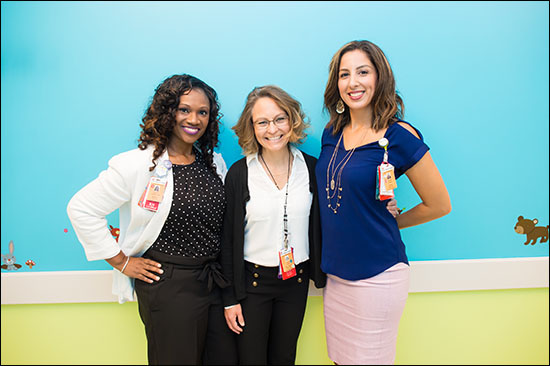
The celebration began in the second floor conference room at The Woodlands campus, as members of the radiology department and hospital leaders mingled and enjoyed complimentary breakfast. Foster then opened a small program by welcoming everyone and thanking many others for their part in this accomplishment. Three MRI technologists, Dionne Dowdy, Hollis Marshall, and Mark Caspari, were awarded the Texas Children’s – The Woodlands Radiology Promise award for Quality Improvement for their collective efforts in successfully transitioning the Radiology Department to the new MRI platform.

“I have been here 22 years and I am really excited about receiving these new scanners and the success of the radiology department as a whole,” Dowdy said. “I look forward to working with these machines and expanding the scope for what we can do for our patients.”

The primary benefit of the new scanners are to provide the best possible quality MR imaging, particularly for neurologic imaging of the brain and spine. The implementation of these machines is a part of a cutting edge platform by our vendor partner, Siemens.

“Texas Children’s for years has set standards for pediatric care in Texas and the country,” Vice President of Sales for Siemens Healthcare Matt Hoffman. “We are excited to be working with you all to be a part of providing high-quality care to children.”

The multinational manufacturing company provided the campus with both the 3T Vida scanner and the 1.5T Sola scanner. Both scanners represent the latest technology on their newest platform, and are amongst the first of its kind in any pediatric facility worldwide.

“Texas Children’s has a commitment to the highest quality and the highest safety for patients, and we are extremely proud of being a part of something so groundbreaking in radiology,” Dr. Victor Seghers, Chief of Community Radiology, said. “These new Siemens MRI magnets represent yet another tangible delivery of our CEO Mark Wallace’s promise to The Woodlands community that children will receive the best care, close to home.”

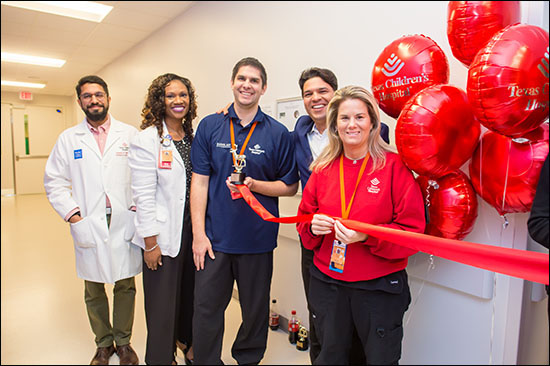
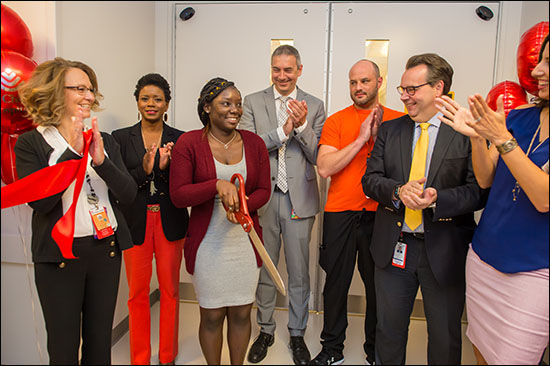
Following the program, everyone proceeded to Radiology on the first floor as seventeen-year-old patient, Ashia Smith cut the ribbon commemorating this momentous event, just before her scheduled MRI exam.

“We have improved our ability to diagnose disease and ultimately treat our patients due to the investment in this new technology,” Seghers added. “Our patients are also reporting improved convenience and satisfaction related to faster imaging time acquisition and the quieter environment in the new MR scanners.”

From an imaging perspective, these new scanners will help ensure that The Woodlands campus can perform all types of MRI exams onsite as opposed to sending patients to the Medical Center campus.

“The future looks terrific. We have a solid partnership with our vendor and a brand new cutting edge platform,” Seghers said, “that can benefit from further improvements and enhancements to both hardware and software over the next 10 years. This is important in light of our clinical and academic/research mission to the patients in The Woodlands and the North Houston metro region.”

Texas Children’s will continue pioneering pediatric radiology technology as we look forward to the arrival of the Kinetic Sensor later this year. This is an integral part and one of the key features of Siemens Healthineers BioMatrix technology and of the new 1.5 Sola and of the 3T Vida systems. It is the first ever in-bore, real-time patient viewing system, allowing close patient monitoring and prospective motion correction for neurological MRI exams, and will be the first in the country.

To learn more about Texas Children’s radiology services, click here.

Every year, more than 25,000 patients come to Texas Children’s for the expert care we provide in neurology, neurosurgery, neurophysiology and genetics. They come from across the nation and around the world with neurologic conditions ranging from common to rare to unknown because few places offer the full continuum of care that Texas Children’s provides.

It was fitting, then, that Texas Children’s was recently recognized for its commitment to excellence and comprehensive, high-quality care, once again being named No. 3 in the nation for pediatric neurology and neurosurgery by U.S. News & World Report.

“We are incredibly proud to be ranked once again among the best locations in the nation for pediatric neurology and neurosurgery,” said Texas Children’s Chief of Neurology and Development Neuroscience Dr. Gary Clark. “Our desire is always to provide the very best care for our patients. That is what drives everything we do and what has gotten us where we are today. We’re committed to providing outstanding neurological and neurosurgical care, to conducting groundbreaking research, and to becoming the best program in the nation.”

The U.S. News rankings use an approach that analyzes quality of health care and patient outcomes data from thousands of medical institutions across the country. This includes measuring specialized clinics and programs, external accreditations, and compliance with best practices. A ranking among the top hospitals in a specialty area indicates a commitment to not only providing high-quality care, but also to identifying gaps where improvements are needed.

One recent example was when survey data revealed gaps specific to neurosurgical shunts. Teams were able to review and analyze the data and swiftly close the gaps.

“We are always striving for excellence, so we take the U.S. News rankings very seriously,” said Chief of Neurosurgery Dr. Howard Weiner. “The rankings are just one measure of the trajectory of the Neuroscience Center as a whole. When I first arrived three years ago, the goals were to be the destination for high-quality, innovative and attentive care; to train the leaders in the field; and to lead in the investigation of neurologic conditions. We’re meeting those goals, but what’s key to our success is the ability for everyone – in Neurosurgery and our amazing colleagues in Neurology – to work together for our patients. That’s the driving principle behind Neuroscience at Texas Children’s.”

Big wins for patients and families

This year, Neurology and Neurosurgery built on successful existing programs and also implemented new initiatives to improve monitoring capabilities, reduce occurrences of infection and improve the overall quality of care.

  • Saw significant decreases in unplanned returns to OR for craniotomy and in readmissions for Chiari decompression

The surgical advanced practice provider team implemented a post-discharge call system to assess patients for signs of infection, increases in pain or other possible complications. This system allowed the surgical team to determine if a clinic visit was appropriate, and it helped decrease the number of 30-day unplanned returns to the OR for craniotomy patients and the number of Chiari decompressions patients readmitted within 30 days of surgery.

  • Increased monitoring for epilepsy patients who received surgical resection or laser ablation

To ensure patients always receive the highest possible level of care, Texas Children’s has always been committed to recruiting and retaining the best and brightest. The addition of six new epileptologists helped greatly improve monitoring capabilities. This past year, at least 50 percent of epilepsy patients who received surgical resection or laser ablation surgery received intraoperative electrocorticography and/or extra-operative monitoring.

  • Significantly decreased percentage of surgical site infections (SSIs) for ventricular shunt surgeries

Dr. William Whitehead has been leading efforts to identify opportunities to reduce SSIs for shunt-related procedures. One key strategy was improved compliance with a bundle of evidence-based surgical protocols, which include the administration of pre-operative antibiotics, appropriate hair removal and proper scrubbing of the surgical site. Adherence to these protocols contributed to a significant decrease in the percentage of SSIs for ventricular shunt surgeries.

  • Decreased the complication rate for epilepsy surgical procedures

An expansion in Texas Children’s Epilepsy program has led to an increase in neuro-diagnostic monitoring volumes that eclipses other institutions. With the addition of new team members (i.e., six new epileptologists) and the opening of a dedicated neuro-intensive care unit this past year – one of the first of its kind in the country – Texas Children’s provides the safest and most effective environment for the care of children with seizure activity.

Learn more about Texas Children’s Neuroscience Center.

Each year in September, Texas Children’s Cancer Center goes gold to honor the courageous journeys of our patients and families who have been touched by pediatric cancer and to create awareness about the challenges these children and their loved ones face. It is also a special time to honor the Cancer Center’s staff and everyone involved in the care and support of our patients.

Today, you will get a sneak peek of what’s to come this month, including the launch of a video series called “This is Cancer: Reflections from our patients.” The series documents the journeys of several families receiving care at Texas Children’s Cancer and Hematology Center. Their stories illustrate in intimate detail what they’re experiencing and how to better support them.

In addition to this series, there are several events scheduled across the organization geared toward raising awareness about childhood cancer. Some of those event are listed below. Please check the Connect calendar and the Cancer Center’s Facebook page for additional details. Also, visit the Texas Children’s Blog for Cancer Center related posts throughout the month.

“We are proud to say that our Cancer Center helps children fight and defeat cancer every day,” said Dr. Susan Blaney, director of Texas Children’s Cancer and Hematology Centers. “We hope you will stand with us in Going Gold for childhood cancer, so that together, we can continue to work on finding a cure for childhood cancer.”

Upcoming cancer awareness activities:

  • September 2-9 – McGovern Commons Water Wall will be lit gold in honor of National Childhood Cancer Awareness Month
  • September 3 at 1 p.m. – West Campus Going Gold Parade and Ribbon Tying Event in the hospital’s main lobby
  • September 4 at 10:30 a.m. – Main Campus Going Gold Parade and Ribbon Tying Event starting on fourth floor of the Pavilion for Women and ending on The Auxiliary Bridge
  • September 5 at 1 p.m. – The Woodlands Going Gold Parade and Ribbon Tying Event in the hospital’s main lobby
  • September 5 at 6 p.m. – Vannie Cook Children’s Clinic in McAllen Going Gold Parade and Ribbon Tying Event
  • September 6 at 10 a.m. – The annual Hyundai Hope on Wheels Tour will stop at Texas Children’s in support of research and programs that bring us closer to better treatment and possible cures to cancer. The tour is a united effort of Hyundai dealers who travel the country to present Hyundai Scholar grants to children’s hospitals.
  • September 7 at 2 p.m. – The opening of and reception for the Periwinkle Foundation’s Making A Mark exhibit on The Auxiliary Bridge. The exhibit, which highlights the art and creative writing by children touched by cancer and blood disorders at Texas Children’s Cancer and Hematology Centers, will be on the bridge throughout the month.
  • September 21-22 – Houston City Hall and the Montrose bridges across Southwest Freeway will be lit gold in honor of National Cancer Awareness Month.

To learn more about Texas Children’s Cancer Center, click here.

Members of Texas Children’s Health Plan are talking back to us – and saying good things.

According to the latest Consumer Assessment of Healthcare Providers and Systems (CAHPS) survey, the majority of families who use our health insurance are pleased with the service they receive.

The recently released 2019 results ranked Texas Children’s Health Plan in the 99th percentile of health plans when it comes to overall performance. This means that we outperformed 99 percent of comparable health plans. We also ranked in the 99th percentile for the health care performed by our providers.

The Health Plan leadership team feels optimistic and we will continue to drive improvements in our member experiences.

“I attribute these scores to the hard work of our employees and the Texas Children’s reputation as a whole,” said Dr. Lisa Hollier, chief medical officer of Obstetrics and Gynecology for Texas Children’s Health Plan. “People trust us and want us to take care of their families.”

Hollier stresses that a reputation is not about what may happen every now and then. A reputation is about what consistently takes place over a long period of time – “And excellence really is who we are at Texas Children’s,” she added.

Our areas of improvement according to the survey data are health promotion and education, coordination of care and shared decision making.

All scores from the survey will be submitted to the National Committee for Quality Assurance (NCQA), the same organization that the Health Plan is looking to earn an accreditation from in April of 2020.

NCQA surveyors will look at the following six areas to see how we are measuring up.

  • Effectiveness of care
  • Availability of care
  • Experience of care
  • Utilization and risk adjusted utilization
  • Health plan descriptive information
  • Measures collected using electronic clinical data systems

Have you ever been asked to do something, but not given the tools to do it?
Have you ever wanted to do something, but lacked resources to get it done?

Not having what you need is one of life’s great frustrations. And unfortunately, this is the case for many students each and every day. They may not have a pen, pencil, notebook or other necessary supplies to do well in class.

Texas Children’s Health Plan addressed this issue head on with three successful back to school fairs. Together, the events provided nearly 3,000 students with day-one ready backpacks.

  • The August 10 event in Tyler had the highest attendance with 1,800 families present and 1,300 backpacks distributed.
  • The August 3 Pasadena event resulted in the distribution of 1,100 backpacks.
  • Port Arthur was host to the July 26 event where 492 students received backpacks.

In addition to the backpack giveaway, the events also included an opportunity for vaccines, health screenings and application assistance for any family wanting to apply for insurance through Texas Children’s Health Plan.