September 23, 2019

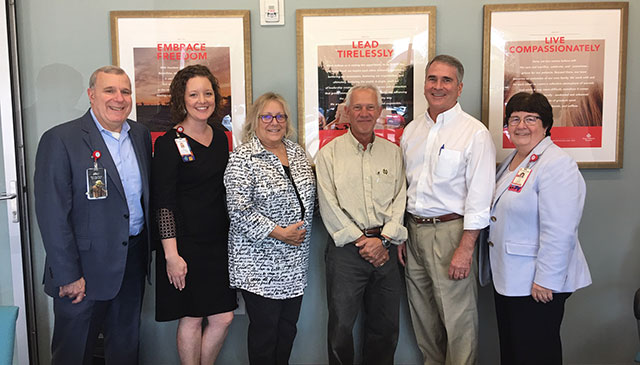
The Texas Children’s footprint continues to expand in the capital. On September 16, Texas Children’s Pediatrics Dawson & Ramirez Pediatrics located at 1111 W 34th suite 102 Austin, TX 78705, opened its doors and became the fourth location in the city.

Drs. Thomas Dawson, Jaime Ramirez and Britni LeBoeuf lead the Practice’s care team, and are dedicated to understanding the importance of a parent feeling completely comfortable with a child’s primary care physician. These board-certified, expert pediatricians have extensive training in children’s health care, and will focus on maintaining Texas Children’s mission of providing high quality care in the Austin community.

“I’m excited to welcome Drs. Dawson, Ramirez and LeBoeuf, as well as their amazing team, to our TCP family,” Kay Tittle, president of Texas Children’s Pediatrics, said. “We know the value pediatricians bring to the community. They are more than doctors – they are partners in your child’s health.”

Texas Children’s Pediatrics locations provide full-service pediatric care for children of all ages including, among other offerings, prenatal counseling; newborn and infant care; well and sick child visits; immunizations; and hearing and vision screenings; as well as camp, school and sports physicals.

In 2018, Texas Children’s expanded its pediatric health care offerings into the Austin community. The first Texas Children’s Pediatrics practice in Austin, Texas Children’s Pediatrics Austin Pediatrics at 5625 Eiger Road, suite 225 opened on June 18.

For more information about Texas Children’s Pediatrics in Austin, visit www.texaschildrenspediatricsaustin.org

On September 19, Texas Children’s Nursing Professional Development and the Shared Governance Interdisciplinary Education Council hosted Professional Day at Texas Children’s Medical Center Campus, Texas Children’s Hospital West Campus and Texas Children’s Hospital The Woodlands.

Approximately 572 participants attended the conference across the hospital’s three campuses – 353 at Medical Center Campus, 110 at West Campus and 109 at The Woodlands. The conference is designed to promote the enhancement of quality care and patient outcomes through evidence-based practice in the areas of pediatrics and obstetrics. The full day event included a pre-conference session, 95 podium and poster presentations, exhibitors, food along with nourishments and fun prizes.

“For the second time, the annual conference was open to the public and we had 31 external participants in attendance,” said Amanda Garey, Nursing Professional Development specialist who was integral to the organization of this event. “Traditionally, Professional Day had been primarily a nursing event, but we have expanded the event to include clinical staff from multiple disciplines who play a critical role in quality patient care and outcomes.” The conference attracted 416 nurses, 14 speech, occupational or physical therapists, 24 social workers, 53 respiratory therapists, five registered dietitians, 10 physicians and 62 other inter-professional clinicians. Professional Day brought over 150 podium and poster speakers from across the system and throughout the community to share their expertise.

Chief Nursing Officer Mary Jo Andre presented the keynote address which was shared to the community sites via telehealth platform. All of the conference speakers were acknowledged as subject matter experts in their fields and delivered the content based on latest trends and evidence. In total, 33 exhibitors and professional organizations supported this conference, which provides a platform for colleagues to collaborate, network, share knowledge and make professional connections.

The event awarded contact hours for nurses, physicians, social work, respiratory therapy, physical medicine and rehabilitation, and registered dietitians. Amanda Garey and Jill Stonesifer were the event leaders at the Medical Center Campus. Lauren Ivanhoe and Deborah Lee were the event leaders at West Campus and The Woodlands.

If you missed this year’s Professional Day, make sure you keep an eye out for the next save the date.

September 17, 2019

As one of the best pediatric cancer centers in the nation, experts at Texas Children’s Cancer Center are on the forefront of cutting-edge basic, translational and clinical research. The center’s world-renowned faculty have pioneered many of the now standard protocols for treating and curing children with cancer.

Scientists and clinical experts at the center are conducting more than 250 clinical trials – more than the majority of pediatric cancer centers in the nation. In addition, the center’s Developmental Therapeutics Program and its Cell and Gene Therapy Program have been leaders in the study of novel agents and immunotherapies, respectively, for the treatment of childhood cancer.

“Our physicians employ evidence-based guidelines and the most advanced clinical trials in the delivery of oncology care,” said Cancer Center Director Dr. Susan Blaney. “Our vast expertise in the development of new therapeutics means our patients have access to the most advanced and innovative therapies.”

Dr. Andras Heczey, one of the Cancer Center’s physician scientists and a member of the newly-formed Sky High Immunotherapy Center, is working with colleagues in his laboratory to develop novel treatments for children with solid tumors. His work is a prime example of what the Cancer Center is doing to advance treatments and ultimately find a cure for a disease that remains the leading cause of non-accidental death in children.

In honor of National Childhood Cancer Awareness Month, we interviewed Heczey about his research and why he thinks such work is so important to enhanced patient care.

What is the focus of your research?
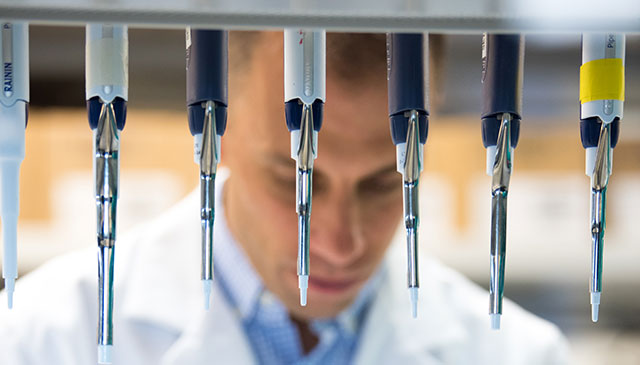
My research focuses on redirecting the normal immune system to attack cancer cells. T cells are a type of white blood cell that participate in the immune response. I am using genetically engineered T cells to treat liver tumors in children and Natural Killer T (NK-T) cells to treat neuroblastoma, a childhood tumor that most commonly involves the adrenal gland.

How exactly does this work?
We take patients’ white blood cells from a simple blood draw, modify them in the test tube to recognize and kill tumor cells, and then re-infuse these genetically engineered (modified) cells into the patient’s blood stream. The idea is that we train the immune system to kill the cancer cells. In patients with neuroblastoma, we modify Natural Killer T cells to express a protein called chimeric antigen receptor (CAR for short) that targets GD2, a molecule on tumor cells but not on normal tissues. When the Natural Killer T cells arrive at the neuroblastoma tissue, they recognize the GD2 molecule and kill the cancer cells. In liver cancer patients, we are using a similar strategy using T cells that express CAR targeting a molecule called Glypican-3, which is primarily expresses on liver cancer cells.

Have you used these treatments in children at Texas Children’s?
Last summer, we started our first human clinical study in children who have relapsed or have refractory high-risk neuroblastoma. So far, three children have been treated. The results we have observed thus far are very promising. We also have started our first human clinical study in children with relapsed or refractory liver cancer. The first patient was recently treated and we are eagerly waiting for the results.

What else are you studying in your laboratory?
In addition to developing strategies to kill the tumor cell, we are also closely studying the tumor environment. We know that when genetically engineered cells enter the tumor, the cancer cells and other cells within the tumor will fight back. We don’t really know how this happens. We have some ideas, but we and others in the field are closely evaluating what happens in human tumors after the engineered cells are infused. This is really important because we want to make sure our cell therapies are effective and that the responses are sustained and the patients are cured. Ultimately, we’ll also need to develop techniques to engineer the cells inside the body. Right now, we have to grow and test the cells before infusing them into the patient. This typically takes four to six weeks, depending on the product and how many cells needed to be manufactured. A patient cannot always wait that long. In the future, we envision strategies where a patient’s immune cells are engineered inside their body to quickly redirect them against the growing tumor cells.

Are you encouraged by what you are finding?
Yes, I am very encouraged. We are getting closer each and every day to finding a cure for some forms of childhood cancer.

Click here to view a preview of the next installment of “This is Cancer: Reflections from our patients.” This installment focuses on Tajah, who was diagnosed with osteosarcoma after visiting Texas Children’s Emergency Center with intense knee pain. The 13-year-old had to have her knee and femur removed. Surgeons replaced them with a metal extendable one, which will prevent her from undergoing several additional surgeries as she grows. The “This is Cancer” series documents the journeys of several families receiving care at Texas Children’s Cancer and Hematology Center. Their stories illustrate in intimate detail what they’re experiencing and how to better support them. Click here to learn more.

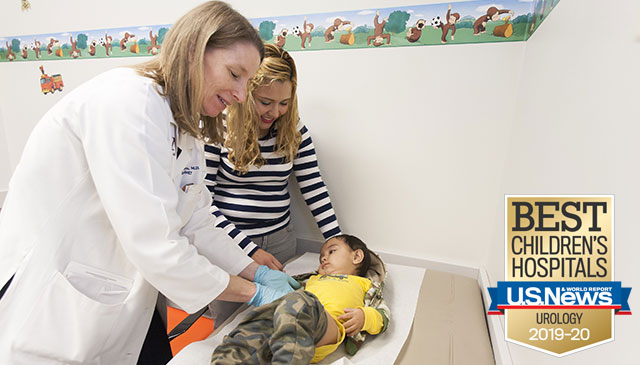
The Urology Division at Texas Children’s Hospital offers the most advanced surgical care for routine urological needs as well as complex genitourinary problems related to congenital birth defects, trauma and a range of other medical conditions. Our urologists have experience successfully carrying out to most extreme procedures on the most delicate patients. Those success rates are evident through nation-wide recognition.

For the first time, Texas Children’s is ranked in the top 10 in each of the U.S. News & World Report-recognized pediatric sub-specialties and this year Urology ranked No. 6.

“Now is the time to show that we can elevate to an even higher level of patient care and do even better than we already have,” Urology Chief of Service Dr. Paul Austin said. “We have to strive to be on the cutting edge of advancement and I envision our reputation factor only increasing further in urology.”

The U.S. News rankings uses an approach that analyzes quality of health care and patient outcomes data from thousands of medical institutions across the country. This includes measuring specialized clinics and programs, external accreditations and compliance with best practices. Improved rankings determine a health care organization’s commitment to not only providing high-quality care, but also to identifying gaps where improvements are needed.

“We’re not going to slow down when it comes to advancing in the areas where we have room for improvement,” Urology Physician Dr. Nicolette Janzen said. “We are going to continue to work toward providing the best care for our patients.”

Big wins for patients and families

This last year, Urology exceeded their yearly goals and executed additional initiatives to increase transparency, reduce risk of infection, and improve the quality of care.

  • Exceed threshold for Percent revision surgery for pyeloplasty
    Pyeloplasty is the surgical reconstruction of a portion of urinary drainage system. This is a procedure that has a national average success rate of over 90 percent. Our Urology team is trained to successfully carry out various approaches to pyeloplasty including robotic-assisted laparoscopic and open. Having this broad range of skill for this procedure ensures the ability to tailor the approach for every patient from babies to teenagers.
  • Significantly decreased unplanned hospital admissions for a urologic issue within 30 days of inpatient urological surgery
    A patient may be re-admitted to the hospital for a urologic issue subsequent to a surgical procedure. Urology has been able to minimize this by analyzing the data from previously re-admitted patients, determining areas for improvement, and applying these improvements to future patients. One successful initiative has been the implementation of “Enhanced Recovery After Surgery” (ERAS). These are protocols for perioperative care pathways provided to advance practice providers (APP), physicians, and nurses as they work together to care for our patients. Lastly, making sure the patient families are educated on how to maintain the child’s health at home helps prevent re-admission.
  • Increased patient volume seen by a pediatric urologist in your Oncofertility program
    Texas Children’s Cancer Center is one of the busiest centers nationally and is on the cutting edge of therapies for cancer patients. An important consideration as patients undergo chemotherapy and radiation therapy for various cancers is fertility preservation. Our urologists are committed to this endeavor. Through our partnership with Baylor College of Medicine (BCM), patients have access to extensive resources for fertility preservation and appropriate counseling. According to Janzen, improving the communication between all services involved with these families has helped to improve access to fertility preservation services.
  • Have closed out 70 percent of gaps
    Gap closure is the result of successful yearly strategies that improves quality outcomes. One of those objectives focuses on preventing infections, more specifically as it relates to Catheter Associated Urinary Tract Infection. Urology’s prevention of gaps in care is a combined effort with the hospital’s system-wide infection control initiatives as we work tirelessly to provide high quality care to our patients.

Click here to learn more about our Urology services at Texas Children’s Hospital.

September 16, 2019

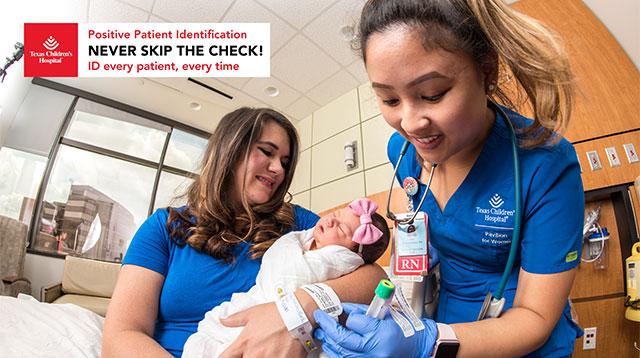
More than 1 million patients are harmed each year in the United States because of medical errors. The most common, yet preventable types of medical errors are those involving patient misidentification.

Collecting blood specimen and other lab results from patients is more than just placing a label on a tube. It’s a complex, multi-step process that involves meticulously checking and re-checking to ensure that the specimen being collected, labeled, processed and handled matches the right patient, every time.

“We know that safe, quality care for every patient at Texas Children’s is the most important responsibility of each staff member and employee here,” said Texas Children’s Vice President Trudy Leidich. “While no hospital is completely immune to medical errors, Texas Children’s continues to take proactive steps to improve the positive patient identification process in order to eliminate preventable harm to our patients.”

In conjunction with World Patient Safety Day on September 17, Texas Children’s has launched a new campaign – Don’t Skip the Check: ID every patient, every time – to engage our employees system wide around PPID efforts and to ensure error prevention alertness and accountability are always top of mind.

“We have several teams anchored around specific PPID goals,” said Denise Tanner-Brown, Director of Patient Care Services at Texas Children’s Hospital West Campus. “They’ve helped us assess and refine our PPID processes and develop learning principles that translate into safe practice at the point of care.”

Since one of the top safety risks nationwide is misidentification, Texas Children’s PPID leaders took an introspective look at our organization to re-assess and identify our potential safety risks. As part of our PPID improvement efforts, the Quality and Safety teams reviewed safety scoops from March 2018 to February 2019, and found that mislabeled specimens was by far the greatest risk of preventable harm.

“Our review of near miss safety events were invaluable lessons for us,” said Nicole Crews, a nurse practitioner in Pathology and Transfusion Safety Officer for the PPID Leadership Team. “By comparing these data trends, we saw what areas we’ve improved upon and what areas need more reinforcement, which subsequently has helped us proactively address these issues and remove barriers to success.”

PPID education roll-out plan – what to expect

The PPID education roll-out initiative will be conducted in several phases across the organization for clinical staff as well as nonclinical employees who have direct encounters with patients and their families.

The training modules accessible via Health Stream include an overview of Texas Children’s PPID policies and processes during blood specimen collection, processing and blood product handling. The modules also include patient families’ stories about misidentification to underscore the important role each of us play in helping to cultivate a harm-free environment for our patients and families at Texas Children’s.

To further drive home this message, the PPID Leadership team collaborated with Marketing to produce electronic slides and screen savers with our call-to-action messaging – Don’t skip the check: ID every patient, every time – that will be used across our three hospital campuses to keep positive patient identification top of mind. Posters will also be placed in our patient units to serve as a visible reminder.

In addition to this, Texas Children’s PPID campaign also includes efforts to educate our patients and families about the importance of wearing ID bands at all times while in our care to ensure their safety.

“September 17 marks a cultural revolution at Texas Children’s Hospital,” said Associate Chief Nursing Officer Jackie Ward, and executive co-sponsor of the PPID Initiative. “We want to ensure every patient has a positive PPID experience and that we’re providing the right care to the right patient every time.”

By just saying, “Alexa, open Texas Children’s Urgent Care,” you will now be able to access wait times and available hours immediately from your Amazon smart device. The feature was developed to make retrieving information about your local urgent care more convenient and hands-free.

Alexa is a widely popular digital assistant built into smart devices, answering questions and performing a multitude of tasks in millions of homes across the country.

Paola Alvarez-Malo, Vice President of Innovation, wanted to explore how to leverage the popularity of Alexa and connected with Information Services Applications Architect Brian Warwick.

“It gets information that’s already out there, and it’s quick, easy and very helpful,” Alvarez-Malo said. “Innovative ideas often come from two people with a common interest connecting and helping each other think through the possibilities. The partnership with IS and Texas Children’s Urgent Care is a great example of how we can work together to bring new ideas to life.”

Warwick had previously built the online Texas Children’s Urgent Care wait times and had already begun to explore how to extend that build to Alexa as a means to demonstrate the use of new technologies.

“I think it’s something that definitely sets us apart from other children’s hospitals and what’s being offered right now,” Warwick said. “I believe we are the only one that is actually pulling real time Epic data, so I’m pretty proud of it.”

By just saying, “Alexa, open Texas Children’s Urgent Care,” you will be able to access wait times and available hours.

“This skill is another way that Texas Children’s is enhancing patient experience through innovative tactics,” President of Texas Children’s Pediatrics and Urgent Care Kay Tittle said. “We look forward to its expansion and how this skill will allow our urgent cares to provide even more efficient services.”

As the first phase of this process rolls out, the information services team plans to include more features and add more locations to the skill. We would love your feedback to determine how we can make Alexa more effective for all patients.

Click here to take our survey and let us know your thoughts.

Texas Children’s Health Plan insures the medical needs of some of the sickest children. But what happens when these children grow up healthy and are ready to contribute to society?

For most members, this isn’t an issue. However, for children who have significant disabilities, this is a top concern.

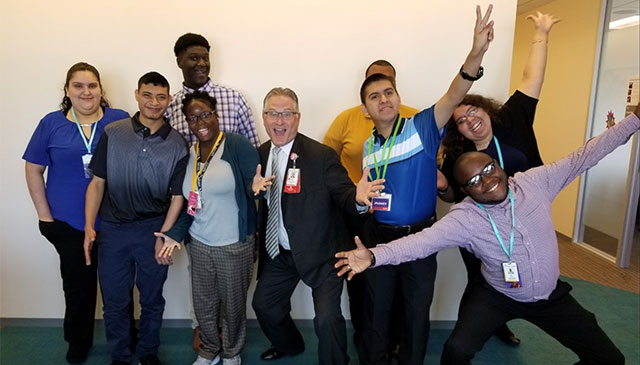
This concern is what sparked Texas Children’s Health Plan to form a partnership with Project Search, a national organization dedicated to helping people with disabilities find employment. Project Search makes it possible for an annual class of interns to earn valuable work experience each year.

Seeking new opportunities at Texas Children’s Hospital

For the past three years all of those internships have been within the walls of The Health Plan. But this year the program’s leaders are looking to offer more opportunities at Texas Children’s Hospital.

“Our main goal is to ensure that our students complete their time with us and are able to land a job,” said Aracely Olmeda, project search program coordinator. “As the host site, we work hard to teach hands-on skills here at The Health Plan, but we are also interested in expanding our offerings and would love to partner with departments at the hospital. The more robust and inclusive an experience we can provide, the higher quality our program will be.”

The class of interns are ready to work and are capable of a variety of tasks; including but not limited to:

  • Data entry and other basic computing
  • Filing and organizing
  • Food service
  • Front desk responsibilities

Olmeda says that Houston Independent School District instructor Lisa Mangum and Texas Workforce Commission job coach and job skills trainer Daphne Wills, lead the efforts and offer full support to Texas Children’s employees who provide opportunities to the interns.

If your department is interested in partnering with a project search intern, please reach out to Aracely Olmeda at anolmeda@texaschildrens.org. Job coaches will train the students on the skills needed for the position.

Want to know more about project search?

Home