September 22, 2020

Tuesday, September 22, 2020: 3:15 p.m.

Storm expected to move out of the area tomorrow, continue exercising caution

As Texas Children’s leadership and the Department of Emergency Management continue to closely monitor Tropical Storm Beta and its impacts to the Greater Houston area and east Texas, it appears the storm will be moving out of the areas by early tomorrow.

Thunderstorms are expected this afternoon with the heaviest rainfall occurring throughout the Houston area and in the Medical Center this evening, continuing through about 1 am Wednesday. Significant rainfall is expected later this afternoon into the evening hours in the Beaumont area with heavy down pours continuing until around 7 am Wednesday.

Braes Bayou has receded significantly in the past few hours, and streets near the Medical Center and throughout Greater Houston are primarily clear, with only isolated issues along 288, 610 South and I-45 South. Priority 1 flood measures, including the closure of B2 Level flood doors, will remain in place through the evening as a precaution. Parking garages have not been impacted and remain accessible.

Operational impacts:

  • Clinical staff at the hospital campuses will continue one-to-one hand-offs as needed this evening and in the morning. Sleep arrangements will be available for staff as a convenience, but no special pay practices will be activated.
  • Texas Children’s Pediatrics, Texas Children’s Specialty Care practices, and The Centers for Children and Women have made appropriate scheduling adjustments for tomorrow, which will continue to be communicated by leaders within those areas.
  • With the storm expected to wind down tomorrow, we are proceeding with normal business operations across the Texas Children’s system, and we are continuing normal pay practices.

Please continue to exercise caution when navigating roadways, and avoid flooded areas as you head home or make your way into work. Plan for additional travel time, and be prepared to identify alternate routes in case roadways are flooded. Also, be sure to communicate with your leaders should your arrival to work be delayed due to the inclement weather conditions.

Also, be certain to stay up to date with Texas Children’s Emergency Management communications. These will be sent via texts, phone calls and emails through the Texas Children’s Notification System. More information, including the latest weather, traffic and road conditions, is available on the Emergency Management Connect site and through the National Weather Service website.

Thank you for your commitment to caring for our patients and their families. We will communicate additional updates as the situation warrants.
 

Tuesday, September 22, 2020: 6:00 a.m.

Heavy rainfall continues, minor operational impacts possible

Texas Children’s leadership and the Department of Emergency Management is continuing to closely monitor Tropical Storm Beta and its impacts to the Greater Houston area and east Texas.

Rainfall is expected to continue throughout the areas, remaining stationery over the Houston area for the next few hours and tracking eastward. Strong wind gusts and the threat of isolated tornadoes remain. A lull in the rainfall is expected from noon to around 5 pm today, with rainfall again increasing this evening, continuing throughout the night and into the early morning hours on Wednesday before moving to the east.

Overnight, Braes Bayou elevated significantly, but is not yet at critical levels. Texas Children’s has put Priority 1 flood measures in place, closing the B2 Level flood doors. However, all garages currently remain open and accessible.

Road conditions throughout the Greater Houston area are primarily clear, with the exception of some adverse road conditions along 288 and 45 South.

Operational impacts:

  • Clinical staff at the hospital campuses will continue one-to-one hand-offs as needed. Understand there may be delays, and expect to remain in place until colleagues can safely arrive.
  • Staff at Texas Children’s Pediatrics and Texas Children’s Specialty Care practices will receive additional information and direction from leaders in those areas regarding any expected opening delays or operational impacts to specific locations.
  • Beyond those impacts, we are proceeding with normal business operations across the Texas Children’s system, and we are continuing normal pay practices.

We ask for your patience and agility as staff, employees and families navigate the weather conditions today, as some delays are likely.

Please continue to exercise caution when navigating roadways, and avoid flooded areas as you head home or make your way into work. Plan for additional travel time, and be prepared to identify alternate routes in case roadways are flooded. Also, be sure to communicate with your leaders should your arrival to work be delayed due to the inclement weather conditions.

Also, be certain to stay up to date with Texas Children’s Emergency Management communications. These will be sent via texts, phone calls and emails through the Texas Children’s Notification System. More information, including the latest weather, traffic and road conditions, is available on the Emergency Management Connect site and through the National Weather Service website.

Thank you for your commitment to caring for our patients and their families. We will communicate additional updates as the situation warrants.
 

Monday, September 21, 2020: 2:44 p.m.

Heavy rainfall expected to continue over next few days

Texas Children’s leadership and the Department of Emergency Management is continuing to closely monitor Tropical Storm Beta and its impacts to the Greater Houston area and east Texas.

Rainfall is expected to continue throughout the areas, with the heaviest bands of rain expected overnight and into the morning hours. Localized wind gusts are also expected with the possibility of weak, isolated tornados within the areas of strong rain bands. Be mindful that the extended rain will elevate the risk of ponding and flash flooding over the next few days.

Please continue to exercise caution when navigating roadways, and avoid flooded areas as you head home or make your way into work. Plan for additional travel time, and be prepared to identify alternate routes in case roadways are flooded. Also, be sure to communicate with your leaders should your arrival to work be delayed due to the inclement weather conditions.

Clinical staff will continue one-to-one hand-offs as needed. In addition, we are continuing normal business operations and normal pay practices. We will keep you posted should this status change.

Please be certain to stay up to date with Texas Children’s Emergency Management communications. These will be sent via texts, phone calls and emails through the Texas Children’s Notification System. More information, including the latest weather, traffic and road conditions, is available on the Emergency Management Connect site and through the National Weather Service website.

Thank you for your commitment to caring for our patients and their families. We will communicate additional updates as the situation warrants.

 

Sunday, September 20, 2020: 2:50 p.m.

Heavy rainfall expected Monday and Tuesday

Texas Children’s leadership and the Department of Emergency Management are closely monitoring the weather as the Greater Houston area and east Texas is expecting a potential threat of heavy rainfall early tomorrow morning, continuing throughout Tuesday. With the heavy rainfall, localized flash flooding is possible in portions of Houston and east Texas.

We urge employees to exercise caution when navigating roadways and avoid flooded areas as you head home or make your way into work. Please plan for additional travel time, and be prepared to identify alternate routes in case roadways are flooded. Also, be sure to communicate with your leaders should your arrival to work be delayed due to the inclement weather conditions.

As for clinical staff, we will proceed with one-to-one hand-offs on Monday and Tuesday for those delayed in arriving at work due to weather and road conditions. At this time, we are planning for normal operations, and we are continuing normal pay practices. We will keep you posted should this status change.

Please be certain to stay up to date with Texas Children’s Emergency Management communications. These will be sent via texts, phone calls and emails through the Texas Children’s Notification System. More information, including the latest weather, traffic and road conditions, is available on the Emergency Management Connect site and through the National Weather Service website.

Thank you for your commitment to caring for our patients and their families. We will communicate additional updates as the situation warrants.
September 21, 2020

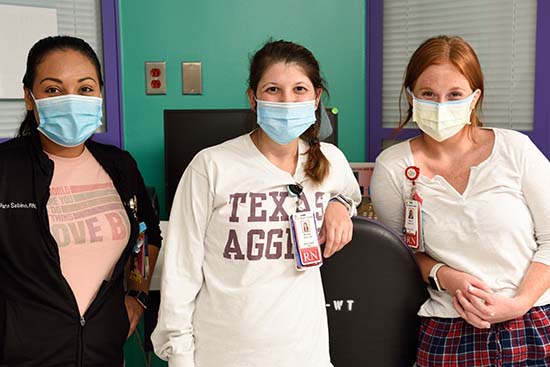
The Houston Texans paid tribute to three Texas Children’s frontline heroes during halftime of the team’s first home game on Sunday. The video thanking the frontline heroes for their ongoing response to the COVID-19 pandemic highlighted Dr. Amy Arrington, Medical Director of the Special Isolation Unit at Texas Children’s Hospital West Campus; Lakeisha Forney, Unit Support Assistant, Facilities Operations; and Lauren Myers, RN, Cardiac Intensive Care Unit. View more

Like most parents, the Harts were nervous about their 10-month-old son’s surgery scheduled with Texas Children’s Division of Urology. In addition to regular jitters, they were especially concerned about their son undergoing general anesthesia.

“My husband did some research and found that it can be dangerous for young children,” Kayla Hart said. “So, needless to say, we were a little worried.”

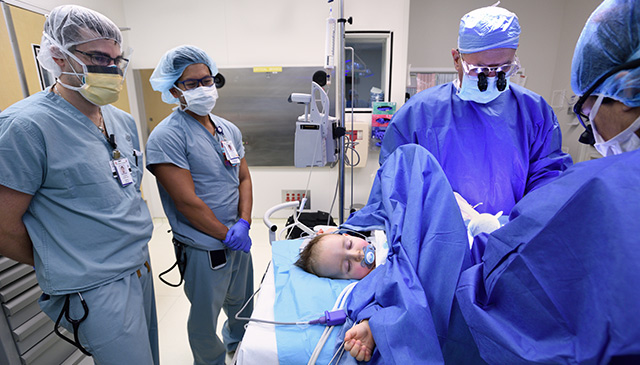
Those worries were put to ease when their son’s pediatric anesthesiologist, Dr. Kevin Chu, and surgeon Dr. David Roth, explained the information the couple found online and offered another option, spinal anesthesia. Spinal anesthesia, numbs the lower part of the body to block pain versus general anesthesia, which puts a patient to sleep.

Texas Children’s Department of Anesthesiology and Department of Surgery recently started offering spinal anesthesia, when appropriate, to parents of young children. Rowan Hart was one of the hospital’s first patients to receive spinal anesthesia as an alternative to general anesthesia.

“When I went back to recovery, he woke up from the nap he was taking throughout surgery and was totally normal,” Hart said. “He wasn’t groggy at all and was even smiling.”

General Anesthesia Division Chief Dr. Olutoyin Olutoye said spinal anesthesia is a safe alternative to general anesthesia in patients under one year of age who are having surgery on the lower part of their body. She said if needed, the patient may receive a light sedative to make them relax but otherwise, they are awake during their procedure. There is no need for a breathing tube when a child receives spinal anesthesia and patients, like Rowan Hart, are alert and in good spirits post operatively.

“Even though anesthesia is much safer today than ever before, every anesthetic exposure and surgical encounter, has an element of risk and we must remain vigilant about communicating such risks to our patients and their families,” Olutoye said. “Offering an alternative to general anesthesia when appropriate is another way we can serve our patients and families in this capacity.”

On December 14, 2017, the U.S. Food and Drug Administration (FDA) released a drug safety communication about prolonged or repeated anesthetics in young children and pregnant women in their third trimester.

The FDA’s communication states:

  • A single, short exposure to anesthesia appears to be safe.
  • There is some evidence that longer (>3 hours) or repeated exposures could have negative effects on behavior or learning.
  • Much more research is needed.

As a result of the communication Texas Children’s Hospital changed its anesthesia practice and started discussing the warning before surgery with the parents of all children 3 years of age and younger.

In addition, Texas Children’s Hospital adopted the warning’s recommendation that a discussion occur among parents, surgeons, other physicians and anesthesiologists about the duration of anesthesia, any plan for multiple general anesthetics for multiple procedures, and the possibility that the procedure could be delayed until after 3 years of age. Parent-education materials that cover these topics are available to our patients and their families.

“I think offering spinal anesthesia is another way we can remain on the leading edge of this issue,” said Roth, who helped spearhead the use of spinal anesthesia together with the Department of Anesthesiology, and who has operated on the patients who have received it thus far. “It’s a safe alternative that we can use to reduce any potential risks of general anesthesia in our younger population.”

Anesthesiologist-in-Chief Dr. Dean B. Andropoulos agreed and said the benefits of anesthesia must always be weighed against the risks of anesthesia itself and Texas Children’s does a good job at doing that.

“We are very serious about educating our patients and families prior to surgery about any risks and any options that can be taken to mitigate such risks,” Andropoulos said. “Using spinal anesthesia is a nice addition to what we already are doing to mitigate potential risk.”

Texas Children’s Cancer Center hosted several virtual activities throughout the month of September to honor our courageous patients and their families, and to thank our dedicated staff for all they do. While COVID-19 changed this year’s Going Gold celebrations, many came together in a virtual and socially distant way to shine the light on pediatric cancer for Childhood Cancer Awareness Month.

Director of Texas Children’s Cancer and Hematology Centers Dr. Susan Blaney said she is grateful for those who participated in our virtual events to help raise awareness for such an important cause. Although great strides have been made in combatting childhood cancer, there is still work to be done.

“We need a cure for every child diagnosed with cancer,” Blaney said. “Each day in our Cancer Center, our devoted team of physicians, nurses, researchers, and many others, are focused on translating the discoveries from our laboratories into novel therapies to improve the cure rate and outcomes for childhood cancer. ”

Here are some highlights from this year’s Going Gold celebrations at Texas Children’s.

Let There Be GOLD Carnival

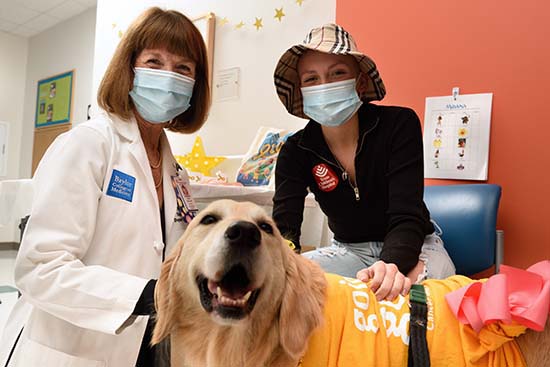
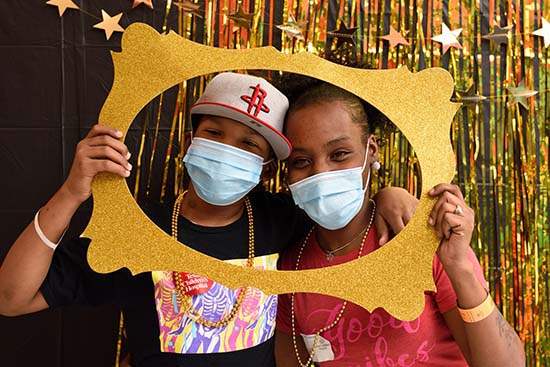
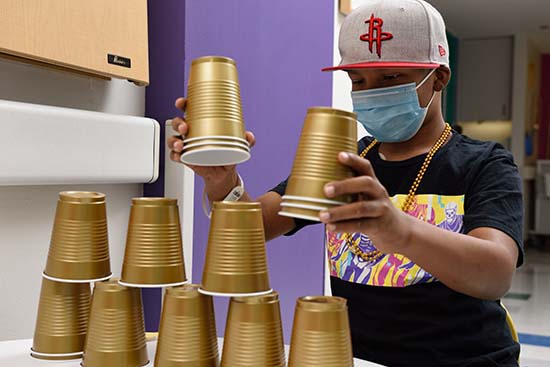
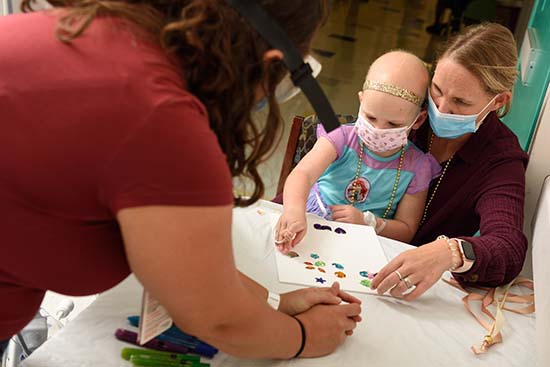
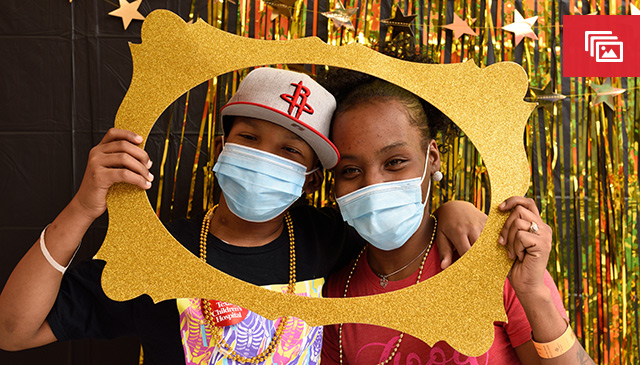
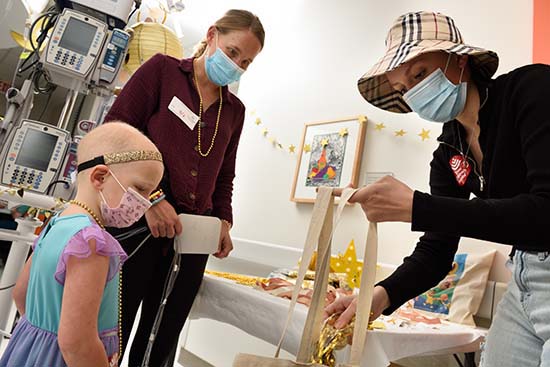
On September 8, The Faris Foundation hosted a socially distant Let There Be GOLD Carnival for patients and their families on our inpatient Cancer Center unit. The floor was adorned in gold ribbons, stars, beads and other festive decorations, and there were numerous activities for children including arts and crafts, games and gold slime making.

Patients and their families also received a special visit from Elsa, our therapy dog, who dressed up for the occasion wearing a Going Gold T-Shirt to celebrate September Childhood Cancer Awareness.

Texas Children’s Cancer Center was inspired to “Go Gold” six years ago by a young patient, Faris D. Virani, who was perplexed about why he didn’t see as much gold in September compared to other colors he saw during different disease awareness months. Motivated by Faris’ concern, each year the Cancer Center has increased their level of “gold-ness,” and this year was no different.

Faris’ mother and founder of The Faris Foundation, Dr. Asha Virani, joined with Texas Children’s Cancer Center staff for the Let There Be GOLD Carnival. Virani said she knows her son, who lost his battle with Ewing sarcoma, is smiling because of all of the gold that was shown around Texas Children’s in September.

“September Childhood Cancer Awareness month is a golden opportunity to spread awareness and love,” said Virani. “Over the years, Texas Children’s has been a leader in making this cause so visible.”

Pajama Day “Go Gold” Celebration

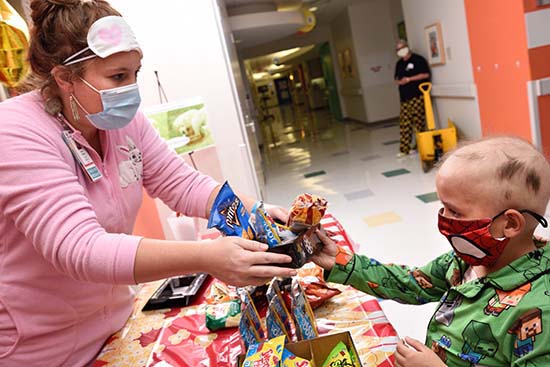
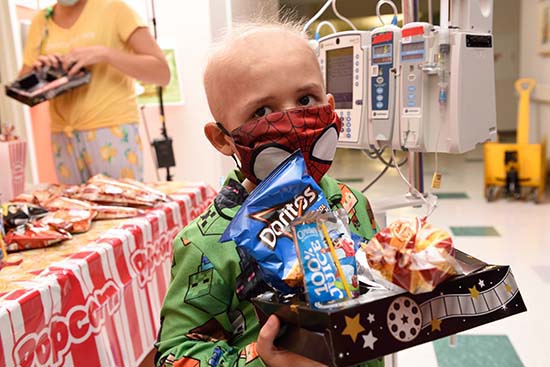
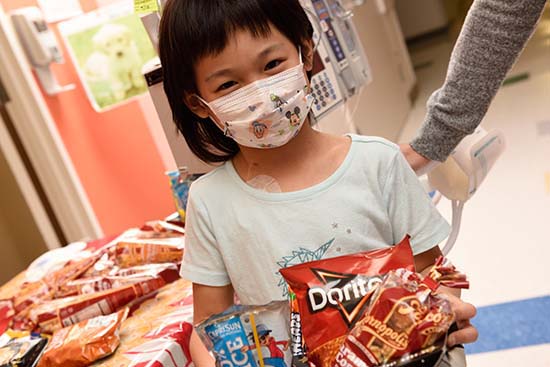
Also this month, patients, families and staff at Texas Children’s Cancer Center had their very own Pajama Day to help raise awareness of childhood cancer. Wearing their pajamas, they stood in solidarity to honor the courageous journeys of our patients and families who have been touched by pediatric cancer.

This year’s Pajama Day was part of #AmazonGoesGold campaign to raise awareness of childhood cancer. Children are fighting cancer while in their pajamas, so the team decided to have a pajama party to celebrate our patients and their journey.

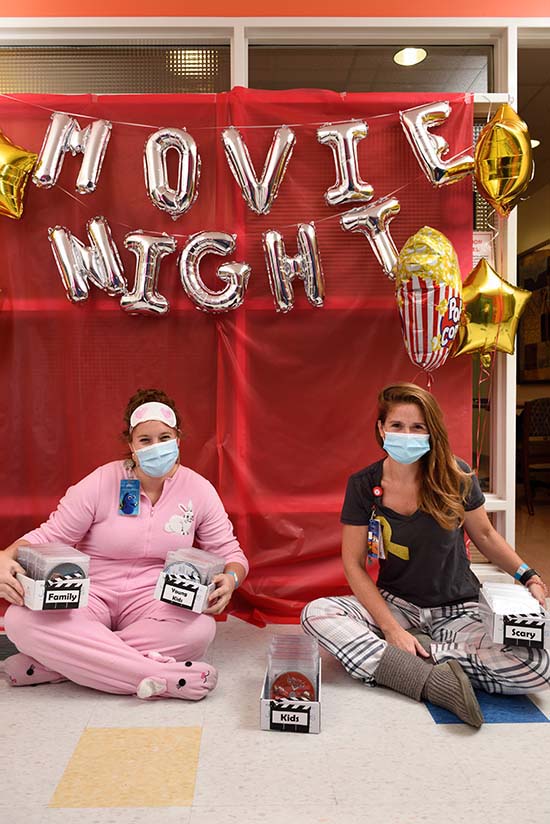
The Pajama Day started with children decorating sleeping masks, pillowcases and their own robes. All three Cancer Center inpatient units had their own concession stand where the patients came and filled their snack box and chose a movie of their choice. Some patients were very interested in scary movies while others wanted something different – there was something for each of our patients. Each child took their snack box and watched a movie with their family in their room.

In conjunction with the #AmazonGoesGold campaign, Amazon donated a gift of $500,000 to Texas Children’s Cancer Center as part of their Go Gold initiative to help advance pediatric cancer research.

Video messages from our Cancer Center staff and patients

To celebrate our patients and their families, our Cancer Center team gathered virtually to share inspiring video messages throughout the month of September. And, several of our fellow patients shared their own messages of hope and encouragement for other children and families impacted by childhood cancer.

One of our patients had this to say to those facing cancer: “September is Childhood Cancer Awareness Month. My encouraging words to you are stay strong, always be positive, and you can beat cancer.”

Click here to view Cancer Center staff videos. Click here to view encouraging words from our patients.

The Health Plan continues its focus on cultural competency as the deadline nears to complete the state-mandated training. More than 80 percent of employees have taken the course.

Teams have spent the past few weeks in discussion around the 15 national Culturally and Linguistically Appropriate Services (CLAS) standards, their personal experiences, and ways they can improve their work performance in this area.

These discussions, along with recent Cultural Competency Week activities are being managed by the newly developed Cultural Competency Committee. In the future, the committee will ensure that the organization adheres to the national standards and plays an integral role in addressing health disparities.

Provider Relations

Provider Relations Liaison Javier Valdez, who is a 32-year Texas Children’s employee, has seen our organization navigate many cultural shifts and is pleased to be part of these latest efforts.

“I feel that we do well when it comes to cultural competency, but I think we could always do better,” Valdez said. “This is exactly why I’m so glad to hear of the committee’s work.”

In his role Valdez meets the needs of culturally diverse providers who serve culturally diverse members.

“We have a very seasoned team that is close and able to discuss issues openly,” he added. “I think this is why it’s important that we have a bilingual staff that can speak many languages. This way we are able to assist our members in a language they feel the most comfortable speaking.”

Valdez added that a member’s culture is often connected to their social situation, their health and subsequently the solutions to any health care issues. This means that the more we understand a person’s culture, the more we can help them reach their health care goals.

Care Coordination

The Health Plan’s care coordination team also conducted a series of cultural competency discussions starting back in May. The discussions were led by Care Coordination Director Ashley Simms and Assistant Director Katara Butler.

Butler said the team’s conversations centered around a few key themes; including personal accountability regarding cultural biases, keeping others accountable regarding their biases and remaining open to learning more about the culture of others.

“Not only do we serve a diverse member population, but as a team we are also diverse,” Butler said. “As managers it’s important that we give our teams all the tools they need to grow personally and professionally in this area.”

All health plan leaders received talking points to help them host cultural competency conversations. These conversations will provide even more context for the state-mandated training, available in HealthStream.

Finding courage 

The following passage was written by Texas Children’s Chaplain Pam Krinock. 

These days it takes an extra dose of courage to walk through the doors of work. It’s more than the potential exposure to COVID-19. We are fortunate to have the protective equipment we need and are learning more about how we can prevent the spread of the virus.  Still, we must acknowledge that health care workers are vulnerable and that we worry about members of our households. That’s why many call us heroes. It’s a bit much to live up to when all we are really doing is coming to work. Yet it does take courage.

The need for personal courage goes beyond the showdown with the pandemic. By showing up for work, we commit to taking on the problems of others. Caregiver fatigue, which is always an issue for family members, is sky high due to the social isolation they are feeling. Therefore, they question our policies, they ask for exceptions, and their need for help and relief is real and intense. We have also been working with limited staff for several months. There are fewer people on site to call on when we need support. For people working in some roles, getting used to telecommuting is challenging. Some say it’s like working with your hands tied behind your back. And, those working labor pool shifts are taking on different roles.  All of this takes an immense amount of personal energy.

Ernest Hemingway says, “Courage is grace under pressure.”  Each day I am awed at the amount of grace I see around me from the teams at Texas Children’s. We all are working in the face of one major stressor while carrying our own second, third or fourth. These stressors can be anything from financial pressures, health concerns, restrictive social measures, political and social unrest, or another natural disaster. It’s a lot!  Yet patience, caring,   professionalism, support for one another, and smiles are abound.

When we don’t do things perfectly (and we often don’t), we can take comfort in the words of Mary Ann Radmacher, “Courage doesn’t always roar. Sometimes courage is that little voice at the end of the day that says, I’ll try again tomorrow.” Giving ourselves and those we rely on grace is a sign of courage.

The work of caring for our patients and families is never done. When I leave work each day I have a personal ritual. I give thanks that my work is fulfilling and important, but that I am not indispensable.  I give thanks for the amazing team that will take care of our patients while I am gone. And I remember the words of Victor Hugo, Have courage for the great sorrows of life and patience for the small ones, and when you have laboriously accomplished your daily task, go to sleep in peace. God is awake.”


September 15, 2020

From COVID-19 to Hurricane Laura, Chief Nursing Officer Mary Jo Andre shares a message of appreciation and support to our nurses for their continued dedication, courage and preparedness in keeping our team and patients safe, while adjusting to what has become our new normal in the wake of the COVID-19 pandemic. Read more