July 28, 2015

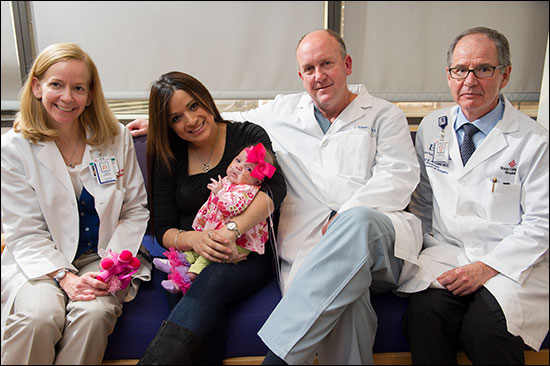
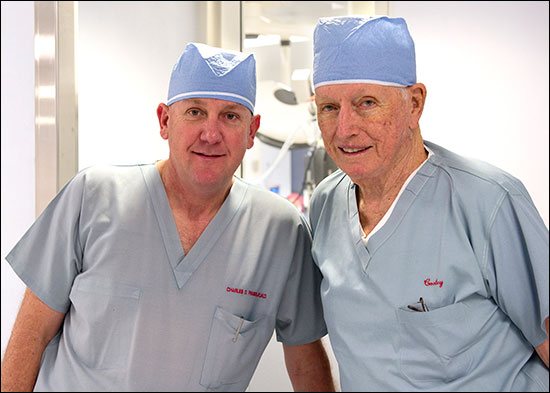
72915fraser640Thanks to the vision of legendary heart surgeon Dr. Denton H. Cooley and the leadership of Texas Children’s Hospital Surgeon-in-Chief Dr. Charles D. Fraser Jr., the Texas Children’s Hospital Heart Center is one of the most active pediatric heart programs in the United States, setting a record with 32 heart transplants in 2014 and consistently treating the most complex heart issues every day.

Since its inception 60 years ago, surgeons with the program have performed more than 27,000 cardiac operations, many of which have pushed the boundaries of a field pioneered by Cooley at Texas Children’s Hospital. The center has continued to push such boundaries under the leadership of Fraser, who joined Texas Children’s in 1995 and has helped focused the center on increasingly complex repair work, particularly in newborns and premature infants.

“I think Cooley would say that some of the contributions we’ve made in the past 20 years he didn’t dream could possibly be happening,” Fraser said. “We will continue to reach for a high bar and not coast on what Cooley and others got started here.”

The Heart Center began shortly after Texas Children’s opened its doors in 1954, a time when the idea of specializing in cardiology or heart surgery was a new concept on adults, much less children and infants. But, Cooley, a masterful surgeon ready to implement the advancements he had seen in medical school, was determined to make Texas Children’s the birthplace of pediatric cardiac care.

One of the program’s first major advances came when Cooley and his colleagues were able to open up the heart and operate inside it. The development of the heart-lung machine, which diverted blood from the heart and lungs, allowed this to happen and drove other doctors to Texas Children’s to observe what was unfolding.

Another milestone that garnered the Heart Center a lot of attention came in 1984 when Cooley performed the first pediatric heart transplant on 6-month-old Sara Remmington. The procedure was unlike anything that had been done, even in adults.

“That really was an exciting occurrence that attracted a lot of attention to the Texas Children’s surgical program,” Cooley said.

Fraser, who recently celebrated his 20th anniversary with Texas Children’s Hospital, is no stranger to monumental surgeries. During his career with the organization, he has performed the smallest arterial switch operation ever reported on a baby girl weighing less than two pounds. He also led a surgery on then 5-week-old Audrina Cardenas, who was born with her heart outside her chest. Fraser and a group of multidisciplinary surgeons saved Audrina’s life during a miraculous six hour open-heart surgery where they reconstructed her chest cavity to make space for the one-third of her heart that was outside of her body.

“We have a tremendous breadth of expertise in pediatrics at Texas Children’s,” Fraser said. “The Heart Center couldn’t be successful with a small baby without this whole focused interest on the children.”

Looking forward, Fraser said his team will continue to refine their techniques and focus on smaller and smaller children. Also, he said his team will work toward providing children with heart problems a life similar to that of a person with a normal, healthy heart.

“The pediatric cardiovascular field has had great success in obtaining survival and meaningful life for people with heart problems,” Fraser said. “Giving such patients a completely normal life, however has not yet been attained and is a goal we want to work toward.”

An important part of the Heart Center’s path forward is its continued relationship with the Texas Heart Institute, which Cooley started in 1962. For more than four decades, the two institutions have worked closely as they achieved numerous successes and Fraser said as long as he’s with Texas Children’s that relationship will continue.

“We’re enormously respectful and grateful for that mutually beneficial partnership,” Fraser said. “We can do so much more together moving forward.”

July 14, 2015

71515HeartFAILUREICU640Texas Children’s Heart Center and the section of Critical Care Medicine cut the ribbon July 6 on a new, first-of-its-kind pediatric Heart Failure Intensive Care Unit. This highly-specialized 12-bed unit focuses on the treatment of children with heart failure, as well as those requiring intensive care before and after heart transplant.

“We are thrilled to be the first in the nation to offer this highly-specialized level of pediatric critical care,” said Dr. Paul Checchia, medical director of the Cardiovascular Intensive Care Unit at Texas Children’s Hospital. “Patient outcomes will only continue to improve as we treat their unique needs in this new setting.”

Checchia and Dr. Lara Shekerdemian, chief of critical care medicine at Texas Children’s Hospital, oversee the unit. Drs. Antonio Cabrera and Jack Price, associate professors of pediatrics-cardiology and critical care at Baylor, serve as associate medical directors of the unit. Shekerdemian had the honor of leading the recent ribbon cutting, which was attended by attended by the CVICU team, Heart Center leadership, Physician-in-Chief Dr. Mark W. Kline, Surgeon-in-Chief Dr. Charles D. Fraser Jr., Chief of Pediatric Cardiology Dr. Daniel Penny, and other Texas Children’s leaders.

“We are excited about our additional capacity and space to care for our critically ill cardiovascular patients in a less congested and more family supportive setting, said Kerry Sembera, a heart center clinical liaison.

Sembera and Gail Parazynski, assistant vice president of Critical Care, worked in collaboration with physician leadership to execute a successful intensive care room design as well as plan for safe transition of patients to this new environment. Patient Care Manager Amanada Wollam in partnership with the CVICU nursing team, were enthusiastic champions of the unit leading to a seamless transition.

The heart failure and cardiac transplantation programs at Texas Children’s Heart Center are among the largest and most successful programs in the world. More than 650 cardiomyopathy patients are cared for each year by a team of physicians, nurse coordinators and administrative personnel. When a transplant is not immediately available, a variety of circulatory support devices are used as a bridge to transplantation. Currently, Texas Children’s Heart Center is able to offer a wide range of mechanical circulatory support devices, as well as extracorporeal membrane oxygenation (ECMO), to children whose hearts are failing: Maquet Rotaflow, Cardiac Assist Tandem Heart, Thoratec Paracorporeal VAD (ventricular assist device), Thoratec HeartMate II, Berlin Heart EXCOR, Heartware LVAD and Syncardia Total Artificial Heart.

April 21, 2015

42215cooleyfraser640

Surgeon-in-Chief Dr. Charles D. Fraser, Jr. spoke at a Texas Surgical Society meeting on April 11 in Galveston. Fraser, who is the son-in-law of Dr. Denton A. Cooley, talked about the hospital’s 60-year history of pediatric heart surgery and the roles played by Cooley and himself.

In 1954, Texas Children’s Hospital opened, and soon thereafter, Cooley initiated a surgical program for children with congenital heart disease. Initial efforts focused on palliative procedures, including the Blalock-Taussig Shunt, followed by early intracardiac repairs using the heart-lung bypass machine.

Texas Children’s was quickly established as a center for the development of surgical techniques for children with all forms of cardiac disease. In 1995, an integrated, dedicated children’s heart center was developed by Fraser, adding additional focus on complex repairs, particularly in newborn babies.

Since the inception of the program in 1954, there have been more than 27,000 cardiac operations performed at Texas Children’s, including successive increases in case volume in each decade. In the present era, more than 20 percent of patients are newborns and 50 percent are infants.

To provide every available therapeutic option, a pediatric cardiac transplant program was initiated in 1984 and to date, more than 325 pediatric heart transplant operations have been performed. In 2001, a lung transplant program was opened and to date, 165 pediatric lung transplants have been performed.

Each decade has seen increasing case volumes and complexity, but with steadily improved mortality rates, now consistently <2 percent and specifically <1 percent in 2014, which is well above the national average of 3 percent.

March 24, 2015

32515DENTALHYGIENE640

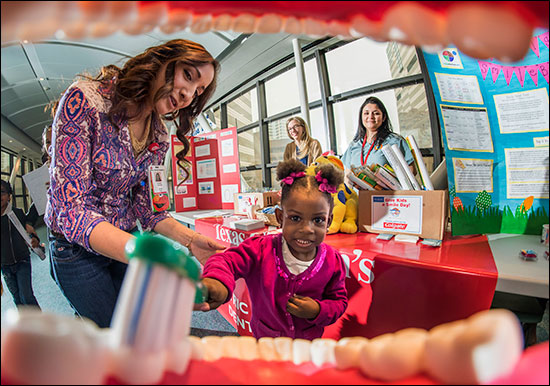
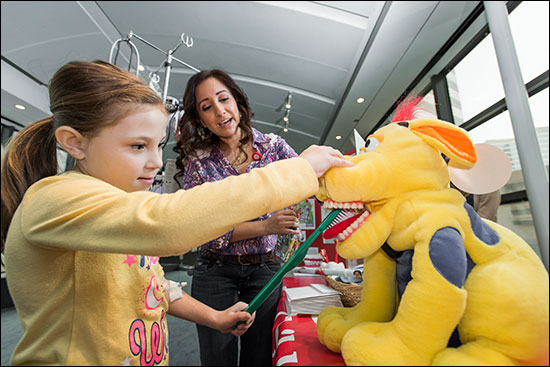
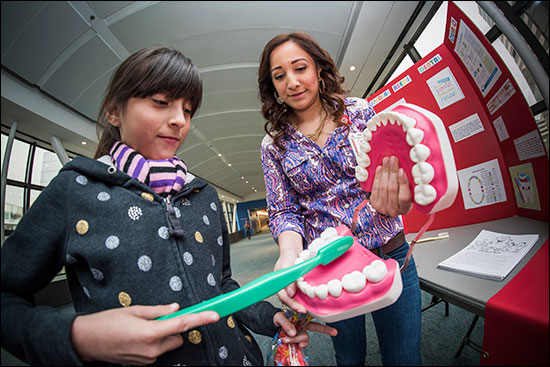
Tooth decay is one of the most common chronic childhood conditions in the United States, and if untreated, can cause pain and infections that may lead to problems with eating, speaking, playing and learning. The good news is tooth decay is preventable and that there are at least two opportunities this month at Texas Children’s Hospital where you can find out how to keep your child’s smile clean and healthy.

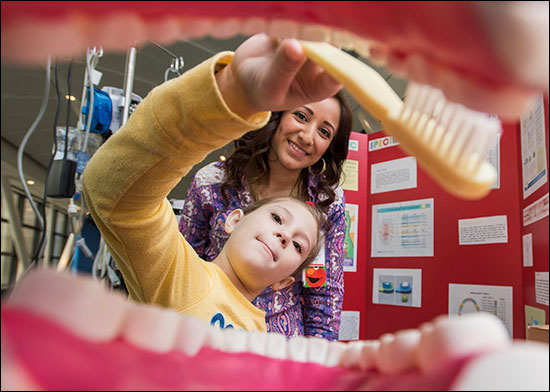
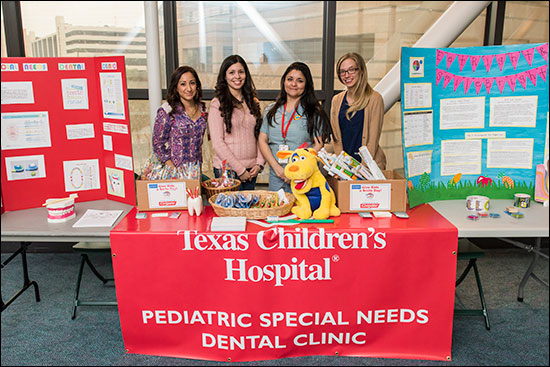
In honor of National Children’s Dental Health Month, representatives from Texas Children’s Hospital Dental Division hosted two events at Main Campus to educate children and their families about proper dental hygiene.

“We want children and their families to know that dental health and hygiene are important even if you are in the hospital focusing on other issues,” said Pediatric Dentist Esther Yang. “We want to take this opportunity to teach them about these things in a fun, light-hearted way.”

The Dental Division at Texas Children’s Hospital provides a full range of routine and complex dental procedures for pediatric patients. We provide dental treatment to children with special needs or complex medical diagnoses requiring coordination of care between our dental team and their subspecialist.

The Dental Surgery Division also provides dental procedures that are necessary to allow patients to continue their other health care needs or to ensure their annual dental needs are met.

Our dentists work in close concert with many of the surgical and medical divisions at Texas Children’s Hospital, including Texas Children’s Cancer Center and Texas Children’s Heart Center to provide the highest level of patient care. Dental patients may be treated as outpatients, inpatients or in the operating rooms.

January 13, 2015

11415cooleylectureship640

Renowned tissue engineering expert and Harvard Medical School John Homans Professor of Surgery Dr. Joseph Vacanti will be the featured speaker at this year’s Denton A. Cooley Lectureship in Surgical Innovation Tuesday, February 10.

Beginning at 7:30 a.m. in the fourth-floor Conference Center at Texas Children’s Pavilion for Women, Vacanti will discuss “Tissue Engineering and The Care of Children,” a burgeoning area of research that has untapped potential for people who need new organs. His talk will be streamed on West Campus in room 150.10 as well as in the auditorium at Children’s Hospital of San Antonio. Please RSVP to Lesa Porterfiled at Ext: 6-5722 or Importer@texaschildrens.org if you plan to attend.

Vacanti’s academic surgical career has included both clinical innovation and basic research related to organ transplantation and tissue engineering, a mission that stems from his long-held interest in solving the problem of organ shortages.

While at Boston Children’s Hospital, he launched the nation’s first liver transplantation program specifically for the pediatric population and instituted New England’s first successful pediatric extracorporeal membrane osygenation, or ECMO, program.

He then began to conceptualize the design of implantable systems that would generate new tissue and replace lost function. Vacanti’s approach to developing tissue involves a scaffold made of an artificial, biodegradable polymer, seeding it with living cells, and bathing it in growth factors. The cells can come from living tissue or stem cells. The cells multiply, filling up the scaffold, and growing into a three-dimensional tissue. Once implanted in the body, the cells recreate their proper tissue functions, blood vessels grow into the new tissue, the scaffold melts away, and lab-grown tissue becomes indistinguishable from its surroundings.

Vacanti earned his Bachelor of Science, summa cum laude, from Creighton University; his medical degree, with high distinction, from University of Nebraska College of Medicine; and a Master of Science from Harvard Medical School. He trained in general surgery at the Massachusetts General Hospital, in pediatric surgery at Boston Children’s Hospital, and in transplantation at the University of Pittsburgh.

Since 1974, Vacanti has held academic appointments at Harvard Medical School. He currently holds the following positions at Massachusetts General Hospital: co-director of the Center for Regenerative Medicine, director of the Laboratory for Tissue Engineering and Organ Fabrication, and chief of Pediatric Transplantion.

In addition to being a founding co-president of the Tissue Engineering Regenerative Medicine International Society (TERMIS), which has 4,000 active members from 80 countries worldwide, Vacanti has authored more than 320 original reports, 69 book chapters, 54 reviews, and more than 473 abstracts. He also has 81 patents or patents pending in the United States, Canada, Europe, and Japan, and was elected in 2001 to the Institute of Medicine of the National Academy of Sciences.

Among others, Vacanti has received the Thomas Sheen Award presented by the New Jersey Chapter of the American College of Surgeons and the 2013 William E. Ladd Medal, the highest honor awarded by the Surgical Section of the American Academy of Pediatrics. He now will be one of several distinguished visiting professors to speak at the Denton A. Cooley Lectureship in Surgical Innovation.

Created seven years ago, the lectureship honors Dr. Denton A. Cooley, a living legend in cardiovascular and surgical innovation. Last year, Cooley was named the most innovative surgeon alive for his groundbreaking work in cardiovascular surgery. He ranked No. 1 on the list of 20 surgeons for the accolade given by Healthcare Administration Degree Programs, which is a website that provides free information for those seeking a career in the medical industry.

Cooley might be best known for performing the first successful human heart transplant in the United States in 1968 and the first human implant of a total artificial heart in the world in 1969. However, his many other contributions are even more important, including his techniques for repairing diseased heart valves and aortic and ventricular aneurysms. Cooley also promoted and popularized the use of non-blood prime for the heart-lung machine, sparing patients unnecessary exposure to blood and allowing more operations to be performed.

Before he retired from the operating room, he and his team had performed more than 100,000 open-heart operations at the Texas Heart Institute, which he founded in 1962. Cooley has authored or coauthored 13 books and more than 1,300 scientific papers. He also has won several awards, including Texas Children’s Hospital’s Distinguished Surgeon Award.

Cooley currently is chief of cardiovascular surgery at St. Luke’s Episcopal Hospital; surgeon-in-chief emeritus at the Texas Heart Institute; consultant in cardiovascular surgery at Texas Children’s Hospital; and clinical professor of surgery at The University of Texas Medical School at Houston.

11415KANE175

Texas Children’s Hospital is excited to announce Dr. Lauren Kane as a new cardiovascular surgeon at Texas Children’s Heart Center. Kane, whose appointment is effective this week, is also an assistant professor of surgery and pediatrics at Baylor College of Medicine.

“We are thrilled to have Dr. Kane join our growing team as she brings with her a great array of clinical and research experience,” said Dr. Charles D. Fraser Jr., chief of congenital heart surgery and surgeon-in-chief at Texas Children’s, as well as professor of pediatrics and chief of congenital heart surgery at Baylor. “Not only will her addition to the team allow for more convenient access for children in need of cardiac surgery, but we’re confident her research will continue to advance the national prominence of our cardiovascular team.”

Kane’s clinical and research interests include the full spectrum of congenital heart surgery, with a particular interest in neonatal palliation and outcomes-based research.

Kane previously served as assistant professor of congenital heart surgery at The University of Texas Health Science Center at San Antonio. She earned her bachelor’s degree from The University of Texas at Arlington, and her medical degree from The University of Texas Medical School at Houston. Kane completed her surgical residency at The University of Texas Southwestern in Dallas, a fellowship in cardiothoracic surgery at Emory University and a fellowship in congenital heart surgery at Children’s Hospital Los Angeles.

Ranked No. 2 nationally in cardiology and heart surgery by U.S. News & World Report, Texas Children’s Heart Center cares for children of every age, including preterm and low-birth-weight newborns tailoring procedures and treatments to the needs of each individual child and his or her family. Texas Children’s Heart Center is recognized across the globe as a leader in the highly specialized field of pediatric congenital heart surgery and performs more than 800 surgical cardiac procedures each year with outcomes among the best in the nation.

December 9, 2014

121014AAOCAconf640

Texas Children’s Hospital hosted its second national conference December 4 and 5, addressing a series of fatal conditions known as coronary artery anomalies.

Coronary artery anomalies are a group of rare congenital heart defects that have been associated with coronary ischemia, myocardial infarction, and sudden death. It is the second most common cause of sudden death in young healthy athletes.

Diagnosing this can be challenging because many individuals with the condition have no symptoms. Those who are symptomatic complain of fainting, chest pain, or palpitations, especially with exercise.

How to best treat a child or young adult with cardiac artery anomalies is a subject of debate in the medical community. Most physicians agree that surgery is necessary for patients who show evidence of decreased blood flow to the heart tissue, but how to treat those these patients who have no physical complaints and who show no evidence of reduced blood flow to the heart is unclear.

Such issues were discussed at the Coronary Artery Anomalies Symposium at the Pavilion for Women. Almost 90 people attended the conference and speakers from 16 leading heart institutions provided a dedicated forum to discuss the diagnosis and management of patients with coronary artery anomalies.

A panel discussion with families affected by the condition brought special attention to the psycho-social needs of patients with cardiac anomalies as well as their parents and siblings. Other talks focused on the most appropriate imaging modalities, identification of risk factors, different management strategies based on best available evidence, surgical techniques, and counseling of patients and families regarding treatment and exercise recommendations.