May 5, 2015

5615carefirstblitz640

What happens when more than 65 people collaborate in one room for intensive, weeklong brainstorming sessions? A plethora of creative solutions to optimize the delivery of care to critically ill patients.

Last month, Texas Children’s Business Process Transformation Department organized Blitz Week to develop an alternative stacking solution and identify design requirements for the 19-floor expansion of Pediatric Tower E next to Texas Children’s Pavilion for Women.

The 25-floor tower, which is slated for completion in 2018, will house a 130-bed intensive care unit, new operating rooms with the latest technology, and the Heart Center, which includes the cardiovascular operating rooms and the cardiovascular intensive care units. The roof of the tower will feature a helipad to transport critically ill patients to Texas Children’s.

To ensure that functionality drives the design of the new pediatric tower, an Interdisciplinary Work Group was formed comprised of key players representing different specialty areas of the hospital including clinical care, pharmacy, radiology, anesthesiology, surgery, family patient services, emergency center, blood bank, supply chain and the Heart Center.

Prior to Blitz Week, the group assembled into specialized teams to map out how they would respond to seven complex patient care scenarios. The teams reconvened during Blitz Week to share their current work flow process using a spaghetti diagram and compared it to the initial stacking diagram to determine what design changes need to be made to enhance operational efficiency and overall patient experience in the new pediatric tower.

“Putting all key players in the same room at the same time was powerful,” said Melanie Lowther, director of Business Process Transformation at Texas Children’s. “After spending more than 35 hours with bedside and support staff, and reviewing more than 150 workflows in one week, we generated creative solutions and requirements to help architects develop a better and more functional schematic design.”

The Super User Committee endorsed these recommendations from Blitz Week:

  • Implement an internal transport team to safely shuttle patients between floors in the pediatric tower
  • Reshuffle the Heart Center for better adjacencies by having cardiovascular operating rooms and cardiovascular intensive care units located on the same floor, and construct a separate MRI in the Heart Center.
  • Separate outpatient and inpatient radiology for all modalities to optimize patient care work flow processes
  • Build call rooms to be co-located with each service area instead of grouped in one location
  • Revise stack diagram to include Critical Care Medicine offices

During the initial design development process, the Interdisciplinary Work Group and Texas Children’s Simulation Center engaged in table-top simulated scenarios to prepare for potential emergency management situations.

Lowther says once the architects create the initial schematic design, the simulation team will develop a cardboard mockup to represent a small size version of different areas of the pediatric tower. The cardboard simulation will allow staff to test out processes, see how departments will be set up and catch potential design issues before the real construction begins.

“Blitz Week was an incredible success and helped us eliminate redundancies in our work flow processes to ensure we deliver the most efficient care to our critical care patients,” said Dr. Stephen Stayer, Texas Children’s associate chief of Anesthesiology. “We want to continue to make Texas Children’s the best possible place to give and receive care and this is one example of how we are fulfilling our CareFirst promise.”


April 28, 2015

42915earthday640

Did you know your phone charger plugged into an outlet uses energy even if it’s not in use? In fact, any electronics that are kept plugged in use energy even when they’re not turned on. Did you know that just turning off just your computer monitor could conserve energy? Did you know that Texas Children’s Green Team has helped save the organization $10.3 million in energy costs since 2008 by promoting an environmentally friendly workplace?

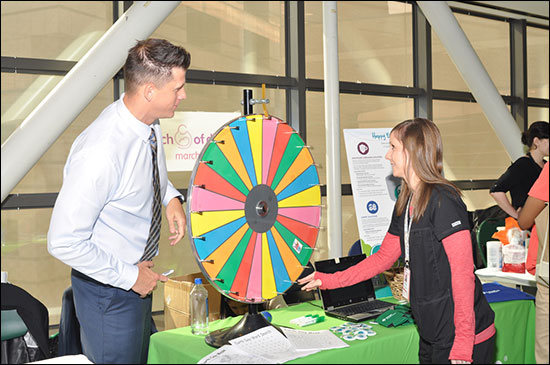
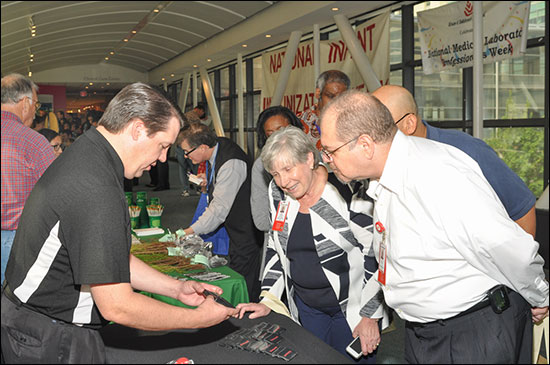
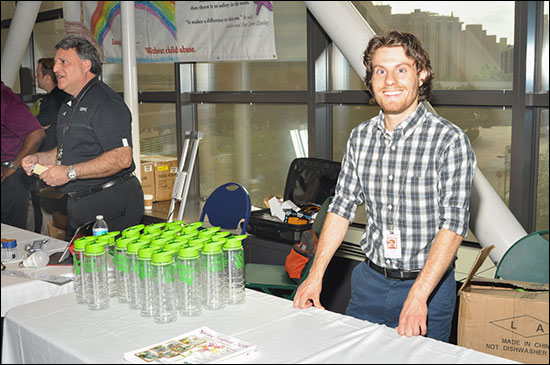
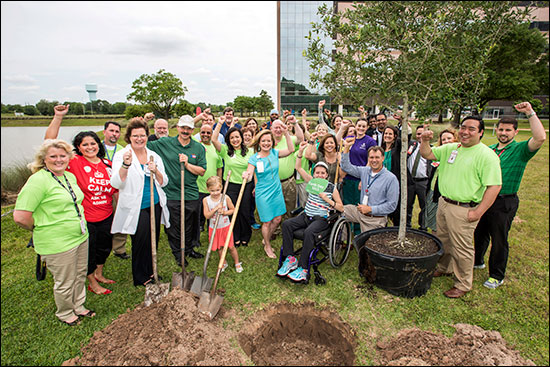
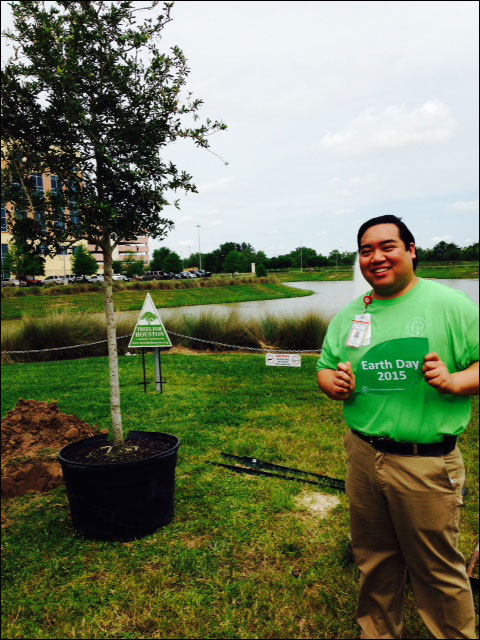
Earth Day was a day to celebrate all that the team has done to initiate a change and direct a move toward a decreased environmental footprint. It was also a time to get you, the employees, involved in the efforts to go green. On April 22, employees joined the Earth Day celebrations by learning about energy conservation from vendors at bridge events, taking “green” selfies at the Main and West Camps “selfie stations” and attending the tree plantings on each campus.

View the Texas Children’s Earth Day photo gallery below.

Here are some tips to go green at work:
Drink green: You don’t need to join the green juice movement, but remember to bring your reusable cups and mugs to the office so you can refill your water or coffee without refilling the trash cans.
Make a memo pad: Reuse unwanted paper by making up memo pads. Just a couple of staples and you’ve got a handy pad for phone messages, notes or lists.
Join the team: Join Texas Children’s Green Team by emailing your name and your department so you can get involved when help is needed in your area. Just email: Teamgreen@texaschildrens.org

Texas Children’s Earth Day photo gallery:

42915medicalrecords640

On October 1, Texas Children’s will join other hospitals across the nation and switch from ICD-9 code sets to the expanded ICD-10 code sets to report patients’ diagnoses and procedures. For the first time in more than 30 years, this transition to ICD-10 will streamline the management of health care records to ensure even better outcomes for our patients.

The implementation of the ICD-10 coding system was delayed last year after Congress passed a new law to postpone cuts to the Medicare reimbursement rate for physicians. President Barack Obama recently signed legislation on April 16 that permanently replaces Medicare’s sustainable growth rate formula, putting a rest to the likelihood of another ICD-10 delay.

For more than a year, Texas Children’s ICD-10 preparedness teams have worked diligently to ensure all employees are prepared for the mandatory October 1 conversion. The most important action we can take is to educate ourselves and be ready for the transition, as it will impact physicians, coders, billing staff, nurses, labs, front desk and many other areas.

“We believe that communicating the change clearly and consistently will help ensure a smooth transition,” said Texas Children’s Chief Safety Officer Dr. Joan Shook. “Some of the tools we’ve developed – like a fact sheet that answers frequently asked questions – are specific to this change, while other times we use existing hospital and provider publications to keep everyone informed.”

Unlike the ICD-10 coding system, the 30-year-old ICD-9 codes use outdated terminology, lack specificity and is running out of room as hundreds of new diagnosis codes are submitted annually. The United States is the only country that uses ICD-9, and the switch to ICD-10 will enable more accurate comparisons of health care data with other countries.

With more than 140,000 diagnostic and procedural codes, ICD-10 will give our physicians, researchers and others a more accurate picture of our patient care by allowing greater specificity and precision in describing a patient’s diagnosis and classifying inpatient procedures.

ICD-10’s more expansive coding system also will help health care providers better track data to measure the quality and safety of care, process claims for reimbursement, and improve clinical, financial and administrative performance.

The two roles most affected by the ICD-10 conversion are physicians and coders. Texas Children’s has partnered with Baylor College of Medicine to provide e-learning videos for physicians to explain how the new coding system will affect their specialties. Coding staff have completed “boot-camps” to learn about the ICD-10 codes and have begun coding some accounts in ICD-9 and ICD-10. For others, the ICD-education team has prepared an area-specific curriculum that is available online through Healthstream.

The deadline for Physician providers to complete required online training is Tuesday, September 1. Click here to access the e-learning modules specific to your specialty.

“We want to ensure our providers are prepared as the ICD-10 implementation moves forward,” said Texas Children’s Director of Health Information Management Austin Frazier. “The latest education completion statistic is 10 percent, but our goal is to achieve 100 percent compliance by September 1.”

Texas Children’s continues to train its staff on the ICD-10 system and make system upgrades to the hospital’s electronic health record and other ancillary systems to ensure it is compatible with the ICD-10 code set.

Below are links to a quick fact sheet and helpful sites with basic information on ICD-10 to see how this change will impact your own medical record documentation.

For more information:
ICD-10 Video
ICD-10 Fact Sheet
ICD-10 Industry Updates
ICD-10 Myths and Facts

42915parking550

Infographic3-300x494We care for our patients and their families by doing all we can to make their experience here as best it can be. For most of our patient families, that experience begins with something that should be relatively simple – convenient parking.

However, patient families and visitors often are unable to find parking in our garages, partly because our employees are occupying spaces that have been designated for them. There also are a number of employees who use the valet services intended for our patient families.

Using the limited parking reserved for our patient families is counter to the experience we strive to provide them. It also disregards Texas Children’s Parking Policy, which states that employees “may not pull a coin to park or use valet parking services in Texas Children’s Hospital garages 12, 16 or 21 when acting in their capacity as an employee. By doing so, an employee may be subject to disciplinary action.”

Security will be conducting random monitoring to identify employees who are parking in these garages. When a violating employee is identified, Security will send a letter to the employee and his or her director to take corrective action.

Remember, employees can park for free in Garage 19 on Greenbriar Drive. They also can use dependable, comfortable transit to and from that garage to the Main Campus facilities. We are introducing new shuttles with more amenities this spring.

Having a dedicated employee parking garage and transit system provides you with a convenient alternative to the limited parking on the Main Campus, which is the only option for our patient families and visitors. So please, help us create a better experience for them by parking in the designated employee garage so that finding parking is the least of our patient families’ concerns when they are here. It’s a simple step that could have a lasting impact on a family’s experience with us.

April 21, 2015

42215greenteam640

Green is the new black and Texas Children’s is taking note. As the nation celebrates Earth Day, Texas Children’s Green Team is doing its part to decrease the environmental footprint of the organization.

Here a list of events you can join during Earth Day – Wednesday, April 22.

Texas Children’s Green Team, a team of environmentally-minded leaders, employees and staff, has embarked on an effort to help Texas Children’s go green.
The Green Team has been pivotal in helping the organization go green by taking on cost and energy saving initiatives:

  • Installed LED lamps in all of the Pavilion elevators
  • Reduced campus energy use intensity by 23 percent through the implementation of many Energy Conservation Measures
  • Replaced 5,500 50-watt spot lamps with 7-watt LED lamps. Each LED energy use is 43 watts lower than the standard lamp.
  • Reduced chilled water consumption, used for air conditioning, usage by 20 percent, which gives us better temperature control
  • Reduced steam consumption, used for heating, by 25 percent and lowered the heating water temperatures from 180 degree Fahrenheit to 130 degree Fahrenheit greatly reducing the steam consumption.
  • Use daylight harvesting to reduce bridge lighting requirements. When there is enough light from outside the bridge lights are turned off
  • Automatically turn off lighting and HVAC for unoccupied spaces using the building automation system to schedule the on and off times
  • Installed automatic lighting controls in all environmental services closets
  • Renegotiated our electricity contract to reduce cost by $670,000 annually

Over all, Texas Children’s Hospital has saved $10.3 million in energy cost since 2008.

Here are some tips for you to join the Texas Children’s green initiative yourself:

  • Power off – If you have a Texas Children’s computer, be sure to power off at the end of the day to conserve energy. According to the Environmental Protection Agency, 75 percent of the computer’s energy use comes from the monitor. Just turning off your monitor any time you won’t be at your computer for an extended period of time can save.
  • Think before you print – Not everything needs to be printed. Consider organizing your files on your computer and cut back on filing papers when appropriate. Use the back of old print outs for note taking to save paper.
  • Eat green – Bringing lunch to work in reusable containers is likely the greenest (and healthiest) way to eat at work. Getting delivery and takeout almost inevitably ends with a miniature mountain of packaging waste. But if you do order delivery, join coworkers in placing a large order (more efficient than many separate ones). Also, bring in a reusable plate, utensils, and napkins.
  • Minimize trash – Consider using reusable cups and mugs throughout the day as you’re filling up on water and coffee instead of plastic bottles or disposable cups.
  • Ride green – Coming soon, you’ll be seeing green as Texas Children’s debuts its new propane-fueled shuttle buses, which significantly lower emissions.

42215WoodlandsForum640

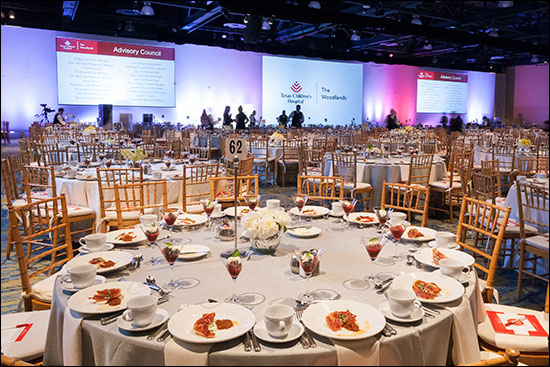
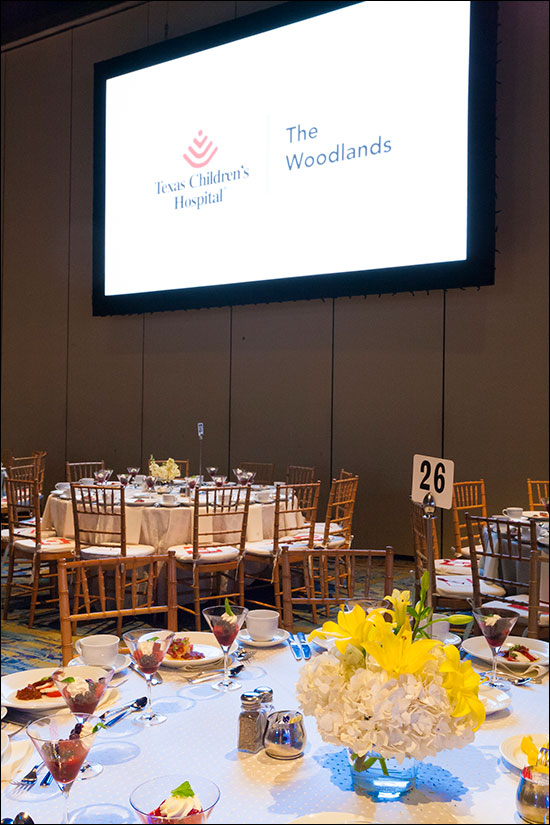
Nearly 800 guests attending Texas Children’s Hospital’s The Forum Luncheon in The Woodlands on April 14 were treated to the very first look into what will be the only dedicated pediatric hospital serving communities north of Houston when the doors fully open in 2017.

Attendees previewed a virtual, behind-the-scenes tour of the Emergency Center, Pediatric Intensive Care Unit (PICU), operating rooms, inpatient rooms and the Physical Medicine and Rehabilitation Clinic through the eyes of three Texas Children’s patient families: Bennett Rhymes, Skylin Parker and Noah and Sammy Folloder. Each of the first-hand accounts highlighted the expert care Texas Children’s provided to them, which will soon be available closer to home for these families and the 380,000 children in the area.

42215WoodlandsForuminside640“Our new hospital is being designed, top to bottom, with children and families in mind,” said Michelle Riley-Brown, president of Texas Children’s Hospital The Woodlands. “I am really excited about all that Texas Children’s Hospital The Woodlands will have to offer when we open our doors.”

Ground was broken on the new community hospital 15 months ago and progress is being made on the structure every day. Texas Children’s Hospital The Woodlands building project is part of the Promise campaign. The goal of the comprehensive $475 million fundraising effort is to help ensure the future of Texas Children’s as a leader in pediatric and women’s health.

To date, $26 million has been raised for Texas Children’s Hospital The Woodlands. The following donors were recognized at last week’s forum for their significant gifts:

  • Anadarko
  • The Howard Hughes Corporation
  • Woodforest National Bank
  • Dawn and Richard Rawson

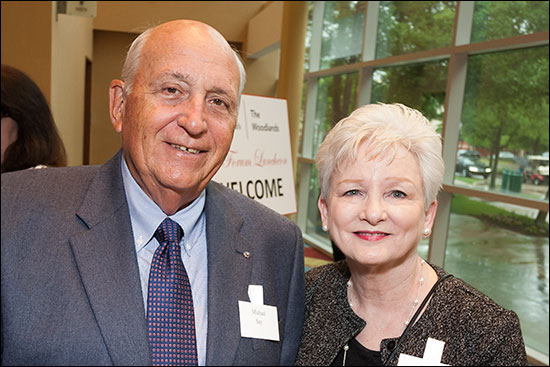
“Through the Promise campaign, each of you in this audience will have a unique chance to see the amazing work that has resulted from your philanthropy every time you drive by this new hospital,” Dawn Rawson said at the forum. “Every time you see a child walking through those doors, you will know that you helped make that child’s care possible.”
April 14, 2015

41515WCSIU640

While Ebola is no longer dominating the headlines, ongoing training and preparations ensure we remain ready to handle highly infectious diseases.

In the months since the Ebola concern, Texas Children’s has stock piled personal protective equipment (PPE) and, most recently, acquired 30 powered air purifying respirators (PAPRs). A PAPR covers the head to protect emergency responders from chemical, biological, radiological and nuclear agents. This addition to our PPE inventory helps ensure the safety of our health care professionals when they are treating patients with highly infectious diseases.

“We were well-prepared before, and we’re even better prepared now,” said Dr. Judith Campbell, medical director of Infection Prevention and Control. “We’ve always been in compliance with the CDC. Now we have the benefit of having visited both Nebraska and Emory where patients with highly contagious infectious diseases are frequently cared for, giving us an added level of knowledge.”

The infectious disease leadership team recently observed a PPE donning and doffing exercise used to successfully contain the disease at Emory Healthcare and Nebraska Medicine. The team also received a tour of their special isolation units (SIU).

The visits to Emory and Nebraska also helped in the design of Texas Children’s first special isolation unit. The unit is designed to care for a broader range of infectious diseases. Campbell said the unit and a special response team will be dedicated to caring for patients with highly contagious infectious diseases.

“When we talk about the SIU, it really is with the intent of taking care of any unusual infectious disease that’s highly contagious,” Campbell said. “There are a lot of infectious diseases emerging. Given we are a global society, it’s certainly possible that there may be another pathogen that could have the kind of impact that Ebola has had.”
Texas Children’s leaders have worked with health care facilities across the country and with the Centers for Disease Control and Prevention to share best practices that will continue to prepare us for the possibility of receiving a patient with highly contagious infectious diseases, such as Ebola. The organization continues to monitor the situation with information from the World Health Organization (WHO) and the Centers for Disease Control and Prevention (CDC).

“We’re confident that, in many aspects, our preparation exceeds that of most other hospitals,” Campbell said. “We want to make sure we have the highest level of protection for our health care professionals.”