February 23, 2016

22416blaneyaward640The Children’s Brain Tumor Foundation honored Dr. Susan Blaney with the Pioneer Award for Pediatric Neuro-Oncology, celebrating her 25 years of dedication to the search for new and better treatments for children with brain and spinal cord tumors.

Blaney is the deputy director of Texas Children’s Cancer Center, a professor and executive vice chair of the Department of Pediatrics at Texas Children’s and Baylor College of Medicine, and she also serves as vice president of Clinical and Translational Research at Baylor.

Blaney’s extensive experience in clinical translational research focuses on developing new treatment strategies for children with brain tumors and other refractory cancers. Blaney has been instrumental in developing more new agent clinical trials than anyone in the field of pediatric oncology.

Blaney serves as vice chair for the Children’s Oncology Group and was one of the initial members of the Pediatric Brain Tumor Consortium (PBTC). Additionally, she serves as a mentor to numerous pediatric neuro-oncology fellows and faculty who are current or developing leaders in the field. Among other appointments and positions, she is a member of the National Cancer Institute’s (NCI) Clinical Trial Advisory Committee and serves on the Executive Committee for the NCI-funded Pediatric Brain Tumor Consortium. She has served as a member of the Investigational Drug Steering Committee for the National Cancer Institute and as a regular consultant for the Food and Drug Administration’s pediatric Oncology Drug Advisory Committee.

Blaney has published more than 190 articles in peer-reviewed journals and has authored numerous book chapters. She is dedicated to the development of new anti-cancer agents and therapeutic strategies for malignant central nervous system tumors of childhood and to decreasing the morbidity of current therapeutic strategies. In addition, she is passionate about the mentorship of young faculty members in clinical and translational research to ensure that there is sustained leadership in the field.

February 16, 2016

A year ago, Knatalye and Adeline Mata lay on an operating table at Texas Children’s Hospital conjoined from the chest to the pelvis. For the next 26 hours, a team of surgeons and support staff separated the girls in an historic and intricate procedure meticulously choreographed to ensure that each step of the process would lead to and support the steps to come. Throughout the procedure, the Mata family stood by, waiting and praying for good news.

Just before 10 a.m. on February 18, 2015 the family counted their prayers as answered when they saw their girls, apart for the first time in adjacent rooms in the Pediatric Intensive Care Unit, where they were cared for by a team of specialized nurses. Since then, the almost 2-year-old twins have been discharged from the hospital and are living relatively normal lives in Littlefield, Texas with their parents Elysse and John Eric, 6-year-old brother Azariah and 5-month-old sister, Mia.

“The girls are both doing awesome,” said Dr. Darrell Cass, one of the lead surgeons in the separation case. “Neither have experienced any complications and both are making steady progress.”

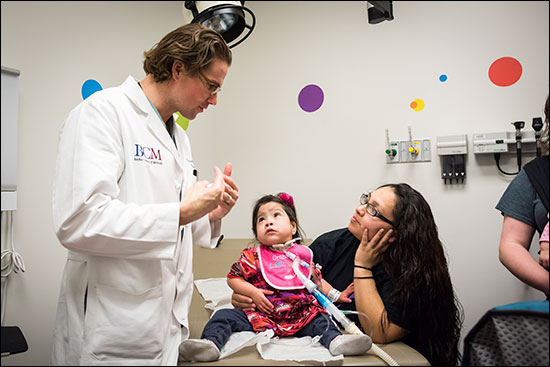
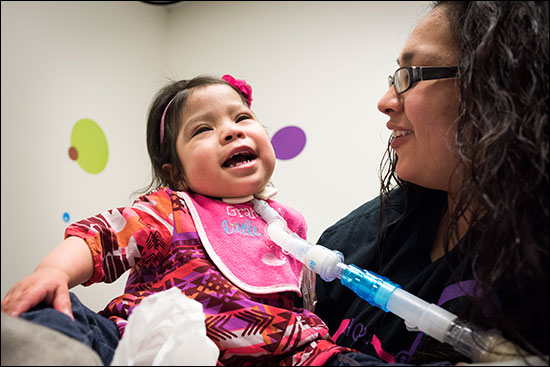
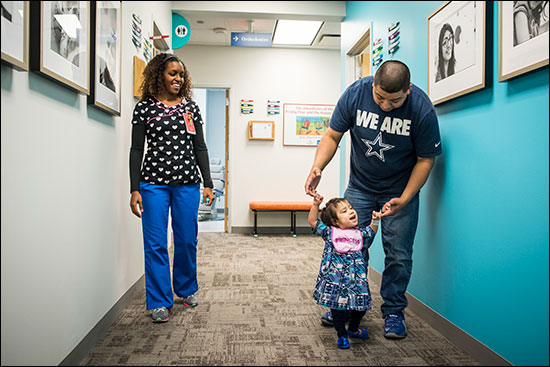
Knatalye is beginning to walk, talk and eat by mouth. Adeline is meeting milestones as well. Her lungs are continuing to improve and she is slowly being weaned from ventilator support. Both girls are still undergoing physical and occupational therapy.

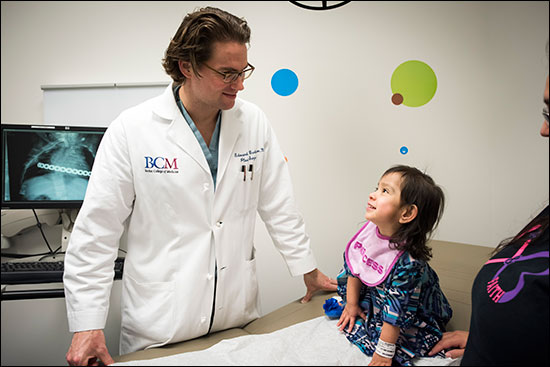
Several members of the medical staff involved in the girl’s care got to see how much Adeline and Knatalye have grown and how far they’ve come during a recent visit the Mata family made to Texas Children’s for follow-up appointments with pediatric subspecialists monitoring the twins’ health and development.

Aimee Renaudin, one of Adeline and Knatalye’s primary nurses in the Neonatal Intensive Care Unit, said she is amazed that the girls are doing so well.

“You would never know how they started off their lives together,” she said. “Elysee and Eric have taken such good care of them.”

Dr. Oluyinka Olutoye, the other lead surgeon in the separation case, said it’s a blessing to see how far Adeline and Knatalye have come.

“It’s always a joy to see the changes that have gone on,” he said. “They’ve gone from just being little babies to now trying to walk and talk and interact with you.”

John Eric said his daughters have far exceeded his expectations and that he and Elysee are enjoying being able to care for the girls at home.

“It’s nice to be able to have all of us together and to be able to wake up and know that they’re there,” Elysee said. “It’s fun to be able to be mom and dad, which we didn’t get to do for the first 10 months of their lives.”

The Mata family will return to Texas Children’s this summer for a checkup. During that visit, surgeons will operate on Knatalye, removing the metal struts used to stabilize her rib cage and to close her chest wall.

To read more about their journey click here. See photos from the Mata family’s latest visit to Texas Children’s below.

An armadillo with thick, long eyelashes whistles as she notices a problem with the blood flow in a child’s heart. Almost immediately an army of robot-like caregivers race into the hospital room and fix the problem.

No, this is not your typical medical setting. This is an imaginary world made to help children with heart problems better understand their diagnosis and potential treatment options. Created by a team led by Chief of Cardiology Dr. Daniel Penny, the series of almost 40 animated videos features Ruby, an armadillo; Beau, a bison; and a group of caregivers called Blings.

Ruby and Beau’s role in the videos is to identify the problem with a child’s heart, call in the Blings for help and explain – in very simple terms – what’s happening and how it’s affecting the patient. The Blings fix whatever is wrong while hopping in and out of colorful cars and using a cadre of MacGyver-like tools.

“The aim of our project is to improve the health literacy of the children and parents who come to us with heart disease,” Penny said. “If we can empower them through information, we can likely improve their treatment outcome and overall quality of life.”

To effectively communicate complex issues such as ventricular septal defect and patent ductus arteriosis, Penny is working with Michael Liddy, a friend and Australian animator, to script the 4- to 7-minute videos and create their characters, sound effects and musical score, all of which are done very intentionally and with the young age of the viewer in mind.

An additional bonus to the production of the videos, which is being funded by a grant from ExxonMobil, is the voices of Ruby and Beau are recorded at Texas Children’s Hospital by employees Hasti Taghi and Dr. Stuart Hall.

“We were very lucky to get the voices of Ruby and Beau in house,” Penny said. “They definitely add a special touch.”

To date, six of the videos in the series have been completed and were unveiled at a February 15 red carpet premier at Texas Children’s Pavilion for Women (click here to view a video). Doctors, patients and families across the organization and beyond can access the videos via Texas Children’s website at http://www.texaschildrens.org/hearteducation.

Penny and his team will continue to add to the animated series and work on another series of videos that educate patients on certain types of routine procedures done at the average heart center.

“We hope that having a program like this any child who enters a heart center will be able to get a feel for what they are going to experience,” Penny said.

111914NEC640A recent Baylor College of Medicine study led by Texas Children’s neonatologist Dr. Amy Hair, and published in the journal Breastfeeding Medicine, found that premature infants weighing less than 1,250 grams at birth showed improved outcomes after being fed a human milk-based diet.

Texas Children’s and Baylor researchers compared outcomes data of more than 1,500 premature infants in four large centers in the U.S. two years before and two years after implementing an exclusive human milk-based diet in the Neonatal Intensive Care Unit (NICU). They found that babies who were exclusively fed human breast milk had a lower incidence of mortality, late-onset sepsis, retinopathy of prematurity (which can lead to blindness) and bronchopulmonary dysplasia, a form of chronic lung disease in infants.

Hair, who is also an assistant professor of pediatrics at Baylor and director of the Neonatal Nutrition Program at Texas Children’s, says feeding premature infants an exclusive human milk-based diet has also been shown to decrease the risk of necrotizing enterocolitis (NEC), a life-threatening neonatal condition that causes inflammation and death of intestinal tissue.

“Since implementing an exclusive human milk feeding protocol for newborns weighing less than 1,500 grams at birth, not only have we reduced the rate of NEC by 77 percent in our NICU, but we have seen additional benefits with this diet,” Hair said.

An exclusive human milk-based diet consists of a mother’s own milk supplemented with donor human milk and fortifier derived from donor human milk. Babies do not receive any bovine protein as formula or fortifiers. Prior to implementing a human milk feeding protocol, infants were fed mother’s own milk with bovine fortifier or formula.

“We know that human milk has immune factors, antibodies, high levels of important fat and vitamins, so it makes sense that it would work with different processes in the body to improve the overall health in babies,” Hair said.

Click here to read the journal article highlighting their study, which was funded by Texas Children’s Hospital’s Bad Pants Day golf tournament.

February 9, 2016

21016CareFirst640

Remember reading the official announcement of our CareFirst plans in November 2014? Well, as you can imagine, a lot has happened since then. After receiving the green light to proceed, Texas Children’s has made remarkable progress on the Pediatric Tower E vertical expansion project.

The first visible sign that construction has begun is the large crane that towers over the south end of Texas Children’s Pavilion for Women. Concrete slabs were removed to make room for the tower crane installation which was completed last December.

“We’re excited to see everything gradually come together,” said Jill Pearsall, Texas Children’s assistant vice president of Facilities Planning and Development. “The progress over the last two months is a direct result of the collaboration among our CareFirst executive leadership and project management teams, our design and construction contractors, and most importantly, our patients and their families.”

Perhaps one of the most significant milestones to date is the completion of the pre-construction simulation-based design tests on the proposed patient room layouts for the cardiovascular intensive care unit, pediatric intensive care unit and the progressive care unit.

In collaboration with Dr. Jennifer Arnold and her simulation team, the CareFirst Quality, Service and Safety Project Team led by Dr. Angelo Giardino, Trudy Leidich and Maria Happe, participated in 32 hours of simulated patient scenarios over a period of four days inside a large warehouse mock-up that resembled a critical care environment. A multidisciplinary team of intensivists, nurses, surgeons, anesthesiologists, respiratory therapists, patient families and other support staff, participated in the simulation and provided feedback to drive design of the space. During these simulations, 115 latent safety threats (LSTs) were identified. The LSTs were categorized based on Safe Hospital Design Principles outlined by the Agency for Healthcare Research and Quality and recommendations will be incorporated into the design.

“We have an opportunity to provide a new space that accommodates the needs of patients, families and clinicians,” said Happe, clinical senior project manager for CareFirst. “All patient rooms are configured to provide dedicated space for the patient, clinicians, all associated clinical equipment, as well as for the families, which helps to promote and enhance family engagement and patient and family-centered care. Simulation has allowed us to test these spaces prior to construction and has guided our design decisions.”

Other recent progress updates include:

  • The interior design concepts for the pediatric tower’s public spaces were fine-tuned with the Board of Trustees Building and Grounds Design Subcommittee on January 13. Once the design theme and colors have been finalized, this will provide architectural guidance to ensure a consistent look and feel throughout the building.
  • A pilot study to test the use of touch-screen activated information stations was launched on the first and third floors of the Clinical Care Center (CCC) for a 60-day assessment and feedback period. Survey input from patient families will be used to refine the hospital navigation tool before it is adapted to other Texas Children’s campuses, including Pediatric Tower E.
  • The technology team installed wireless access points for Voalte phones outside of the operating rooms (ORs). Tests are still ongoing to determine if wireless access points can be added in the OR suite to fully operationalize the Voalte phone roll-out in a manner that does not interfere with the communication of medical equipment in the OR. Additionally, the team will begin testing and reviewing a variety of other devices for CareFirst implementation.
  • The Pavilion Express Gift Shop closed to prepare for the installation of the tower’s elevator shafts. The gift shop will relocate to the first floor of the Pavilion for Women as a separate renovation project. The Pediatric Radiology department’s 3D lab moved from Building E 5 to the fourth floor of the CCC to make way for the upcoming construction activities.
  • Concrete pours to build the floors in the 25-story Pediatric Tower E will continue this month. From north to south, it will take roughly three concrete pours to create one floor.

“We’ve made incredible progress since the initial planning phase began for Pediatric Tower E,” said Texas Children’s Executive Vice President Mark Mullarkey. “This expansion will help us deliver on our promise to make Texas Children’s the best possible place to give and receive care.”

Click here to learn more about how the Pediatric Tower E project will help meet the growing needs of our critically ill patients.

21016NRIrecognitioninside640

Wangler, Yamamoto awarded SFARI grant for autism spectrum disorder study

Drs. Michael Wangler and Shinya Yamamoto recently obtained a research grant from the Simon’s Foundation for Autism Research Initiative (SFARI) to advance their study on autism spectrum disorders.

Their study titled, “In vivo functional analysis of autism candidate genes” is one of five projects selected for research funding by the SFARI.

Autism spectrum disorders (ASDs) are highly heritable but have a complex genetic architecture. Whole-genome sequencing has been used to identify many potential genetic mutations that may be responsible for ASD. However, interpreting the disease relevance of these enormous numbers of individual variants has been difficult because many of them are poorly characterized.

In their study, Wangler and Yamamoto will use a fruit fly model system to study a subset of 300 autism candidate genes to determine their role in disease causation and progression. They predict that using this powerful genetic system will provide much-needed information on the biological mechanisms underlying ASDs.

Besides being on the NRI faculty, Wangler and Yamamoto are assistant professors in the department of Molecular and Human Genetics at Baylor.

Ballabio to receive the 2016 Louis-Jeantet Prize

Dr. Andrea Ballabio, founder and director of the Telethon Institute of Genetics and Medicine (TIGEM), Italy, professor at Baylor and faculty member at the NRI, has been selected to receive the 2016 Louis-Jeantet Prize for Medicine. He will share this award with biochemist John Diffley, associate research director at the Francis Crick Institute, United Kingdom.

The Louis-Jeantet Prize for medicine is awarded each year by the Louis-Jeantet Foundation to experienced researchers who have distinguished themselves in the field of biomedical research in Europe. The prize is intended to encourage the continuation of innovative research projects of major importance to fundamental or clinical medicine.

Ballabio was recognized for his contributions in advancing the understanding of molecular mechanisms controlling the function of lysosomes in health and disease.

Lysosomes are organelles responsible for the degradation of cellular waste. A growing number of diseases are associated to lysosomal dysfunction such as neurodegenerative diseases, cancer, obesity and infections. Ballabio’s group identified a master gene that globally controls lysosomal function and promotes intracellular clearance of accumulating pathological materials. These observations revealed a new biological pathway and provided a tool to modulate lysosomal function to treat human diseases.

Ballabio will receive the award during a special ceremony in Geneva, Switzerland on Wednesday, April 20.

21016Anvari175The Clinical Research Center will present the Clinical Research Award for First Quarter 2016 to Dr. Sara Anvari, physician, Allergy and Immunology. Dr. Anvari is a dedicated clinical scientist for the food allergy research trials at Texas Children’s Hospital.

The award was established by the Clinical Research Center in collaboration with the Research Resources Office to recognize and honor individual contributions to protecting the best interest of the research subjects and compliance with applicable rules and regulations.

Dr. Anvari’s research activities in the CRC focus on understanding the underlying immunopathogenesis of food allergies and the mechanisms that lead to the development of oral tolerance in food allergic patients undergoing immunotherapy.

Through the support of the Texas Children’s Food Allergy Program, Texas Children’s Center for Human Immunobiology and the Clinical Research Center, Dr. Anvari has been able to pursue her research goals and currently oversees the clinical research trials that will provide her with the groundwork for the development of innovative diagnostic and therapeutic options for patients with food allergies.