June 6, 2017

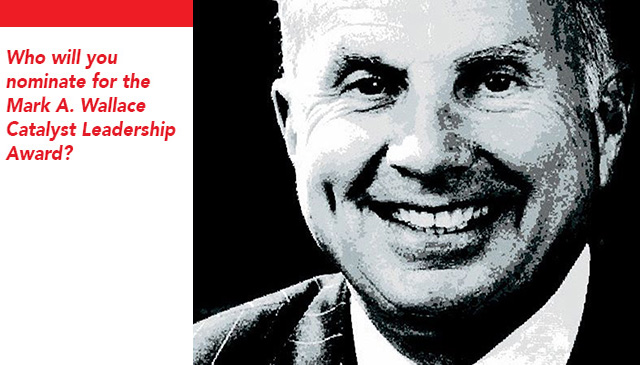
For Mark Wallace’s 20th anniversary as president and CEO, the Texas Children’s Board of Trustees created the Mark A. Wallace Catalyst Leadership Award in recognition of his commitment to leadership.

Since that time, Texas Children’s has recognized 30 of its finest leaders from all levels within the organization. Each has received a number of special honors which include mentoring by an executive, attending senior leadership meetings, being honored at the annual Employee Recognition Celebration, and for the past couple of years, a Texans home game made possible through our partnership with the Houston Texans. Additionally, the Catalyst Leaders of the Year were given the opportunity to further develop their talents by completing advanced training at a renowned leadership institution.

Wallace’s No. 1 maxim is, “Leadership always influences and determines outcomes – not some of the time but all of the time.” He believes each and every day people have a choice about what kind of leader they will be, no matter what role they serve at Texas Children’s.

In keeping with this maxim, people at all levels of the Texas Children’s workforce can be nominated for the 2018 Catalyst Leadership Award. Eligible nominees include all employees, formal leaders (excluding executives), physicians, and volunteers who have two or more years of service with Texas Children’s.

Everyone is encouraged to consider nominating someone whose personal leadership and contributions have positively impacted a team, a patient, a family, a process, an outcome, or any element of our mission while living our core values. Wallace will carefully review all nominations in partnership with other selection committee members, including representatives from Texas Children’s Board of Trustees, our senior executive team, and Human Resources after the nomination period closes at midnight on Friday, June 30.

You may visit the Catalyst Leadership Award website for complete details about the nomination process and this select leadership recognition and development program.

We all work with someone whose actions are the catalyst for the best possible outcomes. Who will you nominate?

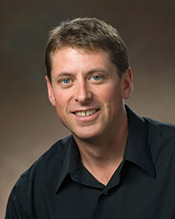
Dr. Benjamin Arenkiel, a researcher at the Jan and Dan Duncan Neurological Research Institute (NRI) at Texas Children’s has received a 2017 Michael E. DeBakey, M.D., Excellence in Research Award, a prestigious honor given annually to Baylor College of Medicine faculty who have made the most significant published scientific contribution to clinical or basic biomedical research during the past three years.

“Arenkiel is an extraordinarily gifted scientist who has made many exciting and notable discoveries in the area of neuroscience,” said Dr. Huda Zoghbi, director of the NRI who nominated Arenkiel for this prestigious award. “The papers he published in the last couple of years open up new exciting areas of research into sensory maps as well as the circuits of feeding behavior.”

Since joining the Baylor faculty, Arenkiel and his team have published and/or co-authored 32 manuscripts. In addition, the Arenkiel lab now focuses on three areas of science that each have resulted in publications in high-impact journals including Developmental Cell, Neuron, Nature, and Nature Neuroscience.

Arenkiel was presented with the DeBakey Excellence in Research Award on May 15. To learn more about the scientific research that garnered Arenkiel the DeBakey award, see below:

Nature Neuroscience: Using contemporary genetic approaches, the Arenkiel lab has recently described novel roles for neuropeptide signaling in synaptic remodeling within the adult nervous system. Synapse and circuit formation and function serves as a platform for their ongoing work. Arenkiel and his lab found that, in contrast to the refinement observed for excitatory maps, inhibitory sensory maps became broader with maturation. However, like excitatory maps, inhibitory sensory maps are sensitive to experience. These data describe the development of an inhibitory sensory map as a network, highlighting the differences from previously described excitatory maps.

Developmental Cell: In this paper, Arenkiel capitalizes on the olfactory system circuits system to understand how newly born neurons integrate into an existing network in the adult brain. Using the rodent olfactory system as a model, their work strives to understand how the circuits that comprise and modulate the olfactory bulb contribute to olfaction. This research shows that local corticotropin hormone signaling onto adult-born neurons promotes and/or stabilizes chemical synapses in the olfactory bulb, revealing a neuromodulatory mechanism for continued circuit plasticity, synapse formation and integration of new neurons in the adult brain.

Nature: Most recently, Arenkiel has initiated new and creative experiments to further probe neuronal synapse and circuit formation in the mouse brain. His lab has discovered a novel mechanism by which cholinergic signaling in the basal forebrain exerts a strong influence on body weight control. His group has serendipitously uncovered novel circuits that govern convergent hypothalamic circuits that influence feeding behavior, sensory processing and stress. He has since taken a keen interest in the feeding behavior circuits. This manuscript has been positively received by the scientific community as well as the pay press and was highlighted in the Wall Street Journal.

Angie Rangel, MSN, RN-BC, CCRN, LNC, has been selected as the president elect for the Houston Chapter of the Association of Nursing Professional Development (ANPD).

She will lead the Board of Directors for the ANPD Houston Chapter and represent Texas Children’s Hospital as one of the primary contacts within the ANPD national office.

Rangel is currently the assistant director of Nursing Professional Development at Texas Children’s. She accepts this award with the recognition of other Texas Children’s NPD practitioners including:

  • Jaime Choate, BSN, RNC-OB elected as a Program Director
  • Amanda Garey, MSN-RN-BC, C-OB, C-EFM as a Membership Director
  • Leslie Morris, BSN, RN as a Community Outreach Director

Rangel’s leadership has impacted involvement with the ANPD professional organization and grown advocacy for specialty certification in Nursing Professional Development at Texas Children’s.

The honor(s) will be bestowed at the National ANPD Conference on Wednesday, July 19.

May 30, 2017

An important milestone was recently reached at Texas Children’s Hospital that has one 17-year-old extremely grateful.

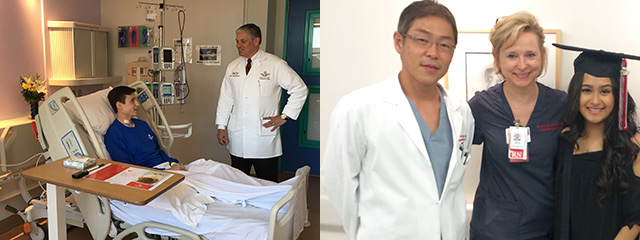
Joseph McCullough received a new liver on May 21, giving him a chance at a new life after battling primary sclerosing cholangitis, a life-threatening disease that causes end-stage liver disease. McCullough’s transplant was the 1,500th transplant performed by the Texas Children’s Transplant Services team.

“That’s fascinating,” Joseph said about being the 1,500th transplant recipient. “That’s unbelievable that I’m that number.”

Texas Children’s Surgeon-In-Chief Dr. Charles D. Fraser said the milestone – and the immeasurable service to children and families that it represents – is due to the hard work of the entire Transplant Services department and the multitude of other departments that support Transplant Services.

“I would like especially to thank to Dr. John Goss, medical director of Transplant Services and surgical director of the Liver Transplant Program at Texas Children’s, for providing strong leadership for the program and all of the medical and surgical directors of Transplant for their guidance, resilience in growing their programs and excellence in every aspect of patient care,” Fraser said. “Under their leadership, we have become not only one of the busiest pediatric transplant programs but also one of the best.”

Transplantation began at Texas Children’s in 1984 with a pediatric heart transplant that was performed by Dr. Denton Cooley. Since that time, liver, kidney and lung have been added and countless lives have been saved.

Just last year, 86 organ transplants were performed at Texas Children’s – 32 kidney transplants, 25 heart transplants, 21 liver transplants and 8 lung transplants – making Texas Children’s one of the most active pediatric transplant program in the nation, per the U.S. Department of Health & Human Services Organ Procurement and Transplantation Network.

Behind the statistics, there’s an exceptionally experienced and well-coordinated transplant program that draws on numerous medical, surgical and support specialties, and transplant coordinators who play an essential role in connecting recipients with prospective donors.

“I believe our success is a testimony to the skill and commitment of our multidisciplinary team,” Goss said. “Our team offers an interdisciplinary approach to all aspects of the transplant process, from initial referral to hospitalization and outpatient management. We also work closely with patients, families and referring physicians to help make the evaluation process as convenient and efficient as possible.”

Goss added that transplants are possible only because of the generous and selfless decisions made by donors and donor families. Without them, people like Joseph would run out of options.

“I can’t wait to play basketball again,” said the teenager, adding that anyone who can should become an organ donor. “I can’t wait to have a full day of school again as crazy as that sounds.”

Watch ABC-13’s news story about Joseph and click here to watch a video about Texas Children’s Transplant Program. Below are the stories of two more lives that have recently been touched by Texas Children’s Transplant team as well as information on how to become an organ donor.

Karla Alonzo
When Karla Alonzo was 13-years-old, she was diagnosed with dilated cardiomyopathy, the most common disease of the heart muscle which causes it to enlarge and not pump blood as well as a healthy heart can. In and out of the hospital in her hometown of Port Arthur for years, Karla was referred to Texas Children’s Hospital when she started to feel extremely weak, couldn’t walk up the stairs and was always thirsty. First, doctors started Karla on medication to help improve the condition, but it was not as successful as they hoped. Next, Karla was implanted with the HeartWare HVAD, which kept her going for a while. Recently, she got what she really needed – a heart transplant. Performed by Dr. Iki Adachi, the transplant went well. Karla has been discharged from the hospital and is at home continuing to recover.

Tenley Kennedy
One-year-old Tenley Kennedy was born with hypoplastic left heart syndrome, a congenital heart defect that affects normal blood flow through the heart. As a result of her disease, Tenley has spent most of her life at Texas Children’s Hospital waiting for a heart transplant. On May 13, her day finally came. Performed by Dr. Carlos Mery, Tenley received a heart transplant. The little girl is still in the hospital recovering but should be able to go home very soon. Click here to watch KPRC’s story about Tenley.

To register to become an organ donor, click here.

As chief of the newly created section of Public Health Pediatrics at Texas Children’s – the nation’s largest and first public health section within a children’s hospital – Dr. Christopher Greeley has devoted much of his resources and time toward developing a one-of-a-kind, community wide program aimed at child abuse prevention.
“As a board certified child abuse physician, I kept seeing children after they were harmed,” said Greeley, who also is a professor of pediatrics at Baylor College of Medicine. “It would be a great day if no one were hurt. And the only way for that to happen would be for the health care team to spend more time on prevention.”

Greeley uses this analogy to illustrate his point:

Imagine standing by a river and watching kids floating by. You pluck them out of the river to rescue them. But you need to go upstream to find the break in the fence that is allowing the kids to fall into the water. Going upstream to find and correct the cause of problems is the model of public health.

“We have been spending all of our time scooping kids out of the river, and now we’re developing a program, a strategy to start going upstream,” Greeley said. “We will always take care of these kids, but part of what our team does is focus on socioeconomic factors that place kids and families at risk in the first place.”

Launched in October 2015, the Public Health Pediatrics section has two components – child abuse pediatrics and the Center for the Study of Childhood Adversity and Resilience (CARE). Both components work together to engage the community around perceived risk factors and improve the trajectory for children of abuse and neglect.

The child abuse pediatrics program focuses on four main areas:

  • Excellence in clinical care: About 2,500 suspected victims of abuse and neglect are evaluated annually at Texas Children’s and the Children’s Assessment Center (CAC) in Houston. Care is provided at Texas Children’s Main Campus and planned for the new Texas Children’s Hospital The Woodlands campus. Consultative services are available at Texas Children’s Hospital West Campus. The program provides medical support to CACs in Houston and Brazoria County. Because children in the foster care system are at risk of abuse, Texas Children’s is developing a foster care clinic.
  • Training and education: Baylor and Texas Children’s have three doctors in training in an accredited fellowship in child abuse pediatrics, one of the largest such programs in the country. Besides education for medical students and the greater Houston medical community, a training program is being developed for post-doctoral public health practitioners. An outreach program trains members of the community on signs and symptoms of child abuse.
  • Scholarship and new knowledge: Clinical research varies from early recognition of abuse to improving mental health services for children in foster care.
  • Community presence: The program’s interdisciplinary team of physicians, nurses, social workers and public health practitioners help primary care physicians and nonprofits who care for abused and neglected children and are available to civic groups, church groups and YMCAs.

In conjunction with child abuse pediatrics, the main focus of CARE is community-level research to identify, promote and implement strategies to prevent adverse childhood experiences such as poverty, violence, inequality, homelessness, and lack of mental health, education and nutrition.

For instance, to help relieve parental stress and improve children’s outcomes, the launch of the upWORDS program at Texas Children’s teaches parents how to improve the quantity and quality of language spoken with their children, which has been known to increase brain development and positively impact their child’s future.

The Public Health Pediatrics section is also working with nonprofit communities, city and county agencies to develop partnerships and strategies to help families cope with other issues including postpartum depression, violence, and food insecurity or hunger in Houston.

“Improving the circumstances that cause adverse childhood experiences is a long-term complex undertaking that must be adapted to fit each community,” Greeley said. “But the section of Public Health Pediatrics is ready to do whatever it takes to improve the lives of children.”

Texas Children’s Physician-in-Chief Dr. Mark W. Kline who recruited Greeley to head this new section applauds the success and foresees the future growth and far reaching impact of this program.

“As a transformative figure in the Department of Pediatrics, Greeley will inspire a generation of public health-oriented pediatricians-in-training who, in turn, will populate programs across the country,” Kline said. “His program is a prime example of the things that we are doing that other pediatrics departments in the U.S. can replicate.”

May 23, 2017

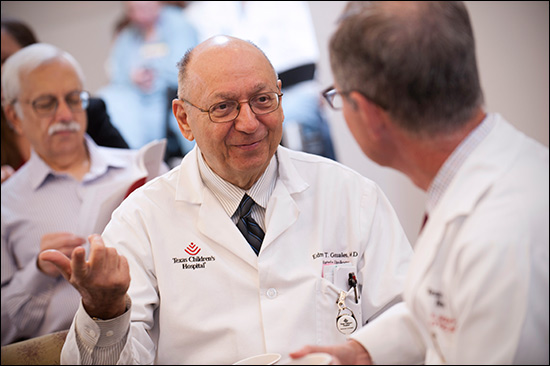
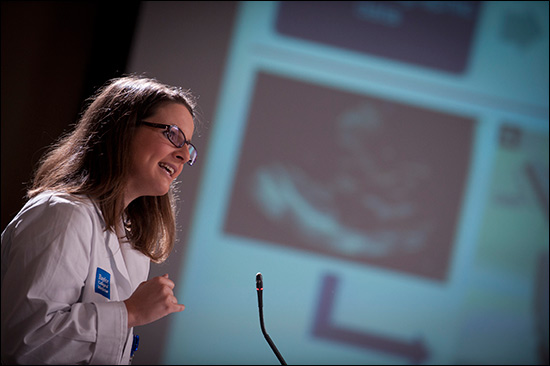
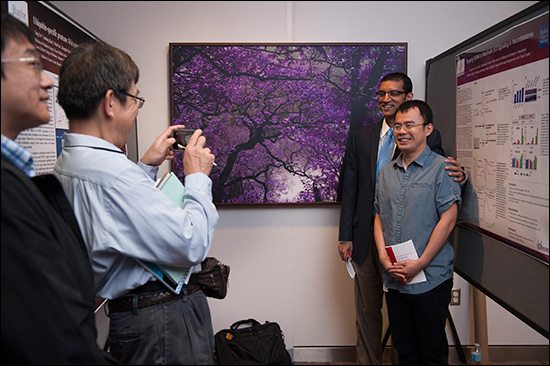
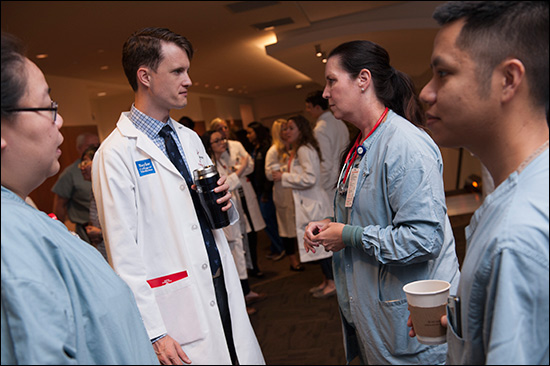
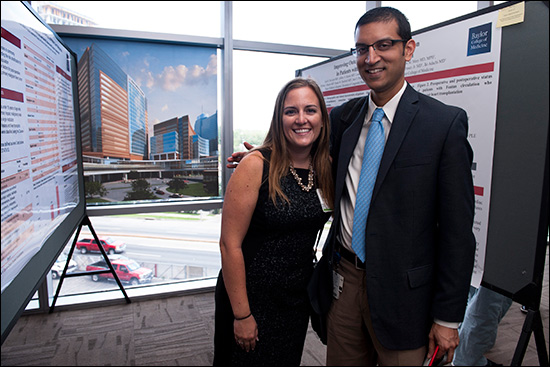
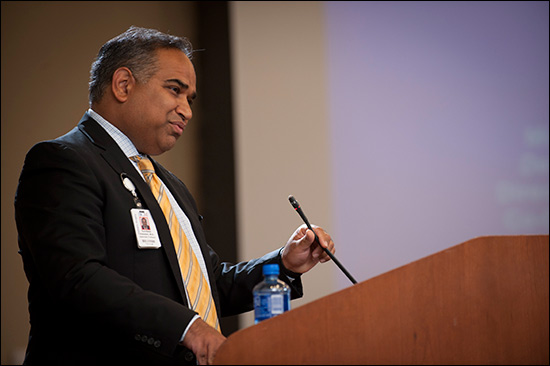
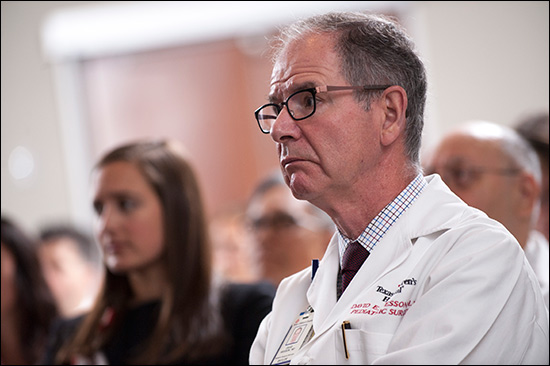
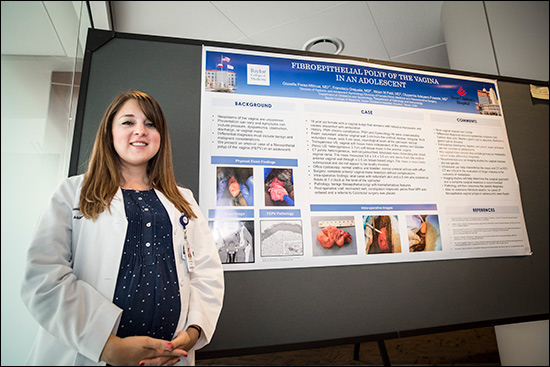
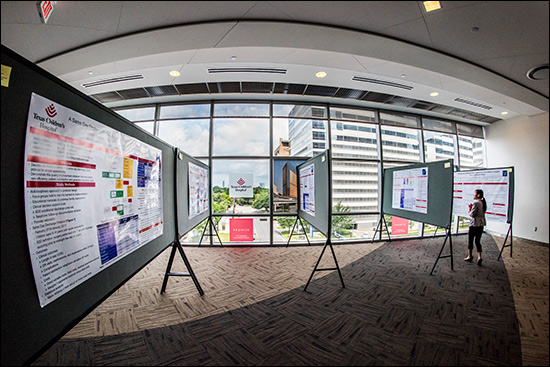
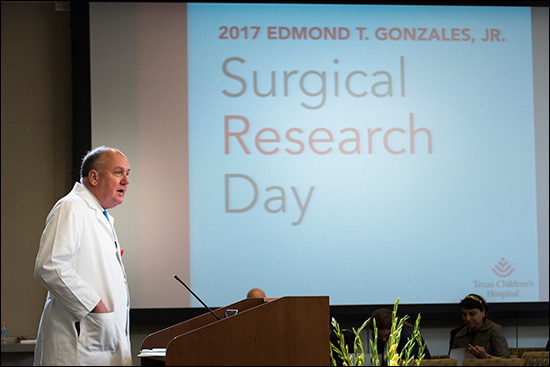
More than 300 members of the Texas Children’s Hospital Department of Surgery attended the eighth annual Edmond T. Gonzales, Jr., Surgical Research Day on May 19. The event provided a forum for researchers across the department to showcase their work.

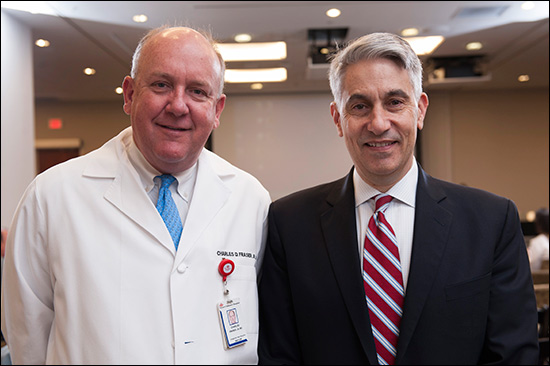
“As the research enterprise within the Department of Surgery grows, this day, where we highlight the research being conducted in the department, is more important than ever,” said Dr. Charles D. Fraser, Jr., surgeon-in-chief at Texas Children’s Hospital. “The new research discoveries coming from academic surgeons and scientists at Texas Children’s Hospital are changing the future of health care.”

This year 159 abstracts were submitted for review. Eleven of these abstracts were chosen for oral presentations on Surgical Research Day and 130 were accepted for poster presentations. This year eight students vied for the Best Presentation award and three faculty members were chosen to present their research.

The 2016 keynote speaker was Dr. Michael Longaker, the Deane P. and Louise Mitchell Professor and Vice Chair of the Department of Surgery at the Stanford University School of Medicine and Lucile Salter and Packard Children’s Hospital. He is a pediatric plastic surgeon who also directs Stanford Medical School’s Program in Regenerative Medicine and Children’s Surgical Research, and co-directs the Institute of Stem Cell Biology and Regenerative Medicine.

Laura Laux Higgins, director of special projects in the Department of Surgery at Texas Children’s Hospital, gave an ethics presentation on ethical violations in research. Higgins worked at leading legal firms as a litigator and spent several years at a top management consulting firm before joining Texas Children’s.

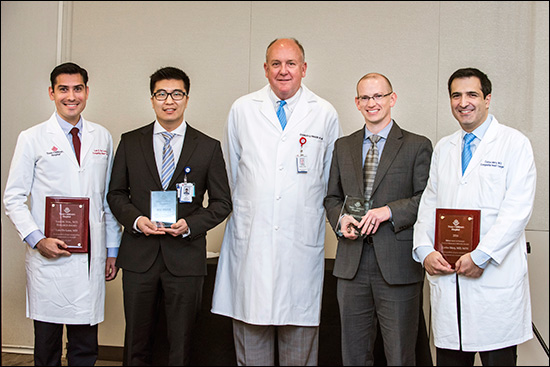
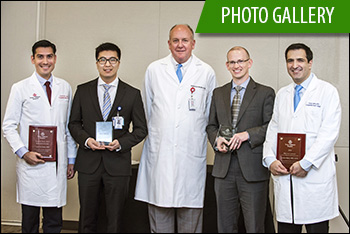
Awards presented at the event were the Samuel Stal Research Award for outstanding research by a resident or fellow, the Research Mentor Award, and Best Oral Presentation and Best Poster Presentation.

  • The Samuel Stal Research Award was presented to Dr. Luis De Leon, a post-doctoral research fellow in Congenital Heart Surgery. The award is named after Dr. Samuel Stal, former chief of Plastic Surgery at Texas Children’s.
  • Congenital Heart Surgeon Dr. Carlos Mery was honored with the Research Mentor Award. The award is given on an annual basis to honor a Department of Surgery faculty member who serves as a research mentor through career development, professional guidance or cultivation of research interests.
  • Best Oral Presentation award was given to Dr. James Fisher who is in the first year of his fetal surgery fellowship. He presented his work on the Development and Validation of a Fetal 3-D Surgical Simulator: Implications for Minimally Invasive In-Utero Gastroschisis Repair.
  • Best Poster award was given to researcher Andrew Lee from Anesthesiology for a poster on Use of the Baxter Faces (BARF) Scale to Measure the Severity of Nausea in Spanish Speaking Children.

Recipients of the 2017 Surgical Seed Grant Awards were announced as the grand finale of Texas Children’s Hospital Surgical Research Day. This grant program, funded by the Department of Surgery, allows surgery researchers to generate the preliminary data necessary for National Institutes of Health (NIH) grant applications and other extramural funding. Click here to find out who received a seed grant.

The Surgical Research Day Planning Committee included Dr. Jed Nuchtern (chair), Melinda Mathis (co-chair), Dr. Swathi Balaji, Shon Bower, Kathy Carberry, Dr. Jennifer Dietrich, Matthew Girotto, Laura Laux Higgins, Dr. Chester Koh, Dr. Lingkun Kong, Dr. Sandi Lam, Liz McCullum, Anissa Quiroz, Angie Rangel, Dr. Scott Rosenfeld, Stacy Staples and Veronica Victorian.

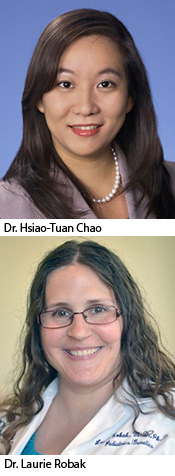
Drs. Hsiao-Tuan Chao and Laurie Robak, physician-scientists at the Jan and Dan Duncan Neurological Research Institute (NRI) at Texas Children’s, received scholarship grants from the American Academy of Neurology (AAN) to support studies on neurodevelopmental and neurodegenerative diseases.

Chao, a postdoctoral associate in the laboratory of Dr. Hugo J. Bellen was awarded the 2017 Neurology Research Training Scholarship for her proposed study titled, “Transcriptional Dysregulation of Neural Circuits in Neurodevelopmental Disorders.” Using the laboratory fruit fly and mouse, she will explore how changes in the function of master regulators of gene expression, like EBF3, can cause childhood neurologic diseases. Chao’s discoveries will provide some answers and improve the quality of life for many of these children and families.

Robak is a postdoctoral fellow in the laboratory of Dr. Joshua Shulman. She was awarded the 2017 Clinical Research Training Fellowship in Parkinson’s Disease for her proposal titled, “Elucidating Genetic Links Between Lysosomal Storage Disorders and Parkinson’s Disease.” Her study will identify lysosomal storage disorder genes as risk factors for Parkinson’s Disease, which will hopefully lead to improved diagnosis and risk assessment, and development of novel therapeutic strategies.

Twenty award winners, including Drs. Chao and Robak, were recognized at the 69th Annual Meeting of AAN, the world’s largest association of neurologists in April.

Click here for more information about their proposed research studies.