April 15, 2019

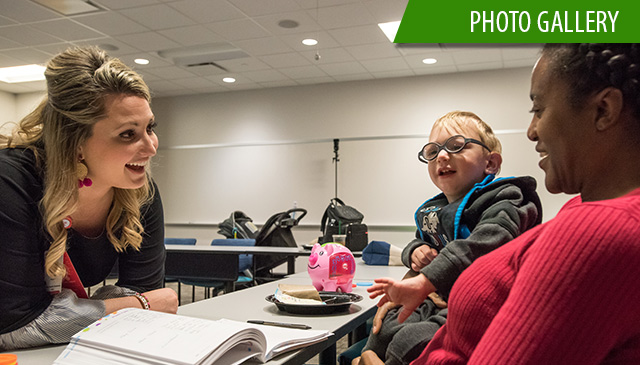
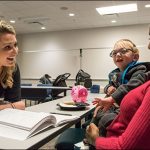
A brand-new clinic at Texas Children’s West Campus is empowering children with visual impairment to make the most of the sight they have and live more independent lifestyles.

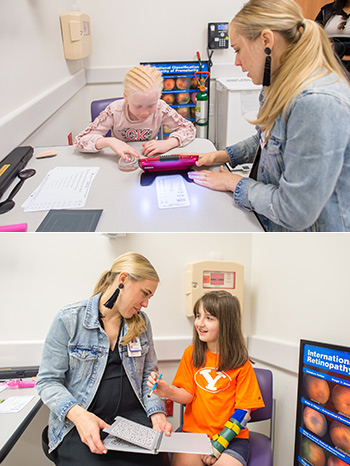
Texas Children’s Vision Enhancement Center – the only pediatric low vision clinic in Houston and one of only a few in the nation – was started this past January to meet the tremendous need for specialty care for children in Greater Houston living with various forms of visual impairment that can’t be corrected with glasses, contact lenses, surgery or medicine.

The clinic, made possible through a generous gift from Kathy and George Bishop, is spearheaded by Texas Children’s pediatric optometrist Dr. Kelsie Morrison and provides children with tools and techniques to maximize their functional vision so they can perform daily tasks and educational activities.

“The Vision Enhancement Center is the product of a partnership between Dr. Morrison, the Eye Care Department at Texas Children’s and our wonderful hospital administrative partners,” said Dr. David Coats, Texas Children’s chief of Ophthalmology. “This great new service provides promise and hope, and I am very proud to be a part of a team that is so committed to helping children with vision impairment live healthy, happier lives.”

The most common causes of visual impairment, or low vision, in children are inherited or congenital eye diseases, such as oculocutaneous albinism, retinal dystrophies (such as retinitis pigmentosa or Stargardt’s disease), retinopathy of maturity, nystagmus, and optic nerve hypoplasia.

These conditions typically cause one or more of the following symptoms:

  • Loss of ability to see detail (visual acuity)
  • Loss of side or peripheral vision (visual field)
  • Constant double vision (diplopia)
  • Inability to navigate steps or the edge of curbs (contrast sensitivity)
  • Inability to distinguish colors

Children with low vision face special challenges in school, where great emphasis is placed on learning in a visual environment.

“The majority of what we learn as children is absorbed visually,” said Morrison. “The conditions that our patients have make it difficult to take in visual input and process it. Our job is to get a baseline measurement of their functional vision and then test different solutions, such as magnification devices or electronic systems, to find the best fit for each individual patient and to improve their quality of life.”

The Vision Enhancement Center administers a complete assessment of visual function, eye health and the visual demands each patient experiences in educational, home and community settings. This initial exam is a critical step in determining how the child uses their vision to function and whether visual aids and other environmental modifications can make daily tasks – such as reading and writing – more comfortable and manageable. To help gain a clearer picture of the child’s needs, teachers, therapists or other health care workers are encouraged to attend appointments if possible.

A review of visual equipment already in use at home and school, as well as of textbooks and school materials, helps the optometrist make suggestions and offer guidance on what other magnification tools may be needed, such as telescopes, magnifiers, electronic systems (e.g., video displays, virtual reality mountings), or special tools to help patients who have difficulty with contrast or glare. Additional guidance may be offered on potential environmental alterations that can be made at home or in the classroom to help maximize the patient’s vision and improve their daily life.

The response from the community has been tremendous. Volume has been high since the clinic’s opening and there are already plans for expanding clinic space.

“The care and healing provided at this clinic have the ability to transform children’s lives,” said Dr. Allen Milewicz, Texas Children’s chief of Community Surgery and chief surgical officer at Texas Children’s Hospital West Campus. “These impactful therapies, and the work of dedicated physicians like Dr. Morrison, make me proud to be part of Texas Children’s.”

Learn more about the Vision Enhancement Center and other services provided by Texas Children’s Division of Ophthalmology.

Texas Children’s MyChart has an electronic waitlist that automatically texts and emails families when appointments become available sooner. Over 2,100 patients have accepted an appointment an average 45 days earlier than their previously scheduled appointment.

Since implementing the electronic waitlist on MyChart in 2018, we’ve received positive feedback from our patients and families about the convenience of this new tool.

“My son’s original appointment was scheduled for September 4, but when I got an electronic notice via MyChart asking me if I wanted to accept an appointment in June, I accepted it,” said Monica Blancas. “While we usually go to the medical center for appointments, I didn’t mind driving a little further for my son’s appointment in Katy if it meant that I could get him in to see a doctor a lot sooner than scheduled.”

Click here for more information on how to opt in to receive New Wait List Offer text messages.

About Texas Children’s Patient Access Initiative

Launched in August 2017, Texas Children’s Patient Access Initiative is an on-going, collaborative effort to improve patient access across the organization. Since then, Texas Children’s has made significant progress to ensure patients easily and conveniently get in the door so we can provide the care they need, when they need it.

Click here for a list of other tools and features we’ve implemented across the system to improve access, care coordination and patient experience at Texas Children’s.

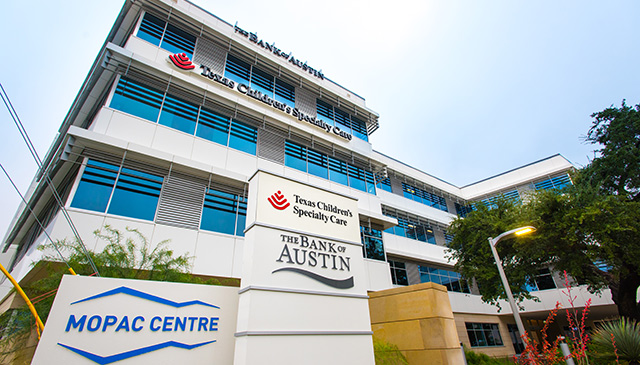
Mere months after opening its doors to patients and families for the first time, Texas Children’s Specialty Care Austin earned recognition from the Austin Chapter of the Associated General Contractors for outstanding construction.

The association selected Specialty Care Austin for its Outstanding Construction Award after considering the difficulty of construction, unusual techniques and the quality and appearance of the completed facility, Jill Pearsall, Vice President of Facilities Planning & Development and Real Estate Services, said. The group also praised how quickly and efficiently Texas Children’s and its partners were able to complete such a complex project – particularly as a new entrant in the Austin market.

The clinic currently comprises 26,000 square feet on the MoPac Expressway in the bustling north-central area of the city, with 30 exam rooms and facilities for subspecialty care including cardiology, ophthalmology, pulmonology, and allergy and immunology.
“We are thrilled to have this recognition as it represents the overall work of the amazing Austin project team and the quality of environment that Texas Children’s is bringing to Austin,” said Allison Muth, facilities project manager. “There is so much construction activity happening in the Austin area, and it’s an honor to have the specialty care project recognized as one of the best interior renovation projects in the area. We couldn’t have accomplished this without the support of our design and construction partners: McCarthy, Page and Transwestern.”

Texas Children’s employees also helped to design Specialty Care Austin by providing input on the functional needs of the space from the front-line perspective. Employee feedback was further incorporated into the construction and occupancy processes along the way.

The opportunity to help introduce Texas Children’s to a new city encouraged the project team to think outside the box while also maintaining the classic brand look and feel. They were intentional about partnering with local companies and vendors on the project to forge positive, new relationships.

“It’s pretty significant to be awarded in both the health care arena and construction arena at a facility in Austin, especially for our first time there,” Pearsall said. “You can walk through the clinic and see it is new and fresh with bright, updated colors and natural light; it stands out. We still have a lot of room to grow, but it’s a great location and setting, and our patients and families are in awe. This recognition from the Austin Associated General Contractors is a sign of our success so far.”

March 18, 2019


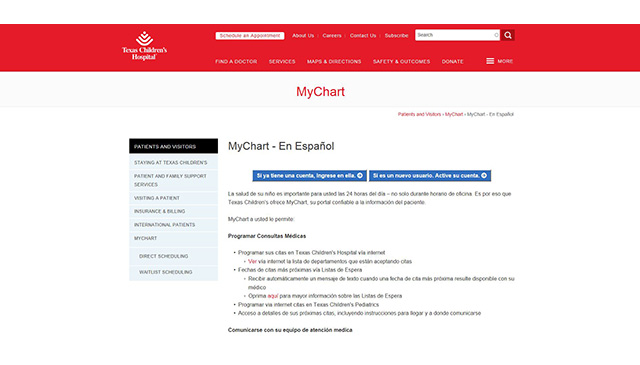
As part of Texas Children’s Care Coordination Initiative – and in an effort to ensure better care and communication between providers and their patients – MyChart is now available in Spanish.

“By having our patient portal available in Spanish, we want to ensure that we are providing information to families in a language they understand,” said Dr. Heidi Schwarzwald, executive sponsor of MyChart Spanish and Chief Medical Officer Pediatrics of Texas Children’s Health Plan. “Patients and providers can now use the same great functionality in MyChart to transmit messages and health information faster and more efficiently in whichever language our patient families are most comfortable with.”

Before or after patients log on to MyChart at mychart.texaschildrens.org, they can click on the “En Español” button and the MyChart patient portal switches to Spanish. From there, patient families can obtain their after visit summaries and immunization records electronically, reducing phone calls and delays. They can also request medication refills and other services. All of the main features from MyChart English are now in Spanish except for certain titles or sections, such as medication names.

Within MyChart, patient and families can also send and receive open messages. Care team members have three tools to translate Spanish messages from MyChart. Messages can be translated by Spanish-speaking staff who have been validated by Language Services or through a translation software, Systran. Staff can also send MyChart messages for translation to the Language Services team via Epic Inbasket. Each clinic has established their workflow on who and how incoming messages will be translated and can then respond to the concern or request using the current workflow for English messages.

“While over 60 percent of Texas Children’s patients use MyChart, only 27 percent of Spanish-speaking patients had accessed the MyChart patient portal which meant providers had to use different modalities to contact these families,” Schwarzwald said. “Now with the launch of MyChart Spanish, we hope this new communication tool will encourage more Spanish-speaking families to engage with us via MyChart.”

From Texas Children’s operations teams that provided the guidance for needed features to the technical teams that helped implement the new functionality to the Language Services department that provided translations for content, the MyChart Spanish rollout has been a huge team effort across the board.

Language Services provided all of the content and document translations that populated the server files for the Spanish MyChart implementation. This included everything from minor phrases and alert messages to full multi-page, terms of service and important FAQ translations. All of the patient-facing files and content needed to be translated and included in the Spanish MyChart build on the web servers.

“We provided knowledge and expertise to ensure the accuracy and reliability of the translation software and we’ve been working to create and build the software’s dictionary, which establishes the benchmark for accurate translation,” said Alma Sanchez, manager of Language Services. “Our team will continue to enhance the dictionary and translation memory to enable quick and complete responses to our patients.”

The soft launch of MyChart Spanish will give staff the opportunity to test the system and workflow processes before actively marketing this new service to our Spanish-speaking patients and families.

“We’re excited to roll out MyChart Spanish for our multilingual patients, families and staff that interact with Texas Children’s for their patient experiences,” said Colleen Julien, Epic Patient Engagement manager for Texas Children’s Information Services. “We are appreciative of the Care Coordination initiative and Dr. Schwarzwald’s leadership. This project has been on our road map for many years and the project took off when Care Coordination made it an operational priority to offer MyChart in Spanish.”

Click here to read the MyChart Spanish FAQs. For more information about MyChart, visit texaschildrens.org/mychart.

March 5, 2019

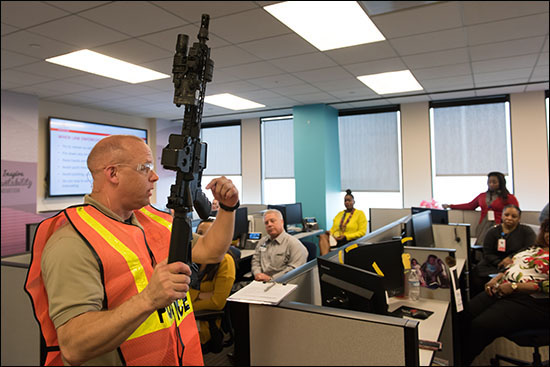
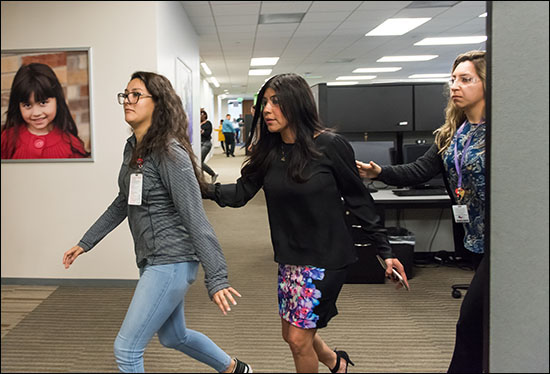
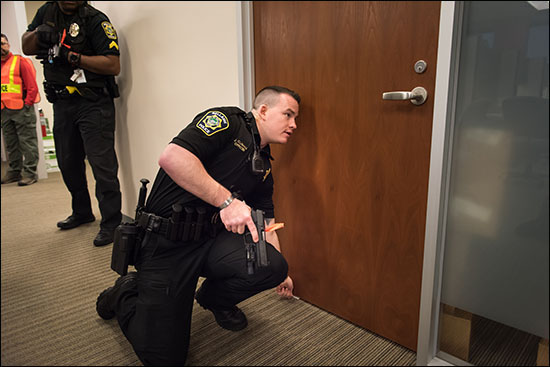
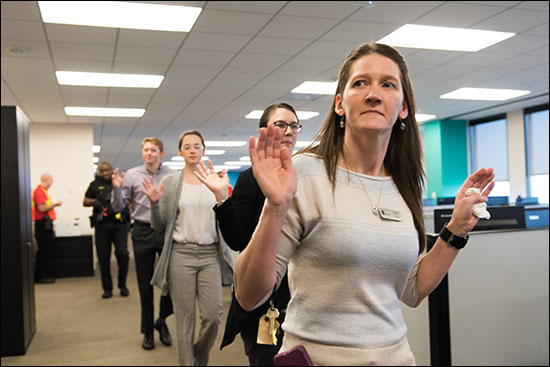
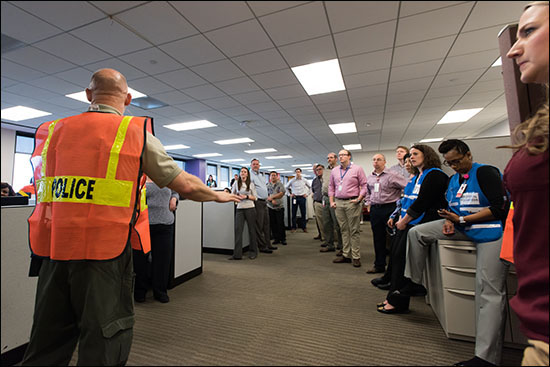
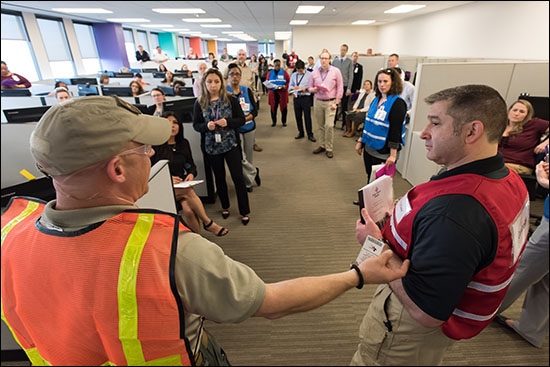
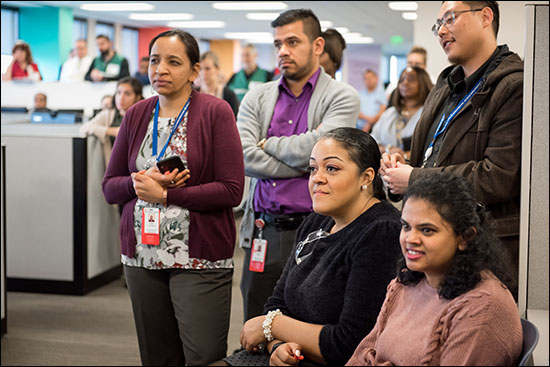
When opportunities arise, Texas Children’s Emergency Management plans functional active shooter exercises on our campuses. Thanks to the leadership and staff of the Texas Children’s Health Plan, or the first time on February 27, the exercise was geared toward those who work in an office environment rather than a clinical space.

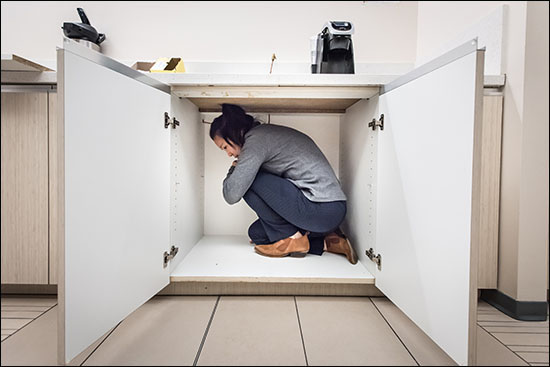
The purpose of these exercises is to test Texas Children’s emergency notification procedures, staff training for response to an active shooter (Run, Hide, Fight), and to give our law enforcement partners a chance to practice their tactical response to an active shooter. Holding this training in an administrative rather than a clinical setting provided an excellent opportunity to test the “Run, Hide, Fight” training and a different environment.

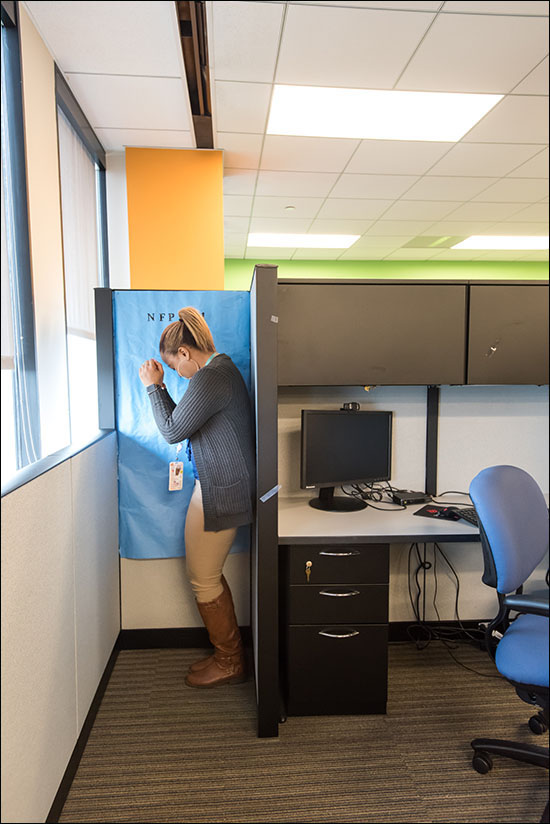
The most important aspect of the exercise is the difference in an administrative setting versus a healthcare setting. Hospitals have multiple patient rooms and storage rooms for other medical purposes, whereas, in most office buildings there are large open areas that have cubicles. When the staff practice the “Run, Hide, Fight” method, most people’s first thought is to hide under a cubicle desk.

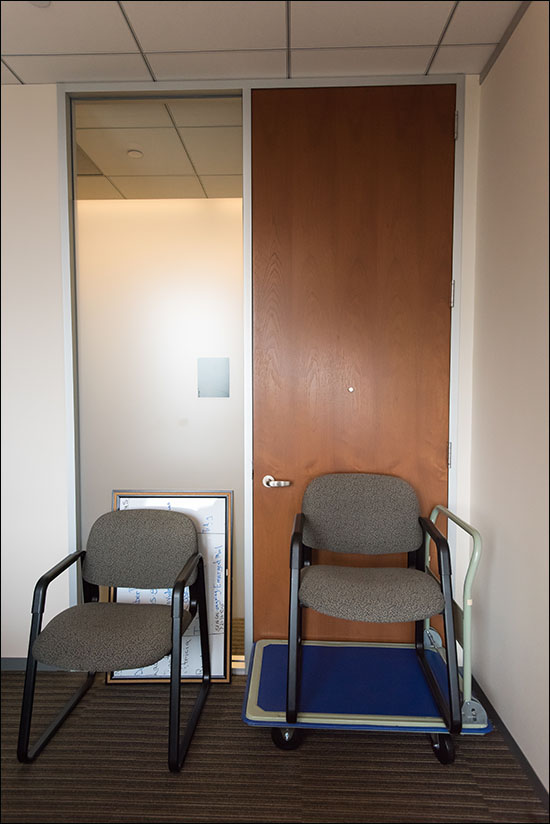
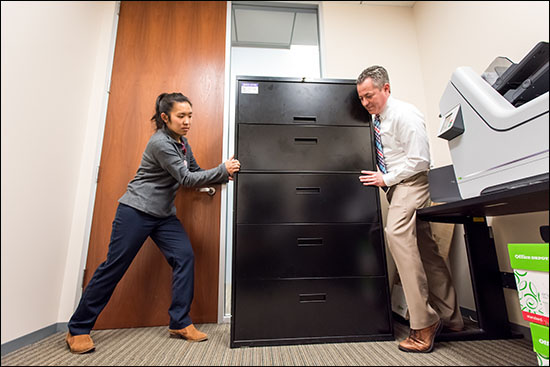
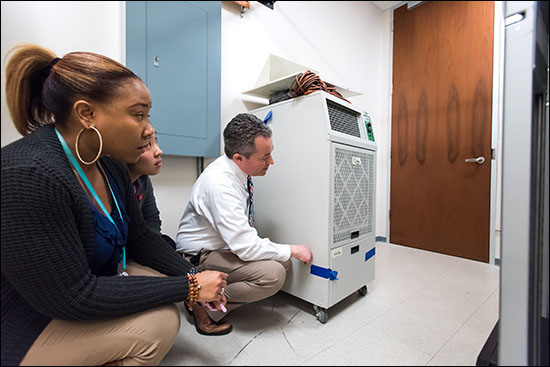
“That is not the safest place during an active shooter situation,” manager of Texas Children’s Emergency Management Aaron Freedkin said. “They need to find another place, either leave the floor or find a room that they can lock or block the door with furniture. That’s preferable to just hiding under a desk.”

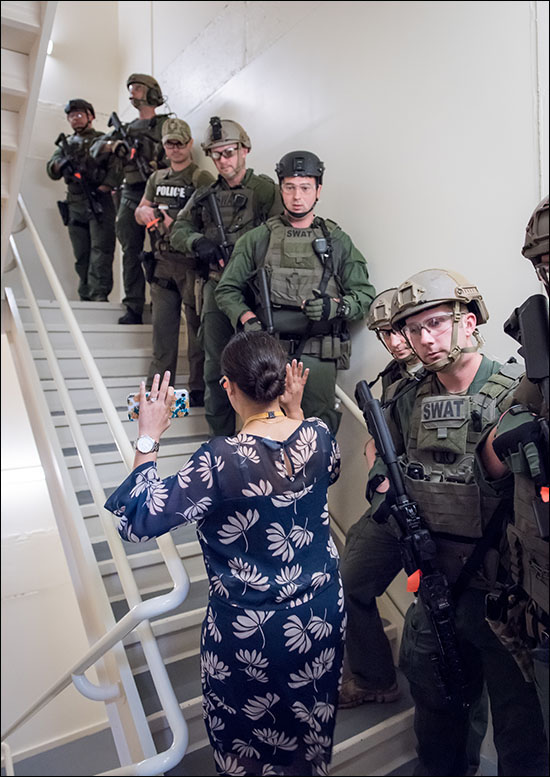
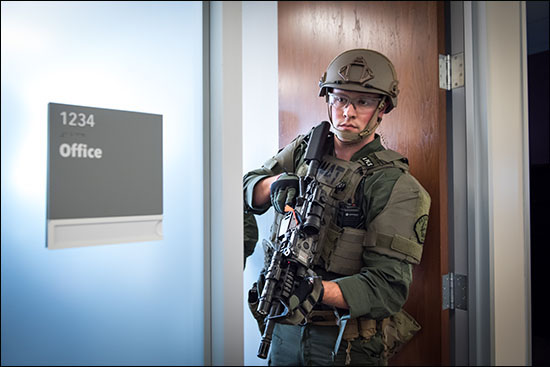
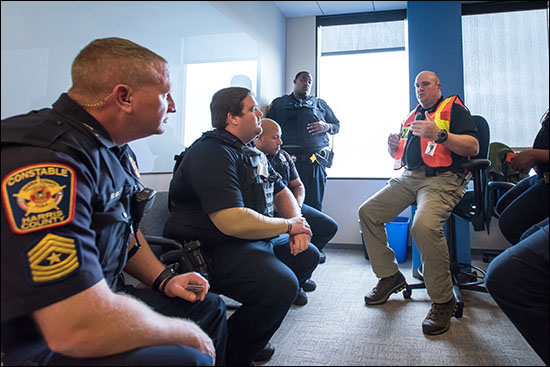
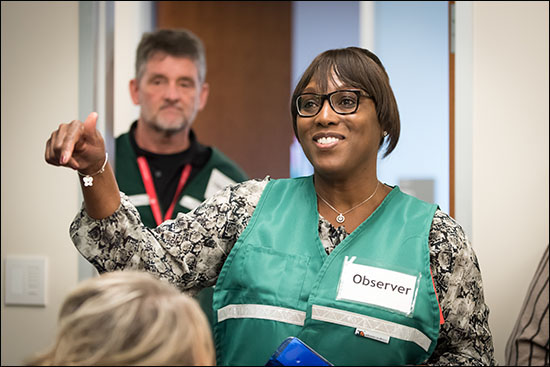
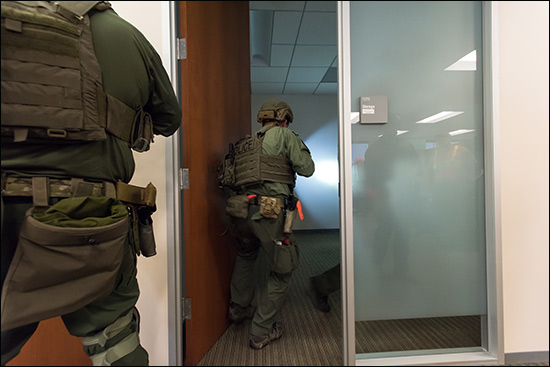
The exercise included 175 participants, 14 logistical volunteers, 32 observers and 48 law enforcement officers such as: UT Police, Bellaire Police, Houston Police Department, Precinct 5 Constables Office, and Pasadena Police Department SWAT. Having multiple agencies involved in simulating an active shooter incident response creates an environment that is as realistic as possible and allows law enforcement agencies to practice their skills in a new environment. A secondary benefit is having the opportunity to train in the office setting, which would be valuable in the event of a real active shooter incident. It is a chance for them to train together with other agencies and get exposed to different training aspects that ultimately have the same basic goals and mission.

“We are excited to partner with these law enforcement agencies,” Freedkin said. “They get many opportunities to practice in empty buildings with law enforcement participants. This exercise will give them all a chance to practice their building clearing and searches with the unpredictability of non-law enforcement officers playing the role of victims and so there is definitely something in it for everyone participating.”

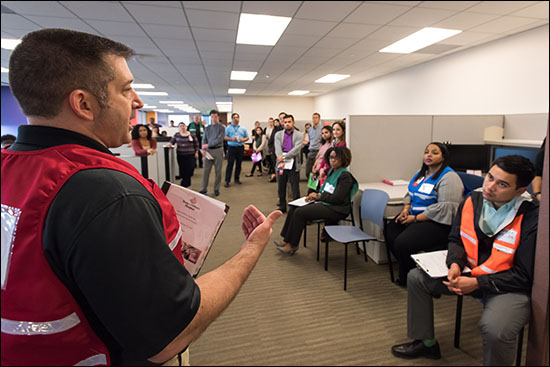
After the participants arrived, they were put through a safety briefing with Texas Children’s Hospital Emergency Management, followed by further orientation with The University of Texas Police Department, and “Run, Hide, Fight” training provided by Texas Children’s Security. During these exercises blank ammunition was used to simulate gunfire to increase realism while maintaining safety.

Law enforcement was staged on the 13th floor and the exercise began as they proceeded down the stairwell. Meanwhile, there is a person on the 12th floor acting as the aggressor toward employees. The challenge then comes as the aggressor engages in a discussion with the employee that may result in them not thinking immediately about, “Run, Hide, Fight.” After the exercise is reset and begins a second time, there is quicker movement of people because they have had time to immediately think about it and learn from their initial mistakes.

“It is always interesting to observe an exercise such as this because people react in unexpected ways such as seeking shelter and protection in places that are not ideal,” Freedkin said. “That is one of the reasons we conduct this training so that people have an opportunity in advance to consider their training and what their reaction should be.”

There were three sessions and all were structured the same way. Between the first evolution and second evolution of each session, a portion of the scenario changed. A debrief discussion was later held and everyone was able to reflect on their reactions.

“The exercise went extremely well and was well received by the exercise participants and senior leadership who were present,” Freedkin said. “For future exercises, we are working with our law enforcement partners to add additional elements of realism to the exercise while still maintaining the safety of our participants.”

The Emergency Management Team looks forward to providing more trainings geared toward the administration staff throughout the system, and wants people to know if an opportunity comes up to participate in an active shooter exercise like this, staff should take advantage of it. The more realistic your training experience the better you’re going to react in an actual incident.

February 25, 2019

An energetic crew of 30 health-conscious Texas Children’s employees, some of their friends and one enthusiastic Heart Center patient mom recently teamed up to put a whole new spin on celebrating Heart Month.

The multidisciplinary group of physicians, nurses, physical and occupational therapists, and nutritionists from our cardiac intensive care unit (CICU), along with several employees from other critical care medicine (CCM)-related departments and services, met at RIDE indoor cycling studio in Houston Heights to sweat for a cause, raising money for Texas Children’s CICU and CCM patients and their families in a charity spin class.

“An event like this shows you the kind of amazing people we have at Texas Children’s,” said Dr. Paul Checchia, medical director of the Cardiac Intensive Care Unit. “Not only does it reflect their dedication to our patients, to give up their personal time – and their sweat – to benefit children with heart disease, but it also shows their dedication to the team, to each other and to their own heart health.”

The idea first came to Dr. Patricia Bastero, Texas Children’s medical director of Simulation for Critical Care Medicine, after the CICU team held two previous spin runs together.

“Lots of us love spin – it gives you strength and cardio, it’s great for you,” she said. “But it’s also a great way to bond with friends. I thought, ‘Why not take it a step further and do it to benefit our families?’ So we started to spread the word through email, on Facebook and with custom-made flyers, and I want to thank Pamela Biggs for all the work she did in helping us to keep people informed about the event.”

Texas Children’s has one of the nation’s largest, busiest and highest-acuity critical care services. Each year more than 6,000 children are admitted to our intensive care units, including approximately 800 children with heart disease admitted to our CICU, the majority of whom have undergone heart surgery. Understandably, because of the complex nature of these cases, critical care treatment can be stressful for patient and family. It can also mean lengthy stays or lots of travel to the hospital, which can add up.

The funds raised through the charity spin class will help defray some of those costs incurred during hospital visits, such as parking or gas.

“An event like this not only raises much-needed funds to support out families, but it’s an incredible team-building event,” said Dr. Lara Shekerdemian, Texas Children’s chief of Critical Care. “We are lucky to have ICU and Heart Center teams whose commitment to our patients extends beyond the doors of the ICU. Excellent teamwork outside leads to even better teamwork and patient care in our ICUs.”

The event was so popular that there are already plans for future charity spin classes. Bastero also hopes it inspires other groups in the hospital to host similar events, both for our patients’ health and their own.

“There are so many groups across the hospital that do similar things for patients and their families, but every little bit helps,” she said. “When many people join together for a common purpose, we can make a bigger difference.”

Learn more about the CICU and critical care services at Texas Children’s Hospital.

When Nicole Tenney took her daughter Aubree home from the hospital in August of 2017, the last thing on her mind was how often she would talk to her newborn and how she would make connections with her through speech.

All the new mom could think about was whether she was going to be able to make it through the day without having to call one of the many clinicians she and her daughter had gotten to know during their 136-day stay in the Neonatal Intensive Care Unit at Texas Children’s Hospital’s Medical Center Campus.

“Aubree was born at 24 weeks gestation and overcame several challenges while at Texas Children’s,” Nicole said. “But she still had a long way to go, and I was willing to do anything to help keep her moving forward.”

So, when Aubree’s physicians, nurses and therapists with the SOAR Program, also known as the High-Risk Neonatal Follow Up Clinic, at Texas Children’s Hospital The Woodlands suggested that Nicole also participate in the hospital’s upWORDS Program, she jumped at the opportunity.

Developed in association with the LENA Research Foundation and generously supported by Kohl’s Care, Episcopal Health Foundation, Ed Rachel and the Powell Foundation, upWORDS gives parents the knowledge of how to improve the quantity and quality of language spoken with their child and educates them on the long-term impact language can have on their child’s success in life. The program includes group classes where parents learn to use the LENA System™ to monitor their home language environment and are taught simple techniques to increase interactive talk with their child.

To measure a participant’s home language environment, the LENA System™ uses a small recorder that fits inside a vest worn by the child. The recorder measures the amount of words a family speaks to their child and how much their child responds in return. The recording is then translated into data that the parents can use to see how much they are talking to their child and identify opportunities to increase the level of spoken interaction they have with their baby.

Texas Children’s via its Section of Public Health and Primary Care launched the upWORDS program in June 2016 as a pilot program at Texas Children’s Hospital West Campus in partnership with the Section of Public Health and Primary Care and Speech Therapy department at West Campus. Since then, 502 families have participated in the program, which is now being offered at 10 locations across the Greater Houston Area.

Late last year, Texas Children’s extended the program to NICU parents via two sets of classes at Texas Children’s Hospital The Woodlands. The classes are supported by the SOAR Program and several of the therapy teams in The Woodlands. About dozen family members – including Nicole and Aubree – attended the classes, graduating from the program on February 14.

“The biggest thing I learned was to give Aubree a chance to respond to me however she could,” Nicole said. “This and many of the other tips I learned really helped. Aubree’s development in speech increased by seven months during the time we were in upWORDS.”

Maura Dugan, manager of the Section of Public Health and Child Abuse Pediatrics, said some parents in the NICU classes increased the number of words spoken to their children by 25,000, and that 84 percent of upWORDS participants who graduated from upWORDS classes last year reported they spoke more to their children, and 79 percent reported an increase in the number of conversational turns or instances of back and forth verbal exchanges between them and their children.

Dugan said the NICU classes in particular have been a huge success as the majority of the participants are dealing with a lot of issues and greatly needed the support of experts as well as other parents who are going through similar things.

Led by upWORDS Health Educator Jennifer Howell and Listening and Spoken Language Therapist Allison Haggerty, the NICU classes not only teach parents and caregivers the importance of early talk and turn taking, but how to implement talking tips into their everyday routine like singing, pausing and chatting while out and about with their baby.

“With the help of staff and each other, parents work through some of the challenges they face in everyday life,” Dugan said. “And, each week they get to watch their children interact and achieve various milestones.”

Dr. Candice Allen, medical director of the SOAR Program, has helped get the upWORDS NICU class started and said they are a great addition to the services her team already provides families who are transitioning from the NICU to home.

“The more support we can give these parents and babies the better,” she said. “We want them to go on to lead healthy and productive lives, and language is a big part of that.”

To learn more about or register for the upWORDS program at Texas Children’s, click here.