May 20, 2019

In May of 2018, Texas Children’s reached a historic milestone when the Lester and Sue Smith Legacy Tower opened its doors to care for our most critically ill patients. Four months later, Texas Children’s No. 1 ranked Heart Center moved into Smith Legacy Tower, marking the completion of the project and delivering on our promise to ensure every child receives the right care, at the right time, at the right place. Learn more by visiting our 2018 virtual Annual Report.

May 13, 2019

The world-class orthopedic care Texas Children’s is known for is now even more accessible for patients who need it.

Texas Children’s and the Division of Orthopedics are proud to offer specialized orthopedic care on Saturday mornings at Texas Children’s Specialty Care Upper Kirby, from 8 a.m. to noon.

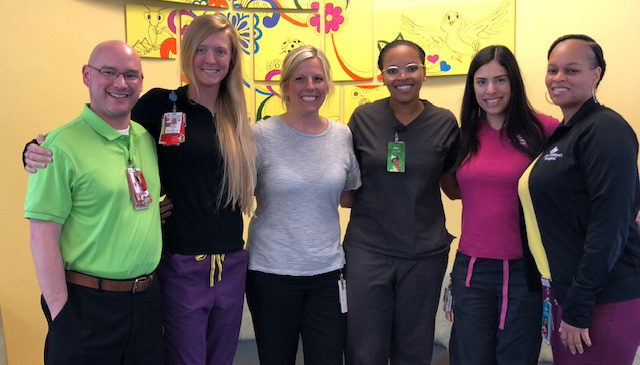
“This new offering is really about improving access for our patients and families,” said Chief of Orthopedic Surgery Dr. Brian Smith. “This care expansion functions as a musculo-skeletal urgent care center with expert orthopedic care, providing families quick, direct access to treatment without waiting hours in an emergency room (ER). I’m proud of all the work Janai’ Buxton and the team have done to make this service available and predict this model will be a success – and perhaps lead to similar expansions across the Texas Children’s system.”

Expanding orthopedic care became a goal after a team of experts at Texas Children’s noticed a trend in families in need of early-morning and late-evening appointments. Many parents also inquired about weekend availability. Additionally, the growth of the Division of Orthopedic Surgery over the past three to four years has equipped Texas Children’s to meet more patients where they are, when they need us. The team began putting the pieces into place to improve access.

“Making orthopedic care available on Saturday mornings provides a huge benefit for parents who work during the week, for children with busy schedules, and for families with urgent needs,” said Buxton, physician assistant and clinical lead for Orthopedic Surgery advanced practice providers (APPs). “Parents will appreciate that convenience and can rest easy knowing they’re getting care from experts who specialize in pediatric orthopedics. Additionally, this initiative may help alleviate high volume of non-emergent orthopedic injuries at Texas Children’s Urgent Care locations and reduce overall weight times for our emergency centers across the Houston area.”

When a child is sick or injured, parents have to change their schedules to ensure their child gets the care they need. This can mean missing work, often without pay, to take the child to an appointment. Additionally, if a child is injured at a Friday sporting event, families sometimes have to wait hours in the ER or even wait until the beginning of the week for specialty pediatric orthopedic care.

Now, at Texas Children’s Specialty Care Upper Kirby, patients and families can be seen on Saturday mornings by an APP specially trained in orthopedic injuries and conditions. Services provided include:

  • Fracture evaluations, including X-ray
  • Injury evaluations for knees, ankles, arms, wrists, etc.
  • Routine injury or surgical follow-up appointments, at the discretion of the patient’s surgeon or physician

Appointments and walk-ins are welcome. Parents should note that not all conditions will be seen during this clinic.

More information about Orthopedics at Texas Children’s, and about making orthopedic appointments at Upper Kirby and other Texas Children’s locations, is available online.

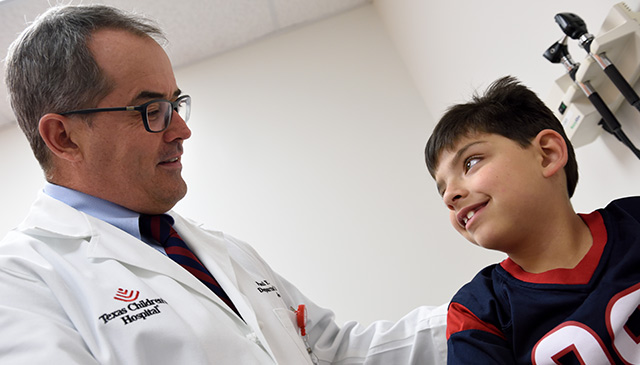
Last month, Texas Children’s Department of Surgery leadership announced that Dr. Paul Austin was named Texas Children’s new chief of Urology, the third Urology chief in the hospital’s 65-year history.

“I’m excited that Dr. Austin has accepted the position of chief of Urology at Texas Children’s,” said Surgeon-in-Chief Dr. Larry Hollier. “His clinical experience, combined with a successful research program, provides a wonderful foundation for the future of Pediatric Urology at Texas Children’s.”

Austin assumes the helm of the division from Dr. David Roth, who has served as chief of Urology for the past seven years and helped recruit Austin nearly two years ago. Under Roth’s leadership, Texas Children’s Division of Urology grew from three physicians and an advanced practice provider (APP) to one of the largest programs in the country, with 10 urologists, two research PhDs and six APPs. During this time, the division of Urology’s national status steadily improved and the program is currently ranked No. 4 in country according to U.S. News & World Report.

“I have enjoyed the growth of our division and appreciate the support of our leadership and administration,” Roth said. “I am excited that Dr. Austin is continuing the tradition of leadership for the Division of Urology that began with Dr. Edmond Gonzales over 40 years ago. He is an internationally recognized leader in pediatric pelvic health and is the right person to lead our division for years to come.”

Austin currently serves as Director of Texas Children’s Complex Urologic Reconstruction Program and Director of the Pediatric Urology Basic Science Research Program. He has co-authored more than a hundred articles and 25 book chapters, has edited four textbooks, and has three grants totaling more than $2.5 million in National Institutes of Health R01 funding.

Austin is also the current president of the American Association of Pediatric Urologists (AAPU) – one of the best-respected and most important societies for pediatric urologists in the United States – an organization that Roth co-founded more than 30 years ago.

“Since I first attended AAPU with a mentor of mine in 1996, it has been my favorite conference of the year,” Austin said. “It’s always a special time of learning, networking and collaboration. The sheer variety of talks and topics is always amazing, and the way these experts challenge each other, but in a respectful way, has always been a hallmark of the event. That is thanks to Dr. Roth’s vision, and it’s my honor to serve as AAPU president this year.”

Austin brings a bright and multifaceted vision for the future to the Division of Urology. In addition to keeping our clinical care at the forefront of pediatric urology on a national level, he wants to enhance the division’s capabilities in the treatment of complex urologic conditions and in research.

“Everyone has their niche, and you have to be aware of your team members’ passions and think about how you can help them grow and develop their talents, whether that be in patient care, education and teaching, or research,” Austin said. “My main goals are to grow our basic and clinical research enterprise, to provide encouragement, motivation and support that will lead our people to continued excellence and achievement in patient care, basic and clinical research, in competition for research prizes, and in leadership roles in the greater field of pediatric urology, and to foster multidisciplinary collaboration between Urology and other divisions and services across the Texas Children’s system.”

About Pediatric Urology at Texas Children’s

The Division of Urology at Texas Children’s Hospital offers the most advanced surgical care for routine urological needs as well as genitourinary problems related to congenital birth defects, trauma and a range of other medical conditions.

The division provides specialized, multidisciplinary care and expertise in fetal medicine, spina bifida, renal stone disease, gender medicine and complex urologic care. The division has also established a transition urologic care process that allows adolescent patients to transfer care to adult care providers.

We work closely with child-life specialists, who provide support to help patients and their families cope with the challenges frequently presented by urological disorders. Transitional follow-up care is provided for adolescent patients as they progress to adult care.

Learn more about Urology at Texas Children’s.

May 6, 2019

Choose one of Mark Wallace’s first five Leadership Maxims:

  1. Leadership always influences or determines outcomes – not some of the time, but all of the time.
  2. Leadership applies to everyone.
  3. We lead in our professional lives and in our personal lives.
  4. We all should have our personal definition of leadership.
  5. The key characteristics to look for when selecting people are a winning attitude and a strong work ethic.

If you’d like a refresher on Mr. Wallace’s Leadership Maxims before writing your submission, watch his short Maxims videos here on the blog.
Write about how that maxim applies to you and your job at Texas Children’s. Please keep your stories between 350 and 500 words.
Click here to read Mr. Wallace’s blog about this year’s maxim leadership challenge.

Please email your submissions to Texas Children’s News at connectnews@texaschildrens.org.

April 30, 2019

On his blog this week, Mark Wallace invites you to share your leadership story with him and how it relates to his leadership maxims. Read more

Houston Texans linebacker Benardrick McKinney announced the 161st pick in the 2019 NFL Draft on April 27 live from NRG Stadium during the Houston Texans Kids Triathlon. The triathlon is the largest kids triathlon in the word and is presented by Texas Children’s Hospital.

Flanked by triathletes, Texans cheerleaders and TORO, McKinney excitedly proclaimed to a live and national broadcast audience that the Texans had chosen defensive end Charles Omenihu as the team’s 161st draft pick. The Pro Bowler and TORO then took a celebratory dip in the Texans Kids Triathlon pool!

Click here to watch a video of the pick and here to see photos.

More than 3,000 participants ages 6 to 15 turned out for the Houston Texans Kids Triathlon on April 27 and 28 at NRG Stadium, making it the largest USATriathlon sanctioned kids triathlon in the world for the fourth consecutive year.

Texas Children’s Hospital presents the event as part of the hospital’s partnership with the Texans and local sponsorship of PLAY 60, the NFL’s initiative aimed at encouraging kids to get sixty minutes of play per day.

Click here to see photos from the triathlon.

April 29, 2019

To provide patients access to our care, we must have the clinic rooms available to see them. A new pilot program was recently launched to test the concept of space sharing between our specialty clinics in Wallace Tower.

The initiative is helping us identify underused or vacant spaces. Subsequently, we can determine if another clinic can temporarily see patients in those spaces, which expands our capacity for appointments.

The three-month pilot began on floors 8 and 9 in Wallace Tower in September 2018. Texas Children’s Space Utilization Initiative and Transition Experience (SUITE) Team found that provider absences – whether due to PTO, conferences or inpatient service rounds – equated to 10 to 20 percent of exam rooms being open at any given time. Of the 103 four-hour clinic sessions requested, 43 sessions were accommodated.

“Partnering with the Financial Services team, we estimate an overwhelming opportunity to accommodate an additional 17,000 to 35,000 clinic visits in Wallace Tower alone, with potential to generate over $4.9M in additional margin for Texas Children’s,” said Brian Cordasco, lead for the SUITE team.

On January 14, the SUITE team launched a second pilot on floors 11, 16, and 17 in Wallace Tower that will span a period of three months to identify any opportunities for space sharing across these clinics.

The long-term goal is to apply the lessons learned from these pilots and implement a larger solution, which will include an IS portal to quickly identify space availability across the entire hospital system.

About Texas Children’s Patient Access Initiative

Launched in August 2017, Texas Children’s Patient Access Initiative is an on-going, collaborative effort to improve patient access across the organization. Since then, Texas Children’s has made significant progress to ensure patients easily and conveniently get in the door so we can provide the care they need, when they need it.

Click here for a list of other tools and features we’ve implemented across the system to improve access, care coordination and patient experience at Texas Children’s.