On his blog, Mark Wallace remembers the significance of August 28, 1963, and reflects on a period of time where national unrest was met with unity. Read more


On his blog, Mark Wallace remembers the significance of August 28, 1963, and reflects on a period of time where national unrest was met with unity. Read more

There is a lot of talk these days about immigration into our country and requirements around the process. Recently, new rules went into effect regarding the Public Charge Inadmissibility Law – commonly known as public charge.
So what do the rules mean for Texas Children’s and for us as employees?
First, they mean that many of our patients and their families may start asking more questions or may shy away from our services due to misinformation. Secondly, it means that all employees should understand exactly what public charge means and what to say to the families who may have questions.
***
What is a public charge?
“Public charge” or the “public charge test” is used by immigration officials to decide whether a person can enter the United States or get a lawful permanent resident status (green card). In this test, officials assess the likelihood of whether a person will lean heavily on the government for support.
What does the new rule mean?
The United States Department of Homeland Security issued a final rule (a new regulation) for legal immigrants in the United States wishing to enter or remain here.
Based on a number of factors – such as income, employment, personal health, education, skills and family situation – a person may or may not be allowed into the country or allowed to apply for lawful permanent status or a visa. The more public assistance a person has received in the past or the more assistance he or she is likely to receive, the less likely their chances of getting a green card.
Are there any exceptions to the rule?
Yes. Patients with the following situations will not have to undergo the public charge test:
The following forms of assistance do not count against anyone subjected to the public charge test:
When does the new rule start?
Several states have filed lawsuits to stop the law from taking effect. However, the new regulations are scheduled to start October 15, 2019. The new rule will only cover applications filed after mid-October.
What do I tell patients who are in the process of trying to obtain a green card?
Tell them that it is important to speak to a lawyer about their individual case before making any decisions.
What about our financial counselors that help families who are inpatient? Can the Health Plan help them?
Texas Children’s Health Plan is here to guide them and help answer their health coverage questions. If they have any questions about their CHIP or Medicaid coverage, they also can:
Where do I go if I’d like to know more about this topic?
The United States Citizenship and Immigration Services has published a very helpful fact sheet.
Visit: https://www.uscis.gov/news/fact-sheets/public-charge-fact-sheet

Hundreds of Texas Children’s employees walk into potentially dangerous situations every day.
Not only in the aftermath of a natural or man-made disaster, but on any given weekday. A routine Tuesday or Wednesday holds possible harm for these staff members.
So who are they?
They are our remote work force, which largely consists of a subgroup of Services Coordinators. They are the men and women who provide direct care and support inside of patients’ homes and out in the community.
They sit on the health plan side of the organization and spend the majority of their time in face-to-face interactions with families.
“Since the heart of our mission is to enhance the health and well-being of every child, our team is dedicated to the members we serve, and they live in every kind of neighborhood you can think of, including some that aren’t very safe,” said Ashley Simms, director of Care Coordination at Texas Children’s Health Plan. “When these employees are hired, they undergo the basic safety training, but we are now rolling out an entire suite of services to ensure that they are even safer on the job.”
What type of situations are they facing?
Katara Butler, assistant director of Care Coordination at The Health Plan, said the potential threats are varied.
“Unfortunately, we’ve had service coordinators physically attacked and threatened. There is also the potential for accidents or falls inside of a family home,” Butler said. “And, of course, by spending so much time on the road there is always the chance that there will be car trouble in an unsafe area.”
How are we ramping up safety for these employees?
Six different services will be available starting in October.
Workplace violence training
Crisis prevention training
Risk management training
Disaster bag
AAA coverage
My EOP (Emergency Operations Plan) app
Want more information?
Managers and supervisors will provide more information in the coming weeks.

You don’t have to be a victim of one of the latest mass shootings to be affected by them. Just hearing the news about the incidents in El Paso, Texas, and Dayton, Ohio, can cause anxiety, fear and a host of other emotions. And, for people sending children back to school this month, there’s an even heightened sense of sensitivity to such tragic events.
Failing to recognize these feelings and how to cope with them can begin to negatively affect your life and possibly hinder your daily performance as a Texas Children’s employee, parent, spouse or friend. Director of Texas Children’s Trauma and Grief Center and Texas Children’s Chief of Psychology Dr. Julie Kaplow assures employees they are not alone if they feel this way and recommends several tips on how to deal with the after-effects of a large-scale violent event.
Can mass shootings like the ones that recently occurred in El Paso, Texas, and Dayton, Ohio, affect people who are not directly impacted, and if so, how?
Whenever a mass shooting occurs, there’s often this sense of mortality, where you recognize that these things can and do happen. For many people, these events can change your world view a little bit. Generally speaking, we walk around feeling fairly secure in our environment, almost like there’s an invisible shield surrounding and protecting us, and then when something tragic or terrifying happens, it makes people feel more on edge, more hypervigilant, more worried or anxious.
How can people constructively deal with their feelings and emotions surrounding tragic events such as the recent mass shootings?
Social support is probably the No. 1 protective factor in the aftermath of any sort of disaster, including man-made disasters or acts of violence. Being around friends and family, people who can support you, is critical after something like this. We also need to be aware of the fact that for those who have a history of trauma, even if the traumatic event occurred many years ago, violent and distressing events like this can be triggering, meaning that oftentimes, even the physiological reaction you have to a mass shooting can remind you of the same physiological reaction you had to another event that happened years ago. Recognizing that these events often have a psychological impact, even if you weren’t directly involved, is key. Also, recognizing what safety precautions and measures are in place in your work environment or in your neighborhood can be comforting and can help to alleviate feelings of distress.
Should parents talk to their children about such events, and if so, what is the best way to go about doing so?
The most important thing, when talking to children about these events, is to let them guide the conversation. Oftentimes parents either err on the side of not sharing at all, or give a little too much detail and information. If developmentally appropriate, you can introduce the topic by saying something like, “You may have heard about something upsetting that happened in El Paso. Do you have any questions for me about that?” Then, let the child guide the rest of the conversation, revealing what they need to know as opposed to information that might be too overwhelming. Throughout the conversation, keep in mind that children mainly need to feel that they are safe and secure, and that the adults in their lives are going to take care of them. Caregivers can also remind them that even though bad things happen, there are lots of helpers out there who are looking out for them and protecting them.
Since opening in 2017, you and your team with the Texas Children’s Trauma and Grief (TAG) Center have launched two high-profile programs to provide ongoing support and healing to families impacted by Hurricane Harvey and the Sante Fe school shooting tragedy. Will your team be going to El Paso?
We have reached out to the El Paso community and the individuals who are on the ground providing assistance there to let them know we are ready and willing to help when and if we’re needed. Right now, the El Paso community is in the critical incident stress management stage, and our TAG team typically becomes involved a bit later in the process, focusing primarily on mental health needs assessment, training/consultation to community providers, intervention planning, and/or longer term recovery among families who have been impacted. So, we are really looking at being able to help two to three months down the road.
What can people do if they feel like their feelings surrounding such events are becoming too much to handle?
If someone is starting to feel like their anxiety is infringing on their ability to function in daily life, for example if they’re having trouble getting out of bed in the morning, going to work, or if they’re afraid to leave the house, then they should reach out to a trained, trauma-informed therapist for an evaluation and possible treatment. Some other red flags to look for are: constantly being on edge, having nightmares, trouble sleeping, trouble eating, engaging in risk-taking behaviors such as drinking excessively, or other forms of substance abuse. Someone exhibiting any of these feelings or behaviors would likely benefit from an evaluation.
Texas Children’s Employee Assistance Program (EAP) team has completed trauma and grief training with Kaplow, and is currently working with the Trauma and Grief team to develop a grief support group for Texas Children’s employees. EAP Manager Allison Bell said the team regularly provides counseling services to employees and eligible dependents with both concerns.
“Along with stress, grief is one of the top reasons that employees come to EAP,” Bell said. “Texas Children’s staff have tough jobs that have difficult and sad endings at times, and the EAP is there to support them. We provide EAP support to individuals, as well as entire units after critical incidents.”
EAP developed and manages Texas Children’s Tandem Support Team, which is designed to help employees cope with serious patient-related events such as errors, unanticipated outcomes or even patient deaths. Trained peer volunteers on the support team are available 24 hours a day, seven days a week, to offer guidance and reassurance to colleagues dealing with the profound emotions of stress, fatigue and blame that often occur after difficult events.
With EAP Plus, an enhanced program launched in January, employees and their families also have round-the-clock access to a certified counselor and confident emotional support services in their community for grief in the workplace, stress reduction and many more concerns.
For more information about EAP resources or to receive assistance with managing trauma and grief, contact the team at 832-824-3327. Additional details about EAP Plus, the Tandem Support Team and other services and programs – including a helpful brochure on how to cope after a traumatic incident and support fellow team members who have been affected – are available on the EAP page on Connect.
“The best way to deliver on Texas Children’s mission to provide exemplary care is to ensure our employees have the resources and support they need to build rewarding careers and lead healthy lives,” said Vice President Jermaine Monroe. “EAP is an important part of our focus on the total well-being of our workforce, and living compassionately as an organization that truly cares for our people and their families.”
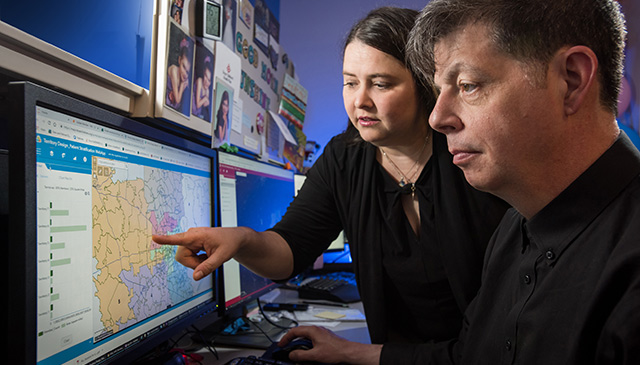
Tricia Foster and Charles Summerhill are the most delightful people providing the most helpful data. They are the geographic mapping experts at Texas Children’s Health Plan.
When you step into their office you feel invited, intrigued and ultimately in awe of the work they do each day to care for our members.
So what exactly do they do?
To the untrained eye the world of GeoMapping seems complicated, but essentially Foster and Summerhill – along with the Business Intelligence Analytics team – build and analyze maps. These maps are then used to meet member, clinical, financial, and operational business needs.
“We use technology that allows us to see where our members are, the resources that are nearby and how to get those resources to them as quickly as possible,” said Foster, senior business intel analyst. “Many times when you work with data and technology you aren’t really sure how your work translates to patient care, but in this job we know we are making a big difference.”
How big?
Big is probably not a big enough word. In recent years the team has had a chance to help patients in the aftermath of some major situations like Hurricane Harvey and the plant explosion in Crosby, Texas.
“On day one of the Crosby explosion we were able to tell the Care Coordination team which members were within a one mile radius of the event and which ones had asthma or breathing related health issues,” said Summerhill, senior business intel analyst.
Foster chimed in with an obvious question – “How many times do you get a call from your insurance company asking how they can help you? People just don’t expect it and it’s wonderful when we can go in and be helpful in times like that.”
The Health Plan’s Mission Control project is another example of how their work has been used to help meet organizational goals.
What can the maps tell us?
The capabilities for the map data are unlimited and always evolving. In addition to knowing where our members are located, we can also tell them the locations of nearby:
But wait, there’s more.
The GeoMapping technology also helps prove that we are meeting state requirements such as having enough providers within a certain proximity to our members. Texas Health and Human Services Commission – the state agency that funds The Health Plan – wants to know that we are making care convenient for our families.
“In addition we can tell if our members are in a food desert,” Summerhill said. “If access to healthy and nutritious food is tough for the family, that is something our member service and care coordination teams should know. There are a variety of factors that impact member care.”
Want to know more about GeoMapping at The Health Plan? Contact Kim Battenfield, manager of Clinical and Business Analytics at kabatten@texaschildrens.org.
GeoMapping – When clinical and business data is used to build a map.
Members – Children and women who have insurance through Texas Children’s Health Plan. While Texas Children’s Hospital has patients, Texas Children’s Health Plan has members.
Member Services – The department at Texas Children’s Health Plan that speaks one on one with members to answer questions and provide assistance. You’ll often hear this group referred to as “the call center staff.” Our member services representatives work in our call center on the 10th floor of the 6330 West Loop South building in Bellaire.
Care Coordination – Staff who work directly with families to ensure that their care is managed. Care coordinators work in a case manager or social worker capacity. A great deal of care coordinator work remotely and are often called the “road warriors.”
Food Desert – an urban area in which it is difficult to buy affordable or good-quality fresh food.
Texas Children’s Health & Well-Being team has partnered with colleagues from Environmental Health & Safety, Physical Medicine and Rehabilitation and Occupational & Physical Therapy to launch a new video series aimed at preventing an all-too-common occurrence among our employees: the twinges and aches of lower back pain.
The latest offering in our ongoing effort to introduce programs and resources that help keep our workforce healthy and strong, the “We’ve Got Your Back” video series provides expert insight and information to empower you to take care of your back while on the job – no matter your work location, shift or role. Each video in the four-part series features quick, practical tips and advice for avoiding back pain by:
“We know that Texas Children’s has grown exponentially in the last few years and we want to make sure that we provide all of our employees with robust resources to improve their health and well-being,” said Health Coach Jackie Pacheco, who is also a certified personal trainer, ergonomics and safety specialist and athletic trainer.
Ready to start learning how to put back pain on the backburner? Click here to watch Episode 1: Ergonomics with Industrial Hygienist Gary Chang, who shows you how making small changes to your work environment – like adjusting the height of your chair or placing your phone closer within your reach – can make a big impact.
“The goal of the Environmental Health & Safety Department is to identify and correct existing ergonomic injury risks and to proactively identify those jobs that could put employees at risk of a musculoskeletal injury,” Chang said, noting that taking preventative steps can also help reduce the high cost of work-related injuries and mitigate the resulting impacts on our colleagues, our patients and their families.
“Ergonomics interventions allow employees to work safely and reduce the risks of musculoskeletal disorders.”

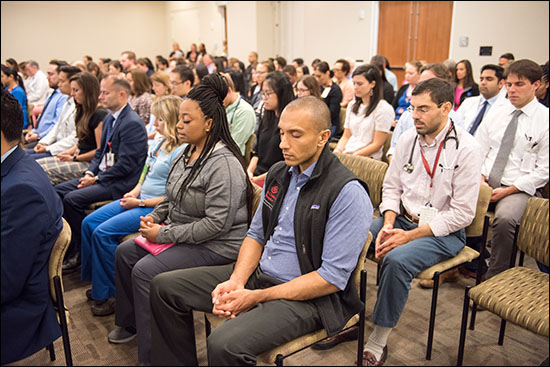
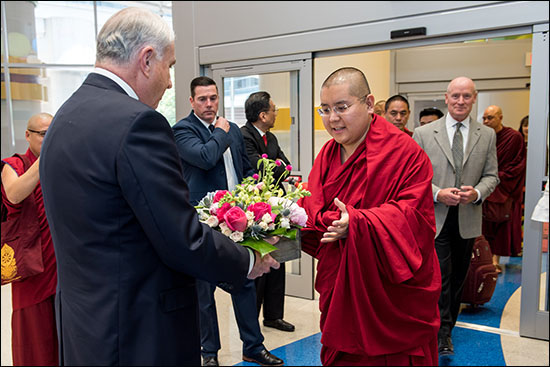
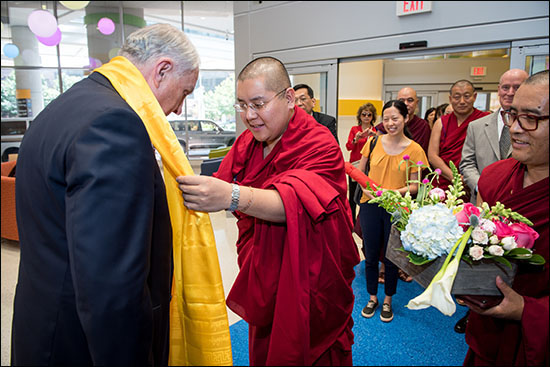
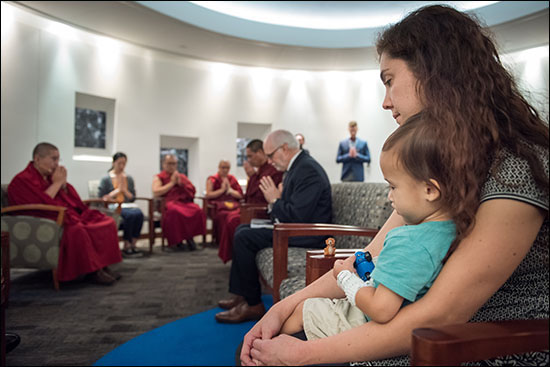
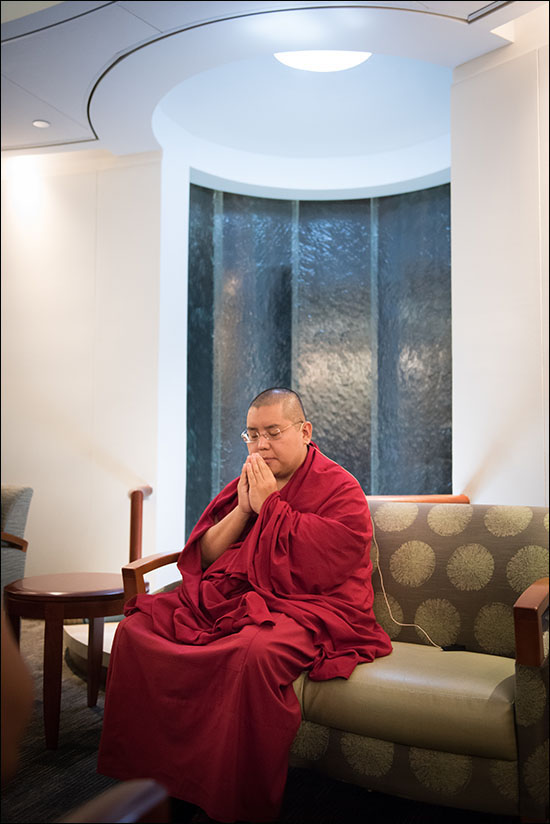
On July 26, employees at Texas Children’s medical center campus received a masterclass on cultivating a life full of love and compassion from an expert on the subject – His Eminence the 7th Ling Rinpoche, an esteemed teacher of dharma (basic principles of existence) in the Tibetan Buddhist tradition.
Click here to listen to the talk given by His Eminence the 7th Ling Rinpoche.
It was an event years in the making. In 2017, Physician-in-Chief Dr. Mark W. Kline invited His Holiness the 14th Dalai Lama to speak at Texas Children’s as part of an upcoming United States tour that would include engagements in Houston. However, due to illness, His Holiness the Dalai Lama was unable to travel. Instead, he asked His Eminence to tour on his behalf – including a specially requested stop at Texas Children’s.
“Texas Children’s Hospital practices compassion thousands of times each and every day,” said President and CEO Mark Wallace in his welcoming remarks. “We are deeply honored that His Eminence requested to include Texas Children’s in his plans for his first visit to Houston, and we are fortunate to hear his inspirational words on compassion.”
The visit to Texas Children’s was part of a full schedule of private lectures and public talks for audiences at the Houston Police Department, NASA Johnson Space Center, VIET TV, Unity of Houston and other locations, and was coordinated by Texas Children’s Patient and Family Services in collaboration with the Drepung Loseling Institute of Texas, a center dedicated to the study and preservation of the Tibetan Buddhist tradition of wisdom and compassion.
“Healing is not just about physical medicine; it also includes a spiritual component,” said Director of Clinical Support Services Michelle Lawson. “Many families find comfort and healing on a spiritual level and lean on their faith traditions. At Texas Children’s, we value the diversity found in all cultures and religions. His Eminence’s presence provides an opportunity for our employees, patients and families to broaden their perspectives regarding healing practices and beliefs.”
Through an interpreter, His Eminence spoke to an audience of executive and clinical leadership, staff, and employees about cultivating love and compassion in daily life. He explained that by working in a profession where the goal was to help others health care workers were already engaged in meaningful living. However, he cautioned that many of the challenges health care employees face – such as physical, mental and emotional exhaustion – can cause them to lose hope when trying to develop an attitude of love and compassion. To meet those kinds of challenges, His Eminence told the audience that people must actively build a sense of connection to every person with whom they come into contact, so that everyone becomes equal to oneself. By doing so, a person becomes more invested in others, and it becomes a moral imperative, even an obligation, to accept responsibility for their happiness and wellbeing. Helping others, he concluded, was the purpose of a meaningful life.
During a short question-and-answer session, His Eminence fielded questions about Buddhism, meditation and dharmic teachings from audience members, including Kline, who asked what people could to do achieve personal peace.
The answer: To reduce a selfish attitude and not focus on obtaining selfish desires, the pursuit of which can lead to anxiety, anger and even poor health. Peace, His Eminence said, was obtained by cultivating an attitude to help others.
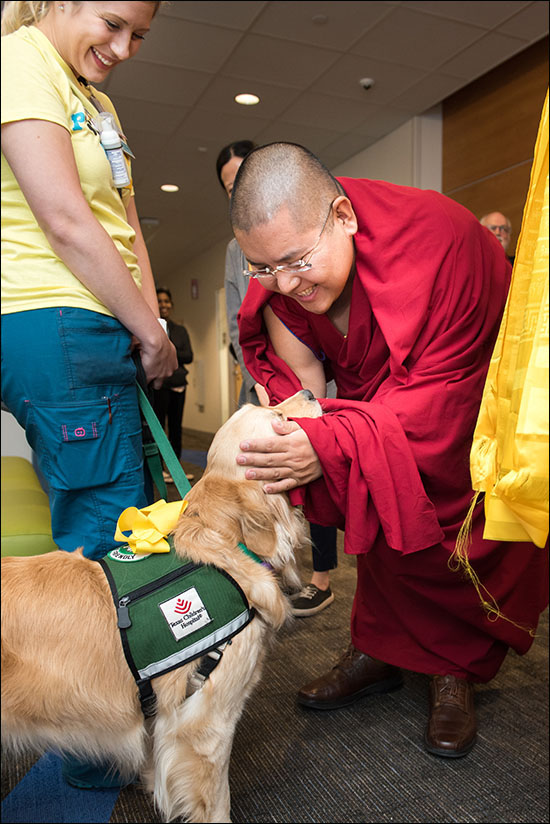
Following the Q&A, His Eminence led the audience through a guided meditation, after which Texas Children’s patient Leyna Le presented him with two copies of “The Art of Texas Children’s” – one for himself and one for His Holiness the Dalai Lama. The book showcases original artwork created by Texas Children’s patients over the years. His Eminence then toured parts of Lester and Sue Smith Legacy Tower and blessed patients and their families in the intensive care unit. To conclude the visit, a small service of prayer and blessing was held in the Children’s Chapel.
“Texas Children’s has become the great organization it is because family-centered care is at the core of our values,” said Tom Sharon, assistant director of Spiritual Care. “But today we’ve been reminded just how important it is to strive to meet our patients’ and families’ emotional and spiritual needs with the same commitment to excellence our experts do for their physical wellbeing.”
Learn more about the resources and programs available at Texas Children’s through Patient and Family Services.
Born in McLeod Ganj, Dharamsala, Himachal Pradesh, India, on November 18, 1985, His Eminence the 7th Ling Rinpoche was recognized in 1987 by His Holiness the 14th Dalai Lama as the reincarnation of the 6th Kyabje Yongzin Ling Rinpoche (1903–1983), His Holiness the Dalai Lama’s most Senior Tutor.
His Eminence joined Drepung Monastic University in southern India in 1990, where his enrollment was celebrated with large religious ceremonies. He began his monastic studies at Drepung at the age of 10 and engaged in rigorous religious study and spiritual training under the special care and guidance of His Holiness the Dalai Lama. His Eminence completed all five Geshe Studies subjects (Logic, Perfection of Wisdom, Middle Way, Higher Knowledge and Monastic Discipline) and received his Geshe degree in November 2016. He then enrolled at Gyuto Tantric College in Dharamsala, India in April 2017 for a year of tantric studies that traditionally follows the completion of a Geshe degree.
His Eminence organized His Holiness the Dalai Lama’s historic Eighteen Jangchup Lamrim Commentaries, teachings on the classic Stages of the Path to Enlightenment. They were held at Sera, Drepung, Ganden and Tashi Lhunpo monasteries between 2012 and 2015 and attended each year by approximately 40,000 people from nearly 70 countries.
Since 2004, His Eminence has also participated in the Mind and Life Institute conferences held in India between His Holiness the Dalai Lama and scientists on a variety of topics, such as physics, neuroplasticity and destructive emotions.
The Drepung Loseling Institute of Texas was established in 2015 as one of the North American Seats of the Drepung Loseling Monastery in India and founded by His Eminence Gala Tulku Rinpoche with advice and blessing from His Holiness the 103rd Gaden Tripa Choeje Lobsang Tenzin Rinpoche and the generous support of Vietnamese devotees.
The primary goal of the Institute is to carry on the legacy of the Drepung Loseling Monastery. With the patronage of His Holiness the Dalai Lama, the Institute is dedicated to the study and preservation of the Tibetan Buddhist tradition of wisdom and compassion. It is a center for the cultivation of both heart and intellect and provides a sanctuary for the nurture of inner peace and kindness, community understanding, and global healing.