October 15, 2019

Texas Children’s has a new website that recognizes the outstanding accomplishments and successes of our dedicated team of more than 3,500 nurses across the organization.

In collaboration with Nursing, Texas Children’s Marketing Team designed a microsite that features compelling articles, pictures, videos and graphics that spotlight how our nurses go above and beyond to spearhead system wide initiatives to improve patient care, safety and outcomes.

Through this new digital communication platform, website page views can be measured and nursing stories and data can be updated more frequently. The Nursing microsite also provides another tool for nursing engagement that complements the Voice of Nursing blog, which was launched in 2014.

Each section of the site – patient care, professional development, research, awards and honors, Voice of Nursing blog and feature stories – demonstrates our nursing team’s continued dedication and hard work, their leadership and the compassion that goes into the work they do at Texas Children’s.

“More than 3,500 nurses across Texas Children’s are touching the lives of our patients and families every day,” said Chief Nursing Officer Mary Jo Andre. “Our nurses have such an integral role making decisions and directing the care for our patients. I am excited about this new website and the opportunity it provides to showcase the contributions our nurses are making to enhance patient experience and outcomes. I encourage everyone to check it out.”

Read all about our nursing team’s achievements at www.texaschildrens.org/nursing. Share the link with family, friends and colleagues, and encourage them to do the same.

Click here for recent feature stories of Nursing in 2019.

From November 14 to 15, Texas Children’s Hospital will host the 7th Annual Meeting of the International Society of Pediatric Wound Care (ISPeW), one of the premier societies in the world devoted to education, collaboration and the state of the art in pediatric wound care.

The two-day conference will be held in the beautiful new auditorium at the Jan and Dan Duncan Neurological Research Institute at Texas Children’s Hospital, and will feature experts in basic science, surgery and nursing discussing the latest advancements in the care, prevention and research of pediatric wounds. These will include Texas Children’s own Shannon McCord, director of Advanced Practice Providers and Nursing Clinical Support Services, Community; MaryAnne Lewis, wound ostomy nurse; and Dr. Sundeep Keswani, pediatric surgeon, surgical director of basic science research, immediate past president of ISPeW, and the event’s local chair. Also from Texas Children’s are Chief of Plastic Surgery Dr. Edward Buchanan and Texas Children’s Director of Surgical Advanced Practice Providers Ryan Krasnosky, who are serving on the conference’s Program Committee.

ISPeW meetings receive abstracts from wound care providers all around the world, a testament to the advancement of the society and to the importance of the field in wound care. New to the conference this year will be three keynote sessions, led by:

  • Dr. Steven Wolf, a leader in the field of pediatric burn care and a Professor of Surgery at Shriners Hospital in Galveston
  • Dr. Paul Bollyky, an immunologist and infectious diseases expert from Stanford, who will talk about his innovative work in biofilms
  • Sandy Quigley, Judi Stellar and Cathy Caillouette, three nurses who will be speaking about their work with the Braden QD pressure injury prevention scale and its implementation
Becoming the epicenter

The field of wound care in the United States, particularly for children, is not as mature as it is in Europe. Until the upcoming ISPeW meeting, there will not have been a meeting of this kind in the U.S. It has been a goal to form a coalition for pediatric wound care in the U.S. with Texas Children’s at the epicenter. A key step toward recognizing that vision was the launch of the Wound Care Clinic – one of only a few in the country, and the first and only one of its kind in Texas. Hosting one of the world’s premier pediatric wound care societies on our home turf is an important opportunity for Texas Children’s.

“Texas Children’s is proud to support the International Society of Pediatric Wound Care annual meeting,” said Surgeon-in-Chief Dr. Larry Hollier, who will also deliver welcome remarks to open the conference. “We’ve spent a lot of time together building Texas Children’s into the magnificent place that it is today. We see the amazing things that are happening here every day because we live it. But others around the country don’t fully appreciate what is happening here. When we host conferences, not only is our expertise on display, but it becomes apparent to anyone who steps through our doors that this place is special. That helps spread the word, builds referrals and strengthens our reputation in our peers’ eyes.”

Surgical leadership and Nursing leadership are also strongly supporting the conference. Thirty complimentary surgical physician assistant (PA) registrations were generously provided and have already been filled.

Nursing leadership has arranged for any interested Texas Children’s nurses to attend the conference at no cost. In addition, continuing nursing education (CNE) units may be earned.

“PAs and nurses are leading the charge in wound care in the United States,” said Keswani. “We have free registrations available for our nursing and PA colleagues, and want to get the word out that this is an amazing opportunity for Texas Children’s nurses to learn about advancements in pediatric wound care, and to also earn CNEs in the process.

If you are a Texas Children’s Hospital employee and interested in attending the ISPeW meeting, please contact Linda Cao at llcao@texaschildrens.org.

As a Texas Children’s employee, it is important to make informed, thoughtful decisions about what you choose to post online. Read more

Texas Children’s Hospital recently hosted the 7th annual REACH (Research, Education and Awareness for Children with Hirschsprung Disease) Symposium. More than 60 parents and patients traveled from 10 states – including California, Colorado, Florida, Louisiana and Oregon – with additional families participating via livestream, making it the best-attended symposium in REACH’s history.

REACH is an international, parent-led non-profit organization committed to increasing awareness, promoting education, connecting families and supporting research initiatives for Hirschsprung disease, which is a congenital condition of the colon. Patients born with Hirshsprung disease have severe colon motility issues due to absence of nerve cells in the affected segments of the colon. These children suffer from intestinal obstruction, colon infections and fecal incontinence. REACH contacted Texas Children’s more than a year ago to discuss holding the symposium, due to the hospital’s outstanding reputation in the field of colorectal surgery, and specifically for its work with Hirschsprung disease patients.

In addition to hosting and organizing the event, Texas Children’s was able to put forth its expert multidisciplinary team, which cares for patients with this disease.

Dr. Danielle Hsu and Dr. Kristy Rialon gave presentations on the surgical management of Hirschsprung disease. Dr. Danita Czyzewski from Psychology discussed how parents and children might better cope with this condition. Talks from Jasia Correa and Simone Romero highlighted Texas Children’s Pediatric Pelvic Floor Physical Therapy Program. Dr. Amaka Akalonu gave a lecture titled, “When Things Don’t Go as Planned: Motility and Sphincter Issues.” And Akalonu’s colleague and fellow gastroenterology motility expert, Dr. Bruno Chumpitazi, participated in a physician panel discussion, moderated by Dr. Timothy Lee, pediatric surgeon and Texas Children’s Colorectal and Pelvic Health Program director.

In addition to participating in presentations and discussions, attendees also got a firsthand look at some of Texas Children’s world-class facilities, including Lester and Sue Smith Legacy Tower and Mission Control, and had the opportunity to interact with our Disney displays.

Colorectal and Pelvic Health at Texas Children’s

A highly skilled, multidisciplinary team of specialists at Texas Children’s Hospital offers the full spectrum of care for congenital disorders of the colorectal and urogenital systems in Texas Children’s Colorectal and Pelvic Health Program.

Watch the video to learn more.

The program comprises four different specialties – pediatric surgery, pediatric urology, pediatric and adolescent gynecology, and gastroenterology – and provides treatment for several disorders and developmental anomalies, including Hirschsprung disease, imperforate anus, cloacal malformation, cloacal exstrophy, and severe idiopathic constipation.

Regardless of the disorder, the team works together to develop a customized approach to care for these complex, and often sensitive, medical conditions. Specialists collaborate to identify the patient’s specific issues and determine the best path to a positive outcome and improved quality of life, whether through surgery, medication or some combination of treatments. Additionally, the team has focused on improving patient care through clinical research and development of best practice pathways to standardize and streamline clinical care for this complex patient population.

“This hallmark of the program is providing multidisciplinary collaborative care,” said Lee. “Even though these conditions aren’t common, we’ve seen more and more of them at Texas Children’s as our patient volume has grown. Parents can be confident when they come to us that they will be receiving truly comprehensive, collaborative care delivered by experts who have been treating these kinds of patients for years.”

Learn more about the Colorectal and Pelvic Health Program.

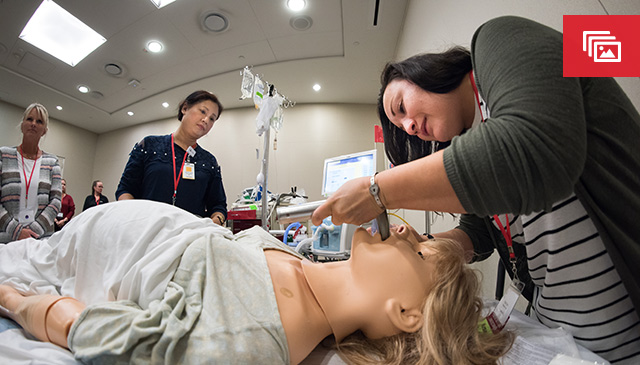
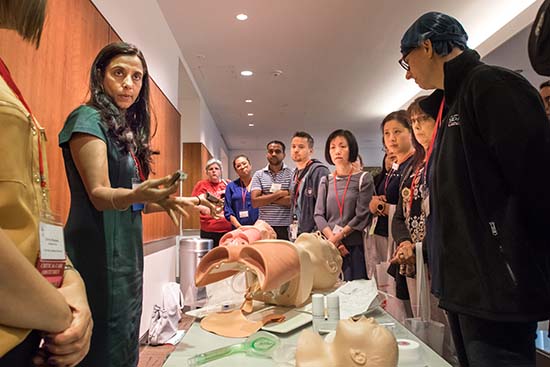
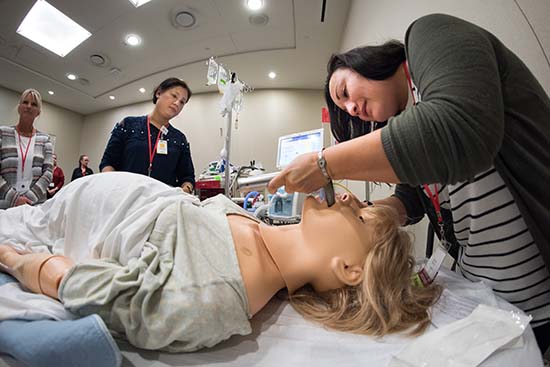
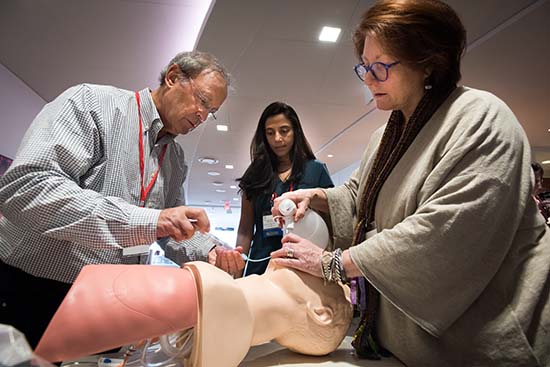
The Pavilion for Women recently held a two-day conference focused on obstetric critical care. With increasing focus on maternal morbidity and mortality the need to expand and elevate the care provided by physicians and nurses is paramount. This unique conference affords the opportunity to participate in skill simulation and expert presentations. Additionally, CMEs and CNEs were awarded upon receiving a successful pass rate of the post-test administered.

Attended by more than 100 people across Texas, and 12 midwives visiting the Pavilion for Women from Hong Kong, the conference covered physiologic changes during pregnancy, specific obstetric medical conditions and appropriate treatment; maternal cardiovascular resuscitation and airway management of critically ill pregnant patients; as well as appropriate steps in fetal assessment, delivery, and neonatal management.

The conference was held October 4 and 5, and was formatted as a series of presentations and skill stations to provide knowledge and guidance for decision-making, and limited practice in some clinical procedures and scenarios. Positively received by attendees, the conference enables the Pavilion for Women as a Level IV Maternal Care Designated facility to determine what educational needs exist across the state and provide additional education to help improve quality outcomes for women.

October 3, 2019

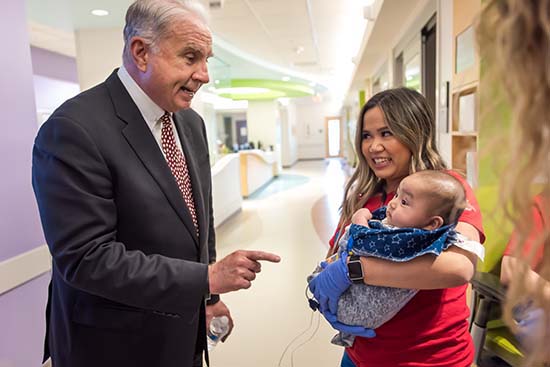
Mark A. Wallace is not your typical CEO. Along with leading the serious and important work in the C-suite and executive board room, the longstanding president and chief executive officer of Texas Children’s Hospital more often than not is connecting with front-line staff and employees, as well as patients and families, to see how Texas Children’s can better serve those in need of exceptional pediatric care.

On any given day, Wallace can be seen walking the halls of Texas Children’s Hospital in the Medical Center wearing a suit, one of his signature ties and his megawatt smile. His booming made-for-radio voice can be heard from quite a distance greeting passersby with a robust “Good Morning!” or “What a great day to be at Texas Children’s!”

Wallace welcomes with energy and fervor all new Texas Children’s employees at several pep rallies throughout the year. He humbly thanks those who have served the organization for 15 years or more at an annual employee recognition ceremony. And, in 2015, he set out to reach every employee across the organization – first with seven hospital-based events, dubbed the One Mission, One Culture, One Amazing Team Event, and then on a whirlwind, 73-stop One Amazing Team bus tour.

In addition to all of this, Wallace has what many CEOs lack today – staying power. Celebrating his 30th year at the helm of Texas Children’s Hospital on October 4, he is the longest serving CEO in the Texas Medical Center. According to a recent study by Equilar, an executive data solutions company, his service to Texas Children’s is pretty extraordinary, considering the average tenure of a CEO at a large U.S. company is a mere five years.

Texas Children’s Board of Trustees Chairman Michael Linn said Wallace’s tenure is exceptional, but not surprising for two main reasons – Mark Wallace is an extremely successful businessman, and he cares deeply about the mission of Texas Children’s.

“Mark sees everyone at Texas Children’s as one big family taking care of other families,” Linn said. “In his heart, he really believes he’s doing what God wants him to do.”

“Mark also cares about our debt rating and our bottom line,” Linn said. “He understands that if we don’t have the financial wherewithal we cannot treat our patients.”

Bigger and better

When Wallace began his journey with Texas Children’s Hospital on October 4, 1989, as a bright and ambitious 36-year-old, Texas Children’s was still in its infancy. The one-building hospital was just 35 years old, a baby compared to other leading children’s hospitals in the nation, some of which have been around for more than a century.

Having just separated from St. Luke’s Medical Center, Texas Children’s Hospital, and its then 1,400 employees, were in desperate need of a leader who could help shape the growth of the organization and distinguish it from its counterparts.

Wallace, who came to Texas Children’s from Houston Methodist Hospital where he had been senior vice president, took this charge to heart and has never looked back.

“When Mark came to tell me he was leaving and that he’d been recruited to Texas Children’s, I actually tried to talk him out of it,” said Larry Mathis, former president and chief executive officer of Methodist Hospital. “I thought Mark had the talent to do something bigger and better. But, as it turned out, he went to Texas Children’s and made it bigger and better.”

During the first 10 years of his career at Texas Children’s, Wallace strengthened the organization’s position as a leader in children’s health care, taking on milestone cases, opening the first Texas Children’s Pediatrics practice and the first Texas Children’s Specialty Care Clinic. He also established Texas Children’s Health Plan, the nation’s first and now largest, pediatric health maintenance organization.

Renovations of the hospital’s original building, the Abercrombie Building, were completed during this time, and construction of what is now the Mark A. Wallace Tower and West Tower began. These two additions made Texas Children’s the largest freestanding pediatric hospital in the United States, a title Texas Children’s still holds today.

Best in nation

During his second and third decades at the helm of Texas Children’s, Wallace’s momentum, passion and dedication to the organization has continued to grow, and has spread to those around him. His vision and energy motivate people to invest in what has become one of the best pediatric health care organizations in the nation.

One of Wallace’s biggest fans is Executive Vice President Michelle Riley-Brown, who joined Texas Children’s in 1999 as an administrative fellow and steadily rose through the ranks to her current position. Over the years, Riley-Brown has seen Wallace’s leadership style grow into what it is today – strong, effective and visionary.

“Mr. Wallace is the quintessential leader,” Riley-Brown said. “He knows what’s best for Texas Children’s, and he knows how to get everyone on board to get it done.”

Riley-Brown has worked closely with Wallace to expand the reach of Texas Children’s into the greater-Houston area and beyond. She helped open the system’s two community hospitals – Texas Children’s Hospital West Campus and Texas Children’s Hospital The Woodlands – and grow the system’s network of Specialty Care Centers, Texas Children’s Pediatrics practices and Urgent Care Centers. Riley-Brown currently is leading Texas Children’s expansion into Austin, where the organization has opened a Specialty Care Center, an Urgent Care Center and a handful of primary care practices.

“I am grateful for the opportunity to work under Mark’s leadership,” Riley-Brown said. “It has been a joy and privilege to implement his vision of expanding care into the community, and I look forward to all that is to come.”

Other major milestones under Wallace’s leadership include the expansion of the Feigin Center and the construction of Texas Children’s Pavilion for Women and the Jan and Dan Duncan Neurological Research Institute. Two Centers for Women and Children have opened their doors, and a network of Urgent Care practices have been established. Most recently, Texas Children’s built and opened the Lester and Sue Smith Legacy Tower, Texas Children’s new home for heart, intensive care and surgery.

All of this and more has earned Texas Children’s a top spot in the U.S. News & World Report Best Children’s Hospital ranking for more than a decade. This year, Texas Children’s was ranked No. 3 in the nation among all children’s hospitals, a ranking no other pediatric hospital in the state has ever achieved. In addition, Texas Children’s ranked in the top 10 in each of the U.S. News & World Report-recognized pediatric sub-specialties.

“I’m sure Mark is very pleased with how a tiny children’s hospital in 1989 has turned into one of the best children’s hospital in the world,” said Susan Stock, Wallace’s long-trusted executive assistant. “He sees that his determination and dedication has paid off in a big way.”

And, that determination and dedication isn’t waning, said Stock, who started working in the president and chief executive officer’s office a few months before Wallace arrived at Texas Children’s.

“I believe that even after being such an excellent leader for so many years, he’s still finding ways to make Texas Children’s even better,” Stock said.

More to come

The pace Wallace has kept all these years isn’t slowing. The tenured Texas Children’s leader has paved the way for continued growth with the purchase of the Baylor and O’Quinn Towers and expansion into the Austin, Beaumont and Tyler markets.

In the capital city, Texas Children’s is continuing to grow its outpatient strategy at a steady pace, and the Texas Children’s Health Plan has a growing membership in Beaumont and Tyler as the result of being chosen in 2016 as one of three managed care organizations to offer the STAR Kids plan, which covers children with complex medical needs.

Texas Children’s Emergency Center at the Texas Medical Center Campus is being renovated and expanded, and the list goes on. With Wallace in the driver’s seat, growth and change is inevitable. It’s part of what makes him a great leader. The one thing that doesn’t change with him though is his ability to connect with the people he serves.

Even though the number of employees at Texas Children’s has grown to 15,000, and the number of patient encounters reached 4.3 million last year, Wallace still finds time to walk the halls of the system’s ever-growing facilities, show up at pep rallies and other celebrations, and share his ongoing vision for the organization. In short, he still cares passionately about Texas Children’s and its mission to care for sick children and women.

“As the need for affordable, quality health care grows for our country, I believe Mark’s motivation grows to meet those needs,” said Shannon Wallace, Mark Wallace’s wife of 16 years. “He is incredibly gifted at finding solutions for problems, especially when those problems affect our most vulnerable citizens.

“I am overwhelmed but not surprised by Mark’s accomplishments,” Shannon added. “I have never known a more authentic, compassionate, capable person in my life.”

October 1, 2019

Texas Children’s is one of the best in the country at taking care of our patients. But we are constantly striving to be better in the coordination of that care.

So what exactly does that mean? It means that although several providers may be involved in a patient’s treatment, they each deliver care as if they are part of one big picture.

This effort – Care Coordination – is an organizational priority and is in full swing at Texas Children’s.

But why?

Many Texas Children’s patients, especially those who are medically complex, use several aspects of our services; several times throughout the year. We can take care of these families as if each one of their visits are individual occurrences; or we can actually coordinate their care so that it is more comprehensive, less frustrating and enhances value for us as an organization.

What does UNcoordinated care look like?

Before recent efforts began there were many more cases of uncoordinated care, which caused a great deal of frustration for our families.

Uncoordinated care means that patients may receive multiple phone calls with inconsistent information, they may be asked the same question when they show up in different areas of the organization, and certain duties may be duplicated by employees.

Tabitha Rice, senior vice president and administrative lead of the Care Coordination project, said she is proud of the work that has been done so far to rectify these issues. The project is already yielding measurable results. “However, high performance is in our blood at Texas Children’s and so we never want to stop getting better,” Rice said. “Care coordination is about quality and safety first. Secondly, it’s about enhancing the experience for our patients, providers and staff.”

The Care Coordination effort involves all three of our hospitals, Texas Children’s Pediatrics, Texas Children’s Health Plan, The Centers for Children and Women and all of our partners. It is a true system-wide effort.

When care coordination is done right, we …

  • Have a shared care plan that forces us to think through responsibilities and potential problems ahead of time.
  • Communicate with patients by explaining treatments, procedures and necessary follow-up actions.
  • Communicate between providers and care givers by telling all the details of the patients’ story when performing a hand-off.
  • Transition a patient efficiently between areas within our system or between their stages of care.
  • Organize a patient’s care for their convenience by taking into consideration things like scheduling, transportation, supplies, medication, etc.
  • Use community resources effectively.

Both clinical and non-clinical employees have a role in this work. Care Coordination is a priority for the system and for thousands of members of our One Amazing Team.

A shining example of Care Coordination

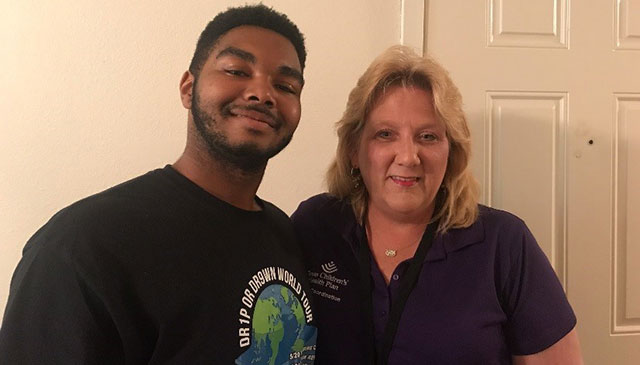
Deanna Courts, Texas Children’s Health Plan service coordinator, and her work with member Mark Bowden is a shining example of exceptional care coordination.

For more than two years Courts went above and beyond to assist Mark as he battled ADHD, bipolar disorder and a cancerous tumor.

With Courts leading the way, the entire Texas Children’s system had a role in providing Bowden and his family with diagnostics, chemotherapy, food assistance, psychiatric support, social support and anything else needed to work through this trying time in life.

Today, this young man is now a cancer-free, high school graduate. Thanks to our one amazing team he is currently enrolled in college at Lamar University and doing well.

Tell us your story

Do you or someone you work with coordinate care well? Tell us how by sending a note to connect@texaschildrens.org. We want to hear from you!