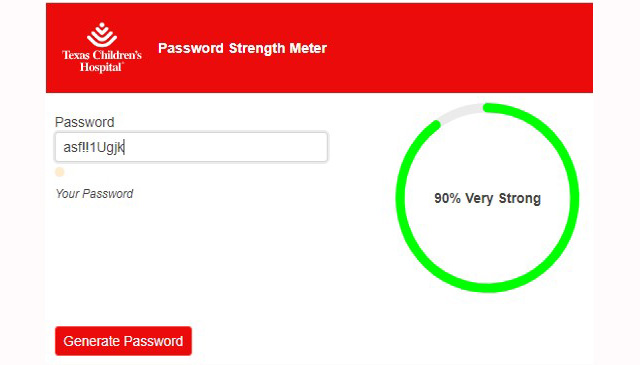
Check out this new Password Strength Meter to check the strength of your passwords. Read More


Check out this new Password Strength Meter to check the strength of your passwords. Read More
Finding the right words to say just got easier. Learn more about why perception around mental health matters and ways you can help reduce the stigma surrounding mental health. Read more

In collaboration with the Simulation Center, the Pavilion for Women team leverages simulation to improve outcomes. Read more
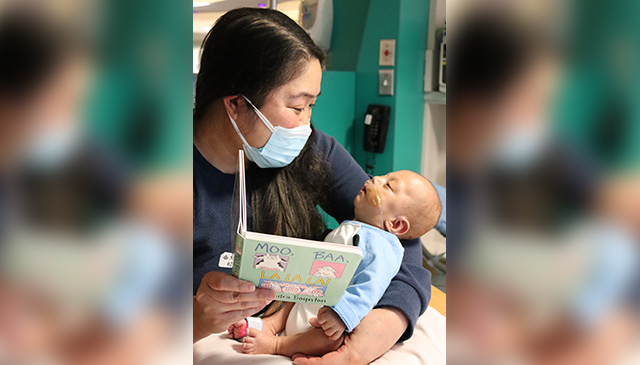
While human connection and bonding are crucial to the health, growth, and early development of children, babies in the Neonatal Intensive Care Unit (NICU) can have a hard time making that connection to caregivers. The NICU Little Listeners program was founded by Pediatrician Dr. Christina Wong a few years ago, as one of the ways to help encourage parent and baby bonding in the Texas Children’s NICU through verbal communication, such as reading and talking aloud.
“Because early reading is critical for language, speech, and brain development, one of my initial goals at Texas Children’s was to help build the Little Listeners program and library in our NICU,” shares Dr. Wong. “It’s understandable for parents to feel stressed while their baby is in the NICU. They can sometimes forget that there are things they can do to help normalize the experience, such as reading and talking to their baby. We wanted to establish a program to support them.”
Dr. Wong, along with Library Coordinator and Child Life team member Catherine Zdunkewicz, and the Newborn Center Child Life and Music Therapy team – Emma Page, Maribeth Vain, Olivia Priolo and Anna Boucher – have combined their passions for children and literacy to take the program to the next level by creating the NICU Little Listeners Reading Initiative.
The NICU Little Listeners Reading team strives to help normalize the experience for NICU babies by providing parents with educational classes and books they can read to their babies. They also encourage Nursing team members to speak to babies by their name and model good verbal communication and gentle touch stimulation for parents.
The Little Listeners team is excited to launch their first major event at Texas Children’s – a Read-A-Thon where NICU families will receive a new book on each day during the week-long celebration September 19-23, in honor of National Literacy Month and NICU Awareness Month. All Texas Children’s team members are encouraged to participate – watch for more information!
Prior to the coronavirus pandemic, the NICU Little Listeners Reading team encouraged parents to borrow books from the Pi Beta Phi Book Nooks located throughout the NICU to read to their child in the NICU, and siblings during visits. Post-pandemic, the team shifted to donating books to every family who arrives at Texas Children’s NICU, allowing them to keep the book and build their child’s library at home.
Upon arrival, the team provides families with the book Read Baby, Every Day by pediatrician Dr. John Hutton, along with their admission packet. The team also donates educational books to NICU families such as Calm Baby, Gently and Sleep Baby, Safe and Snug, also by Dr. Hutton. The books, reviewed by parents and Texas Children’s CPR educators, help educate families about safe sleep and promote injury prevention. Because admission is often prolonged, The Newborn Center Child Life and Music Therapy Team gives more books to families bi-monthly, along with a bookmark featuring tips and benefits of reading to your baby. Families receive about six books throughout the year, available in both English and Spanish.
Zdunkewicz has purchased a remarkable 2,860 books for the CPR educational class and admission packets with funds donated by the Houston Pi Beta Phi Foundation. The Little Listeners Reading team has also purchased more than 1,200 books for bimonthly Little Listeners book distribution.
“What we’d like everyone to remember is that no baby is too small or too sick to benefit from being gently read to or talked to,” Dr. Wong shares. “No matter how scary the situation is, or how scared you are by the machines and everything else going on, you can still read and talk to them. Reading and talking to your baby are two of the best things you can do for them in life.”
You can learn more about Texas Children’s libraries and library resources on the Child Life Department webpage, and we encourage you to explore Read Aloud, a website dedicated to promoting the benefits of reading by providing fun educational tips, flyers and other tools for literacy advocates.

Since 1991, Emergency Center Pharmacist, Les Pieniazek, has found joy in spreading the good name and mission of Texas Children’s. So much so that Les recruited his two daughters and his son-in-law to join our One Amazing Team this year. Read more

Please see the update issued by Apple to its operating systems to fix bugs that could allow access to hackers. Read more

There’s a ton of excitement in the air as our family members, friends and neighbors return to school. Butterflies and anxiety, too – some because of the lingering effects of tragedy and concern about safety. Texas Children’s Behavioral Health experts, Dr. Karin Price and Dr. Kirti Saxena recently wrote a guide offering tips for managing back-to-school stress that can overshadow the importance of reconnecting, experiencing firsts and building resilience.
A few of their tried and true approaches for adults managing their own worries while helping children manage theirs include:
Managing your own feelings first. Children often take cues about how to respond to situations from their caregivers. That’s why it’s important for adults to model flexibility and acceptance of things beyond our control and avoid negative talk as much as possible. This can make it easier for kids to feel confident and brave about returning to school.
Listen when your kids are not talking. Kids’ nonverbal cues can speak loudly – difficulty sleeping, changes in appetite and physical aches and pains are some of the things that may be signs of worries they haven’t figured out how to talk about yet.
Model coping behavior. Parents and caregivers can help children learn to handle difficult situations by helping them to label their feelings. For example, saying things like: “It sounds like you are feeling worried about going back to school.” You can acknowledge that the situation is stressful, while also helping your child understand they are brave and can handle hard things by saying something like: “Lots of kids and families are feeling nervous about going back to school. It may be hard, but I know you can handle it because you are a brave kid who can do hard things. I am here to help you be brave.”
Drs. Price and Saxena encourage parents to seek professional help if their child’s anxiety about returning to school is ongoing, intense, or causes enduring issues with friends, school or family life.
You can find their full guide here for more tips to help you provide comfort and raise healthy, resilient children.