April 8, 2014

4914MyPlate640

Everyone hears that proper nutrition plays a significant role in your overall health though it’s not often as easy as it sounds. A healthy meal is the best start to achieving your optimal health and wellness goals but where do you start?

Texas Children’s is dedicated to supporting you as you strive to meet your health and wellness goals. Employee Health and Wellness is sponsoring an upcoming nutrition program, MyPlate Challenge, so gather your co-workers and join together or start planning goals of your own to make Texas Children’s a healthier campus all around.

Don’t eliminate, just add! It’s a refreshing and positive way to shift the way we look at food and have fun with your coworkers along the way.

Follow these simple weekly themes and eat at least the recommended amount of a particular food group four days a week or more. It’s about being consistent, not perfect!

Week Number
Dates
Weekly Theme
Week 1
April 21-27
Fruit
Week 2
April 28- May 4
Whole Grains
Week 3
May 5-11
Lean Protein
Week 4
May 12-18
Vegetables
Week 5
May 19-26
Dairy
Week 6
May 27-June 1
Eat Well
 

Throughout the program, participants will receive an incredible amount of nutrition information and support through such things as Motivational Monday emails, interactive discussion boards, and online resources. In addition, all participants will receive a Texas Children’s MyPlate mouse pad and have the opportunity to earn bonus points toward a drawing for one of ten Fitbits.

The challenge begins Monday, April 21.

Click here to join the challenge! (This link will only open internally)

4914ChildAbusePrevention640

April marks Child Abuse Prevention month. The Child Abuse Pediatrics team hopes this is a reminder for all of us to pay attention to the signs of abuse and take action. Last year, more than 1,400 children who came through the Texas Children’s Hospital doors were identified as being abused or neglected. Twenty-six of them died as a result of suspected abuse or neglect. The CAP team relies on you, the staff, to take action.

Child maltreatment can take on many forms. While a list of indicators would be very long, here are some red flags to watch out for:

  • If a child tells you they are being mistreated, take action. Call the child abuse hotline to help make that child safer.
  • Sudden unexplained changes in child’s behavior (regressive, aggressive, or sexualized).
  • Unexplained burns, bites, bruises, or black eyes particularly to the head, neck, torso, buttocks and insides of the thigh.
  • A parent who shows little evidence of care or concern for the child, or even expresses that the child is a burden.
  • Parents who appear to be overwhelmed or use unusually harsh forms of discipline. Offer comfort and support instead of criticism.

Ways to prevent or stop child maltreatment include:

  • Share information regarding appropriate child development. This may reduce unrealistic parental expectations on a child.
  • Offer resources for parents struggling emotionally and physically. When provided in a supportive and helpful manner, most parents are appreciative. 2-1-1 is available in most communities, and is an excellent general resource.
  • Listen to children when they are talking about their lives. Stay calm and do not show emotional reactions. Many children who have been the victims of chronic maltreatment may not be able to correctly interpret your emotions.
  • Call Children’s Protective Services if you suspect child maltreatment. CPS exists to help families get stronger, while keeping children safe.

4914ICD10550

On March 27, the U.S. House of Representatives voted to delay the implementation of the ICD-10 coding system for hospitals and providers – which was to replace the current ICD-9 coding system – by one year. Originally, all hospitals and providers were to have implemented ICD-10 by October 2014. The new deadline for implementing ICD-10 is October 2015.

The Senate passed the legislation on April 1, and the bill was signed into law April 2. The law is called the Protecting Access to Medicare Act of 2014 and is effective immediately.

How Does This Affect Texas Children’s?

The hospital has been working on its education plan for providers for more than a year. The education component will move forward as planned.

Providers still can access the education modules that explain how the new coding system will affect their specialties, beginning this month.

What does change is the deadline to complete the education courses. That deadline has been extended to July 2015.

In the meantime, the hospital will continue to train its billing staff on the ICD-10 system, and will continue to make system upgrades to the hospital’s electronic health record (EHR). Those upgrades ensure that our EHR is compatible with the ICD-10 system.

By continuing with our efforts to make the switch to ICD-10, the transition will be that much easier come next October.

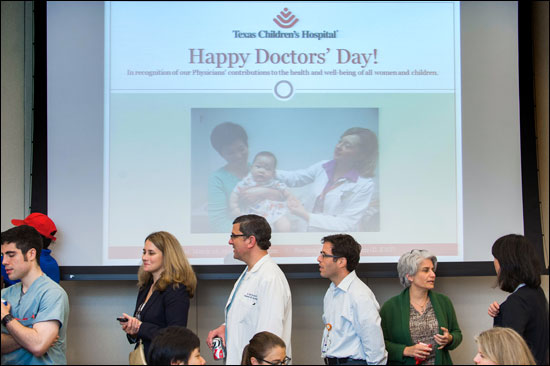
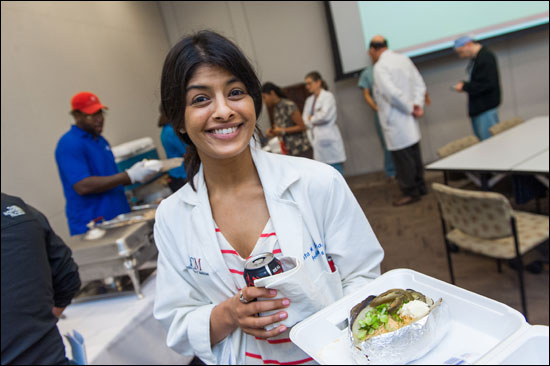
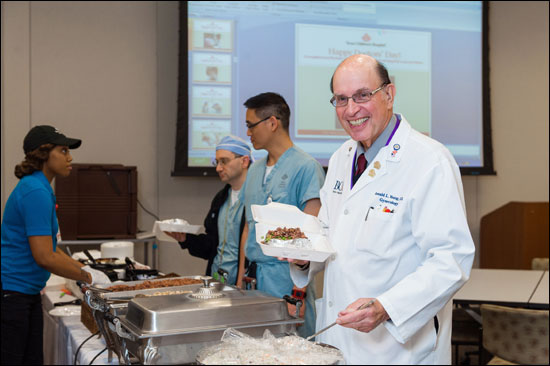
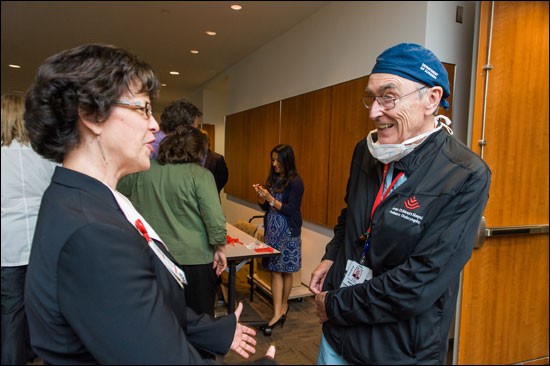
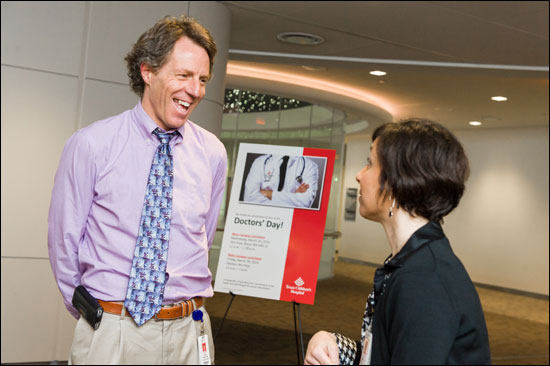
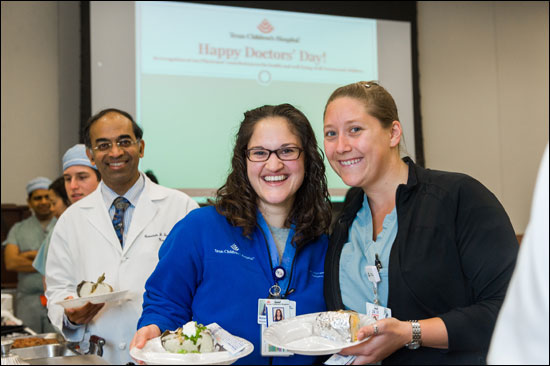
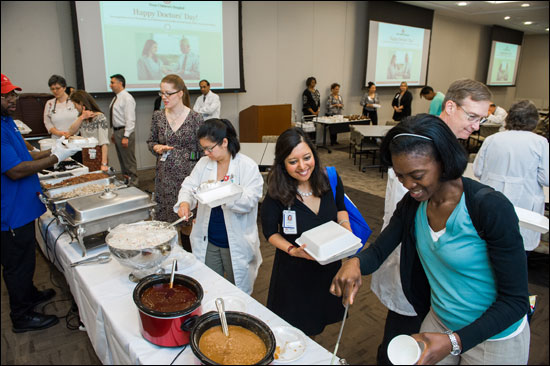
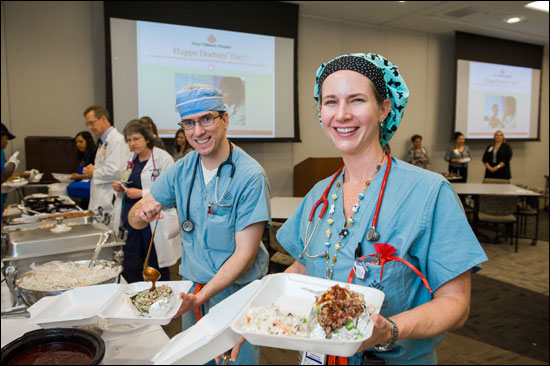
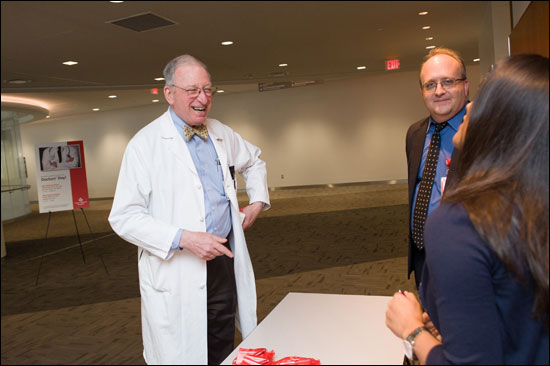
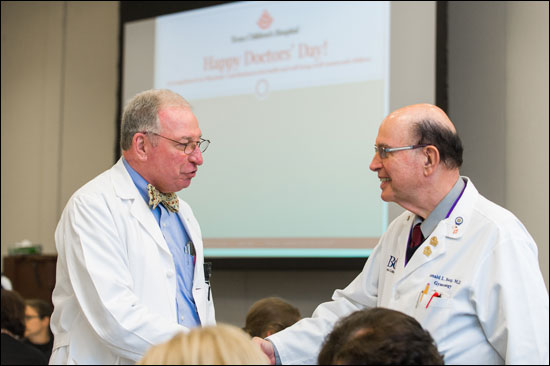
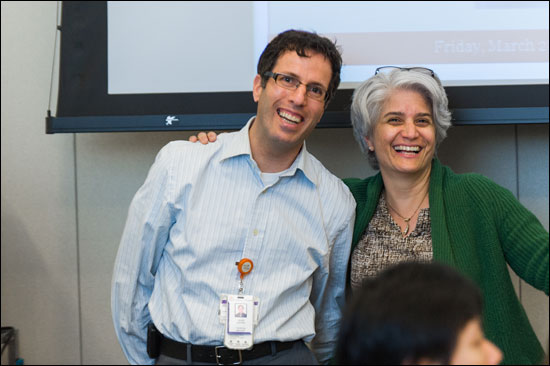
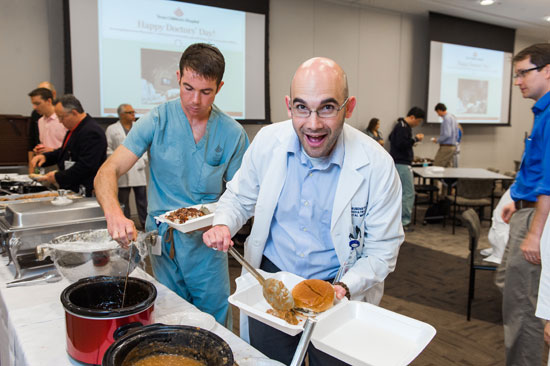
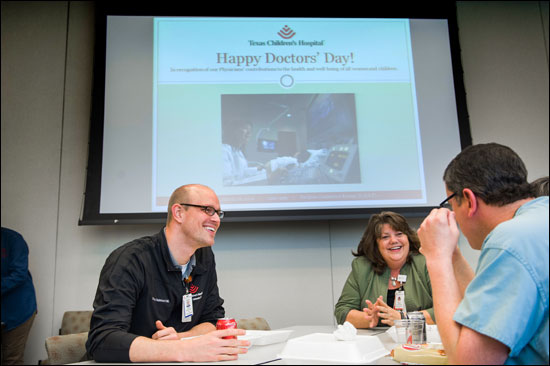
The annual Doctors’ Day celebration took place during a luncheon honoring the hard work of our physicians. The event was attended by doctors and members of the leadership team who stopped by to say thank you.

4914BWWallaceFamily640

Nine years ago, I was sitting in a meeting with the St. Luke’s CEO when I learned that they were looking to get out of obstetrics and gynecology and maternal fetal medicine. I raised my hand and let them know we were interested to take over. I knew we were about to do something that would change women’s health care in Houston forever. Texas Children’s would assume responsibility for St. Luke’s ob/gyn and MFM services until we were able to build our own facility.

Texas Children’s Pavilion for Women opened its doors for inpatient services on March 26, 2012. It was a monumental day for everyone who had been a part of planning and executing this new state-of-the-art hospital. I knew it would make a difference in the lives of countless women. What I didn’t know then was that I would one day have a personal experience at the Pavilion as a family member.

On February 10, 2014 at 6:29 p.m., Clark Wallace was born at Texas Children’s Pavilion for Women. What a full circle moment. From the day I raised my hand in that meeting with St. Luke’s, to my own grandbaby being born here, it was surreal. This was a very special and exciting experience from a number of different perspectives.

First, it was our son Ben’s first baby. Emily, our daughter, has four sons and one daughter, but they live in Chicago, so this was also our first Texas-born grandbaby. Of course it was also impressive to experience the Pavilion as a grandparent and to be here for such a special moment in my personal life.

My wife, Shannon, and I patiently waited at home to get the news of Clark’s arrival and came to the hospital the following morning to meet the newest grandbaby. To see our Pavilion team in action – from Dr. Belfort to everyone in the delivery suite, the floor nurses, diagnostic and therapeutic services, radiology and pathology, food and nutrition – was incredible. To see it all come together in such a beautiful way and know that it wasn’t just for Clark Wallace but that it’s what all our patients are experiencing was a proud moment for me, both as President and CEO and as a grandfather.

I knew we had the right vision for this new hospital and for the thousands of babies born here every year, including my grandson. I have great pride in knowing that our grandson and daughter-in-law had the very best care. Seeing that care firsthand as member of a patient’s family and knowing it’s the same care every mother and baby receives here was truly an incredible feeling.

Now it might be hard to believe, but I promise I saw Clark smile as soon as he saw me and I might have even heard him say “TCH.” He looked exactly like Ben did when he was born, a really good looking fella with a big head and fat cheeks.

Watching the team at work from a patient family perspective and seeing the quality of care and service – from valet to the delivery room and room service – made me swell with pride for what we’ve created at the Pavilion for Women. It’s one of a kind, and there’s nothing like it in Texas, the U.S. or the world.

Dear Texas Children’s Family:

Each year, we have the special opportunity to thank our truly remarkable volunteers for their dedication to Texas Children’s during National Volunteer Week – Sunday, April 6 through Saturday, April 12.

Our people define Texas Children’s. Our patients and families measure their experience by the clinical care we provide, the extra moments we take to care for their needs beyond the bedside, and the special attention we provide that assures them that their child is our child.

Each and every day, our volunteers honor Texas Children’s Hospital and our patients and families with the gift of their time. It has been often said that someone who gives you their time, gives you part of their life. In this way, our volunteers share their time, talent, and love to improve the lives and experiences of patients, families, and staff of Texas Children’s in ways only they can.

The Auxiliary to Texas Children’s Hospital, an organization founded even before the hospital opened its doors on February 1, 1954, has chronicled the history of our institution. Over the past year, 1,668 Auxiliary volunteers, equivalent to more than 45 full-time employees, focused solely and directly on the needs of our patients, families and staff.

Texas Children’s is also extremely proud to be the home of community-wide service organizations such as Ronald McDonald House, The Junior League of Houston, and The Blue Bird Circle, among many others. Collectively, these groups accounted for an additional 703 volunteers at Texas Children’s in 2013. We are indebted to these and all organizations that enhance our mission through their generosity and kindness.

A smile found, a hand held, a craft created, a need attended, a song sung, a heart guided – these are the differences of the 2,400 active volunteers across Texas Children’s system. These are the differences that can only be made by our amazing and beloved volunteers.

This remarkable asset and these partnerships are to be cherished, supported, and cultivated. Please join us in thanking our volunteers this week and every week, as they selflessly act in support of Texas Children’s mission every day.

Sincerely,

Michael T. Walsh, Jr.
Director, Texas Children’s Volunteer Services

April 1, 2014

4214MatchDaynew640

Dr. Mark Kline sits in his office checking his watch. At one minute before 1 p.m. on March 20th he’s feeling anxious. At exactly 1 p.m. is the moment he will find out the group of residents matched to Texas Children’s and Baylor College of Medicine’s residency programs. It’s that moment when the leader of each program across the country is able to log in to a website where their matches are revealed. The residency programs affiliated with Texas Children’s include a categorical pediatric residency program, a pediatric global health program, the surgery residency as well as the residency in obstetrics and gynecology. For Dr. Kline and the other leaders involved, this is the culmination of months of interviewing.

“I meet with every hopeful resident who visits us to tell them about our organization and what it means to be here,” said Kline. “What I’m looking for is people who are not just smart but nice. I don’t need them to be nice to me, everyone is nice to me, I want them to be nice to people who have no power over their position here.”

Kline calls it “accessible brilliance.” A phrase he uses often when referring to recruitment at all levels. Whether it’s residents or chiefs of service, it’s a quality that exemplifies the Texas Children’s brand. Today, it’s the residents who have matched to the institution and will be bringing that accessible brilliance to an organization which touches about 8,500 patients daily.

When he’s finally given the list, Kline and his chief residents compare the matches to the list of top candidates who were interviewed. Each year, Texas Children’s interviews hundreds of hopeful residents, when the interviews are over, the organization is given a chance to pick candidates and rank them on a list. The residents are given the same opportunity to pick their top programs ranked similarly. Each student is then matched to the institution that is highest on the list and has ranked them on the top of theirs. It’s highly competitive between the top children’s hospitals across the nation.

What attracts residents here is not just the breath and depth of cases they will be able to see, it’s the leaders who become their mentors throughout their years here.

On March 21st, less than 24 hours after residency program directors have been informed of their residents, it’s the medical students’ turn to count down to their own matches. Baylor College of Medicine hosted a Match Day 2014 brunch for the students and their families as they celebrated this momentous day in their journeys to becoming doctors. Residents gathered in the Baylor courtyard anxiously pacing about as they waited for 11 a.m. A 10 second countdown led to the class president ripping open a paper-covered board where each student found an envelope with their names; inside, a letter congratulating them on their match with the name of the program where they will be spending the next few years as residents.

Loud cheers, some tears of joy and lots of hugging and the residents were finally able to celebrate their accomplishments. A day they’ve awaited for years. A day where they could find out they have been matched to programs like those at Texas Children’s and Baylor College of Medicine.

“The better talent that we can attract at this level right out of medical school, the better we will be 5 years, 10 years, 15 years down the line,” said Kline.