April 29, 2014

43014DBSMayahAppointment640

In the summer of 2012, a then 6-year-old little girl, Mayah Villarreal, began to write with her left hand instead of her right. Her kindergarten teacher mentioned it to Mayah’s mom, Ashley, but told her not to worry as it was common in young children. A few weeks later while taking a bath, Ashley noticed that Mayah began to lean her body to the right and could not sit up straight. Soon she could not lift her right leg on her own to do simple, everyday tasks. Mayah, a formerly active young girl who loves gymnastics, had never shown any signs of a movement disorder and now her life had come to all but a halt, as she was unable to function normally.

Mayah was originally diagnosed in her hometown of Alton with a chiari malformation, and doctors recommended that Mayah undergo a craniotomy surgery, which she had in October 2012. A few days prior to the surgery, Mayah had stopped walking completely and was suffering from debilitating headaches.

After the surgery, there was no improvement in Mayah’s condition. In fact, it continued to worsen and she landed in a local hospital where she was admitted for two days and was told her condition was psychological. One of the doctors on call at the time called Texas Children’s Hospital and after a brief conversation, the Kangaroo Crew team picked Mayah up and flew her to Houston.

Mayah was admitted to the Blue Bird Circle Clinic where they diagnosed her with an extremely rare pediatric movement disorder called dystonia. Dystonia from each individual genetic etiology is rare, and in DYT 1, which is what Mayah has, the disease frequency in Ashkenazi Jews is estimated at 1:3000-1:9000. Among non-Jews, the prevalence is lower.

The team at the Blue Bird Circle Clinic, including Dr. Amber Stocco, former director of the hospital’s movement disorder clinic and Dr. Daniel Curry, director of pediatric surgical epilepsy and functional neurosurgery, developed a course of care that included an aggressive and innovative treatment plan. Stocco recommended deep brain stimulation (DBS) to treat Mayah’s condition. Commonly used for Parkinson’s patients, the use of DBS in pediatric patients is still limited as there are only a few experienced centers worldwide and few patients meet the criteria to qualify for DBS.

“Until recently there have been only case reports of DBS in children,” said Stocco, of this innovative approach. “It is starting to gain acceptance in pediatric centers; however, to date, there are likely less than 300 cases of DBS in children internationally.”

In order to administer DBS to Mayah, Stocco, Curry and the team implanted a small, programmable battery in the upper chest region, near her shoulder. The battery connected to a series of electrodes that targeted specific parts of her brain to block the abnormal brain activity that prevented her from controlling her own muscle movements.

Soon after surgery, Ashley noticed a change in Mayah’s behavior. “Soon after surgery, before the device was even fully programmed to a higher level, we saw Mayah’s condition improving. Every day, we watched Mayah become more and more independent.”

On August 10, 2013, Mayah walked unassisted for the first time since the summer of 2012.

Thanks to Dr. Stocco and Dr. Curry’s innovative approach, Mayah’s case proved to be an extraordinary outcome and story of success. The DBS has returned Mayah’s motor skills to normal and she is happily back enjoying gymnastics. Her implant requires minimal maintenance, needing a charge for just a few minutes every week.

Mayah’s case is amongst the most remarkable of recoveries. Until recently there have only been case reports about using DBS in children and is now starting to gain acceptance among pediatric hospitals, with Texas Children’s at the forefront.

connect anywhere

Texas Children’s is a big place with lots going on, and sometimes it’s tough to keep a pulse on it all. With that in mind, Texas Children’s Internal and Corporate Communications team has launched a new website – www.texaschildrensnews.org – to put all of the organization’s top news at employees’ fingertips.

Texaschildrensnews.org launched in February and already has had nearly 18,000 views.

“The best thing about this site is that we finally have created a place where staff and employees can access Texas Children’s news easily,” said Angela Hudson, assistant director of Internal and Corporate Communications.

The site was launched to complement the team’s weekly news cycle. The team updates the Connect intranet site every Tuesday with five to six top news stories, which rotate in the homepage photo carousel. On Wednesdays, the team emails the Connect News enewsletter to all staff and employees featuring the week’s new headlines.

“Connect News now links you directly to the new texaschildrensnews.org, and you can get there from a mobile phone, tablet or computer at home or work,” Hudson said. “This was really important to us – It’s important to provide this access to our audience. There’s no logging in, no passwords, no firewalls. Just hop on, take a quick read and stay informed.”

In addition to the new site, the team also will debut a refreshed design for the weekly Connect News enewsletter this week. Connect News first launched in summer 2012 and was significant in helping decrease the amount of global email traffic within the organization. The new, cleaner look complements the Connect site and the new external news site and will continue to be emailed weekly.

“We’re committed to telling and sharing the Texas Children’s story internally,” Hudson said. “After all, our ‘story’ revolves around our staff and employees and their amazing work. Our team’s goal is to get them information they want and need, when they need it, as easily as possible.”

Get Connect News sent to your home email
If you don’t have access to your Texas Children’s email on your phone or don’t typically have time to check your email at work, we can send the weekly Connect News enewsletter to a home email address. Just email us at connectnews@texaschildrens.org.

By Veronika Javor-

When I was pregnant with my daughter, I knew I wanted to breastfeed. For some time after her birth I did a combination of nursing and pumping and even after lots of help from the incredible lactation support team here at the Pavilion for Women, I made the choice to exclusively pump so that I could continue to provide breast milk for my baby who was having a difficult time nursing.

Returning to work after having a baby brings about many challenges, and one of the most major ones is continuing to nurse. Staying motivated and having the right support system and resources in place is essential for any mom who would like to continue to provide breast milk for her baby.

After exclusively pumping for the last year, here are my best tips for making it through to reach your nursing goal:

harper bottle21. Get into a routine – start pumping before you return to work, if possible. Get your body used to the pump and try to pump the same times you would at work so your body gets into a rhythm. This will make it less of an adjustment when you return to work because you’ll already have a routine established.

2. Plan ahead – how many times will you need to pump at work and for how long? How will you make sure you bring the supplies you need each day? Where will you pump and store your milk? Addressing these questions about a week before you arrive back to work will allow you to have a solid plan to integrate pumping into your day. Remember that we have a wonderful Milk Bank where employees can pump located on the fourth floor of the West Tower. If you work off-campus, make sure there is a room or office you can pump in prior to returning to work.

3. Build a support network – some days, what got me through was talking to coworkers and friends who pumped. Their stories and words of encouragement motivated me. If you’re a mom who pumped at work, offer encouragement to moms returning to work. Sometimes a simple “you’re doing a great job!” can make someone’s day.

4. Get your partner involved – my husband has been very supportive and I could not be more thankful. Each morning he packs a Ziploc bag containing my pumping parts for the day as well as a cooler bag. It’s one less thing for me to think about in the morning.

5. Make small goals – though my ultimate goal was to provide my daughter with breast milk for the entire first year of her life, I made smaller goals as a way to take pressure off of myself. My first goal was six months, then nine. By the time I made it to nine months, getting to 12 didn’t seem so far away.

6. Celebrate! Speaking of making goals, it’s just as important to reward yourself for meeting each goal. Maybe it’s a fancy dinner or a new pair of shoes. Maybe it’s simply enjoying your favorite dessert after dinner – celebrate each breastfeeding milestone. You deserve it!

bottle parts7. Be productive – though pumping limits what you can do, there are ways to make that time count. Answer emails on your smartphone, tablet or laptop, review lengthier documents that require proofing or clean out and organize your inbox. You could also pump during your lunch break and eat at the same time. If you’re using your lunch break to pump, make that your “me time” which you don’t get a lot of as a new mom and do something you enjoy!


8. The light at the end of the tunnel – try to remember pumping isn’t forever and remind yourself about the important benefits you’re providing to your baby. Anytime I had a rough day and hated the idea of pumping (yet again) I reminded myself that it’s temporary and I focused on how my daughter is growing the thriving with the nutrition only I can provide for her.

9. Don’t be afraid to ask for help – that’s what our lactation support and milk bank staff are for. I’ve called many times myself.

10. Don’t be too hard on yourself – deciding to stop breastfeeding can cause a lot of guilt. If you find you don’t want to or cannot continue, don’t focus on what you’ll no longer provide- focus on what you have provided to your child. Breastfeeding has cumulative benefits so each day counts! Celebrate what you provided, no matter how long or short a time.

I hope this helps all of the new moms who are returning to work and trying to manage new schedules. Take it one day at a time and remember, YOU CAN DO IT!

Watch the newest “Super Star” video featuring partner Lindsey Gurganious in Intensive Care West Tower. “Being given this award reminded me that no matter what your role is at Texas Children’s, you have a part in our patient’s and their family’s lives,” Lindsey said. Check out her video, and find out how you and your coworkers can nominate a Super Star to be featured in the “Super Star” section on Connect.

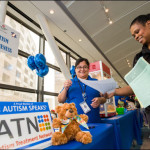
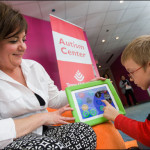
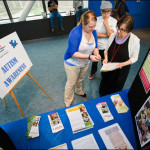
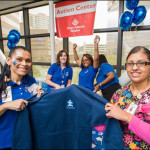
Texas Children’s Autism Center promoted awareness of Autism Spectrum Disorder (ASD) at a recent bridge event. They provided information about ASD, early intervention services and community resources and were available to answer questions. Also several other non-profit organizations were present to promote awareness and available local services. Stickers for the May 2 Autism Awareness Blue Jeans Day were available for purchase. Contact Stacey Broton at Ext. 4-8385 for stickers.

Event photos:

April 22, 2014

42314heart640

Dr. Henri Justino, director of the C.E. Mullins Cardiac Catheterization Laboratory, is something of a magician when it comes to repairing a child’s heart in the least invasive way possible. He and his colleagues in the cath lab can remove a blockage, close a hole in the heart, and replace a defective heart valve using thin, flexible catheters and some deft flicks of the wrist, leaving no trace of their efforts other than a tiny incision near the patient’s hip.

One thing that has consistently bothered him, however, is the lack of available options for children with defective heart valves.

“Compared to the adult market, the pediatric market is simply too small for companies to invest in,” Justino said. “Seventy-five percent of children who need a valve replacement need a pulmonary valve, but there’s only one kind available today that can be delivered by a catheter approach and is approved for use in the pulmonary position. It’s expensive and hard to come by. We need another option.”

Justino and his partners – Daniel Harrington, Ph.D., at Rice University, and Kwonsoo Chun, Ph.D., at Baylor College of Medicine – are on a mission to create an artificial pediatric pulmonary valve that can be delivered by a catheter-based approach into the heart.

“Right now, we are working on getting the mechanics right,” Justino said. “We need a solid valve that works well, opens and closes well with every heartbeat, and is designed to last.”

Getting the valve’s mechanics right is no small feat. It must be small, thin and flexible enough to snake through a young child’s veins and through the chambers of the heart. Once it’s in the right place, it needs to expand to full size, anchor in place with no sutures or adhesive, and be durable enough to last many millions of cycles in a child’s heart, which beats up to twice as fast as an adult’s. They’re also trying to design the valve so that it can grow with a child over time.

“We’ve definitely got some challenges,” said Justino, who compares catheterization to a mechanic trying to fix the motor on a car while it’s still running. “We’re doing all sorts of procedures on the heart without ever having to stop the heart or put the patient on a heart-lung machine.”

And that’s the point – to fix the heart with as little disruption as possible.

“Open heart surgery does work very well, and it is a very good option if it’s your only option,” Justino said. “If you can get the very same result without having the chest opened, without a long scar, without using an artificial machine to circulate blood through your brain, and if you can go home the very same day instead of staying in the hospital for several days – even go to school the next day – why would you not want that?”

After three years of development, Justino, Harrington and Chun have a working prototype and are very close to completing their first milestone, which is to prove that it works in the lab setting and meets the criteria the FDA requires of valves. The next phase is animal testing: How does this device perform when it’s placed in a living organism, in contact with organs, tissue and blood? The final step, human testing, may be several years away depending on funding and how well the first two stages go.

“Our long-range goal, after all of this is complete, is to see if we can coat the valve with living tissues and various kinds of cells to make the device more biocompatible with the patient, similar to what Dr. Jacot and his team are doing,” Justino said. “But that’s a long way away. For now, our main goal is to get the best performance we can from this valve and then get it on the market – helping children – as quickly as possible.”

Cutline: Drs. Henri Justino, Daniel Harrington and Kwonsoo Chun examine the prototype valve in a high-cycle tester.

42314CHA640

Hospital photographers place first and fourth in national competition

Texas Children’s Hospital is hosting the 2013-2014 Children’s Hospital Association (CHA) Photo Exhibit, a biennial competition that celebrates its 20th anniversary this year. The national exhibit, which is on display on the fourth floor of Texas Children’s Pavilion for Women during the month of April, features photographs by Texas Children’s Hospital photographers Paul Kuntz and Allen Kramer. Visit childrenshospitals.net/photoexhibit to view the images.

Kuntz and Kramer received special recognition as their photos were selected as “top 5” photos, chosen from more than 250 photographs submitted by 56 children’s hospitals across the country and internationally. Kuntz placed first in this competition, the second time he has won this honor, and Kramer placed fourth and fifth. This marks the third competition in a row that Kuntz and Kramer have both placed in the top five. Additionally, there are four other images from the duo in the exhibit.

The CHA Photo Exhibit is comprised of 50 poignant and powerful images that portray the everyday heroes in children’s hospitals – brave patients, supportive families and compassionate health care providers.

Additionally, the exhibit’s presence at the hospital coincides with an international Arts & Health conference hosted by Texas Children’s, the Global Alliance for Arts & Health’s 2014 Annual International Conference, Enhancing Lives Through Arts & Health: 25th Anniversary Conference & Celebration. This exhibit truly embraces the goal of the conference which aims to bring much needed attention to the transformative impact the arts have on the healing process.

The CHA photo exhibition has been traveling around the country since last year and will be on display June 23-24 on Capitol Hill in Washington in conjunction with the Association’s Speak Now For Kids Family Advocacy Day event.