September 24, 2014

92414enterovirus640

News of Enterovirus D68 (EV-D68) cases have increased in the media in recent weeks, just of many of us are bracing for the onset of cold and flu season. Texas Children’s leaders encourage staff and employees to arm themselves with the facts about EV-D68.

The issue isn’t the actual virus, rather it’s the severity of the person’s illness who may have it. Patients with underlying pulmonary disease are at increased risk of significant illness from EV-D68, said Dr. Jeffery Starke, Texas Children’s director of Infection Control. However, most children infected with the virus only have mild illness that is indistinguishable from other respiratory infections.

“It is not necessary to take children to the emergency room or rush to the pediatrician’s office,” Starke said. “Only children with significant symptoms need to seek care.”

Significant symptoms include intense wheezing, difficulty breathing or uncontrollable coughing.

Here are the other things you need to know about the rare respiratory illness that has cropped up this year in several states across the country:

What is the current situation?
For the first time since 2012, the Centers for Disease Control and Prevention has confirmed several cases of EV-D68. So far this year, 160 people in 22 states have tested positive for the virus. No deaths attributed to the infection have been documented.

What is EV-D68?
EV-D68 is a rare form of enterovirus that affects the respiratory system. First identified in California in 1962, EV-D68 was rarely seen until 2009, when there were outbreaks in Japan, the Philippines and the Netherlands. Small clusters of cases were identified in the United States around the same time.

Who is at risk?
Infants, children and teenagers are most likely to get infected and become ill since they don’t have an immunity from previous exposures to enteroviruses. The most severe cases tend to involve children with asthma and other preexisting respiratory problems.

What are the symptoms?
Symptoms of EV-D68 are usually mild, barely distinguishable from a common cold. However, a small percentage of children develop intense wheezing, difficulty breathing or uncontrollable coughing.

Are there any treatments?
There is no vaccine to prevent EV-D68 and no drug to attack it. Parents can treat the pain and achiness with over-the-counter medications, and for more serious cases doctors have used albuterol and supplemental oxygen.

How is EV-D68 transmitted?
Like most other respiratory viruses, EV-D68 is transmitted through an infected person’s saliva, nasal mucus or sputum.

How can I avoid getting the virus?
You should:

  • Wash your hands often
  • Avoid touching your eyes, nose and mouth with unwashed hands
  • Avoid close contact with people who are sick
  • Disinfect frequently touched surfaces

Is there anything else I should do?
Get your flu vaccine. Although it won’t help ward off EV-D68, it will help medical staff diagnose you if you get a severe respiratory infection.

For more information
For more information about EV-D68, click here. To find out how to get your flu vaccine, click here.

September 23, 2014

92414MAWflushot640

Flu season is right around the corner and leaders at Texas Children’s want you to protect yourself and your patients by getting a seasonal influenza vaccine.

Throughout this year’s flu season, you will hear from leaders across the organization about why you should get vaccinated and how you can encourage your co-workers to do the same. Texas Children’s CEO and President Mark A. Wallace delivers the first message of this year’s flu campaign here:

Quick, Easy, Free

The Centers for Disease Control and Prevention predicts this year’s flu season will begin in October but recommends people get vaccinated now to ensure they are protected, explaining it takes about two weeks after vaccination for antibodies to develop and provide protection against the illness.

Texas Children’s is making that task quick, easy and free for all of its employees. Starting from 6:30 a.m. to 5:30 p.m. on Tuesday, September 23, on The Auxiliary Bridge and from 6:30 a.m. to 11 a.m. and noon to 2 p.m. at West Campus’ lobby, Employee Health is administering free seasonal influenza vaccinations to Texas Children’s employees, Baylor College of Medicine employees working in Texas Children’s facilities, Texas Children’s medical staff and volunteers. Leaders from Texas Children’s Pediatrics, Texas Children’s Health Centers and The Center for Women and Children will inform their staff about seasonal flu vaccination details.

Click here to view future vaccination schedules for both Main and West Campuses. Employee Health strongly encourages you to get your vaccine at one of the times listed on the schedule. If you are unable to do so, please schedule an appointment to get the flu vaccine at the Employee Health Clinic after Wednesday, October 1.

P3 Incentive Plan

In addition to helping you stay healthy, getting an annual flu shot is part of Texas Children’s P3 incentive plan, which is an important component of the total rewards you receive at Texas Children’s Hospital. Employees working in other parts of Texas Children’s have their own incentive plans, all of which encourage workers to get a flu vaccine.

As part of P3, we are striving for at least 90 percent of our staff to get vaccinated. We were successful in achieving that goal last year, and organization leaders are confident that with YOUR support we’ll reach our goal again this year.

“Getting your flu vaccine is a big part of our compensation program, but most importantly, it’s about quality, service and safety for all of our patients, families and for you,” Texas Children’s President and CEO Mark A. Wallace said. “I’m going to get the flu vaccine and I want you to be right behind me.”

Additional information regarding Texas Children’s influenza vaccination policy can be found here. As a reminder, staff should be in compliance by Monday, December 1.

92414BadPants640

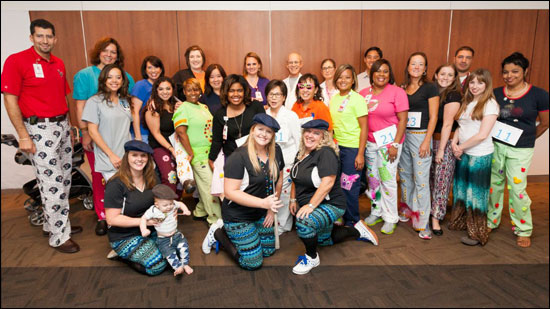
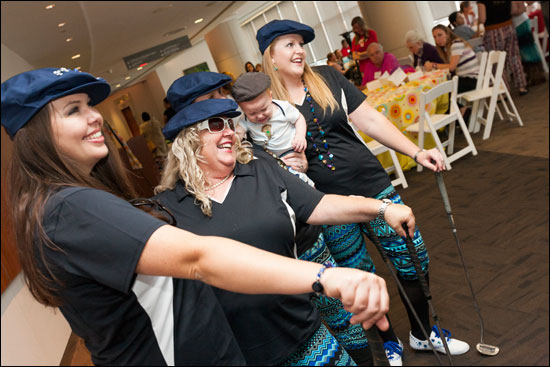
Texas Children’s employees and former patients’ families gathered at Texas Children’s Pavilion for Women to honor our neonatal nurses for their hard work and dedication. But, this wasn’t your typical celebration.

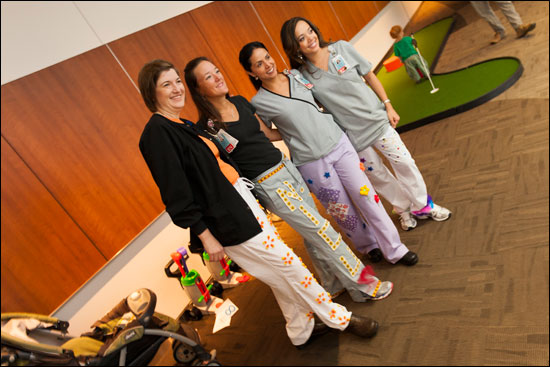
Nurses traded in their scrubs for creative, yet cringe-worthy pants that probably wouldn’t get the nod of approval from Giorgio Armani or Gianni Versace: green pants with bright yellow flowers, candy corn pants and red slacks with flamboyant feathers, to name a few.

For nurses at Texas Children’s Newborn Center, Bad Pants Day was more than just dressing up in whacky attire. It was their day to shine and realize just how much they are appreciated for the diligent work they do every day to improve the outcomes of critically-ill infants in our Neonatal Intensive Care Unit (NICU).

View the photo gallery:

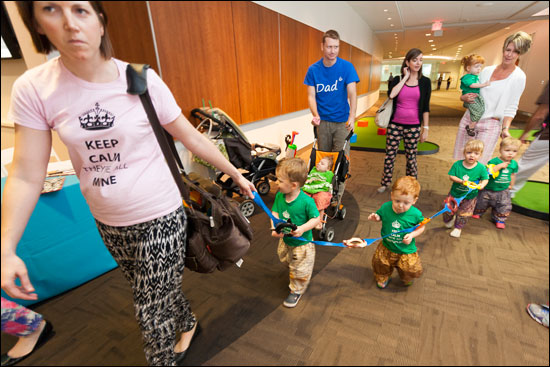
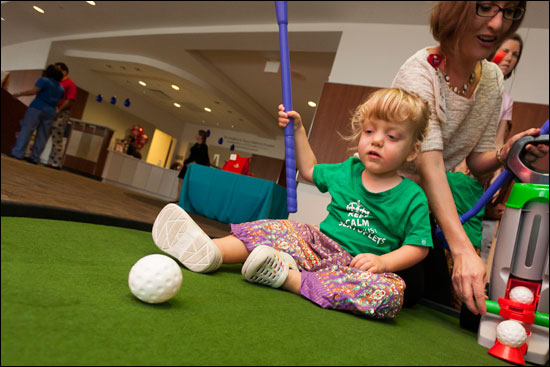
Several NICU families joined in on the festivities, including David and Lauren Perkins, and their energetic 2-year-old sextuplets – Benjamin, Caroline, Andrew, Allison, Levi and Leah – who teamed up for a game of putt-putt golf with the neonatal nurses.

Ben and Amanda Kopp shared their unforgettable experience about the NICU staff who took wonderful care of their daughter, Cami, who was born at just 25 weeks at the Pavilion.

“Throughout the ups and downs of Cami’s 86-day stay in the NICU, the nurses, doctors and volunteers at Texas Children’s gave us the faith and confidence that our precious little angel would not only survive, but thrive,” said Amanda Kopp. “Today, our 17-month-old daughter is happy and healthy.”

Texas Children’s Bad Pants Day event also marked the official kick off for next month’s 17th annual Bad Pants Open. All proceeds from the golf tournament will support Texas Children’s Newborn Center. Several of the sponsors and organizers of this fundraiser attended Bad Pants Day to show their appreciation for our NICU nurses.

To register for the Bad Pants Open and support a worthy cause, click here.

To learn more about Texas Children’s Newborn Center, click here for a video tour.

92414BeyondBatteninside640

Beyond Batten Disease Foundation delivers the largest investment in the history of Batten Research to Texas Children’s Hospital

No treatment. No cure. Fatal. That’s what the parents of six-year old Will Herndon of The Woodlands were told when their son was diagnosed with a disorder that strikes young, otherwise healthy children. Will, now 11, is blind, and the family is heart-broken, but driven to find a cure.

“We are so blessed to live in a community that has passion to believe that even the impossible can become possible if you truly believe change can be made,” said Missy Herndon, Will’s mother and founder of The Will Herndon Research Fund at Beyond Batten Disease Foundation.

Batten Disease is a rare, inherited pediatric neurological disorder, which begins with vision loss and seizures, followed by cognitive and motor impairment. Currently, there is no cure, and the disease is fatal in the late teens or early 20s. This prognosis is unacceptable for Will Herndon’s family and the hundreds of children affected with this condition. Beyond Batten Disease Foundation (BBDF) supports research to treat and cure Batten disease that strikes young otherwise healthy children around the age of five.

Missy and Wayne Herndon, Will’s parents, jumped into action after receiving the devastating news about their son. They partnered with Beyond Batten Disease Foundation to raise funds from generous donors in The Woodlands, the Houston area and Texas. Ultimately, these contributions and others have resulted in the largest investment in the history of Batten Disease research in the United States to Texas Children’s Hospital.

“I am so grateful for the tremendous support we have received from the families of The Woodlands and beyond. Our success is a testimony to the resources; love and faith each of them have shared since day one of Will’s diagnosis. There is no doubt in my mind this community is committed and a life-changing discovery will happen,” said Missy Herndon.

Craig and Charlotte Benson of Austin created Beyond Batten Disease Foundation in 2008 after their daughter, Christiane, was diagnosed with Batten disease. In 2009, Wayne and Missy Herndon launched The Will Herndon Fund as part of the Foundation in honor of their son. The Fund’s mission is simple; SAVE WILL and the hundreds like him, and in the process create promising treatments for so many other neurodegenerative conditions.

Mrs. Herndon presented a check from the Foundation to Texas Children’s Hospital for $1.75 million. The money will go to the Jan and Dan Duncan Neurological Research Institute at Texas Children’s Hospital. This follows another $2.5 million dollar gift in 2009 from Jim and Cherie Flores and Beyond Batten Disease Foundation. The grants totaling $4.2 million dollars are the largest investment ever made in the history of Batten research. The money allowed a team of researchers from Italy to come to Texas Children’s to conduct research. The researchers have identified six potential drug compounds that are currently in testing. The $1.75 million from the Foundation will support the critical steps necessary to eventually translate basic research into future clinical trials, ultimately to treat children in a race against time for their lives.

“We are profoundly grateful that the Beyond Batten Disease Foundation has chosen to support Batten disease research at Texas Children’s,” said Dr. Huda Zoghbi, director of the Jan and Dan Duncan Neurological Research Institute at Texas Children’s. “Children like Will Herndon and Christiane Benson are the inspiration for accelerating discoveries about this devastating disorder, and this next phase of research is a critical step in that process.”

The Herndons spoke for the first time to the Houston media last week about the disease that strikes children that formerly ran, laughed and sang. View KHOU coverage.

The Herndons hosted the 6th Annual HOPE Under the Stars event in The Woodlands to help fund the research to find a cure. The celebration honored the amazing support of The Woodlands community and announce the new grant at Texas Children’s Hospital featuring the most promising research in the history of the disease.

92414SSEstellaTam175

Read the newest “Super Star” Q&A featuring Estella Tam, Pathology. “A super star employee is someone who enjoys and has compassion for what he or she does,” Tam said. “A super star also is someone who strives for excellence and willing to be a F.A.T. – Faithful, Available and Teachable.”

Check out her Q&A, and find out how you can nominate a Super Star to be featured in the “Super Star” section on Connect.


Q&A: Estella Tam, July 2014 Employee

1. Your name, title and department. How long have you worked here?
Estella Tam, B.S., MT-ASCP, technical supervisor, Pathology Main Campus. I have been at Texas Children’s Hospital 32 years.

2. What month are you Super Star for?
July 2014

3. Tell us how you found out you won a super star award.
I was paged to see my assistant director, Mr. Aaron West, one afternoon. He said we had to go to a meeting in the conference room and our VP, Mr. John Nickens was there waiting for us. He opened the door and to my surprise, the room was filled with Pathology leadership team and Mr. West made the announcement of me being selected as July Super Star Employee. It was totally a surprise!

4. What does it mean to be recognized for the hard work you do?
It was truly an honor to be recognized for the work I do. This award also goes to all my wonderful coworkers, my leaders and medical directors supporting me every day.

5. What do you think makes someone at Texas Children’s a super star?
A super star employee is someone who enjoys and has compassion for what he or she does and does it well beyond the call of duty, is willing to learn and take new challenges, be flexible and ready to adopt changes, be humble and respect others, be willing to help even if it is inconvenient, strives for excellence and to be a F.A.T. – Faithful, Available and Teachable.

6. What is your motivation for going above and beyond every day at work?
I come to serve our patients, their families and my coworkers. Having a sick child is very stressful for the family. I want to do my best providing timely and accurate lab results for the physicians taking care of the patients. I personally know a few premature babies who came through our NICU, and now they are beautiful adults. I understand how important my job is working together with my coworkers to provide the service.

7. What is the best thing about working at Texas Children’s?
The best thing about working at Texas Children’s is knowing that every day I make a little difference in someone’s life. It does not matter if it’s providing lab results or helping someone find their way. I am encouraged by the hospital’s mission and vision finding the best way to improve the health of children through research and education. This is my “home away home” for the past 32 years, and I am proud to be part of the Texas Children’s Hospital family.

8. Anything else you want to share?
I am thankful for my leaders and coworkers’ encouragement and support helping me grow professionally and personally. I am blessed working with a wonderful team in Pathology. Even though we don’t have much patient contact working in the lab, the samples that we work with each day are not just a number but are precious samples from patients. It inspires me seeing my coworkers pursuit of excellence in doing their work providing diagnostic tools. We are part of the caring team behind the scene.

92414BWtwoyear640

By Lindsey Gooding

I never thought I’d be able to forget the exhaustion that accompanied my son, William’s, four-week stay in the Neonatal Intensive Care Unit (NICU) at Texas Children’s Pavilion for Women in April 2012. William has reached so many exciting milestones since he left the NICU two years ago.

The progress William has made between his first and second birthday still amazes me. At his first birthday, he wasn’t walking, he had no teeth and he had no interest in solid food. By his second birthday, he was a walking, talking, food-loving little toddler who finally had seven teeth.

I’d be lying if I said I didn’t worry about him not being on the growth charts for so long and his speech being delayed compared to others his age. When William turned two years old, I had him evaluated by a speech therapist because he wasn’t saying 50 words. They told me what I had known deep down in my heart. He didn’t qualify. He was learning a little more every day. William was doing things on his own timeline and that’s okay.

William is his own person. He was a preemie who has made remarkable progress. All we can do is love him, teach him and encourage him. He has met all his milestones. A few were several months behind but he’s done it and that’s what matters. He can kick a ball, he repeats things he hears, he knows all his body parts, he plays make-believe and he’s more independent with each day that passes. We couldn’t be more pleased with his progress.

Although a NICU stay can be exhausting, there were several things that made it an awesome, positive experience. The car seat education program was priceless. I got to have a little baby for longer than most. The nurses were so informative and helped me perfect my “mom skills.” Gordon and I enjoyed going out to dinner a couple of times which most new parents don’t get to do (and we had the best babysitters in town!). Since William received donor breast milk while in the NICU, I knew I had to give back by donating myself!

Gordon and I would love to add another little Gooding into our family. If we are ever blessed enough to welcome another baby into the world, we will be more prepared for a NICU stay. It won’t be easy but being a parent never is. Every NICU family has a different story. Some are harder than others. I try to always put things into perspective. Find the silver lining. My motto is: You have to embrace all the days, good and bad. In their own unique way they are very precious moments. It may not be what you envisioned but sometimes that’s okay.

92414CRCKathyPitts175

The Clinical Research Center (CRC) presented the Clinical Research Award for Third Quarter 2014 to Kathleen Pitts, nurse practitioner, Department of Allergy & Immunology, Pulmonary, and Asthma Clinic, Baylor College of Medicine.

The award was established by the Clinical Research Center in collaboration with the Research Resources Office to recognize and honor individual contributions to protecting the best interest of the research subjects and compliance with applicable rules and regulations.

Ms. Pitts research activities in the CRC focus on allergy, asthma and pulmonary related issues.

Congratulations to Kathleen Pitts.