October 3, 2014

maw

On October 4, 1989, a bright and ambitious 36-year-old young man walked through the front doors of Texas Children’s Hospital into a building that was just a few stories tall and envisioned something much bigger.

This was Mark A. Wallace’s first day as President and Chief Executive Officer at Texas Children’s Hospital. Wallace had been the senior vice president of The Methodist Hospital before he joined the 1,000 or so physicians, staff and employees at Texas Children’s Hospital. No one suspected this young man would significantly change the history of the hospital for the next two-and-a-half decades.

That one-building hospital that greeted Wallace when he arrived 25 years ago is now an impressively comprehensive campus spread out among several buildings in the Texas Medical Center, a second campus in West Houston, a third campus under construction in The Woodlands, 49 pediatric primary care practices, health centers, the Neurological Research Institute, The Center for Children and Women and Texas Children’s Pavilion for Women. And those 1,000 employees have grown to more than 10,000 in 2014.

“The face of Texas Children’s healthcare has changed tremendously since he’s been here,” said Jackie Ward, assistant vice president of the Cancer Center. “It’s not just bricks and mortar, it’s the programs we’ve implemented for every child, locally, regionally, nationally, and internationally. We have established a portfolio of healthcare access for all of these children and now women.”

Despite the growth, Wallace still walks the hallways like it’s a small hospital, stopping to talk to everyone who comes in his path. His powerful voice is typically heard before he’s seen. He is the embodiment of passion for the mission, making sure to interact with patient families as well as employees.

The early years

When Wallace began his journey with the organization, the hospital was just 35 years old and still in its infancy. Having just separated from St. Luke’s, it was in need of a leader who would help shape its growth and distinguish it amongst other leading children’s hospitals who had the historical advantage of being a century older. His work began immediately.

With Wallace at the helm, Texas Children’s Hospital completed the renovations of the original building, Abercrombie, and began construction of the Clinical Care Center and West Tower. These two additions made Texas Children’s the largest freestanding pediatric hospital in the U.S.

Senior Vice President of Human Resources Linda Aldred joined the organization just one year before Wallace and has seen the tremendous growth under his leadership.

“He doesn’t just come to work every day,” Aldred said. “He comes with the intent to do something profound every day.”

Throughout the 90s the hospital began to strengthen its position as a leader in children’s health care, taking on milestone cases and establishing Texas Children’s Health Plan, the nation’s first pediatric health maintenance organization.

Overcoming challenges

Wallace’s time wasn’t without its difficulties. In 2001, Tropical Storm Allison brought heavy flooding to the region and devastated much of southeast Texas, including Houston, which was hardest hit. The Texas Medical Center saw some of the worst of the storm’s destruction. The dedicated employees at Texas Children’s Hospital were tasked with caring for patients within the hospital and also took on patients from other hospitals that had suffered storm damage.

For Aldred, this difficult time was a shining moment in Wallace’s leadership. After meeting with his leadership team and staff to ensure the situation was under control, Aldred said his next remarks are what stand out to her even now.

“He turned and looked at his leadership team, and, without hesitating, said, ‘Now, let’s take care of the people who were here taking care of our patients. Let’s see what they lost and what we can do for them. And how we help every single one of them,” Aldred said. “Within three days, we had raised more than $200,000. We were a much smaller organization then, but we raised a lot of money, we built a network of caring, we built a network of help.

“People helped people tear their homes down, get rides to work and provided basic life needs for them. I’ll always remember that defining moment when he thought about the hospital, but he never stopped thinking about the people who worked here.”

Positive momentum

The organization’s growth continued with the $1.5 billion Vision 2010 expansion which included the Heal Sick Children campaign which raised $500 million toward supporting the hospital’s priorities. The project involved the expansion of the Feigin Center, the construction of Texas Children’s Pavilion for Women, Texas Children’s Hospital West Campus, and the Jan and Dan Duncan Neurological Research Institute. Vision 2010 marked an unprecedented period of growth for the organization, which would continue its exceptional care of children and would expand its care to women.

“Mark is truly a catalyst leader,” said 2014 Catalyst Leader of the Year Dr. Oluyinka Olutoye, who is also co-director of Texas Children’s Fetal Center. “If you look at the word catalyst, it refers to a person or thing that actually transforms the environment or the reaction that it’s involved in. When you look at the transformative effect Mark Wallace has had on Texas Children’s, there is no question he’s a catalyst here.”

Ward saw Wallace as a mentor and an inspiration to many of his leaders and his entire workforce throughout Vision 2010.

“I saw him through the eyes of my mother, who worked here for 36 years, and now I have the privilege of knowing him as my own leader,” Ward said. “To know him is to love him as your leader because of his passion for what he does and his passion for health care.”

On the horizon

With yet another community hospital set to open in The Woodlands in 2017, the organization continues to see great success in providing the right care at the right place. Wallace’s dedication continues to lead the way for better health care for children and women throughout the global community and has kept Texas Children’s amongst the best places to work according to the Houston Business Journal.

“I look forward to being on his team and watching the evolution continue,” said Dr. Charles Hankins, chief medical officer of West Campus and Texas Children’s Hospital The Woodlands. “Here’s to 25 more years.”

October 2, 2014

On Tuesday, the Centers for Disease Control and Prevention (CDC) confirmed the Ebola diagnosed in the United States.

“An adult patient who traveled recently from Liberia to Dallas became ill and was admitted to a hospital there,” said Texas Children’s Hospital Physician-in-Chief Dr. Mark Kline.

“Having this case in Dallas, only 270 miles away, might engender fear, especially among health care workers who come in contact with patients who might have a suspected case of Ebola, but the factors that led to this epidemic in West Africa are not present here in Texas or the United States.”

Kline emphasized the U.S. will never suffer the kind of Ebola epidemic that Africa is experiencing today because of the hygienic conditions here and, in particular, because of the infection control practices in U.S. hospitals. Texas Children’s leaders remain confident about our preparedness plans should we receive a patient with Ebola at one of our sites.

“We’ve concentrated our efforts on the main portals of entry to the hospital and the system – for example, the Emergency Center and our primary care practices across the community,” Kline said. “We’ve gone from passively screening with posted signage to active screening. Every child and family is being asked specifically ‘Have you traveled in the past 21 days? If so, has any of that travel been to West Africa and, specifically, to the countries that have been impacted by Ebola?’ ”

If the answer to those questions is “yes,” Texas Children’s has a plan in every setting for moving the child and the family to an isolated area for further evaluation.

How Texas Children’s has prepared

Texas Children’s leaders in Infection Control, the Emergency Centers, Critical Care, Emergency Management, Texas Children’s Pediatrics and other areas monitor daily Ebola updates and recommendations from the CDC and the World Health Organization. They regularly assess Texas Children’s preparedness as it relates to the most current information, and there is a plan in place in the unlikely event we receive a patient with the disease.

Preparation has included:

  • Simulation exercises and thorough education in areas that may be a point of entry for a patient with Ebola symptoms.
  • Development of specific protocol outlining the steps we will take should we receive a patient with Ebola symptoms, including designated isolation rooms in the Emergency Centers and the PICUs.
  • Securing an inventory of appropriate personal protective equipment (PPE), including full-coverage protective suits, which have been deployed to Texas Children’s Main and West campuses, Pavilion for Women and transport services (Kangaroo Crew).

“We’re doing everything we can to make certain that if we see a case of Ebola we will not have secondary cases among health care workers or among the other patients and families we serve,” Kline said.

“I’m very, very confident that with all of the policies and procedures and infection control precautions we have in place we will maintain our ability to care for patients and families and to care for one another as well.”

Important facts to remember about Ebola

Most of the population in West Africa doesn’t have Ebola.
As of September 30, there had been about 6,500 cases of Ebola diagnosed in Guinea, Liberia, Senegal and Sierra Leone. However, more than 20 million people live in these countries. This means fewer than 1 percent (.03 percent) have the virus – 99.97 percent of the residents in these countries do not have Ebola.

Diagnosis occurred in Dallas, but the disease source is still in Liberia.
Tuesday’s news revolves around the first case of Ebola that was diagnosed in the U.S. However, the source of transmission originated in Liberia – not here. Nothing has changed about the epidemiology of this virus in the U.S.

Ebola is not a highly infectious disease.
Ebola is a bloodborne pathogen – it is not transmitted like the flu or other airborne viruses. It is spread only when symptoms are present.

The CDC is the best source of information, not the media.
The best way to allay any concerns is to educate yourself. The most current information about Ebola is available online from the Centers for Disease Control and Prevention.

September 30, 2014

10114NRI640

The Jan and Dan Duncan Neurological Research Institute (NRI) at Texas Children’s and Baylor College of Medicine welcomed two new faculty members, Dr. Akash Patel and Dr. Mingshan Xue.

“I am thrilled to have Dr. Patel and Dr. Xue launch their independent research careers at the NRI,” said Dr. Huda Zoghbi, founding director of the NRI. “Dr. Xue has a stellar track record and is one of the most innovative scientists that I know. Dr. Patel is one of those rare neurosurgeons who chooses to do basic research while maintaining an active neurological practice.”

Akash Patel and Mingshan Xue launch their research careers at the NRI.

Dr. Akash Patel
Patel, an assistant professor in the department of Neurosurgery at Baylor and the NRI, is a neurosurgeon who specializes in the treatment of malignant and benign tumors of the brain and skull base. His clinical interests include neuroendoscopy and minimally invasive neurosurgery, awake craniotomy and brain mapping for tumors in eloquent regions of the brain, and surgery for deep brain tumors: intraventricular, pineal, insular and brainstem.

Patel is a member of the American Association of Neurological Surgeons and the Congress of Neurological Surgeons. He earned an undergraduate degree in biochemistry from Rice University. While earning his medical degree at Baylor, Patel explored his interest in genetics and basic research by working in the laboratory of Zoghbi. He continued to work under Zoghbi’s mentorship as he completed his residency in neurosurgery at Baylor and MD Anderson, and developed a passion for research.

Patel’s research focuses on determining the molecular underpinnings of inherited and sporadic forms of various brain tumors, including gliomas, meningiomas, and acoustic neuromas. He is particularly interested in studying tumors that are part of inherited tumor syndromes as a means to gain insight into more common, sporadic forms of these tumors. His ultimate goal is to help translate these findings into targeted therapies to treat common and aggressive cases.

Dr. Mingshan Xue
Xue is an assistant professor in the department of Neuroscience at Baylor. He is also a member of the Cain Foundation Laboratories and the NRI.

Xue earned his undergraduate degree in biology from Fudan University in Shanghai, China. He obtained his Ph.D. in neuroscience from Baylor and completed his postdoctoral training at the University of California in San Diego.

Xue’s research explores the communication mechanisms of cortical circuits in the brain that control motor, sensory and cognitive functions, and how dysfunction and abnormal neural circuit development can contribute to the pathogenesis of neurological disorders such as autism and childhood epilepsy. Xue’s primary goal is to translate these findings into new therapeutic interventions to treat developmental disorders.

Xue is eager to begin his contribution to the NRI, saying, “The NRI offers an exciting opportunity to collaborate with world-class researchers from diverse backgrounds to improve the quality of life for patients with devastating neurological disorders.”

The NRI at Texas Children’s and Baylor is a basic research institute committed to understanding the pathogenesis of neurological diseases with the ultimate goal of developing treatments to improve the quality of life for patients.

10114Flushots640

Tens of thousands of people die each year from the flu. Although anyone can be affected, the elderly and young children – like the ones treated at Texas Children’s – are most susceptible to the illness.

Each year, an average of 20,000 children under the age of 5 are hospitalized because of influenza complications, according to the Centers for Disease Control and Prevention. Last flu season, more than 100 flu-related pediatric deaths were reported.

The best way to prevent the flu is by getting vaccinated each year. Many Texas Children’s patients, however, are too sick to receive the vaccination, which makes protecting yourself even more vital.

“We would never want to expose anyone to the flu,” Senior Vice President and Chief Nursing Officer Lori Armstrong said. “We have a responsibility to keep every patient healthy.”

About 4,000 Texas Children’s employees already have taken one for the team and gotten their flu vaccine. Now it’s your turn to do what’s right for you and your patients.

Employee Health is administering free seasonal influenza vaccinations to all Texas Children’s employees, Baylor College of Medicine employees working in Texas Children’s facilities, Texas Children’s medical staff and volunteers. Leaders from Texas Children’s Pediatrics, Texas Children’s Health Centers and The Center for Women and Children will inform their staff about seasonal flu vaccination details.

Click here to view vaccination schedules for both Main and West Campuses. Employee Health strongly encourages you to get your vaccine at one of the times listed on the schedule. If you are unable to do so, please schedule an appointment to get the flu vaccine at the Employee Health Clinic after Wednesday, October 1.

And, remember, getting an annual flu shot is part of Texas Children’s P3 incentive plan, which is an important component of the total rewards you receive at Texas Children’s Hospital. As part of P3 , we are striving for at least 90 percent of our staff to get vaccinated by Monday, December 1. As of September 30, we were less than half way there.

10114nursesummit640

“Today was a banner day at Texas Children’s,” said Chief Quality Officer Dr. Angelo Giardino. “We have figured something out.”

Giardino, who attended the debrief of a two-day nursing care delivery summit, said he was hopeful for what the future of nursing at Texas Children’s has in store. The two-day summit brought together more than 60 frontline nurses, nursing leaders, representatives from human resources and leaders from across the organization. The frontline staff made a huge impact on the summit by bringing their ideas from the bedside to the leaders and investing in the re-design. The intent of gathering this particular group was to generate ideas, share concerns and form suggestions about the way nursing care is delivered by our 2,500 nurses.

“We felt the support of our leadership and other disciplines,” said Clinical Specialist Joellan Mullen. “They recognized the importance of the role of the nurse in patient care and quality outcomes.”

The strategy was to form groups that would then visit an area of the hospital unfamiliar to them. The groups each captured a day in the life of a nurse in order to determine the best strategy to improve the role of the nurses in that unit. By identifying challenges, they were able to understand what stands in the way of delivering the best possible care. Challenges included the need for better collaboration between the physicians and nurses during rounds, cluttered work spaces, a lack of standardization in pods, struggles with translation services, juggling the many duties of a nurse and role confusion.

“What I need from each of you is to be patient and hopeful,” said Chief Nursing Officer Lori Armstrong who listened to all of the reports.

It was a chance for not only Armstrong, but other leaders, including representatives from Human Resource,s to hear the needs of this dynamic group of employees at Texas Children’s and how their work can greatly impact patient outcomes. The three main overarching goals that were determined as a result of the summit are:

  1. Bring the RN closer to the bedside
  2. Ensure that the right discipline has the right responsibilities
  3. Ensure that there are no gaps in supplies, equipment or services needed to deliver care

“The Summit reinforced Texas Children’s commitment to empower the nursing staff to advocate for safe care for ALL patients by focusing on the right task done at the right time, by the right person,” said Patient Care Manager Tina Babb. “The Summit showed that Texas Children’s is committed to the future of nursing, health care, and our patients.”

As a result of the summit, an executive summary has been developed, a governance structure has been established with an executive steering committee, project steering team and work teams. The committee will begin meeting this fall and teams will kick off their work in January.

“What we learned from the summit was what action needs to be taken immediately to help our nurses deliver the best possible care to every patient,” Armstrong said.

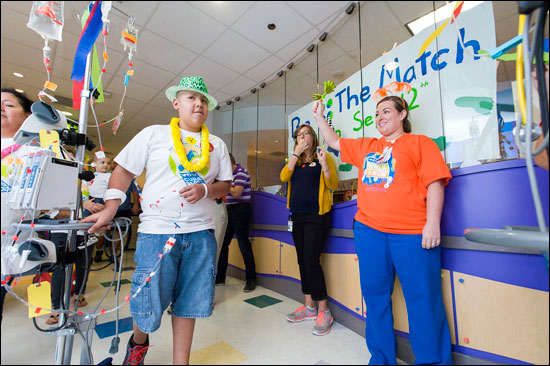
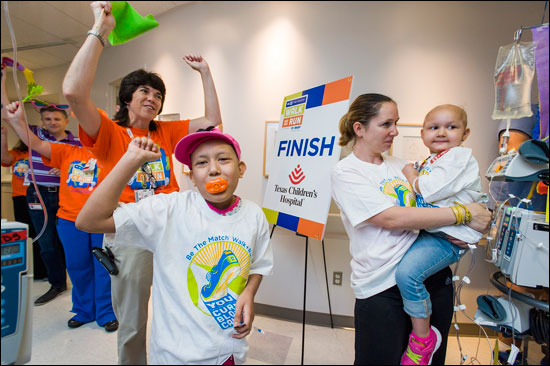
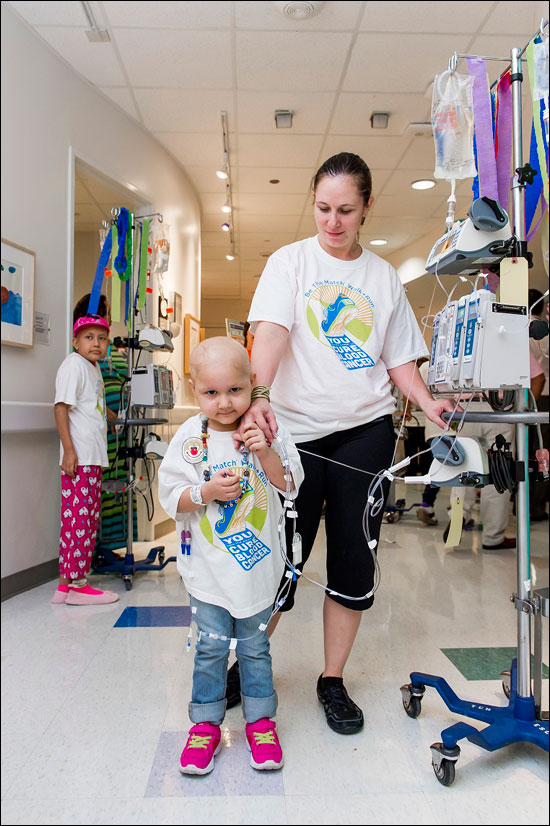
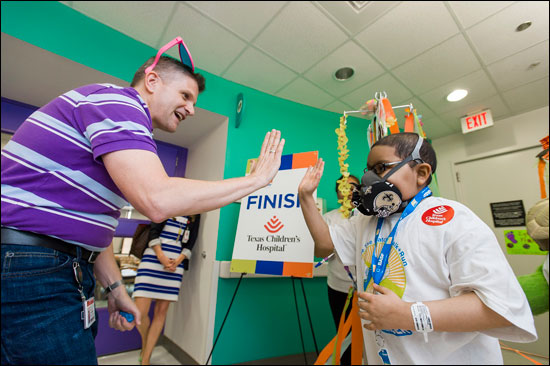
Patients walked the hallways of the Texas Children’s Bone Marrow Transplant Unit for the annual “Be The Match” walk, which raises awareness for the global bone marrow registry.

View our gallery:

10114BWPregnantwoman640

By Dr. Carol Baker, vaccine and pediatric infectious disease specialist

As we prepare for cold and influenza (flu) season, which typically begins in late November or early December, getting a flu vaccine is the best way to protect yourself and your loved ones. But what if you are pregnant? Should you still get vaccinated?

The answer is simple: YES. Pregnant women should get vaccinated against the flu.

Pregnant women, especially in the second and third trimester, are more likely to have complications from flu, rarely even death. In fact, the flu can lead to serious problems for an unborn baby, including premature labor and delivery. Getting vaccinated protects against these bad outcomes and also protects the baby against flu until the baby first can be vaccinated at age six months.

The best way to protect yourself and your unborn child from influenza is to get vaccinated. And it’s important to remember that pregnant women should only get the flu shot, not the nasal spray, known as FluMist. (FluMist contains live virus and should not be given to pregnant women because it may not be safe.) The flu shot is available at most doctors’ offices and all local pharmacies.

It takes up to two weeks for inactivated influenza vaccine to become fully effective. So the best time to get this vaccine is as soon as it is available. Even a late vaccination can be beneficial because the flu season can last through March and April.

According the Center for Disease Control and Prevention (CDC), vaccination helps protect women during pregnancy and their babies for up to six months after they are born. One study showed that giving flu vaccine to pregnant women was 92 percent effective in preventing hospitalization of infants for flu.

As a pediatric infectious disease specialist and executive director of the Center for Vaccine Awareness and Research at Texas Children’s Hospital, I am dedicated to finding the best ways to stop children and their parents from getting preventable diseases. I know the dangers the flu can pose to pregnant women and their unborn children. So I urge you to disregard the myths and misperceptions that often circulate about the flu vaccine. The flu shot cannot cause a person to develop influenza because the virus in the vaccine has been killed.

During the 2013-14 flu season, about half of pregnant women protected themselves and their babies from flu by getting a flu shot. This is a significant progress. But almost half of pregnant women and their babies still remain unprotected from influenza. As I noted above, the flu shot is the single best way protect yourself and your family from the flu. Make sure to protect yourself and your baby – get vaccinated.

This website will help you find a location near you where you can get vaccinated. For more information about pregnant women and the flu, visit the CDC or download the PDF below by visiting here.