November 4, 2014

H
Texas Children’s cares for some of the country’s most critically ill patients, and safe, quality care for every patient is the most important responsibility of each staff member and employee here. Equipping our staff and employees with the knowledge and tools to take preventive action is key to creating an environment of safe patient care.

In an effort to illuminate the importance of everyone’s role, each month we will share patient safety stories that help heighten staff and employee alertness and accountability and, ultimately, reduce harm. This month’s story is a reminder that being familiar with your surroundings and knowing what to do in an urgent situation can help improve the outcome.

When congenital heart disease patient Emily came to the hospital for diagnostic testing, her family and the diagnostic team expected a routine clinical visit like she’d had many times before. But this visit ended differently. During testing, Emily’s condition began to deteriorate unexpectedly. The diagnostic team rarely treated acute patients and was not accustomed to calling for help. Their unfamiliarity with emergency protocol delayed a call to *9999, and once the response team arrived, there was additional delay in finding the code cart.*

Actions everyone can take:

  1. Know how to get help in an emergency. If you don’t know, ask your leader today.
  2. Know your surroundings and the location of emergency equipment. Some areas have code carts, automatic electronic defibrillators, panic buttons and other emergency equipment. Make sure you know what emergency support is available in your area, where it is and when it should be used.
  3. Be alert. Don’t take routine situations for granted, even if it’s something you’ve done many, many times before.

*Patient safety stories are based on events at Texas Children’s Hospital. Patient names and some of the circumstances of the event may have been changed to protect patient privacy.

For the latest quality and safety information, visit the Patient Safety website on Connect.

11514Benefits640

The clock is ticking on this year’s 2015 benefits enrollment period, and with only 10 days left, it’s time to make a decision about the coverage you want for you and your family.

Enrollment ends on Friday, November 14. If you want to change plans or coverage levels, or if you want to participate in the Flexible Spending Account, you’ll need to elect your benefits during the enrollment period. If you don’t actively enroll during that time, your current medical, dental and other benefits will automatically carry over next year. Flexible Spending Account participation does not carry over from one year to the next, so you will need to reenroll.

Here are some questions and answers that hopefully will help you make the best decisions about your health insurance.

Where do I get more information about benefits?

Visit www.texaschildrens.org/mybenefits to learn more about your 2015 benefit options.

I need help selecting a plan. What resources are available?

You have access to Decision Direct, an interactive tool designed to help guide your decisions around which plan might work best for you and your family. Decision Direct is available at www.decisionsupportsuite.com/texaschildrenshospital.

Is the most expensive medical plan the best plan available?

Not necessarily. What’s “best” is based on the amount of coverage you and your family actually need. For example, if you enroll in the EPO or PPO option next year but don’t use a lot of health care services or take a lot of prescription medications, you may pay for more coverage than you need. The key is to consider your “total” medical plan costs for next year. That’s how much you contribute from your paycheck and how much you anticipate spending throughout the year combined.

Is one medical plan option better than another?

No. One medical plan option isn’t necessarily “better” than another. They’re designed to give you choices so you can find the option that makes sense for your and your family’s situation. Remember to take your total costs into consideration, which includes what you pay out of your paycheck and what you pay out of your pocket when you receive care (deductibles, coinsurance, copays). For example, if you select the EPO or PPO, you’ll pay more up front in payroll contributions and generally pay less during the year when you need care. With the CPP, you’ll pay less up front in payroll contributions and generally pay more when you need care during the year (but can use money in your HRA).

Are the same services covered by all the medical plan options?

The services that the CPP, EPO and PPO cover through BCBS are identical. They are just covered at different levels. You can find specific plan coverage details in your enrollment guide.

How does the CPP work?

The CPP saves you money up front with lower payroll contributions. You must meet an annual deductible for medical and prescription drug expenses before the plan begins to pay benefits. You will have an HRA account you can access to help satisfy out-of-pocket expenses such as the deductible, coinsurance, and/or other eligible expenses. Once you meet the annual deductible, you pay 20 percent of in-network medical and prescription drug costs until you reach the annual out-of-pocket maximum. Then the plan pays 100 percent of eligible expenses for the rest of the plan year. You have the option to open a Flexible Spending Account (FSA) along with your HRA, into which you can deposit $2,500 out of your check to help pay for your expenses. If you do open an FSA, using your debit card will allow those funds to be used first to pay for services to meet your deductible before the funds will be paid out of your HRA.

How does the CPP encourage informed and smart health care behavior?

Low payroll contributions on the front end and higher deductibles on the back end help you think before you use health care services – like deciding whether to go to an Urgent Care Clinic rather than the Emergency Room (ER) for a sinus infection. This type of plan promotes better decision-making around health care use, which in turn drives down costs.

I want to improve my health in 2015. What other programs are being offered?

You can kick-start your healthy 2015 by receiving your annual physical at the Employee Medical Clinic. Preventive care is covered by all three medical plans at no cost to you and subsequent visits are only $10! Employee Health and Wellness can also support you in achieving your well-being goals through various wellness programs including tobacco cessation programs, chronic condition management, health coaching, and engaging wellness activities. An exciting new offering is that tobacco cessation prescriptions and over the counter treatments are now covered at 100 percent with a prescription. Contact the Employee Medical Clinic at Ext. 4-2150 for a same-day appointment and wellness program details.

11514DeptofPeds640

Recently the Department of Pediatrics at Baylor College of Medicine and Texas Children’s Hospital reached a milestone with the hiring of its 1,000th faculty member. Today, more than 1,011 physicians make up that faculty and while the numbers are impressive, the story behind the numbers is what makes this department truly impressive. The latest milestone is part of a continuation of growth the department has seen over the years, more than doubling in size since 2007.

“Being the first in history means we cover the waterfront,” said Physician-in-Chief Dr. Mark W. Kline. “Texas Children’s forte is taking care of kids with the most complex medical conditions. We have expertise in every conceivable area no matter how complex or serious a child’s illness.”

In the past few years, the organization has added more than 100 new physicians a year across all subspecialties at Main Campus with a much bigger footprint across the community including West Campus, health centers, The Center for Children and Women, newborn units across the community that are staffed by Texas Children’s physicians and our latest partnership with Children’s Hospital of San Antonio.

“It’s a great story of our capacity and expertise,” said Kline. “We are less siloed and leave a mark across a broad geographical area.”

Kline said the vast expertise of the department means a capacity to deliver on every area of the Texas Children’s mission including patient care, education, research and service while driving innovation in health care. Amongst the goals of the department is educating young doctors who are the future of pediatric health care. Last year 40 new pediatric residents began their careers at Texas Children’s, this year that number has grown to 43 and it’s a program that continues to distinguish itself amongst others in the nation. Not only is it the largest program offered, the program includes a general pediatrics track, a global health track as well as the newest addition for 2015 applicants, the pediatrician-scientist training and development program. The program is intended for those with an interest in becoming a physician-scientist.

“I tell applicants it doesn’t matter where your interests gravitate throughout your residency, we have someone who can mentor you in that area,” said Kline. “This is a program to broaden horizons.”

Having the largest faculty and expertise in every recognized subspecialty gives Kline and other leaders the opportunity to recruit the best and brightest faculty. While leading growth has come easy, managing growth while preserving the cultural values of the institution presents a bigger challenge.

“The way we’ve ensured our culture remains strong is having a mix of new talent along with those who have been engrained in the culture for years,” said Kline. “We are creating that same mix at the leadership level to preserve our culture while continuing our growth.”

Kline recently created a new leadership structure with Dr. Susan Blaney, Dr. Sheldon Kaplan and Dr. Gordon Schutze appointed to new executive vice chair positions allowing the strengthening of the leadership structure with broader representation.

Kline said he doesn’t see a plateau in sight and hopes the growth will continue as the hospital continues its efforts to offer the best care at Main Campus, expands its services at West Campus and soon begins its latest venture in The Woodlands.

11514Flu640

Dr. Paul Checchia, medical director of the pediatric cardiovascular intensive care unit, has extensive experience with respiratory syncytial virus (RSV) in various clinical, research and academic settings. In response to the recent Ebola outbreak in West Africa and the handful of cases that have been treated here in the United States, Checchia wrote the following story in an effort to refocus people’s attention to RSV and influenza – two viruses he says are much bigger threats in the United States than Ebola.

11414pchecchia150During the past couple of months we all have seen our fair share of news coverage on Ebola. From turning on your television to walking into a pediatrician’s office and being asked questions about recent travel, the topic is everywhere. It’s not uncommon that with the surplus of information out there, it can begin to cause some anxiety.
While the likelihood of an Ebola outbreak is extremely low, it is still important to stay informed. And at Texas Children’s Hospital we want the community to know that we are fully prepared if an Ebola case were to appear in Houston.

But one thing I can’t help but ask myself is: With so many people worried about the spread of Ebola, why aren’t they also taking every precaution necessary to protect themselves against other diseases? For instance, why are individuals not having the same reaction to the flu as they are with Ebola?

The flu is a preventable disease that affects hundreds of thousands of individuals every year. According to the Centers for Disease Control and Prevention, an average of more than 200,000 people in the United States are hospitalized each year from the flu, with up to 49,000 dying from it. Yet many people are still refusing to get vaccinated. In fact, less than half of the U.S. population receives the flu vaccine each year. The CDC also reports that only 45 percent of children ages 6 months to 17 years got the influenza vaccination during the past 12 months. Only 26 percent of adults 18-49 years of age received theirs.

And what about respiratory syncytial virus (RSV)? While there isn’t a vaccine for RSV, there are many ways in which parents and Texas Children’s employees can actively protect infants and children from contracting this respiratory virus, including, washing your hands and making sure anyone in contact with your infant does the same. It’s also important to keep infants and children away from others who are sick, especially with cold or flu-like symptoms (which is why a flu shot is important for all family members and health care workers). While RSV is not as deadly as the flu, it can spread very rapidly among children. So what’s most important to remember about RSV is that is can be prevented.

As many communities are taking precautions to protect themselves and their families from Ebola, let’s not forget about these other diseases that are affecting so many of us every year. The flu and RSV have regularly impacted our community in more devastating ways than Ebola has. It is important that we not ignore these much greater health threats in the U.S.

So please get vaccinated: Everyone 6 months or older is recommended for flu vaccination. It’s the best way to protect yourself and others.

Employee Health is administering free seasonal influenza vaccinations to all Texas Children’s employees, Baylor College of Medicine employees working in Texas Children’s facilities, Texas Children’s medical staff and volunteers. Leaders from Texas Children’s Pediatrics, Texas Children’s Health Centers and The Center for Women and Children will inform their staff about seasonal flu vaccination details.

Click here to view vaccination schedules for both Main and West Campuses. Employee Health strongly encourages you to get your vaccine at one of the times listed on the schedule. If you are unable to do so, please schedule an appointment to get the flu vaccine at the Employee Health Clinic.

Remember, getting an annual flu shot is part of Texas Children’s P3 incentive plan, which is an important component of the total rewards you receive at Texas Children’s Hospital. As part of P3, we are striving for at least 90 percent of our staff to get vaccinated by Monday, December 1.

11514APP640

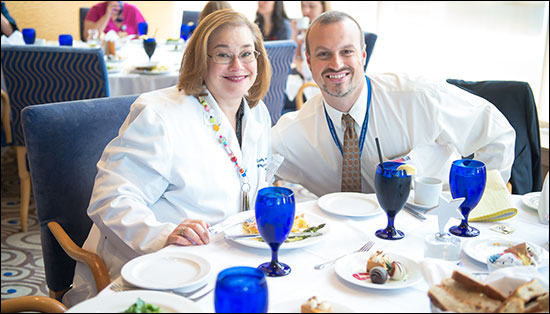
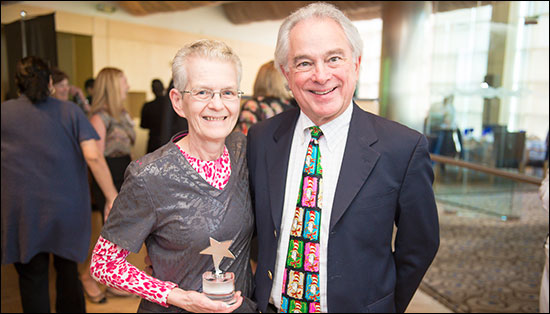
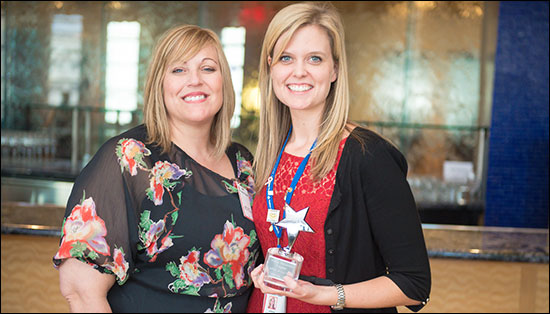
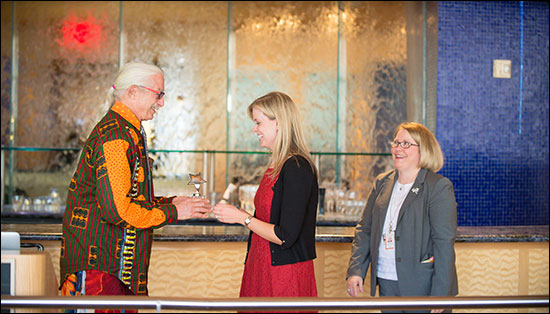
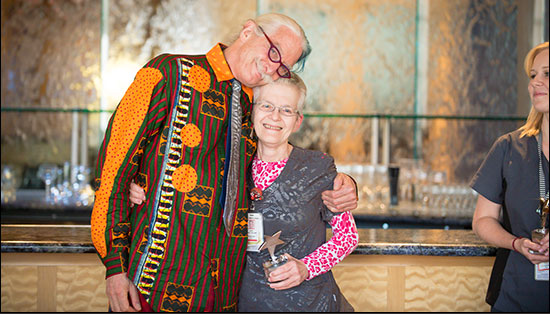
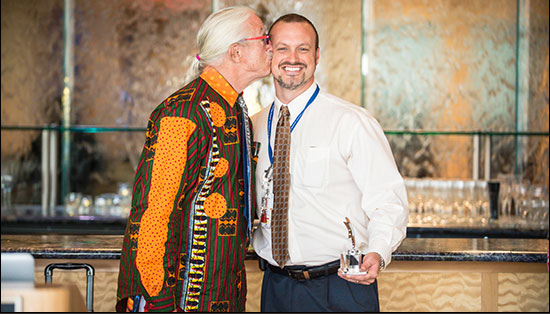
Advanced Practice Providers got a special visit from Dr. Patch Adams at their annual luncheon. Adams gained fame after being portrayed by Robin Williams in the Hollywood movie named for him.

Award recipients were:

Nurse Practitioner of the Year: Jessica Geer
Physician Assistant of the Year: Teri Baierlipp
Advanced Practice Provider Preceptor of the Year: Lois Tracy
Advanced Practice Provider Novice of the Year: Jennifer Barrera
Physician Partner of the Year: Dr. Terry Yen

11514Shulman150

Dr. Joshua Shulman recently received the prestigious Grass Foundation-American Neurological Association (ANA) award in Neuroscience at the annual ANA conference in Baltimore. This award recognizes young investigators for their outstanding contributions to neuroscience research.

Shulman is an investigator at the Jan and Dan Neurological Research Institute at Texas Children’s and an assistant professor of neurology, neuroscience, and molecular and human genetics at Baylor College of Medicine.

His current research explores the genetic susceptibility and pathogenesis of neurodegenerative disorders, including Parkinson’s and Alzheimer’s diseases. His work integrates genetic investigation in human subjects and fruit fly models, with the goal of understanding brain function and aging, and improving the treatment of neurologic disease.

Shulman received a B.A. in biochemical sciences from Harvard College and a Ph.D. in genetics from Cambridge University in Cambridge, MA. He earned his medical degree and M.M.Sc degree in clinical investigation from Harvard Medical School and the Massachusetts Institute of Technology, respectively.

Shulman completed his residency and fellowship training in the Harvard/Partners Neurology Program at the Brigham and Women’s Hospital and Massachusetts General Hospital in Boston. Before moving to Houston, he was an associate neurologist at the Brigham and Women’s Hospital and assistant professor in neurology at Harvard Medical School.

Among his previous honors, Shulman received a Career Award for Medical Scientists from the Burroughs Wellcome Fund and the C.W. Cotterman Award from the American Society of Human Genetics.

Click here to learn more about Shulman’s research at the NRI.

October 30, 2014

Dear Colleagues,

For the past few months, many of us here at Texas Children’s have been focused on keeping each other and our patients and families safe in the event of a potential Ebola case at our hospital.

While I am proud of our efforts to ensure we will provide the best care to such patients while keeping our staff safe and healthy, I am concerned we have forgotten about an infection that is much more likely to affect us than Ebola. That infection is the flu.

More than 200,000 people suffering from the flu are admitted to a hospital each year. And more than 20,000 of them die. They die from a virus that a simple vaccination can most times prevent – a shot that takes mere seconds to receive.

Ebola has infected some 7,000 people and killed more than 3,300. Most of those infected with the virus are in West Africa. One person in the United States has died from Ebola, and he contracted the infection in Liberia. Two of the people who cared for that patient and became infected with the virus have been treated and released.

There is no vaccine for Ebola. That is why we have been working so hard to obtain the best personal protective equipment for our staff. There is, however, a vaccine for the flu, and everyone here at Texas Children’s should get one. Getting a flu vaccine is one of the simplest and most basic things we can do to keep ourselves and our patients healthy during flu season. It also is part of Texas Children’s incentive plans.

I implore you to take this responsibility to heart. Get your flu shot. Make sure everyone in your family is vaccinated, and educate those around you about getting vaccinated. It’s truly the best personal protective equipment you can wear during flu season.

Remember influenza vaccinations are free and available in Employee Health at our Main and West Campuses and will be available at the Benefits and Wellness Fair today on the Auxiliary Bridge.  If you receive your vaccination elsewhere, your Texas Children’s insurance will cover the cost.  Please remember to provide documentation to Employee Health & Wellness.

Information about where to get your flu shot is below.

Regards,

Mark A. Wallace

Get vaccinated!

  • Flu vaccines are available in Employee Health
  • Appointments are recommended, however walk-ins are welcome
  • Department or unit leaders may request a flu cart visit by calling Employee Health at 832-824-2151 or West Campus Employee Health at 832-227-1365
  • If you received your flu vaccine elsewhere, please fax your documentation to 832-824-2141or send via interoffice mail to Employee Health A5527

Main Campus Employee Health 

Hours of Operation: Monday – Friday, 7:30 a.m. – 4:30 p.m.

Location: Employee Health & Wellness Center
5 Tower by the yellow elevators

Phone: 832-824-2150

Fax: 832-825-2141

Emergency: An Employee Health nurse is available after hours by pager 24 hours a day for emergencies. Call the page operator at 832-824-1000 to have an Employee Health nurse paged.

West Campus Employee Health 

Hours of Operation: Monday – Friday, 7:30 a.m. – 4:30 p.m.

Location: West Campus, Human Resources and Employee Health, 2nd floor

Phone: 832-227-1365