March 24, 2015

F

Have you ever found your fruit bowl teeming with fruit flies that seemed to appear out of nowhere? While pesky at times, these 6-legged, red-eyed insects have endured as a laboratory staple for more than 100 years, helping scientists unlock the genetic causes of human disease.

In a recently published article in the journal Genetics, fruit fly biologists at the Jan and Duncan Neurological Research Institute at Texas Children’sDrs. Michael Wangler, Shinya Yamamoto and Hugo Bellen – explore the value of fruit fly research and the need for more funding to accelerate biomedical discoveries using the Drosophila fruit fly.

Unlike mouse models, the authors argue that fruit flies are inexpensive to maintain, they grow quickly from embryo to adult in 12 days, and share many similar genes with humans, making the Drosophila a powerful model organism for the study of genetics.

To study human disease in fruit flies, scientists mutate, or disrupt, the same gene that is known or suspected to cause the disease, and then figure out why mutations with this particular gene leads to disease. However, one can also take an unbiased approach and discover new genes.

Inside their laboratory at the NRI, Bellen and his team have performed a large scale forward unbiased genetic screen which allowed them to isolate 165 fruit fly genes that cause neuro-developmental and neuro-degenerative phenotypes when mutated, 90 percent of which have human counterparts. The human counterparts of one third of the genes cause Mendelian disorders. By exploring the remaining two thirds of the genes in patients with rare disease they could identify a few novel human diseases genes, work that they did in collaboration with Drs. Jim Lupski and Richard Gibbs.

A detailed characterization of some of the 165 genes also permitted them to discover novel mechanisms that underlie a variety of known diseases such as the peripheral neuropathy associated with Charcot-Marie-Tooth (2A) disease, Leigh syndrome and some ataxias, including Spinocerebellar Ataxia 6 and Friedreich ataxia.

“By understanding how a particular gene works in the fruit fly, we can dissect the molecular and genetic events that underlie the pathogenesis of human disease so that effective treatments can be developed in the future,” Bellen said.

“We see fruit fly research as an avenue of tremendous importance,” Wangler said. “Federal agencies need to actively encourage collaborative research between fruit fly researchers and human geneticists and clinicians to make the best possible use of dwindling research dollars to promote public health.”

Click here to read their article titled, “Fruit flies in biomedical research,” in the journal Genetics.

32515Misra175

Dr. Sunita Misra, a child neurology resident at Texas Children’s, recently received the 2015 Roger and Mary Brumback Sage Award of Excellences for her study on Dravet Syndrome.

Her award-winning study analyzed the quantity and type of medications that are required to stop prolonged seizures in children with Dravet Sydrome, a severe childhood epilepsy syndrome that causes patients to experience dozens or even hundreds of seizures a day.

In her study, Misra and her team also analyzed the triggers and complications resulting from the long seizures, and how many episodes led to emergency room visits or hospitalizations for prolonged seizures.

The Roger and Mary Brumback Sage Award of Excellences is awarded to the recipient of the best junior member presentation at the annual meeting of the Southern Pediatric Neurology Society.

32515DENTALHYGIENE640

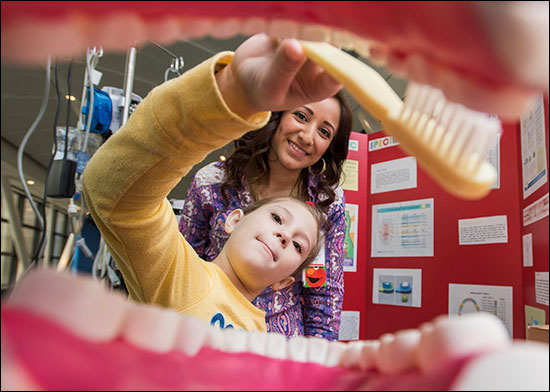
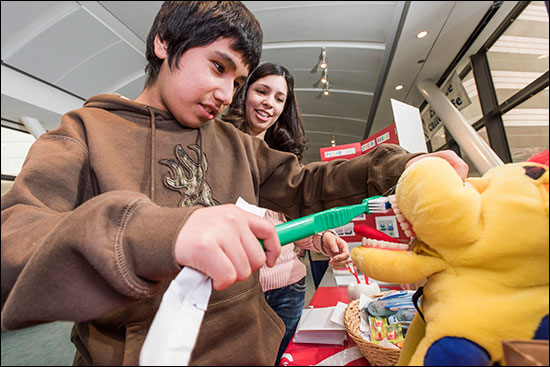
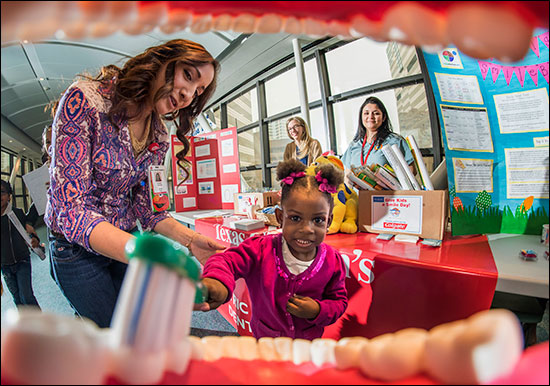
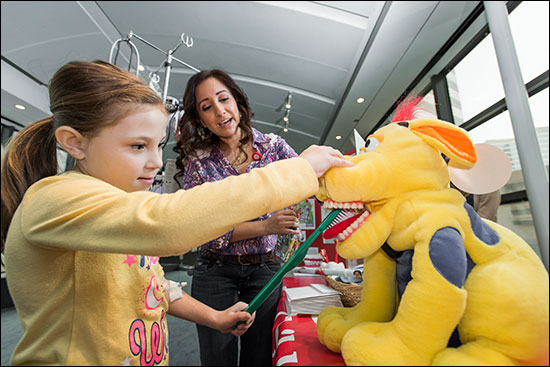
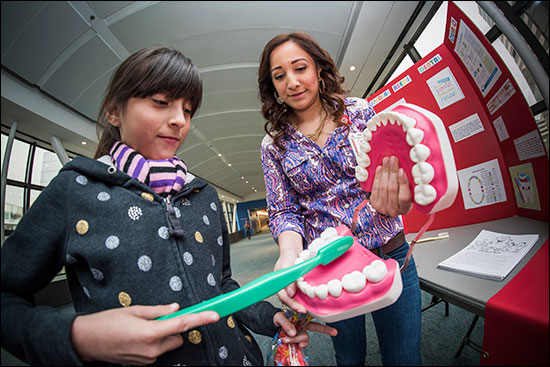
Tooth decay is one of the most common chronic childhood conditions in the United States, and if untreated, can cause pain and infections that may lead to problems with eating, speaking, playing and learning. The good news is tooth decay is preventable and that there are at least two opportunities this month at Texas Children’s Hospital where you can find out how to keep your child’s smile clean and healthy.

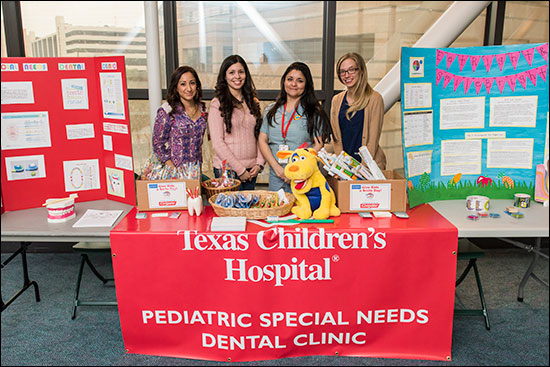
In honor of National Children’s Dental Health Month, representatives from Texas Children’s Hospital Dental Division hosted two events at Main Campus to educate children and their families about proper dental hygiene.

“We want children and their families to know that dental health and hygiene are important even if you are in the hospital focusing on other issues,” said Pediatric Dentist Esther Yang. “We want to take this opportunity to teach them about these things in a fun, light-hearted way.”

The Dental Division at Texas Children’s Hospital provides a full range of routine and complex dental procedures for pediatric patients. We provide dental treatment to children with special needs or complex medical diagnoses requiring coordination of care between our dental team and their subspecialist.

The Dental Surgery Division also provides dental procedures that are necessary to allow patients to continue their other health care needs or to ensure their annual dental needs are met.

Our dentists work in close concert with many of the surgical and medical divisions at Texas Children’s Hospital, including Texas Children’s Cancer Center and Texas Children’s Heart Center to provide the highest level of patient care. Dental patients may be treated as outpatients, inpatients or in the operating rooms.

32515RUDOLPHAWARDS640

Dr. Steve Abrams, Neonatology Fellowship Program Director, congratulates Dr. Sudeepta Basu, third-year fellow, the 20th annual Arnold J. Rudolph Memorial Grand Rounds award recipient. The award recognizes third-year fellows in neonatal-perinatal medicine for outstanding teaching, patient care, scientific inquiry and professional integrity.

32515DrJulieBoom175

State Rep. Donna Howard honored Dr. Julie Boom, director of Texas Children’s Immunization Project, before the State Legislature earlier this month for being named Centers for Disease Control and Prevention Childhood Immunization Champion for Texas.

This annual award, given by the CDC Foundation and the CDC, honors exemplary childhood immunization advocates across the 50 U.S. states, eight U.S. Territories and Freely Associated States, and the District of Columbia.

“This prestigious award recognizes individuals across the United States who have worked to protect the health and safety of children by ensuring that vaccination is a priority,” Howard said to her legislative colleagues. “After being nominated by her peers, Dr. Boom was chosen by health care professionals, community supports and other leaders for her contributions to pediatric health care in our state.”

When Boom was a medical resident, she treated a 3-year-old girl who died of meningitis. This experience inspired her to devote her career to promoting immunization through education, research, and the development of improved immunization technology and practices. Boom led the development of an automated software tool that forecasts what vaccines each child will need and when, according to the recommended schedule. To remind parents about the importance of vaccines, she helped create Vaccine-Preventable Disease: The Forgotten Story, a book featuring 20 families affected by vaccine-preventable illnesses.

To watch a video of Boom being honored on March 4 during the 84th Legislative Session, click here and go to time code 34:06.

March 17, 2015

31815measles640

Due to the increased number of measles cases in the United States, Texas Children’s Hospital has put appropriate plans in place to care for a patient with this highly contagious disease. The hospital also is making sure all employees are protected against this infection.

Employee Health and Wellness Director Jill Fragoso said nearly 98 percent of Texas Children’s employees have received the measles-mumps-rubella (MMR) vaccine or are immune by titer. She added that all employees can get a free MMR vaccine at the Employee Health Clinic.

“At Texas Children’s, we want to do everything possible to make sure our staff remains healthy and are immune to measles, and vaccination is the best way to do that,” Fragoso said. “Though much focus has been on measles cases in children, adults can pose an even greater risk of passing along the infection because of travel and the amount of people with whom we come in contact.”

Fragoso added that in addition to keeping ourselves safe, “we have a public health commitment to protect our coworkers, our families, our patients and our communities.”

If you aren’t sure whether you need the measles vaccine, medical personnel at the Employee Health Clinic can check your records or do a blood test to see if you carry antibodies to the infection. Please call Ext. 4-2150 to make an appointment today.

As for patient care, Dr. Judith Campbell, medical director of Infection Prevention and Control, said Texas Children’s Hospital is treating patients with suspected or confirmed measles like we would any other airborne transmitted infectious disease.

“Workflows are in place to identify and isolate suspected cases of the measles,” Campbell said. “There also are several mechanisms and venues in place to educate frontline employees about measles, an infection that was considered eradicated from the United States in 2000.”

In 2014, however, the United States saw a record-breaking number of confirmed cases of the infection, 644 from 27 states, including Texas where there has been one reported case since January, according to the Centers for Disease Control and Prevention.

In addition, measles is still common in many parts of the world, including some countries in Europe, Asia, the Pacific and Africa. Worldwide, an estimated 20 million people get measles and 146,000 people, mostly children, die from the disease each year.

“The CDC is urging health care professionals to consider measles when evaluating patients with febrile rash and to ask about a patient’s vaccine status, recent travel history, and contact with individuals who have febrile rash illness,” an agency flier about the infection says. “The government agency also is urging people to get vaccinated against the potentially deadly disease.”

Facts about the measles according to the CDC

What are the measles: Measles, also known as morbilli, rubeola, or red measles, is a highly contagious infection caused by the measles virus.

Can the measles be serious: Yes. About one in four people in the United States who get measles will be hospitalized; one out of every 1,000 people with measles will develop brain swelling, which could lead to brain damage; and one or two out of 1,000 people with measles will die, even with the best care.

How does the virus spread: Measles is an airborne disease that spreads easily through the coughs and sneezes of those infected. It may also be spread through contact with saliva or nasal secretions. Nine out of ten people who are not immune who share living space with an infected person will catch it. People are infectious to others from four days before to four days after the start of the rash. People usually only get the disease at most once.

What are its symptoms: The most common symptoms of measles are fever, runny nose, red eyes and rash. The rash is classically described as a generalized red maculopapular rash that begins several days after the fever starts. It starts on the head or back of the ears and, after a few hours, spreads to the head and neck before spreading to cover most of the body, often causing itching.

How is it prevented: The best protection against measles is measles-mumps-rubella (MMR) vaccine. MMR vaccine provides long-lasting protection against all strains of measles.

Vaccine Recommendations: The CDC recommends all children get two doses of MMR vaccine, starting with the first dose at 12 through 15 months of age, and the second dose at 4 through 6 years of age. Children can receive the second dose earlier as long as it is at least 28 days after the first dose.

Health care personnel should have documented evidence of immunity against measles. Health care personnel without evidence of immunity should get two doses of MMR vaccine, separated by at least 28 days. Adults who are not health care personnel and who do not have evidence of immunity against measles should get at least one dose of MMR vaccine.

31815retirement550

31815InfographicBenefitsinside640
Click on the graphic for a larger view.

Did you know that Texas Children’s is contributing to your retirement right now?

Unlike many other organizations, Texas Children’s offers employees both a fully funded Cash Balance Pension Plan and a 403 (b) plan with match dollars. The organization recently posted its 2014 deposit into the Cash Balance Pension Plan, which Texas Children’s pays the full cost of and you are automatically enrolled in on April 1 or October 1 once you reach 21 years old and have worked 1,000 hours or more during the 12 consecutive months after your initial date of hire.

To see how much your Cash Balance Pension Plan has grown, log in to Mercer’s website at www.ibenefitcenter.com. The website has useful tools that allow you to view your balance, estimate your future pension balance and verify/update your beneficiary information.

To learn more about the Cash Balance Pension Plan, click here to view the summary plan description or call the Texas Children’s Hospital Pension Plan Support Team at 800-752-8230 between 8 a.m. and 5 p.m. Monday through Friday.

In addition to the Cash Balance Pension Plan, Texas Children’s offers a 403 (b) plan. If you are not already enrolled in the plan, you should consider doing so. You don’t want to miss out on Texas Children’s 50 percent match of the first 6 percent of your pre-tax per paycheck contribution. You can enroll anytime by contacting Fidelity at 800-343-0860 or online at www.fidelity.com/atwork.

It is never too early to start saving for retirement. The Texas Children’s benefits team encourages you to take advantage of all the retirement benefits our organization offers.

“Investing in our people with competitive retirement and other benefits helps Texas Children’s attract, support and retain top talent like you,” said Jim Cuva, assistant director of Human Resources. “That’s why we are committed to your financial well-being.”