December 15, 2015

121615MainCampusUrgentCare640

On December 1, Texas Children’s opened an urgent care clinic on Main Campus, creating a system-wide solution to effectively manage the Emergency Center’s low acuity patient population.

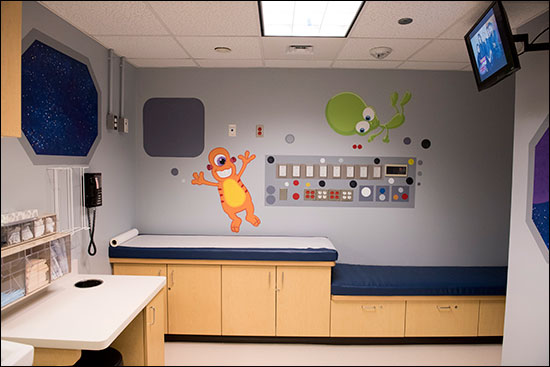
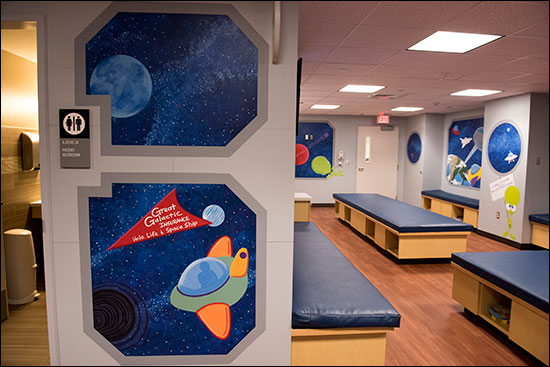
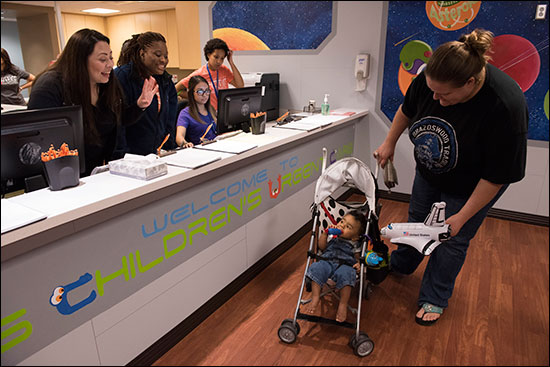
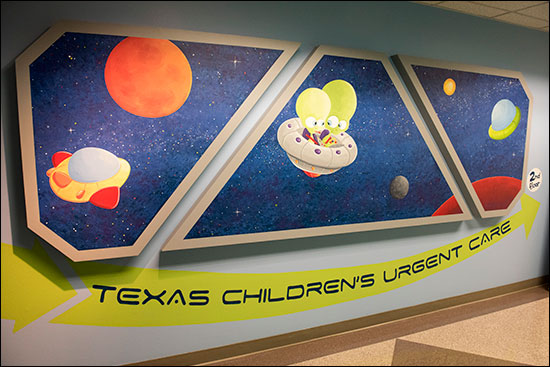
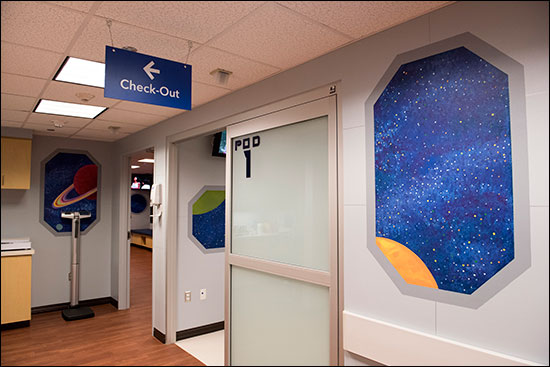
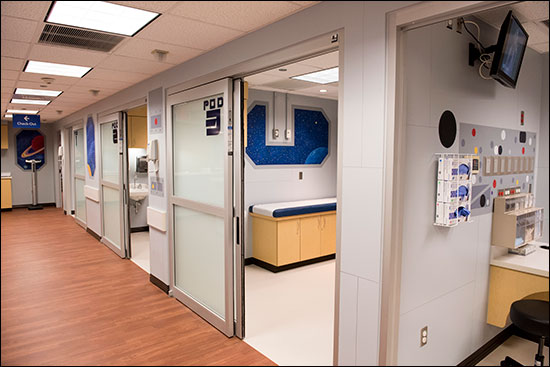
The 4,100-square-foot facility is located on the second floor of the Abercrombie Building and has a dedicated staff of physicians, advanced practice providers, nurses and clinical support staff, all of whom have previously worked in either emergency or urgent care settings. The walls of the clinic’s 11 exam rooms, X-ray room and waiting area are covered in space-themed murals, providing a relaxed, child-friendly atmosphere.

To be seen at the clinic, patients may self select urgent care, or may initially present to the EC, where they will be assessed and then, if appropriate, transferred to the urgent care clinic. If they are transferred, the patient and their family will be escorted to the urgent care clinic’s location.

“Having this option to send low acuity patients to our onsite Texas Children’s Urgent Care clinic permits our EC faculty and staff to devote all of our time, effort and resources to providing the highest quality care to the sickest patients without inconveniencing our lower acuity arrivals,” said EC Medical Director Dr. Paul Sirbaugh. “To put it simply, the clinic will allow us to provide the Right care, at the Right place, at the Right time, for the Right price.”

After just two weeks of being open, the clinic already is lightening the load of the EC, seeing, on average, about 30 patients, or 25 percent of the EC’s patient volume, a day. In addition, wait times for patients with a low-acuity illnesses has decreased dramatically.

“Some low-acuity patients would wait 10 plus hours in the EC before being seen,” said Jeremy Trainer, the manager of the new urgent care clinic. “Now, these patients can be seen at the clinic in an hour or less.”

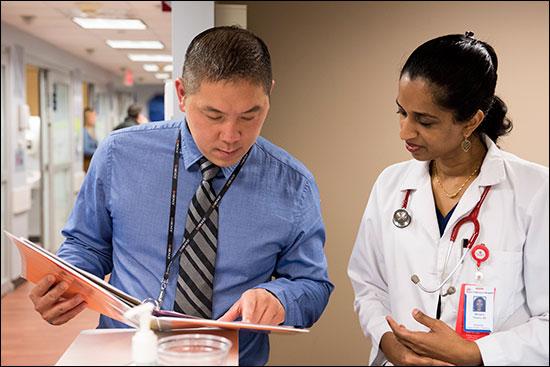
Karrianna Yu, a physician’s assistant who works in both the EC and the Main Campus Urgent Care Clinic, said the response from everyone – patients, their families and caregivers – has been overwhelmingly positive.

For the patients and their families, Yu said they are pleased because they are seen sooner, they get more time with their caregiver and they are treated quicker in a lower stress environment than the EC. For caregivers, it allows them to focus on what they really need to be doing, which is taking care of high-acuity patients in the EC and low-acuity ones in the urgent care clinic.

“It’s a win for all involved,” Yu said.

Hours of operation
Monday through Friday, 4:30 p.m. to 11 p.m.
Saturday through Sunday, noon to 8 p.m.

Types of conditions treated

  • Allergic reactions
  • (Mild) Asthma
  • Broken bones (Simple fractures)
  • Cough
  • Croup
  • Ear pain
  • Fever
  • Flu
  • Minor Lacerations
  • Minor burns
  • Pink eye
  • Rashes
  • Sinus infections
  • Skin infections
  • Sore throat
  • Sprains and strains
  • Urinary tract infections
  • Vomiting and diarrhea

What types of procedure can be performed?

  • Antibiotic injections
  • Breathing treatments
  • Fracture care and splinting
  • IV fluids
  • Lab services (on-site and send-out labs)
  • Laceration repair (stitches, staples and skin glue)
  • Urine catheterization
  • Wound care
  • X-rays on site

121615PoplackBookinside640

Dr. David Poplack, director of Texas Children’s Cancer and Hematology Centers, and numerous members of his medical staff helped write the recently published, 7th edition of the textbook, Principles and Practice in Pediatric Oncology, the leading textbook in the field.

This thoroughly updated edition contains 54 chapters, more than 1,300 pages, and is the most comprehensive resource on the biology and genetics of specific childhood cancers including recent advances in the diagnosis, multimodal treatment and long-term management of cancer in young patients.

“Since the first edition was published 26 years ago, the biology and treatment of pediatric cancers have become increasingly more complex, which has made it more challenging to produce a textbook of this magnitude,” Poplack said. “There was immense collaboration involved to bring this exciting project to fruition.”

Besides being used by all medical schools, pediatric oncologists and institutions pursuing pediatric oncology research around the world, this textbook also provides helpful information geared specifically to caregivers and families of children with cancer, which adds to the unique quality of the book.

“This resource guide also comes in an e-book format,” Poplack said. “We will have periodic updates on the major chapters that will be available electronically to subscribers.”

Click here for more information about this textbook.

121615achd640

Falon Wiesner-Jones was just a baby when she had her first visit to the Texas Children’s Heart Center diagnosed with a congenital heart disease that has been a fabric of her life ever since. Now 33, she’s still a patient at the heart center. Today, she sees specialists in the Adult Congenital Heart Disease Program, part of the transitional medicine program that allows pediatric patients to continue their care here at Texas Children’s Hospital into their adult years.

“I’ve been here from day one and I’ll continue my care here,” said Wiesner-Jones who now drives to Houston from Dallas to see her doctors. “The doctors are well-versed in my history and it makes it easier to come to one place and receive all of the care I need.”

Wiesner is part of a growing population of adults with congenital heart disease. The Centers for Disease Control and Prevention (CDC) estimates that about 40,000 babies are born each year with a congenital heart disease. It is the most common birth defect.

“The data shows that people who were born in the 1940s and 50s, before the era of advanced surgical and interventional repairs had only about a 15 percent chance of survival past their first birthday,” said Dr. Wayne Franklin, director of the Adult Congenital Heart Disease Program at Texas Children’s Hospital. “In the modern area, we’ve reversed that and now 85 to 90 percent survive into adulthood so there is a real need for the right care for these adults who have had heart disease throughout their lives.”

That care now includes women’s care for Wiesner who just delivered her second child at Texas Children’s Pavilion for Women. When she told her physician, Dr. Wayne Franklin, director of the Adult Congenital Heart Disease Program at Texas Children’s Heart Center, she was pregnant again, he was thrilled to know her care coordination would take place in the ob-cardiac clinic at The Pavilion where both her cardiology doctors and her obstetrician meet in one place to see her during her monthly appointments.

“Women’s health and cardiology were an underserved area in medicine,” said Franklin. “With the Pavilion, we’re able to offer that to her and all of our other patients. We offer multidisciplinary care that is most crucial to these patients during pregnancy.”

Because the heart has to work harder during pregnancy, patients with heart disease are watched closely by an interdisciplinary team, meeting often in the ob-cardiac clinic for appointments.

“It’s reassuring to know all the resources we need are in one spot, all here to help me deliver safely,” Wiesner-Jones said.

Texas Children’s Hospital offers several programs for adults outside of women’s care including heart disease programs, cystic fibrosis programs as well as a program for survivors of pediatric cancer.

“Texas Children’s is now in the arena of adult medicine,” Franklin said.

December 8, 2015

Each year beginning in the fall for several months, young hopeful physicians in suits will be seen escorted around the hospital on tours. These medical students are part of the nearly 1,500 applicants who have applied for the largest pediatric residency program in the United States, right here at Texas Children’s Hospital and Baylor College of Medicine. The residency hopefuls are competing for just 34 spots within the Department of Pediatrics.

“Our program used to mainly attract students regionally, but that has really changed over the last several years,” said Chief Resident Kim Lehecka who spends a good part of her time each week with these soon to be first-year residents. “We are interviewing medical students from all over the country and around the world.”

The majority of these students are hoping for a spot in the categorical pediatric residency program which includes three years here at Texas Children’s, with rotations at Ben Taub and the Harris Health System sites. An additional 289 applicants have applied for the five spots in the pediatric global health program that adds an extra year to their training, which is spent at one of Texas Children’s’ global sites. Those with an interest in becoming physician-scientists are vying for the three spots which will be chosen from 132 applicants this year. Several other specialized programs are offered including the neuro developmental and disabilities residency, pediatrics-genetics combined residency, internal medicine in pediatrics program as well as other combined programs.

“As a chief resident, I get the privilege of being a part of these future residents’ first introduction to the hospital,” Lehecka said. “I love our residents and I love our program. I want to give back to the program because I have benefitted so much from it myself.”

Lehecka is part of a team of four women who currently serve as chief residents. These top-tier residents are hand-picked by Dr. Mark W. Kline and Dr. Mark Ward and spend an extra year as leaders of the residency program. They stand out amongst their peers and among their duties is to be a part of the decision-making process in picking the new batch of residents.

“I want these residents to know even though we’re the biggest program in the country, it’s always been a family here,” Lehecka said. “The faculty members want to mentor and be involved in your education and career development so you always feel supported.”

As part of the Texas Children’s family, these residents learn to embody the culture of the program that’s given them their first real taste of medicine.

“Residency is like being in the trenches together. You go through hardships, tough times and stressful situations, but you’re always learning and growing and that forges strong friendships,” Lehecka said.

The sound of strumming ukuleles in unison can be heard every Thursday at noon outside of the Kids’ Zone Radio studios. That’s when a group of Texas Children’s employees come together to learn to play the ukulele. The group consists of men and women from various departments who have kindled a friendship over their new musical talents.

“When we started, it was really for the child life department for team building and self care, but people enjoyed coming and it grew,” said Music Therapist Amy Smith. “People who were in the group started inviting other people in the hospital who might want a break in their day, who might want to do some self care while here at work, to learn a new skill and meet new people.”

The group has now grown to 20 employees and continues to see more interest as word gets out about this sort of music therapy for employees. There is a lot of research to support the positive effects group music making can have on individuals. For Nurse Coordinator Amelia Sherinski, it’s a place to get away from the emotional task of working in hematology/oncology patients.

“There is a lot of emotional stress associated with my job,” Sherinski said. “It’s nice to take that mental break, come do something I’m really bad at, but have a good time doing it.”

The members of this team are by no means professional ukulele players. Most had never picked up the instrument before joining this group, but in preparation for Garth Brooks’ visit to dedicate the new Child Life Zone, the group prepared their own rendition of “Deep in the Heart of Texas.”

“Our tag line now is that the ukulele choir at Texas Children’s got to open for Garth Brooks,” Smith said. “That was a neat opportunity where they asked us to write a song and we decided to remake this famous song to instead say ‘deep in the heart of Texas Children’s’.”

But the choir isn’t just practicing for the next big celebrity to join, last year they did caroling on patient floors and they are even available to attend your next Texas Children’s event.

“It was so neat to give back to the children here at Texas Children’s in a different way than most of us are used to,” said child life specialist Laura Linville.

To join the Texas Children’s Ukulele Choir or request their talents for your next Texas Children’s event, contact Amy Smith.

12915leapfrog640

Texas Children’s Hospital West Campus has been recognized as a Top Children’s Hospital by the Leapfrog Group for the third consecutive year. The Leapfrog Group is an organization that provides the only national, public comparison of hospitals across safety, quality and efficiency dimensions. Texas Children’s Hospital West Campus is honored among an elite group of only 12 children’s hospitals and is the only children’s hospital in Houston to be recognized with this prestigious distinction.

“It is an honor to again be recognized as a top performing children’s hospital,” said Chanda Cashen Chacón, president of Texas Children’s Hospital West Campus. “Our physicians, nurses and employees constantly strive to provide high quality care for our patients while keeping their safety our top priority.”

This year’s list includes 12 Top Children’s Hospitals, 62 Top Urban Hospitals and 24 Top Rural Hospitals. The selection is based on the results of The Leapfrog Group’s annual hospital survey, which measures hospitals’ performance on patient safety and quality, focusing on three critical areas of hospital care: how patients fare, resource use and management structures established to prevent errors. Performance across many areas of hospital care is considered in establishing the qualifications for the award, including survival rates for high-risk procedures and a hospital’s ability to prevent medication errors.

The Leapfrog Group was founded to work for improvements in health care safety, quality and affordability. The annual survey is the only voluntary effort of its kind. The Top Hospitals will be honored at Leapfrog’s Annual Meeting on December 2 in Washington D.C., which gathers key decision-makers from Leapfrog’s network of purchaser members, industry partners, health care stakeholders and national collaborators. For more information, or to see a complete list of The Leapfrog Group’s 2015 Top Hospitals, visit www.leapfronggroup.org/news.

12915nocrib640

A nice cozy crib is something you might think every child has in his or her bedroom at home, but unfortunately that’s not the case. Caregivers often encounter patients whose parents cannot afford more than their own beds, forcing families to sleep together, which is not always safe.

Our Spiritual Care Department is trying to minimize these situations and is seeking donations of the following items for our patient families in need of safe-sleeping accommodations:

“Your support is greatly needed to provide assistance to mothers and families who might be sharing a bed with an infant, putting the child at risk of a co-sleeping injury or even death,” said Chaplain James Denham. “Our goal is to provide a better, safer sleeping environment for everyone.”

Texas Children’s Hospital will distribute sets (consisting of one crib, one blanket, educational materials from the Center for Childhood Injury Prevention and a note from the donating organization) to families in need.

For more information or to arrange the drop off and/or pick up of donations, please contact the Spiritual Care Department at Ext. 4-7223.