February 9, 2016

21016NRIrecognitioninside640

Wangler, Yamamoto awarded SFARI grant for autism spectrum disorder study

Drs. Michael Wangler and Shinya Yamamoto recently obtained a research grant from the Simon’s Foundation for Autism Research Initiative (SFARI) to advance their study on autism spectrum disorders.

Their study titled, “In vivo functional analysis of autism candidate genes” is one of five projects selected for research funding by the SFARI.

Autism spectrum disorders (ASDs) are highly heritable but have a complex genetic architecture. Whole-genome sequencing has been used to identify many potential genetic mutations that may be responsible for ASD. However, interpreting the disease relevance of these enormous numbers of individual variants has been difficult because many of them are poorly characterized.

In their study, Wangler and Yamamoto will use a fruit fly model system to study a subset of 300 autism candidate genes to determine their role in disease causation and progression. They predict that using this powerful genetic system will provide much-needed information on the biological mechanisms underlying ASDs.

Besides being on the NRI faculty, Wangler and Yamamoto are assistant professors in the department of Molecular and Human Genetics at Baylor.

Ballabio to receive the 2016 Louis-Jeantet Prize

Dr. Andrea Ballabio, founder and director of the Telethon Institute of Genetics and Medicine (TIGEM), Italy, professor at Baylor and faculty member at the NRI, has been selected to receive the 2016 Louis-Jeantet Prize for Medicine. He will share this award with biochemist John Diffley, associate research director at the Francis Crick Institute, United Kingdom.

The Louis-Jeantet Prize for medicine is awarded each year by the Louis-Jeantet Foundation to experienced researchers who have distinguished themselves in the field of biomedical research in Europe. The prize is intended to encourage the continuation of innovative research projects of major importance to fundamental or clinical medicine.

Ballabio was recognized for his contributions in advancing the understanding of molecular mechanisms controlling the function of lysosomes in health and disease.

Lysosomes are organelles responsible for the degradation of cellular waste. A growing number of diseases are associated to lysosomal dysfunction such as neurodegenerative diseases, cancer, obesity and infections. Ballabio’s group identified a master gene that globally controls lysosomal function and promotes intracellular clearance of accumulating pathological materials. These observations revealed a new biological pathway and provided a tool to modulate lysosomal function to treat human diseases.

Ballabio will receive the award during a special ceremony in Geneva, Switzerland on Wednesday, April 20.

21016Anvari175The Clinical Research Center will present the Clinical Research Award for First Quarter 2016 to Dr. Sara Anvari, physician, Allergy and Immunology. Dr. Anvari is a dedicated clinical scientist for the food allergy research trials at Texas Children’s Hospital.

The award was established by the Clinical Research Center in collaboration with the Research Resources Office to recognize and honor individual contributions to protecting the best interest of the research subjects and compliance with applicable rules and regulations.

Dr. Anvari’s research activities in the CRC focus on understanding the underlying immunopathogenesis of food allergies and the mechanisms that lead to the development of oral tolerance in food allergic patients undergoing immunotherapy.

Through the support of the Texas Children’s Food Allergy Program, Texas Children’s Center for Human Immunobiology and the Clinical Research Center, Dr. Anvari has been able to pursue her research goals and currently oversees the clinical research trials that will provide her with the groundwork for the development of innovative diagnostic and therapeutic options for patients with food allergies.

21016Cooperflu640Super heroes come in many shapes and sizes, and Texas Children’s Health Plan encouraged students to channel their inner super hero by protecting themselves and their families against the flu. Schools from eight school districts in Houston, Beaumont and the surrounding areas were invited to participate in a month-long super hero themed flu vaccination contest. The school in each district with the most students receiving the flu vaccination won a pizza party that included pizza and drinks. A portion of the drinks were provided by Kroger.

“With more than 2 million Texans admitted to the hospital last year because of flu, it is very important we do something to protect children and their families,” stated Dr. Heidi Schwarzwald, Chief Medical Officer, Pediatrics, Texas Children’s Health Plan. “Texas Children’s Health Plan wanted to empower children to be an active part in their health and wellness in a fun way. We are very excited that so many schools and students participated in the contest.”

During the month-long contest (October 15 through November 15), more than 2,000 students from 93 schools in eight school districts were immunized against the flu. The winning schools were:

  • Johnson Elementary – Aldine ISD
  • Fletcher Elementary – Beaumont ISD
  • McFee Elementary – Cy-Fair ISD
  • Dick Dowling – Port Arthur ISD
  • Taylor Ray Elementary – Lamar CISD
  • Hopper Elementary – Goose Creek ISD
  • Jessup Elementary – Pasadena ISD
  • Rhoads Elementary – Katy ISD
  • Cooper Elementary – Spring ISD

Texas Children’s Health Plan began their cold and flu initiative in the fall of 2015 to help educate parents about flu and cold. In addition to the school contest, Texas Children’s Health Plan also launched www.coldandfluhero.org and created Cold and Flu Defender kits to distribute to their members. The kits included tissues, nasal saline, hand sanitizer, bulb syringe and information on how to prevent cold and flu symptoms.

21016CaughtYouCaring640

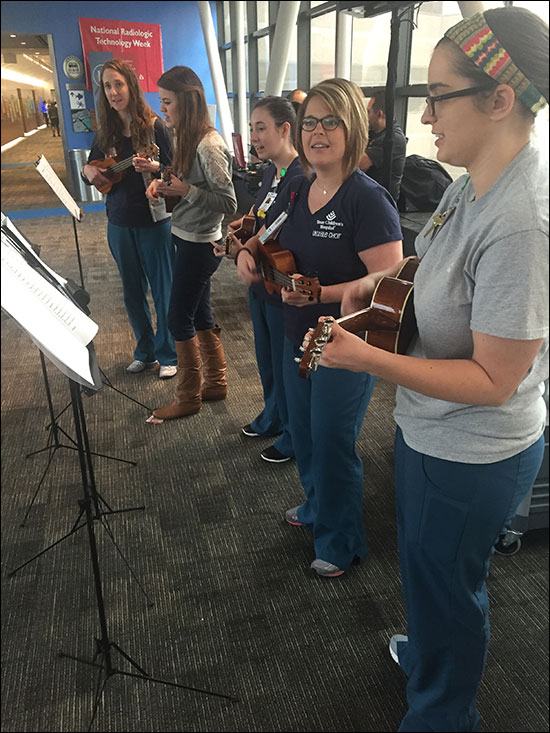
The Patient Experience team kicked off the system-wide launch of the Caught You Caring program with Frozen-themed events at Main Campus and West Campus. View the photo gallery of the events and be sure to recognize your colleagues who are caught caring.

February 8, 2016


bench-and-beside-Header1

Bench and Bedside is a digest of the previous month’s stories about the clinical and academic activities of our physicians and scientists. We welcome your submissions and feedback.

January 5

Zoghbi to receive Vanderbilt prize in Biomedical Science

2116zoghbilab300Dr. Huda Zoghbi, professor of molecular and human genetics at Baylor College of Medicine, and director of the Jan and Dan Duncan Neurological Research Institute at Texas Children’s, will be honored with the 2015 Vanderbilt Prize in Biomedical Science. This award is given by the Vanderbilt University School of Medicine to recognize women scientists with a stellar record of research accomplishment who have also mentored other women in science. More

January 5

Second location of The Center for Children and Women celebrates milestone

2116TheCenterAnniv300Texas Children’s Health Plan recently celebrated the first anniversary of The Center for Children and Women in Southwest Houston. During the past 12 months, the Center has provided care to more than 5,800 patients, including 356 births, demonstrating The Center’s remarkable footprint in the community. More


January 12

Dr. Sanjeev Vasudevan selected for Baylor Young Alumni Award

Dr. Sanjeev Vasudevan will receive the 2016 Young Alumnus Award from the Baylor College of Medicine Alumni Association. Vasudevan is a pediatric surgeon and researcher specializing in pediatric cancers such as neuroblastoma, liver cancer, renal tumors and sarcomas. More

January 12

Harpavat receives ASSLD award for study on newborn screening tool to detect biliary atresia earlier

Dr. Sanjiv Harpavat, a pediatric gastroenterologist at Texas Children’s and Baylor College of Medicine, received the 2015 Jan Albrecht Clinical and Translational Research Award in Liver Diseases from the American Association for the Study of Liver Diseases (AASLD) Foundation. His study titled, “Assessment of a Novel Newborn Screening Tool for Biliary Atresia,” explores a new strategy to detect infants with biliary atresia earlier. More

January 12

Pediatric Surgeon Dr. Sundeep Keswani awarded visiting professorship

Dr. Sundeep Keswani, pediatric surgeon, was chosen by the Association for Academic Surgery to receive the 2016 International Visiting Professorship Award to attend the Columbia Surgical Association Congress in Bogota, Colombia, in August 2016. Keswani is the principal investigator for the Texas Children’s Laboratory for Regenerative Tissue Repair. More

January 12

Family Fertility Center advances innovative research to improve IVF process

2116FFC300From exploring the metabolic factors impacting egg quality to the genetics of embryo implantation, Family Fertility Center researchers at Texas Children’s Pavilion for Women are engaged in several fascinating studies to help infertile couples achieve successful pregnancy outcomes. Read about the various studies in progress. More


January 19

Three Texas Children’s Cancer Center researchers receive prestigious ASH awards

The American Society of Hematology (ASH) recognized three researchers from Texas Children’s Cancer Center and Baylor College of Medicine for their work in advancing our understanding of disease pathogenesis and exploring novel innovative approaches for the treatment of pediatric cancers. More

January 19

Texas Children’s uses advanced orthopedic imaging, less radiation exposure

2116EOS300Texas Children’s is the first pediatric hospital in the southwest to offer advanced orthopedic imaging that provides full body, 3-D views of a patient’s bone structure using less radiation. Because of the low radiation dose, EOS imaging is beneficial for orthopedic patients with scoliosis and other spinal deformities who require frequent imaging to monitor disease progression. More


January 26

Texas Children’s Hospital welcomes expert pediatric hand surgeon

Texas Children’s Hospital is excited to welcome Dr. William Pederson, a highly-regarded pediatric hand surgeon, to the Department of Surgery. Pederson, whose appointment was effective in January, also is a professor of surgery and pediatrics at Baylor College of Medicine. More

January 26

Texas Children’s Heart Center welcomes trio of cardiologists

Texas Children’s Heart Center has welcomed three new pediatric cardiologists to the team. Drs. Tobias Schlingmann, Betul Yilmaz and Justin Zachariah joined Texas Children’s in July. More

February 2, 2016

2316SaltySix640

Celebrate Go Red for Women by wearing red this Friday, February 5 to raise awareness for heart disease. Texas Children’s badge holders who wear red on this day will receive a free heart healthy sweet* during lunchtime at the following Texas Children’s dining locations:

  • Pavilion for Women Fresh Bistro
  • Clinical Care Center Food Court
  • West Campus Luby’s DOTS Kitchen

For heart health education, blood pressure checks, and to meet the new Employee Medical Clinic providers, please stop by the Employee Health and Wellness Go Red for Women booth from 11 a.m. to 1 p.m. on Friday, February 5 at the Pavilion for Women Fresh Bistro. In addition to these offerings, the Employee Medical Clinic offers a Healthy Heart Program free of charge for employees. The Healthy Heart program features three individual sessions with a Registered Dietitian who will work with you to improve your blood pressure or cholesterol through healthy lifestyle modifications including nutrition, meal planning, physical activity, blood pressure monitoring, and stress management. The Employee Medical Clinic supports your personal health needs and offers convenient access to exceptional primary and acute care services on Main Campus. The clinic delivers many additional services including health coaching, physical therapy, nutrition consultations, and diabetes education.

For more information about the Healthy Heart Program or to make an appointment, please call Ext. 4-2150, option 2. Click on the image above to learn more about six popular food items that can add high levels of sodium to your diet. Share how you Go Red this Friday by using the hashtag #TexasChildrensGoRed.

*Free heart healthy sweet with purchase and while supplies last to Texas Children’s badge holders wearing, or accessorized, in red.

2316zikamosquito640In light of the multiple confirmed cases of recent travelers who returned to the Houston area after contracting Zika in Central America, Texas Children’s leaders encourage employees and staff to arm themselves with facts about Zika virus.

The virus, which has spread rapidly through Central and South America in the last year, is transmitted between humans primarily through mosquito bites. People may not realize they’ve been infected with Zika virus because the majority of people will develop an asymptomatic or mild flu-like infection.

The Zika virus has heightened concern among pregnant women since the virus may increase the risk of microcephaly, a rare neurological birth defect in which babies are born with abnormally small heads.

While there is no vaccine to protect against Zika infection, Dr. Kristy Murray encourages employees, particularly pregnant women, to refrain from travelling to areas where the outbreak is growing. The only way to prevent infection is to avoid getting mosquito bites.

“The only risk factor right now is foreign travel to areas where the virus is epidemic,” said Murray, director of the Laboratory for Viral and Zoonotic Diseases at Texas Children’s. “Currently, we do not have mosquitos locally that can transmit the virus, though we are concerned that an infected traveler could expose our mosquitos, setting up an opportunity for local transmission to begin. For about a week, an infected person has enough virus circulating in his or her blood to infect mosquitos.”

Texas Children’s OB/GYN-in-Chief Dr. Michael Belfort recently convened a task force of physicians and researchers at Texas Children’s and Baylor College of Medicine to develop management and research strategies based on important screening criteria outlined by the Centers for Disease Control (CDC) for pregnant women who may have been exposed to the Zika virus.

Belfort stresses that “women who have traveled to an affected area just before or during their pregnancy should contact their OB-GYN.” As stated in the developed task force guidelines, if pregnant women return from an endemic area and within two weeks develop symptoms, they will be referred to a knowledgeable provider or maternal fetal medicine specialist to test for evidence of Zika virus exposure. Additionally, pregnant women who return from an endemic area, regardless of symptoms, will be referred for ultrasound screening for fetal microcephaly. If fetal microcephaly is detected, an amniocentesis for Zika virus exposure will be offered.

“Our expert group also has recommended testing for chromosomal disorders at the time of amniocentesis for fetal microcephaly,” said Dr. Kjersti Aagaard, vice chair for Research in the Department of Obstetrics and Gynecology at Texas Children’s and Baylor, and a member of the task force. “Since the same mosquito carries Dengue, Chikungunya and Zika, we are advocating for testing of all three viruses once laboratory options become available.”

Below are FAQs about the Zika virus from the CDC and the developed guidelines:

What are the symptoms of Zika?
The most common symptoms of Zika virus disease are fever, rash, joint pain or conjunctivitis (red eyes). Symptoms typically begin two to seven days after being bitten by an infected mosquito.

How is Zika transmitted?
Zika is primarily transmitted through the bite of infected Aedes mosquitos. It can also be transmitted from a pregnant mother to her baby during pregnancy or around the time of birth. We do not know how often Zika is transmitted from mother to baby during pregnancy or around the time of birth, when women are at highest risk, or how the transmission occurs.

Who is at risk of being infected?
Anyone who is living in or traveling to an area where Zika virus is found is at risk for infection, including pregnant women.

What countries have Zika?
Specific areas where Zika virus transmission is ongoing are often difficult to determine and are likely to change over time. Click here for the most updated information.

For more information about the Zika virus and ways you can protect yourself, click here.