April 12, 2016

41316drshilt175Texas Children’s Hospital The Woodlands is pleased to announce the addition of Dr. Jeffrey Shilt as chief surgical officer. Shilt is also a member of the Division of Orthopedics.

“Dr. Shilt brings an exciting combination of academic, surgical and community practice experience which will be a tremendous asset to us as we open our hospital in The Woodlands,” said Texas Children’s Hospital Surgeon-In-Chief Dr. Charles D. Fraser Jr. “I am excited to welcome him to the team and I look forward to the outstanding pediatric surgical leadership he will bring to The Woodlands community.”

Shilt comes to Texas Children’s from St. Luke’s Children’s Hospital in Boise, Idaho, where he was an active pediatric orthopedic surgeon and director of the hospital’s Spasticity Clinic and motion analysis lab for children and adults. Prior to his time in Idaho, Shilt held positions as associate professor and residency program director at Wake Forest University Baptist Medical Center in Winston-Salem. When Wake Forest established Brenner Children’s Hospital, Shilt served as the director of pediatric orthopedics where he assisted in the further development of pediatric specialty care. His research interests include management of spasticity in cerebral palsy, sports performance and the treatment of endurance sports injuries.

As a recognized leader in both academics and clinical practices, Shilt brings a breadth of experience to the Texas Children’s team. While he served as the program director of the Wake Forest University orthopedic surgery residency he participated in pioneering work in the treatment of children with spastic cerebral palsy, as well as sports medicine applications of tissue engineering. He has presented numerous lectures, both nationally and internationally, and serves on various committees and advisory boards. Additionally, he has served as the team physician for the USA triathlon team at the two world championships, two years as a team physician for a professional cycling team, and as a medical consultant for multiple World Champion athletes, Olympians & gold medalists, and multiple professional ironman and other endurance athletes.

A Missouri native, Shilt obtained his medical and undergraduate degrees at the University of Missouri – Kansas City six-year combined BA-Medical Degree program directly out of high school. He then completed his general surgery internship and orthopedic surgery residency at the Ochsner Clinic in New Orleans, as well as a year of basic science research at the Pediatric Research Institute at Cardinal Glennon Children’s Hospital in St. Louis. This was followed by a pediatric orthopedic fellowship at Vanderbilt University in Nashville. After completing his clinical training, Shilt took part in the personalized leadership development program at Wake Forest University Babcock Graduate School of Management’s Institute for Executive Education in Winston-Salem.

Slated to open in 2017 under the leadership of President Michelle Riley-Brown, Chief Medical Officer Dr. Charles Hankins and Shilt, the 560,000-square-foot, state-of-the-art facility is being designed specifically to serve children and families. Texas Children’s Hospital The Woodlands will offer inpatient and outpatient specialty pediatric care in areas including: cancer, cardiology, neurology, orthopedics, diabetes and endocrinology, urology, sports medicine, gastroenterology and nutrition, pediatric surgery, plastic surgery, otolaryngology, allergy and immunology, dermatology, adolescent medicine and physical rehabilitation.

The facility will open with 25 emergency center rooms, 72 outpatient rooms, 12 radiology rooms, four operating rooms, 28 critical care beds and 32 acute care beds with plans to add up to 200 additional beds in the future to meet community needs. In addition to serving families throughout The Woodlands, Texas Children’s anticipates serving families in counties throughout Greater North Houston including Montgomery, Walker, Grimes, Liberty, Harris, Polk, San Jacinto and Hardin counties and beyond.

41316WCAmbulatoryOpenHouse640Practice administrators and all Health Center community leaders recently attended an open house at Texas Children’s Hospital West Campus to focus on ways to embed “systemness” into our leadership structure.

In order for Texas Children’s to successfully expand across the Houston metropolitan area, it is critical that all leaders partner across the system to enhance the patient experience. These core ideas tie with the efforts around creating practice councils, which are ensuring patient care across the system is consistent at each location.

The day included a teambuilding activity, updates from West and The Woodlands, formal rounding expectations and a tour of West Campus.

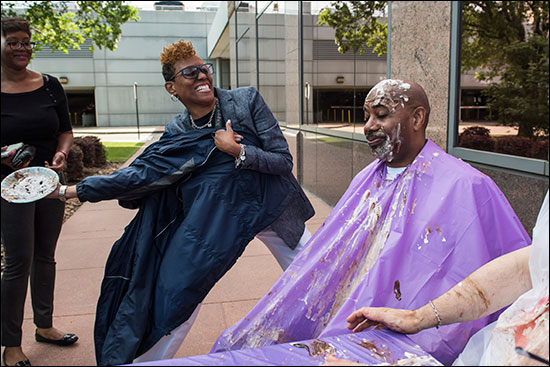
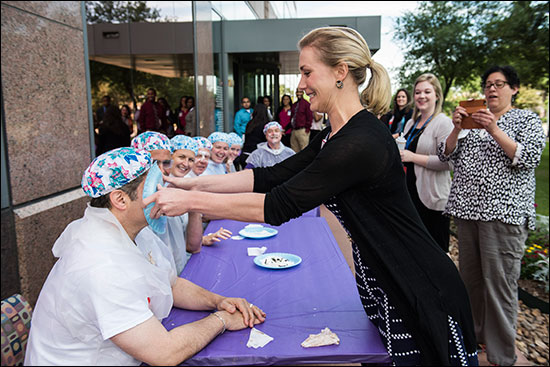
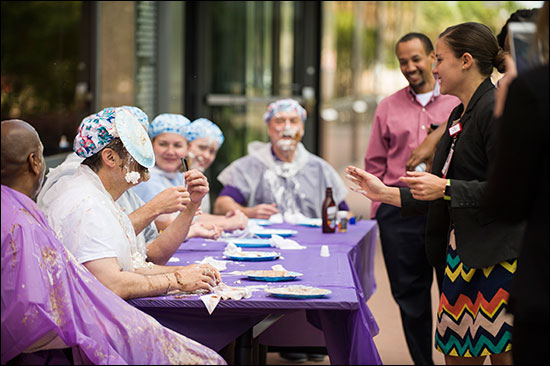
41316pieMOD640Last Thursday, the Facilities Planning and Development team hosted a “Pie your Leader Day” outside the Meyer Building to raise money for the March of Dimes. For $4 a pie, employees smooshed pies of whipped cream on their leaders’ faces to support a worthy cause – helping to improve the health of babies.

March for Babies Walk

You can show your support by participating in the 2016 March for Babies walk on Sunday, April 24, at 9 a.m. at the University of Houston. Whether you join a Texas Children’s team or start your own team, the five-mile walk promises to be a fun day out with people who share our passion for improving the health of babies.

Last year, Texas Children’s March for Babies team was no. 9 among corporate teams for the walk, collectively raising more than $64,000. This year, as a Signature sponsor, Texas Children’s goal is to raise $120,000 that will support the March of Dimes.

“If each hospital department/unit raises an average of about $1,500, with 35 participating teams, we will reach our goal,” said Judy Swanson, vice president of Texas Children’s Newborn Center. “Texas Children’s is off to a great start with a $75,000 contribution from the system to date.”

At the March for Babies walk, there will be family teams, company teams and people walking with friends. To donate or sign up for a Texas Children’s team, type TCH in the team search bar and select your team.

If you want to build your own team, please identify a spirited organizer in your department to be a team captain for Texas Children’s. Once identified, please send their contact information to Sharla Weindorff. Contact Sharla at Ext. 4-2011 if you have further questions.

To learn more about March for Babies, click here.

April 8, 2016

4716Malawi550

The United States Agency for International Development (USAID) has awarded a $69.8 million grant to the Baylor College of Medicine Children’s Foundation–Malawi (Baylor–Malawi), an affiliate of the Baylor College of Medicine International Pediatrics AIDS Initiative at Texas Children’s Hospital, to support and expand HIV/AIDS programs in Southern Africa. The grant, through the USAID Regional HIV-AIDS Program, will fund a dynamic and innovative project called Technical Support to PEPFAR Programs in the Southern Africa Region, or TSP. Designed by the Baylor-Malawi team, TSP is a collaborative program that includes ICAP at Columbia University and Baylor College of Medicine Children’s Foundations in Botswana, Swaziland, Lesotho and Angola.

“While Southern Africa remains the epicenter of the HIV/AIDS epidemic, recent progress toward global elimination goals provides an impetus for coordinated, regional efforts,” said Dr. Saeed Ahmed, assistant professor of pediatrics with BIPAI who will lead TSP. “The program will address challenges related to HIV care and treatment, including pediatric and adolescent care, HIV prevention from mother to child and the unique gender aspects of the epidemic, providing a common regional platform for dissemination and rapid adoption of best practices.”

In support of the primary goal to reduce the impact of HIV/AIDS in Southern Africa, TSP objectives are to:
Improve clinical and other technical outcomes of partner programs in the region by providing mission programs with technical support and short- and medium-term program assistance and capacity building toward sustainability;

Improve and rapidly expand pediatric and adolescent treatment services in the region by providing technical assistance in the short and medium term and longterm program support;

Implement PEPFAR programs directly, in close cooperation with USAID.

The TSP will provide a wealth of technical expertise, Ahmed said, including human resource capacity, physical infrastructure, existing networking and program implementation experience, bringing together formally the unique and complementary strengths of the Baylor network and ICAP at Columbia University. The Baylor foundations are the leading providers of pediatric and adolescent HIV care and treatment in their respective countries with Centers of Excellence anchoring broad networks of satellite clinics. ICAP, the second-largest PEPFAR implementing program, offers incredible geographic scope and technical, programmatic and monitoring and evaluation expertise. Combined, the Baylor network and ICAP have managed more than $1 billion in funding over the past 5 years, and are implementing more than 50 U.S. Government supported initiatives.

To provide assistance to regional HIV/AIDS programs, Baylor-Malawi and its partners have organized a ‘Dream Team’ of experts who will provide the technical advising backbone of the program. Through its implementing partners, the Dream Team will have access to an extensive network of more than 1,500 people, including doctors, nurses, social workers, counselors, community health workers and volunteers, and pharmacists to provideHIV/AIDS program assistance and implementation.

“The high-quality assistance and program implementation provided by this project will strengthen the efforts in the region to achieve the UNAIDS 90-90-90 benchmarks, which call for 90 percent of HIV-infected individuals to know their status; 90 percent of patients who know their status to be started on and adherent to anti-retroviral therapy; and 90 percent of patients on ART to be viral suppressed by 2020” said Dr. Mark Kline, physician-in-chief, Texas Children’s Hospital and chairman of the department of pediatrics, Baylor College of Medicine.

Women and children are a special focus on the TSP program. It aims to achieve elimination of mother-to-child transmission, doubling of the number of children on anti-retroviral therapy and, through the DREAMS Initiative, assisting partners in developing interventions to address gender-based violence and reduce new HIV infections in adolescent girls and young women. DREAMS, or Determined, Resilient, AIDS-free, Mentored and Safe Women, is a PEPFAR program to reduce HIV infections among girls and young women in sub-Saharan Africa.

“This award is a true testament to the BIPAI Network’s ability and capacity as a global leader in pediatric HIV/AIDS and tuberculosis. Baylor–Malawi continues to excel in innovative program development,” said Michael Mizwa, chairman, Baylor–Malawi Board of Directors, chief operating office/senior vice president of BIPAI and director of global health at Texas Children’s Hospital.

“With the resources from this award, I am pleased that Baylor Malawi will lead a consortium that leverages the extensive expertise that is in the BIPAI network with its partners ICAP and regional ministries of health to accelerate the region’s advances to the 90-90-90 targets,” said Dr. Peter Kazembe, executive director of Baylor College of Medicine Children’s Foundation–Malawi.

April 5, 2016

Before learning about pediatric otolaryngologist Dr. Deepak Mehta on Facebook, Christina Harper was about to give up hope that her 2-year-old daughter, Harlow, would ever live a life without a tracheostomy tube.

Shortly after being born in California, surgeons discovered Harlow had bilateral vocal cord paralysis, which caused her vocal cords to stay closed, preventing her from breathing. The only solution at the time was to put a tracheostomy tube into Harlow’s tiny neck.

Although necessary, living with a tracheostomy tube wasn’t easy. It made it hard for Harlow to eat, to talk and it posed a risk of infection. All of the above is why Harper wanted to see if there was something doctors could do to mitigate Harlow’s condition and remove the tracheostomy tube.

To her dismay, no one she saw in California had any answers. So, she turned to Facebook, where parents in similar situations were trading information, advice and most of all – hope. Several of the people Harper met on the social media site pointed her to Texas Children’s Hospital, more specifically, Mehta, an expert in complex airway surgery.

Mehta joined Texas Children’s Otolaryngology Department last year and works with a multidisciplinary team that aims to treat patients who have multiple problems with the respiratory tract and the upper part of the digestive tract, including the lips, mouth, tongue, nose, throat, vocal cords, and part of the esophagus and windpipe.

“Having a team like this is very important for patients such as Harlow,” Mehta said. “The expertise and coordinated care we provide really makes a difference.”

For Harlow, it meant life without a tracheostomy tube. In order to remove the tube, Mehta first had to fix the problem she was diagnosed with when she was born. To do that, he and his surgical team took a bone graft from Harlow’s rib and placed it in-between her vocal cords to widen them and allow her to breathe on her own. Mehta and the surgical team also had to correct a problem in Harlow that had never been detected – a laryngeal cleft, which prevented the toddler from swallowing.

After the more than five-hour surgery concluded, members of Texas Children’s Pediatric Intensive Care Unit kept Harlow asleep for a week so that she could properly heal. Within about 10 days, the brown-eyed, curly-haired girl was eating, drinking and talking like she had never done before.

“She used to not want to eat anything, not put anything in her mouth,” Harper said. “Now, we can’t keep her out of the kitchen.”

Mehta said Harlow will need some therapy over the next few months so that her swallowing can get even better and her speech can get even stronger. After that, he said she should go on to lead a normal life.

To watch a story KPRC News 2 did on Mehta and Harlow, click here.

4616alarmmanagement640

Texas Children’s recently won the ECRI Institute’s 10th Annual Health Devices Achievement Award for demonstrating excellence in health technology management and patient safety.

The award-winning submission, “Alarm Management Reboot,” describes Texas Children’s successful effort to improve patient safety by incorporating enterprise-wide alarm management practices to make alarms more meaningful and actionable while eliminating alarm fatigue within patient units.

Texas Children’s alarm management steering team began with a baseline analysis of the organization’s current alarm management program. The team also laid out the Joint Commission’s National Patient Safety Goal into an action plan which designated specific operations necessary to meet the phases of the patient safety goal. Texas Children’s partnered with an outside organization to develop an alarm dashboard to enable the team to collect and analyze alarm data by care area, nurse and patient. Simple changes progressed to patient-specific alarm dashboards that helped the care team make decisions around alarm settings.

“Substantive changes were needed to shift focus from the number of alarms to actionable information based on an analytic dashboard,” said John Weimert, director of biomedical engineering at Texas Children’s. “This project aligned people, technology and governance to meet the common goal of improving patient safety.”

For the initiative’s pilot, the team targeted the progressive care unit (PCU), a step-down unit from the pediatric intensive care unit that treats critically and chronically ill patients. It was an ideal place to start because PCU patients depend on technological support and heavy monitoring, resulting in frequent alarms on the unit.

Data collected from patient monitors showed that nurses received an overwhelming number of alarms – approximately 180 per 12-hour shift. A closer look revealed that low oxygen saturation alarms made up nearly half of the total. Rarely were levels dangerously low, just small dips below that unit’s standard level of 93 percent oxygen saturation. Frequent fluctuations in oxygen saturation set off alarms constantly.

To fix the problem, the team lowered oxygen saturation alarm levels to 90 percent. The new standard was tested over a 28-day trial, during which patients also were monitored for adverse event. At the end of the trial, alarms related to low oxygen saturation levels had decreased by 10 percent, and the time patients spent in an alarm state, decreased by 9 percent. No adverse health events were reported.

Additionally, alarms data and insight from nurses revealed other small factors that made a huge impact. For example, nurses noticed that metal trash cans in shared hospital rooms made a loud noise when opened causing patients’ heart rates to spike. By replacing noisy trashcans with quieter ones, the average daily alarm time was reduced by 3 percent. The threshold for the unit’s centralized alarms notification system located in nursing stations was also adjusted from 10 seconds to one minute. Due to these changes, the unit is quieter with noise levels improving from 80 decibels – the sound of an alarm clock two feet away – to less than ambient noise level.

“The partnership among all the disciplines involved in this work was key to changing the conversation around alarms,” said Jennifer Sanders, director of Clinical Support Operations, who co-led the initiative with leaders from Information Services and Biomedical Engineering. “Without robust data and collaboration between the clinical nursing and physician staff, these improvements would not have been possible.”

Based on the initiative’s success in reducing alarm fatigue in the PCU, Sanders says the alarms management initiative has the potential to benefit other hospital units.

“The team did an admirable job of revamping their alarm management program with an in-depth assessment of the environment at the patient’s bedside,” said ECRI Institute’s David Jamison, executive director of health technology evaluation and safety. “The actionable approach Texas Children’s took to stop alarm fatigue provides a good example for hospitals nationwide.”

Click here to read the ECRI Institute’s article about Texas Children’s award-winning alarm management strategy.

4616childabuseinside640For the 10th consecutive year, Texas Children’s employees took a moment out of their day on April 1 to remember the more than 1,500 children evaluated last year by Texas Children’s Hospital’s Child Abuse Pediatrics Team for possible child abuse.

After listening to presentations on the causes of child abuse and the stress of taking care of those who have been abused, employees walked to the Texas Children’s Hospital Playground and tied blue and black ribbons to the iron fence that surrounds the slides and swings.

Each ribbon represents a child evaluated at Texas Children’s Hospital for suspected child abuse or neglect over the past year. The black ribbons represent children who died as a result of suspected abuse or neglect during that same period.

The ribbons will remain on the fence for the month of April, which is Child Abuse Awareness and Prevention Month.

“We are here today to give these children the dignity they deserve,” said Texas Children’s Chaplain James Denham. “We also are here to recognize the caregivers who have placed gentle hands on them in their time of need.”

At Texas Children’s, the Child Abuse Pediatrics or CAP team is responsible for assessing and ensuring the safety of children where child maltreatment is suspected. The CAP team comprises physicians, nurse practitioners, nurses, forensic nurses and social workers, and evaluates hundreds of cases a week at Texas Children’s Hospital and the sexual abuse clinic at the Children’s Assessment Center. In 2015, Texas Children’s Hospital’s Child Abuse Pediatrics Team evaluated more than 1,500 children for possible maltreatment.

Every year about 65,000 children in Texas are victims of child maltreatment with more than 200 deaths directly attributed to this abuse and/or neglect across the state. The Texas Children’s Emergency Center team sees almost 2,500 of these child abuse cases each year.

“I urge everyone to make a difference in a child’s life by standing up for the safety and well-being of all children,” Denham said on Friday. “We all can make a difference even if it’s just opening our eyes to the injustice of child abuse.”

To learn more about child abuse and its widespread affects, Texas Children’s Section of Public Health Pediatrics will introduce upstream risk factors that influence a child’s health and the healthcare professional’s role to mitigate these risks through screening, early recognition, and connecting families to resources. By doing this, we will serve as advocates for healthy children and families. We encourage our colleagues to join us not only in our April events, but year-round to keep children resilient and safe.

Friday, April 8, noon to 1 p.m.
Child Abuse Awareness & Prevention Month Lecture Series
Judith McFarlane, DrPH, RN The Role of the Healthcare Professional in Household Violence Texas Children’s Hospital auditorium

Wednesday, April 13, 11 a.m. to 1 p.m.
Child Abuse Awareness & Prevention Month Bridge Event
Celebrating Community Partners that support healthy families
The Auxiliary Bridge (between CCC and WT)

Friday, April 15
All day Go Blue Day
Wear Child Abuse Prevention T-Shirt and Jeans

Friday, April 15, noon to 1 p.m.
Child Abuse Awareness & Prevention Month Lecture Series
Dr. Claire Bocchini
The Role of the Healthcare Professional in Advocacy 
Children’s Nutrition Research Center, Howland Auditorium

Monday, April 18, noon to 1 p.m.
Child Abuse Awareness & Prevention Month Lecture Series
Jeff Temple, PhD
Dating it Safe: Understanding & Preventing Teen Dating Violence
Children’s Nutrition Research Center, Howland Auditorium

Friday, April 29, noon to 1 p.m.
Child Abuse Awareness & Prevention Month Lecture Series
Shreela Sharma, PhD
The Role of the Healthcare Professional in Food Insecurity 
Children’s Nutrition Research Center, Howland Auditorium