April 19, 2016

Two decades after Texas Children’s Hospital opened its doors in 1954, the hospital’s medical staff was called on to care for one of the most famous patients in the world – David Vetter, better known as “the bubble boy.”

David’s life, Texas Children’s involvement in his care and the advancements that have been made in the field of immunology, allergy and rheumatology were the topic of two recent Forums Luncheons hosted by our Office of Development to help engage current and potential donors in our mission.

At the River Oaks event and the one held in The Woodlands, former members of David’s care team and members of David’s family described the little boy’s historic journey, which began on September 21, 1971, at Texas Children’s Hospital.

“David was born with severe combined immunodeficience or SCID,” said Dr. William Shearer, the former section chief of Allergy and Immunology. “The hereditary disease, which dramatically weakens the immune system, forced David to live in a clear sterile chamber that resembled a bubble.”

Shearer and other members of Texas Children’s medical staff, including Dr. Imelda Hanson, a physician in Immunology, Allergy and Rheumatology, cared for David until he died of Burkitt’s lymphoma on February 22, 1984, four months after receiving a bone marrow transfusion from his sister. It was later discovered that her marrow contained traces of a dormant virus – Epstein-Barr – which had been undetectable in the pre-transplant screening.

But, as former members of the boy’s medical staff explained, neither David’s life nor his death were in vain.

The dark-haired boy whose face covered magazines across the globe changed the face of immunology here at Texas Children’s and nationally, giving children born today with SCID a good chance at living a normal life. David, who would have been 40 this year, also paved the way for Texas Children’s Hospital to become an international referral center for families worldwide seeking hope and advanced, comprehensive diagnoses, treatment and care, said Physician-in-Chief Dr. Mark W. Kline.

“A few years after David’s passing in 1989, Texas Children’s Hospital was still primarily a regional hospital,” Kline said at the luncheons.” Today, we treat patients from all 50 states and about 60 countries. In fact, we are now an international referral center for some of the world’s most complex cases.”

Many of those cases are children with SCID and almost all benefit from the great strides in SCID research Shearer and Hanson have made after David’s death.

Shearer, for example, helped create the David Center at Texas Children’s Hospital. The center provides state-of-the art care and cutting-edge research for immune system diseases that make children susceptible to auto immunity and infectious diseases. Hanson works with federal and state health agencies to institute newborn screening options for children with SCID and other immune deficiency disorders in Texas and throughout the United States.

David Vetter’s mother, Carol Ann Demaret, said at the luncheons that she cannot express how much the care her son received at Texas Children’s Hospital means to her and her family.

“I am so grateful to Texas Children’s Hospital for giving my family 12 years with our son we never would have had otherwise,” she said. “I could work for the hospital for 100 years and still never repay them for that gift.”

42016epic640Before using Epic’s MyChart as their primary means of communicating with patients about routine matters, Dr. David Coats’ staff in the Division of Ophthalmology spent a lot of time transcribing conversations they had with patients and families into the hospital’s electronic health record.

With MyChart, that process is automated, saving staff valuable time and creating better documentation that can easily be accessed by both the patient and Coats’ medical staff.

“I believe that as we see increased utilization of MyChart, our staff will become more efficient and effective,” Coats said. “I also believe the health of our patients will improve and that there is significant potential for better patient satisfaction scores.”

This is just one of many examples of how Epic directly impacts patient care and will continue to do so the more it is used and improved. Texas Children’s started using the electronic health record software in 2008 and continues to see benefits from it organization wide.

“Technology is at the center of everything we do,” said Julie McGuire, director of Enterprise Systems for Information Services. “It impacts our culture, our quality of care and our effectiveness. To continue to lead in medicine and nursing, we must continue to advance technology.”

To help continue the momentum built over the past seven years, Texas Children’s is preparing to upgrade Epic as part of the FY16 Epic Ecosystem Lifecycle Program, which includes a new version of Epic, OnBase and other infrastructure updates to ensure a safe, reliable and secure environment.

Epic version 2015 will debut Sunday, June 12, delivering more than 700 new and enhanced features to improve tasks Epic users do every day, including enhancements to InBasket, Chart Search, Care Everywhere (Interoperability) and MyChart.

Questions?
To keep up with the latest Epic update news:

  • Visit the Epic Hub for key information about new and improved functionality coming your way
  • Check out Yammer at Texas Children’s Yammer (join the Epic Upgrade Group)

42016surgerygroupinside640Texas Children’s Department of Surgery is excited to announce three new positions at Texas Children’s: Associate Surgeon-in-Chief for Academic Affairs, Associate Surgeon-in-Chief for Clinical Affairs and Surgical Director of Basic Science Research.

Dr. David Wesson will serve as Associate Surgeon-in-Chief for Academic Affairs. In his new role, he will focus on growing and improving the department’s academic programs, including the processes for faculty development and promotion, as well as our educational programs. In addition to his new role, Wesson will continue to serve as Head of the Texas Children’s Hospital Department of Surgery.

Dr. Larry Hollier is the new Associate Surgeon-in-Chief for Clinical Affairs. In this new role, Hollier will help lead in the development of all aspects of clinical care delivery, both inside, and out of the operating rooms. He will focus on coordinating and improving all aspects of care in our increasingly complex system, including patient experience, staffing, efficiency, and value. Additionally, he will be the Medical Director of Advanced Practice Providers and will continue to be Surgical Director of Operating Rooms and Surgical Director of Patient Experience.

Dr. Sundeep Keswani will assume the role of Surgical Director of Basic Science Research. In this new role, Keswani will guide efforts beyond his own research on regenerative wound healing and matrix biology, and share his expertise to the greater surgical enterprise.

42016DrOrange175Chief of Immunology, Allergy and Rheumatology Dr. Jordan Orange was recently named president of the Clinical Immunology Society (CIS). Orange will serve the CIS as president for a one-year term, during which he plans to focus his initiatives around advocacy for patients and immunologists.

CIS was established in 1986 and is devoted to fostering developments in the science and practice of clinical immunology. CIS works to facilitate education, translational research and novel approaches to therapy in clinical immunology to promote excellence in the care of patients with immunologic/inflammatory disorders.

April 12, 2016

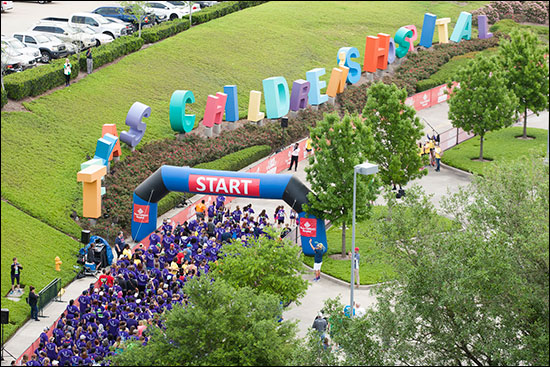
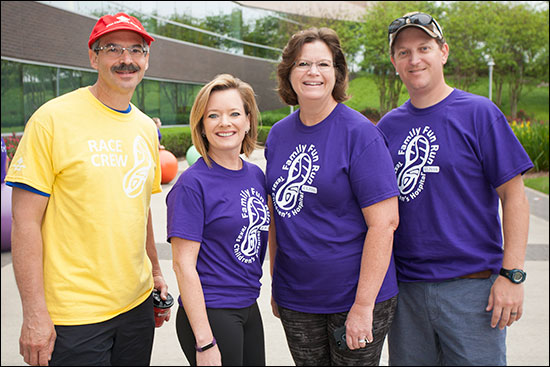
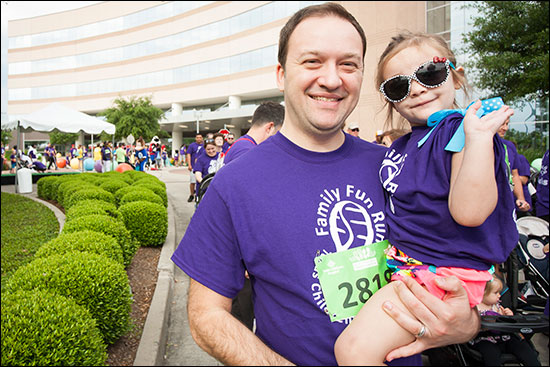
41316FunRun640Texas Children’s employees and Houston-area residents came out in full force to participate in the 4th annual Texas Children’s Hospital and Houston Marathon Foundation Family Fun Run at Texas Children’s Hospital West Campus.

On April 9, more than 4,000 people of all abilities, including those needing walkers and wheelchairs, participated in the non-competitive 1K and 3K courses. Following the race, participants enjoyed the H-E-B sponsored Family Fun Zone, which was packed with snacks, entertainment and close to 40 attractions.

“We are excited to have this event at Texas Children’s Hospital West Campus,” said West Campus President Chanda Cashen Chacón. “It’s a great way to show families that we are committed to the West Houston community.”

Executive Vice President John Nickens agreed and said the run’s stellar turnout is an example of the community’s support of Texas Children’s.

“Four thousand runners is amazing,” he said. “It’s definitely something to be proud of.”

Get a first-hand look at the fun by:

  • Flipping through a photo gallery of the event below.
  • Ordering your race-day photos from Spring Action. You can search by your bib number or last name to find your photos (if any exist). There also are hundreds of unidentified photos to sort through in the Lost & Found section. You can also browse the entire event, if desired.
  • Taking a look at our Facebook photo album from Saturday by.
  • Watching a video of the run.

41316MEGScanner640Texas Children’s is the fourth pediatric hospital in Texas to offer magnetoencephalography (MEG), a non-invasive brain imaging technology that assists neurosurgeons in developing more precise surgical plans for patients with epilepsy and other seizure disorders, ultimately enhancing their long-term outcomes.

The MEG scanner records very tiny magnetic fields produced by electrical activity in the brain to identify the sources of normal and abnormal brain function with millimeter precision. Unlike X-ray and CT scans, MEG does not emit radiation. Instead, it works like a very sensitive microphone that records magnetic fields emitted by brain cells instead of sound.

“MEG is an invaluable tool in evaluating epilepsy patients for potentially curative brain surgery,” said Texas Children’s neurologist Dr. Michael Quach. “Prior to MEG, the only technology capable of localizing brain activity with such high temporal and spatial resolution was intracranial EEG monitoring, which requires exposing the surface of the brain with surgery in order to implant EEG electrodes. With MEG technology, we can achieve similar localization without the need for open brain surgery.”

When patients come in for a MEG scan, the MEG technician places electrodes onto the patient’s scalp before positioning the patient’s head into the scanner where the machine collects information from 306 sensors simultaneously every millisecond. The MEG images are superimposed on the MRI to correlate where the magnetic activities of brain function occur in relation to the patient’s brain structures.

When MEG and MRI are analyzed together, physicians can identify the sensory regions of the brain – like speech, touch, vision and motor function – and can localize the sources of seizures and other abnormal brain activity. With this combined information, surgical procedures can be planned more precisely to remove abnormal brain tissue while minimizing damage to parts of the brain that function normally.

“One of the great things about MEG is it gives pediatric patients a chance to qualify for epileptic surgery,” said MEG technician Michael LaRose. “With this increased data, our neurologists and neurosurgeons have a better chance of coming up with a surgical plan that may help these children with seizures.”

The MEG procedure usually lasts about an hour and a half but the amount of time it takes to complete the scan varies for each patient. Since the MEG lab opened last November, Texas Children’s has performed 25 MEG procedures.

Since very few hospitals in Houston are equipped with this advanced imaging technology, Texas Children’s also offers this service to Baylor College of Medicine physicians who treat adult patients.

41316malaria640The Baylor College of Medicine International Pediatric AIDS Initiative (BIPAI) and Texas Children’s Global Health have been helping meet the health care needs of mothers and babies across the globe for years. With global health programs and projects in more than 20 countries, BIPAI and Texas Children’s Global Health have developed a network of partners who are sometimes called on to respond to emergency situations. For these scenarios, we often turn to Medical Bridges, a Houston-based non-profit that provides medical supplies and equipment to support our work.

Recently, BIPAI and Texas Children’s Global Health addressed pediatric emergencies in Papua New Guinea and during the Ebola crisis, in Liberia, with the help of Medical Bridges. Presently, there is an outbreak of malaria among pediatric patients in Luanda, Angola.

To address this health emergency, BIPAI, Texas Children’s Global Health and Texas Children’s Pediatric Hematology & Oncology program have partnered with Medical Bridges, Chevron and SonAir, an Angolan national air services company, to provide drugs, supplies and equipment to the Hospital Pediatrico David Bernardino (Bernadino Pediatric Hospital) in Luanda and to the hospital in Cacuaco. These much-needed drugs and supplies will help the staff at the hospitals address the recent outbreak of malaria among the pediatric population.

“BIPAI and Texas Children’s Global Health are fortunate to have partners like Chevron and Medical Bridges that can mobilize and respond proactively to public health emergencies around the world,” said Michael Mizwa, leader of BIPAI and Texas Children’s Global Health.

Ali Moshiri, president of Chevron Africa and Latin America Exploration and Production Company, said the company is proud to be able to help mitigate public health situations such as these.

“We value our partnership with BIPAI and Texas Children’s Global Health,” Moshiri said. “This contribution underscores Chevron’s long-standing commitment to fight malaria and to the children of Angola who are most at risk for the disease”

The Baylor College of Medicine International Pediatric AIDS Initiative (BIPAI) and Texas Children’s Global Pediatric Hematology & Oncology program started an Angola Sickle Cell Initiative (ASCI) in 2011 with generous support from Chevron, aimed at bringing neonatal Sickle Cell Disease (SCD) screening and care to two regions in Angola: Luanda and Cabinda. To date, 135,000 babies have been screened and, in 2015, with a donation from Bristol-Myers Squibb (BMS), the first organized Hydroxyurea (HU) treatment program for Angola was begun.