September 13, 2016

91316chroniclephilanthropy250Texas Children’s is the honored sponsor for every Tuesday’s “Houston Legends” series. For more than 20 weeks, we will showcase the legendary care Texas Children’s has provided since 1954, and focus on milestone moments in our unique history. Also, a complementary website offers a more detailed look at our past, our story and our breakthroughs.

On the right is the Texas Children’s ad that is featured in this week’s Chronicle. Click the ad to visit our companion website at texaschildrens.org/legendarycare. The website will change weekly to complement the newspaper ad, which will be published in section A of the Chronicle on Tuesdays for the next several weeks. We also will spotlight this special feature weekly on Connect, so stay tuned to learn and share our rich history.

Click here to visit the Promise website.

September 7, 2016

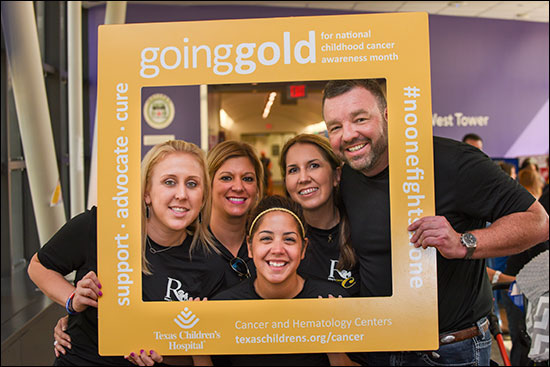
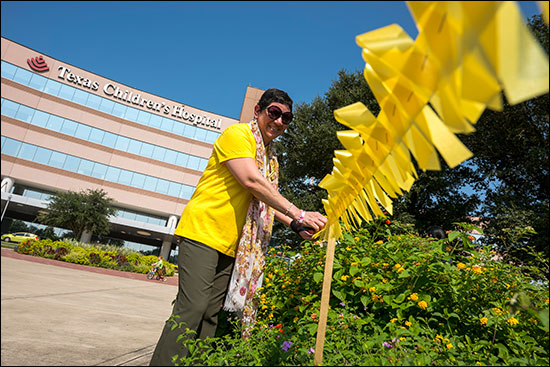
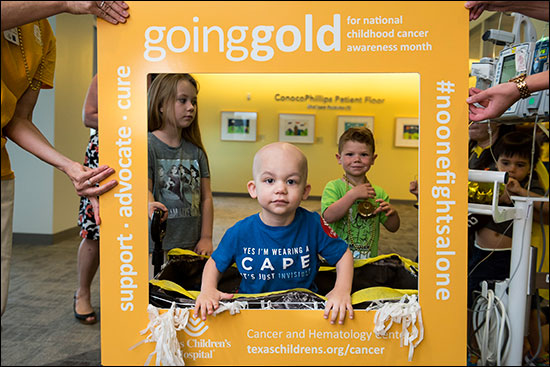
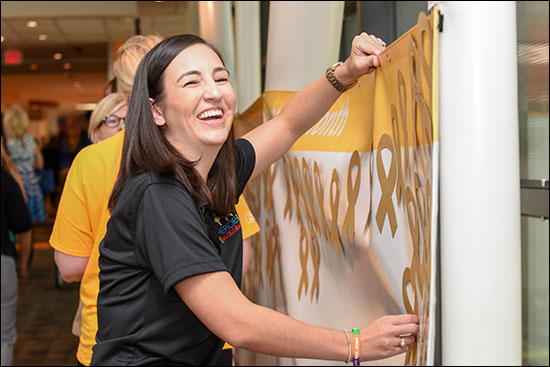
These days, it’s hard not to see gold throughout our hospital campus. From gold ribbons to gold T-shirts and gold pins worn by our physicians and staff, to a holiday tree decked out in gold, Texas Children’s Cancer Center is making a gold splash to raise community awareness about childhood cancer throughout the month of September.

“Going gold is a way for us both to honor the courageous journeys of our patients and families who have been touched by pediatric cancer and to create awareness on a national level about the challenges these children face,” said Dr. David Poplack, director of Texas Children’s Cancer Center. “This is also a special time to honor our staff and everyone involved in the care and support of our patients and their families at the Cancer Center.”

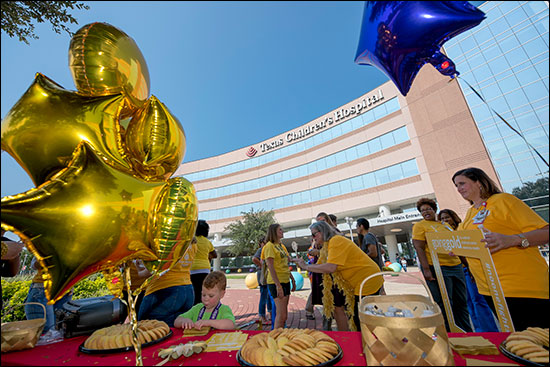
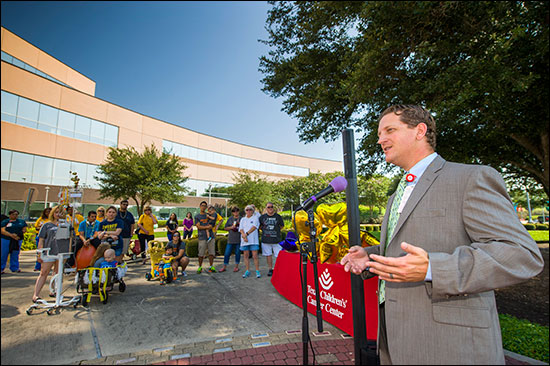
To officially kick off September’s cancer awareness activities, two gold ribbon tying ceremonies were held on September 1 and 2 – one on The Auxiliary Bridge at Texas Children’s Medical Center Campus and the other at Texas Children’s Hospital West Campus.

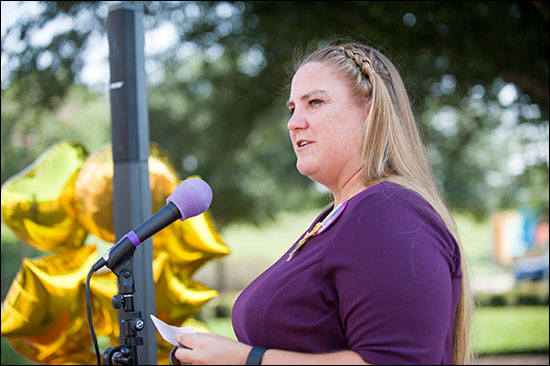
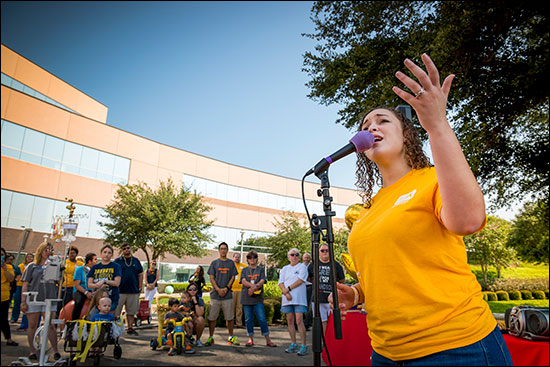
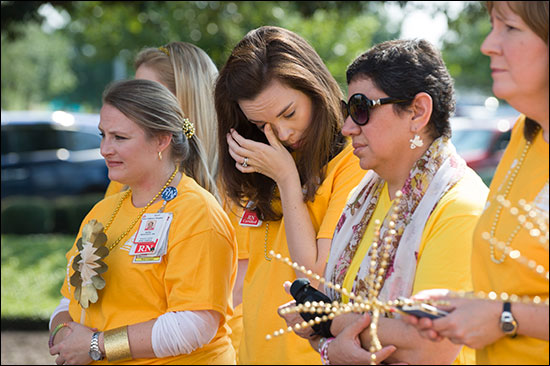
Along with remarks from Drs. Poplack, ZoAnn Dreyer, and Chaplain Pat Krinock, patients and their families, and the Cancer Center faculty and staff, were touched with emotion when Christian Spear, a former Texas Children’s patient and 17-year cancer survivor, sang “The Bell Song,” an inspirational song she co-wrote with Anita Kruse, founder and executive director of Purple Songs Can Fly.

“This is a special tribute to all of the children who are battling cancer right now,” Spear said. “The song’s lyrics are a constant reminder that a cure is very close.”

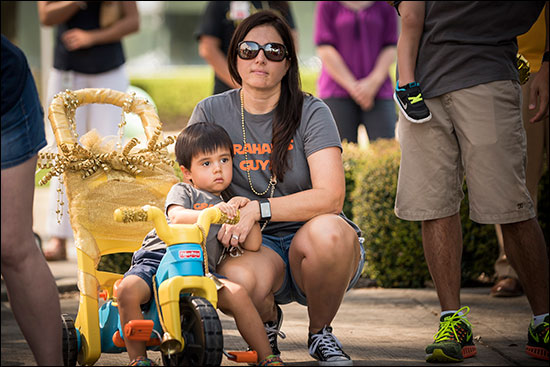
At West Campus, patients, families and staff celebrated Childhood Cancer Awareness Month with a “Go Gold” Parade. The procession of children riding tricycles and wagons decorated with gold ribbons started on the third floor and proceeded outside the entrance of the hospital where the ribbon tying ceremony was held.

West Campus Vice President Matt Schaefer and his sister-in-law, Kerri Schaefer, shared their stories of how a childhood cancer diagnosis impacted their family.

“Malachi’s diagnosis and subsequent battle with childhood cancer changed our family forever, just as it does all families,” Schaefer said. “Although my nephew has been gone more than nine years, we will never forget him or the incredible care that he and our family received at Texas Children’s Hospital.”

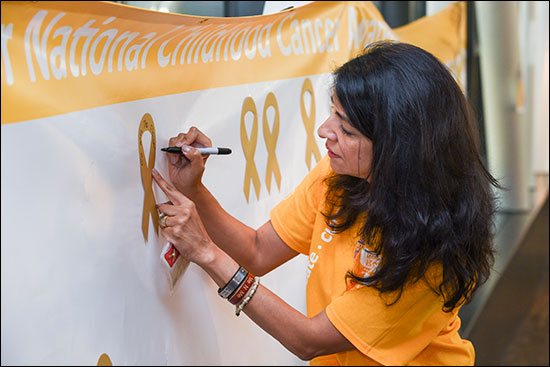
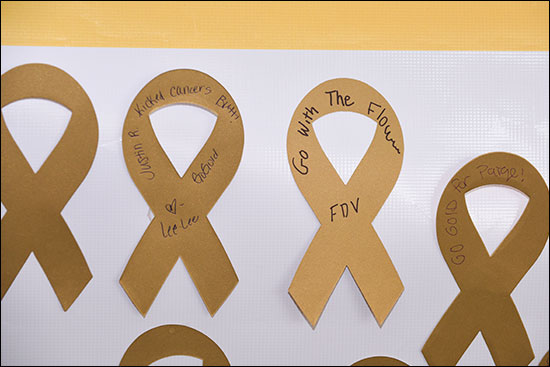
Throughout the month of September, the fenced walkway and garden area at West Campus and the gold banner on The Auxiliary Bridge will be adorned with 630 gold ribbons, one for each child diagnosed with pediatric cancer in the past year at Texas Children’s Cancer Center.

“It is estimated that more than 15,700 children nationwide will be diagnosed with a form of pediatric cancer by the end of this year,” Poplack said. “While we are curing 80 percent of pediatric cancers, as pediatric oncologists, our job is not over until every child is cured of this disease.”

View a photo gallery below. To learn more about Texas Children’s Cancer Center, click here.

Upcoming cancer awareness activities:

  • Friday, September 9 – Lace Up for Life Walk (1 p.m.), West Tower, eighth floor
  • Saturday, September 10Making a Mark opening reception (2 – 4 p.m.), The Auxiliary Bridge
  • Saturday, September 17 – Sickle Cell Education and Research Day (11 am. to 3 p.m.)
  • Friday, September 23 – Ewing Sarcoma Symposium (10 a.m. to 4 p.m.), PFW fourth floor, E and F
  • Tuesday, September 27 – Visit/appearance by Houston Texans Devon Still (11 a.m.)

9716ChronicleCancerAd250Texas Children’s is the honored sponsor for every Tuesday’s “Houston Legends” series. We will showcase the legendary care Texas Children’s has provided since 1954, and focus on milestone moments in our unique history. Also, a complementary website offers a more detailed look at our past, our story and our breakthroughs.

On the right is the Texas Children’s ad that is featured in this week’s Chronicle. Click the ad to visit our companion website at texaschildrens.org/legendarycare. The website will change weekly to complement the newspaper ad, which will be published in section A of the Chronicle on Tuesdays for the next several weeks. We also will spotlight this special feature weekly on Connect, so stay tuned to learn and share our rich history.

Take a look at the latest time lapse video capturing the remarkable and steady progress of the construction of Pediatric Tower E.

9716cdiff640Cody Knight was15 years old when he came down with a serious intestinal infection caused by the bacterium Clostridium difficile (C. diff). Despite antibiotic treatments, the infection kept coming back at least three times over a six-month period.

“My son lost 15 pounds and it took weeks for him to gain enough strength to do anything,” said his mother Holly Knight. “He missed the last week of school and never really got a chance to play freshman football due to his frequent bouts with vomiting and diarrhea. As a last resort, Cody received a fecal transplant two years ago at Texas Children’s which has improved his symptoms tremendously.”

To improve outcomes for C. diff patients like Cody, Texas Children’s Microbiome Research Center received a 5-year, $7.5 million grant from the National Institute of Allergy and Infectious Diseases at the National Institutes of Health (NIH) to accelerate a multi-center study to combat C. diff, the most common and potentially deadly bacterial infection impacting children and adults in the U.S.

C. diff, a bacterium that causes diarrhea and severe inflammation of the colon, is a hospital-acquired infection often associated with inappropriate antibiotic use. While antibiotics are used to treat infections in children and adults, they can also disrupt the natural communities of healthy bacteria in the gut, allowing C. diff to colonize and cause disease.

“C. diff is a disorder of microbial ecology,” said Dr. James Versalovic, pathologist-in-chief and director of Texas Children’s Microbiome Center. “Some patients are more susceptible to C. diff recurrence following treatment with antibiotics while other patients may struggle with infections due to drug-resistant bacteria including C. diff. These issues can pose enormous challenges to successfully treating these patients.”

At Texas Children’s Hospital and Texas Children’s Pavilion for Women, our physicians are continuously challenged by many infectious agents and drug-resistant pathogens. Being at the leading edge of “big” discovery science requires a highly collaborative approach to uncover the causes of C. diff infection and drug resistance in children and women.

“This 5-year grant will accelerate our existing work in C. diff as it relates to the human microbiome,” said Dr. Tor Savidge, associate director of Texas Children’s Microbiome Center and principal investigator of this study. “Our long-term goal is to achieve a better understanding of why certain patients fail antibiotic treatment and which patients are more susceptible to recurrences in order to help us develop new methods to treat C. diff infection.”

Using a systems biology approach and the latest state-of-the-art technologies, Savidge and his team – including research partners at Baylor College of Medicine, Texas A&M University, University of Houston, and UCLA – will analyze the stool specimens of C. diff patients at Texas Children’s and compare it to specimens of healthy adults and children. These researchers, who form an integral part of the C. diff Gulf Coast Collaborative, will also examine the common threads and differences between adults and children with C. diff infection. A unique aspect of this study is the inclusion of infants who are not susceptible to this pathogen.

“Babies in their first year of life may be colonized during infancy by C. diff,” Versalovic said. “Their microbiome develops very early in life but infants may or may not respond to the toxins produced by C. diff. We have much to learn about the susceptibility of young children to C. diff disease. We know that the numbers of children infected with C. diff have expanded greatly in the past 15 years.”

This collaborative study is a direct result of the Precision Medicine Initiative led by President Barack Obama designed to equip clinicians with the necessary resources to determine which treatments will work best for which patients based on specific characteristics like human genetic makeup, or in this case, the bacterial composition of a patient’s microbiome.

Texas Children’s is uniquely positioned as the leading research site for this study. Besides the Department of Pathology’s diagnostic capabilities to test for C.diff in children and women, Texas Children’s Microbiome Center has partnered with Dr. Richard Kellermayer from the Pediatric Gastroenterology, Hepatology and Nutrition section to offer fecal transplants as a treatment alternative for children with recurrent C. diff infection.

“It’s important for the medical community to be smarter about antibiotic use and its effects on the microbiome,” Savidge said. “I think some fundamental lessons will emerge in this 5-year study that will help us understand childhood infections and lifetime risk of serious infections further down the road.”

For Cody’s mom, she is grateful that Texas Children’s is leading this study and is hopeful that a cure for C. diff will one day be found.

“I met so many children and adults suffering with recurring C.diff when Cody was ill,” Knight said. “I support any research that can be done to prevent another child from being as sick as Cody was for such a long period of time.”

9716sskatiejones175Katie Jones of Infection Control is the latest Texas Children’s Super Star employee. “Working at Texas Children’s has afforded me the opportunity to grow as an educator and presenter, so that I can share my passion for infection control with health care providers and encourage them to be infection prevention advocates in their own areas,” Jones said. Read more of her interview below and find out how you can nominate a Super Star.

Your name, title and department. How long have you worked here?
Katie Jones, Infection Control Coordinator, Infection Control. I started working for Texas Children’s in July 2015.

What month are you Super Star for?
September 2016

Tell us how you found out you won a super star award.
I thought I was attending a regularly scheduled staff meeting, and at the last minute we changed rooms. When I arrived, I saw that leaders from quality and critical care nursing were at the table. They do not normally attend our regular weekly staff meetings. My manager said he had an announcement, it all felt very serious with our additional guests in attendance so I was a little worried at first – but then he announced that I had received the Super Star award! It was very surprising and flattering! It was so much fun to share that moment with my department and enjoy cake and punch with them.

What does it mean to be recognized for the hard work you do? How has the organization helped you achieve your personal and professional goals?
Everyone I encounter at Texas Children’s gives 110 percent of themselves every day, so it is really an honor to be selected. Working at Texas Children’s has afforded me the opportunity to grow as an educator and presenter, so that I can share my passion for infection control with health care providers and encourage them to be infection prevention advocates in their own areas.

What do you think makes someone at Texas Children’s a super star?
Coming to work every day ready to say “yes” to any challenge.

What is your motivation for going above and beyond every day at work?
I believe there is a patient advocacy element to everyone’s job in a health care environment – even if you don’t provide direct patient care. I love that by working in Infection Control, I have an opportunity to play a role in the development and implementation of initiatives that can protect our patients and help Texas Children’s continue to be a leader in patient care, research, and education.

What is the best thing about working at Texas Children’s?
I am inspired every day by the passion exhibited by our frontline health care workers and my fellow infection control team members. We are all very supportive of each other and one person’s success is a victory for the whole team.

What does it mean to you that everyone at Texas Children’s is considered a leader? What is your leadership definition?
Leaders identify themselves by their actions, not their job title. By encouraging everyone to put our patients and their families first, the behavior that makes someone a leader in their own role is naturally supported.

Anything else you want to share?
I want to thank the Shannon Holland and the PICU team for nominating me for this award. It is truly a privilege to work with them.

9716jjwattandjeston640Earlier this summer, one of Texas Children’s patients Jeston Adams’ dreams came true – the 8-year-old got to meet his hero J.J. Watt. Since then, Jeston’s relationship with the Houston Texans football player has grown into a full-fledged friendship that has kept him going during his search for a new heart.

To Watt and Jeston’s amazement, that search ended three weeks ago when congenital heart surgeon Dr. Iki Adachi implanted a new heart into Jeston’s chest. The Louisiana native is recovering and being cared for by Dr. Jeff Dreyer, medical director of the Heart Transplant Program, and other members of the Heart Center team.

“Jeston has a very infectious personality,” Dreyer said. “He’s had a great attitude and that’s contributed to his recovery.”

After his transplant, Jeston worked with Texas Children’s Child Life team to create a video for the man he calls his big brother. Watt shared the video on social media.

“He has been a warrior through it all and handled it with such a positive attitude,” Watt wrote on Instagram. “He truly is an incredible kid with an amazing spirit. No matter what gets us down in life, how bad we feel or how negative the situation may seem, if we keep a positive attitude and fight with everything we’ve got, incredible things are possible. That’s what Jeston has taught me.”

Click here to watch CBS 11 KHOU’s update on Jeston.