September 27, 2016

92716chroniclediabetesad250Texas Children’s is the honored sponsor for every Tuesday’s “Houston Legends” series. We will showcase the legendary care Texas Children’s has provided since 1954, and focus on milestone moments in our unique history. Also, a complementary website offers a more detailed look at our past, our story and our breakthroughs.

On the right is the Texas Children’s ad that is featured in this week’s Chronicle. Click the ad to visit our companion website at texaschildrens.org/legendarycare. The website will change weekly to complement the newspaper ad, which will be published in section A of the Chronicle on Tuesdays for the next several weeks. We also will spotlight this special feature weekly on Connect, so stay tuned to learn and share our rich history.

September 20, 2016

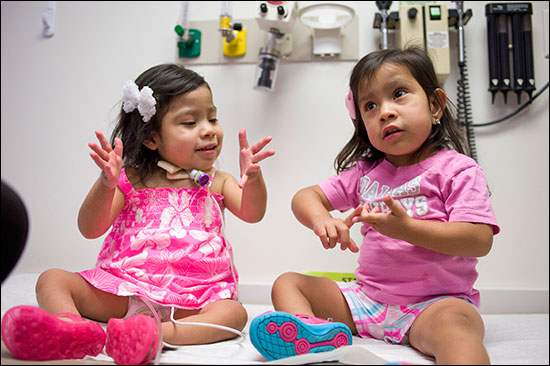
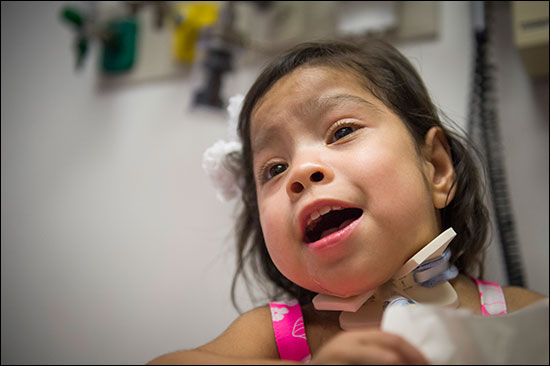
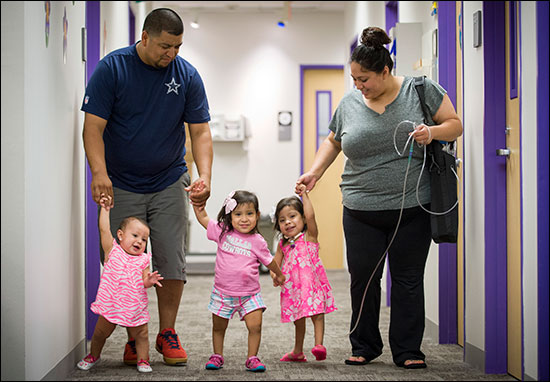
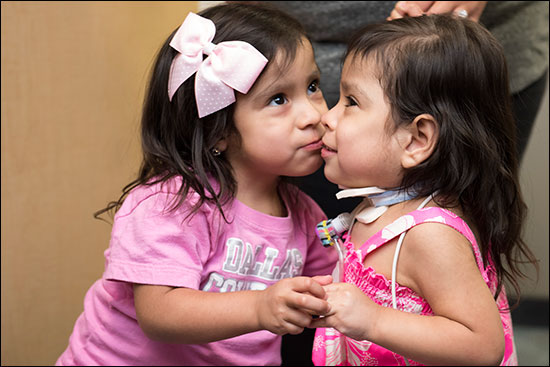
It’s been more than a year and a half since a team of Texas Children’s surgeons and medical staff separated conjoined twins Knatalye Hope and Adeline Faith Mata in an historic, more than 24-hour-long procedure. Since then, the girls – now 2 years old and living at home near Lubbock – have worked hard with various types of therapists, medical experts and on their own to recover from the monumental surgery.

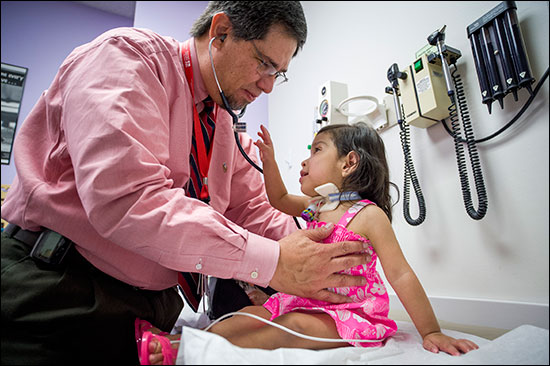
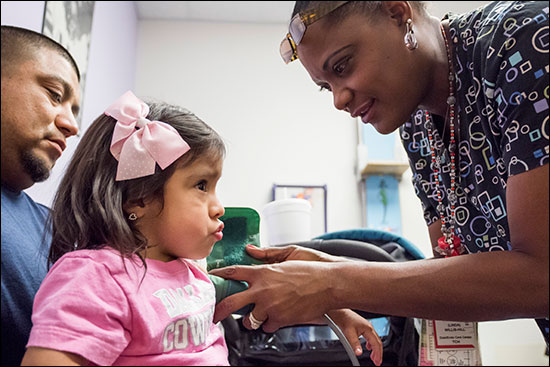
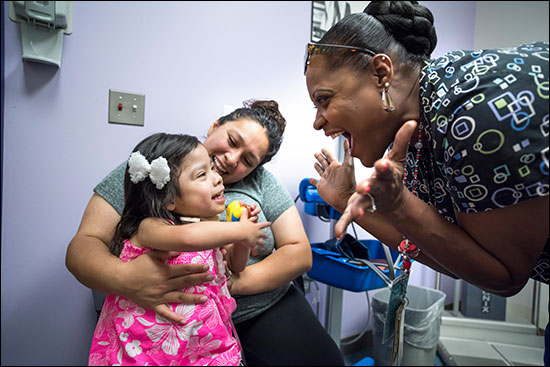
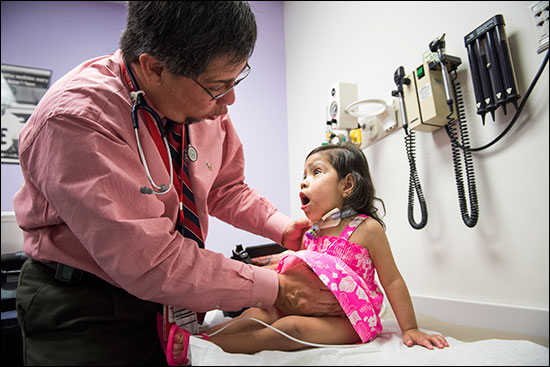
During a recent visit to Texas Children’s Hospital, physicians and medical personnel got an up-close look at just how far the girls have come. When a nurse in pulmonologist Dr. Fadel Ruiz’s office weighed the girls, they walked up to the scale and hopped on. When the nurse bent over to take their blood pressure, they sat on the exam table and reached for her stethoscope like it was a toy. And, while the girls were waiting for Dr. Ruiz to enter the room, they, like most toddlers, ran around, chattered and begged for snacks.

“They are growing and reaching milestones every day,” the twins’ mother Elysse Mata said. “It’s non-stop around our house. We aren’t getting much sleep but that’s OK.”

The girls’ father, Eric Mata, said watching his girls grow and get stronger every day feels good and that he sometimes has to stop and think just how far they have come. “It’s amazing really,” he said. “I never imagined our lives would be like they are today.”

Dr. Darrell Cass, one of the lead surgeons in the separation case and co-director of Texas Children’s Fetal Center, said Knatalye and Adeline are doing “awesome!” He said Adeline is slowly being weaned off of her ventilator and G-tube, devices she only uses occasionally versus all the time after the separation. The toddler’s pelvis is healing well and her lungs are continuing to grow and become stronger, progress Cass said will help her walk, talk and eat even better than she is now.

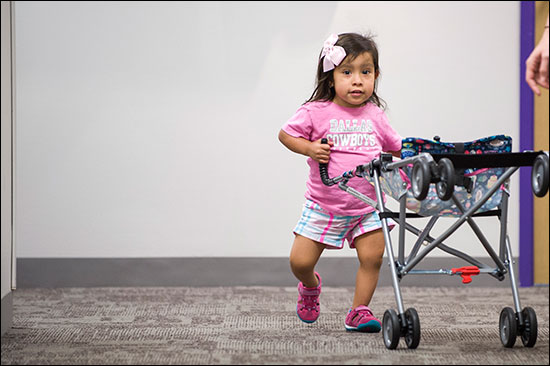
Knatalye’s breathing is so good Cass said cardiovascular surgeon Dr. Dean McKenzie recently removed a metal plate from her chest and closed her sternum, a procedure they were waiting to do following sufficient lung strength and growth. Like her sister, Knatalye is being weaned from the G-tube and is learning to eat on her own. She is walking well, Cass said, but her pelvis is still a bit separated, something she might have to get more work done on in the future.

“I’ve always said the girls will walk into kindergarten one day together and I definitely think that will still be true,” Cass said.

View a series of photos from the Mata’s visit below.

92016chroniclenewbornad250Texas Children’s is the honored sponsor for every Tuesday’s “Houston Legends” series. We will showcase the legendary care Texas Children’s has provided since 1954, and focus on milestone moments in our unique history. Also, a complementary website offers a more detailed look at our past, our story and our breakthroughs.

On the right is the Texas Children’s ad that is featured in this week’s Chronicle. Click the ad to visit our companion website at texaschildrens.org/legendarycare. The website will change weekly to complement the newspaper ad, which will be published in section A of the Chronicle on Tuesdays for the next several weeks. We also will spotlight this special feature weekly on Connect, so stay tuned to learn and share our rich history.

92116languageservices640For non-English speaking families like Argelia Diaz, she knows that when she comes to Texas Children’s, she can always count on a Spanish-speaking interpreter to help her communicate with her daughter’s medical team.

“I don’t know what I would do without them,” Diaz said through her interpreter. “They give us all the information that the providers want to tell us and help break down the medical terms for us. They are very kind and are always there whenever we need them.”

As an internationally recognized referral center, Texas Children’s cares for many international patients including those here at home who do not speak English. These patient families rely solely on the skills and expertise of Texas Children’s Language Services Department to bridge the communication barrier.

“Language barriers have the potential to adversely impact patient care and outcomes,” said Language Services Manager Alma Sanchez. “Issues like misdiagnosis, lack of compliance, medical errors and readmissions can all be further compounded when a patient has limited English proficiency. Communicating with them in their preferred language ensures everyone is on the same page regarding the care and treatment of the patient.”

Being an interpreter at Texas Children’s is more than just speaking a foreign language fluently. As the primary liaison between the physician and patient, interpreters ensure accurate and seamless communication is delivered to both parties during every phase of the health care process. Specially trained in diverse areas including medical terminology, modes and standards of interpretation, standards of ethics and intercultural communication, interpreters also serve as a cultural broker in the communication of information since there are many factors that may impede a patient or family’s clear understanding of a medical diagnosis or treatment plan.

“While speaking in the family’s native language, we explain their child’s diagnosis and ensure they understand all of the instructions provided by their care team,” said Violeta Riccio, project analyst at Language Services. “We also help the providers understand the patient’s concerns or questions in order to resolve any potential issues.”

On average, the Language Services Department receives 12,000 language requests per month – 4,000 are in-person interpretations, 7,000 are telephonic and 1,000 are through a mobile video system called My Accessible Real Time Trusted Interpreter (MARTTI) where an external interpreter can be contacted via live video. These capabilities enable Texas Children’s to provide interpretations in about 170 different languages.

To meet the growing demand for this service, Texas Children’s has 28 interpreters dispersed across several campuses – 17 at Texas Children’s Main Campus, five at Texas Children’s Hospital West Campus, four at Texas Children’s Pavilion for Women and two interpreters at Texas Children’s Hospital The Woodlands. Spanish is the most requested language for interpretation followed by Arabic, Vietnamese and Chinese-Mandarin.

Just like our patient families, Texas Children’s health care teams benefit greatly from this service too.

“Having an interpreter physically present is crucial to effective communication particularly in stressful situations when children are undergoing procedures or when critical information is being conveyed,” said Dr. Larry Hollier, chief of plastic surgery at Texas Children’s. “Having an onsite interpreter in the ambulatory surgery area has been transformative in terms of family satisfaction and the efficient and safe flow of children through the area.”

To learn more about Language Services, drop by their office located on the third floor of West Tower across from the gift shop. Click here to watch a video spotlighting a day in the life of interpreters at Texas Children’s.

Before Dr. Howard Weiner accepted his new position as chief of neurosurgery, he knew that Texas Children’s Hospital was the place he wanted to be.

“When I visited Texas Children’s, I was literally blown away by this place,” said Weiner, who also serves as professor of neurosurgery at Baylor College of Medicine. “Speaking with the people here, hearing about the vision, the leadership, the direction, it was very infectious. This was where I needed to be for the next 15, 20 years of my career to do the things that I wanted to accomplish in pediatric neurosurgery for our patients.”

Prior to joining Texas Children’s neurosurgery team, Weiner received his undergraduate degree from the University of Pennsylvania and his medical degree from Cornell University Medical College. During his residency, he was a Howard Hughes Medical Institute research fellow in the Department of Biochemistry at New York University. Following residency, Weiner was awarded the Van Wagenen Fellowship by the American Association of Neurological Surgeons to study brain development in Paris. He also completed a fellowship in pediatric neurosurgery at New York University Langone Medical Center, where his career continued for a total of nearly 27 years altogether.

With nearly three decades of experience in the field, Weiner shares his enthusiasm for the future of Texas Children’s neurosurgery program and the opportunity to work alongside a neurosurgery team that he describes as an “incredible team of innovators.”

“If you take every one on the faculty in neurosurgery here at Texas Children’s, everyone is driving their individual sub-specialty area,” Weiner said. “We are using minimally invasive approaches, like laser ablation, to treat epileptic brain lesions and brain tumors. Our teams are developing new techniques in fetal surgery to treat hydrocephalus and we are leading the way in defining neurosurgical clinical outcomes and best practices that are essential to growing a successful craniofacial surgery program to serve our patients and their families at Texas Children’s for many years to come.”

Weiner’s plan is to continue transforming Texas Children’s into the premier pediatric neurosurgical program in the country by providing innovative, high-quality patient care and focusing on multidisciplinary collaboration and teamwork. While overseeing the growth of Texas Children’s neurosurgery program, he is cultivating a rich environment for faculty members to develop their subspecialty interest and propel their clinical and scientific discoveries to the next level.

“We are well on our way as a division of neurosurgery and as an institution to be the destination for high-quality, world-class innovative and especially attentive care for children,” Weiner said. “That is really my vision for neurosurgery. We will be the leaders in training the next generation of leaders in our field.”

Ranked No. 2 nationally in neurology and neurosurgery by U.S. News & World Report, Texas Children’s neurosurgery program is among the largest and most experienced pediatric neurosurgery units in the U.S., performing more than 950 surgeries annually for a broad range of pediatric neurosurgical disorders.

For more information about Texas Children’s neurosurgery program, click here.

92116westcampusorexpansion640With scissors in hand, leaders at Texas Children’s Hospital West Campus proudly cut a red ribbon draped across the entrance to the hospital’s newly expanded perioperative suite.

The September 15 ribbon cutting unveiled four new operating rooms, a new procedure room, three new call rooms as well as a new doctor’s lounge, kitchen and break area. The expansion brings the total number of operating rooms at West Campus to eight and doubles the total number of procedure rooms – places where minor outpatient procedures occur.

The call rooms, doctor’s lounge, and enlarged staff kitchen and break area didn’t exist before the expansion and, according to Chief Surgical Officer at the West Campus Dr. Allen Milewicz, will help set the stage for expanded perioperative capabilities at West Campus.

“This expansion will allow us to do longer, more complex surgeries,” Milewicz said. “It also will help us increase the scope of services we offer.”

Two growth areas of interest are orthopedics and dental, Milewicz added. The demand for such procedures is increasing in the West Houston area because families and area providers are eager to take advantage of the broad range of pediatric expertise that only a dedicated children’s hospital can provide. West Campus wants to be able to continue to accommodate that demand and grow with it.

Trauma is another area of potential growth, Milewicz said. Currently, West Campus does not see a large amount of trauma cases but wants to develop this service in the future. Having a fully equipped perioperative suite will allow the West Campus surgical team to treat such patients in the best manner possible.

“The scope of what community hospitals are being asked to do is growing,” Milewicz said. “We want to accommodate that growth and meet the demands of our patients and their families.”

West Campus Vice President Matt Schaefer agreed and said the expansion of the perioperative suite is not about new rooms or space but about West Campus’ ability to improve lives.

“A little more than five years ago, we stood in this same place with our first surgical patient and cut the ribbon to our perioperative suite,” Schaefer said. “Since then, we have met the surgical needs of more than 20,000 children. The expansion increases our ability to reach more children.”

Schaefer added that the recent expansion of the Perioperative Suite is part of a $50 million capital improvement effort that will help expand West Campus’ capacity and capability. To date the following projects have been completed:

  • Additional office and administrative support space for dedicated physicians and providers
  • An 18-bed expansion of the hospital’s acute care capacity, including an eight-bed special isolation unit designed for children with highly contagious infectious diseases.
  • Conversion of offices within ambulatory clinics into additional exam rooms to increase outpatient subspecialty access
  • A dedicated suite for Interventional Radiology services

The following projects are still in the works:

  • A new 14 exam room clinic for Neurology, Renal & Dermatology
  • Build-out of the final inpatient shell floor to accommodate 22 PICU beds


92116drcarolbaker175

Dr. Carol Baker, executive director of Texas Children’s Center for Vaccine Awareness and Research and Baylor College of Medicine professor of pediatrics, molecular virology & microbiology, presented the 2016 Jeryl Lynn Hilleman Endowed Lecture “Vaccines for Pregnant Women: A Long Time Coming” at the National Immunization Conference in Atlanta, GA on September 13.

This endowed lectureship, the first permanent endowment established at the CDC Foundation, was given by The Merck Company Foundation in celebration of the 50th anniversary of the Centers for Disease Control and Prevention (CDC) and the 25th anniversary of the first combination vaccine for measles, mumps and rubella, M-M-R and its successor M-M-R II, licensed by Merck. The lecture has become an important and popular component of the CDC’s annual National Immunization Conference.