October 4, 2016

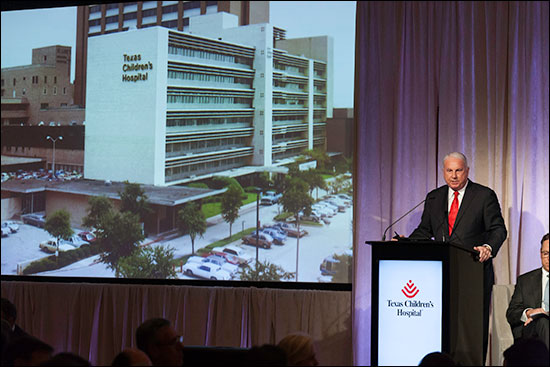
10516bipai640A program of Baylor College of Medicine International Pediatric AIDS Initiative (BIPAI), Texas Children’s Hospital and Chevron to improve health outcomes in a remote region of Colombia recently was awarded for its impact in the South American country.

Launched in January 2014, the initiative is based in La Guajira, one of the Colombia’s most impoverished states with a large indigenous community and high child and maternal mortality rates. Called SAIL (Salud y Autosuficiencia Indígenas en La Guajira), the program is a public-private partnership of Chevron, the central and departmental governments of Colombia, the state of La Guajira, and the Baylor College of Medicine Children’s Foundation-Colombia, an affiliate non-government organization of BIPAI. Currently, it is BIPAI’s only program in South America.

The SAIL program received a National Nutrition Award from the Exito Foundation, the charitable arm of Exito, Colombia’s largest retailer, in the category of Promoción Nutrición Materno Infantil – 1,000 days (advancing maternal-child nutrition in the first 1,000 days from conception). The award was presented at a ceremony September 7 in Bogota, Colombia.

“The early success of our program in Colombia is a reflection of BIPAI’s commitment to public-private partnership. We view ourselves as an extension of government’s public health programs. We aim to be complementary and never in conflict or competition with the good work others are doing.” said Dr. Mark W. Kline, chair and professor of pediatrics at Baylor College of Medicine and physician-in-chief at Texas Children’s Hospital.

“SAIL is a strategic initiative that enables comprehensive, locally driven health solutions for the Wayuu community. The program is being implemented in a very challenging environment, but we are witnessing impressive results,” said Ali Moshiri, president of Chevron Africa and Latin America Exploration and Production Company. “The National Nutrition Award is a recognition of this effort, but the real award is the potential and the opportunities for Wayuu mothers and children.”

“It’s a crowning achievement for our program to be honored in the area of nutrition, because very early on we recognized that in order to improve health in the region, we had to do something about the issue of malnutrition,” said Dr. James Thomas, professor of pediatrics at Baylor who leads the program for BIPAI. “There is a staggering amount of malnutrition in La Guajira.”

Forty percent of children have some form of malnutrition, Thomas said. It is one of the primary contributing factors to the high rate of mortality in children under age 5. Under 5 mortality and maternal mortality are two to four times higher in La Guajira than the national average, he said.

For the program to reach its goal of decreasing these high rates of child and maternal morbidity and mortality rates, Thomas and his colleagues knew they would have to take a different approach than the traditional Center of Excellence-based health care that has proven successful in BIPAI programs in sub-Saharan Africa. La Guajira is a desert region in northern Colombia, where its indigenous people, the Wayuu, live in remote settlements of open-air huts. They are a nomadic people, and their settlements are not easily accessible to one another or to the larger towns and cities in La Guajira where health care facilities are located.

A mobile health care platform was the best solution. Complemented initially by a BIPAI Global Health Corp pediatrician, a team of Guajirans was assembled, with the most critical members being nine indigenous women who were viewed as community leaders in their matrilineal society and had some healthcare experience. They received additional training focused on the integrated management of childhood illness. The team has expanded and now includes an OB-GYN and general practitioner. Leading the program on the ground in Colombia is executive director Dr. Ana Maria Galvis, who accepted the Exito award from First Lady of Colombia Maria Clemencia de Santos.

The team’s first step was to collect baseline data from the 172 Wayuu communities. This included weighing and measuring children, getting a basic health history and identifying at-risk patients.

In the first year of the program, more than 700 malnourished children were identified and treated by the interdisciplinary team who visited the rural settlements regularly. These efforts were boosted by a partnership with the Exito Foundation, which provides supplementary feeding for the indigenous Wayuu communities in the municipality of Manaure. At-risk families received a monthly food package, including items that are culturally accepted by the Wayuu community, until their malnourishment was reversed and they were no longer considered at risk. The Exito Foundation has placed an emphasis on eliminating malnutrition in Colombia by 2025.

Thomas emphasized the importance of providing treatment for malnutrition and other health care in the local community. “We knew that trying to provide treatment in health centers would not be effective,” he said. “It’s an incredible hardship on mothers and children to go to a clinic or hospital, in many cases requiring a four to five hour walk and leaving behind other children. Instead, we wanted to focus on identifying people in the early stages of disease in their own community.”

Other elements of the SAIL program include health fairs that have been conducted in numerous Wayuu communities and training sessions for health care workers in hospitals in the larger towns, where the main topic covered was identifying and treating malnutrition. The addition of an OB-GYN to the mobile health care team who provides check-ups during pregnancy has allowed the program to focus on the reduction of maternal mortality rates. Recent efforts in the area of maternal health have also focused on family planning. Wayuu women often have as many as eight or nine children, contributing to the issue of malnutrition, so family planning can have a direct impact on child health.

“When a mother dies not only is it an absolute tragedy for the family but is also an unsustainable loss for the community and country. The partnership in Colombia is a very real way to address maternal mortality and morbidity in the region, and addresses key aspects of obstetrics and prenatal care,” said Dr. Michael Belfort, chair and professor of obstetrics and gynecology at Baylor and obstetrician/gynecologist-in-chief at Texas Children’s Pavilion for Women. “We are already seeing tangible evidence of improved maternal care with our ultrasound and other educational programs that allow early diagnosis and treatment of problem pregnancies. It is a great pleasure to be able to help the remarkable team of Colombian physicians and nurses in this amazing project.”

Thomas acknowledged that addressing malnutrition has been a bigger piece of the health care puzzle in La Guajira than anticipated. By improving this health care concern, the focus can turn to other causes of disease.

More than 3,400 patients have already been directly seen through the program, and more than 300 health professionals have received training. Galvis expects its impact to continue since it was designed to be sustainable thanks to the involvement of the La Guajiran people. “It’s really their program, and this makes sense because it’s for their community,” she said.

Each success of the program is gratifying, Thomas said, but nothing is more gratifying than the opportunity to help the Wayuu people.

“There is a depth of personality in these people,” he said. “They are tapped into a traditional wisdom and belief system that has been there for centuries.”

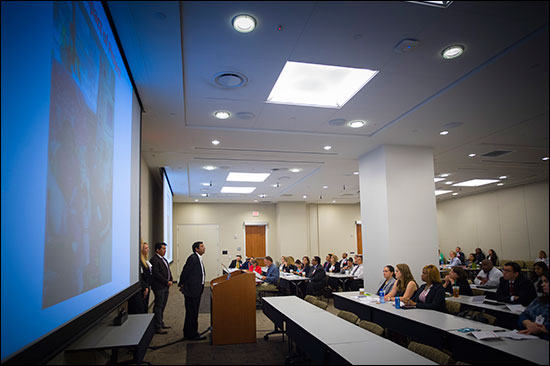
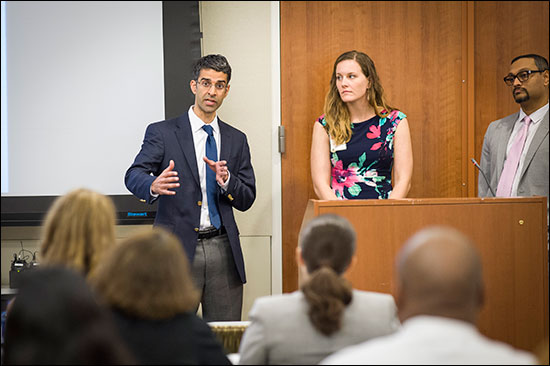
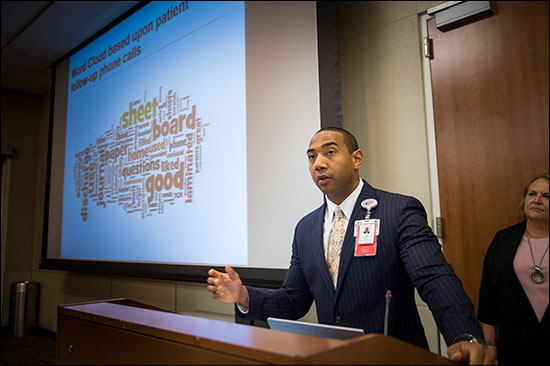
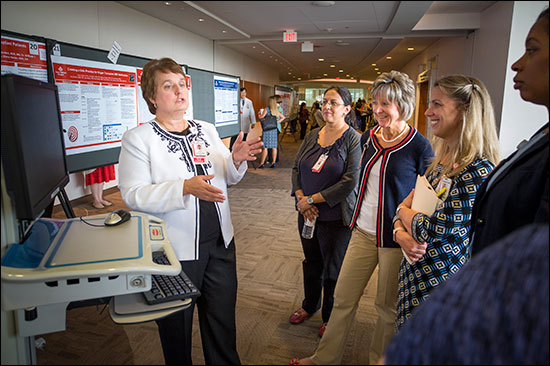
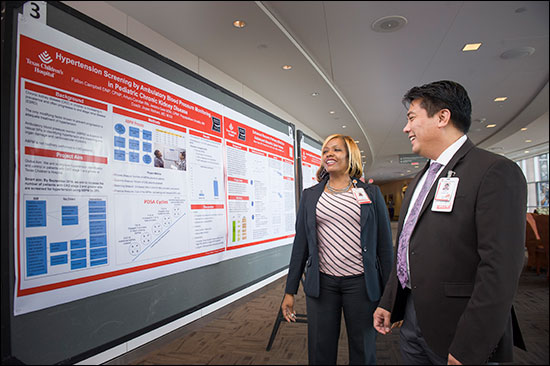
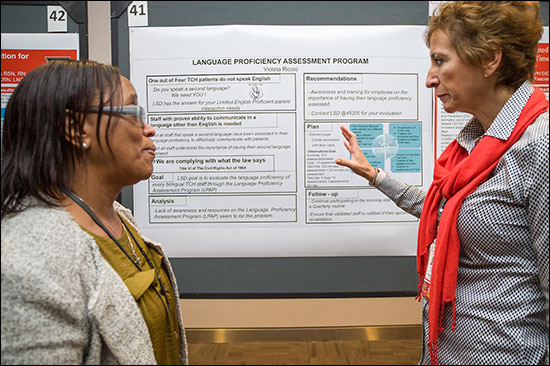
10516qualityday640On September 16, more than 50 projects were featured at the 2016 Texas Children’s Quality Day event, “Leading Tirelessly, Always Improving: Celebrating Quality, Safety, and Process Improvement Innovations at Texas Children’s and Advanced Quality Improvement (AQI) 14 Graduation.”

Held at Texas Children’s Pavilion for Women Conference Center, this special day was organized by the Quality Education Team and other Texas Children’s quality leaders. The event included presentations on exciting improvement initiatives implemented by the graduates of the AQI 14 class and showcased the many improvement projects/programs developed by staff and leaders across the organization.

“I am truly amazed and inspired to work with such a talented organization,” said Dana Danaher, director of Quality Education, Collaboratives and Advocacy at Texas Children’s. “I am privileged to facilitate building ongoing improvement capability for long-term sustainability.”

Chief Quality Officer Angelo Giardino kicked off the event with an inspirational keynote to the audience of more than 80 attendees. In recognition of the Daily Operational Briefing (DOB), a culture-changing safety practice adopted by Texas Children’s in November 2015, he presented a special quality award to Dr. Lane Donnelly, Dr. Joan Shook and recently retired Texas Children’s COO Randy Wright for their leadership in supporting the implementation of the DOB.

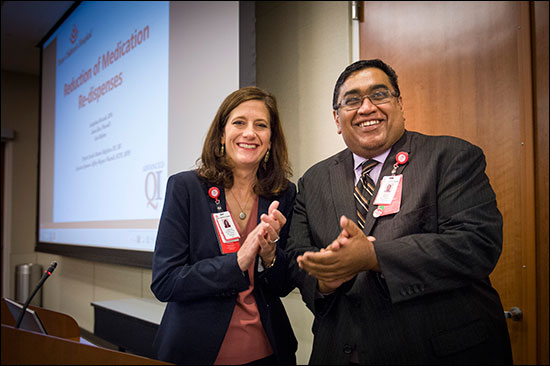
Following this motivational opening, the recent graduates of the AQI program presented their projects. Examples of some of the improvements discussed included:

  • MyChart activation
  • Discharge readiness
  • Improving isolation compliance
  • Postpartum depression screening
  • Reduction of medication re-dispenses

With more than 400 AQI graduates trained over the seven years that Texas Children’s has offered this valuable education, Giardino says Texas Children’s has great capacity to continue leading tirelessly to improve quality.

“The privilege of getting this training comes with a responsibility to use this new knowledge and the skills to do quality improvements to make things better for the women and children that we seek to serve,” Giardino said.

10416chroniclephilanthropyad250Texas Children’s is the honored sponsor for every Tuesday’s “Houston Legends” series. We will showcase the legendary care Texas Children’s has provided since 1954, and focus on milestone moments in our unique history. Also, a complementary website offers a more detailed look at our past, our story and our breakthroughs.

On the right is the Texas Children’s ad that is featured in this week’s Chronicle. Click the ad to visit our companion website at texaschildrens.org/legendarycare. The website will change weekly to complement the newspaper ad, which will be published in section A of the Chronicle on Tuesdays for the next several weeks. We also will spotlight this special feature weekly on Connect, so stay tuned to learn and share our rich history.

Click here to visit the Promise website.

September 27, 2016

92816fallforum640Community members attending the recent Forum Luncheon on September 21 got to meet the top surgical leaders at Texas Children’s Hospital and learn about the incredible ways they are making history in pediatric surgery and about their vision for the future of the hospital’s surgical enterprise.

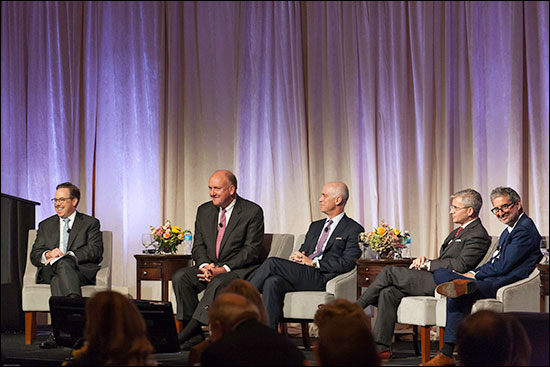
Following lunch and remarks from President and CEO Mark A. Wallace about the steady and rapid growth of Texas Children’s – including the Department of Surgery – Senior Vice President Mallory Caldwell moderated a panel discussion between: Surgeon-in-Chief Dr. Charles D. Fraser, Jr., Chief of Otolaryngology Dr. Ellis Arjmand, Chief of Plastic Surgery Dr. Larry Hollier and Chief of Neurosurgery Dr. Howard Weiner.

Caldwell focused on questions that highlighted why Texas Children’s Department of Surgery is bigger, better, faster and stronger than any in the nation and how the core mission of the department is to have the depth and breadth of expertise to deliver a surgical solution for every child in need of one.

Topics discussed include: the importance of outcomes measurement and how we have approached this work at Texas Children’s; the fact that Texas Children’s expertise is in treating common illnesses as well as complex, rare conditions; the strength and unique value in the department’s many multi-disciplinary teams; and our ability to recruit the best and brightest as we continue to grow and strengthen our team.

“When I came down here and learned about what is going on at Texas Children’s and the future trajectory of the organization, I knew I had to be here,” said Weiner, who recently joined Texas Children’s from New York University where he led a world-renowned neurosurgery program. “The leadership, the can-do attitude and the drive to grow as a world class institution providing high quality, attentive care to all children is very exciting.”

When Texas Children’s Hospital opened its doors in 1954, it did so with the one and only pediatric surgeon in the city of Houston. Today, Texas Children’s Hospital, now more than 90 surgeons strong, is one of the first two hospitals in the U.S. to be verified as a Level I Children’s Surgery Center by the American College of Surgeons.

Our surgeons have performed more than 350 heart transplants, making the heart transplant program one of the most experienced and active programs in the nation. We launched the first of its kind MRI-guided laser ablation surgery for epilepsy treatment, and we recently separated one of the most complicated cases of conjoined twins.

“Every time we have expanded it has been successful because we’ve done it for the right reasons,” Fraser said. “We are filling a specific need.”

The need for quality pediatric surgical care continues to grow and is a factor that convinced hospital leadership and its board of directors to add 19 floors to Pediatric Tower E near the Pavilion for Women. Much of the added space will house our expanded intensive care units and surgical facilities.

When Pediatric Tower E is complete, it will have 640,000 additional square feet of space, 130 beds for pediatric and cardiovascular intensive care, new operating rooms with the latest technology and a new and expanded Heart Center, including the outpatient clinic, cardiovascular operating rooms and catheterization labs.

Ultimately, Wallace said, the expansion will allow Texas Children’s Hospital to continue to provide the best possible family-centered care and best outcomes for the nation’s sickest children who come to us for help.

Texas Children’s is committed to the health, safety and well-being of our patients, families, and employees. This commitment is especially evident as we enter flu season. Influenza (the flu) is a contagious respiratory illness caused by influenza viruses. It can cause mild to severe illness and can even lead to death. Older people, young children, and people with certain health conditions are at high risk for serious flu complications. The best way to prevent the flu is by getting vaccinated every year.

Getting vaccinated at Texas Children’s is quick and easy. This year, receiving the vaccine is even quicker and easier than in the past as our flu vaccine consent forms are available online via the Employee Health and Wellness Portal. Click here for flu vaccine event schedules. Employees are to complete their online consent form before attending a flu vaccine event – click here for instructions.

Employee Health will be administering seasonal influenza vaccinations at no cost to:

  • Texas Children’s employees
  • Texas Children’s medical staff
  • Texas Children’s volunteers
  • Baylor College of Medicine employees working in Texas Children’s facilities

Texas Children’s Pediatrics, Texas Children’s Health Centers and The Center for Women and Children will receive separate instructions from their leaders about seasonal flu vaccination.

Stay tuned for updates about Texas Children’s seasonal vaccination program. If you have questions, please call Employee Health at 832-824-2150, option 1.

For more information about the flu and the flu vaccine, visit the Centers for Disease Control and Prevention website here.

92816facilitydoginside350Starting on Monday, October 3, you’ll notice a new employee walking the halls of the hospital wearing a bright green vest emblazoned with the Texas Children’s badge. But she is not your typical employee – she is furry, has four legs and is just 1 1/2 years old.

Her name is Elsa and she is Texas Children’s new therapy dog. Just like any new employee, she will be spending the first few weeks getting acclimated to her new hospital surroundings with her handler before seeing patients in the West Tower.

Elsa is part of Texas Children’s new facility dog program that will officially launch next month. This program uses animal-assisted therapy to enhance the emotional well-being of pediatric patients by reducing their anxiety, perception of pain and fear of hospitalization.

“Our new therapy dog will provide goal-oriented therapeutic interventions to patients, families and staff,” said Mary Tietjens, assistant director of Child Life and Social Work at Texas Children’s. “She will be consulted to provide support to patients and families who may be having trouble coping with hospitalization, a new diagnosis or other traumatic experiences. Our dog also will provide distraction and motivation to patients undergoing certain medical procedures.”

Prior to coming to Texas Children’s, Elsa underwent extensive training with Canine Assistants, a non-profit in Atlanta, GA, that has matched more than 1,500 service dogs including individual and hospital placements. After demonstrating strong competencies geared toward working in a pediatric hospital environment, Elsa spent additional time training at Children’s Hospital of Atlanta working alongside her handler and pediatric patients.

“As Elsa’s handler, we participated in a week long training with Canine Assistants in Atlanta,” said Sarah Herbek, a child life specialist and animal assisted therapy coordinator at Texas Children’s. “I will work alongside the therapy dog and the medical team at Texas Children’s to provide a different focus from illnesses, symptoms, pain and medical treatments. My goal is to prioritize patients who are having a particularly difficult time during their hospitalization.”

The Child Life team has worked with Canine Assistants for the past year gathering benchmarking information and working on program development. Last December, the Development team and Child Life leadership presented the facility dog program to the Shackouls family who graciously decided to support this program.

“It is our hope that the support and love these therapy animals provide will help countless children in making their treatment and recovery journeys brighter,” said Bobby and Judy Shackouls. “We look forward to watching this program grow into something even bigger because every child, no matter their age, gender, background or health condition, deserves to feel the unconditional love and comfort these animals can provide throughout the healing process.”

Elsa will see patients full time starting the week of October 10. To ensure she always looks her best, she will be groomed weekly and her paws will be wiped down daily.

The therapy dog will provide therapeutic intervention to specific patients. A patient who is allergic to dogs will not be consulted and the dog will not go into patient rooms without first receiving verbal permission from a guardian and the medical team.

“We are so excited to finally bring this program to fruition at Texas Children’s Hospital,” Tietjens said. “This was a collaborative team effort and would not have been possible without the support of everyone who was involved.”

If you see Elsa at the hospital, be sure to greet her and make her feel welcome. And, albeit she’ll wag her tail vigorously to show her appreciation and excitement to be part of the Texas Children’s family.

View a testimonial from PICU Staff Nurse Jenny Tcharmtchi about what it’s like to work at Texas Children’s.