November 1, 2016

When Michelle Guerrero and her husband welcomed their daughter Olivia on November 8, 2012, at Texas Children’s Pavilion for Women, their excitement quickly gave way to anxiety. Soon after Olivia was born, she had trouble breathing and was rushed to the neonatal intensive care unit (NICU) for observation.

Olivia had developed pneumothorax, her lung had collapsed and she needed a chest tube and breathing tube. As a parent, Guerrero worried about her daughter’s lung condition, but having cared for premature and critically ill infants in the Newborn Center, she knew Olivia was in the best place for treatment.

“My daughter spent three weeks in the NICU, and I am grateful for the exceptional care she received,” Guerrero said. “As a nurse, I am also proud of the incredible work we do every day to improve the outcomes of our babies in the Newborn Center.”

For Guerrero and her NICU colleagues, there’s yet another reason to be extremely thankful.

On October 20, the 19th annual Bad Pants golf tournament donated $375,000 that will support life-saving programs and services for the tiniest patients at Texas Children’s Newborn Center who are in need of premier medical treatment. Each year since 1997, the turnout at the annual golf outing continues to soar.

“As a grateful parent and a representative of the presenting sponsor, it’s very exciting to see how much the tournament has grown over the years,” said Les Fox, Bad Pants Open committee member and managing director of RBC Wealth Management. “We filled three golf courses with nearly 400 golfers wearing some really bad pants to raise funds that will directly support the care of premature babies and their families. I can’t wait to celebrate our 20th year in 2017!”

The event included a check presentation to the Newborn Center where the proceeds will advance innovation and excellence in the research, treatment and care for the more than 2,500 critically ill and premature infants who are treated at the Newborn Center each year.

Crystal Cruz, the recipient of the 2016 Bad Pants NICU Nurse of the Year award, says this generous donation will go a long way to improve patient outcomes.

“Giving is an act of charity and every year, the Bad Pants golf tournament helps our organization continue to make miracles happen,” Cruz said. “I am extremely grateful for this event and all that is donated to help us continue to help save these precious, tiny lives we are entrusted to care for.”

View a photo gallery of the 2016 Bad Pants Open.

Halloween was definitely not lost on the many sick children at Texas Children’s who had to miss school parties and trick or treating events due to doctor’s visits or hospital stays. Throughout the day and across the Texas Children’s system, there was a load of Halloween fun for patients and their families. Watch the video to get a glimpse of the fun everyone had at these unforgettable events.

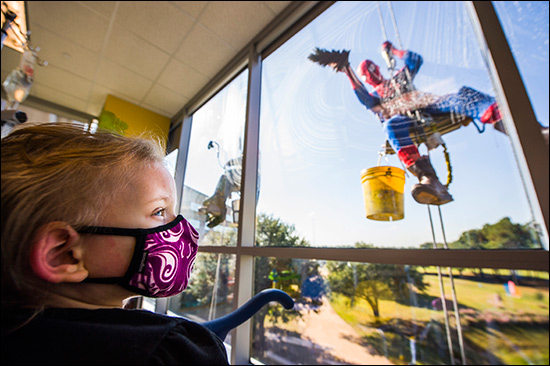
At West Campus, the festivities began on October 28 when members of Texas Window Cleaning Co., Inc. dressed up as super heroes and cleaned the hospital’s windows while waving to children inside. The company has been cleaning the windows at Main Campus since 1957 and at West Campus since 2011.

“This is the third year the superheroes have brought their superpowers to West Campus, and we are grateful to them for doing so,” said Matt Schaefer, president of Texas Children’s Hospital West Campus. “Things like this are small and simple, but they can have a profound impact on our patients, families and visitors. After all, what better way to live out our vision than to look for ways to brighten the days of the patients who seek care on our campus.”

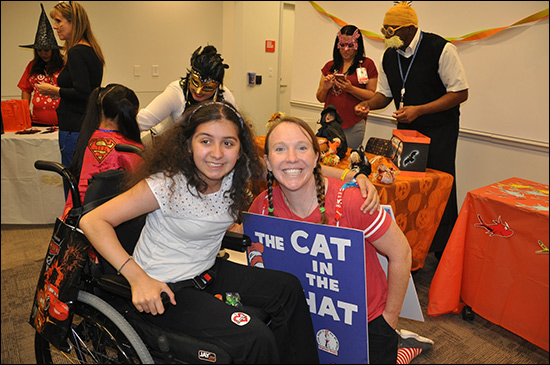
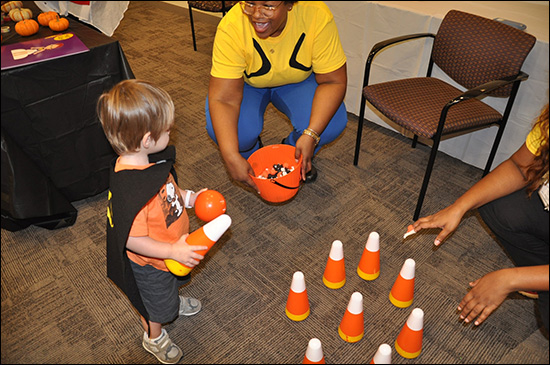
Festivities at West Campus and beyond continued on Monday with the West Campus Fall Festival and the Annual Halloween Spooktacular Patient’s Party on The Auxiliary Bridge in the Medical Center. Dressed in their Halloween best, employees handed out goodies to patients during the multi-hour long parties sponsored by Child Life at West Campus and the Patient Activity Team at Main Campus.

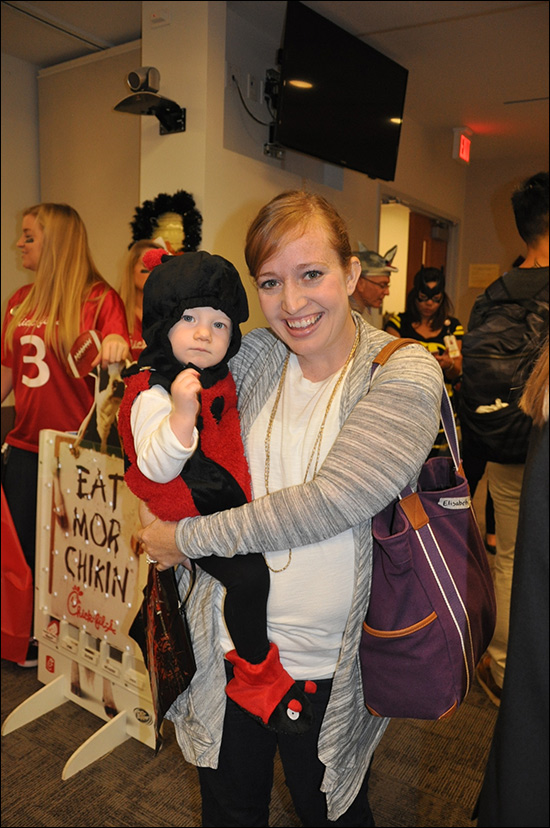
Ghosts, goblins and ghouls also were out in full force at other areas across the organization, including the new Outpatient Facility in The Woodlands, various Health Centers across the Houston area and many departments at Main Campus.

11216pscf640Purple Songs Can Fly celebrated its 10-year anniversary this month with the Journey to Hope gala at the Hobby Center for the Performing Arts. In addition to the beautiful seated dinner, guests enjoyed an inspiring performance of Purple Songs Can Fly’s original musical, Journey to Hope, starring six pediatric cancer patients/survivors who shared their incredible stories and songs of hope. Carol Herron, coordinator of the Periwinkle Arts In Medicine program at Texas Children’s Cancer and Hematology Centers, was the gala honoree and received praise for her continued dedication to bringing the arts to patients.

Purple Songs Can Fly is a unique program that provides a musical outlet for children being treated for cancer and blood disorders at Texas Children’s Cancer and Hematology Centers. In this program, which is the first of its kind, the children work with founder, Anita Kruse, and other professional composers to write and record their own songs. In an in-house studio at Texas Children’s Cancer Center, composers work with children and their siblings to write, record, and burn songs to disc within short session.

Click here to listen to a Purple Songs Can Fly song that Dr. Jennifer Arnold and Texas Children’s patient Peyton Richardson created about their cancer journey and the importance of always remaining positive.

11216drshook175Chief Safety Officer Dr. Joan Shook received the 2016 Jim Seidel Distinguished Service Award from the American Academy of Pediatrics Section on Emergency Medicine at the AAP National Conference on October 22 in San Francisco. The award recognizes members who have provided exceptional service to the section and to the field of pediatric emergency care.

11216drbrenner175Dr. Malcolm Brenner was recently named a member of the National Academy of Medicine, a prestigious panel of doctors that advises federal officials on health issues. Brenner is the director of the Center for Cell and Gene Therapy at Baylor College of Medicine, which is responsible for stem cell transplant programs at Texas Children’s and Methodist hospitals.

As a clinician-scientist, Brenner has pioneered basic and clinical research focused on use of gene transfer to augment the immune response to tumors. His contributions have led to the development of genetically modified T cells that can safely and effectively target cancer tumors.

Brenner has received many awards for his work including the American Society for Gene and Cell Therapy Outstanding Achievement, the American Society of Hematology Mentor Award and the Pioneer Award from the peer-reviewed journal Human Gene Therapy in recognition of his scientific achievements and leadership in the field.

This honor from the National Academy of Medicine was bestowed to Brenner during the academy’s annual conference on October 17.

11216nribrain640A new study published in the journal Neuron found that taking a pill that prevents the accumulation of toxic molecules in the brain might someday help prevent or delay Alzheimer’s disease.

According to researchers at Texas Children’s Hospital, Baylor College of Medicine and Johns Hopkins University School of Medicine, the study took a three-pronged approach to help subdue early events that occur in the brain long before symptoms of Alzheimer’s disease are evident.

“Common diseases like Parkinson’s, Alzheimer’s and dementia are caused in part by abnormal accumulation of certain proteins in the brain,” said senior author Dr. Huda Zoghbi, director of the Jan and Duncan Neurological Research Institute at Texas Children’s. “Some proteins become toxic when they accumulate and they make the brain vulnerable to degeneration.”

Tau is one of those proteins involved in Alzheimer’s disease and dementia. When tau accumulates as the person ages, it increases the vulnerability of the brain to developing Alzheimer’s.

“Scientists in the field have been focusing mostly on the final stages of Alzheimer’s disease,” said first author Dr. Cristian Lasagna-Reeves, postdoctoral fellow in the Zoghbi lab. “Here we tried to find clues about what is happening at the very early stages of the illness, before clinical irreversible symptoms appear, with the intention of preventing or reducing those early events that lead to devastating changes in the brain decades later.”

To find out which enzymes affected tau accumulation, the scientists inhibited about 600 enzymes called kinases one by one and found one, called Nuak1, whose inhibition resulted in reduced levels of tau.

By confirming this discovery in three different experiments – in fruit flies, mice and human cells – the researchers said the next step is to develop drugs that will block the production of Nuak1.

“If we can find drugs that can keep tau at levels that are not toxic for the brain, we would be able to prevent or delay the development of Alzheimer’s and other diseases caused in part by toxic tau accumulation,” Zoghbi said.

Click here to read the joint Baylor and Texas Children’s news release for more details on this study.

11216drgeorgeverghese175Texas Children’s is proud to announce Dr. Verghese George as the new division chief of women’s radiology at Texas Children’s Pavilion for Women.

George, who also serves as associate professor of Radiology at Baylor College of Medicine, received his medical degree from the Armed Forces Medical College in India. After completing four years of residency training in Obstetrics and Gynecology in India and the United Kingdom, he pursued residency training in Diagnostic Radiology at the University of Manchester in the United Kingdom. Subsequent to this, he moved to the U.S., and completed three fellowships: Abdominal Imaging (University of Washington), Body MRI (Yale University) and Nuclear Radiology (Yale University).

As new division chief of women’s radiology, George will merge his prior Ob/Gyn training with his clinical interest in Women’s imaging. His research interests include placental and pelvic floor imaging, and imaging of chronic pelvic pain including pelvic congestion syndrome and vulvodynia. His work focuses on multimodality abdominopelvic radiology in the adult population.