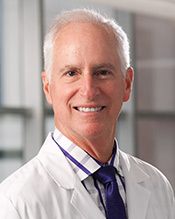
Dr. Huda Zoghbi, director of the Jan and Dan Duncan Neurological Institute at Texas Children’s and professor in the departments of pediatrics, molecular and human genetics, neurology, and neuroscience at Baylor College of Medicine, received the 2017 Switzer Prize from the David Geffen School of Medicine at UCLA for excellence in biological and biomedical sciences research.
The Switzer Prize recognizes discoveries in basic research in the biological and biomedical sciences that have the potential to inspire transformative breakthroughs in medicine. It is awarded annually to an individual investigator whose recent work has revealed new paradigms, illuminated biological processes or pathways, or explained the origins of pathologies or diseases.
The David Geffen School of Medicine at UCLA established the prize to promote the importance of basic sciences research, which advances the understanding of biological systems and human physiology. Such research – a priority at UCLA – is essential to continued improvements in the diagnosis and treatment of a wide variety of illnesses.
The Switzer Prize is named in recognition of the generosity of Irma and Norman Switzer, who made a major gift to the David Geffen School of Medicine at UCLA.
Zoghbi’s research includes identifying a gene mutation that causes Rett syndrome, a severe genetic disorder that mostly affects girls. She will deliver the Switzer Prize lecture at UCLA in February 2018.
Texas Children’s Radiology-in-Chief Dr. George Bisset was recently awarded the Radiological Society of North America’s (RSNA) Gold Medal for 2017.
The Gold Medal is RSNA’s highest honor. It is awarded annually by the Board of Directors to those persons who, in the judgment of the Board, have rendered unusual service to the science of radiology. Typically, three medals are awarded each year in accordance with the RSNA’s Bylaws as revised November 1977. A unanimous vote of the Board of Directors is required.
Bisset is the second Texas Children’s Hospital recipient of this prestigious award. The first recipient was (late) Dr. Edward Singleton, who received the award in 1995.
July 11, 2017
When a patient is transferred to or from Texas Children’s Hospital, several wheels are set into motion to make the process run smoothly for our patients and their families.
People from various areas of the organization jump into action to make the best decision on where the patient needs to go and how they should get there.
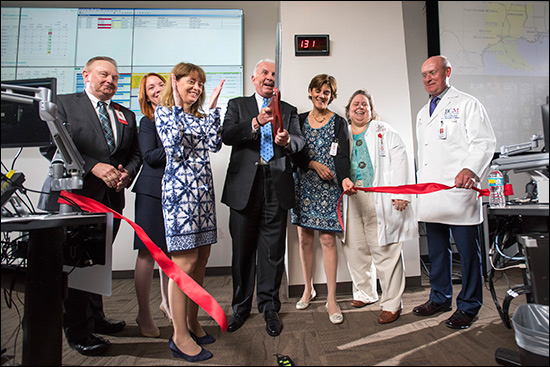
For decades, the transfer process has prevailed using little to no technology to transfer an average of about 1,300 patients a year to and from Texas Children’s Hospital in the Medical Center, West Houston and The Woodlands. On April 19, all that changed with the opening of Texas Children’s Nerve Center, a communications hub for everyone involved in the transfer process and beyond.
“This is another great day at Texas Children’s Hospital,” said Texas Children’s President and CEO Mark A. Wallace at the center’s grand opening ceremony. “This Nerve Center is distinctive, innovative, forward thinking and a great example of the amazing leadership we have here at Texas Children’s.”
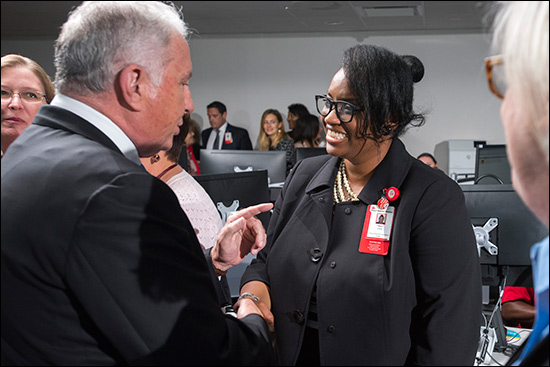
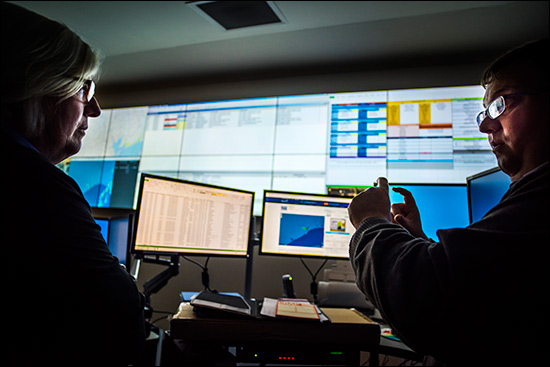
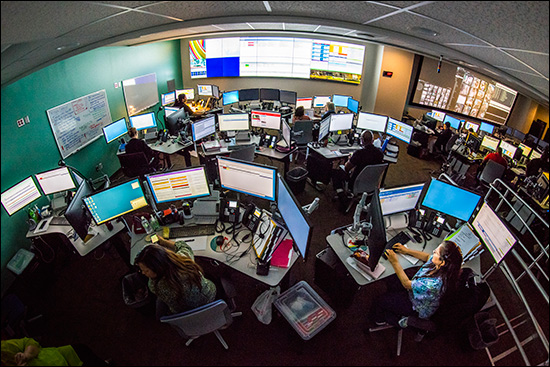
Equipped with state-of-the-art technology, the Nerve Center is located in a large, high-tech room on the third floor of Texas Children’s Pavilion for Women. Half of the room is occupied by representatives from the hospital’s security and facilities departments. The other half houses representatives from the departments of Room Management, Transport Services and Critical Care.
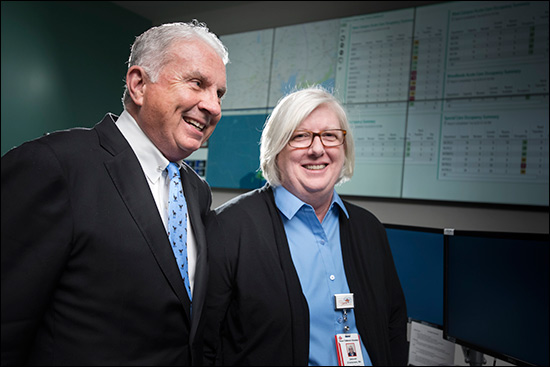
View photos of the Nerve Center below.
When a call about a transfer comes into the center, representatives from all teams work together to assure an efficient, rapid and accountable, transfer occurs that provides the highest quality and safest care possible for Texas Children’s high risk maternal, neonatal and pediatric population.
“We have all the people in the room we need,” said Assistant Director for Transport Services Deborah D’Ambrosio. “It’s so much easier to coordinate, be efficient and supportive to families in referring hospitals.”
One notable change made with the opening of the Nerve Center was the splitting of responsibilities for transfers and transports. Transfers deal with patients who are either coming or going to acute care and transports handle patients who are much sicker and either need a physician or a higher level of care while being moved to where they need to be. At the Nerve Center, transfer calls go to one team and transport calls go to another. The team that handles the transport cases includes a transport charge nurse and a critical care physician.
“At the Nerve Center, you have one directive and no distractions by competing interests,” said Dr. Mona McPherson, the Nerve Center’s medical director. “Your sole focus is on the transport team and getting the patient where they need to be safely and quickly.”
In addition to getting everyone in the same room and a few organizational tweaks, the biggest change to Texas Children’s transport process was the implementation of technology that enables everyone in the Never Center to do their job better.
When you step into the Nerve Center, there are many different pieces and types of technology. Each workstation has four monitors displaying information vital to the transport process. There is a huge LED display at the front of the room showing a list of patients coming and going from Texas Children’s, the location of all Texas Children’s ambulances, each of the organization’s two, soon to be three helipads, and census data. And, there are several systems operating behind the scenes that connect everyone in the room with the most up-to-date information needed to make the best decision possible about a patient coming to or leaving Texas Children’s.
“We’ve taken a department that was using very little technology to one that uses a lot in various ways, all of which are able to improve their outcome,” said Melissa Witt, a registered nurse and a senior system analyst for Texas Children’s Information Services. “We’re already seeing good results.”
During the first month the Nerve Center was launched, the Transfer Team reduced their time from dispatch to pick up by 20 minutes. It used to take the team 50 minutes to get out the door. Now it takes them 29 minutes. In addition, the number of transfers has gone up, breaking a record in May with 151.
“We’ve had more than one community ER doc say, ‘Wow, this is the easiest I’ve ever been able to get a child into Texas Children’s,” McPherson said. “And that really is our mission central here. We want to make people want to call us, not because we’re just good and give excellent care, but because it’s really easy to get a patient in here.”
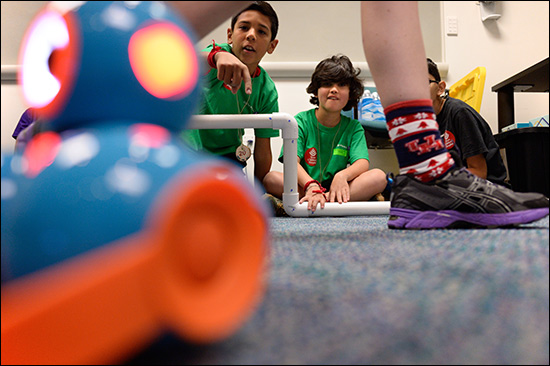
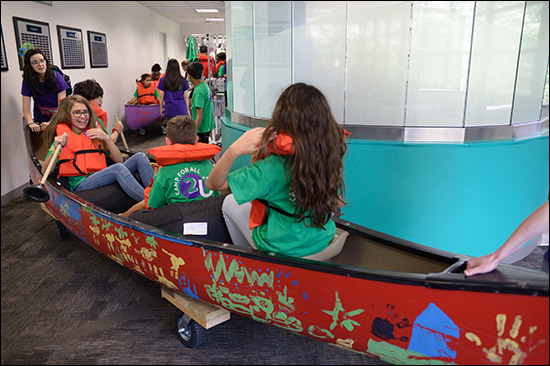
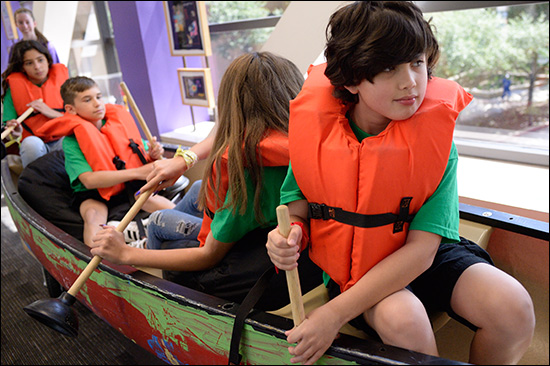
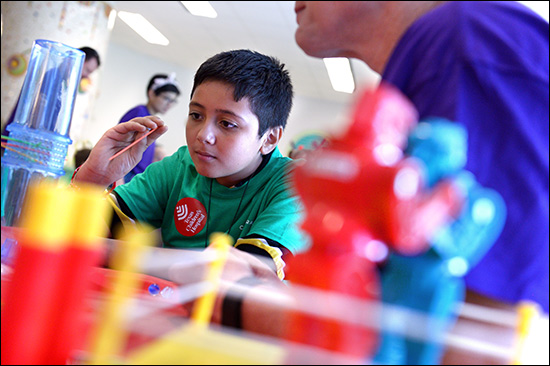
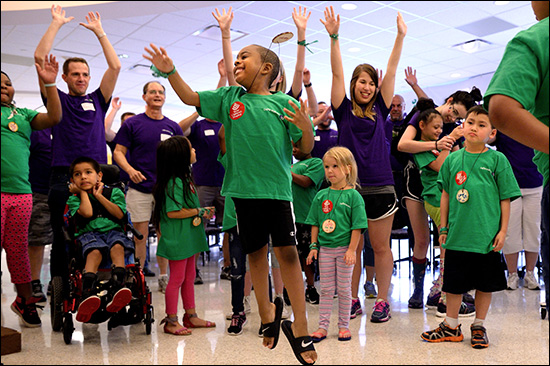
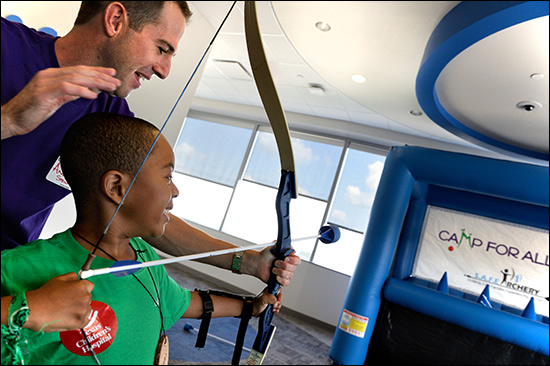
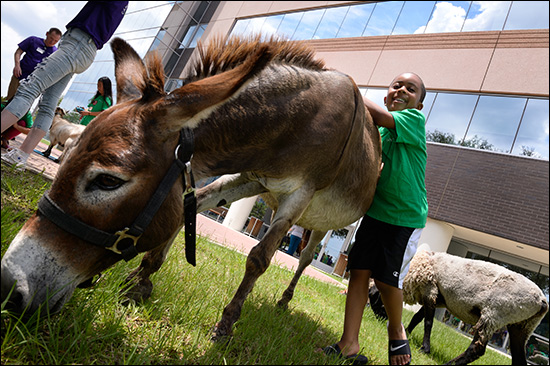
For two weeks in June, Camp For All 2U brought the joy of summer camp to patients at Texas Children’s Hospital’s Main and West Campuses.
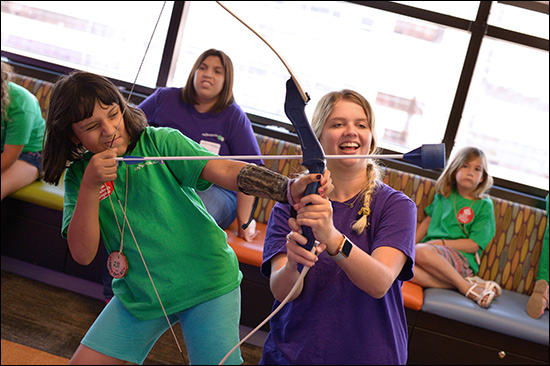
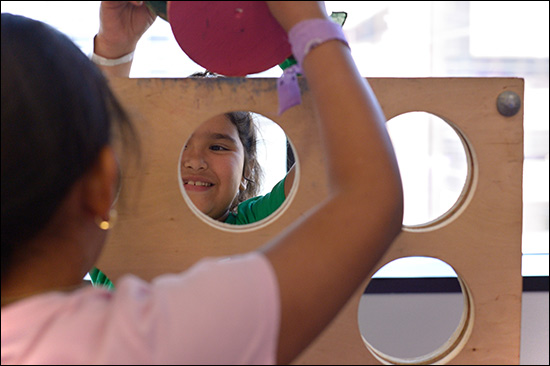
The program transforms areas of the hospital into camp, providing patients who may not get the experience of camp outside of the hospital the opportunity to enjoy a variety of games and activities. With a different theme each day, camp activities include archery, a petting zoo, arts and crafts and much more.
“We are so excited to have Camp For All 2U here at Main Campus for the second time,” said Child Life Specialist Sarah Herbek, who collaborated with Camp For All to bring the experience to Texas Children’s. “For many of these patients, this is the only opportunity they will have to experience camp this summer due to their current medical condition.”
Camp For All Program Supervisor Allen McBride said he was thrilled to be back at Main Campus and, with the generous support of the Wood Group, to be able to expand the program to West Campus.
“We are grateful to be able to give these patients the chance to temporarily forget what they are going through and just enjoy being a kid,” McBride said.
And, enjoy they did. Many of the patients didn’t want to leave camp and signed up to attend for multiple days.
View photos from Camp For All 2 U below.
Child Life Specialist Riley Hammond was key to getting the camp at West Campus and said “It is huge for staff and parents to see these kids having so much fun. In terms of normalization in the child life world, camp has tremendous positive impact on patients and families.”
It wasn’t just the children who were having fun. Camp counselors, volunteers and hospital staff were overcome with smiles, laughter and child-like joy as well. Some even went so far as to let the camp goers throw a pie in their face just for laughs.
Andrew Stewart, CEO of the Wood Group, was one of those volunteers and said he and his executive team wanted to participate in something extraordinary that would support the amazing work that’s already being done at Texas Children’s.
“We’ve had a wonderful time,” he said. “And, I think the children have as well.”
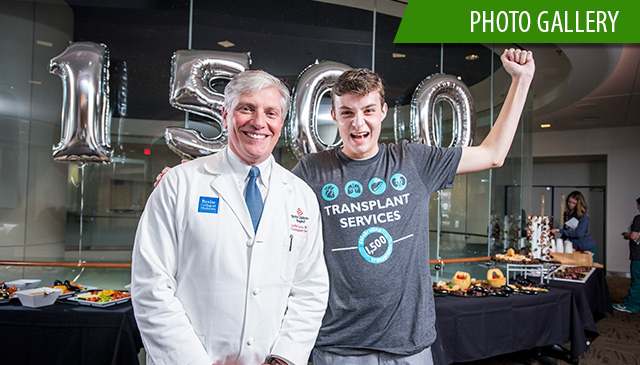
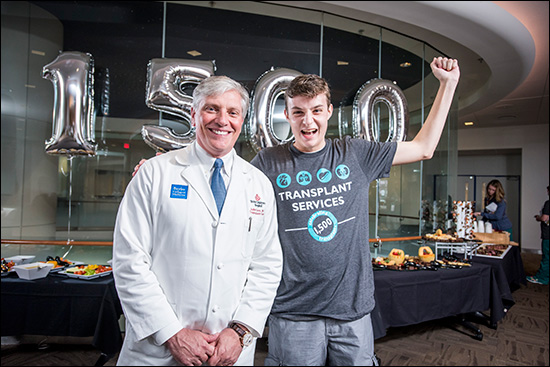
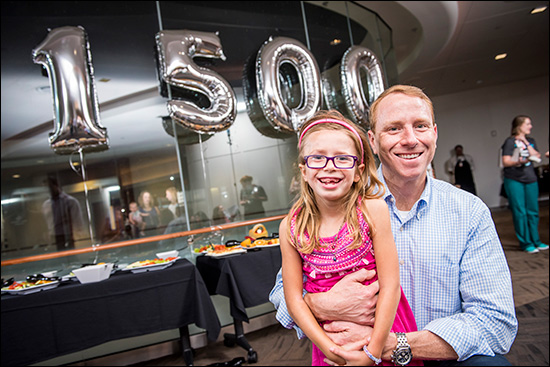
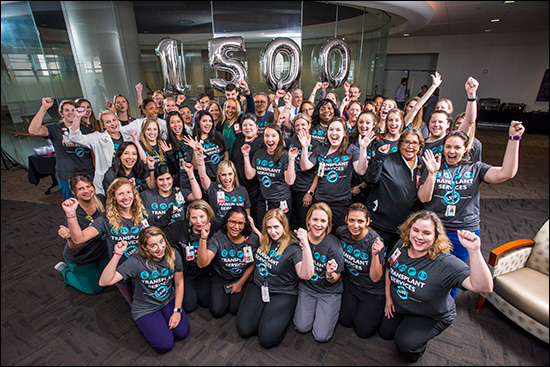
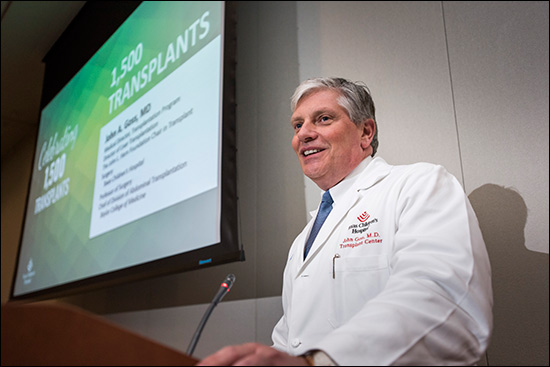
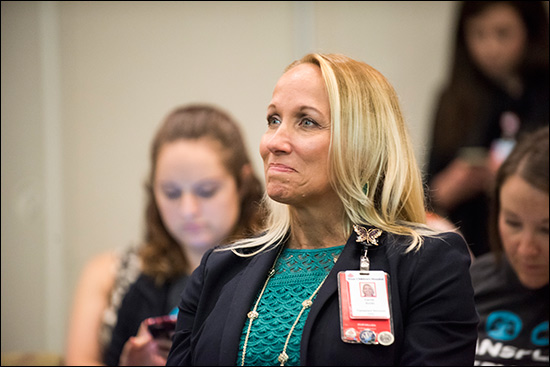
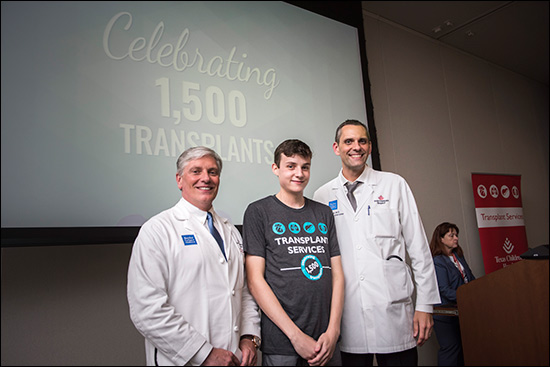
On June 28, Texas Children’s Transplant Services held a celebration in honor of reaching an important milestone – the completion of 1,500 transplants.
The milestone further solidifies Texas Children’s position as one of the most active pediatric transplant programs in the nation, per the U.S. Department of Health & Human Services Organ Procurement and Transplantation Network.
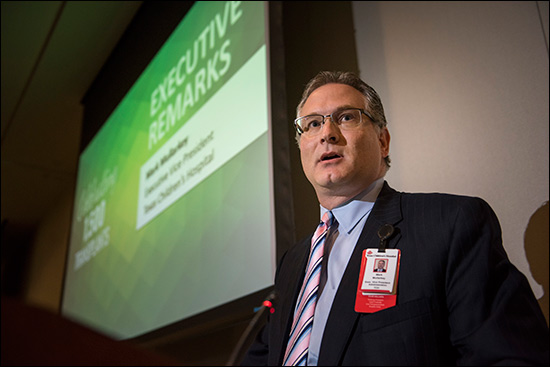
“Texas Children’s transplant program is key to our medical and academic success,” said Executive Vice President Mark Mullarkey. “This really differentiates us and I can’t thank you enough for that.”
Transplantation began at Texas Children’s in 1984 with a pediatric heart transplant that was performed by Dr. O.H. “Bud” Frazier. Since that time, liver, kidney and lung have been added and countless lives have been saved. Just last year, 86 organ transplants were performed at Texas Children’s – 32 kidney transplants, 25 heart transplants, 21 liver transplants and 8 lung transplants.
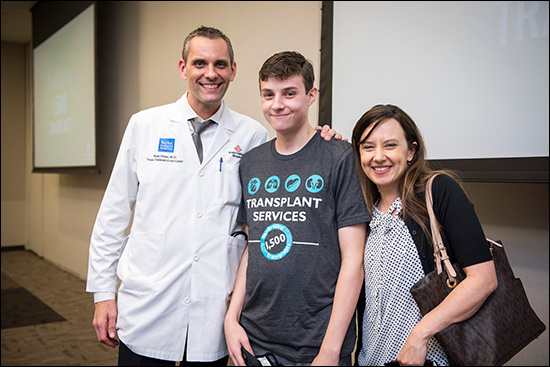
The Transplant Team’s 1,500th transplant occurred on May 21 when 17-year-old Joseph McCullough received a new liver, giving him a chance at a new life after battling primary sclerosing cholangitis, a life-threatening disease that causes end-stage liver disease. McCullough was at last month’s celebration and thanked everyone in the crowd.
“When I was little, I loved Super Heroes. Today, I know who the real Super Heroes are and that’s you,” McCullough said. “I am honored to be up here to say thank you and that transplantation is a beautiful process.”
Other transplant recipients in the audience were Amelia Hicks and Carson Kainer. Amelia received a heart transplant when she was an infant. She is now a thriving kindergartener. Kainer received a kidney transplant at Texas Children’s as a young adult and became the first professional baseball player to play after an organ transplant.
“I got to live out my dream after my transplant because of you here today,” Kainer said. “Thank you so much for what you’ve done, what you do today and the lives you will impact in the future.”
When Dr. John Goss, medical director of Transplant Services and surgical director of the Liver Transplant Program at Texas Children’s, took the podium, he thanked all of the donors who make the transplant process possible and his team for making stupendous strides in a complex field.
“I want you to understand how special you are,” Goss said. “We do a lot of very complex procedures here and we’ve gone from doing about 20 a year to around 100 and I foresee us doing even more in the future.”
For more information about Texas Children’s Transplant Services, click here. To register to become an organ donor, click here.
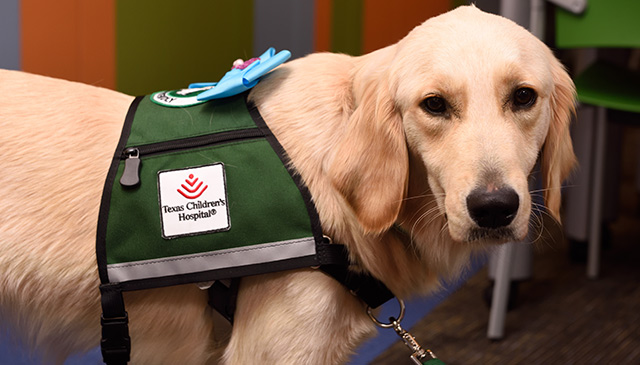
For our 5th annual Help Kids be Kids online fundraiser we are raising funds to help support and enhance our Therapy Dog Program!
Our patients’ faces light up when Elsa walks through the halls. She is incredibly gentle and affectionate whether she’s helping a patient deal with a long-term illness, cope with chronic pain or get through physical therapy.
Elsa is in high demand. There are more patients who would benefit from spending time with her, but she only has so many hours in the day. This campaign will support Therapy Dog Program and help us get closer to giving her a four-legged brother or sister in the future!
Here’s how employees can help:
Share on Facebook and Twitter. Let your friends and family know that they can join you and help make sure our Therapy Dog Program can continue to grow!
Support this program by making a donation. Consider making a donation yourself to enhance the Therapy Dog Program: texaschildrens.org/puppylove.
Together we can make a difference for our patients!
Texas Children’s Hospital’s Kidney Stone Clinic has expanded to Texas Children’s Hospital West Campus.
In addition to once monthly clinics at Main Campus in the Medical Center, patients can now access multi-disciplinary stone treatment at West Campus on the first Wednesday of each month.
During each visit, patients and families will meet with a urologist, a nephrologist, and a dietitian to better understand what’s causing the stones and how to manage or prevent them.
To make an appointment, simply place a referral order in Epic or contact Central Scheduling at ext. 2-2778.


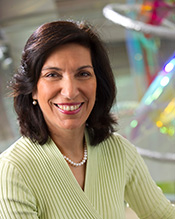 Dr. Huda Zoghbi, director of the Jan and Dan Duncan Neurological Institute at Texas Children’s and professor in the departments of pediatrics, molecular and human genetics, neurology, and neuroscience at Baylor College of Medicine, received the 2017 Switzer Prize from the David Geffen School of Medicine at UCLA for excellence in biological and biomedical sciences research.