October 10, 2017

More than half of Texas Children’s employees have stepped up to protect themselves and others against the flu by getting a flu shot. As of the end of last week, 7,572, or 59 percent, of Texas Children’s employees, medical staff, volunteers, and Baylor College of Medicine employees working in Texas Children’s facilities had received a flu vaccination.

“We are off to a good start but still need to push forward,” said Jill Fragoso, director of benefits and well-being. “We are striving to achieve greater than a 90 percent vaccination rate by December 1.”

Each fall, Texas Children’s employees are asked to get vaccinated against the flu to not only protect themselves but to protect those around them – their co-workers, family, friends, and their patients. The Centers for Disease Control and Prevention (CDC) predicts this year’s flu season will begin this month and recommends a yearly flu vaccination as the first and most important step in protecting against the flu and its potentially serious complications.

Texas Children’s Employee Health is administering free flu vaccines to Texas Children’s employees, medical staff, volunteers, and Baylor College of Medicine employees working in Texas Children’s facilities. Click here for more information on how to get your shot and here for the BCM Occupational Health Program schedule.

Prior to receiving your vaccine, Texas Children’s employees are to complete their Flu Consent Form online via the Employee Health & Wellness Portal. Click here for portal instructions. Baylor College of Medicine employees working in Texas Children’s facilities will continue to complete paper consent forms when they receive the flu vaccine.

“Thank you in advance for doing the right thing and receiving your flu vaccine,” Fragoso said. “Such a small act will go a long way for you, your family, friends, co-workers, and most importantly, your patients.”
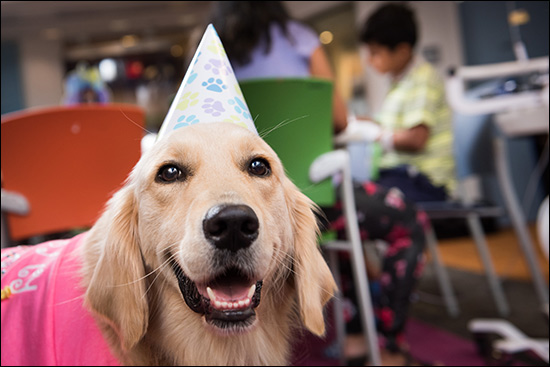
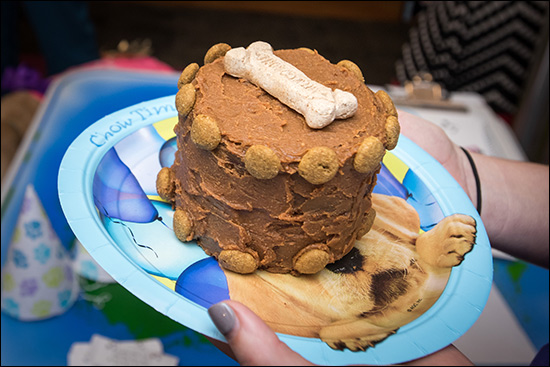
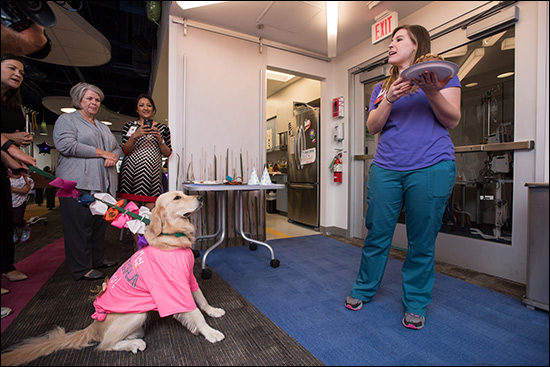
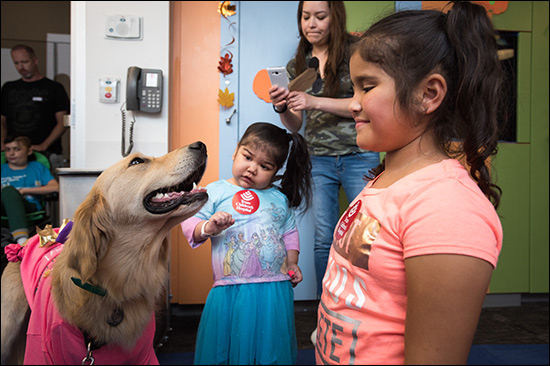
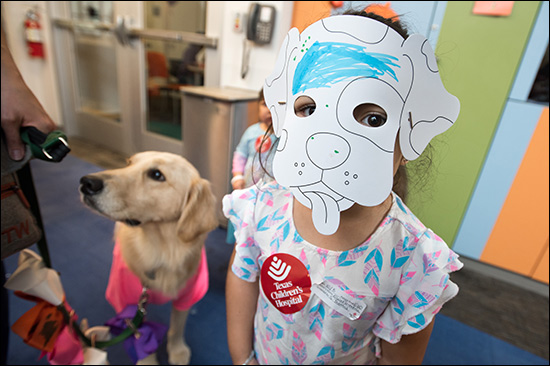
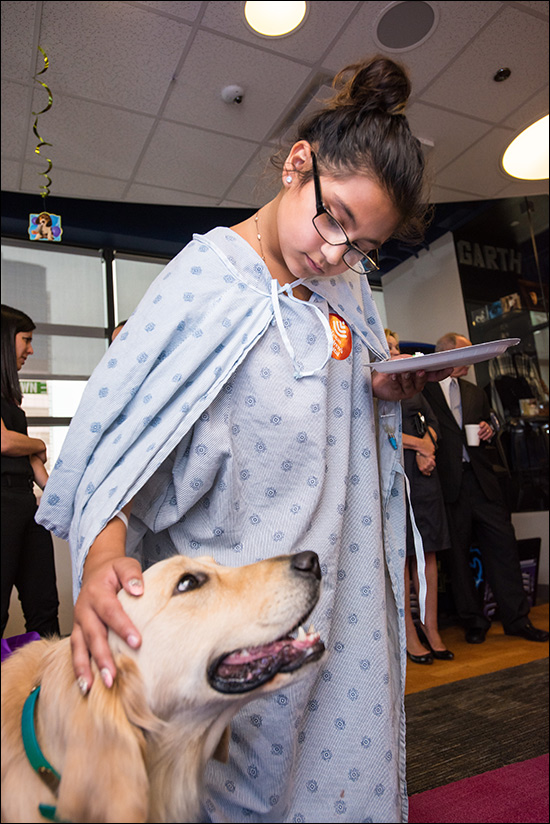
On October 2, Elsa, Texas Children’s first therapy dog, celebrated her one year anniversary at the hospital with patients and friends alike. The four-legged, full-time employee arrived in October 2016 and has brought smiles and comfort to patients, families, visitors and employees ever since.

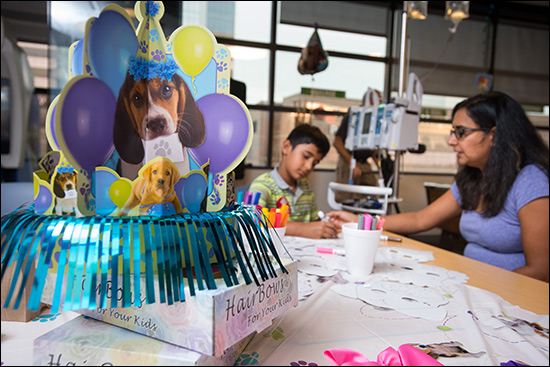
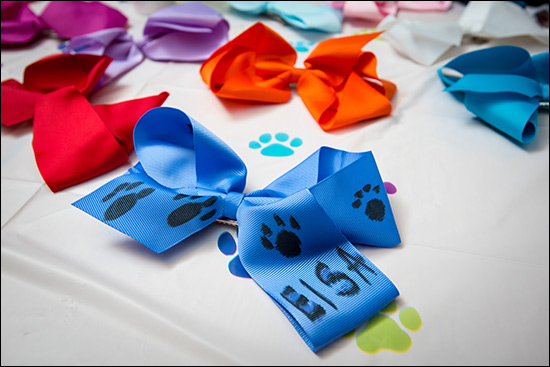
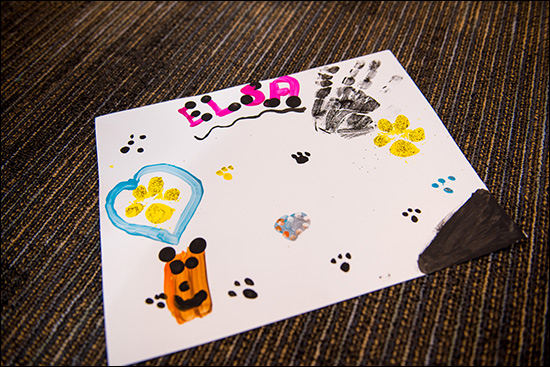
To commemorate her special day, Elsa donned a “It’s my gotcha day!” t-shirt. She spent time greeting patients and guests, and received many cards from those who love her most. Patients also decorated new bows for Elsa’s collar and enjoyed cookies during the celebration.

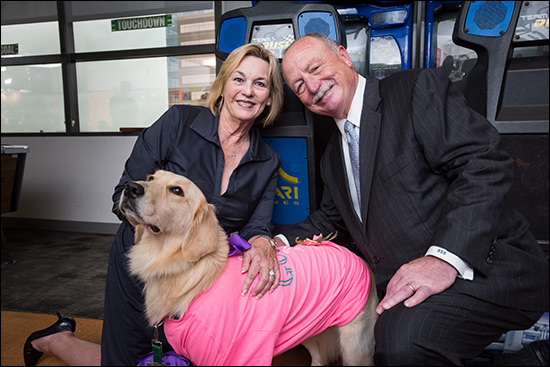
Graciously funded by Judy and Bobby Shackouls, the golden retriever spends her days with her handler and Texas Children’s child life specialist, Sarah Herbek. The two collaborate with medical teams and physical and occupational therapists to provide support to patients who may be having trouble coping with hospital stays, a new diagnosis or other experiences.

Texas Children’s looks forward to celebrating many more milestones with Elsa.

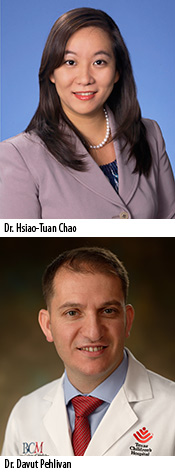
Dr. Hsiao-Tuan Chao received the 2017 Outstanding Junior Member Award from the Child Neurology Society for her discovery of the genetic cause of a neurodevelopmental condition known as the Hypotonia Ataxia and Developmental Disorder Syndrome.

Chao is the clinical instructor in pediatric neurology at Baylor College of Medicine and physician-scientist at the Jan and Dan Duncan Neurological Research Institute (NRI) at Texas Children’s in the laboratory of Dr. Hugo J. Bellen.

Through large-scale collaborative efforts with the Undiagnosed Diseases Network (UDN) and Baylor Genetics Laboratory (BGL), Chao’s research studies revealed the pathogenic role of damaging genetic changes in Early B-Cell Factor 3 (EBF3) in neurodevelopment and cognition. Her research continues to focus on elucidating the role of EBF3 dysfunction and transcriptional dysregulation of neural circuits in highly prevalent childhood disorders such as intellectual disability and autism spectrum disorder.

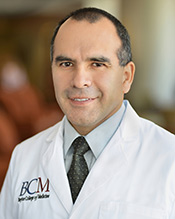
Dr. Davut Pehlivan, a medical resident in pediatric neurology and physician-scientist at Baylor College of Medicine in the laboratory of Dr. James Lupski, is the recipient of the 2017 M. Richard KoenigsBerger Scholarship Award from the Child Neurology Society for his studies related to arthrogryposis patients.

Pehlivan analyzed 108 arthrogryposis families using whole exam sequencing approach as part of Baylor-Hopkins Center for Mendelian Genomics initiative. His studies made important contributions to understanding the disease pathogenesis by showing evidence for oligogenic inheritance in arthrogryposis and yielded several novel genes causing arthrogryposis.

The Child Neurology Society established this scholarship award in 2013 to honor the memory of . The awardee is selected between CNS Junior Members/residents submitting the best abstract in the areas of neonatal neurology, genetic diseases, HIV or metabolic disorders.

Texas Children’s collaborative work to develop a novel device to anchor the chorio-amniotic membranes during fetal surgery was recently funded by the Eunice Kennedy Shriver National Institute Of Child Health & Human Development (NICHD) of the National Institutes of Health (NIH).

Partnering with Baylor College of Medicine, the Department of Bioengineering at Texas A&M University, and local life sciences commercialization firm Fannin Innovation Studio, the $225,000 Small Business Innovation Research (SBIR) grant will be used to advance the development of a device that can be introduced into the uterine cavity under ultrasound guidance to anchor the chorio-amniotic membranes, thereby reducing the risk for premature rupture of membranes (PROM) during fetal surgery.

Preterm PROM is the most frequent complication associated with fetal surgery and can increase the risk of premature delivery that could potentially add the insult or prematurity to the fetal anomaly that leads to the need for fetal surgery.

Through the Texas A&M undergraduate and graduate design program, a group of Texas A&M engineering students collaborated with Dr. Jimmy Espinoza and OB/Gyn-in-Chief Dr. Michael A. Belfort, obstetricians and gynecologists, and fetal surgeons at Texas Children’s and Baylor, to create the device in 2016. Espinoza and Belfort challenged the students to develop innovative tools that could be percutaneously introduced into the uterus during fetal surgery to anchor the chorio-amniotic membranes in order to reduce the risk of preterm PROM.

Fetal surgery is a relatively new discipline that aims to reduce the risk for fetal death in conditions such as twin-to-twin transfusion syndrome, severe fetal anemia, congenital diaphragmatic hernia or fetal hydrops, or reduce the long term complications and improve the quality of life in conditions such as spina bifida. Texas Children’s and Baylor are at the forefront on fetal surgery in the U.S. and have innovated techniques to make fetal surgery safer for the mothers and their unborn children.

After extensively collaborating with Texas Children’s surgeons to understand the challenges of anchoring the chorio-amniotic membranes during fetal surgery and the need for refinement, the collaborative team developed a device that can be percutaneously introduced into the uterine cavity under ultrasound guidance in order to anchor the chorio-amniotic membranes to reduce the risk for preterm PROM. This new innovation in fetal surgery could potentially be used in all fetal surgeries because of its percutaneous approach and should reduce the risk for the most common complication associated with fetal surgery, namely pre-term PROM.

“The development of new devices and new approaches in fetal surgery is very important to make fetal interventions safer not only for the fetus but also for the mother,” said Espinoza, co-director of the Fetal Center at Texas Children’s. “The decision to proceed to fetal surgery is very altruistic for the mothers because they will be exposed to risks associated with surgery for the benefit of their unborn child. Thus, we have the obligation to minimize those risks. This award recognizes the academic partnerships that are necessary to advance the frontiers of fetal surgery.”

The team’s invention has won the top prize at Texas A&M University’s 2016 annual Engineering Design Showcase. The project was judged against over 700 students on more than 150 other projects.

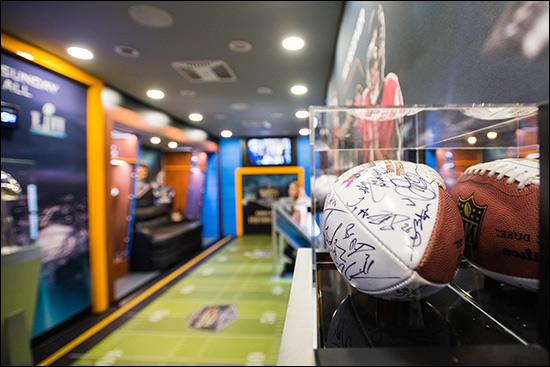
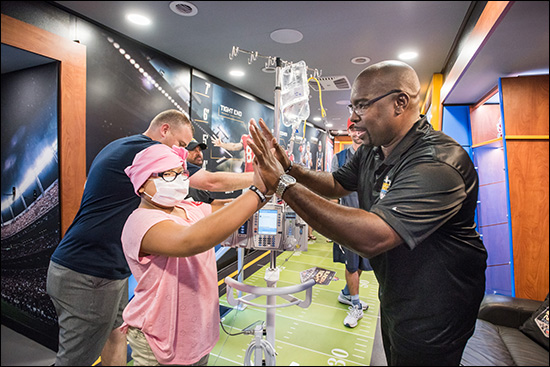
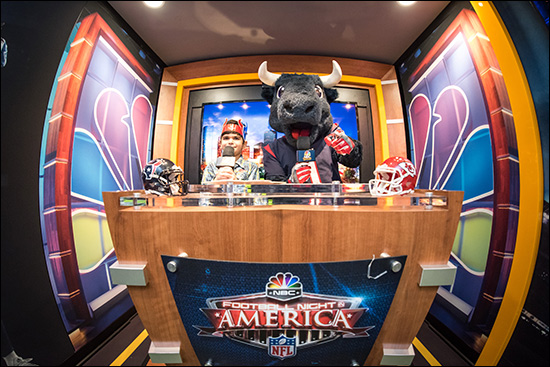
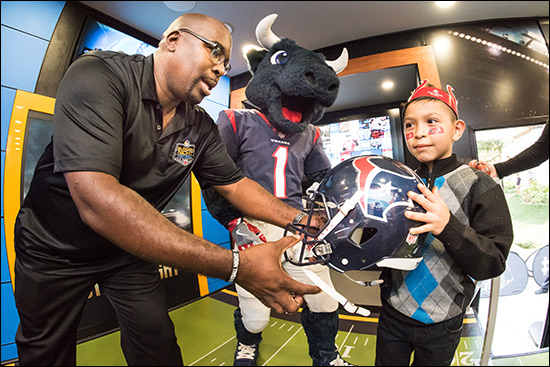
Texas Children’s patients and families got the chance to visit NBC’s Sunday Night Football Bus October 6 ahead of the Houston Texans game against the Kansas City Chiefs.

The bus included a player wall where children and adults could compare themselves to a real NFL player, a replica news desk for photo ops, Player of the Game balls signed by the players of each week’s game, the Super Bowl trophy and more.

TORO was on hand for the excitement, posing for photos and signing autographs.

October 4, 2017

How ‘bout them ‘Stros! With their pride, passion, and perseverance, our Houston Astros are in the 2017 American League Division Series (ADLS). During a very difficult time in Houston with Hurricane Harvey, our professional sports teams were a ray of hope on and off the field. Like Texas Children’s, our hometown heroes were STURDY during the storm and volunteered their time while they continued to win.

Now, let’s show the Astros our gratitude and one-of-a-kind Texas Children’s spirit and “Orange Out Houston” by wearing the color orange tomorrow, October 5, and Friday, October 6. They will be facing the Red Sox in Houston before heading to Boston for game three.

The Houston Astros have amazing leaders, but it is through Amplifying Unity as a team they made it to the ALDS. Let’s help the ‘Stros “Earn It” by wearing orange and helping Orange Out Houston!

Play Ball!

October 3, 2017

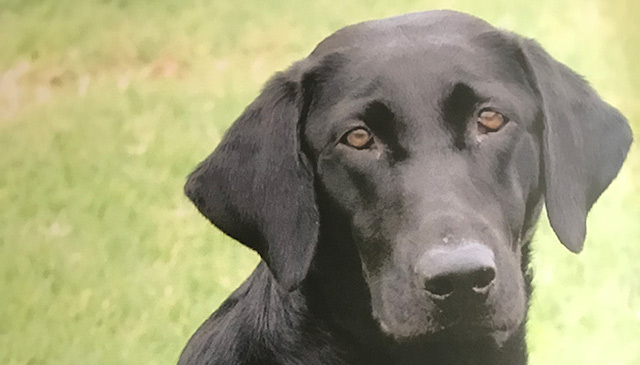
Texas Children’s President and CEO Mark Wallace and his wife, Shannon, recently donated a very special gift to the Texas Children’s Pawsitive Play Program in memory of their beloved black Labrador, Cadence. The Wallaces have generously pledged an initial $80,000 contribution to the program to enable Texas Children’s to hire another animal-assisted therapy coordinator and therapy dog team to provide therapeutic interventions for patients and families in the Legacy Tower.

“Shannon and I are both animal lovers through and through, and we could not think of a better way to honor Cadence than by donating to the Pawsitive Play Program in her memory,” Wallace said. “We were very attached to Cadence, who brought us so much joy before she passed away. We saw what a positive impact Elsa has made on our patients and their families, and we know the addition of a new therapy dog will allow even more of our patients, employees and staff to benefit from this program in the Legacy Tower.”

Since joining Texas Children’s one year ago, Elsa, Texas Children’s first therapy dog, has provided targeted therapeutic interventions to patients and their families in numerous patient care settings at the Texas Children’s medical center campus. The hospital’s second therapy dog will be specifically trained to care for patients and families in the critical care environment.

“The Pawsitive Play program has made an incredible difference in the healing process for our patients and their families,” said Texas Children’s Assistant Vice President Sarah Maytum. “And the impact extends to our employees and physicians as well. Elsa brightens everyone’s day. I often see her in the hallway, surrounded by a crowd of employees who have stopped to greet Elsa as she is on her way to see patients.”

Texas Children’s will again collaborate with Canine Assistants, a non-profit organization in Atlanta, Georgia, that has matched more than 1,500 therapy dogs, including individual and hospital placements. The organization will conduct a site visit to learn more about the critical care areas of the Legacy Tower before selecting the ideal therapy dog for that environment.

Many of the clinical areas that are moving into Legacy Tower have had great success with the Pawsitive Play Program already. Elsa visits the intensive care and progressive care units on a regular basis. While some patients will not be able to receive a visit from the new service dog because of their clinical conditions, the families, visitors and staff throughout Legacy Tower will be able to experience the comfort of our newest therapy dog.

The Wallaces’ contribution will support Texas Children’s second therapy dog and its handler over the 8-year service life of the dog. Texas Children’s plans to have this new furry companion on staff in early 2018. This will allow sufficient time to get the newest furry member of the team oriented and ready for the opening of Legacy Tower.

“Legacy Tower is so distinctive and innovative,” Wallace said. “It is being equipped with the most advanced technology and much larger, family-centered critical care spaces. It will complement the hospital’s existing ORs and radiology services, and will be home to Texas Children’s No. 1 ranked Heart Center. With so much to look forward to, Shannon and I thought it would be great to bring a special new therapy dog to the patients we will care for in our new critical care tower. We are so fortunate to be able to do something like this, and we both can’t wait to welcome our new friend.”