December 20, 2017

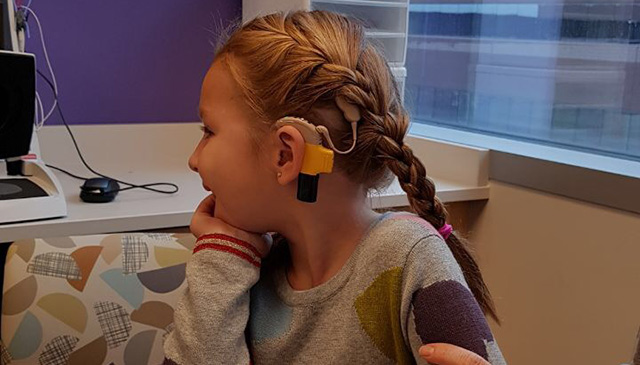
Five-year-old Marianne Franco failed every hearing test since she was born, causing her to move through life lip reading and hearing what she could with a hearing aid. All of that recently changed when doctors at Texas Children’s Hospital The Woodlands turned on the cochlear implant Marianne received weeks before.

As an audiologist rang a bell, the girl gave a grin. When they continued to ask her questions, trying to gauge how much she could hear, Marianne’s mom, Lizette, whispered behind her daughter’s head.

“I hear that,” Marianne said.

“What did you hear?” her mom asked.

Marianne is not sure yet how to discern exactly what she’s hearing. She’s grown up lip reading and has been able to pick up amplified sounds through a hearing aid. However, the sounds have never been crisp or at a safe volume. That’s why her family opted for Texas Children’s physicians in The Woodlands to surgically place a cochlear implant inside her head and give her the chance to hear.

“I think she’s going to do fantastic with the implant,” said Pediatric Otolaryngologist Dr. Jill Beck, explaining that the implant in Marianne’s head is sending a wireless signal to the outside processor. The nerve that’s being exercised for the first time is so fragile they have to send very soft sounds that will gradually build with time.

Meanwhile, she has to learn what sounds to associate with words in both English and Spanish. It will be exhausting, but Marianne is willing to work hard. To understand her motivation, you have to think like a child. Minutes after her implant was on, she asked to go underwater. She’s never heard the sound of water.

“You’ve been dreaming about this right?” Lizette asked.

Beck said Marianne is one of four children at Texas Children’s Hospital The Woodlands to get this kind of implant. As technology gets better, she said, there’s a lot of promise that this will become a more routine procedure.

For more information about Texas Children’s cochlear implant team and the Eat & Hearing Center at Texas Children’s click here.

To watch KPRC Channel 2’s story about Marianne’s cochlear implant and reaction to hearing the world like she never has before, click here. To read a story in the Houston Chronicle about her implant, click here.

From festive holiday decorations to trees decked out in ornaments and lights, it sure is beginning to look and feel a lot like the holidays at Texas Children’s.

Throughout the month of December, the Child Life Department and Volunteer Services collaborated with several organizations in the community to spread holiday cheer to patients and their families. From Texas Children’s Medical Center campus to Texas Children’s West Campus and The Woodlands campus, employees organized numerous fun activities for the kids that brought plenty of smiles and laughter to their faces.

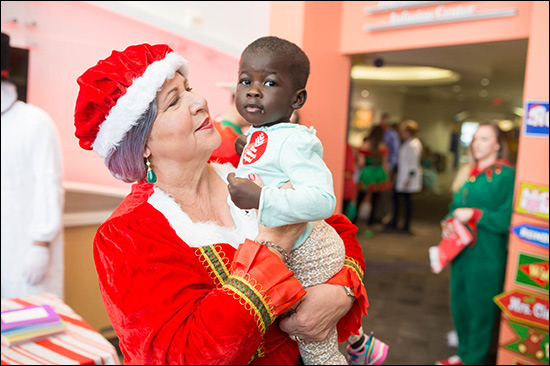
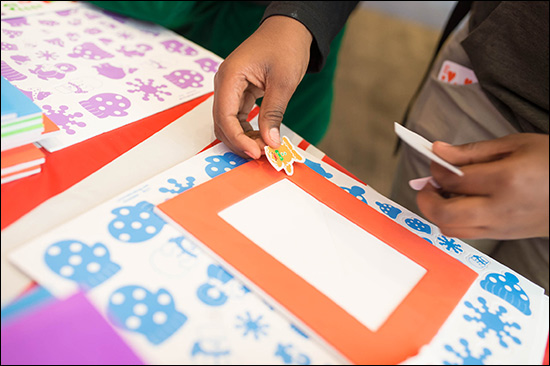
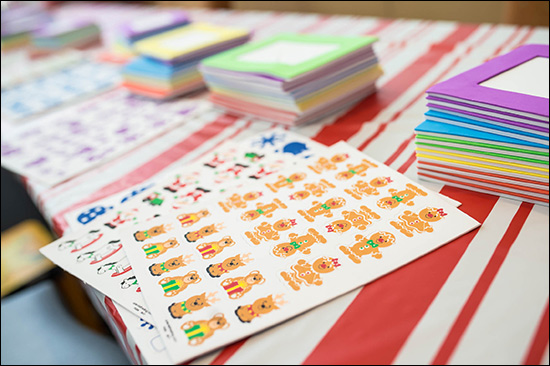
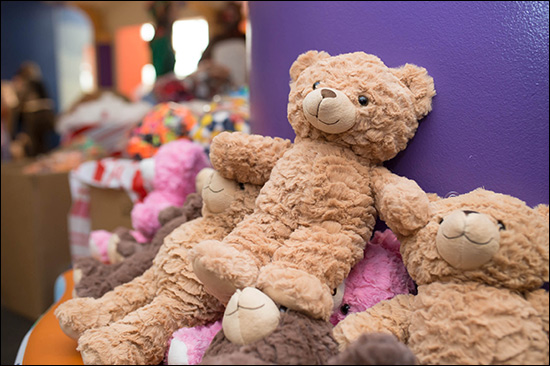
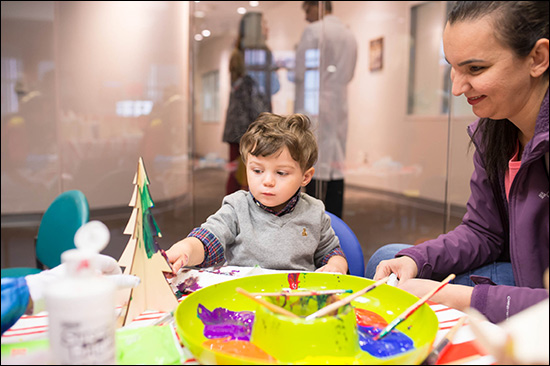
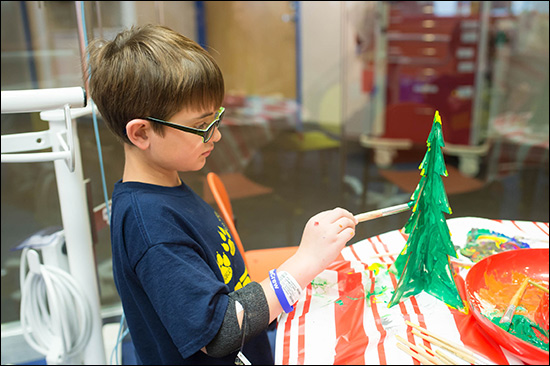
Besides the annual tree lighting events to kick off the spirit of giving, children participated in holiday arts and crafts, built their own gingerbread houses and got their pictures taken with Santa and Mrs. Claus. Bennet’s Bears and United Airlines surprised inpatients with a special delivery of stuffed teddy bears. Texas Children’s beloved therapy dog Elsa also joined in on the festivities at the hospital.

Santa Claus also made his way to the neonatal intensive care unit (NICU) at Texas Children’s Pavilion for Women to spread some holiday cheer – but he wasn’t the only one dressed up in red. Babies in the NICU were dressed in their own tiny Santa hats and booties.

The visit from Santa was hosted by the hospital’s Newborn Center Family Advisory Committee and First Memories Texas, a volunteer group that helps families with babies in the NICU and CVICU at Texas Children’s to make memories and tell their children’s stories through photography.

It’s been nearly four months since Hurricane Harvey stormed through Texas, displacing more than 1 million residents and damaging some 200,000 homes while taking more than 80 lives. The destruction stretched more than 300 miles, and it’s estimated that repairs and rebuilding will cost billions of dollars.
Immediately after the storm, many employees donated time and resources to help fellow team members get back on their feet. Employees donated over 2,500 hours from their “Harvey Days” and more than $200,000 to the Employee Financial Assistance Fund. More than 670 requests were received for support related to Harvey, and the fund has been a great source of relief for many.

“We are fortunate to be able to help members of our Texas Children’s family who are in need of assistance after the storm. Many employees and their families are still living in temporary housing and haven’t begun to realize the total amount of recovery costs ahead of them,” said Employee Assistance Program Manager Brent LoCaste-Wilken. “We also are very appreciative and proud of those who have already donated their time and money to help co-workers. This type of generosity illustrates our culture of unity and compassion.”

Almost $550,000 in financial aid and $73,850 in gift cards have been provided to employees thus far. But the road to full recovery will be long for many, and every bit of additional support helps.

To view employee testimonials, click here.

How can I help?

A text-to-give option has been created to make giving as easy as possible. Text TEAMTCH to 50555 to give $10 to the Employee Financial Assistance Fund. When prompted, reply to confirm.*

For payroll deduction, log into MOLI and select Employee Giving, then click the EFAF button. For credit card and PayPal, click here.

*Charges will appear on your wireless bill or be deducted from your prepaid balance. All purchases must be authorized by account holder, and you must be 18 years of age or have parental permission to participate. Msg & Data rates may apply. Text STOP to 50555 to STOP. Text HELP to 50555 for HELP. Full Terms: mGive.org/T. Privacy Policy: mGive.org/P.

December 19, 2017

Dr. Carla Davis has been appointed the new head of the Section of Immunology, Allergy and Rheumatology and Chief of the Allergy/Immunology Service in the Department of Pediatrics at Baylor College of Medicine and Texas Children’s Hospital.
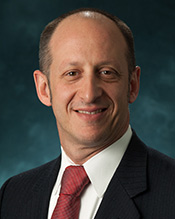
Dr. Jordan Orange, who currently holds this position, will be leaving Texas Children’s to become the new Chair of Columbia University’s Department of Pediatrics. Until his departure in the Spring 2018, Orange will work closely with Davis to ensure a smooth transition of leadership.

Davis earned an M.D. degree from Duke University Medical School in 1997. She completed pediatric residency training at Baylor and Texas Children’s, followed by postdoctoral fellowships in Allergy and Immunology (2001-2003) and HIV/AIDS Clinical Research (2000-2001 and 2003-2004). She joined the Baylor faculty as an assistant professor in 2005 and was promoted to associate professor in 2015. Davis is certified by both the American Board of Pediatrics and the American Board of Allergy and Immunology. She is an internationally recognized authority and investigator in the field of food allergies.

“Under Dr. Davis’ leadership, I have no doubt that our outstanding programs in Immunology, Allergy and Rheumatology will continue to flourish,” said Texas Children’s Physician-in-Chief Mark W. Kline. “Please join me in thanking Dr. Davis for her willingness to take on this important leadership role.”

Dr. Jordan Orange, professor of pediatrics and chief of the section of Immunology, Allergy and Rheumatology at Baylor College of Medicine, and the director of the Center for Human Immunobiology at Texas Children’s, is the recipient of the 2018 Edith and Peter O’Donnell Award in Medicine from The Academy of Medicine, Engineering and Science of Texas (TAMEST).
Each year, the O’Donnell Awards recognize rising Texas researchers who are addressing the essential role that science and technology play in society, and whose work meets the highest standards of exemplary professional performance, creativity and resourcefulness.

As a trailblazing innovator in modern medicine, Orange was recognized for his accomplishments in defining a new class of diseases, natural killer cell deficiencies. These diseases take place when the body’s built-in defenses against infections, pathogens and cancer are defective and prevent the body from being able to adequately fight back. His work has uncovered immune deficiencies and identified secrets of these disorders to improve diagnosis and treatment for patients, particularly children.

“Learning more about how natural killer cells work could have an important role in the therapy of some of the most vexing medical conditions that we face,” said Dr. Mark W. Kline, chair of Pediatrics at Baylor College of Medicine and physician-in-chief at Texas Children’s Hospital. “The potential of his work is just now beginning to manifest.”

“The TAMEST Edith and Peter O’Donnell Awards showcase the best and brightest among Texas researchers,” says TAMEST President Gordon England. “Their work is helping to advance science and open new pathways to discovery. We’re proud to recognize Dr. Jordan Orange for his achievements.”

Orange will be presented with this award at a special dinner and reception at the TAMEST annual conference on Thursday, January 11, in League City.

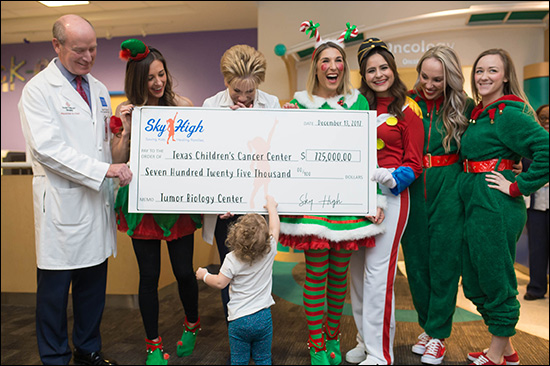
Sky High, a non-profit organization dedicated to eradicating pediatric cancer, made a generous donation of $725,000 to Texas Children’s Cancer and Hematology Centers during a Christmas Carnival the organization hosted on the 14th floor of Wallace Tower for cancer and hematology patients and their families.

“Days like today keep us doing what we do,” said Brittany Hebert, the founder and chief executive officer of Sky High, which raises funds by hosting a variety of events including concerts, golf tournaments and sporting clay tournaments. “We are happy to here and be able to help.”

Dr. ZoAnne Dreyer, an oncologist with the Cancer Center, said the money donated by Sky High will go toward developing a tumor biology lab and will undoubtedly play a significant role is helping research and treat childhood cancer.

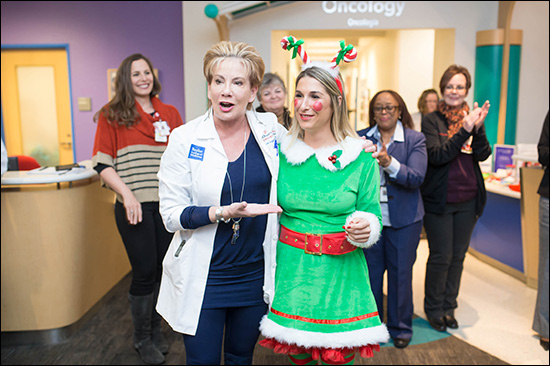
“We are so appreciative of your generosity,” Dreyer told Hebert and her team of elves who helped secure the donation and who made the Christmas Carnival a hit with patients and families. “We are privileged to have a relationship with such a great organization.”

Texas Children’s Physician-In-Chief Dr. Mark W. Kline echoed Dreyer’s comments and said that he too is proud to be a part of Sky High, an organization dedicated to such a noble cause.

To learn more about Sky High, click here.

Each year, about 50,000 people across the United States make donations ranging from a few dollars to $10,000 or more through the Office of Philanthropy’s Direct Mail program. Often, donors send heartfelt notes wishing our patients, clinical staff, and other team members well, or they mention fond thoughts of their own children or grandchildren.

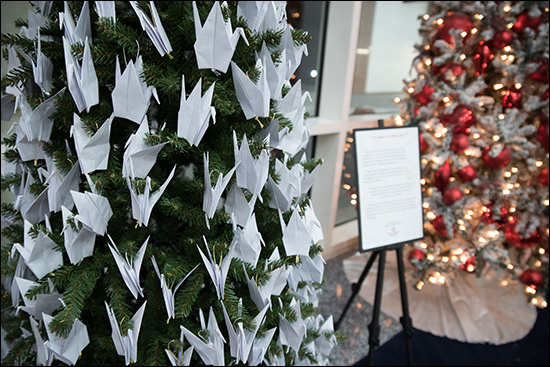
To help capture that spirit during the holidays, which can be a tough time for those not able to spend it at home, the program offered its donors the opportunity to sign and return paper origami cranes as a way of sending good wishes and hope to our patients and their families.

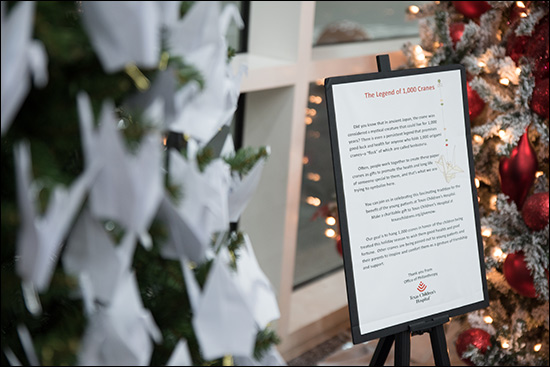
Japanese legend has it that mystical cranes can live for 1,000 years, and because cranes represent good health, people often work together to create 1,000 paper cranes – called senbazuru – to promote the health of someone special to them.

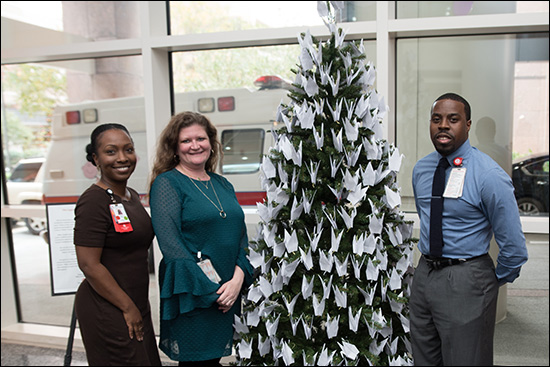
In honor of our patients and families, a Tree of Hope decorated with 1,000 cranes will remain in the lobby of the Mark A. Wallace Tower throughout the holidays. Patients and families are welcome to take a crane as a gift from our donors, each of whom stopped during a busy time of year to think about Texas Children’s and our mission.