On Tuesday, September 25, Texas Children’s No. 1 ranked Heart Center will open in Legacy Tower. To prepare for this historic milestone, multidisciplinary teams recently conducted simulations in the cardiovascular intensive care unit and cardiovascular operating room to test out the new patient care spaces before real patients are seen.
“Today, we are doing systems testing in our cardiovascular intensive care unit,” said Dr. Cara Doughty, medical director of Texas Children’s Simulation Center. “During these simulations, we have a number of different patients both receiving care as well as receiving escalations in care that can happen in the intensive care unit.”
In addition to multidisciplinary staff, patient families from Texas Children’s Family Advisory Committee participated in the CVICU simulations and provided their perspective on how much this space is going to change the way that care is provided to heart patients and their families at Legacy Tower.
“It’s really nice and comforting to me as a parent to see how much thought goes into it,” said Texas Children’s Family Advisory Committee member Christine Hanes. “I know that they aren’t just making a random decision on how to take care of my child. They’re actually testing it and making sure that they follow all the right procedures and that they do everything to optimize their care.”
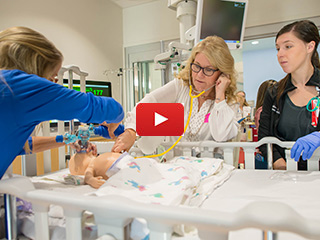
Following the CVICU simulations, Texas Children’s conducted patient care simulations in the CVOR to test the system, the work flow processes, the placement of surgical equipment, as well as test the communication among multidisciplinary teams to ensure everyone and everything is ready before the first CVOR in Legacy Tower.
“For the CVOR, we had one patient but that patient was going through all of the different aspects of being a patient from registration to preoperative care to arrival to being in the operating room,” Doughty said.
Following each simulation, a one-hour debrief was held where staff from different disciplines came together to discuss what went well and what system processes need to be corrected before actual patients are seen.
“We want to make sure we’re well prepared, that the space is in tip top shape to be able to provide what we need for these critical patients,” said Kerry Sembera, assistant director of clinical practice for the Heart Center.
In preparation for the opening of Texas Children’s No. 1 ranked Heart Center on September 25, a series of systems testing was also conducted last month for acute care cardiology, the Heart Center Clinic and the Cath lab/HCRU.
Employees and staff can see more of Legacy Tower on Connect throughout the month. Texas Children’s Corporate Communications Team will feature a series of stories and videos on Connect promoting the Heart Center and sharing how we are preparing for this historic move into Legacy Tower.
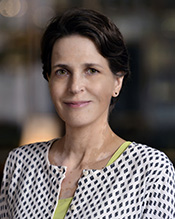 Texas Children’s Physical Medicine and Rehabilitation Electrodiagnostic Laboratory has received Laboratory Accreditation with Exemplary status from the American Association of Neuromuscular & Electrodiagnostic Medicine (AANEM). Dr. Suzanne Woodbury is the laboratory’s medical director and said she is very excited to receive AANEM Laboratory Accreditation status.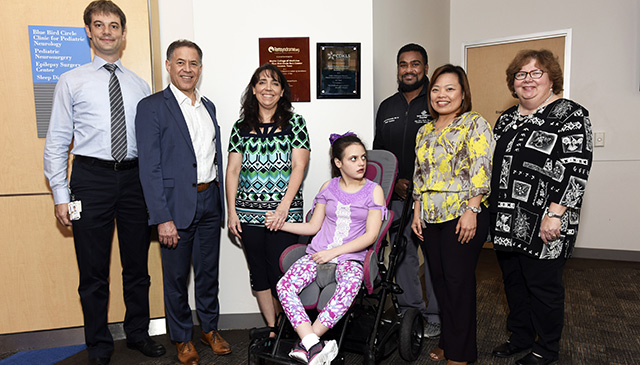
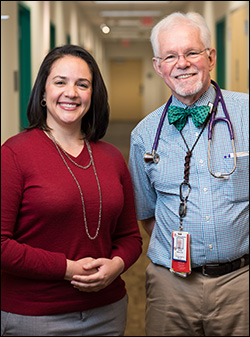 In 2002, Dr. George Mallory helped establish Texas Children’s Lung Transplant Program and has built it into one of the world’s preeminent pediatric programs, with a reputation for collaborative, patient-centered care. This year, Mallory is passing the torch of medical leadership to Dr. Tina Melicoff, who will lead the program in partnership with surgical director Dr. Jeffrey Heinle.
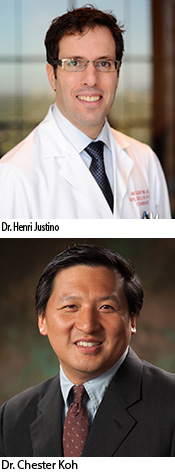 The Southwest Pediatric Device Consortium (SWPDC), anchored at Texas Children’s Hospital and Baylor College of Medicine, recently received a prestigious P50 grant from the U.S. Food and Drug Administration. The five-year, $6.75 million grant will begin on September 1 and will allow SWPDC to leverage ongoing activities to expand and accelerate the development of much-needed pediatric medical devices. The five principal investigators include Drs. Chester Koh and Henri Justino of Texas Children’s and Baylor, Dr. Balakrishna Haridas of Texas A&M University, Dr. Maria Oden of Rice University, and Dr. Michael Heffernan of Fannin Innovation Studio.