February 25, 2019

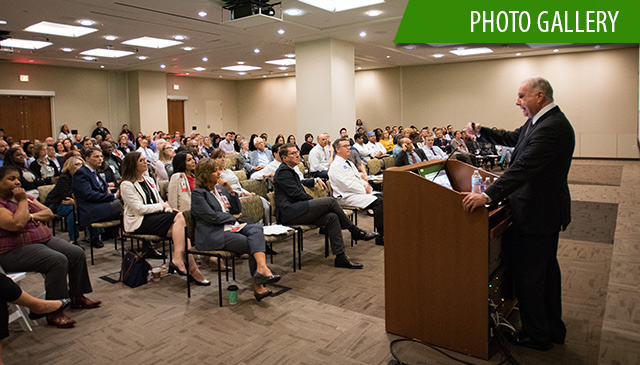
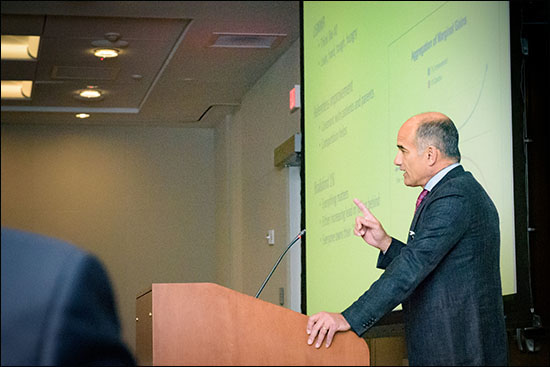
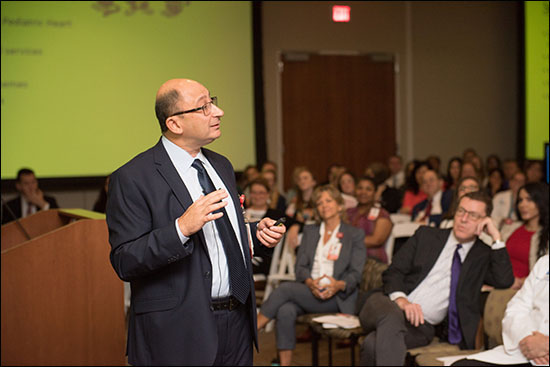
Experts from Texas Children’s Hospital are regularly invited to give lectures and presentations at national and international conferences, where they share their knowledge and experiences caring for some of the rarest and most complex pediatric medical conditions. Now a new video series from Texas Children’s Service Line Marketing provides direct access to those experts.

Medically Speaking features some of the brightest minds from several Texas Children’s specialty and subspecialty areas. The series is meant to be a helpful educational resource for parents and a convenient way for physicians and other caregivers to stay up-to-date on the latest in pediatric medicine. Viewers can watch talks on a variety of interesting topics, including advancements in surgery, breakthroughs in research, new clinical trials, and novel and back-practice treatments for specific conditions.

In this episode, you’ll hear from Texas Children’s ophthalmologist Dr. Madhuri Chilakapati speaking about strabismus, an eye muscle imbalance commonly known as crossed eyes, lazy eyes or wandering eyes. During the talk, Madhuri reviews the different types of strabismus, shares common pain points from parents and ways to offer better support, and shares possible treatment options.

Be on the lookout for more Medically Speaking episodes on Connect, or view additional episodes now.

Learn more about the services provided and conditions treated by Texas Children’s Division of Ophthalmology.

PLEASE NOTE:
This presentation is not intended to present medical advice or individual treatment recommendations, and does not supplant the practitioner’s independent clinical judgment. Practitioners are advised to consider the management of each patient in view of the clinical information. All content is shared for informational purposes only, and reflects the thoughts and opinions of the original author. No physician-patient relationship is being created by the use of this presentation. The presentation sets out recommendations based upon similar circumstances and is provided as an educational tool. The presenters are not attorneys, and to the extent this presentation provides commentary on current laws and regulations affecting health care activities, it is not intended as legal advice.

Your name, title and department. How long have you worked here?
Valerie Rippey, RN, BSN; Inpatient staff nurse, Post Anesthesia Care Unit at Texas Children’s Hospital West Campus. I have been a part of this unit for four years but part of Texas Children’s for 10 years.

Tell us how you found out you won a super star award.
I was told to attend a staff meeting during the day that was imperative to changes on our unit. When I arrived I sat in the meeting as my assistant director and manager were going over the Texas Children’s Hospital Core Values and expectations on our unit (not out of the ordinary). There was a power point presentation that went along with the meeting and then our manager asked us about anyone we would select that role models the Texas Children’s values and what it means. Before I knew it I looked up as she was saying that we have someone on our unit who exemplifies these values and staff has taken note of it and they are a “super star” on and off the unit. She changed slides and when I looked, it took me a second to realize the picture was of me!

What does it mean to be recognized for the hard work you do? How has the organization helped you achieve your personal and professional goals?
Receiving the super star award was by far the biggest surprise in my professional career. I had no idea I was receiving this award nor did I expect it. It was a great feeling knowing that those around me have noticed my extra efforts to help create a stronger team dynamic in perioperative services. My unit has undergone many changes in the last couple of years and I decided recently to become more involved and be a part of the change. My leadership has been very supportive in allowing me to be able to branch out into different roles such as charge nurse, preceptor, and retention chair for perioperative services. They have provided the flexibility in my schedule to attend hospital-wide meetings, classes and always remain an accessible and valuable resource for me. Through these roles I have been able to build relationships with my peers as well as the entire multidisciplinary team.

What do you think makes someone at Texas Children’s a super star?
There are so many super stars at Texas Children’s. I feel that no matter where you go or which campus you step in, everyone goes out of their way to make you feel welcomed. A Texas Children’s super star is someone who goes out of their way to go above and beyond to take care of our patients, families and each other on a daily basis.

What is your motivation for going above and beyond every day at work?
Each and every day I am constantly motivated by children and their families. Over the last 10 years at Texas Children’s I have been fortunate to meet some of the most resilient little humans I have ever seen in my life. The fact that I can make a difference in a child and family’s life that will last a lifetime is what keeps me pushing to be better. I believe in the mission and core values of Texas Children’s and strive to embrace them daily.

What is the best thing about working at Texas Children’s?
The best thing about Texas Children’s is the magic. The magic that happens within the walls and outside as well. If you take a step back and just watch… you’ll see it. It’s every time providers and patients hug as if they are family. It’s in every little step that is taken and created to provide each and every child the very best care. It is the genuine love, support, care and compassion that is shown through all who wear a badge with the infamous red logo. It is the pride that comes shines out of me when someone asks where I work and I reply “Texas Children’s Hospital.” This is the place where truly amazing people make magical things happen every day. We ARE Texas Children’s Hospital.

What does it mean to you that everyone at Texas Children’s is considered a leader? What is your leadership definition?
The thing about Texas Children’s is that leadership comes in all shapes and forms. It does not matter what your job description is or what letters come after your name. Leadership is a characteristic that Texas Children’s recognizes throughout the entire organization. To me leadership has nothing to do with the position or title you are holding but everything to do with your influence on others. Leadership is building relationships and giving respect before the expectation of gaining it. I feel a true leader not only adds value and success to their team but strives to build other leaders.

Anything else you want to share?
The only reason I am able to do the things I have set out to do on my unit is because I have an amazing team around me that supports, encourages, and comes together like no other department I have worked in. The staff in perioperative services at West Campus are the true super stars day in and out. I am just the lucky one who brought the attention to it. They are my family away from home and I couldn’t be more grateful to be surrounded by such an amazing team.

To better understand the impact of parental incarceration in Harris County, Texas Children’s Section of Public Health Pediatrics recently led a needs assessment of children of incarcerated parents.

The year-long study was funded by Texas Medical Center’s Health Policy Institute and involved Baylor College of Medicine, the University of Texas Medical Branch at Galveston, and the Harris County Sheriff’s Office.
“We wanted to better understand the needs of children with incarcerated parents in Harris County Jail as well identify opportunities to support these children,” said Nancy Correa, senior community initiatives coordinator for Texas Children’s Section of Public Health and Primary Care. “Parental incarceration as an adverse childhood experience has been largely overlooked and not well-studied, which is significant considering the United States has the highest incarceration rate in the world and The Annie E. Casey Foundation estimates 5.1 million American children have a parent in jail or prison during their childhood.”

After conducting interviews with inmates and caregivers of children that have parents in Harris County Jail, researchers found that seven percent of all Harris County children have a parent who spends time in the county jail each year, half of inmates have at least one child under the age of 18, and 61 percent of incarcerated parents provided all or most of the financial support for their children before being jailed.

“If the person who is incarcerated is the breadwinner, lots of family needs all of a sudden become really critical,” said Dr. Chris Greeley, the section chief of Public Health and Primary Care. “Sometimes people will get incarcerated for something relatively minor, and they can’t afford to pay bond. Because of that, a kid’s life is irrevocably altered.”

During a February 12 press conference, Harris County Sheriff Ed Gonzalez underscored the multiple hardships children of incarcerated individuals face.

“Children are traumatized by being separated from their parent,” Gonzalez said. “Sometimes they have to change homes and schools routinely. These children also suffer shame and feelings of isolation, and have urgent basic needs like food and emotional support.”

The Sheriff said his office’s goal is to make visitation at Harris County Jail – the largest jail in Texas and the third largest in the United States – more child-friendly by making the visitors’ lobbies more inviting, developing curricula and training deputies on interacting with children when they visit the jail.

Gonzalez said he also plans on reviewing his department’s policies and determining best practices for when deputies arrest a parent when a child is present. He also plans on updating the Harris County jail website to include information on community resources.

“Children of incarcerated parents have been overlooked,” Correa said. “They are the innocent and forgotten victims of crime in our community, but there are things we can do to help.”

February 18, 2019

After coming to Texas Children’s throughout her youth as a patient, recently hired medical assistant Blanca Alonso got something she always wanted – the opportunity to join the organization as an employee at Texas Children’s Specialty Care Sugar Land.

“It’s really incredible working with the kids and patients, and I don’t plan on going anywhere else,” said Alonso, one of more than 40 new members of the Texas Children’s family who attended the first Mark Wallace New Employee Pep Rally of 2019, held February 4 at West Campus.

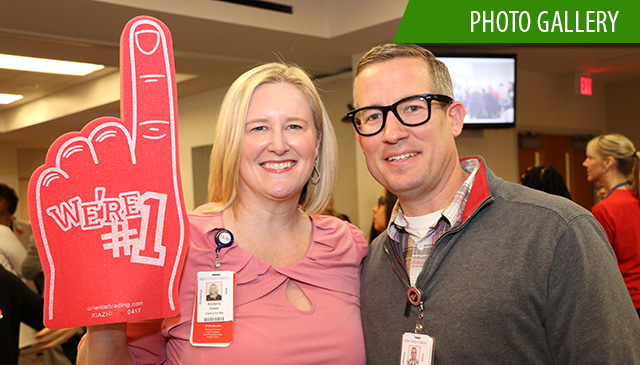
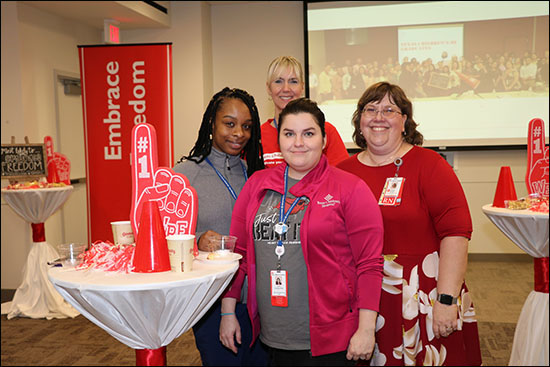
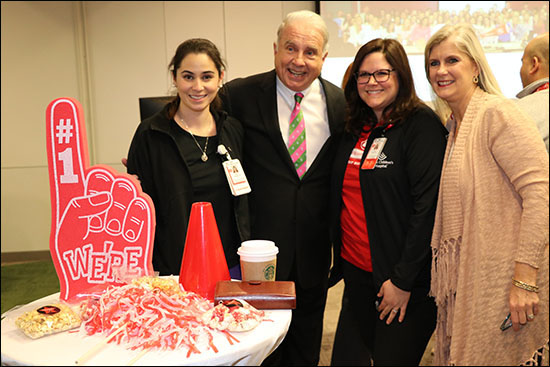
Fashioned in the same back-to-school theme of the Texas Children’s Hi orientation, the pep rally allows new employees to learn more about the organization and meet executives and other leaders within a festive atmosphere complete with foam fingers, pompoms and lively music. Participants included new and recent hires based at West Campus, as well as those from specialty care clinics in surrounding communities.

“West Campus is flourishing and we’re lucky to have all of you here,” President and CEO Mark Wallace told the new employees, recalling Texas Children’s early days in a single, seven-floor building – well before the opening of Legacy Tower at the Medical Center campus; the suburban hospitals at West and The Woodlands; and the urgent care centers and specialty care clinics that stretch across Harris County and now reach into Austin and Central Texas.

“In 1989, I knew this was our destiny,” Wallace said. “I knew Texas Children’s was going to grow and flourish because that was part of the plan: taking care of more patients and more families. The key to our success has always been the people and the leadership.”

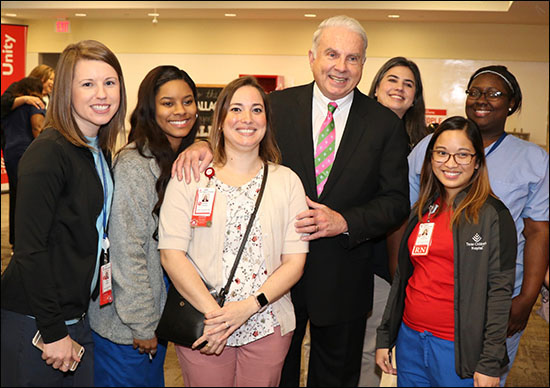
Wallace reminded the new hires that they, too, are leaders in their personal and professional lives, and encouraged them to develop their own leadership definitions. He also introduced himself and shook hands with every new employee at the pep rally, pausing often to pose for photos and snap selfies.

As she enjoyed refreshments and connected with her new colleagues, Shamira Connor reflected on the warm welcome she has received since becoming a medical assistant at the Sugar Land specialty care clinic. “I’ve always wanted to work at Texas Children’s. Now I’m here and I love it,” she said.

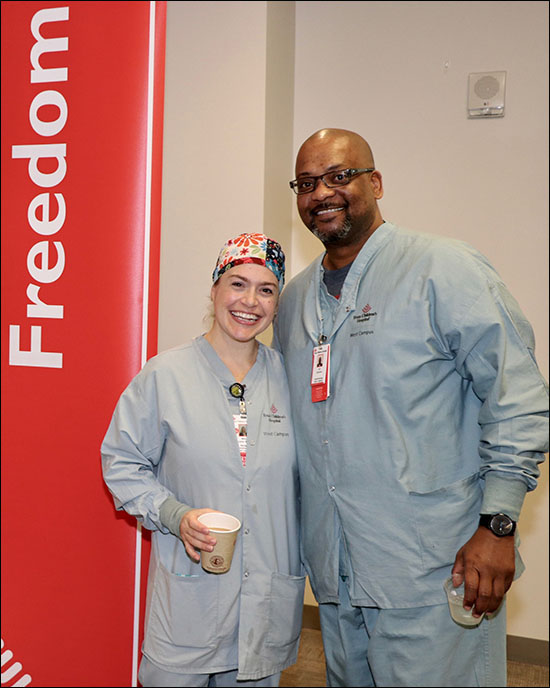
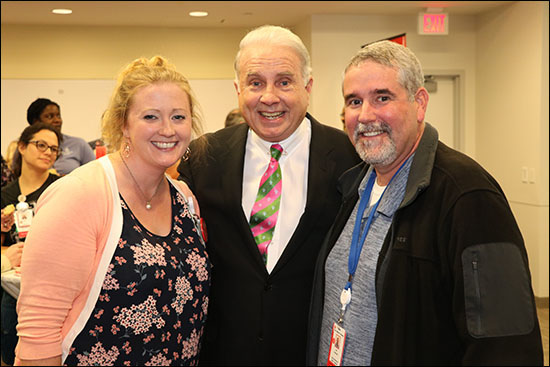
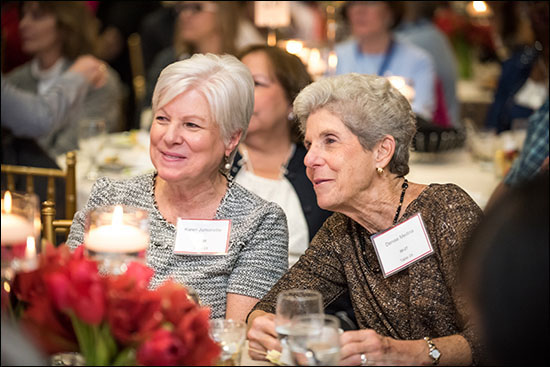
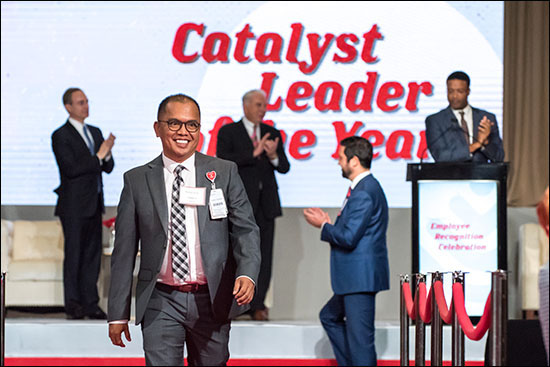
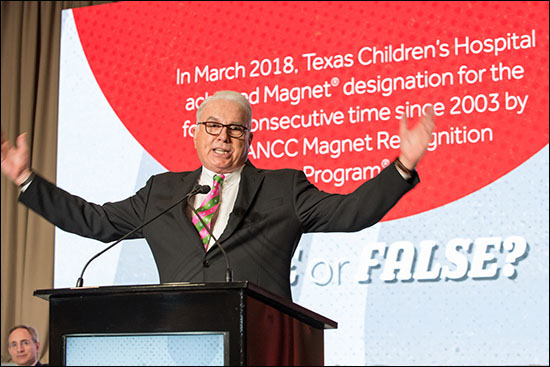
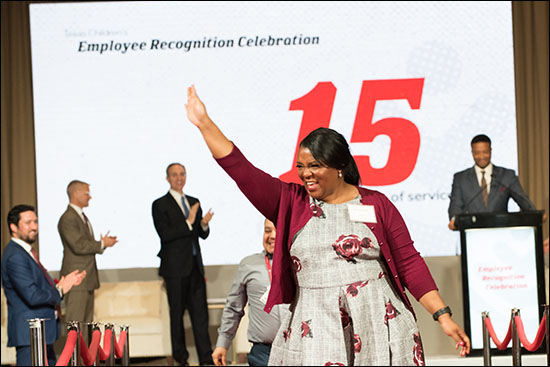
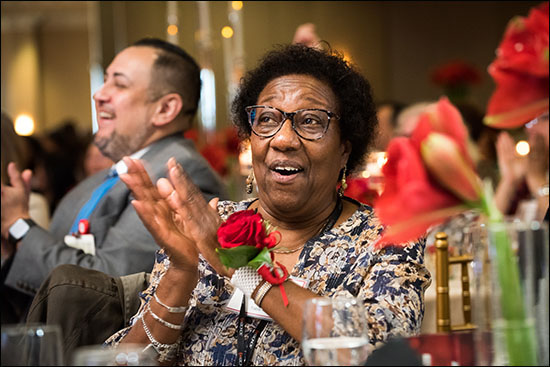
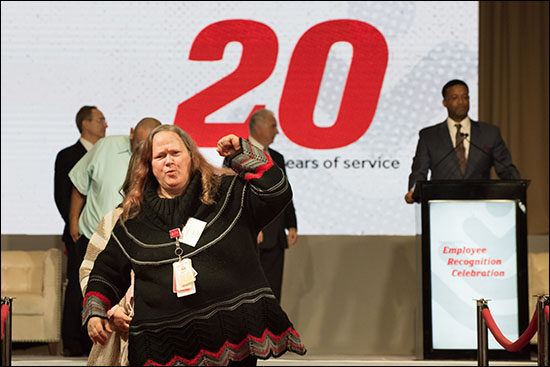
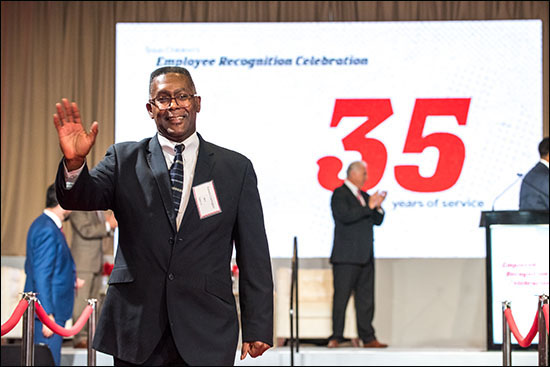
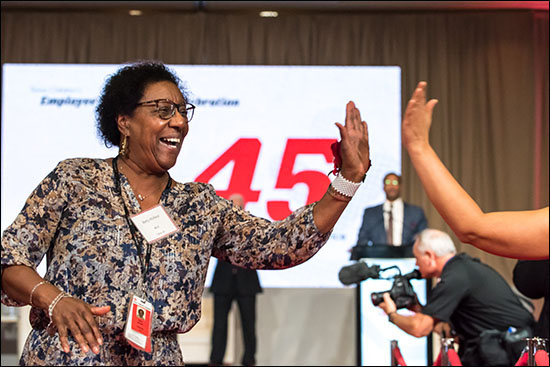
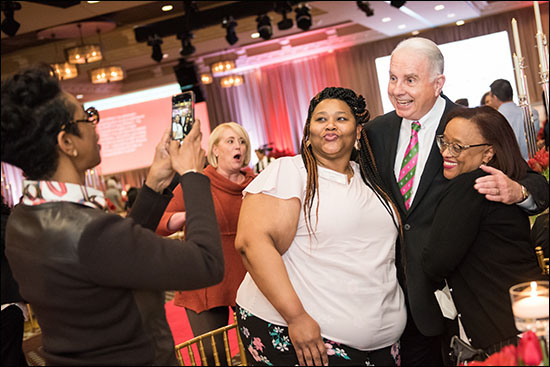
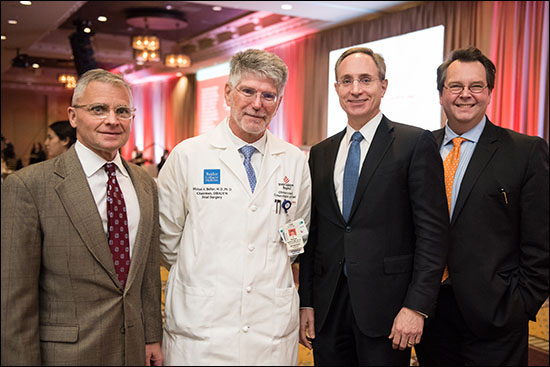
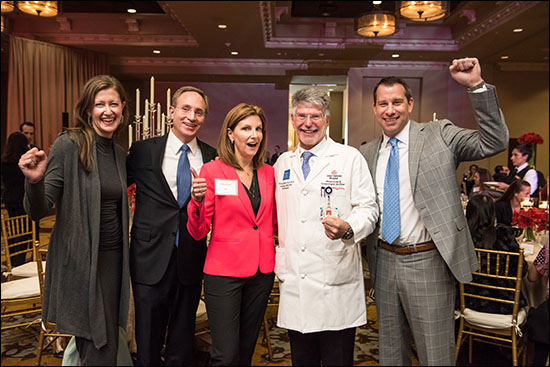
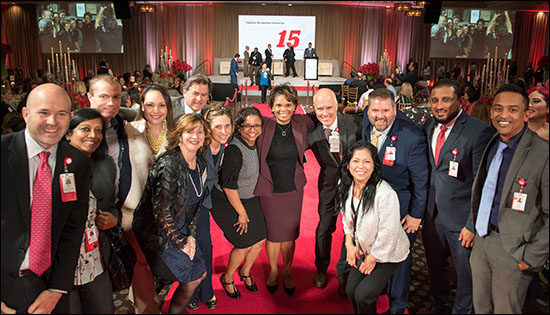
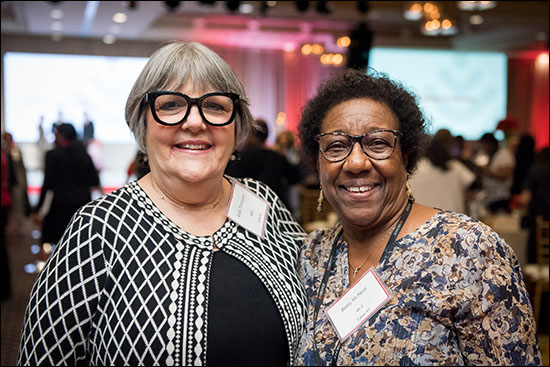
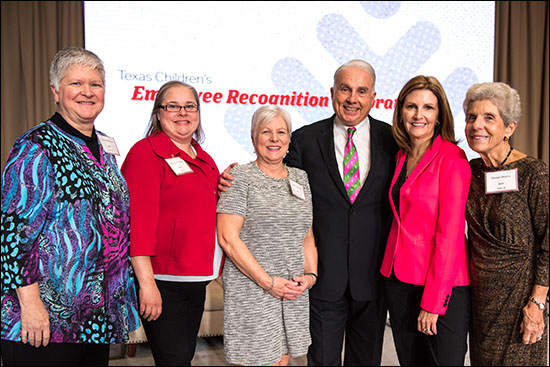
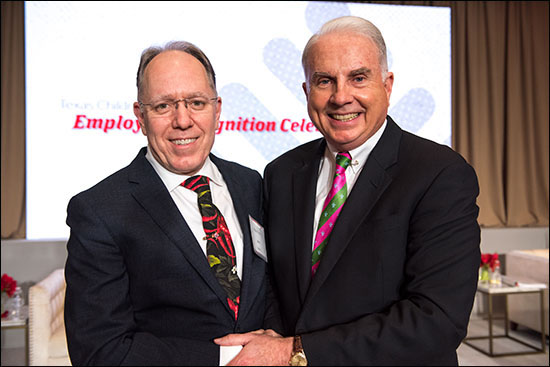
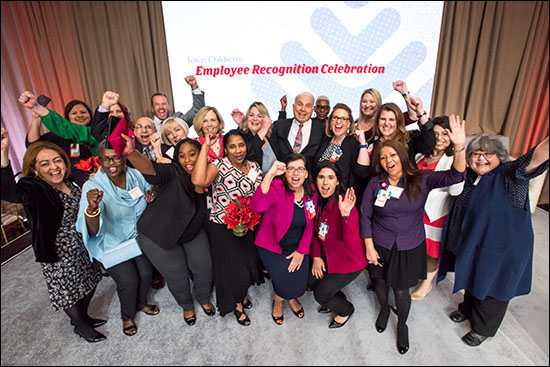
On February 12, almost 600 Texas Children’s employees whose careers span between 15 and 45 years were celebrated and honored at the 31st Annual Employee Recognition Ceremony. Winners of other organization-wide awards such as Super Star, Best of the West and Caught You Caring also were recognized. As always, the beloved affair included an appearance from President and CEO Mark Wallace, who mingled and posed for pictures with employees before speaking to the crowd of 567 honorees.

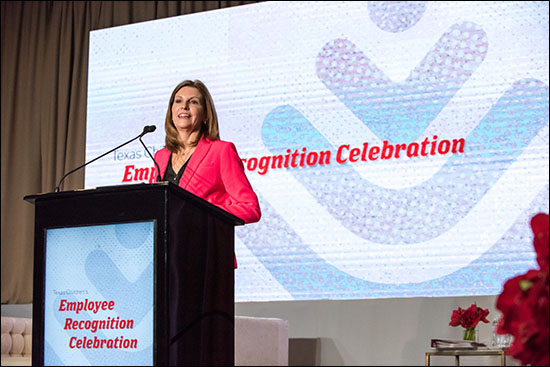
“This is your day, this is the day that you celebrate what you’ve helped build at Texas Children’s,” Senior Vice President Linda Aldred said as she opened the ceremony. “This rich culture, the legacy of Texas Children’s is something that will truly last forever.”

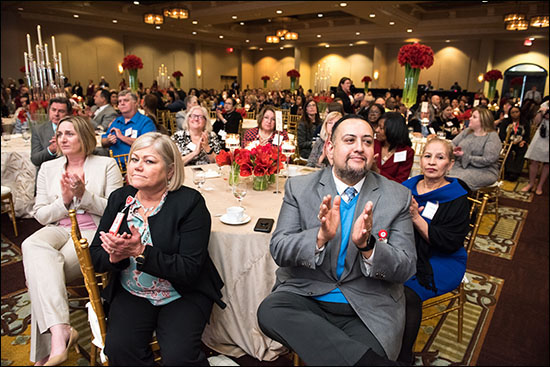
Employees, their leaders, and executives filled the Bayou City Event Center just before noon to support and honor the recipients on their lasting commitment to the organization.

Following lunch, Surgeon-in-Chief Dr. Larry Hollier introduced Texas Children’s Board of Trustee Scott Wulfe. Wulfe began with a short heartwarming story about his neighbor who received excellent care from Texas Children’s years ago, and is now a part of providing that care to patients today as an employee. He went on to speak highly of Texas Children’s and our President and CEO Mark Wallace, and he congratulated all of the honorees.
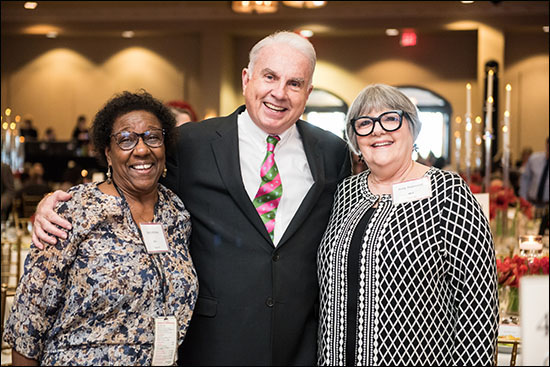
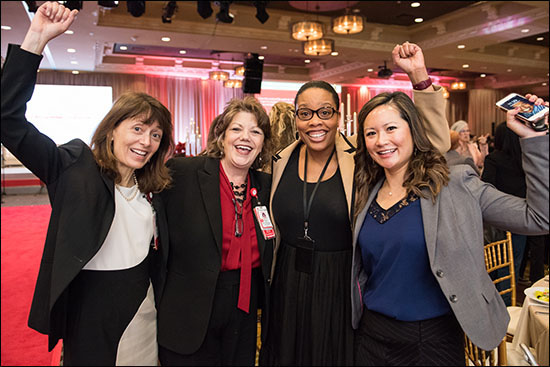
“The fact that you have chosen to dedicate so much of your lives and career to Texas Children’s speaks volumes to your character and to the unique culture at Texas Children’s,” Wulfe said.

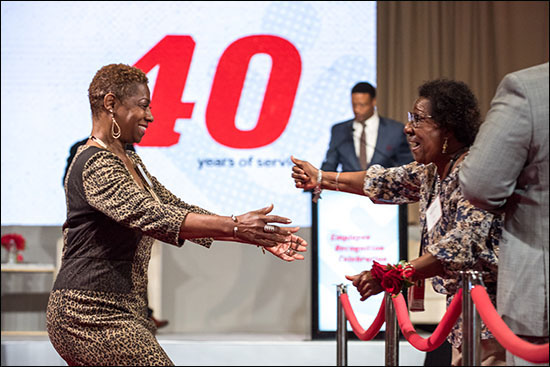
Many of the honorees expressed how much they love working at Texas Children’s and what keeps them coming back year after year. Renee Williams, Supply Chain Clinical Product Evaluation Coordinator, celebrated 40 years at Texas Children’s and talked about how the organization has evolved over the years.

“We’ve grown so much. We reach more children, and now women, than I ever imagined,” Williams said. “We’ve also expanded into other parts of the state, including Austin. Taking that care to other areas is just phenomenal.”

This year’s ceremony continued to reflect why we are one of the leading pediatric hospitals in the nation.

“I’m beyond proud and touched to know how much you love and believe in this organization and our vision for accelerating health care and improving the lives of everyone we touch,” Wallace said. “It’s my honor to be your president and CEO, and I am deeply appreciative of each and every one of you and all that you and your families have given to this organization.”

View photos from this year’s employee recognition ceremony below.

During Heart Month we celebrate our patients and the miracles our experts perform every day providing heart care that’s the best in the nation. This year, we’re also celebrating a unified commitment to making our Heart Center even better.

Heart Center leadership, faculty and staff recently convened for the inaugural Heart Center Retreat. The event afforded the full, multidisciplinary team of surgeons, clinicians, intensivists, nurses, advanced practice providers, anesthesiologists, administrators and more the opportunity to collectively reflect on past successes, discuss areas of possible improvement, identify transformative goals, and actively plan for the future.

“If you believe some of the external ratings sources, our congenital heart disease program is one of the best in the country. Personally, I do not like to give external ratings much credence” said Dr. Christopher Caldarone, Texas Children’s chief of Congenital Heart Surgery. “A great program will hear such accolades and disregard them while searching for ways to get better. And that was the purpose of the Heart Center Retreat – to help us rise above the day-to-day and intensely focus our attention on ways to improve in terms of patient care, access, teaching, research, innovation, and quality of life for members of the Heart Center team.”

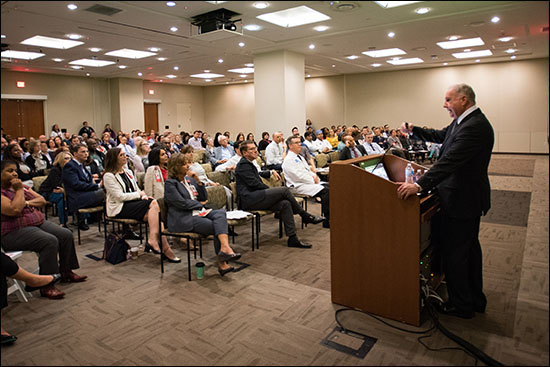
Following an introduction from President and CEO Mark Wallace, attendees heard several talks from Heart Center leadership on a variety of topics. These included reflections on the program’s growth in recent years, how the move into Lester and Sue Smith Legacy Tower has affected processes and outcomes, and what it means to be the No. 1 heart program in the nation. Attention then turned to ways to make the Heart Center even better, with talks outlining opportunities for advancement in innovation and research, plans for improved education and training, challenges posed by competition and strategies for staying ahead, and the need to relentlessly improve patient care, access and experience.

“To be our best we must do our jobs better than anyone, work together and always keep the patient top of mind,” said Dr. Daniel Penny, Texas Children’s chief of Pediatric Cardiology. “We believe that what will separate Texas Children’s Heart Center going forward is a unique combination of exceptional technical abilities coupled with a highly developed collaborative culture that is completely centered on our patients and their families.”

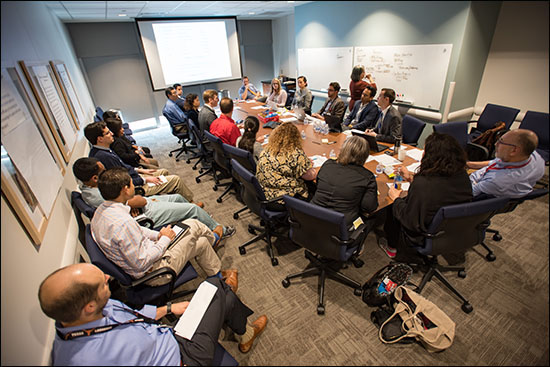
Following the talks, attendees split up into preselected breakout groups. The teams chose their groups based on the topic and were tasked with developing real-world strategies based on key Heart Center objectives. These included:

  • Establishing a comprehensive center for patients and families living with Fontan physiology across the lifespan
  • Developing a unified data platform to increase efficiency and improve quality control and research productivity
  • Creating an innovation fund with a streamlined application process to generate new ideas
  • Design a process that solicits, evaluates and prioritizes innovative projects
  • Improving satisfaction and efficiency in the management of new patients
  • Providing access to professional development for nursing and ancillary services

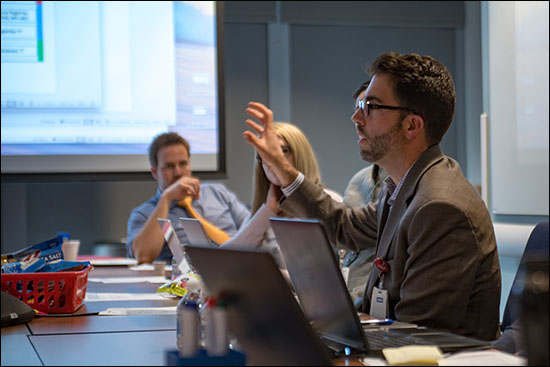
The breakout groups facilitated lively discussion and engagement. Each team was highly motivated and have since reported back to the Heart Center executive committee with proposals that include target objectives, and tactics and budgetary considerations for meeting those objectives.

Feedback from retreat participants has been positive and there are plans to make it an annual event. It’s yet another way the Heart Center has rallied around its ongoing mission to, as the leadership teams says, “get so far ahead no one can catch us.”

“Even though we’re a large, elite program, we must consistently take a critical and objective look at all aspects of our performance”, said Caldarone. “Our goal is be a large, comprehensive, and collaborative team that is nimble in our ability to mobilize expertise to meet the needs of every patient.”

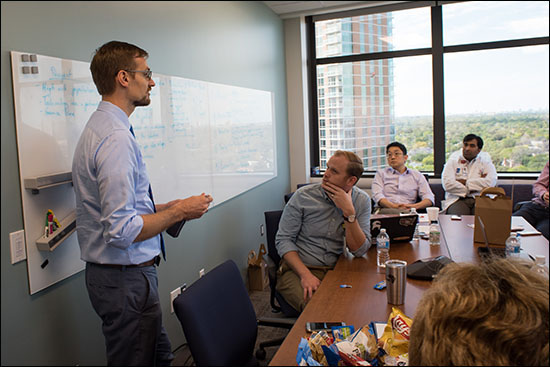
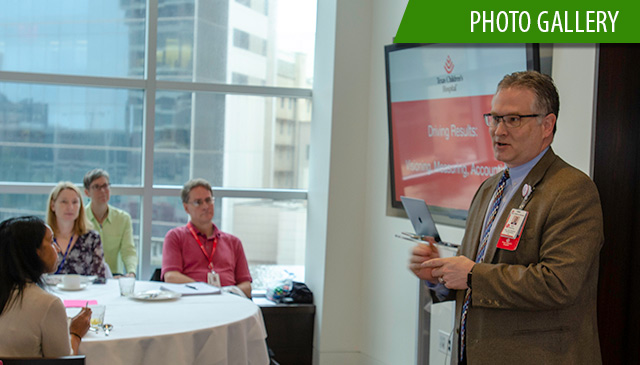
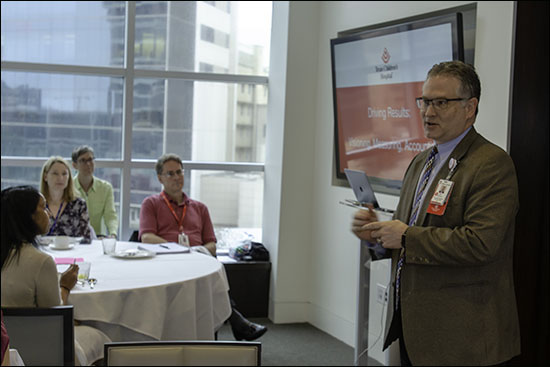
This past fall, Department of Surgery leadership launched the Infinite Leadership Academy, a new initiative aimed at fostering personal and professional development among surgical providers, and preparing the next generation of surgical leaders.

The six-month program embraces one of Texas Children’s cultural cornerstones – leadership – and takes it to a new level, with a curriculum specially developed to help surgeons and APPs recognize their potential and hone their leadership skills. The academy – now in its fourth month – also underscores the Department of Surgery’s ongoing commitment to investing in its people.

“Leadership skills, like technical surgical skills, take practice to master,” said Surgeon-in-Chief Dr. Larry Hollier. “We’ve recognized that early in a career, it’s critical to develop skills that have more to do with how you fit into a team structure, how you involve others in critical decision-making, and how you move the care of the patient forward. To practice those skills effectively, it is helpful to have someone coach you. This is the goal of the leadership academy”

The program kicked off with a personality and behavior assessment to help the 20 inaugural participants more firmly identify their core skills and leadership styles. After initial evaluation, participants began taking part in regular monthly sessions designed to help build on leadership strengths. The curriculum includes lectures, reading assignments, coursework and group projects, developed to help each participant understand their personal vision and function as part of a team that can innovate and improve.

“In the limited time that I’ve been in the program, I already feel it has allowed me to become a better person and an improved leader,” said Dr. Mary Frances Musso, surgical sleep director at Texas Children’s Hospital. “I have a better understanding of my vision for growing the surgical sleep program at Texas Children’s. Leadership to me is about making new discoveries, creating a team, motivating advancement and leading the team to new innovations. It is powerful to stop and reflect how I can now improve my approach to different situations by looking at them from a different point of view and utilizing the new tools I have gained from this program. I feel invigorated to lift others up to become better leaders.”

Another key component of the program is the integration of Texas Children’s Breakthrough Communication, a course facilitated by providers and designed to equip surgeons, physicians and APPs with tools to enhance and better organize patient encounters.

“Communication in a children’s hospital environment is extraordinarily complex,” said Hollier. “We’ve developed a communication course that’s the first of its kind to teach our providers how to compassionately and effectively communicate with the patient – regardless of their age – and the parent or guardian. It will also eventually include strategies for communicating with other providers. This is and will continue to be an essential part of the leadership academy curriculum.”

The response thus far from participants has been tremendous.

“We’ve gotten a lot of interest, and currently there are more people who want to participate than we have slots,” said Hollier. “The intention going forward is to have these on a rolling basis, and to develop ongoing training for people who’ve already availed themselves of these early courses.”