June 3, 2019

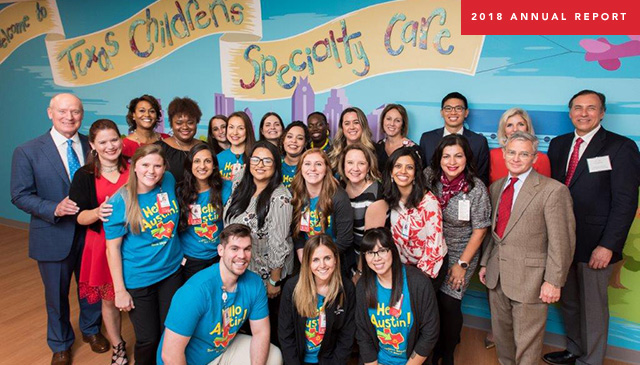
Texas Children’s marked the beginning of an exciting chapter in its history last year by opening the first Austin location, Texas Children’s Urgent Care Westgate. Since then, Texas Children’s Pediatrics primary care and Texas Children’s Specialty Care Austin have been introduced to the Austin community with a pediatric population of half a million. Learn more by visiting our 2018 virtual Annual Report.

Being a clinician in today’s fast-paced health care environment can be stressful. The expectation to see more patients and produce better, quicker results stretches the limits of even the best care givers in the field. As a result, a level of compassion and empathy can be lost, which in turn can impact the quality of care given to patients and their loved ones.

Texas Children’s nurtures compassionate, empathetic, humanistic relationships between clinicians and patients. To better support care givers in creating and sustaining these types of relationships, Dr. Daniel Mahoney, a palliative care physician, and Dr. Gwen Erkonen with the Pediatric Intensive Care Unit have created a Medical Humanities Program at Texas Children’s for Texas Children’s faculty and staff.

In affect for less than a year, the program works to incorporate humanities such as literature, philosophy, ethics, sociology, visual and performing arts into medical education and practice. What this has looked like thus far, has been opportunities for care givers to participate in music therapy sessions and book clubs geared toward clinicians. The program also is working to teach and implement narrative medicine and parallel charting.

“Our hope is the tools provided through this program will help clinicians better process the myriad of experiences they deal with on a daily basis,” Mahoney said. “As a result, we hope it will enhance the way we practice medicine.”

Dr. Amanda Ruth, a PICU physician, attended one of the program’s recent book clubs and said she got a lot out of it. The book, When Breath Becomes Air by Dr. Paul Kalanithi, was about a physician diagnosed with Stage 4 lung cancer.

Ruth, who deals with terminally ill patients often, said the book was interesting because it illustrated how a physician dealt with his own mortality and what it taught him about his patients and his role in caring for them.

“If you don’t connect with a family, you can’t really create an effective treatment plan,” Ruth said. “The more you understand their situation, the better able you are to care for them.”

Ruth added that she also enjoyed meeting care givers across the organization and simply unplugging from her daily medical duties, even if it’s just for a short time.

“It’s nice to not think about medicine for five minutes, to just get away and be human,” she said.

Another tool clinicians are learning through the Medical Humanities Program, is parallel charting. Some Texas Children’s residents are using parallel charting to help them implement narrative medicine into their everyday practice. When using parallel charting, residents keep two charts for each patient. One chart is to log the patient’s medical record. The other chart is to log how the patient and their experience is affecting the resident.

“Every patient and clinician has a story,” Dr. Daniel Mahoney said. “Narrative medicine teaches clinicians to pay attention to those stories and how they intersect to help cultivate a more impactful relationship.”

Dr. Daniella Saydi, a pediatric resident, said she used parallel charting during a four-week trip to Malawi and that it allowed her to think about her experience on a deeper level.

“It’s very easy to go abroad and live in the moment without actually meditating on what is going on around you,” she said. “Parallel charting allowed me to capture moments that I had forgotten about in the hustle of the work day. I can still vividly remember certain patients and details because I was able to write them down.”

Pediatric Resident Victoria Mitre is learning about narrative medicine from Mahoney and Erkonen as a member of the Primary Care Leaders Evaluating and Addressing Disparities program. Mitre said the quarterly class has helped her create a more purposeful framework for her writing and that it has driven home her longstanding belief that effective communication is perhaps the most important part of a pediatrician’s job.

“Whether it is walking into a patient’s room or starting the process of writing an Op-Ed, Dr. Efkonen and Dr. Mahoney have taught me the importance of first identifying and understanding my audience,” she said. “In clinical situations, this has helped me tailor my counseling to meet the specific needs of my patients and their families. When the work I can accomplish in clinic is simply not enough to meet their needs, narrative medicine has given me the space and tools to reflect on my experience and advocate for change. Ultimately, it has helped me take better care of myself as a physician.”

Erkonen, who studied professional burnout in the healthcare industry, said staying in touch with your emotions and connected to your patients and colleagues helps clinicians maintain meaning in their work and thus prevents burnout.

“Clinicians view a lot of tragic things, and as a result, it’s easy to let cynicism in,” Erkonen said. “That’s why staying connected is so important. It’s key to avoiding burnout.”

Burnout, Erkonen said, is something many care givers experience at some point in their career. If it’s not remedied, burnout can lead to an increase in clinician errors among other things that impede patient care and physician growth.

A robust medical humanities program that offers training throughout all levels of a clinician’s career can help prevent burnout and promote the development of a more engaged, fulfilled and empathetic clinical workforce, Erkonen said.

“If you don’t teach empathy, it won’t be cultivated,” Erkonen said. “It’s just as valuable as anything else you learn in medical school.”

For more information about the Medical Humanities Program at Texas Children’s, click here to view their page on Connect, and click here to see their page on texaschildrens.org. You also can follow the program on Twitter @TCHMedHum.

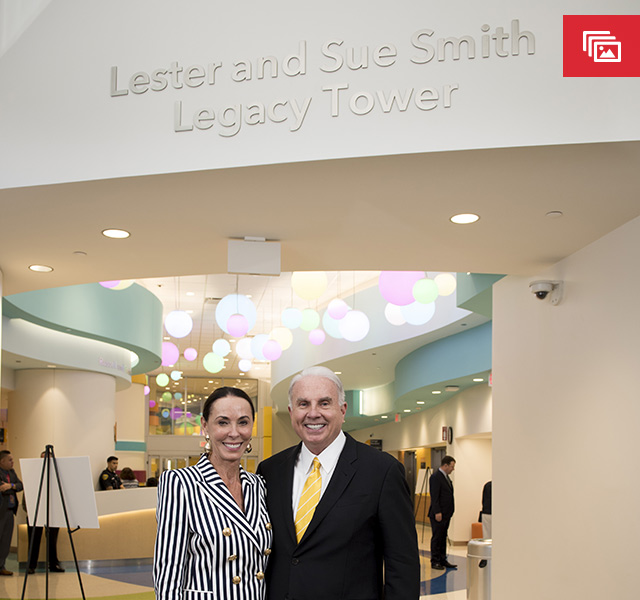
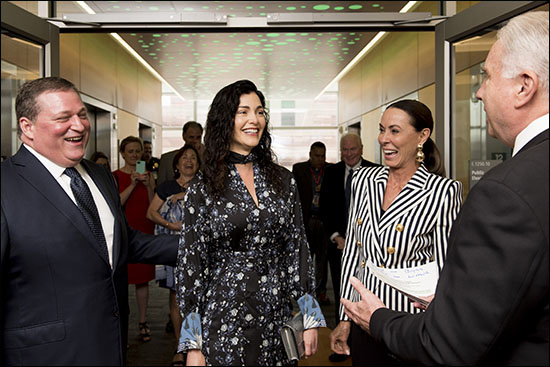
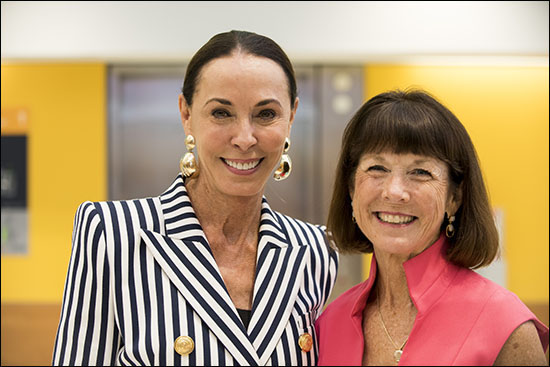
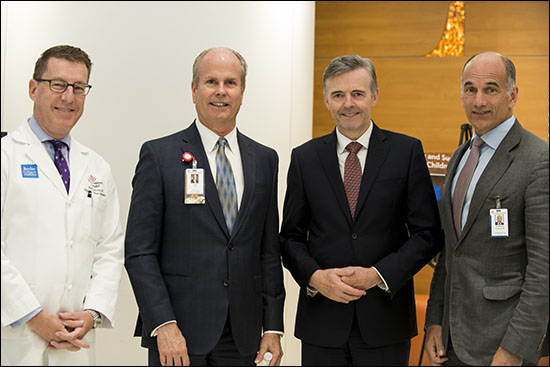
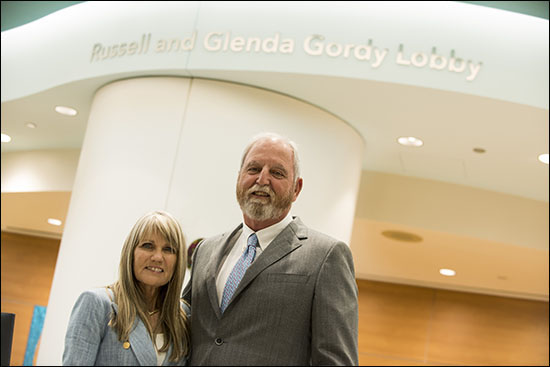
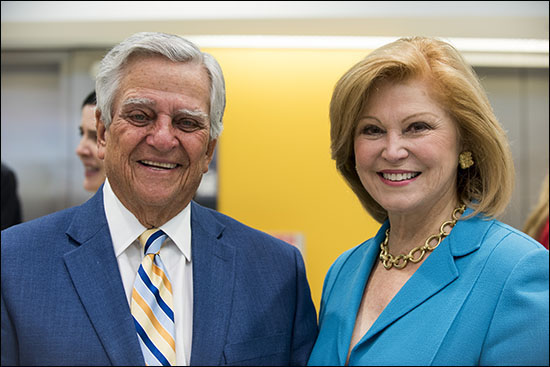
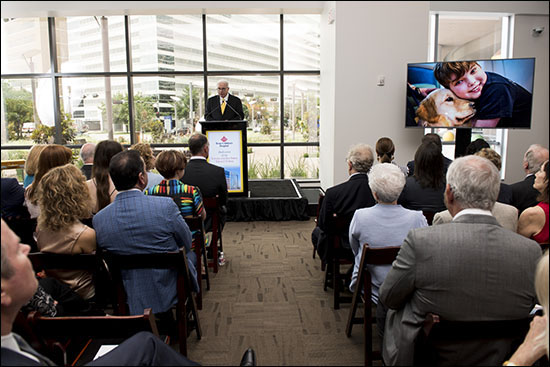
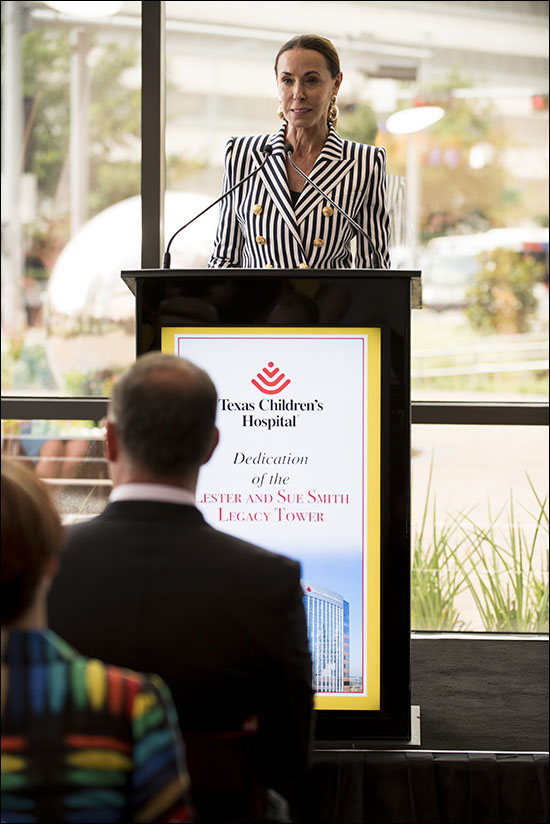
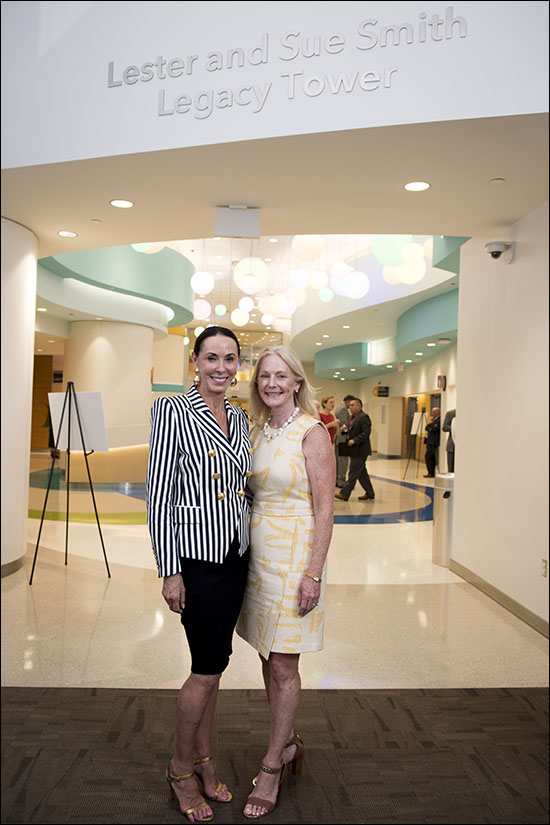
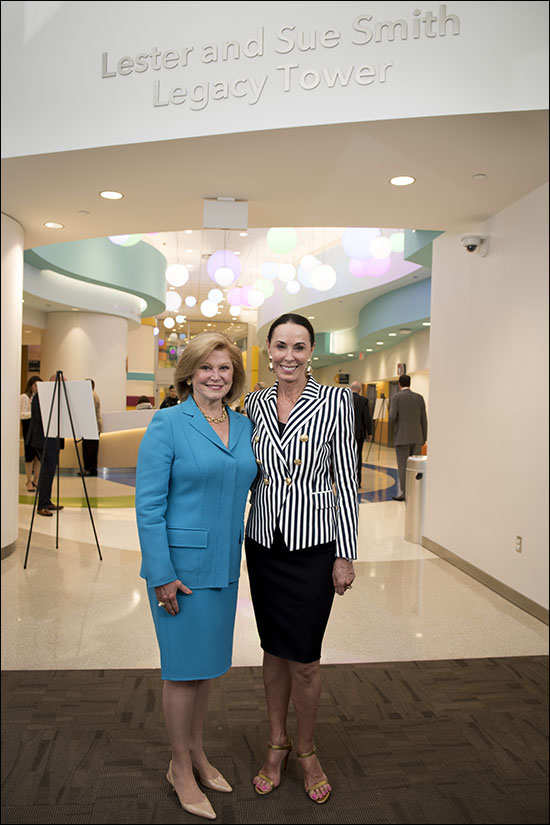
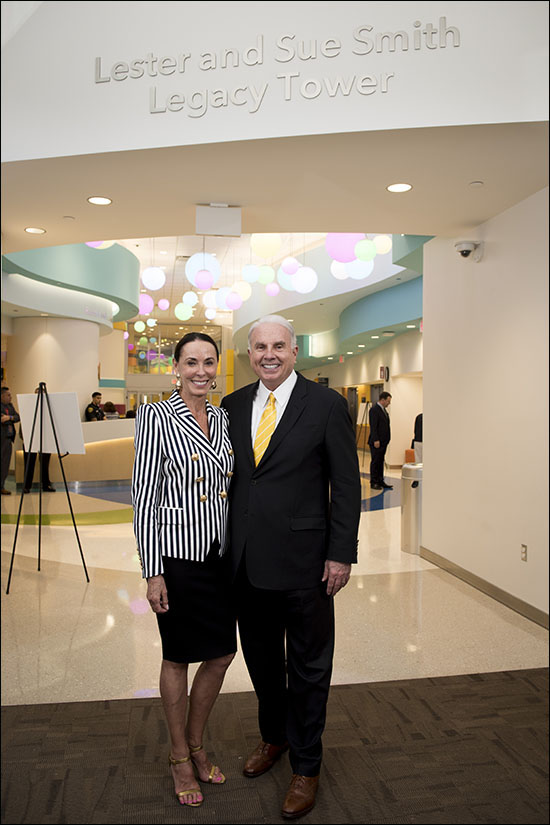
On May 31, nearly 100 guests – including Texas Children’s executive and physician leadership, members of the Board of Trustees, and the family of Lester and Sue Smith – gathered in the Russell and Glenda Gordy lobby for the official dedication and blessing of Lester and Sue Smith Legacy Tower.

Among late Houston philanthropist Lester Smith’s greatest joys was his dedication to the service of others. Most recently, Lester and his wife, Sue, announced a $50 million gift and helped raise a total of $83 million for Texas Children’s following the hospital’s Legacy of Motown Gala in Sept. 2018.

It’s been just over a year since Lester and Sue Smith Legacy Tower first opened its doors as the new home of heart, intensive care and surgery at Texas Children’s Medical Center campus. The cutting-edge, 640,000-square-foot facility allows Texas Children’s to continue providing the highest-quality care possible for the most critically ill children who come to us for help.

“When this tower was still under construction, we named it Legacy Tower,” said Mark Wallace, Texas Children’s president and CEO. “We knew this would be a place that would not only hold Texas Children’s legacy, but also the legacy of so many others, including our resilient patients and the dedicated team of caregivers who work hard each and every day to create healthier futures for children everywhere. Lester left so many legacies – his conviction and courage, his generosity, his triumphant spirit and his passion for life. Each of these legacies will be lived out every day in this building through the patients and families we serve.”

Prior to the official dedication, Lester’s daughter, Shelly, and her husband, Brian, along with his son Stuart and his wife, Limor, were surprised with the unveiling of two patient floors in the tower which were named in their honor by their late father.

“Lester brought so much joy to those he loves and cared for, and he often said that the most important thing we can do is care for the most vulnerable in our community – our children,” Sue Smith said. “We believe that the best place to heal sick children is right here at Texas Children’s, where all children are treated with the utmost compassion and expertise available, regardless of their family’s circumstances. That truly resonates with us and is what guides our giving.”

The first year in Lester and Sue Smith Legacy Tower was a busy one. As of May 2019, there had been 3,839 patient admissions in the pediatric and cardiac intensive care units. More than 9,000 patients received care at our outpatient Heart Center clinics, and over 700 catheterization and 476 MRI procedures were performed here.

A total of 3,455 surgeries were completed in the tower’s state-of-the-art surgical and cardiovascular operating rooms, totaling nearly 14,000 surgical hours. And since the tower’s helistop opened last November, Texas Children’s has had more than 120 landings, allowing for greater access to Texas Children’s for the sickest patients.

Texas Children’s® Health Plan members are now a secure video conference away from connecting with doctors and providers anytime, anywhere.

Through our very own Texas Children’s telehealth platform called Texas Children’s® Anywhere Care that was recently launched on May 22, Health Plan members will have the option of seeking urgent care services for certain conditions – like allergies, fever (in children older than 8 weeks), skin infections, pink eye, sore throat, vomiting, diarrhea and more – via telehealth instead of in the emergency rooms, which will help to alleviate many barriers that our Medicaid patients currently face, like transportation.

“We want to ensure we provide the best care to our pediatric patients and women when they need it,” said Dr. Heidi Schwarzwald, Chief Medical Officer Pediatrics of Texas Children’s Health Plan. “For some of our Health Plan members, physical access to Texas Children’s can be difficult. Telehealth technology will enhance our current operations and allow us to improve the quality and access to care for children and pregnant women, while facilitating more efficient communication with patients and families.”

Health Plan members can register for the platform at www.texaschildrensanywherecare.org. Once the Texas Children’s Anywhere Care app – which will be available in Android and iPhone stores in the next few weeks – is downloaded onto a smart phone, they can connect with one of Texas Children’s telehealth physician partners via video for a consultation. This new telehealth option, available on demand in both English and Spanish, is not intended to replace a patient’s ongoing relationship with their primary care provider, but to supplement care when there are unavoidable gaps.

“Through our partnership with American Well, Texas Children’s Health Plan has access to providers in their Online Care Group which has enabled us to go live with 24/7 coverage for our urgent care visits,” said Laura Laux Higgins, director of Special Projects at Texas Children’s who co-leads the telehealth initiative at Texas Children’s under the supervision of the eHealth Executive Steering Committee. “As we expand our services, our long term goal is to build our own team of Texas Children’s e-health providers who are solely dedicated to telemedicine visits.”

Bringing telehealth services to the Health Plan would not have been possible without the collaboration from multiple departments across the system including Information Services, Legal, Finance, Treasury, Marketing, Texas Children’s Health Plan, Texas Children’s Pediatrics, and our Obstetrics-Gynecology, Quality and Safety teams.

“This project was not just about technology, but having the right vision, strategy and operational support to bring telehealth to Medicaid patients who comprise 85 percent of our Health Plan membership,” said Haley Jackson, senior project manager for Women’s Services and co-lead for the telehealth initiative. “This was a huge team effort across the board, and I am grateful for everyone’s support on this project.”

In September 2018, telehealth was also launched to all Texas Children’s employees and their eligible dependents who are enrolled in a Texas Children’s medical plan via Cigna, our health insurance provider. Employees who have used telehealth describe the service as a welcome addition to their Cigna benefits.

Click here to read a recent Connect article about Cigna Telehealth benefits. Click here for more information on Texas Children’s® Anywhere Care.

About Texas Children’s Health Plan

Texas Children’s Health Plan was founded in 1996 by Texas Children’s Hospital and is the nation’s first health maintenance organization created just for children. Texas Children’s Health Plan cover kids, teens, pregnant women, and adults. If a child is able to get Medicaid or the Children’s Health Insurance Program, the Health Plan has a large group of more than 6,250 doctors, 7,811 specialists, 221 hospitals, and health resources to care for their needs. For more information, visit texaschildrenshealthplan.org.

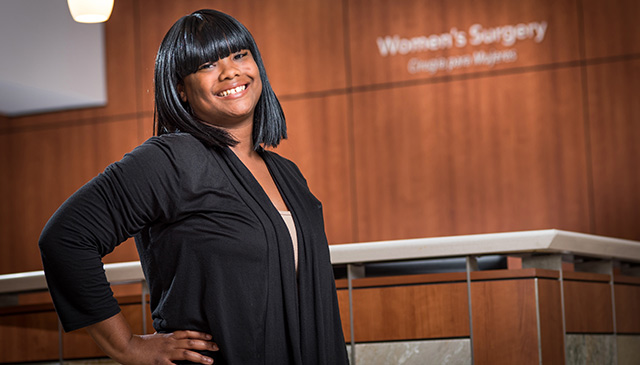
Whenever anyone asks about Shamika Jenkins, the first observation made is about her infectious smile and enthusiastic personality.

Customer service isn’t just a specific portion of an employee’s job description, it affects a patient’s entire experience. As a clerical secretary, Jenkins comes in contact with just about every patient that checks in during her early morning shift. In the Pavilion for Women Surgery department the patient’s experience begins with her warm welcomes and persistence.

“Although it can be pretty busy, I love meeting all different kind of people,” Jenkins said. “There are times when some people may be in a bad mood, a wonderful mood, some may be lost, and others are as upbeat and cheery as I am. Regardless, it gives me joy to encounter all moods because no matter what, I’m here to make their day.”

The waiting area can be the most quiet and uneventful time during a patient’s hospital visit. Either following check in, during an appointment, or after surgery as a patient recovers, patients and their families can potentially spend hours sitting in the lobby. Jenkins has transformed her role into not just checking patients in for their appointments, but makes them feel comfortable as well.

“Shamika is always the pretty, smiling face and helpful person in the waiting room,” Nursing Manager of Pavilion for Women Perioperative Services, Aleli Cabali said. “Shamika goes above and beyond to make sure that families in the waiting room are updated while patients are in the operating room.”

Jenkins’ diligence and consistence in making sure all surgery patients are called and scheduled for their appointments helps both patients and her co-workers, and is what allows the department to continuously provide high quality care.

“I remember a time when several people from the department had to go on vacation, and Shamika called patients ahead of time and scheduled their appointment to make it easier on the rest of the team,” Cabali said. “This was a big help to the unit and is why she deserves this award.”

Jenkins says despite the constant verbal recognition that she receives, she was not expecting to get a hospital-wide award.

“To be honest I didn’t see this coming,” she said. “I just come into work, do my job, and always remember to be myself; that is probably what excites me the most about being recognized. When working at Texas Children’s you have to be ready to put your ‘A game’ on every day. We have people come from everywhere so we need to make sure we maintain that great customer service consistently, and I am more than happy to be that example.”

The Houston Business Journal recently named several Texas Children’s physicians 2019 Health Care Heroes, honoring them for going above and beyond in serving the healthcare industry. The physicians were honored at a May 23 ceremony and are listed below:

Outstanding Health Care Practitioner: Dr. Ricardo Flores, hematology/oncology; Dr. Joohi Jimenez-Shahed, neurology; Dr. Julie Kaplow, pediatrics and psychology; and Dr. Michele York, neurology.

Outstanding Physician: Dr. Daniel DeSalvo, pediatrics, diabetes and endocrinology; Dr. Lisa Hollier, obstetrics and gynecology; Dr. Peter Hotez, pediatrics and dean of the National School of Tropical Medicine; Dr. Rayne Rouce, pediatrics and hematology/oncology.

Rising Star: Dr. Hsiao-Tuan Chao, neurology; and Dr. Arindam Sarkar, resident physician in family and community medicine.

The Clinical Research Center/Research Resources Office presented the Clinical Research Award for second Quarter 2019 to Dr. Patricia Baxter, Department of Pediatrics-Hematology/Oncology, Baylor College of Medicine.

The award was established by the Clinical Research Center in collaboration with the Research Resources Office to recognize and honor individual contributions to protecting the best interest of the research subjects and compliance with applicable rules and regulations.

Dr. Baxter’s research in the CRC is focused on evaluating novel therapeutic agents for recurrent pediatric cancers, with a special interest in brain tumors. She is a member of the Cancer and Hematology Centers Neuro-oncology and Developmental Therapeutics Teams and is an active participant in the Pediatric Brain Tumor Consortium (PBTC), Collaborative Network for Neuro-Oncology Clinical Trials (CONNECT) and Pacific Pediatric Neuro-Oncology Consortium (PNOC). Dr. Baxter credits the CRC nurses and staff, as well as the research nurses in the Cancer Center for playing a critical role in moving this research forward and their compassionate care of the patients and family.