December 10, 2019

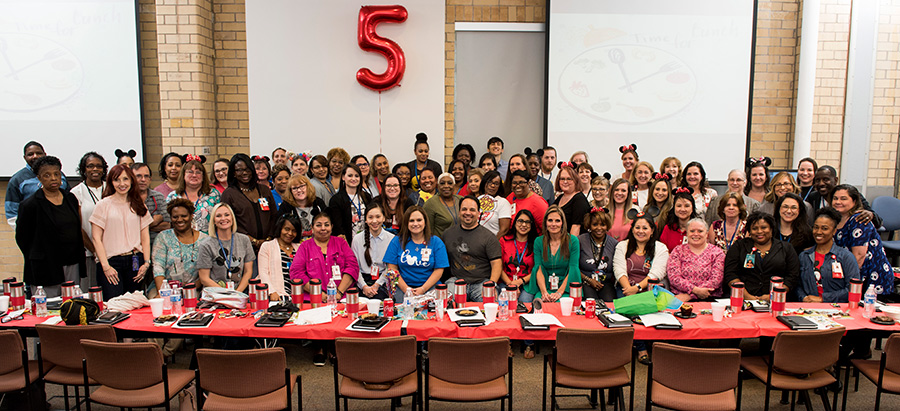
Another Leadership Maxim series has come to a close, highlighting amazing leadership throughout the organization through a series of guest blogs on On The Mark. To celebrate the finale, about 100 employees who participated in the series or commented on the blogs in the series attended a private event with the Houston Texans that included a behind-the-scenes tour of NRG Stadium, an autograph session with two Houston Texans football players and photos with Texans cheerleaders. The event was held on December 3. Read more

On Monday, Texas Children’s closed on the purchase of two plots of land in Austin – Presidio to the north and Estancia to the south (click on image to see both plots). This additional investment into the Austin community is yet another example of our commitment to expand our expert pediatric and maternal care to more conveniently serve the families of central Texas.

“In June 2017, we first announced plans to extend our brand of pediatric and maternal care to the Austin community,” President and CEO Mark Wallace said.  “Eighteen months later, we have 62 employees and 23 physicians in Austin helping to deliver on our mission and intention of caring for the children and families in need of the expert care we provide, closer to home.”

Texas Children’s is constantly exploring options and assessing the needs of children and women in the community to help fill gaps in care where they exist. Currently, there are no confirmed plans for the use of this land.

“We know Austin continues to be one of the fastest growing cities in the nation, and our goal is to help supplement and add value to the great health care options already available to Austin-area families,” Executive Vice President Michelle Riley-Brown said.

The organization’s first health care location in Austin, Texas Children’s Urgent Care Westgate, opened in March 2018 and provides high-quality, efficient and affordable pediatric-focused care after hours and on weekends. Located at 4477 South Lamar Blvd., suite 400, Texas Children’s Urgent Care is staffed by board-certified pediatricians and nurses, with facilities and equipment designed specifically to meet the needs of children and adolescents up to age 18.

Additionally, Texas Children’s Pediatrics, the nation’s largest pediatric primary care network, currently has five practices in Austin which provide full-service care for children including, among other offerings, prenatal counseling; newborn and infant care; well and sick child visits; immunizations; and hearing and vision screenings; as well as camp, school and sports physicals. Building upon its 20 plus years of experience working with community pediatricians, Texas Children’s Pediatrics continues to partner with existing pediatric primary care practices in the region. Currently, Texas Children’s Pediatrics locations in Austin include:

In October 2018, Texas Children’s Specialty Care Austin opened bringing the hospital’s own subspecialty pediatric care to the Austin community. Located at 8611 North MoPac, suite 300, Texas Children’s Specialty Care helps increase access for children and families in need of allergy and immunology, cardiology, clinical nutrition, diabetes and endocrinology, ophthalmology, plastic surgery, and pulmonology, among other subspecialties. Additional pediatric subspecialties will be added in the coming months to help serve the growing needs of the Austin community and the state of Texas.

December 9, 2019


As a Texas Children’s employee, it is important to make informed, thoughtful decisions about what you choose to post online. Learn more about how to be social media savvy. Read more

For the past two years, increasing access to care has been one of the central goals across the Texas Children’s system, resulting in several new programs and initiatives.

The most recent example was on December 2, when the Department of Surgery took yet another major stride in its effort to provide patients and families with even more access to Texas Children’s surgical care through the launch of the new After Hours Clinic for Surgical Care.

The After Hours Clinic is now open Monday through Friday, 5 p.m. to 7 p.m., on the eighth floor of Mark A. Wallace Tower, and is staffed by the Surgical APP Hospitalist Team, which currently cares for surgical patients in the Texas Children’s Emergency Center (EC) and inpatient areas.

This clinic provides access to care for post-surgical patients or those who need to be seen quickly for a large range of non-emergency or non-urgent medical issues.

“There are many situations, particularly in the early postoperative period, in which parents feel the need to have a surgical provider evaluate their child,” said Texas Children’s Surgeon-in-Chief Dr. Larry Hollier. “Often this is just for reassurance or to provide additional instructions or guidance. The After Hours Clinic is designed primarily for families who feel they cannot wait to be seen until the following day.”

In addition to convenient clinic hours, patients and families will benefit from the relative low cost of clinic visits compared with visits to the EC or to urgent care. Usually a visit to the After Hours Clinic will cost the same as a regular clinic visit; and for post-surgical patients, it may even be covered within the global period.

Staff within surgical divisions can directly schedule patients to the After Hours Clinic in Epic. And in the coming months, pediatricians and families will be able to schedule as well by calling 832-822-2778.

After Hours Clinic for Surgical Care FAQs

When: Monday through Friday, 5 p.m. to 7 p.m.

Where: Mark A. Wallace Tower, eighth floor

Who is eligible?

  • New patients
  • Postop patients
  • Established patients

What types of conditions are treated?

  • All postoperative concerns
  • All wound concerns
  • Minor burns
  • Cast and splint issues (e.g., pain, swelling, wet or loose casts/splints)
  • Suture, staple or glue concerns
  • Cellulitis
  • Hair tourniquet
  • Gastrostomy button concerns
  • Foreskin concerns (e.g., balanitis, phimosis)
  • Fingernail infection (e.g., felon, paronychia)
  • Non-displaced fractures (bones are still in proper alignment)
  • Superficial lacerations (do not extend into the muscle or have exposed bone)
  • Ear and nose foreign body removal

What kinds of patients should be sent to an EC?

  • Patients who need EC resources, such as CT scans, sedation, etc.
  • Congenital heart patients
  • Patients with Ophthalmology concerns
  • Patients with Neurosurgical concerns

Who sees the patients?

Surgical Advanced Practice Providers (APPs) on the dedicated Surgical APP Hospitalist Team. The Surgical APP Hospitalist Team is cross trained in Pediatric General Surgery, ENT, Urology, Orthopedics and Plastic Surgery. While surgeons and physicians are not physically present during clinic hours, they will be contacted as appropriate.

How is a visit to the After Hours Clinic for Surgical Care different from a Same Day/A+ Clinic Appointment?

These are patients with a surgical concern who would otherwise go to the emergency room.

How does a patient get on the clinic schedule?

Surgery clinic staff, schedulers and/or ambulatory service representatives can directly schedule patients into an after-hour visit type in Epic. The templates will have 20-minute time slots starting at 5 p.m., Monday through Friday.

Who can I contact with questions or for additional information about the clinic?

For additional information about the After Hours Clinic for Surgical Care, please contact Kris Marsack or Susannah Ferguson.

The following story was written by Jenny Deam and was published by the Houston Chronicle on November 26.


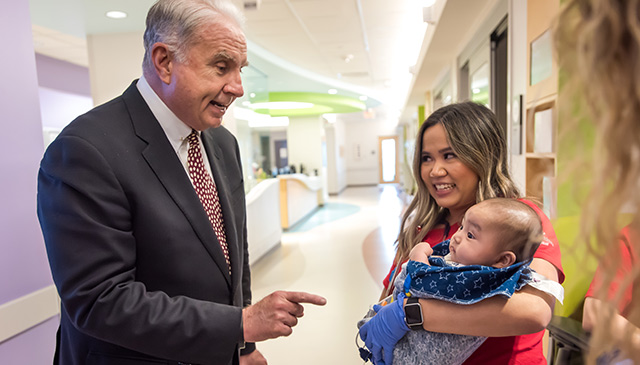
On Oct. 4, 1989, Mark A. Wallace, a bright, ambitious 36-year-old health care executive took the reins at Texas Children’s Hospital as one of the youngest CEOs at Texas Medical Center. Back then he had a vision to turn his hospital into a powerhouse to be reckoned with.

Three decades later, Wallace, now 66, is still CEO. Texas Children’s has grown on his watch into one of the largest and most comprehensive pediatric and women’s hospitals in the nation. Texas Inc. sat down with Wallace for a wide-ranging talk on the challenges facing health care today and into the future. His comments are edited for length.

Q: What made you decide on a career in medicine?
A: I was 16 years old and I was at a basketball camp in Edmond, Okla. I wandered over to the library at Central State University and I picked up some career books and manuals and they were talking about how Medicare and Medicaid has just been enacted and how medicine and health care were going to expand because there was going to be all of this additional reimbursement coming in. I’m sitting there in gym shorts and tube socks and white Converse tennis shoes and I’m thinking, well, this sounds like a great opportunity. I went home that night and I announced to my family at the dinner table, “Y’all I want to be a hospital administrator when I grow up.” That’s not what most 16-year-olds say, especially in 1969, but I have been focused on that ever since.

Q: Did you ever wish you had become a doctor?
A: Never. I was all about leadership and management and driving performance. I’ve always been fascinated with physicians and what they do clinically, what they do in research. I have tremendous affinity for physicians. And that has been one of the keys to my success: I like doctors. A lot. There’s a lot of health care CEOs that don’t.

Q: What has been the best change in medicine and health care in your career?
A: It’s definitely the attention, the resources and the focus on quality, service and safety. I spend more time talking about and listening to our team discuss quality and safety than I do about finance. And that was different 20 years ago. It used to be more about the balance sheet and the profit-and-loss statement.

Q: Safety is better now?
A: It’s improved dramatically. We have the ability now in real time to monitor safety events, where an egregious mistake was been made possibly resulting in death or serious harm to a patient. Last year in 2019 we had 4.6 million patient encounters at Texas Children’s. We had only five serious safety events and no deaths from them. Twenty years ago, we wouldn’t have been able to even count serious safety events to the degree we can today. And even with a lower denominator, because we weren’t as big back then, the number of mistakes would have been much, much higher.

Q: What is worse in health care?
A: Not here at Texas Children’s, but in medicine in general, I see many people have less personal contact with their colleagues and sometimes even with patients and family members. Because of the development of technology, there is less face time. People are using their devices and texts and email in order to communicate. This is a challenge for the industry throughout the United States and throughout the world. There’s no substitute for face time. That personal touch is so important in medicine. I don’t think that’s being old-fashioned. I think that’s the right way to do it.

Q: How does your hospital deal with the state’s high uninsured rate?
A: To us, and to me, is it is a major problem in health care in the United States, especially in Texas and in Houston. But we run toward that problem, we embrace the uninsured in our community and we want to take care of them regardless of their ability to pay. Twenty years ago we started community care centers. We have seven now throughout the Greater Houston area. We have nurses and social workers and case workers who work with these children when they come in to sit down with the moms and fill out the forms and see if they are eligible for Medicaid or Children’s Health Insurance Program (CHIP) or a commercial plan. That’s the big problem in Texas. So many of these kids are eligible but they’re not enrolled. Texas has got to do better than this. This is an embarrassment for our great state.

Q: Why is having children insured important?
A: When a child has health insurance, they are three times as likely to be taken to see a pediatrician or to go to a hospital. If a child doesn’t have access to health care they lag behind, they miss school and they get sicker and their state of health declines. We end up taking care of them in the emergency centers where their problem is much more serious and much more expensive to treat.

Q: Is this personal for you?
A: Many years ago, I thought, before I retire I want to work in a system that has universal access and coverage for all children. I thought that would be done by now.

Q: Are you seeing any fallout in health care from the White House’s policies on immigration, even among citizen children of immigrant parents?
A: Yes. There’s the Texas Children’s Health Plan and we have over 400,000 members. The majority are children covered by Medicaid and CHIP. We’ve seen in the last year about a 4 percent decline in our membership and it’s because of exactly that – parents are not taking their child to get enrolled because they are fearful of being deported. It’s incredibly unfortunate and it’s affecting children and their health. That is a reality in our society.

Q: What can you as a hospital administrator do?
A: I think it’s talking with people. It’s talking with our legislative leaders.

Q: What’s been the reception?
A: It’s falling on deaf ears.

Q: How do you prepare for the large-scale change that could be coming in payment methods?
A: We study the proposals. There will be a change, whether its 2020 or 2024, whether it’s Medicare-for-All or something else. We’ve been advocating for universal access and coverage my entire career. We believe that it is a right for health care in the United States of America for our citizens. We don’t know what’s coming down the pike, but we’ve been hearing about single-payer systems since the 1960s with Sen. (Edward) Kennedy. It’s been around for 50 years, but we’ve not made very much progress. Now that conversation is more mainstream. How do we get ready? Regardless of the form or the structure of the payment methodology we know who we are, and we know what our mission is so we’re going to stick to that mission.

Q: How do you re-arrange your financial structure to be ready?
A: You have to be very efficient with the deployment of your resources. But it really is care coordination, finding that most effective way and venue to take care of a child. That’s the key. Reimbursement today is as good as it’s ever going to get. Lean and mean and being more effective and more efficient those are things we work on every single day.

Q: Any plans for a merger or acquisition with another hospital?
A: No.

Q: Any retirement plans on the horizon?
A. Everyone asks that. When you get to be 66 and you’ve been the CEO for 30 years you can’t be afraid of that question, and I’m not. I feel great, I still have a very high energy level, I still feel very inspired. So right now, I don’t have any plans for retirement. But one of the most important things that a board and a CEO can do is have a really strong leadership development and succession plan. Several years ago, I made a deal with God that He would tell me when it was time for me to retire.

Q: God has not whispered in your ear?
A: Not yet. But I try to always be available.

Mark A. Wallace, CEO of Texas Children’s Hospital

EDUCATION: B.S. from Oklahoma Baptist University and MHA from Washington University in St. Louis

FAMILY: Wife – Shannon; two children; seven grandchildren.

SOMETHING MOST PEOPLE DON’T KNOW ABOUT ME: How much I like to sing and tell jokes.

FAVORITE QUOTE: “The best way to predict the future is to create it.” – Peter Drucker.

FAVORITE BOOK (or books): “The Art of Possibility” by Rosamund Stone Zander with Benjamin Zander

PERSON I WOULD LOVE TO HAVE DINNER WITH: Theodore Roosevelt

SOMETHING I DON’T TALK ABOUT MUCH BUT GUIDES ME: My faith and belief in destiny.

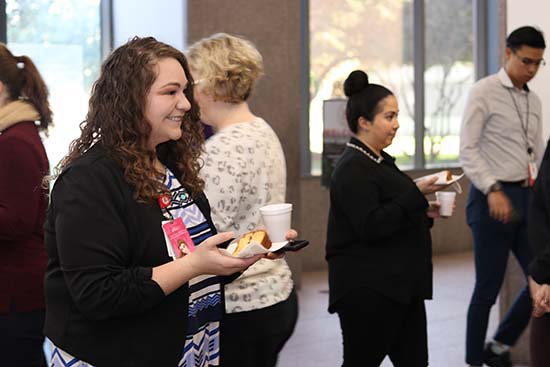
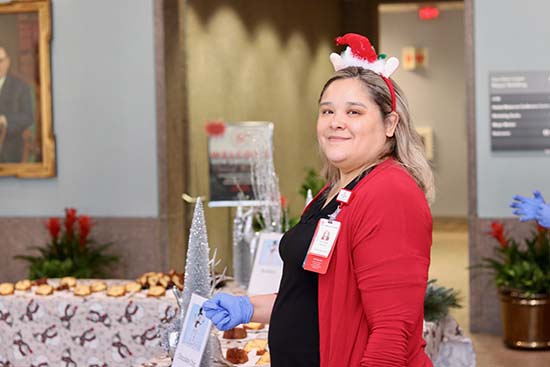
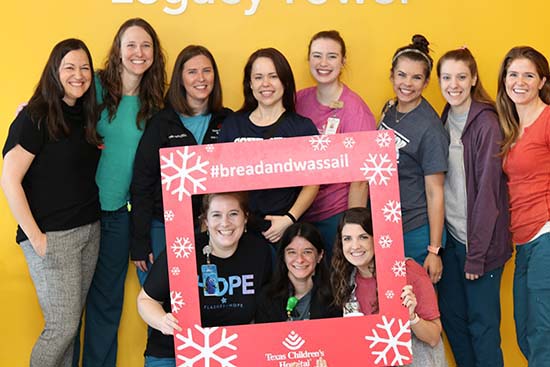
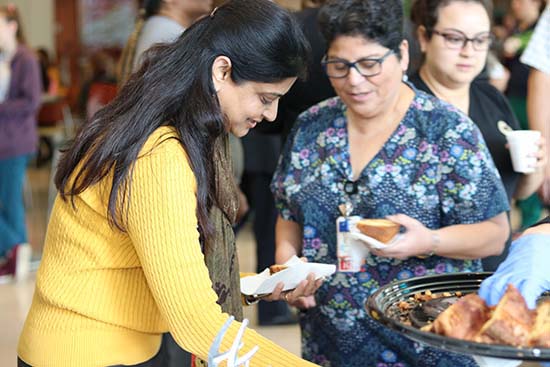
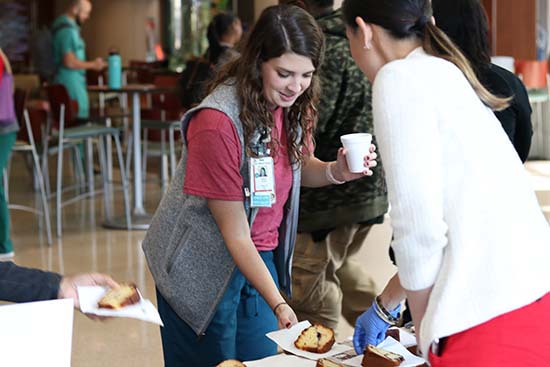
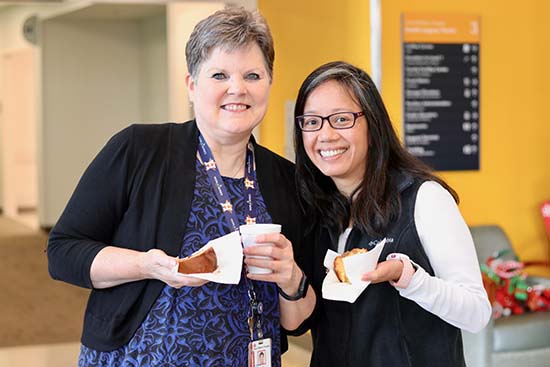
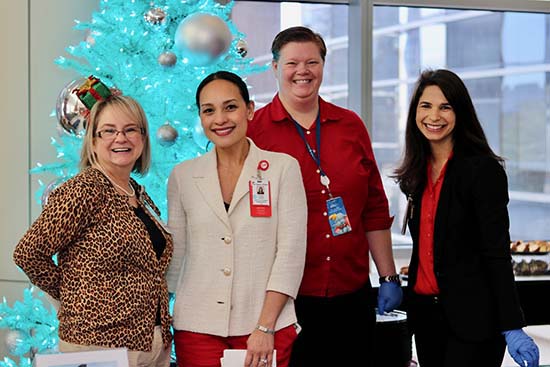
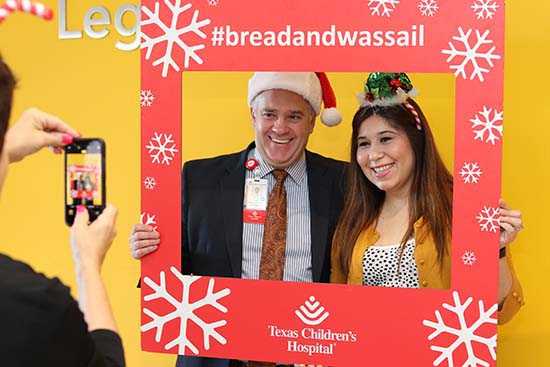
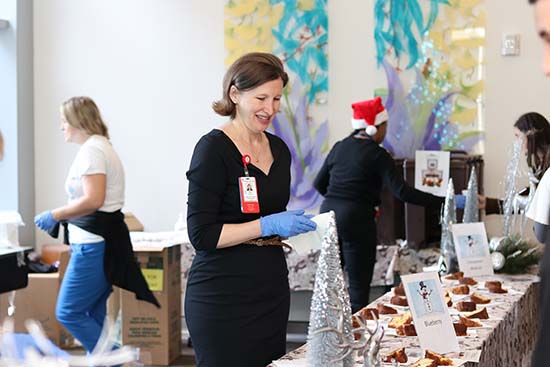
The week of December 2, Texas Children’s employees kicked off the holiday season with camaraderie and joy by participating in our annual holiday bread and wassail tradition. Please view the photo gallery below to see pictures of the festivities.

December 8, 2019


When you think of a medical coder, what’s the first thing that comes to mind? Perhaps you conjure up images of someone feverishly attempting to solve a puzzle or decipher an ambiguous code.

Medical coding is often compared to the work of a detective. Medical coders analyze and translate complex information from patients’ charts into standardized medical codes. This job requires extensive knowledge of medical terminology, anatomy, physiology, disease processes and analytical skills.

When a patient receives care at Texas Children’s, every diagnosis and procedure is documented in the patient’s chart by their physician, detailing what is wrong with the patient and what services were performed. Since there are many diseases, procedures and services out there, medical coders must search through thousands of alpha numeric codes to find the right code for each procedure or diagnosis.

Since Texas Children’s cares for some of the world’s most critically ill patients, and those with medically complex needs, the more complex the diagnosis and procedure, the more complex the coding can be.

“Our team uses the ICD-10 system to classify and code all diagnoses, symptoms and procedures,” said Coding Quality Assurance Specialist Stephanie Koopmann. “From reviewing and deciphering physician notes to translating them into codes, our job requires meticulous attention to detail to ensure patients not only receive the right care, but that revenue for Texas Children’s services flows accurately and efficiently.”

While medical coders work behind the scenes to ensure the delivery of high quality patient care, they are also the lifeline of Texas Children’s Revenue Cycle. Every ICD-10 code entered into a patient’s electronic medical record – and on an insurance claim – eventually drives revenue for Texas Children’s Hospital

“Our coding team looks at every piece of patient documentation to ensure we code correctly from a compliance standpoint before the claims are sent to the payors,” said Brenna Thiem, assistant director of Coding Compliance and Clinical Documentation. “From ensuring the accuracy of revenue and physician reimbursements systemwide to creating a valid record of patient care history, proper medical coding is important so Texas Children’s can continue to meet the needs of our patients and families.”

Currently, there are 80 certified medical coders across the organization. Through a special partnership, Texas Children’s hopes to increase that number in 2020.

Since 2018, Texas Children’s has partnered with Volunteers of America, a recipient of the Healthcare Professionals Opportunity Grant administered by the Administration for Children and Families. Through this federal educational grant, over 20 Texas Children’s employees have completed classes to obtain their certification in either professional or outpatient coding, or certification to become a professional biller.

Syreeta Elkins, whose been with Texas Children’s for 10 years and works for the Revenue Cycle, first learned about the program from her manager. While the classes are free of charge to employees thanks to this grant, the program’s flexibility enabled her to balance work while attending classes in the evenings.

“This program has helped me prepare for a coding role in the future and broadened my knowledge of the Revenue Cycle process,” Elkins said. “This is a great program to help employees expand their skills, and it shows that the organization is dedicated to growing each individual and retaining exceptional talent.”

Due to the success of last year’s program, Volunteers of America has selected Texas Children’s for the last year of this grant, providing another invaluable opportunity for employees to obtain their certification to work in areas, such as medical coding and billing, that are vital to the success of Texas Children’s.

A total of 40 employees have enrolled for the next session that begins in January 2020. The classes are held two nights a week for three months at Texas Children’s Medical Center Campus. After students complete the course, they’ll take a certification test proctored onsite by an AAPC instructor.

“This grant has helped individuals who had wanted to further their education, but didn’t have the financial means to do so or had other barriers in their way,” Thiem said. “We are grateful for our partnership with Volunteers of America and for selecting Texas Children’s once again to benefit from this grant.”