Texas Children’s patients now have access to free parking when visiting the Medical Center Campus. Last month, The Parking & Transportation Committee approved changing the Main Street Lot, located across from Texas Children’s Pavilion for Women, from a public parking lot to a no cost, patient only lot.
In addition to patient designated parking in our garages, the Main Street lot will allow restricted access to our patients to improve the overall patient parking experience and meet the current parking demand. Employees should park in their original designated parking assignment.
This new parking strategy began with an update of Texas Children’s patient assistance parking program (PAPP), managed by social work services.
“When a family experiences hardship with parking our team will do a brief assessment,” social work manager, Jackson Huynh said. “If we determine that the family qualifies, the family will be able to use the Main Street lot until they are discharged.”
Benefits of PAPP for families:
Almost guaranteed an (undesignated) parking spot
Have in and out privileges
Can renew vouchers on a weekly basis (Monday-to-Monday)
Can receive their vouchers via email (e-version)
Maps of the Main Street lot is included in the voucher
Main Street lot restrictions:
Families must meet the criteria for parking assistance (social work services assessment based on financial hardship)
Families must be admitted for seven days or greater to receive the assistance
Only two caregivers per child can use PAPP, but only one car is permitted to parking in the lot at a time
In addition, LAZ parking now manages the lot along with other parking areas throughout the Texas Medical Center, and sit on the parking and transportation committee.
The amount of families assisted through PAPP has increased by over 500 between 2018 and 2019.
“I am excited to provide no cost parking for our patient families,” assistant director of facilities operations, Michael Jackson said. “We are constantly working towards providing an easy and affordable experience for Texas Children’s families.”
Texas Children’s Well-Being team has launched a new weekly video series to help employees taking on the My Nutrition Challenge achieve a healthier, more balanced plate. This week, focus on filling one-quarter of your plate with a lean protein.
Whether animal-based or plant-based, protein has staying power! It promotes fullness and satiety, while also helping maintain muscle mass and is an important component of your meal.
Watch the video for more tips on incorporating protein from Cigna Health Coach and Registered Dietitian Staci Tobolowsky Astrein.
March 8, 2020
The Clinical Research Center/Research Resources Office presented the Clinical Research Award for First Quarter 2020 to Farida Lalani, senior assistant manager, Research Resources Office.
This award was established by the Clinical Research Center in collaboration with the Research Resources Office to recognize and honor individual contributions to protecting the best interest of the research subjects and compliance with applicable rules and regulations.
Lalani joined the Research Resources Office with Baylor College of Medicine as a Sr. Research Coordinator in 2013. During this time, she has gained significant experience in pediatric clinical research as she worked with sponsors, CROs and expert physicians on clinical trials in several therapeutic areas such as peanut and milk allergies, rheumatoid arthritis, infectious diseases, surgical pain management, congenital cardiac defects, and diabetes, among many others. She moved into a management role in 2017 and currently oversees the research coordination team along with the RRO nurse manager.
March 3, 2020
Sudden cardiac arrest can happen to anyone, anywhere, any time – and it often happens with little to no warning. More than 200,000 cardiac arrests occur in hospitals each year in the United States. To keep employees better prepared to perform cardiopulmonary resuscitation (CPR) and contribute to improved patient outcomes, Texas Children’s recently launched a new Nursing initiative that takes CPR training to the next level.
“We don’t have to perform CPR too often, but unfortunately, when we have to provide this life-saving procedure, we have to do it well,” said Nursing Professional Development Specialist Gayle Young. “Through this initiative, resuscitation skills are accessed and reinforced to give staff the added confidence they need to achieve and maintain high quality CPR performance in the event of a cardiac emergency.”
Resuscitation Quality Improvement, (RQI), the American Heart Association’s gold standard for Basic Life Support (BLS) training, is a quarterly training program at Texas Children’s that offers real-time visual and audio feedback on compressions and ventilations to support the mastery of high quality CPR skills. Unlike conventional CPR classes – where an instructor provides his or her own personal feedback – RQI uses computer-based eSimulation technology that evaluates performance quality and solicits objective feedback in the form of positive reinforcement or suggestions for improvement.
“Being able to see the actual outcome of our compressions is amazing,” said Cardiac ICU Education Coordinator Shannon Cummings. “You can see if you’re under or over inflating, if you’re going too deep or too shallow, or if you’re not allowing for recoil and letting the chest expand. The program walks you through the steps, and tells you when to adjust your compressions, so you can perform CPR effectively.”
This program, administered by Texas Children’s Nursing Professional Development (NPD) Team, consists of online learning modules and skills assessments that are completed quarterly instead of once every two years. As part of this quarterly training, on-campus simulation stations will be equipped with adult and infant manikins, and a computer that connects to the CPR training materials.
After successfully completing the RQI training curriculum, staff are issued an RQI e-Credential card that must be renewed quarterly and a BLS e-Card that is renewable every two years. Additionally, staff can keep track of their completion and expiration via HealthStream.
“Studies have shown that CPR skills can decay within three to six months after initial hands-on training,” said Nursing Professional Development Assistant Director Angie Rangel. “The only way to master basic life-saving skills is through regular, measured and frequent practice. Through quarterly drills, we’re reinforcing the confidence and competence staff need to perform high quality CPR. At the end of the day, it’s all about improving outcomes. And with RQI, we are really moving towards great patient outcomes.”
Several nurses and direct patient care providers, as well as Child Life staff, participated in the soft launch of the RQI program on February 4, and these participants already see the benefits this program offers.
“In Child Life, a lot of times we’re doing one-on-one activities where there’s no medical staff around our patients in the room,” said Child Life Specialist Danielle Coleman. “So just in case something unexpected happens with a code, we can be the first responders and help that child out and be there for support.”
“I think this program is great, and will help refresh our skills more frequently than once every two years,” said Pavilion for Women Ambulatory Education Coordinator Leslie Williams. “We’ll be more comfortable with performing the resuscitation skills and it’s just better for the patients and the families.”
The NPD team has already identified 75 “super users” from Texas Children’s Medical Center Campus, Texas Children’s Hospital West Campus, Texas Children’s Hospital The Woodlands, and several Specialty Care Centers to be early adopters of RQI before the program is rolled out in phases across the system.
Click here to access the NPD website to learn more about RQI Training at Texas Children’s Hospital.
On his blog this week, Mark Wallace addresses the Harvey Weinstein verdict and the power of the #MeToo movement. Read more
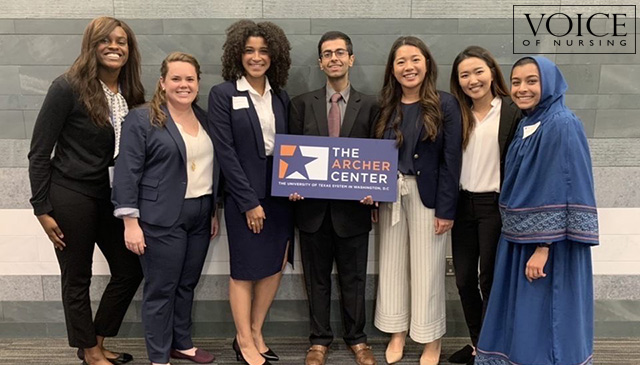
Maya Peterson, education coordinator in the PICU, was recently accepted into The Archer Fellowship Program in Washington, D.C. Maya shares her experience applying for this internship program and how this opportunity will benefit her in her current role at Texas Children’s. Read more
March 2, 2020
Not so long ago the Claims department at Texas Children’s Health Plan faced significant challenges. Those challenges led to unhappy providers and millions of dollars in state penalties. But in the last year April Riggs, director of Claims Administration – and her newly restructured team – have overseen a remarkable turnaround. The team is more efficient, providers are happier and within the last eight months, the department has incurred $0 in state penalties.
Remarkable is perhaps an understatement.
In record time, the team has:
Ensured that 98 percent of all claims are paid within 30 days.
They reduced the average time from 22 days to five days.
Reduced the amount of claims in cue.
The team had 80,000 claims in cue at their lowest performance level.
The goal was to be at less than 30,000 claims in cue, which they have achieved and sustained for 14 months.
Eliminated liquidated damages, which are non-compliance penalties issued by the state.
The department previously incurred $2 million in damages over a 21- month period.
For the past eight months, they have incurred NO new liquidated damages.
How did they do it?
“We coined our mission Mission Possible and we set some very straight forward goals,” said Riggs. “We knew that to be successful we had to define our mission, review historical practices and in no way could we return to business as usual.”
Riggs immediately set her team on a course that consisted of:
Putting the right people in the right positions
Making data driven decisions
Implementing metrics that matter
Consistently monitoring productivity; and
Collaborating with key business partners
After all of these efforts were in place, she noticed a shift occurring within her team. “It was a pleasure to watch it happen. We became a team that could identify issues very early on and then move swiftly to identify solutions.”
And if that wasn’t enough, Riggs said her staff began daily briefings to review their work for the day, the week and even for the following week. “I believe Mr. Wallace calls that skating to where the puck is going to be,” she said.