March 30, 2020

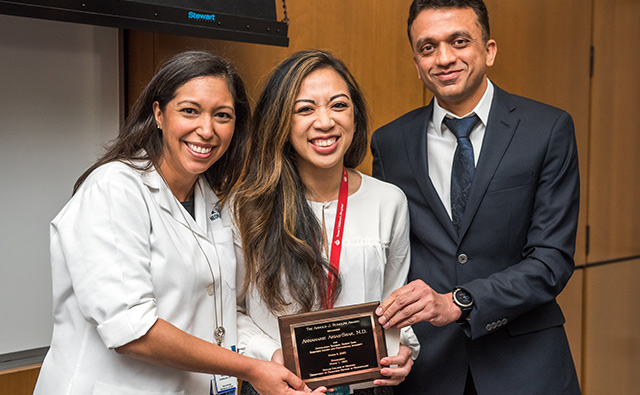
Drs. Melissa Carbajal and Muralidhar Premkumar, Neonatology faculty and fellowship program leadership, congratulate third-year fellow Dr. AnnaMarie Arias-Shah as the 25th annual Arnold J. Rudolph Memorial Grand Rounds award recipient. The award recognizes third-year fellows in neonatal-perinatal medicine for outstanding teaching, patient care, scientific inquiry and professional integrity. Dr. William E. Benitz, Philip Sunshine Professor of Neonatology in the Division of Neonatal and Developmental Medicine at Stanford University School of Medicine, was this year’s invited speaker at the recent grand rounds.

The Arnold J. Rudolph Memorial Grand Rounds was established in 1996 by the Section of Neonatology, in the Department of Pediatrics at Baylor College of Medicine, in memory of its late Section Chief, Dr. Arnold J. Rudolph, who died in 1995. Dr. Rudolph was a well-respected clinician and educator, recognized internationally as a leader of neonatology.

March 23, 2020

As part of our COVID-19 preparedness efforts, Texas Children’s is establishing mandatory screenings for all employees and staff beginning Monday, March 23.

What do i need to do?

Refer to the list of checkpoints below for your designated screening location. Plan to arrive at your designated screening location at least 15-30 minutes early. Some locations will have lengthy lines as our screeners and employees become more accustomed to this process. Allow yourself some additional time to get through screening and report to your normal work location as required. Employees will not receive compensation for any screening wait times.

If you are cleared to work, please place your wristband as soon as it is received.

Screening process

Check your own temperature and symptoms before reporting to work. Do not come to work if you are sick. Your temperature will be checked as part of your screening and if you present symptoms consistent with COVID-19, you will not be allowed on site and will be provided information as to when you are able to return to work.

Each day that you are cleared to work, you will receive a different wristband each day to indicate you have been cleared. Be sure to wear your wristband and remind others to do the same.

Designated checkpoints

Medical Center (includes Meyer building)
Feigin Circle for walkers and drop-offs
Garage 11 – Entrance
Garage 19 – Level 1 through 8
Legacy Tower – B3, B4 elevators only

West Campus
Back MOB entrance near service elevators

The Woodlands
MOB second-floor bridge

Health Plan
Main Lobby entry

Texas Children’s Pediatrics and Urgent Care
Upon entry to the practice/site

Specialty Care
Bellaire: near service elevators
Clear Lake: rear employee entrance
Cy-Fair: rear employee entrance
Sugar Land: first floor lobby by rear parking lot entrance

Reminders and recommendations

Maintain social distancing. Keep a safe distance (approximately 6 feet) between yourself and others while waiting in line to be screened and encourage your colleagues to follow suit. Stay in touch with your leader. We know it will take time to get used to being screened as part of your routine. Reach out to your leader for support and guidance throughout this process. Be mindful of Texas Children’s travel guidelines. You will be asked to answer travel questions as part of our screening. Remember: Any workforce member (employees, Baylor faculty or staff members) who has traveled greater than 150 miles cannot report to work at Texas Children’s until the 15th day following your return from travel. If you have returned to work already, you will be sent home until you meet this criteria.

Guidelines – Workforce screening and community exposure

To provide additional guidance and clarity about how Texas Children’s is assessing and clearing team members for on-site or remote work, click here to view these guidelines. Note, these will be updated as the situation evolves.

Texas Children’s is establishing labor pools to be staffed by employees across the system who have the skills and abilities to fulfill any potential labor needs during the COVID-19 event. The following labor pool roles are available at this time:

All employees are eligible
  • Patient/visitor screener
Registered nurse and Advanced Practice Provider only
  • Employee Health support
  • Emergency Center phone support
  • Emergency Center nursing support

We are asking leaders and/or team members who have leadership approval and are interested in volunteering to follow the steps below. Prior to signing up, please speak to your leader to ensure you can be relieved of your current responsibilities without disrupting any core departmental operations.

As labor needs emerge, pool participants will be evaluated against any requirements. Team members selected to fulfill labor pool assignments will be contacted separately to confirm participation and will be provided with additional training, if applicable.

Medical Center campus

Please sign up via this link (best opened with Google Chrome) as soon as possible. A confirmation email will be sent to you and your immediate supervisor with shift details. Team members can request shifts for Emergency Center Nursing support via the COVID19 Labor Team inbox at covid19laborteam@texaschildrens.org. If you have any questions, please contact covid19laborteam@texaschildrens.org.

West Campus and The Woodlands

Team members interested in volunteering for the labor pools at West Campus or The Woodlands are to email the labor teams at their respective campus:

As we approach the end of the My Nutrition Challenge, your Texas Children’s Well-Being team wants to help our participants finish strong and make building healthier, more balanced meals a lifelong habit. In the last week of the challenge, focus on including 2 tablespoons of healthy fat with your meals.

Healthy fats do more than add flavor to our food. They can also help regulate blood sugar, decrease inflammation, increase satiety and lubricate joints.

Cigna Health Coach and Registered Dietitian Staci Tobolowsky Astrein shows us how to fatten up our meals the right way in the final video of our challenge series.

March 17, 2020

Once you submit the form, you will be notified if you are cleared for work or will be contacted directly by Employee Health for further evaluation (based on your travel history). Complete the form here.


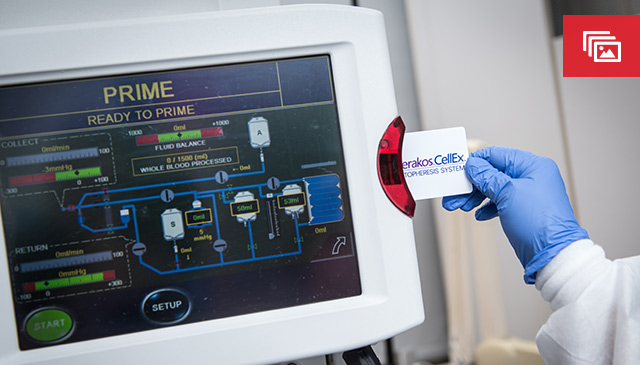
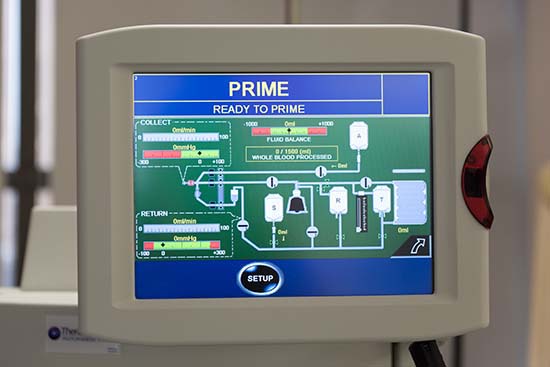
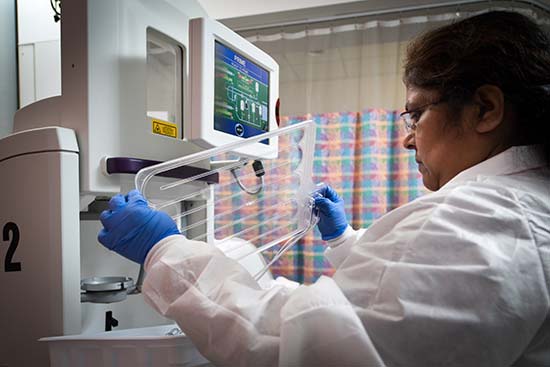
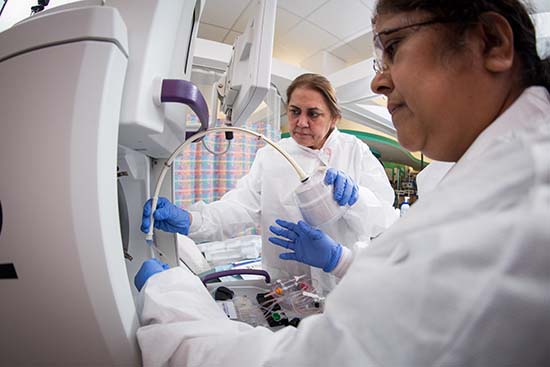
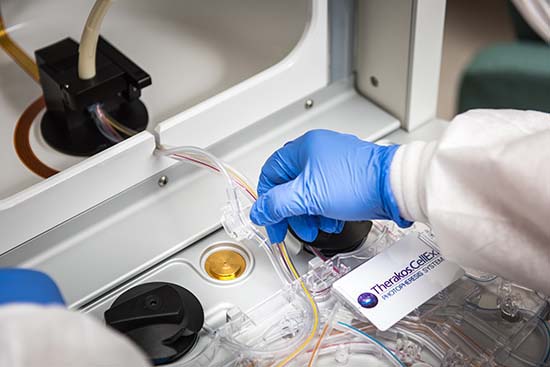
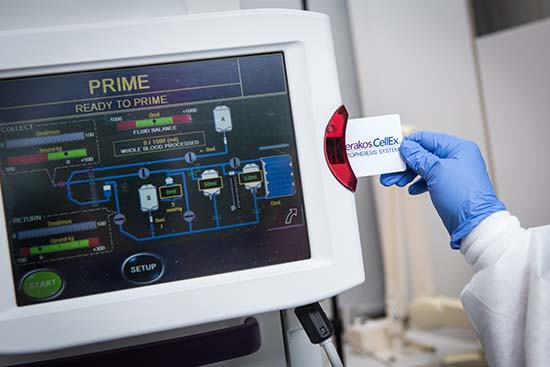
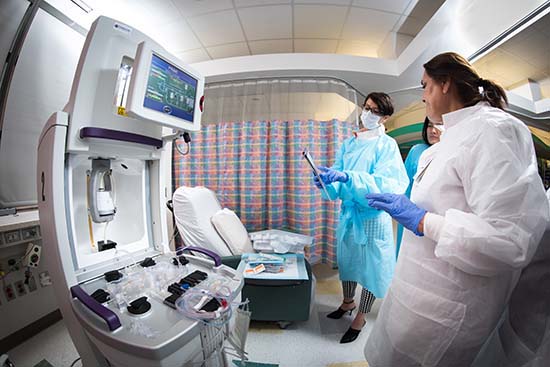
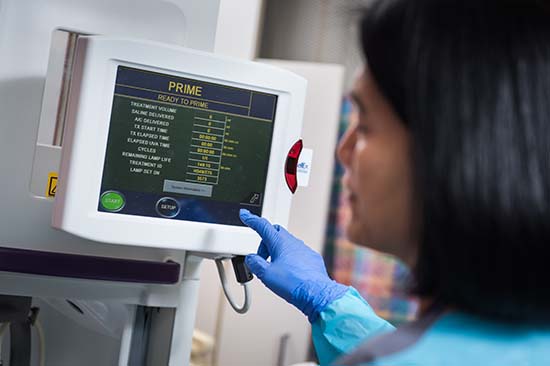
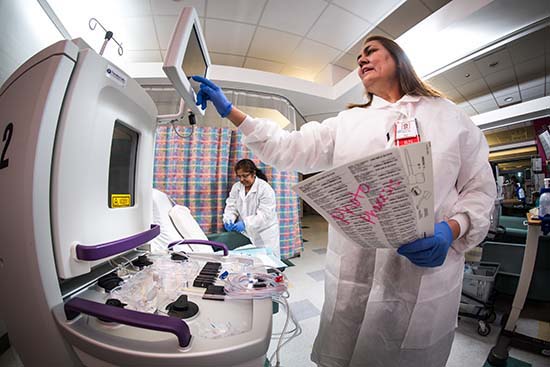
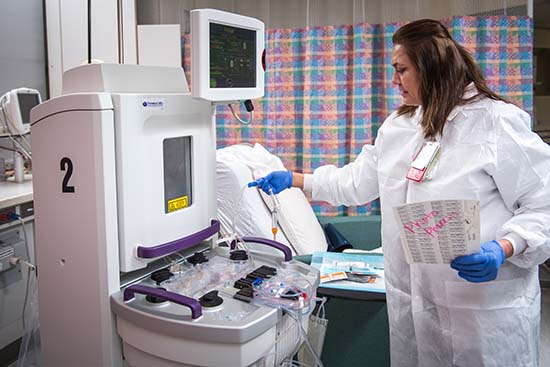
Texas Children’s Apheresis Program led by Dr. Poyyapakkam Srivaths has reached a milestone with the addition of a new service, photopheresis. Photopheresis is a medical treatment that causes photoactivation of white blood cells by separating them from blood, which are then exposed to a medication called 8-methoxypsoralen followed by UVA irradiation before returning the blood to the patient.

Texas Children’s is currently using this apheresis therapy for bone marrow transplant patients who are experiencing graft-versus-host disease and lung transplant patients who are undergoing organ rejection. Photopheresis is typically used when other treatments have failed.

We are the second institution in Houston to offer photopheresis, and the only program dedicated solely to pediatric patients.

“There was a tremendous multidisciplinary effort to make this happen,” said Dr. Tina Melicoff, medical director of Texas Children’s Lung Transplant team. “We are thrilled to now offer some of our transplant patients with rejection issues another treatment option through photopheresis.”

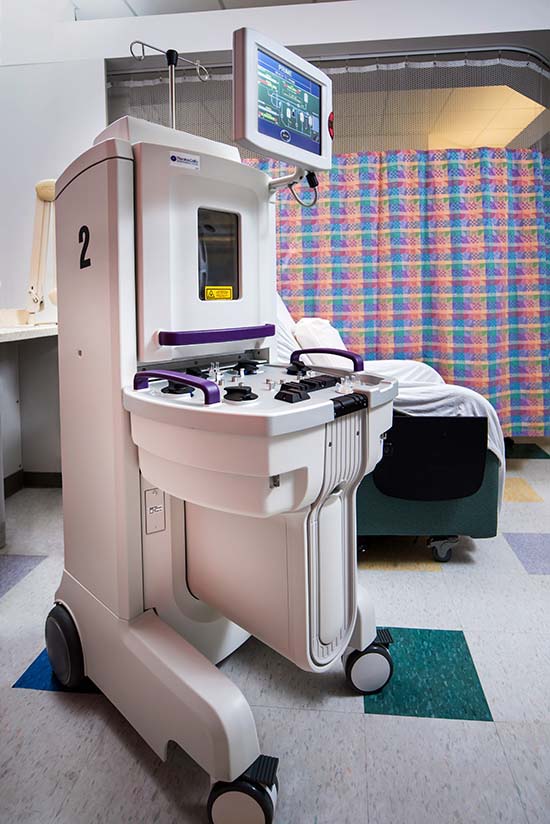
To be able to offer the service, two photopheresis machines were purchased and a core group of dedicated nurses were trained to operate it. Clinicians expect to treat about five patients a year with each patient receiving about three sessions a week for about 10 weeks. Each session lasts around two hours.

Texas Children’s recently conducted its first photopheresis treatment on a bone marrow transplant patient. The patient is expected to receive additional treatments over the next several months.

“By offering this therapy, we are offering hope to patients who already have been through so much,” said Dr. Robert Krance,” director of Texas Children’s Pediatric Bone Marrow Transplant/Stem Cell Transplant Program. “Photopheresis is a promising therapy for our patients experiencing host-versus-graft and organ rejection.”

Photopheresis is the second new extracorporeal therapy introduced in the past 20 years at Texas Children’s. The last extracorporeal therapy, Molecular Adsorbent Recirculating System, or MARS, was introduced six years ago for liver failure patients.

“MARS helped to transform our liver transplant program,” said Chief of Renal Services Dr. Michael Braun. “I am hopeful photopheresis will have a similar impact for our BMT and lung transplant patients.”

Chief Nursing Officer Mary Jo Andre shares the proactive measures we are taking to ensure the safety of our patients and care teams as we adapt and respond to the COVID-19 situation. Read more