April 13, 2020

After Hurricane Katrina slammed into New Orleans in 2015, thousands of people poured into Houston looking for food, shelter and medical care. Many of them were housed at NRG Stadium, including children. Texas Children’s – one of the only pediatric medical institutions on site – set up shop inside the stadium and started caring for the children – more than 2,500 in all.

In 2009, Texas Children’s used a similar concept during the H1N1 pandemic setting up what we now call our Mobile Pediatric Emergency Response Team (MPERT) in the physician parking lot across from our Emergency Center in the Medical Center. Medical staff working MPERT saw about 60 children a day during that crisis, providing capacity for the surge of patients coming to our Emergency Center.

Several weeks ago when the COVID-19 pandemic hit the United States, leaders asked themselves whether they should launch MPERT again. Even though the disease’s target is not children, they decided to move forward with the effort not only at Texas Children’s Hospital in the Medical Center but at Texas Children’s Hospital West Campus, Texas Children’s Hospital The Woodlands and the Pavilion for Women.

“Texas Children’s has always had a keen eye to preparedness whether it be H1N1, Ebola or COVID-19,”said Medical Director of Emergency Management Dr. Brent Kaziny. “We have never faltered in our commitment to provide exceptional care in times of crisis including the one we are facing today with COVID-19.”

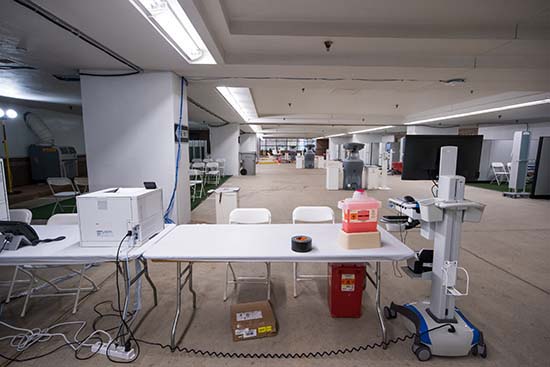
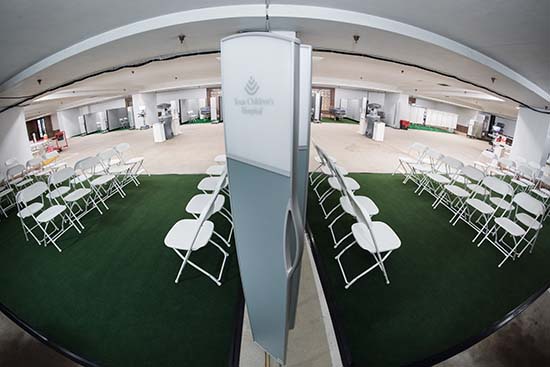
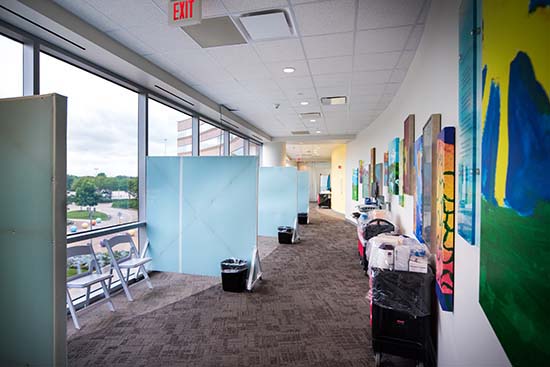
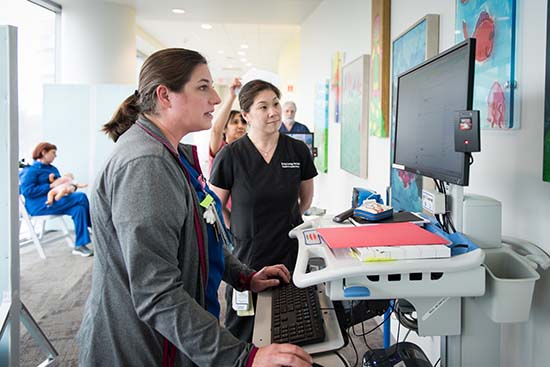
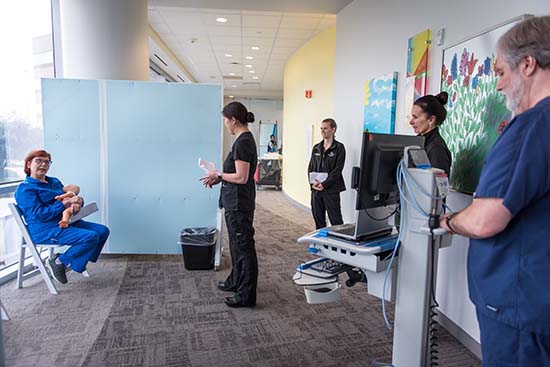
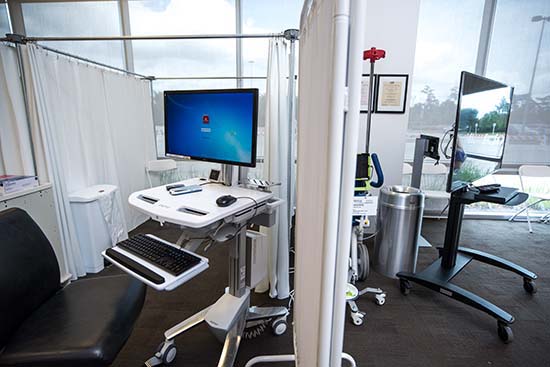
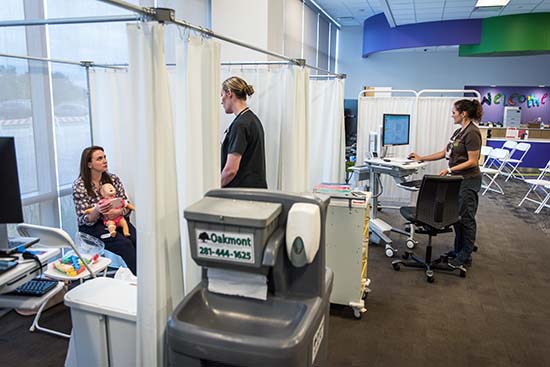
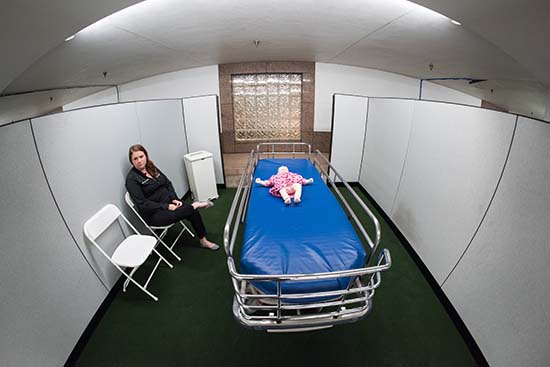
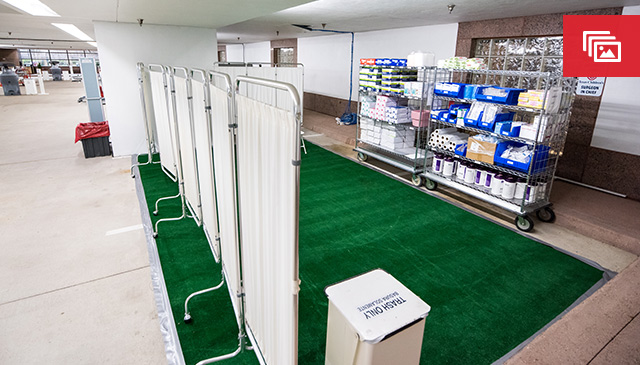
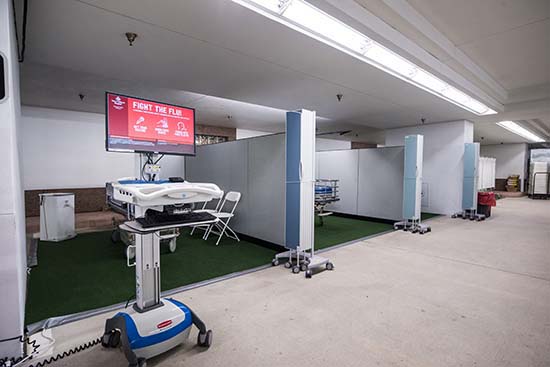
Teams across the Texas Children’s system, including Facilities, Information Services, Pharmacy and Emergency Services, have been working hard over the past few weeks to set up MPERT in the Medical Center, at West Campus and in The Woodlands. The teams are tailored to their locations. One is set up in a parking garage, the other in a clinic waiting room and another in a large, low-traffic hallway. If needed, Texas Children’s also has tents that can be set up in parking lots to handle additional overflow patients.

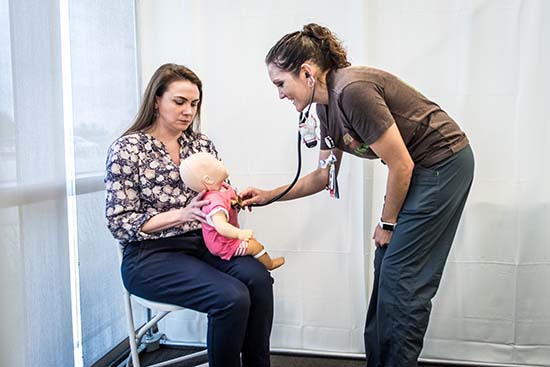
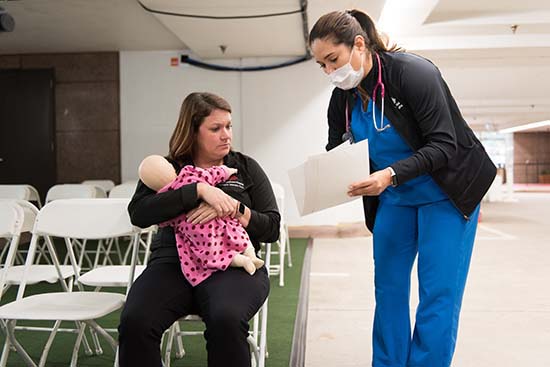
Each site includes intake, waiting, triage and clinical areas equipped to treat patients who do not have a significant medical history but are exhibiting upper respiratory symptoms. Members of the mobile teams can test patients for flu, strep, urinary tract infections and COVID-19.

The Mobile Maternal Emergency Response Team at the Pavilion for Women is set up in the ambulance dock area in the Medical Center. If a surge of patients occurs, the team will be ready to triage, test and even deliver babies, if necessary. The team is currently being used to test for COVID-19 expectant mothers who are scheduled for an induction.

“We have weathered many things at Texas Children’s and this crisis will be no different,” said Lynda Tyer-Viola, vice president of nursing at the Pavilion for Women. “Because of our resilience, we will come out of this stronger and better.”

Senior Vice President of Facility Operations Bert Gumeringer said his team situated the mobile teams so they can quickly and efficiently triage and treat as many patients as possible.

“This was a large undertaking but everyone worked together and got it done for the good of our patients, families and staff,” Gumeringer said. “Doing what is best for them and for our colleagues is and always has been our primary goal.”

Simulations have been held at all of the mobile sites, all of which will only be launched if there is a surge of patients coming into our system wanting to be tested for COVID-19 or are exhibiting symptoms of the disease. Until then, these teams will stand ready to serve.

“We are here and we are ready to take care of any and all patients who need us during this time,” said Ryan Breaux, director of business operations and support services at West Campus. “I’m extremely proud to work for an organization that is committed to disaster preparedness and to fulfilling our mission no matter the circumstance.”

Eric Allum, director of business operations and support services in The Woodlands, agreed and said Texas Children’s is recognized nationally when it comes to disaster preparedness and that the organization’s dedication to such efforts has paid off.

During Tropical Storm Allison, for example, Texas Children’s was able to stay open and continue to care for patients and families because leaders had the forethought to invest in flood doors in the hospital’s basement.

“We were the only operational hospital in the Medical Center that didn’t flood,” Allum said. “It’s a phenomenal commitment that the organization put forth then and has continued with each new challenge.”
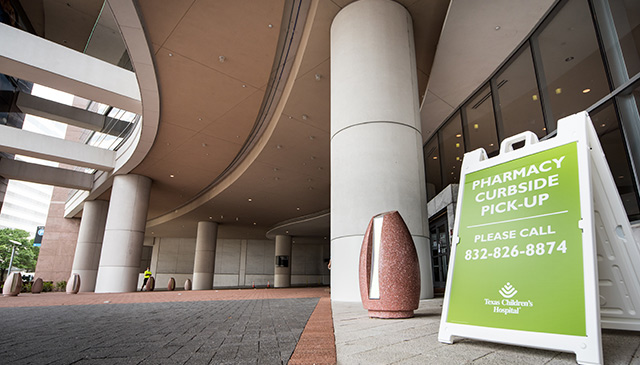
In an effort to implement additional measures to help protect our patients, families and staff, Texas Children’s Pharmacy Services is now offering curbside pick-up.

All Texas Children’s patients are eligible for this prescription service and can pick up refills and new prescriptions at the following locations:

Texas Children’s Medical Center Pharmacy
6651 Main St.
(valet drive at corner of Southgate and Main)
Hours: 9 a.m. to 5 p.m. Monday through Sunday

The Center for Children and Women at Southwest Houston Pharmacy
9700 Bissonnet St.
(Look for parking spaces designated for curbside pick-up. Pharmacists bring prescriptions to families while they are sitting in their cars)
Hours: 9 a.m. to 7 p.m. Monday through Friday

The Center for Children and Women at Greenspoint Pharmacy
700 N. Sam Houston Pkwy. W.
(Look for parking spaces designated for curbside pick-up. Pharmacists bring prescriptions to families while they are sitting in their cars)
Hours: 9 a.m. to 7 p.m. Monday through Friday

How does curbside pick-up work?

The patient family contacts one of the three participating pharmacies to request curbside pick-up. When the patient family arrives at the pick-up location, they will:

  • Follow signs to park in the designated prescription pick-up area.
  • Call the phone number listed on the sign to notify the pharmacy team of their arrival
  • Review important information about the prescription with the pharmacist over the phone or by video (in certain situations) and payment is collected if applicable.

A member of the pharmacy team will deliver the prescription to the patient family’s vehicle and provide instructions on how to contact the pharmacy team with any future questions. Please note, only credit/debit card payments are accepted for curbside pick-up at this time.

Launched last week, several families have used the curb-side service and have expressed their gratitude for Texas Children’s commitment to their safety. Pharmacy staff is proactively calling families that have not yet picked up their prescriptions. During one of those calls, a family with 13 prescription refills told the technician they were thinking of requesting a transfer to another pharmacy because they did not want to come into the hospital during this pandemic, said Director of Community & Ambulatory Pharmacy Services Yemi Abudu. When they learned about our curbside service they were elated and scheduled to pick their prescriptions up the next day.

Abudu said families can continue to come into to the pharmacy if they wish, but now have the option to pick it up curbside, especially if they do not have any other reason to come into the hospital.

“This is an innovative way to keep our business going and to meet the ongoing needs of our patients and families,” she said. “We are pleased to be able to offer this to them during this unprecedented time of need.”

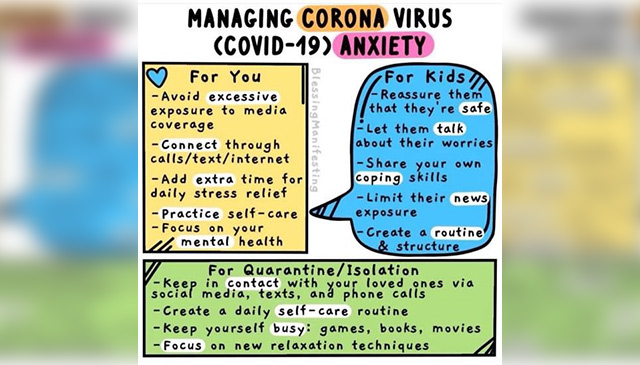
The COVID-19 pandemic has been a challenging time for all of us. We’ve been asked to step outside our comfort zones more than once, and we will most likely be asked to do so again before this event comes to an end. We want you to know that you are not alone and that if you find yourself feeling stressed about the situation, there are recourses available that can help support your mental, physical and spiritual needs.

Here’s how you can access many of those tools:

Stress Management

Click here for a comprehensive list of stress management resources provided by our Employee Health, Employee Assistance Program (EAP) and Well-Being teams.

Cigna also has the following tools to help you manage anxiety during the COVID-19 pandemic:
Managing anxiety
Coping with the fear of coronavirus
Self-care strategies

Relaxation techniques

Breathing: practicing deep breathing can help your body to feel more relaxed and refreshed in stressful moments. Check this article for a step-by-step deep breathing exercise.
Visualization: this technique helps expand our ability to rest and relax by focusing our minds on more calming and serene images. For a 15-minute guided imagery, please check this video.
Meditation: Meditation has great benefits for stress management and can be practiced in many ways. Check the steps for a 5-minute meditation to get started.

Eating healthy
  • Regulate blood sugar with protein and fiber at meals and snacks. Regulating blood sugar with give your body the nutrients when stress may arise and strengthen your immune system.
  • Consume fruits and vegetables at every meal. Your body needs a variety of vitamins and minerals to support your overall health. When the weather starts to change and people around you are starting to get sick, it is important to boost your immune system with vitamins and minerals like vitamin c, zinc, vitamin E, and vitamin A. Try to fill your plate with a variety of colors of fruits and vegetables along with protein, carbohydrates, and fat.
  • Add garlic and ginger into your food. They do not fight the flu or coronavirus, but they do boost your immune system and may help lower blood pressure and slow down hardening of the arteries. Ginger is another food item that you may turn to after getting sick. Ginger decreases inflammation, which can help reduce sore throats and other inflammatory illnesses.
  • Here are more tips on how to keep your immune system healthy.

Tired of cooking? You can access Mom’s Meals® through the Healthy Rewards program. Mom’s Meals® provides nutritionally balanced, refrigerated and ready-to-eat meals direct to your home, the home of an aging parent or any address nationwide. Place your order at 877-347-3438 or online at momsmeals.com/Cigna.

Get moving

Twenty minutes of daily exercise has been proven to boost the immune system. Movement produces with blood cells that kill bacteria and viruses.
Here are some exercises that you can perform at home.

Texas Children’s Employee Health and Wellness Strengthen and Tone instructor, Anna, is offering live classes on her personal Instagram account @Annahaulina on Mondays and Wednesdays at 6 p.m. Our Barre instructor, Alissa, will be offering class on Wednesdays from 11:30 a.m. to 12:15 p.m. Please email her at Alissa.ann@hotmail.com with Barre Class in the subject line and she will send you a Zoom link to participate.

  • Define is offering free workouts from Bounce, Barre, Yoga, Beat (Dance Cardio), Mind and Prenatal.
  • Camp Gladiator has just announced their Hustle from Home series of workouts, where anyone can have access to digital workouts, Facebook live workouts and at-home printable workouts.
  • Peloton is offering a free 90-day trial for their workout library of strength, yoga, meditation, boot camp, cycling, and running classes.
  • YouTube can always be accessed for a variety of excellent at-home workouts.

Stay calm and informed
Make sure that you are getting your information from a creditable source. Stay up to date with Texas Children’s COVID-19 communications. Click here to view the Connect COVID-19 page and here to visit our external COVID-19 Resources webpage.

Get plenty of sleep
More sleep does not prevent you from getting sick, however not getting enough could adversely affect your immune system. Without sufficient sleep, your body makes fewer cytokines, a type of protein that targets infection and inflammation, effectively creating an immune response. Experts recommend getting 7-9 hours of sleep a night.

Finding courage

The following passage was written by Texas Children’s Chaplain James Denham. His words are adaptations from a prayer written by American theologian Cornelius Plantinga, Jr. and sentiments made by pediatric chaplain Gloria Kroeze.

We are people of accomplishment. We invent, we create, we build, we discover, we train, we break records, we teach, we support, we nurture, we help. We do all of these things, but now we come stunned, because in spite of all we can do, we don’t know what to do. We are scared. We are scared by what we fear may happen. We are scared by something that we cannot understand. We are scared by something that we cannot see — a microscopically small virus. This virus has altered our present lives, it has shut down our schools, it has cancelled our plans, it has emptied our schedules and it has separated us. It has consumed our thoughts, our conversations, social media, the news and our prayers. We live in a world of many unknowns and we struggle to keep up with what is going on. We do know that we don’t want to get sick. We do know that we can’t get near each other as we’d like.

In these moments, it is our courage that grounds us. Courage is not a lack of fear, or a lack of uncertainty. It is an unwavering trust even when we aren’t sure. It is being tireless even though we also feel tired. Courage is hope no matter how challenging a situation looks. Ryder Carroll once wrote, “No matter how bleak or menacing a situation may appear, it does not entirely own us. It can’t take away our freedom to respond, our power to take action.” In our case, while our world is full of unknowns, we stand in a place of courage, ready to act in the face of it, and we do it together.

May we find blessing from one another, through the help we offer, the support we give, the laughter we share, the listening we give. We may not know what to do, but we know who we are. People of compassion, kindness, strength, and endurance. People who rise with courage to face even the unknowns and the heartaches.

From that which is sacred to us, we ask for help. Source of hope, quiet our fears. Source of peace, calm our spirits. Source of strength keep us going. Source of healing, provide enough to heal. Bless those who care for the sick and have been even before COVID — and protect their families. Bless those who are sick in the midst of all this chaos. Bless family members who are able to be with the sick. Bless those who are separated from those they love. Bless those who are hopeful for healing. Bless those who are trying to be hopeful. Bless those who are making decisions and protocols that will affect many. May your hands, your hearts, and your work be blessed by your Source and by each other.

April 7, 2020

Chief Nursing Officer Mary Jo Andre provides an update on the evolving COVID-19 situation and highlights three areas that are being frequently addressed: PPE, testing and operations. Read more

Service and Significance

“You are going to give your life for something. What will it be—a career, a sport, a hobby, fame, wealth? None of these will have lasting significance. Service is the pathway to real significance.”  – The Purpose Driven Life by Rick Warren

No one is going through this alone. We are all part of a family – our families at home, the Texas Children’s family, the families in our communities and perhaps a church family. I believe that together, we are being asked to redefine ourselves – not individually – but collectively.

Consider this … who are we? What do we need to do for each other? How can we serve better together? How can we do more? This week, remember that there isn’t just power in numbers. There is also purpose.

While Texas Children’s employees work locally to keep COVID-19 at bay, members of our system’s global health team are working just as hard to keep the disease from spreading in areas that are far more vulnerable to the pandemic.

“Low- and middle-income countries in places like Africa and Latin America are already stressed and strained with weak health systems and vulnerable populations,” said Dr. Heather Haq, Chief Medical Officer for the Baylor College of Medicine International Pediatric Aids Initiative (BIPAI) at Texas Children’s Hospital. “We will see devastating effects if COVID-19 becomes widespread in these areas.”

BIPAI at Texas Children’s Hospital is one of the largest global maternal and child health programs in the world with a presence across sub-Saharan Africa as well as Latin America and Romania. Our mission in these countries is the same as it is here in the United States – to care for sick children and women, and to educate more people to do the same.

Tremendous progress has been made in these communities over the years in the areas of HIV/AIDS cancer, tuberculosis, malaria, sickle cell disease and malnutrition; however much work needs to be done to ensure that COVID-19 does not undo these gains. Although the disease has yet to reach these areas in full force, it’s coming, and Texas Children’s and Baylor are standing ready to help fight its effects. Partnerships forged between Texas Children’s, government officials and local leaders are already helping forge a productive path forward in the face of this global crisis.

“We are extremely thankful for the continued commitment Texas Children’s and Baylor have to their global partners,” said Dr. Mogomotsi Matshaba, Executive Director of BIPAI’s operations in Botswana. “We need your expertise, guidance, moral support and financial assistance to get through this trying time.”

BIPAI at Texas Children’s Hospital is working around the clock to provide technical assistance and resources to help our global partners prepare for and respond to COVID-19 while maintaining access to essential services like continued access to antiretroviral therapy for people living with HIV. The BIPAI network holds daily calls to discuss strategies to protect the health care workforce, contain the spread of COVID-19, and continue to serve patients. In addition, they hold weekly video conferences focused on pertinent clinical information on COVID-19 and have established a COVID-19 resource library for global sites.

Texas Children’s and Baylor also are participating at national levels with local and regional leaders to shape policies aimed at curbing the impact of COVID-19 and protecting the work that’s already been done to strengthen their nations’ health care systems.

“It’s imperative we protect the gains we’ve made,” said Dr. Adeodata Kekitiinwa, BIPAI’s Executive Director in Uganda. “COVID-19 has the potential to wipe out years of work in areas where we are seeing significant gains.”

HIV/AIDS is one of the areas where great strides have been made. A setback such as the spread of COVID-19 – the effects of which are not yet known in people living with HIV – could be detrimental. In addition, children who need care for ailments such as malaria and malnutrition might not get the services they need if travel is restricted in countries or if resources are diverted to help those with COVID-19. Compounding the issue is that resources for critical care are already scarce in these areas. Uganda, for example, has only 55 ventilators for the entire country – that’s one ventilator per 1.3 million people. Other countries have even fewer.

“Unfortunately, the severe shortage of critical care means that many people in these settings who get sick with severe COVID-19 disease will die, until advances are made in treatments or a vaccine becomes available,” said Haq.

Phoebe Nyasulu, Executive Director of BIPAI’s operations in Malawi, said the severity of the situation means that COVID-19 has to be faced head-on and that it needs to be looked at from a global lens versus a country-by-country issue.

“With the help of BIPAI, Texas Children’s and Baylor College of Medicine, we are more confident we will be able to respond to COVID-19,” Nyasulu said. “We will get through this together.”