April 20, 2020

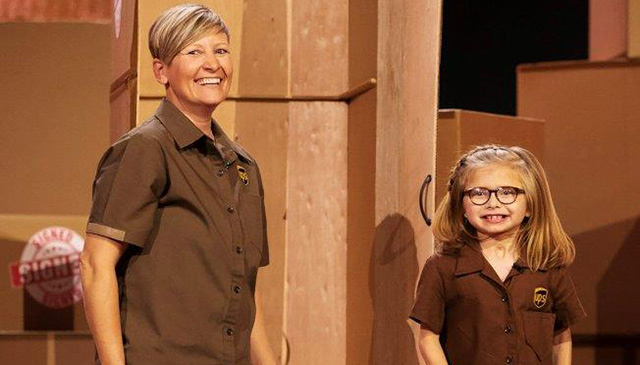
Kicking off National Pediatric Transplant Week, Texas Children’s lung transplant patient Parson Blue Herrington was featured this Sunday on NBC’s “Little Big Shots.” The little girl shared her dream of becoming a UPS driver and received a surprise video message from Dr. George Mallory and two other members of her care team. To watch the entire segment, click here. (You will have to watch an ad, but it’s well worth it). To watch the entire segment on your mobile device, you will have to download the NBC App, or you can watch an abbreviated version of the segment here.

Lightening the load

The following passage was written by Texas Children’s Chaplain James Denham.

I might be the most blessed person in the hospital. I am lucky enough to walk around many units, see lots of nurses, hear lots of voices, and watch the work that is done around here. I get to be a first-hand observer of the courage, resilience, and perseverance that our nurses, doctors, Environmental Services workers, techs, and frontline staff continue to show day in and day out.  I have seen people managing multiple changes to their work lives adjust somehow.  I have seen nurses who adapt with a fierce spirit that gives me wonder. I have watched our staff wait in the uncertainty with a spirit of unmatched compassion, even as they feel exhausted by it all.  The fact that our world feels so heavy seems matched by the unity of your desire to serve.

YOU, each of you, do amazing work.  But it is not work in some technical sense.  It is work that makes a mark. Charles Dickens wrote that, “No one is useless in this world who lightens the burdens of another.” We indeed are carrying lots of burdens right now. Yet, I don’t know if anyone here at Texas Children’s will ever fully realize the mark you make on one family, one patient, one colleague, or each other.

In these times when our minds are abuzz with uncertainty, we are definitely tempted to feel helpless or useless or make ourselves believe that we are just doing a job, to disregard what kind of impact we are making.  It couldn’t be farther from the truth.  It may be because you brought a smile to one child, or by drawing up the meds exactly as needed a child can heal, or you listened as your colleague and friend shared their worry for their family.

You do amazing work.  You support. You help. You rush in when the call goes out.  You seek to understand.  You try to hear each other. You give relief.  You bring peace.  You bring calm.  You share the load.  You lighten another’s burden.  You may feel helpless or useless or lost during these times, but in lightening the burdens of each other and our families, one at a time, your presence matters.  Your showing up matters, because you do such good work making a difference.

One of the funniest people I know is Ellen.  She said “We need more kindness, more compassion, more joy, more laughter. I definitely want to contribute to that.” Share your kindness! Share your compassion! Share your joy and laughter! We all need you and those things more than ever. I hope you know that by showing up today and every day, you make a difference. You contribute to lightening the burden of others, you bring goodness, and you bring heart.


As Texas Children’s continues to navigate through these unprecedented times, our focus has been, and will continue to be, the health and safety of our patients and staff. Extra precautions have been taken and additional processes have been put in place to ensure we keep moving forward as a strong unit. But we know our responsibility reaches far beyond Houston and its surrounding areas. As a recognized leader in global health, Texas Children’s has worked diligently to create adaptive solutions for our clinics in sub-Saharan Africa, South America and Eastern Europe.

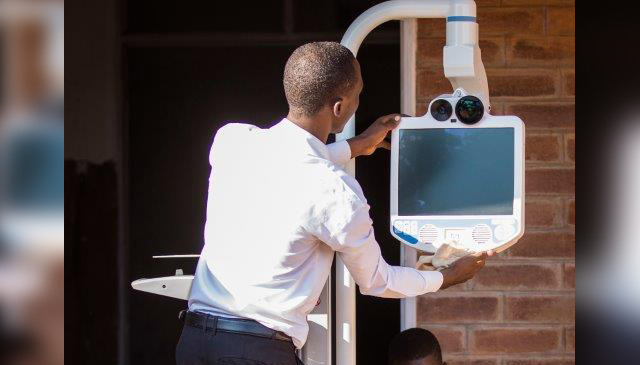
One of those solutions was rolled out this week in Malawi, Africa, at the Baylor College of Medicine Children’s Clinical Centre of Excellence-Malawi (COE) where children and young adults with HIV/AIDS are tested, diagnosed and treated. The InTouch Lite V2 (often referred to as ‘Lite’) device was deployed to the COE as part of our efforts to provide patient care during the COVID-19 crisis in sub-Saharan Africa by utilizing available resources.

This remote presence robot, which was donated to Texas Children’s Global Women’s Health program in Malawi by the World Telehealth Initiative in 2018, allows for remote monitoring of patients and can be maneuvered electronically at the bedside to assist in care delivery. The device will be used during in the upcoming months at the Baylor-Malawi COE to assist in patient care.

“The technology is amazing even with Malawi’s bandwidth challenges,” said Dr. Jeff Wilkinson, an accomplished female pelvic and reconstructive surgeon with Texas Children’s Global Women’s Health Program. “It removes the location barrier and allows us to provide expertise from afar when we can’t be on location.”

Wilkinson said he’s used the robot many times in the past at the Fistula Care Center and thinks it will be a great resource at the COE, especially during this unique time of need.

By deploying this resource for use at the COE, health care workers have the ability to interact with patients remotely to reduce transmission of the infection among their immunocompromised patient population. This quick adaption and working partnership between Texas Children’s and World Telehealth will allow the teams to continue safely providing the same high-quality care and treatment for HIV, tuberculosis, malaria and malnutrition while limiting the spread of COVID-19.

Sharon Allen, executive director of World Telehealth Initiative, said the robot is connected to a proprietary worldwide network built and operated by InTouch Health and is ready to be used once she finishes training the physicians who will be accessing the machine to see patients. The training takes about 20 minutes and is indicative of just how easy the device is to operate, Allen said.

“After hitting just a few buttons – boom – you are right there,” she said. “And if there are any problems, we are here to help.

The mission of the World Telehealth Initiative is to provide medical expertise to the world’s most vulnerable communities to build local capacity and deliver core health services, through a network of volunteer health care professionals supported with state-of-the-art technology. Part of that mission is to ensure health care workers know how to use and deploy the technology.

“We are available to help in any way possible,” Allen said. “Our main goal is to connect medical experts with people who might not receive health care otherwise.”

Phoebe Nyasulu, Executive Director of BIPAI’s operations in Malawi, said she is looking forward to seeing the robot in action at the COE and believes the machine will help her staff protect themselves and their patients and families, many of whom are immunocompromised and possibly susceptible to COVID-19.

Malawi has seen an uptick in the number of COVID-19 cases over the past week, leading to a 21-day national lockdown. Texas Children’s and Baylor College of Medicine are participating at national levels with local and regional leaders to shape policies aimed at curbing the impact of COVID-19 and protecting the work that’s already been done to strengthen their nations’ health care systems.

“The use of the robot Lite is one of many ways health care workers can continue to care for our patients in the safest way possible,” Nyasulu said. “We have to continue to be innovative and open to ideas like this as we continue to navigate the COVID-19 public health crisis. We are thankful we have partners like Texas Children’s, Baylor and the World Telehealth Initiative to help us along the way.”

COVID-19 has affected much of what we do here at Texas Children’s but there are still areas of our system where things are almost, well, normal. One of those areas is the Labor and Delivery Unit at the Pavilion for Women where new babies are born every day and families celebrate some of the best moments of their lives.

“No one is canceling having a baby,” said Lynda Tyer-Viola, vice president of nursing at the Pavilion for Women. “The deliveries are still coming and we are going the extra mile to help our patients make joyful, lifelong memories despite what’s going on outside the walls of their hospital rooms.”

These efforts combined with precautions and protocols established to minimize any potential exposure to COVID-19 are helping ease the anxiety of expectant mothers who are having babies during this historic and unprecedented time.

To protect patients and families from the potential spread of COVID-19, members of the Labor and Delivery team are wearing masks in patient-facing settings, screening patients and visitors for symptoms of the disease, and limiting the number of visitors who come into the unit to see their loved one. Other than that, things are pretty much business as usual.

“All of the changes we have made have been embraced by both patients and families, and staff, Tyer-Viola said. “Everyone has been extremely supportive and seems to understand that we are doing what is best for everyone involved.”

Kristin Thorp, assistant clinical director of nursing at the Pavilion for Women, agreed and said she is extremely proud of her team for being so adaptive during this event and for always keeping their attention and focus on what matters most – our patients.

“Team members have exhibited a lot of grace and have been extremely nimble during this entire process,” Thorp said. “They have really stepped up to care for our patients and themselves during this unique time in history.”

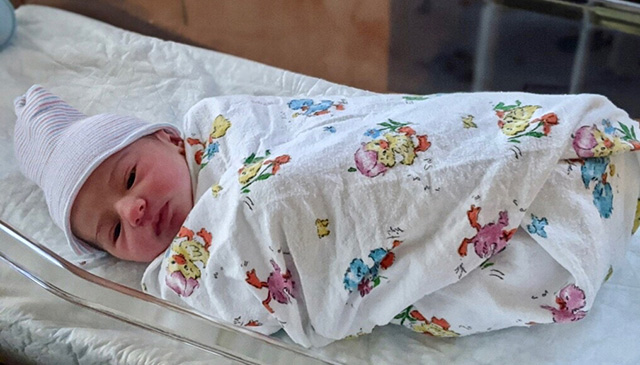
Natalia Angulo Hinkson, a new mom and a Texas Children’s employee, delivered her first child, Isabel Iris, on March 27 at the Pavilion for Women. Prior to the outbreak of COVID-19, Hinkson said she had talked to several colleagues and friends about what to expect from the experience and had made plans accordingly.

Post-delivery, she said outside of the precautions made to protect her and her daughter, and a few tweaks in her own plans to align with those measures, everything went like she hoped it would. Her husband was able to be in the delivery room with her when Isabel was born, her doctor was there to deliver the 6 pound 6 ounce bundle of joy, and her labor and delivery nurses and support staff were cool, calm, reassuring, warm and friendly.

The biggest change Hinkson said she had to make and accept was that her extended family was not able to be at the hospital during delivery. She said she had planned for them to be in the lounge and for her mom to come into the delivery room if there were complications. Fortunately, there were not, and her family is standing by to meet Isabel when it’s safe for all parties involved.

“There were things that were different and not possible, but it felt like everything my friends had told me about,” Hinkson said. “Any apprehension I had went away once I was at the hospital under the team’s care. They were extremely professional, prepared and attentive to making my experience the best it could be during what is obviously a very unusual time.”

Tyer-Viola said her team and the hospital as a whole have weathered many storms and that we’ve always ended up stronger and better than before.

“This pandemic will be no different,” she said. “We are resilient and we are dedicated wholeheartedly to our mission of caring for children and women.”

Texas Children’s Public Relations and Social Media teams are looking to share stories such as these on social media. If you delivered your baby at the Pavilion for Women during the COVID-19 pandemic, we’d love to hear your story to potentially be featured on the Pavilion for Women’s Facebook page. Please contact vxjavor@texaschildrens.org with your story.

April 14, 2020

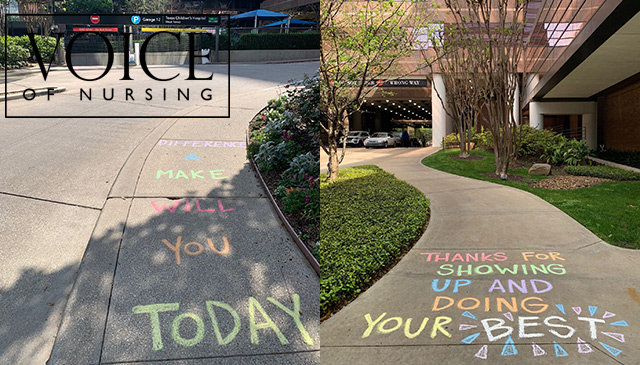
Natashia Bush shares how she finds inspiration and peace during the COVID-19 pandemic, and how a simple message on the sidewalk reminded her of the strength and resiliency of our nurses and how they are making a difference in other people’s lives every day. Read more

The development of a COVID-19 vaccine is the greatest medical need of our generation—and Texas Children’s is on the front lines.

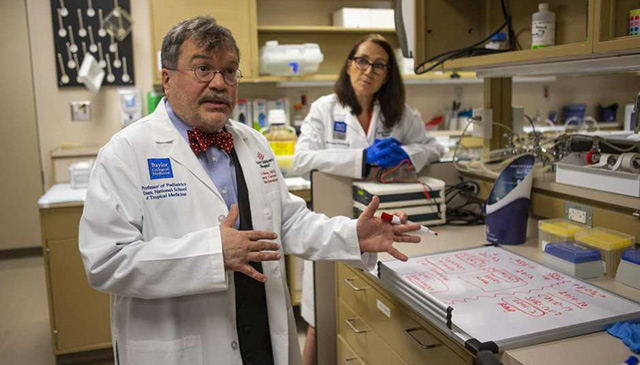
Drs. Peter Hotez and Maria Elena Bottazzi, who co-direct Texas Children’s Center for Vaccine Development, are rapidly advancing their work on vaccines that will protect against COVID-19 and other coronaviruses.

“Without a vaccine, we’re using 14th-century methods of prevention—that’s what quarantining and social distancing are, and we have to use these methods, “ Hotez said. “But vaccines have always been our best and most powerful front-line public health defense against widespread infection, and they are the answer—now and in the future—for COVID-19 and other coronaviruses.”

Most people aren’t aware that there is an entire family of coronaviruses. The one that has ignited our global pandemic is SARS-CoV-2, the virus that causes COVID-19. Severe Acute Respiratory Syndrome (SARS) and Middle East Respiratory Syndrome (MERS) are two others that have emerged in recent years.

Drs. Hotez and Bottazzi, along with their teams, have already developed recombinant protein-based vaccines against SARS and MERS. One of them is ready to be tested in humans; the other is ready for scaled-up production. We are now using our extensive expertise with these related viruses to develop a vaccine for COVID-19 and quickly move it into the clinic.

In a recent interview on the nationally syndicated health show “Dr. Oz”, Dr. Hotez shared his thoughts on COVID-19 and what he feels the future will bring. You can view part one and part two of the interview.

To learn more about the work taking place at Texas Children’s Center for Vaccine Development visit TexasChildrensVaccines.org.

Since the COVID-19 pandemic began, Texas Children’s leaders have been working tirelessly to keep us informed about COVID-19 and the organization’s response to this historic and unprecedented event.

From timely global e-mail communications to implementing various precautionary measures – including employee/patient screening, employee/patient testing algorithms, quarantine and masking protocols, and social distancing – our COVID-19 response has focused on protecting the health and safety of our patients, employees and staff while ensuring Texas Children’s facilities have sufficient resources to support patient care and operations.

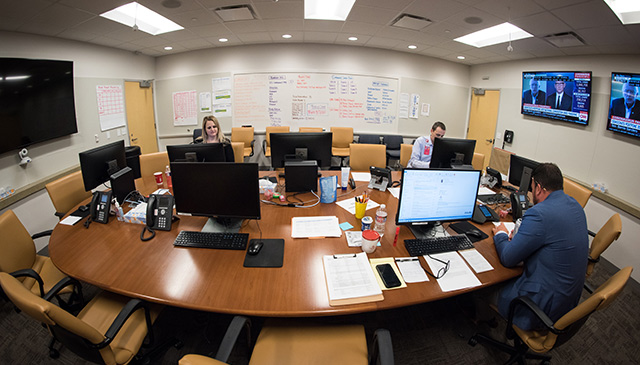
“Our preparation for COVID-19 began back in January when we started screening all patients arriving for appointments,” said Chief Nursing Officer Mary Jo Andre. “We activated our Incident Command Center on March 12. This was a critical step in our response to this rapidly evolving health situation, as our command structure provides the support that is necessary to not only manage operations today, but also to proactively forecast needs and plan accordingly for the future.”

The Incident Command structure consists of eight subcommand centers. These include Logistics, Operations, Planning, Finance/Human Resources, and four other subcommand centers that cover Texas Children’s Hospital West Campus, Texas Children’s Hospital The Woodlands, Texas Children’s Pediatrics and Urgent Care, and Texas Children’s Health Plan. Each of these teams provide guidance for the organization’s response to COVID-19.

The Incident Command Center is co-chaired by Andre, Interim Physician-in-Chief and Pathologist-in-Chief Dr. James Versalovic and Executive Vice President Mark Mullarkey. This team works closely with our eight large subcommand centers dealing with a variety of issues related to supplies, remote access, visitor and patient screening, patient placement, shuttle service, dining services, adult care services, community services and response, and a command focused primarily on supporting our employees and staff.

In collaboration with our partners from Infection Control, the Special Isolation Unit, Nursing, Pathology, Critical Care, Emergency Medicine, Obstetrics and Gynecology, Supply Chain, and other areas critical to system wide planning, the command centers also work with our Human Resources and Corporate Communications teams to ensure timely information is communicated to our employees and staff.

“We attend conference calls throughout the day with many leaders representing diverse areas of the organization to help us reassess and strategize our needs around COVID-19,” Mullarkey said. “The pandemic is a dynamic situation with rapidly changing information and new developments are constantly coming to light. As this situation unfolds, we have been adjusting our response protocols as needed and reporting out to system leadership via weekly Shared Leadership teleconferences.”

While ensuring the health and safety of our employees, patients and families remain the highest priority, communication and transparency have played a pivotal role in our response to COVID-19. As decisions are made in the Incident Command Center, employees and staff can always stay informed through global e-mail communications and by visiting Texas Children’s COVID-19 Resources webpage. Employees can also visit Texas Children’s Coronavirus Connect page for updated information.

Versalovic says the organization will continue to work together one day at a time to respond to the challenges ahead, and for as long as this pandemic lasts, we will come out of it stronger than ever.

“Texas Children’s is a sturdy and resilient organization,” Versalovic said. “While we have weathered many catastrophic storms together, we will get through this COVID-19 pandemic together. We are grateful to our entire team for leading tirelessly and for their strength and resilience they have shown every step of the way.”