June 22, 2020

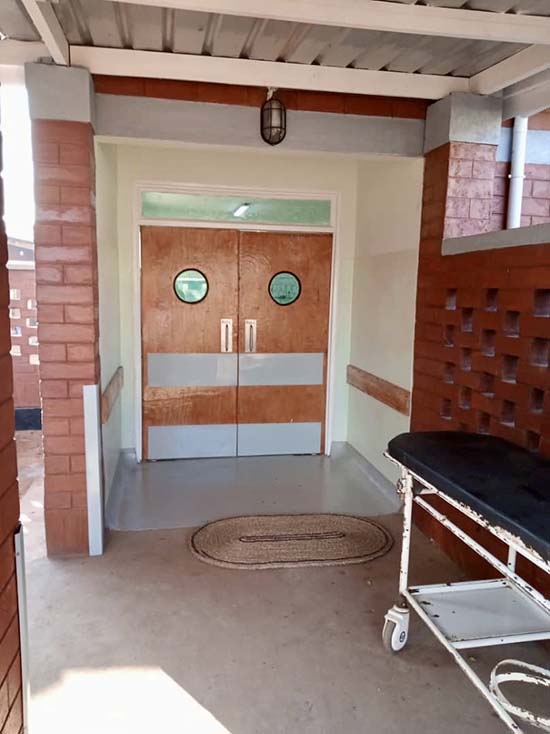
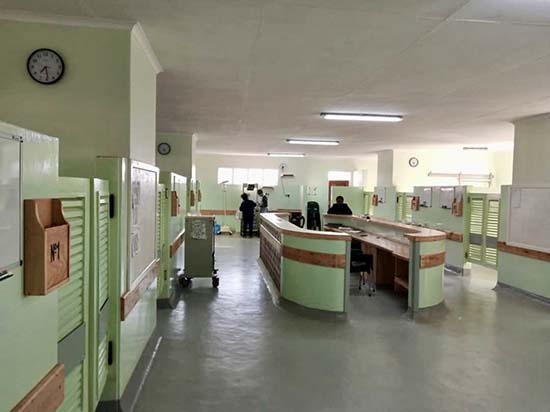
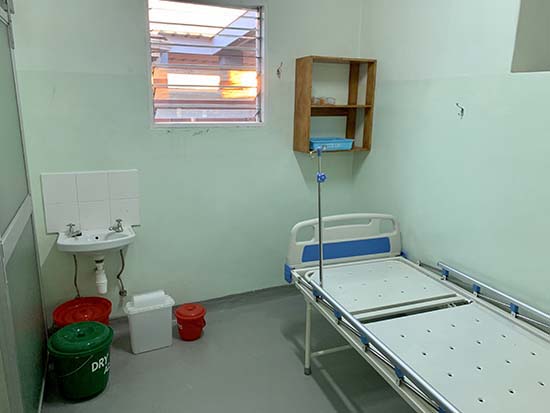
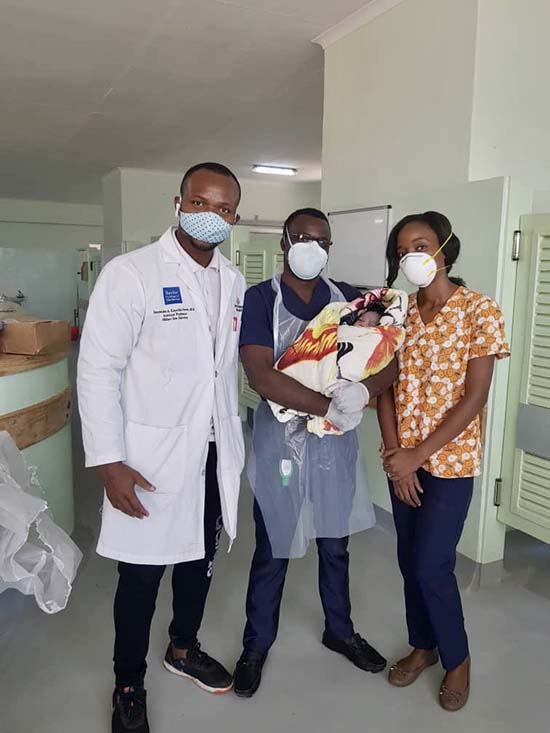
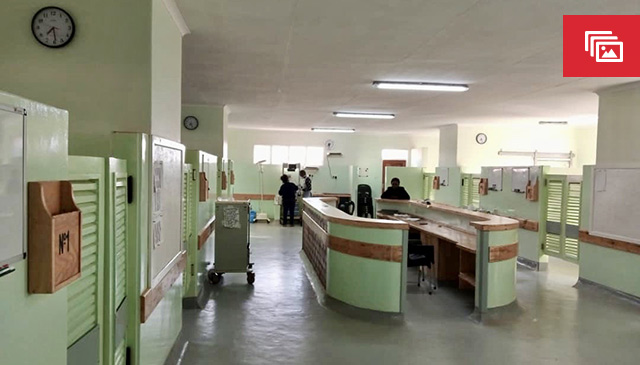
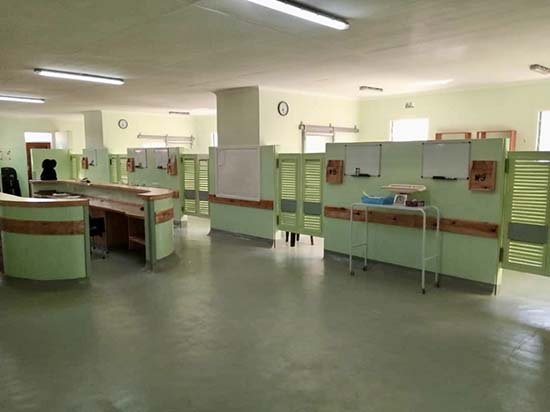
A new nine-bay labor and delivery ward at Area 25 Health Center in Lilongwe, Malawi, is providing women a private place to give birth, and clinical workers more space to deliver the same amount of babies per year born at the Pavilion for Women.

“This is a huge step forward for our patients and our clinicians,” said Dr. Jeffrey Wilkinson, vice chair of Global Health and professor, OB-GYN and director of the Global Women’s Health Program. “It falls right in line with our goal of providing the highest quality of care to the women and children we treat through our Global Women’s Health program.”

Formed in 2012, the program is a collaboration between Texas Children’s Hospital, Baylor College of Medicine Children’s Foundation – Malawi and the Ministry of Health of Malawi. This public-private partnership leads the way in the development of transformative programs that benefit thousands of women and babies as well as scores of learners in low resource settings.

Women and children are disproportionately affected by lack of access to health care services, particularly in resource limited settings. Malawian women have some of the worst odds with 675 deaths per 100,000 live births – among the highest maternal mortality ratios in the world. By contrast, the ratio for US women is 14 deaths per 100,000 live births.

To improve these odds, the Global Women’s Health program has invested a lot of time and effort into expanding the quality and quantity of services offered at Area 25 Health Center, significantly alleviating the burden of increasing demand for maternal and neonatal services at Kamuzu Central Hospital (Lilongwe’s referral hospital) and Bwaila Maternity Hospital, the largest maternity unit in the region with 17,500 plus deliveries per year.

With the help of generous donors, a maternal waiting home, a four-room operating theater and now a new labor and maternity ward have been built to help clinicians, midwives and non-medical staff better serve the women and children of Malawi.

Each room in the new labor and delivery ward is equipped with a swinging door that leads out to a nurses’ station. One of the nine rooms has a private bath and shower. The other eight rooms share four private baths and showers, each with a sliding door for easy access.

Prior to opening the new ward, women at Area 25 were delivering their babies in a six-bed labor and delivery ward on beds lined up in one room and separated by only a curtain. Because of the cramped quarters, family members were not able to accompany or help their loves ones during delivery.

The new ward has enough space for one family member to be in the room during delivery, an accommodation that is somewhat unique in health care facilities across Malawi and sub-Saharan Africa. The old labor and maternity ward will be used for anti-labor, triage, admissions and evaluation of patients coming in for labor.

“This has been a transformational gift for the women and babies in this region,” said Dr. Ibe Iwuh, one of the OB-GYNs at Area 25. “It’s helped us not only provide high quality care to women but also to demonstrate the potential between a public-private partnership between a US academic institution, a US health care organization, and the Malawi Ministry of health.”

Dr. Chikondi Chiweza, one of the OB-GYNs at Area 25, said it’s very satisfying to see Area 25 become one of the busiest maternity wards in the area.

“Because of the waiting home, women who might have gone into labor far from a medical institution now have a safe place to wait during their last few weeks and days of pregnancy,” Chiweza said. “The operating theater has enabled us to take care of more complex patients, and the new maternity and labor ward will allow us to better meet the ever-growing demand of births and well-woman services.”

For more information about the Global Women’s Health program and Area 25, click here.
Interim Physician-in-Chief Dr. James Versalovic and several other Texas Children’s physicians recently published a paper in the Oxford Academic: The Journal of the Pediatric Diseases Society detailing the clinical course of 57 children with COVID-19 cared for at Texas Children’s at the beginning of the pandemic. Dr. Catherine Foster with Infection Control and Prevention is the lead author of the paper and Dr. Judith Campbell with Infection Control and Prevention is the senior author.

The paper’s overall findings were that most of the children were mildly symptomatic, and only a few patients with underlying medical conditions required hospitalization. System wide, the patient evaluation processes at Texas Children’s allowed for prompt identification and management of patients with COVID-19.

“These outcomes are an affirmation that we were doing what we need to do to provide the best care for patients and their families,” said Campbell, medical director of Infection Control and Prevention. “They tell us that we are identifying patients early and getting them the help they need quickly all while helping to reduce the spread of COVID-19.”

Some key findings of the study, which took place during the first five weeks of the outbreak in Houston include:

Identification process

  • Pre-procedural surveillance testing identified three patients who had no respiratory symptoms
  • The majority (71 percent) of cases presented in the ambulatory setting

Patient demographics

  • Fifty-six percent of all 57 patients were male
  • Median age was 10.7 years (range was 0.1 – 20.2 years)
  • Asthma (12 percent) was the most common underlying condition, followed by sickle cell disease (7 percent)
  • More than half of the cases (54 percent) reported a laboratory-confirmed COVID-19 household contact
  • International travel was reported in two cases (Mexico and Commonwealth of Dominica) and interstate travel in one case (New Jersey)
  • Most patients (83 percent) presented with either fever or cough, including all of the patients who presented to the Emergency Center
  • Fever was reported in 53 percent of ambulatory patients, 90 percent of EC patients, and 25 percent of hospitalized patients

Patient care

  • Six patients were cohorted in the Special Isolation Unit at Texas Children’s Hospital West Campus
  • Half of the hospitalized patients required supplemental oxygen via nasal cannula, and 1 patient was on home bilevel positive airway pressure without supplemental oxygen.
  • No patients required mechanical ventilation
  • The median length of stay was 2 days (range, 1 – 10 days)
  • None of the 57 patients received therapeutic agents to treat COVID-19
  • No patients died

In addition to the data above, the paper evaluated Texas Children’s Hospital’s integrated system approach to the evaluation and management of patients during the COVID-19 pandemic by performing a retrospective assessment of all pediatric patients with COVID-19 cared for through the Texas Children’s system.

COVID-19 was declared a pandemic by the World Health Organization on March 11. As of the beginning of June, the Centers for Disease Control and Prevention reported more than 1.8 million COVID-19 cases and 100,000 plus deaths in the United States. Early reports have provided critical insights on the clinical manifestations of the disease in children. Most children appear to have asymptomatic or mild to moderate respiratory illness, whereas adults, especially the elderly, are more likely to suffer severe respiratory illness and a higher case fatality rate. Given the rapidly evolving nature of the COVID-19 pandemic, data on the epidemiology and clinical course of pediatric patients with COVID-19 in the United States are lacking.

“That’s why it’s so important to document what we are seeing and doing and share these findings with the medical community worldwide,” Versalovic said. “Texas Children’s has been doing this since the onset of the pandemic and will continue to be on the leading edge of scholarship and care of pediatric COVID-19 patients.”

Paper authors include:
Dr. Catherine Foster, Infection Control and Prevention
Dr. Elizabeth Moulton, Infection Control and Prevention
Dr. Flor Munoz, Infection Control and Prevention
Dr. Kristina Hulten, Infection Control and Prevention
Dr. James Versalovic, Interim Physician-in-Chief
Dr. James Dunn, Pathology
Dr. Paula Revell, Pathology
Dr. Tjin Koy, Infection Control and Prevention
Dr. Amy Arrington, Special Isolation Unit
Dr. Lucila Marquez, Infection Control and Prevention
Dr. Judith Campbell, Infection Control and Prevention

by President and CEO Mark Wallace

“U.S. children’s hospitals are national treasures. They offer, as they always have, the promise of a better future for kids. It’s our duty as a nation to provide the disaster relief and recovery support they need to help them through the COVID-19 crisis.”

I want to share an article from U.S. News & World Report about pediatric hospitals around the nation. It perfectly captures the heart of why children’s hospitals are so important for not only pediatric patients, but adult patients too.

Texas Children’s, and many other children’s hospitals, have played a vital role in keeping our communities safe during the COVID-19 pandemic, and we are continuing to take bold actions in order to support and partner with our colleagues throughout the Texas Medical Center and our nation.

You know more than anyone about the compassion and expertise our teams exhibit every day, and how critical it is to ensure the future of our institutions.

I hope that after reading this, each of you take a moment to recognize that you make us a national treasure.

The storms

The following passage was written by Texas Children’s Chaplain Jessica Shannon.

There are many types of storms. Some are literal and some are figurative. It seems that both types of storms have been constant for months now. We wonder when the storms will stop, but they stir up everywhere we turn.

At times, it seems there is no end in sight. When will our organization feel the same again? When will our city feel the same? As soccer has been starting again around the world, we watch our favorite clubs play to empty stadiums that normally house well over 50,000 singing fans. Other sports will follow the same path or choose not to have a 2020 season at all. The storms seem to keep coming.

With storms comes fear, uncertainty, panic, and anxiety. Houston is no stranger to storms. Normally, we buy water, milk, and bread. The panic preparations for COVID-19 added toilet paper to everyone’s grocery list. Panic buying is coping with fear and uncertainty. It’s trying to control something when we feel helpless, and helplessness is a common feeling we witness in healthcare. Parents want to fix their child, and they can’t. They sit in their child’s room wanting to do something, anything, to help. They feel out of control. They are in a storm. We have all joined together in a storm, and we will get through it together.

We rely on each other’s gifts, jokes, wisdom, calming presence, words of love, and moments of peaceful silence to weather the storms of 2020. Let’s all take a moment to reflect on how the many patients and families we have cared for have coped with fear and helplessness. They found hope in us. They found hope in families in the playroom. They found hope in a kind employee. They found hope in their community.

Our community is full of environmental services representatives, doctors, advanced practice providers, social workers, chaplains, leadership, nurses, child life representatives, guest services, interpreters, and so many more gifted people who make Texas Children’s a family. May we all give each other hope and peace. May we all remind each other that, despite the uncertainty, the storms will end.

June 18, 2020

Texas Children’s Hospital, our employees, medical staff, and leadership team are carefully monitoring the ongoing active transmission and increased number of COVID-19 cases in the greater Houston area and across our great State of Texas. While this is an unprecedented pandemic, we have learned a lot, very quickly, and Texas Children’s is confident in our ability – and that of the hospitals across the greater Houston area – to do what is necessary to care for our community.

Texas Children’s will always be here for our patients, families, and the community at large. We stand ready and committed to doing our part to assist our city should the number of COVID-19 cases continue to rise. I have personally spoken with our medical staff and nursing leaders who share this commitment and pledge to serve in whatever way needed. Specifically, Texas Children’s can provide additional capacity through ICU and acute care beds across our Main Campus in the TMC, West Campus in Katy, and The Woodlands Campus in The Woodlands to take on additional patient volume – both pediatric and adult.

To the public, I say: We know COVID-19 has not gone away. We implore you to take responsible actions – practice appropriate social distancing, wear a mask or face covering anytime you leave your home, wash your hands frequently for at least 20 seconds, and avoid touching your face whenever possible. These efforts worked to slow our patient volumes earlier this year, and taking decisive action now will alleviate the pressure on our hospital systems.

I know firsthand what the employees and medical staff in Houston hospitals are capable of doing. I have seen the heft, might, devotion, and compassion on display each and every day, and I know we are ready. Ready to serve the children and women who need us in the safest way and environment possible with all of the appropriate and necessary PPE and infection control protocols. Ready to serve and partner with our colleagues and support them if and when the need arises.

Texas Children’s is always here and we are ready and eager to serve.

On June 12, Juliana Graves met her donor heart family with her mom, dad and brother by her side. Juliana, now 6, had a life-saving heart transplant at Texas Children’s in 2014 at just 17 days old.

The Graves family knew they would one day want to meet the family who gave their daughter the gift of life. That meeting happened last week when the Graves family met the Aguiars at LifeGift where they shared stories and memories about Juliana and the Aguiars’ son, Christopher.

Christopher’s mom, Jennifer Aguiar, also listened to her son’s heart beating inside Juliana’s chest.

“Meeting the Graves family was both beautiful and comforting,” Jennifer Aguiar said. “It’s helping me process the loss of my son.”

Riki Graves, Juliana’s mother, said her family thinks and prays about Christopher every day and that being able to meet his family was “wonderful.”

During the meeting, Juliana handed Jennifer a teddy bear and gave her a big, long hug.

“The most important thing this family has given me is Christopher’s heart,” the little girl said.

Living without a new heart was not an option for Juliana. Doctors with Texas Children’s Fetal and Heart Centers diagnosed her with a complex heart condition before she was born and initially thought she would need several heart surgeries shortly after being delivered.

Riki was already fighting a battle when she found out, at 20-weeks pregnant, that her unborn daughter might not survive. Earlier in her pregnancy, Riki was diagnosed with breast cancer and decided to pause treatment while still pregnant.

Her team of doctors at the Fetal Center monitored her pregnancy very closely. Juliana was born on April 9, 2014 and it was determined that her heart was too structurally abnormal and weak to undergo surgery. Juliana was placed on the transplant list on April 21. On April 26, at 17 days old, she received her new heart.

Dr. Jeffrey Heinle, associate chief of congenital heart surgery, led the transplant surgery, which was a success. He and Dr. Jeff Dreyer, pediatric cardiologist and medical director of heart failure, cardiomyopathy and cardiac transplantation, have been following Juliana and working with the Graves family to provide them with continuous, ongoing care.

“The Graves’ story is a remarkable one and much of it is owed to the generosity of the Aguiar family,” Heinle said. “Organ donation truly saves lives. This is a perfect example of that.”

Dreyer agreed and said it’s always nice to be part of such a happy ending.

“This mother and child have overcome so many obstacles,” he said. “Continuous monitoring for Juliana will be needed, but she is on a positive path forward thanks to her donor family and others.”

Diana Harter, assistant clinical director of nursing for transplant, was Juliana’s transplant coordinator. She said she knows the Graves family has been waiting a long time to meet their donor family and that such meetings are meaningful and healing for everyone involved.

“Donor meetings are so special to witness,” said Harter, who attended the meeting with the Graves and Aguiars last week via video conference. “They bring everything full circle.”

June 16, 2020

The 2020 U.S. News & World Report survey of Best Children’s Hospitals was released this morning and Texas Children’s is again one of the best in the nation. I am excited to share with you that Texas Children’s ranked fourth place among all children’s hospitals nationally.

Seven of Texas Children’s specialties are ranked in the top 5 this year, and 9 are in the top 10. Cardiology and Congenital Heart Surgery ranked No. 1 in the nation for the fourth straight year in a row, and Neurology and Neurosurgery moved up from No. 3 to No. 2, which is an amazing feat.

The scores this year were exceptionally tight among the top children’s hospitals, and here are a few highlights of this year’s biggest wins across the system:

  • We received maximum scores for all system-wide structure and process metrics.
  • We achieved maximum points for our collaborative efforts on infection prevention.
  • We exceeded our T-dap and flu immunization compliance threshold, which was increased to 95 percent.
  • We exceeded the new threshold for number of infection preventionists per 100 beds.

Dr. Jim Versalovic and Dr. Larry Hollier have demonstrated exceptional leadership over their departments, and all of our chiefs of service have worked tirelessly to ensure their respective specialties excelled in this year’s rankings — Dr. Paul Austin, Dr. Susan Blaney, Dr. Michael Braun, Dr. Christopher Caldarone, Dr. Gary Clark, Dr. Peter Hiatt, Dr. Daniel Penny, Dr. Benjamin Shneider, Dr. Brian Smith, Dr. Rona Sonabend, Dr. Gautham Suresh and Dr. Howard Weiner. Please join me in thanking our medical leaders for their hard work and dedication.

Our entire list of 2020 U.S. News rankings include:

#1 Cardiology and Congenital Heart Surgery
#2 Neurology and Neurosurgery
#2 Nephrology
#3 Pulmonology
#4 Cancer
#4 Gastroenterology and GI surgery
#5 Diabetes and Endocrinology
#6 Urology
#10 Neonatology
#15 Orthopedics

The rankings methodology weighs advanced technology, best practices, credentialing, infection prevention, nursing care, outcomes and reputation. The more consistently we deliver high quality care and the safer we deliver that care to our patients, the better their outcomes are, and the better our overall numbers are.

The results also reflect the efforts of our team and their steadfast focus on the U.S. News survey. Compiling and refining our data is a continuous process and, with the support of our medical staff, in-chiefs, service chiefs, as well as Mark Mullarkey, Trudy Leidich, Elizabeth Pham and the entire Quality team, we have again excelled this year.

I hope you are all as proud as I am of this remarkable accomplishment. These results, combined with the resiliency you have all shown over these past few months, exemplify why Texas Children’s is the best pediatric hospital in Texas. Thank you for your commitment and leadership. It takes all of you to be ranked one of the nation’s best.

This year’s rankings will be available online at usnews.com/childrenshospitals. You can learn more about Texas Children’s rankings here.