
Joni Justice shares her experience participating in last month’s peaceful protest on racial injustice and how each of us can be a catalyst for change in promoting racial equality, unity and respect in our workplace and in our communities. Read more


Joni Justice shares her experience participating in last month’s peaceful protest on racial injustice and how each of us can be a catalyst for change in promoting racial equality, unity and respect in our workplace and in our communities. Read more
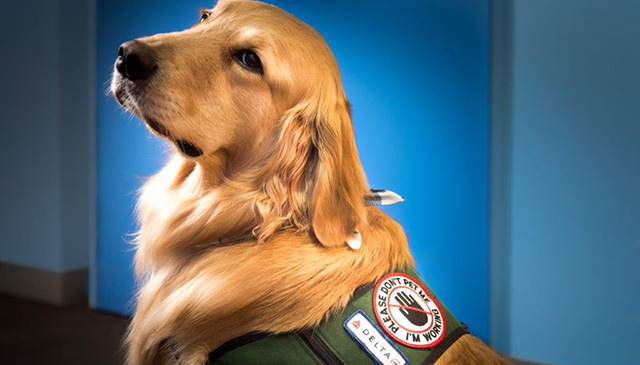
Some of Texas Children’s most beloved employees are back in the office! Members of Texas Children’s Pawsitive Play program started seeing patients again last week prompting some much-needed laughter, smiles and fun.
Designed to enhance the emotional well-being of patients and families in the hospital, the program’s animal-assisted therapy dogs provide support to those who may be having trouble coping with a hospital stay, new diagnosis or certain medical procedure.
Our dogs work full time alongside their animal-assisted therapy coordinators and consult with the multidisciplinary team to provide goal-oriented, therapeutic interventions and emotional support for hospitalized children as well as families and staff.
“We want to ensure thoughtful and intentional visits for each consult,” said Diane Kaulen, manager of the Texas Children’s Child Life Department. “Our animal assisted therapy handlers’ work alongside the medical team to align their interventions to the individualized plan of care.”
This is especially true during the pandemic when anxiety is high and safety is of upmost concern. To ensure the safety of our patients, their families, and our staff – including our therapy dogs and their handlers – the Pawsitive Play program is resuming in a limited capacity and with added restrictions.
We need your help in enforcing these new rules. When requesting a consult for the dogs or when encountering the dogs and their handlers at one of our campuses, please keep in the mind the following:
“We are glad to be back helping our patients have the best experience and outcomes possible during their stay with us,” Kaulen said. “We also appreciate everyone’s help in keeping our dogs and handlers safe during this unprecedented time.”
For more information on the Pawsitive Play Program, click here.

The Place of Danger
The following passage was written by Texas Children’s Chaplain Jessica Shannon.
Spiritual play is one of the interventions and gifts that sets Pediatric Chaplains apart from Chaplains who serve adult populations. It allows us to use play to guide children in processing their feelings and find both hope and meaning. Essentially, spiritual play creates a field where we can meet children where they are. We hop into their world and provide spiritual care in a way that is tailored to children. It can look like any form of play with games, coloring, and general silliness or with a specific spiritual intervention. My personal favorites are prayer activities, such as prayer bubbles and echo prayers, bibliotherapy and Godly Play. Godly Play is where we will land today.
Godly Play consists of Montessori-based stories that can appear light on the surface but create deep, meaningful conversations. The stories are Judeo-Christian, but Pediatric Chaplains adapt the language to be interfaith, allowing all children to experience these stories and find meaning in their diagnosis, hospital admission and circumstances. Godly Play stories have opened heavy doors with patients.
In one particular story, “The Parable of the Good Shepherd,” we find “a place of danger.” Children are asked to reflect on what their place of danger is, and like all thoughts shared during Godly Play, no answer is right or wrong. None of you would be surprised to hear that most kids label the dangerous place as the hospital or a feeling related to their illness and treatment. The way in which they describe the “place of danger” can be heartbreaking but important for them to share. One child once said, “It’s all of it,” as he gestured at everything around him in the hospital. The Godly Play storyteller then asks, “I wonder how you get through it?” The answers are rich, powerful, and often full of hope despite their fear and pain. It’s very important for the Pediatric Chaplain to create a safe space for a child to share from their heart, and we are blessed to hear children express heavy statements that they had not otherwise allowed themselves to articulate.
I wonder what your “place of danger is,” and I wonder how you get through it? What, or who, helps you? We know that stay-at-home orders can help protect the community and keep us healthy enough to continue serving in our roles at TCH, but those same orders can keep us from the activities and people who help us through our “place of danger.” Right now, it seems that everywhere we turn there is sadness, worry, and fear right now. It seems that coping with the darkness is more and more difficult as our activities, places of worship, and inability to be surrounded by friends and family. But, regardless of what comes our way, we can get through the “place of danger,” no matter how hard it appears to be.
The number of people testing positive for COVID-19 is rising all over the country, including in the Greater Houston area and at Texas Children’s. We may be in the “place of danger” right now, just as so many of the kids for whom we care are. Like our brave patients, however, we will get through it. We will find healthy and helpful ways to cope. We can enjoy a dog walk, a good book, or a family Zoom call. We will support each other with humor, permission to vent or cry, and simply sitting with each other in silence. We will rely on our faiths and the coping skills we have built over our years of caring for sick and dying children. We will find a way though the “place of danger.”

As we head into the holiday weekend, it is very important we understand that COVID-19 is not on holiday. That means our traditional July 4th plans must look a bit different this weekend, but they can still be just as enjoyable.
For your safety and that of everyone around you, use this three-day weekend as an opportunity to explore new traditions and activities – ones that will help ensure we’re here to enjoy gatherings in years to come.
With a quick Google search, we found lots of great ideas for spending the holiday safely at home. Here are our top 5:
1. Celebrate virtually. Houston’s Shell Freedom Over Texas celebration will be virtual this year, featuring fireworks and musical acts, like the Houston Symphony and country singer Pat Green. Tune in on July 4 at 7 p.m. on ABC13.com. And while there’s nothing quite like getting an up-close look at the Statue of Liberty, an interactive virtual tour by the National Park Service offers panoramic views of the statue’s exterior and interior. In additional, lots of national museums are offering history-packed videos and virtual tours online.
2. Hamilton anyone? A live recording of Hamilton, the acclaimed Broadway musical from the writer and its star Lin-Manuel Miranda, and the director Thomas Kail, arrives on Disney Plus on Friday. Take the fun up a notch by watching outdoors on the patio.
3. Get physical. Get your blood pumping with an early morning workout, alone, with your spouse or the whole family. Or enjoy an evening bicycle parade with a small group of friends – don’t forget to decorate your bike! Want to keep the fun outdoors? Stock up on lawn games like oversized checkers, tic-tac-toe, Connect 4 and cornhole. Stand-by favorites like sidewalk chalk and bubbles can also be a hit!
4. Bring the fun inside. No backyard? No problem. Bring the camp out indoors – pitch a tent and find a recipe for s’mores you can make in the oven. Or clear the furniture, and set up a picnic right in the family room – picnic basket, checkered linens and all! Spend the day making festive crafts, playing games and enjoying movies or karaoke.
5. Revitalize. While we often think of holidays as a time for celebration, they also can serve as a moment of relaxation. Take advantage of the long weekend by doing something that centers or refreshes you. Read a book, take a walk, attend a virtual church service, phone a friend or family member you’ve lost touch with, or just allow yourself to be still for a bit. Still have energy to burn? Consider tackling a cluttered room or closet, and enjoy the reward of your newly reorganized space.
These ideas are the tip of the iceberg. So explore online, get creative and most importantly stay safe.

As Texas Children’s begins accepting adult patients, Chief Nursing Officer Mary Jo Andre shares what this new opportunity means for nursing and how our nurses can do their part to help curb the spread of COVID-1. Read more
For many patients and their families, coping with a new illness can be challenging, and often times, can produce anxiety and fear. Since 1997 the Periwinkle Arts in Medicine Program at Texas Children’s Cancer and Hematology Centers, has helped numerous patients cope with their illness through various art opportunities.
“Access to the arts is essential to our every day well-being, especially in the most challenging of times,” said Carol Herron, coordinator for the Periwinkle Arts in Medicine Program. “It gives our patients affected by cancer and blood disorders the opportunity for self-expression, empowerment and healing through the arts.”
Before the COVID-19 pandemic, the program’s community Art Partners frequently visited the Cancer and Hematology Clinic to engage patients and their siblings in fun and educational arts activities. Since the art partners are unable to come into the clinic due to COVID-19 restrictions, the Periwinkle Arts in Medicine Program launched a creative and interactive way to virtually connect with patients and their families.
Creativity Connected is a weekly interactive virtual arts newsletter that the Periwinkle Arts in Medicine program rolled out in response to the COVID-19 pandemic. The newsletter goes out weekly to a database of more than 1,300 Texas Children’s Cancer and Hematology Centers’ patients and their siblings.
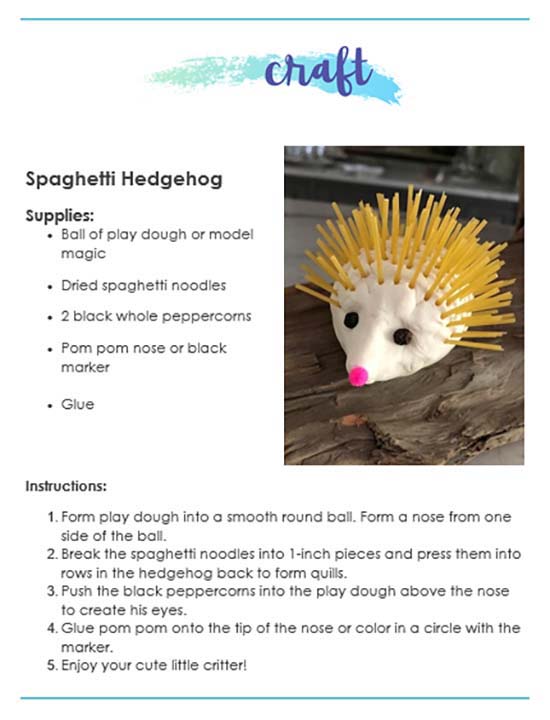
The publication provides a collection of enjoyable arts activities for children including video clips on how to build a spaghetti hedgehog or how to make musical instruments using common household materials. Creativity Connected also features a selection of artwork from Making A Mark®, an exhibition of art and creative writing from children touched by cancer and blood disorders at our Cancer and Hematology Centers.
One of the long-time Art Partners that is part of the Periwinkle Arts in Medicine Program is Purple Songs Can Fly, which has provided hundreds of patients and siblings a musical outlet to share their incredible stories and songs of hope which are produced in an in-house studio at Texas Children’s Cancer Center.
Below is a note from a child who wrote a song virtually with Purple Songs Can Fly founder and executive director Anita Kruse, and then had that song shared in the Creativity Connected newsletter.
“I feel happy to make songs with Anita. She is so kind. My sister and I enjoy making and singing songs. I like the way she plays the piano. When I grow up I would love to play piano like her.”
In addition to Purple Songs Can Fly, several other Art Partners that have contributed to bringing art therapy to our cancer and hematology patients include Writers in The Schools, Houston Center for Photography, Young Audiences of Houston, the Houston Symphony, The Woodlands Children’s Museum, the Museum of Fine Arts Houston, River Oaks Chamber Orchestra and DaCamera.
Texas Children’s partners with The Periwinkle Foundation, an organization that develops and provides programs that positively change the lives of children, young adults and families who are challenged by cancer and other life-threatening illnesses and are cared for at Texas Children’s Hospital.





Since the pandemic began, fewer children than usual have visited emergency rooms. But, according to media reports, doctors across the country say they have seen a growing number of children who suffered broken bones on bikes and trampolines, accidental poisonings and other severe injuries during the widespread lockdowns.
Instead of getting injured on playgrounds or during team sports, many children are getting hurt while playing with outdoor toys and sports equipment at home. Sales of trampolines, scooters, skateboards, bicycles and inflatable pools have surged as families look for ways to keep their kids entertained — and with parents often unable to provide constant supervision because of work and other obligations, injuries have followed.
The story is no different at Texas Children’s. All three of our trauma centers have seen an increase in the number of patients seeking our care.
“It’s been really busy for sure,” said Dr. Bindi Naik-Mathuria, medical director of the Trauma Center at Texas Children’s Hospital Medical Center Campus. “We’re seeing everything from dog bites and falls to car accidents, drownings, gunshot wounds, child abuse and neglect. The effects of the pandemic and subsequent lockdowns are definitely taking a toll on families in the Greater Houston area and beyond.”
But, Naik-Mathuria said, Texas Children’s is here for those who need our care and the trauma teams at all three campuses are well equipped to handle whatever situation they encounter.
When a child comes to one of our hospitals with a traumatic injury, they are cared for by members of one of our trauma teams either at the Medical Center Campus, at Texas Children’s Hospital The Woodlands or at Texas Children’s Hospital West Campus.
The trauma centers at The Woodlands and West Campus were recently designated Level IV trauma centers by the Department of State Health Services. The trauma center at the Medical Center Campus is a Level I Trauma Center and has been designated as such since 2010.
The teams at these centers are responsible for a patient’s care throughout their journey at Texas Children’s, which can sometimes be months long. During this time, team members work with departments across the system to coordinate a patient’s care.
“The integration across our system is so important,” said Tarra Kerr, director of the trauma program at all three campuses. “We all work together to make sure our patients get the right treatment so they can return home and have the best possible outcome.”
At the Medical Center Campus, the Level I pediatric trauma center provides around-the-clock coverage to evaluate and treat the most severely injured pediatric patients. Averaging over 1,000 trauma admissions per year, teamwork is crucial in the rapid and decisive actions needed to treat traumatic injuries.
Dedicated space for trauma cases is available in the Emergency Center, our main operating room suite and inpatient units. Approximately 70 percent of all trauma cases come from within the Metro Houston area, which consists of nine counties covering more than 9,500 square miles.
Over 50 percent of the trauma patients cared for at the Medical Center Campus are transferred from other hospitals. The average time to accept a transfer is 15 minutes, well below the 30 minute threshold that is allowed by federal regulation.
The Level IV trauma centers at West Campus and in The Woodlands are capable of stabilizing any trauma patient received, handling onsite single-system orthopedic injuries and superficial lacerations. More complex cases are stabilized and then transferred to a higher level trauma center such as our Level I trauma center in the Medical Center.
The Level IV designation sends a clear signal to first responders that our community hospitals are equipped to handle such trauma patients. West Campus and The Woodlands have been caring for such patients since the hospitals opened their doors, however the designation formalizes that process and holds the centers to certain quality and process improvement standards.
“We are a solid, tri-campus trauma center,” Kerr said. “We have made a lot of progress over the years that better ensures patients receive the right care at the right place at the right time.”
Another area of focus for Texas Children’s trauma centers is injury prevention and research. Kristen Beckworth manages this aspect of the trauma centers at all three campuses. Her team of six educators works in the hospitals and the communities that surround them.
“The goal of the Center for Childhood Injury Prevention is to address major areas of unintentional injuries to children in our local area,” Beckworth said. “This is accomplished by raising awareness among adults and children, providing lifesaving education and resources, and by making childhood injury a public priority.”
With pediatric injury being the No. 1 cause of injury and death of children in the United States, the center educates thousands of parents and children each year on a variety of child safety topics, such as child passenger safety, safe sleep, home safety and bike and pedestrian safety. The center works with trauma center registrars to determine trends, write grants, and implement programming so that what they do is evidence based and in line with what the community needs.
Valuable local partners are key to the center’s success, especially during the pandemic when Beckworth and her team are tied to their decks more than giving in-person education and working with people face to face.
“It’s been challenging, but we are doing what we can,” Beckworth said. “People have been very appreciative of our continued commitment to our program during such trying times.”
Some things Beckworth and her team have done since the pandemic is offered virtual car seat checks, partnered with Houston Apartment Association and Home Owner’s Association to distribute water safety tip sheets, and reached out to all Texas Children’s Pediatrics practices and Texas Children’s Urgent Cares to inform them about the increase in traumatic injuries and tips on how to prevent them.
In addition to injury prevention, Texas Children’s trauma centers aims to continuously evaluate and improve the quality of care given to trauma patients from the perspective of our patients, parents, providers and system. Our trauma process improvement program monitors and evaluates patient care and system performance, while ensuring implementation of a culture of safety. The team participates in the American College of Surgeons’ Trauma Quality Improvement Program and attends the annual scientific meeting and training which compares and provides benchmarking for all level I and II trauma centers.
“We have a very active research program and put a lot of protocols into place that increase the quality of care for our patients, many of whom are forever changed by their injuries and have a strong bond with the people who helped them through one of the toughest times in their lives,” Naik-Mathuria said. “I am very proud of what we and everyone involved has accomplished for the betterment of our patients and their families.”
For more information about Texas Children’s trauma centers and the teams that support them, click here. For more information about the Center for Childhood Injury and Prevention, click here.