February 23, 2021


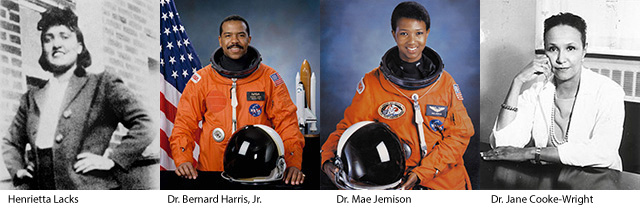
In celebration of Black History Month, Texas Children’s Medical Staff Committee on Diversity, Inclusion and Equity is shining a light on African American pioneers in medicine. For our final installment, we salute Henrietta Lacks, whose cells became the first human cell line; Dr. Bernard A. Harris, Jr., the first African American to complete a spacewalk and the first to conduct a telemedicine conference from space; Dr. Mae Jemison, the first African American woman astronaut and the first African American woman in space; and Dr. Jane Cooke-Wright, the Black woman oncologist known as “The Mother of Chemotherapy.”

In the United States, Black women are more likely than White women to die from cervical, breast, ovarian and endometrial cancers – and the statistics are startling:

  • Black women with cervical cancer are nearly 10 percent more likely to die when compared with White women after adjustment for socioeconomic status and stage at diagnosis.
  • Among women with hormone receptor positive breast cancer, Black women have twice the risk of death. More than one-third of that excess risk is attributable to differences in health insurance coverage.
  • When compared with White women, non-Hispanic Black women with ovarian cancer have consistently worse survival both by time interval and disease stage, despite very similar distribution of cancer stages.
  • The mortality risk of endometrial cancer is 55 percent higher for Black women than White women.

The driving factors behind these persistent disparities? For one, Black women are less likely to be diagnosed with early-stage disease. However, the basis for later-stage diagnosis appears to be a result of improper evaluation rather than biologic cause. At least one study also reported that Black women were less likely to receive guideline-concordant care, which was in turn associated with higher odds of advanced stage of disease at diagnosis.

In honor of the advancements that have been made in cancer screening, diagnosis and treatment, we recognize the Black woman whose cells have supported advances in most fields of medical research – including research on space missions – and two physician-astronauts who conducted research in space.

The Legend of Henrietta Lacks

In 1951, a young mother of five named Henrietta Lacks visited The Johns Hopkins Hospital complaining of vaginal bleeding. Upon examination, renowned gynecologist Dr. Howard Jones discovered a large, malignant tumor on her cervix. Lacks began undergoing radium treatments for her cervical cancer, and a sample of her cancer cells retrieved during a biopsy were sent to Dr. George Gey’s nearby tissue lab. Neither Lacks nor her family knew or consented to her cells being taken.

Gey, a prominent cancer and virus researcher, had been collecting cells for years from all patients who came to Johns Hopkins with cervical cancer, but each sample quickly died in his lab. What he would soon discover was that Lacks’ cells were unlike any of the others he had ever seen: where other cells would die, her cells doubled every 20 to 24 hours.

These incredible cells – nicknamed “HeLa” cells, from the first two letters of Henrietta Lacks’ first and last names – became the first human cell line. HeLa cells have been used to study the effects of toxins, drugs, hormones and viruses on the growth of cancer cells without experimenting on humans. This cell line has contributed to many medical breakthroughs, from research on the effects of zero gravity (they went up in the first space missions) and the development of the polio vaccine, to the study of leukemia, the AIDS virus and cancer worldwide. Many scientific landmarks have used her cells, including cloning, gene mapping and in vitro fertilization.

Lacks ultimately passed away on October 4, 1951 at the age of 31. More than 20 years later, her family finally learned that her cells had been used to fuel medical research that continues to impact the world. Their story and the subsequent controversy over the HeLa cells was captured in the 2010 best-seller, “The Immortal Life of Henrietta Lacks” by Rebecca Skloot, which was later adapted into a movie of the same name.

Source: Johns Hopkins Medicine

Dr. Bernard A. Harris, Jr.

Born in Temple, Texas, in 1956, Dr. Bernard A. Harris, Jr., became the first African American to complete a spacewalk on February 9, 1995. While at NASA, he conducted research in musculoskeletal physiology and clinical investigations of space adaptation and developed in-flight medical devices to extend astronaut stays in space. On his second flight, he conducted the first telemedicine conference from space with the Mayo Clinic.

Harris earned a Bachelor of Science degree in Biology from the University of Houston; a Master of Medical Science degree from the University of Texas Medical Branch at Galveston; a Master of Business Administration degree from the University of Houston; and a Doctorate of Medicine from Texas Tech University School of Medicine. He completed a residency in Internal Medicine at the Mayo Clinic, a National Research Council Fellowship in Endocrinology at the NASA Ames Research Center, and trained as a Flight Surgeon at the Aerospace School of Medicine, Brooks Air Force Base.

Since retiring from NASA, Harris has worked tirelessly to advance STEM education, particularly in underserved communities, and is currently a Texas Medical Center board member.

Source: National Math + Science Initiative

Did you know? Telehealth at Texas Children’s

Texas Children’s has seen tremendous growth in telemedicine over the last year. An average of 1,500-1,600 patient visits are completed each day using audiovisual communication. For some services, more than 95 percent of encounters are by telemedicine, and overall, 15-20 percent of all outpatient encounters for Texas Children’s are completed by telemedicine. Texas Children’s Pediatrics completed its first 100,000 telemedicine in November 2020.

Though hopes were high that telemedicine would reduce or even eliminate barriers to care for disadvantaged populations, significant barriers to access care persist – they’re just different barriers. Types of personal electronic devices, familiarity with technology, internet access, bandwidth capacity and cost, and cultural and language differences all play significant roles.

Texas Children’s eHealth is addressing these barriers and exploring strategies to reduce them with an eHealth Access Equity Committee. Strategies include loaner devices for connecting, remote monitoring technology, providing free WiFi access, creating training in cultural sensitivity for providers, as well as a streamlined and easy to use video-interpretation solution for use in telemedicine visits.

Dr. Mae Jemison

Born on October 17, 1956, Dr. Mae Jemison is the first African American female astronaut and the first African America woman in space aboard the Endeavour in September 1992.

After graduating from high school at just 16 years old, Jemison attended Stanford University and earned bachelor’s degrees in Chemical Engineering and African American Studies in 1977. She went on to receive her medical degree from Cornell University and served two years in the Peace Corps in West Africa as a staff physician. Her responsibilities there included managing the health care delivery system for the Peace Corps and the U.S. embassies in Liberia and Sierra Leone.

In the wake of the Space Shuttle Challenger tragedy, Jemison left her private medical practice in Los Angeles and applied to become an astronaut candidate. She was one of 15 chosen from a pool of 2,000 applicants in 1988. She completed the intensive training, eventually being assigned to STS-47, a Spacelab Life Sciences mission. On this 8-day flight, she served as a science mission specialist and carried out experiments on the effects of space motion sickness, frog fertilization in space and bone loss during spaceflight.

After leaving NASA, Jemison went on to teach at Dartmouth College, formed a company that researches advanced technologies, is an active public speaker, and continues to urge students to pursue their dreams and pursue math and science.

Source: Smithsonian Institute

Dr. Jane Cooke Wright (November 30, 1919 – February 19, 2013)

Born on Nov. 30, 1919, Dr. Jane Cooke Wright grew up in Harlem, N.Y. Her father, Dr. Louis Wright, was one of the first Black graduates of Harvard University Medical School and established the Cancer Research Center at Harlem Hospital. Wright studied art at Smith College before changing her major to pre-med, and later received a full academic scholarship from New York Medical College, where she was one of few Black students. She graduated with honors in 1945.

Wright interned at Bellevue Hospital from 1945 to 1946, serving nine months as an assistant resident in internal medicine. After a six-month leave from residency at Harlem Hospital for the birth of her first child, she returned to complete her training as chief resident. In January 1949, Wright was hired as a staff physician with New York City Public Schools and continued as a visiting physician at Harlem Hospital. After six months she left the school position to join her father, director of the Cancer Research Foundation at Harlem Hospital.

At the time, chemotherapy was still mostly experimental. Her father had already redirected the focus of research to investigating anti-cancer chemicals, and together they began experimenting with these chemicals in mice. While Louis worked in the lab, his daughter performed patient trials. In 1949, the two began testing a new chemical on human leukemias and cancers of the lymphatic system. Several patients who participated in the trials went into remission. Following her father’s death in 1952, Wright was appointed head of the Cancer Research Foundation.

In 1955, Wright became associate professor of Surgical Research at New York University and director of Cancer Chemotherapy Research at New York University Medical Center and its affiliated Bellevue and University hospitals. In 1964, President Lyndon B. Johnson appointed her to the President’s Commission on Heart Disease, Cancer, and Stroke. In 1967, Wright was named professor of surgery, head of the Cancer Chemotherapy Department, and associate dean at New York Medical College, her alma mater. She was then the highest-ranking Black woman in a medical institution in the U.S, and became renowned throughout the country for her breakthrough research.

While pursuing research at New York Medical College, Wright implemented a new comprehensive program to study stroke, heart disease, and cancer, and created another program to instruct doctors in chemotherapy. By 1971, she became the first woman president of the New York Cancer Society, was a founding member of the American Society of Clinical Oncology and served on the board of directors of the American Cancer Society, New York. During her 40-year career, she published more than 100 papers and led delegations of cancer researchers to Africa, Asia and Eastern Europe.

Sources: American Association for Cancer Research, U.S. National Library of Medicine

Did you know? Texas Children’s Cancer and Hematology Centers

Cancer is the leading cause of death in children, affecting more than 15,000 children and adolescents annually. Survival rates for children with cancer have increased substantially over the past 50 years, primarily due to “bench-to-bedside” translation of research advances and treatment of children on clinical trials. Because of these treatment advances, the number of adults classified as “childhood cancer survivors” continues to grow.

Texas Children’s Cancer and Hematology Centers care for one of the largest and most diverse patient populations, representing every form of childhood cancer. As one of the nation’s most comprehensive pediatric cancer centers, we have more than 60 years of experience caring for the most rare and complex cases. Our patients have access to the most innovative treatments, research and clinical trial networks in the world, and the cancer center has more than 250 active clinical trials available.

The cancer center also has 135,000 square feet of laboratory space with 47 labs developing novel treatments for all pediatric cancers. Development of these cutting-edge strategies is a high priority for our unique Developmental Therapeutics and cutting edge Cell and Gene Therapy and Cancer Genomics Programs, which have become leaders in the study of new treatment strategies for childhood cancer.


As unrest roiled the nation after the tragic death of George Floyd, faculty in the Baylor Psychology Department felt compelled to respond.

Protestors were filling the streets, outraged that another unarmed Black man had been killed by the police. COVID-19 was ravaging the Black community. Racial disparities in health care and health outcomes stubbornly persisted.

And yet every day, Black team members came to work at Texas Children’s and performed their roles as if they weren’t affected by all that was happening in the world beyond the hospital walls.

“These things can take a toll, and these feelings don’t necessarily go away when you enter the workplace,” said Dr. Ashley Butler, who was among the Psychology faculty who believed that providing a platform for discussions about social injustice and racism could impact change.

Seeking to create a safe space for Black providers and employees in the department to feel supported and understood, they piloted a first-of-its-kind monthly discussion group in June that is still going strong today.

Now known as the Collaborative for African American Racial Equality (CAARE), participants meet virtually each month to discuss current events and the long-standing reality and impacts of racism against Black people. In addition to the Black Lives Matter protests and murder of George Floyd, recent topics have included the insurrection at the U.S. Capitol in January and the availability and acceptance of the COVID-19 vaccine in Black communities.

Ellen Binkley, ambulatory services rep II for the Psychology Service, has been part of CAARE since its inception and credits its influence with helping her to think about her Blackness in a new way.

“I wanted to be part of this groundbreaking endeavor to make a difference, to be part of a community where we can discuss different topics without being judged,” said Binkley, who also enjoys imparting the wisdom of her own experiences on younger colleagues.

“After our meetings, I feel refreshed because I’m able to express my concerns, give my opinions and get positive feedback from the group that helps me in my day-to-day life.”

A space for solidarity

CAARE is also a place for participants to celebrate Black culture and achievements, while checking on and being present for each other.

“In diverse groups, Black people often times find themselves describing or retelling personal historical events that are traumatic without support,” Butler said, noting that CAARE participants don’t have to educate other members about the nuances and lived experiences of being Black.

“We wanted to create an intentional space for connection and prevent the chance that our colleagues would deal with all that is going on in isolation,” she said.

Peer support and the opportunity to build genuine relationships gives many participants the feeling they aren’t talking to strangers, but friends – and though they share similar experiences, they bring a variety of perspectives and viewpoints to the table.

“It’s a good reminder that though we all might be concerned about something, we might be thinking about it differently and it might be affecting us in different ways,” said Dr. Sadiqa Cash, an assistant professor in Psychology Services.

“Even as progress is made, I appreciate that we have this space and this forum to process, and that racial justice and equity are things that Texas Children’s wants to focus on,” Cash said. “We’re all trying to figure this out the best way we can.”

A space to speak freely

As overwhelmed as she was by the violence of George Floyd’s murder, Sr. Project Coordinator Kerrianna Floyd has been just as moved by the outpouring of support and compassion she received from her colleagues through CAARE.

As part of the Racial Equity and Inclusion (REI) group the Psychology Department created last summer as a subset to the Inclusive Excellence Initiative launched in 2019, Floyd wanted to do more to contribute to learning and healing about racial issues. CAARE stood apart as an authentic attempt to give Black faculty and staff a space within the workplace setting to acknowledge their pain, without fear of offense or misunderstanding.

“The Psychology Department created an invaluable resource for its team members by understanding the complexity of our experiences and needs both personally and professionally,” Floyd said. “Knowing that my organization honors my personal experiences, by giving me the opportunity to clear my mind of external concerns, allows me to focus on the work before me and perform proudly.”

Recognizing the increased need for convenient and socially distanced telehealth visits during the pandemic, Texas Children’s has partnered with Amwell and our very own Anywhere Care program to provide an additional telehealth option for you. All employees and their eligible dependents who are enrolled in a Texas Children’s medical plan now have two telehealth service options to reach a trusted provider virtually anywhere, at any time.

  • Cigna Virtual Care by MDLive
  • Texas Children’s Employee Telehealth by Amwell

Through April 21, 2021, all medical telehealth appointments for covered employees and dependents are at no cost to you, whether you are contacting them for COVID-19-related symptoms or another illness.

For instructions on how to access either of the telehealth services, click here.

New Behavioral Health Telehealth options

Texas Children’s and Cigna have collaborated to provide new telehealth options for mental health services to our team members and their families. These options offer more convenient and easier access to mental health professionals from any location of your choice. Please note there will be a copay.

  • Cigna Virtual Care by MDLive
  • Talk Space through MyCigna website or app

As a reminder, you can also obtain Behavioral Health telehealth services at no cost by scheduling an appointment with Texas Children’s EAP counselors and/or Health Coaches and via EAP Plus. For more information click here.

Lauren Salinas shares how the CVICU nursing team achieved zero primary (non-mucosal barrier injury) central line-associated bloodstream infections for the month of January. Read more

Inspired by Rosa Parks and the Montgomery Bus Boycott, Vice President Jermaine Monroe reflects on the COVID-19 vaccine as our pathway to ending the pandemic.

February 16, 2021

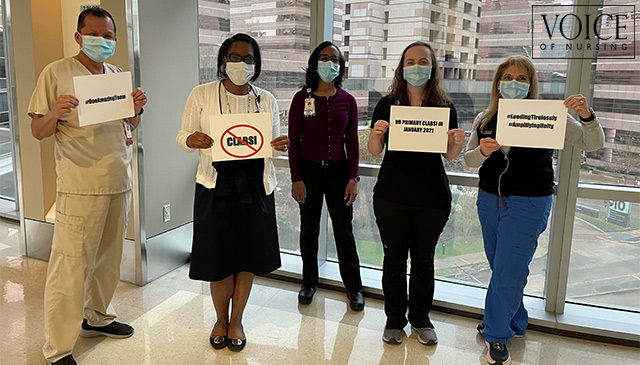
Our nursing team has a big reason to celebrate. During the month of January 2021 the team achieved zero primary (non-mucosal barrier injury) central line-associated bloodstream infections (CLABSI), demonstrating the value of teamwork and our hospital’s commitment to cultivating an environment for safe patient care.

“We are so proud of our teams for the tireless work that goes into caring for our patients with central lines,” said Kathleen Magee, Nursing Director lead for the CLABSI Hospital Acquired Conditions (HAC) workgroup.

“We could not have accomplished this goal without such strong collaboration from our front line nurses and PCAs, medical team, infection control colleagues and perioperative teams that place these lines. It is so great to see that hard work pay off and result in zero primary CLABSI for our patients.”

What are CLABSI?

Central line-associated bloodstream infections (CLABSI), also known as a Hospital Acquired Condition (HAC), are a serious infection that occurs when bacteria enters the bloodstream through a patient’s central line.

How are CLABSI prevented?

To prevent CLABSI health care providers must follow a strict protocol when inserting the line to ensure it remains sterile and CLABSI do not occur. In addition to inserting the central line properly, providers must use stringent infection control practices every time they check the line or change the dressing. Patients who get a CLABSI have a fever, and might have red skin and soreness around the central line. If this happens, health care providers can do tests to learn if there is an infection present.

How did Texas Children’s achieve this milestone?

Some strategies to achieve this milestone include determining the necessity of the line in the care of the patient and the use of CHG treatments. Additionally, routine central line dressing and tubing changes can help mitigate the incidence of CLABSI.

The last time Texas Children’s achieved zero cases of CLABSI was in June 2015.

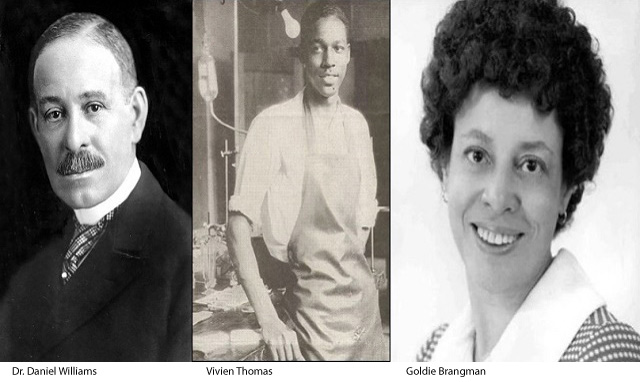
In celebration of Black History Month, Texas Children’s Medical Staff Committee on Diversity, Inclusion and Equity is shining a light on African American pioneers in medicine. This week following Valentine’s Day, we salute Dr. Daniel Hale Williams, who founded the first Black-owned hospital in America and performed the world’s first successful heart surgery; Vivien Theodore Thomas, who developed a procedure used to treat cyanotic heart disease; and Goldie Brangman, who was the first and only African American president of the American Association of Nurse Anesthetists and assisted with an emergency heart surgery on Dr. Martin Luther King, Jr., after an assassination attempt.

Cardiovascular disease is the leading cause of maternal mortality, and the risk of dying from cardiovascular disease-related pregnancy complications is 3.4 times higher for non-Hispanic Black women than non-Hispanic White women, independent of other variables. Increased rates of cardiovascular disease-related complications among women of color can be explained, in part, by racial and ethnic bias in the provision of health care and health system processes.

The diagnosis of cardiovascular disease in pregnancy can be especially challenging because the overlap of cardiovascular symptoms with those of normal pregnancy may lead to delays in diagnosis and subsequent care. However, if cardiovascular disease were to be considered in the differential diagnosis by treating health care providers, it is estimated that a quarter or more of maternal deaths could be prevented. Additionally, the incidence of pregnancy in women with congenital heart disease and acquired heart disease is on the rise. The United States experienced a significant increase in maternal congenital heart disease from 2000 to 2021.

At Texas Children’s, we not only care for infants with the most complex congenital heart disease – we also care for adults with congenital and acquired heart disease. The joint Maternal/Cardiac clinic at the Pavilion for Women offers specialized care for pregnant women with complex heart disease, who are seen by both a specialist in Maternal-Fetal Medicine and Adult Congenital Heart Disease during prenatal visits and delivery. This coordination of care between cardiac and obstetric specialists ensures improved communication and collaboration between these services in caring for these complicated patients.

In addition, the support from all the other services at Texas Children’s and the Pavilion, including a dedicated ICU and critical care service on labor and delivery, leads to the safe and comprehensive care of these women. An adult unit also recently opened at Legacy Tower to provide continuing care for all adults with congenital heart disease.

In recognition of our ability to provide the highest level of cardiac care to Texas Children’s patients throughout the full spectrum of their lives, we honor the physicians who pioneered heart surgery and the Certified Registered Nurse Anesthetist who paved the way for African Americans in the field.

Daniel Hale Williams, M.D.
(January 18, 1856 – August 4, 1931)

Dr. Daniel Hale Williams founded the first Black-owned hospital in America and performed the world’s first successful heart surgery in 1893. At age 20, Williams became an apprentice to a former surgeon general for Wisconsin. Williams studied medicine at Chicago Medical College. After his internship, he went into private practice in an integrated neighborhood on Chicago’s south side. He soon began teaching anatomy at Chicago Medical College and served as surgeon to the City Railway Company. In 1889, the governor of Illinois appointed him to the state’s board of health.

Determined that Chicago should have a hospital where both Black and White doctors could study and where Black nurses could receive training, Williams rallied for a hospital open to all races. After months of hard work, he opened Provident Hospital and Training School for Nurses on May 4, 1891, the country’s first interracial hospital and nursing school.

One hot summer night in 1893, a young Chicagoan named James Cornish was stabbed in the chest and rushed to Provident. When Cornish started to go into shock, Williams suspected a deeper wound near the heart. He asked six doctors (four White, two Black) to observe while he operated. In a cramped operating room with crude anesthesia, Williams inspected the wound between two ribs, exposing the breastbone. He cut the rib cartilage and created a small trapdoor to the heart. Underneath, he found a damaged left internal mammary artery and sutured it. Then, inspecting the pericardium (the sac around the heart) he saw that the knife had left a gash near the right coronary artery. With the heart beating and transfusion impossible, Williams rinsed the wound with salt solution, held the edges of the palpitating wound with forceps, and sewed them together. Just 51 days after his apparently lethal wound, James Cornish walked out of the hospital. He lived for over 20 years after the surgery. The landmark operation was hailed in the press.

In 1894, Dr. Williams became chief surgeon of Freedmen’s Hospital (now known as Howard University Hospital) in Washington, D.C., the most prestigious medical post available to African Americans then. In 1895, he helped to organize the National Medical Association for Black professionals, who were barred from the American Medical Association. Williams returned to Chicago and continued as a surgeon. In 1913, he became the first African American to be inducted into the American College of Surgeons. As a sign of the esteem of the Black medical community, until this day, a “code blue” at the Howard University Hospital emergency room is called a “Dr. Dan.”

Source: Columbia Surgery via PBS American Experience

Vivien Theodore Thomas
(August 29, 1910 – November 26, 1985)

Vivien Theodore Thomas was born in Lake Providence, Louisiana in 1910. The grandson of a slave, Vivien Thomas attended Pearl High School in Nashville, and graduated with honors in 1929. In the wake of the stock market crash in October, he secured a job as a laboratory assistant in 1930 with Dr. Alfred Blalock at Vanderbilt University.

Tutored in anatomy and physiology by Blalock and his young research fellow, Dr. Joseph Beard, Thomas rapidly mastered complex surgical techniques and research methodology. In an era when institutional racism was the norm, Thomas was classified, and paid, as a janitor, despite the fact that by the mid-1930s he was doing the work of a postdoctoral researcher in Blalock’s lab. Together he and Blalock did groundbreaking research into the causes of hemorrhagic and traumatic shock. This work later evolved into research on Crush syndrome and saved the lives of thousands of soldiers on the battlefields of World War II.

Blalock and Thomas began experimental work in vascular and cardiac surgery, defying medical taboos against operating upon the heart. It was this work that laid the foundation for the revolutionary lifesaving surgery they were to perform at Johns Hopkins a decade later. In 1943, while pursuing his shock research, Blalock was approached by renowned pediatric cardiologist Dr. Helen Taussig, who was seeking a surgical solution to a complex and fatal four-part heart anomaly called Tetralogy of Fallot (also known as blue baby syndrome, although other cardiac anomalies produce blueness, or cyanosis). Thomas was charged with the task of first creating a blue baby-like condition (cyanosis) in a dog, then correcting the condition by means of the pulmonary-to-subclavian anastomosis. In nearly two years of laboratory work involving some 200 dogs, he demonstrated that the corrective procedure was not lethal, thus persuading Blalock that the operation could be safely attempted on a human patient. During this first procedure in 1944, Thomas stood on a step-stool behind Blalock coaching him through the procedure. When the procedure was published in the May 1945 issue of the Journal of the American Medical Association, Blalock and Taussig received sole credit for the Blalock-Taussig shunt. Thomas received no mention and, in Blalock’s writings, he was never credited for his role.

Thomas’ surgical techniques included one he developed in 1946 for improving circulation in patients whose great vessels (the aorta and the pulmonary artery) were transposed. A complex operation called an atrial septectomy, the procedure was executed so flawlessly by Thomas that Blalock, upon examining the nearly undetectable suture line, was prompted to remark, “Vivien, this looks like something the Lord made.” To the host of young surgeons Thomas trained during the 1940s, he became a figure of legend, the model of the dexterous and efficient cutting surgeon. “Even if you’d never seen surgery before, you could do it because Vivien made it look so simple,” the renowned surgeon Denton Cooley told Washingtonian magazine in 1989.

After Blalock’s death, Thomas stayed at Hopkins for 15 more years. In his role as director of Surgical Research Laboratories, he mentored a number of African American lab technicians as well as Hopkins’ first black cardiac resident, Dr. Levi Watkins, Jr., whom Thomas assisted with his groundbreaking work in the use of the Automatic Implantable Defibrillator. In 1976, Johns Hopkins University presented Thomas with an honorary doctorate. However, because of certain restrictions, he received an Honorary Doctor of Law, rather than a medical doctorate. Thomas was also appointed to the faculty of Johns Hopkins Medical School as Instructor of Surgery.

Source: Katie McCabe, Washingtonian; Vanderbilt Medical School
Goldie D. Brangman
(October 2, 1920 – February 9, 2020)

Brangman was part of the emergency surgical team at Harlem Hospital that was responsible for a successful emergency heart surgery performed on Dr. Martin Luther King Jr., after he was stabbed during an assassination attempt in 1958.

Many present that day argued for moving King to a different hospital since they were under the assumption that the staff at the Harlem Hospital weren’t up to the task. It was finally decided that King could not survive the move and needed help immediately. Brangman was responsible for physically operating the breathing bag that kept King alive during surgery and once the letter opener used to stab him was removed, she was the anesthetist who finished his anesthetic.

Brangman remained at Harlem Hospital for another 45 years after caring for Dr. King, serving as director of the School of Anesthesia. She also served as the first and only African American president of the American Association of Nurse Anesthetists in history, from 1973-74.

Source: Angelina Walker, nurse.org