August 17, 2021

After implementing bold action in June to show our appreciation for our team members’ contributions, Texas Children’s has just announced a new retention program that will impact every employee below the director and physician level – including part-time and per diem team members, and Baylor College of Medicine staff based at Texas Children’s.

President and CEO Mark A. Wallace announced the 1-2-3 Retention Program this week as another step forward in the Tomorrow, Together investment that Texas Children’s has made in our people. The program is designed to celebrate our team members’ tireless work and recognize your commitment to staying with the organization to advance our mission forward.

How the 1-2-3 Retention Program works
  • Retention Payment 1 on Sept. 17, 2021: Full-time team members will receive 1% of their salary or $500, whichever is greater, while part-time and per diem team members will receive 1% of their salary or $250, whichever is greater.
  • Retention Payment 2 on March 18, 2022: Full-time team members who remain employed with Texas Children’s until this date will receive 2 percent of their salary or $750, whichever is greater, while part-time and per diem team members receive 2 percent of their salary or $375, whichever is greater.
  • Retention Payment 3 on Sept. 16, 2022: Full-time team members who remain employed with Texas Children’s receive 3% percent of their salary or $1,000, whichever is greater, while part-time and per-diem team members will receive 3 percent of their salary or $500.
  • Baylor Dates: Please note that payout dates for Baylor may vary based on their payroll schedule.

“Though our resilience may be tested, you prove time after time that our commitment to healthy women and kids will always be greater than our challenges,” Wallace said. “On behalf of our entire leadership team, please accept our 1-2-3 Retention Program as a way of honoring your loyalty to Texas Children’s, and for the compassionate care you help deliver every day for the women and children we serve.”

To download a handy chart about the 1-2-3 Retention Program, click here.

For answers to frequently asked questions about the Tomorrow, Together initiative, click here.

Transitioning from the relaxed sleep schedules of summer break to a back-to-school sleep schedule may appear daunting, but it is achievable with some preparation and patience. You would typically want to establish these school year sleep schedules at least a couple of weeks before the first day of school so your kids have time to adjust. However, do not lose heart if you begin the process later after school has begun. It’s never too late to introduce healthy sleep habits, as they are always beneficial to our kids’ physical and mental development.

Start by progressively waking up your kids 15 minutes earlier each morning and putting them to bed 15 minutes earlier than the previous day. This process will help you work towards having them ready and adjusted to sleeping the right amount while still waking up for school at the same time each morning.

Getting back on track is the first step. Now we have to maintain these healthy sleep habits throughout the school year. Here are some tips to help:

  • Be consistent. Keeping a consistent sleep schedule without changes, even on weekends, helps keep kids’ circadian rhythms (the body’s internal clock) regulated.
  • Maintain a soothing bedtime routine to wind down and relax. A consistent and relaxing bedtime routine will help signal to your kids’ bodies that it is time to sleep. Establishing “quiet time,” reading a book, hearing a bedtime story, and performing other relaxing activities such as taking a warm bath or shower can help kids prepare for bed.
  • Limit screen time before bed. Turn off the TV and other electronics an hour before bed and keep their mobile devices outside the bedroom. Studies show that the light of screens (cell phones, tablets, laptops) can confuse our bodies into thinking it is still light outside, making it harder to fall asleep.
  • Create a calm sleep environment. Having an environment conducive to sleep makes a huge difference for kids. That means making sure kids have a dark and quiet room, a comfortable bed, and a comfortable room temperature (68 – 72 degrees). White noise machines or a fan can also be effective in soothing your kids to sleep by creating a consistent and rhythmic sound. Playing soft, calming music (think classical) can also help them to sleep.
  • No caffeine six hours before bedtime. This includes sodas and other caffeinated beverages that can interrupt a child’s natural sleeping patterns.
  • Avoid big meals before bedtime. Meals with oversized portions or spicy foods can cause discomfort from indigestion and make it harder for kids to fall asleep.
  • Exercise after school. Physical activity in the afternoon can help ensure a good night’s sleep by tiring kids out during the day. Some kids find it harder to sleep if they exercise too close to bedtime, so make sure to encourage exercise a few hours before. For example, a neighborhood stroll or bike after dinner can help with digestion as well as expend any leftover energy.

As teams across the organization continue to celebrate the recent Tomorrow, Together investment in our people, Texas Children’s is launching another special program to express our gratitude for our team members’ hard work and commitment.

In addition to the 50 percent discount on all purchases made at food courts and outlets at the Medical Center, West Campus and The Woodlands campus locations, we have sweet news we want to share.

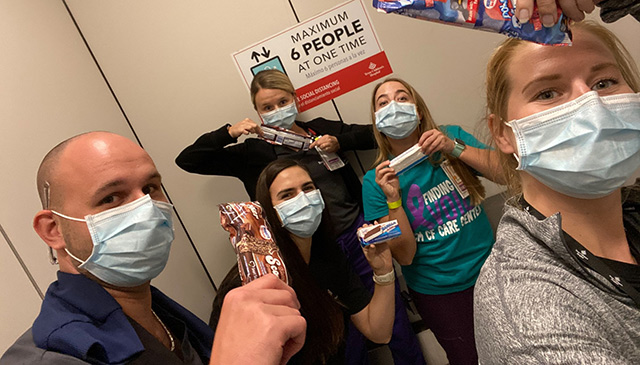
Every Friday in August, all team members will get free ice cream, or another sweet treat, at all Texas Children’s locations. Make sure to grab a treat before or after your shift, overnight hours included.

  • Health Plan Building – 6330 West Loop South Freeway, Boardroom, Room #1436
  • Medical Center – Fresh Bistro at the Pavilion for Women and Food Court at Mark Wallace Tower
  • Meyer Building – Main Lobby
  • The Woodlands – Treehouse Café
  • West Campus – Dot’s Kitchen
  • Pediatrics, Specialty Cares, The Centers, Urgent Cares and other community locations – Please see your practice leader

Show off your smiles! Send your photos with your sweet treats and details to HR Communications for a chance to see your smile featured on Connect News and our social media channels.

Employees can receive $1,000 for referring a candidate who joins our team and $5,000 for helping to fill one of the featured jobs. Read more

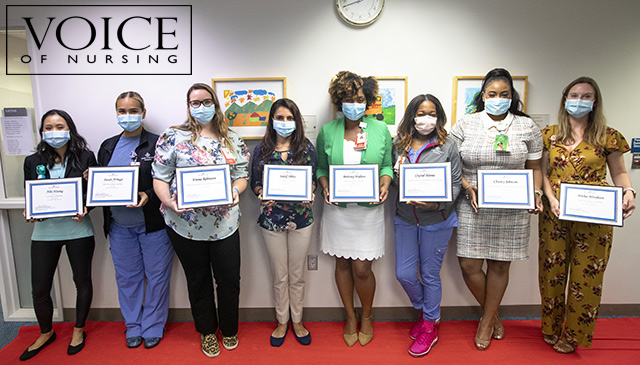
As the 2021 recipient of the Molly Mae LeBlanc Scholarship, Brittany Walters (pictured in the middle) shares why she applied and what this nursing education scholarship means to her. Read more

August 13, 2021

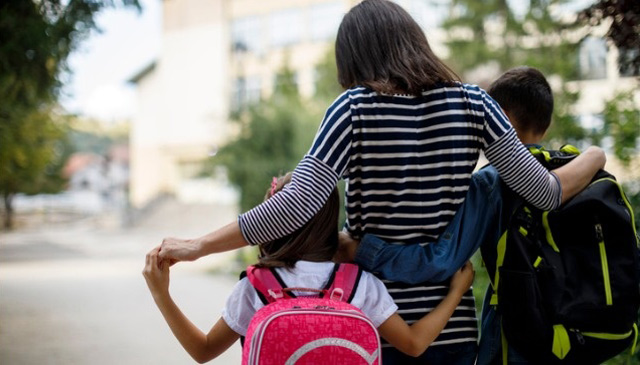
As we approach the back-to-school season, many of us are preparing our kids for another reconstructed school year in a continuously evolving pandemic. While more schools reopening the traditional classroom setting, our communities are also navigating through emerging variants and rising infections. It is natural for parents and caregivers to be anxious and concerned about their kids’ safety and well-being, especially with shifting masking guidelines.

Dr. Karin Price, Chief of Psychology for Texas Children’s, shares some helpful tips to help parents and caregivers manage their own anxiety, and more importantly, help their kids feel confident about returning to school.

  • Acknowledge the anxious feelings and worries, while also setting the expectation for bravery. Telling kids (or ourselves) “Don’t worry” or “Everything will be fine” disregards our natural response to a stressful and uncertain situation. Instead, we can help children learn to label their feelings by saying things like, “Sounds like you are feeling worried about going back to school.” We can then acknowledge that the situation is stressful, while also communicating that the child is brave and can handle difficult situations. “Lots of kids and families are feeling nervous about going back to school this year. It may be hard, but I know you can handle it because you’re a brave kid.”
  • Don’t let your (or your child’s) worries feed the anxiety. We know there is a strong connection between thoughts and feelings, and during times of uncertainty the “what if” thoughts can become overwhelming. These worries tend to build on one another and create a cycle of escalating anxiety. Instead of allowing these thoughts to feed the anxiety, try to focus on things that are within your control. For example, if a parent is worried that the other kids or adults in the school setting will not be wearing masks, they can redirect their thoughts to simple problem solving. “I can only control my child, and she will wear a mask to school every day to help keep her safe.” It is important to move on to something more deserving of your attention.
  • Model bravery and healthy coping with uncertainty. Kids often take cues about how to respond to a situation from their caregivers. If they hear parents in emotional discussions about more adult topics (such as whether rules around masking are appropriate, concerns about the efficacy of vaccines against new virus variants, or anxiety about illness or death), it may be very hard for them to feel confident and brave returning to school.

Instead, we can acknowledge their own anxiety while also modeling how to cope. “I am a little worried about everyone going back to school, too. It feels especially hard this year, but I know we will handle it together.” Modeling flexibility and acceptance of things beyond our control is also important during times of uncertainty, especially by avoiding negative talk about other people. A caregiver may say something like, “I also don’t like it that many of the kids in your class don’t wear masks. I wish everyone would, but I can’t control everyone. I can just make sure that the people in our family make the best choices for our own health and safety.”

August 12, 2021

Texas Children’s joins other medical entities across the country in recommending both masks and vaccination to protect against COVID-19

Like many hospitals across our region, Texas Children’s continues to experience a surge of COVID-19 cases, combined with a highly unusual summer surge of patients diagnosed with Respiratory syncytial virus.

To protect children and their families as school resumes, and in accordance with recommendations from the Centers for Disease Control and Prevention, the American Academy of Pediatrics, and the American College of Obstetricians and Gynecologists, Texas Children’s Hospital recommends everyone, regardless of their vaccination status, wear a mask indoors – including at school. We know how important it is developmentally for kids to attend school in-person, but it is of utmost importance that they do so in an environment that is as safe as possible.

As the largest children’s hospital in the nation, we, along with other leaders, are dedicated to doing all we can to protect those who are most vulnerable, including children under 12 who are not yet eligible to be vaccinated. Now, more than ever, it is important for everyone who is eligible to get vaccinated and remain vigilant about wearing a mask, washing hands frequently and thoroughly, maintaining social distancing and avoiding large gatherings. It will take all of us working together to get through this pandemic and we must ensure our children are protected in the process.

We also know that many of you are not only health care professionals, but parents as well. This is a challenging time, both personally and professionally, and we want to do all we can to help all children enjoy a safe and successful school year.

You are likely receiving questions from parents, schools and the community. Please click here to view available resources, including blog posts and a video about the Delta variant and how to help children cope with back-to-school anxiety, as well as high-level talking points about Texas Children’s response to this surge.